Testing the binary black hole nature of a compact binary coalescence
N. V. Krishnendu, K. G. Arun, Chandra Kant Mishra

TL;DR
This paper introduces a new gravitational wave analysis method to verify if compact binary mergers are genuine black holes by measuring their quadrupole moments, testing the no-hair conjecture and distinguishing exotic objects.
Contribution
The paper presents a novel observational technique to measure spin-induced quadrupole moments, enabling differentiation between Kerr black holes and other exotic compact objects using gravitational wave data.
Findings
Method can distinguish black holes from exotic objects based on quadrupole moments.
Higher order spin effects encode the nature of the compact objects.
Potential to constrain the parameter space of alternative compact objects.
Abstract
We propose a novel method to test the binary black hole (BBH) nature of compact binaries detectable by gravitational wave (GW) interferometers and hence constrain the parameter space of other exotic compact objects. The spirit of the test lies in the "no-hair" conjecture for black holes where all properties of a black hole are characterised by the mass and the spin of the black hole. The method relies on observationally measuring the quadrupole moments of the compact binary constituents induced due to their spins. If the compact object is a Kerr black hole (BH), its quadrupole moment is expressible solely in terms of its mass and spin. Otherwise, the quadrupole moment can depend on additional parameters (such as equation of state of the object). The higher order spin effects in phase and amplitude of a gravitational waveform, which explicitly contains the spin-induced quadrupole moments…
Click any figure to enlarge with its caption.
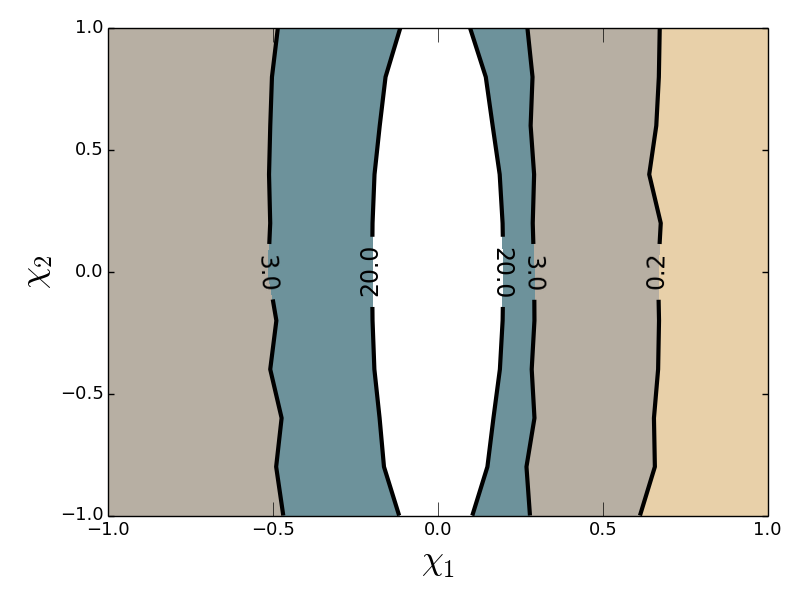 Figure 1
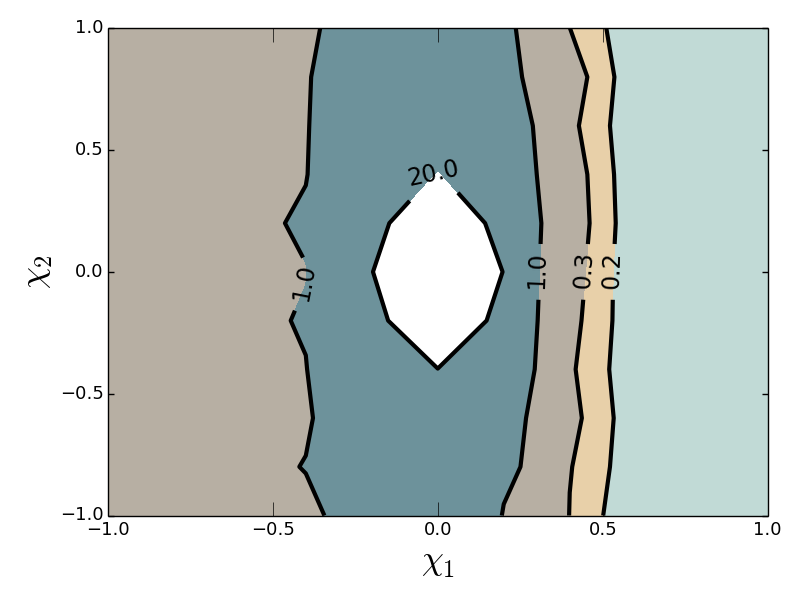 Figure 2
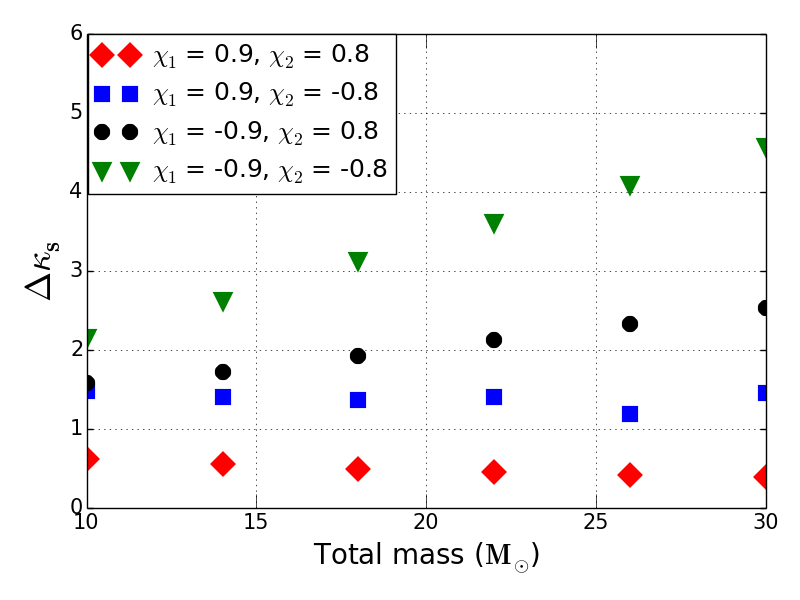 Figure 3
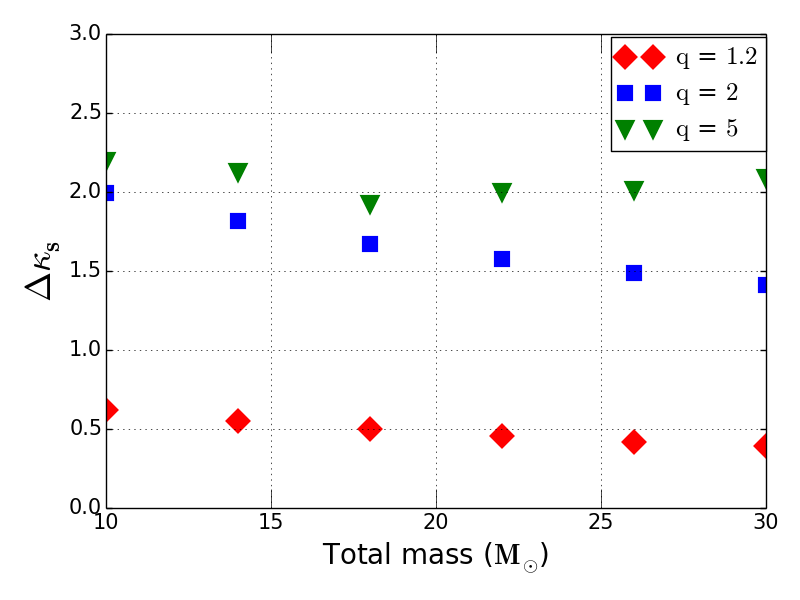 Figure 4
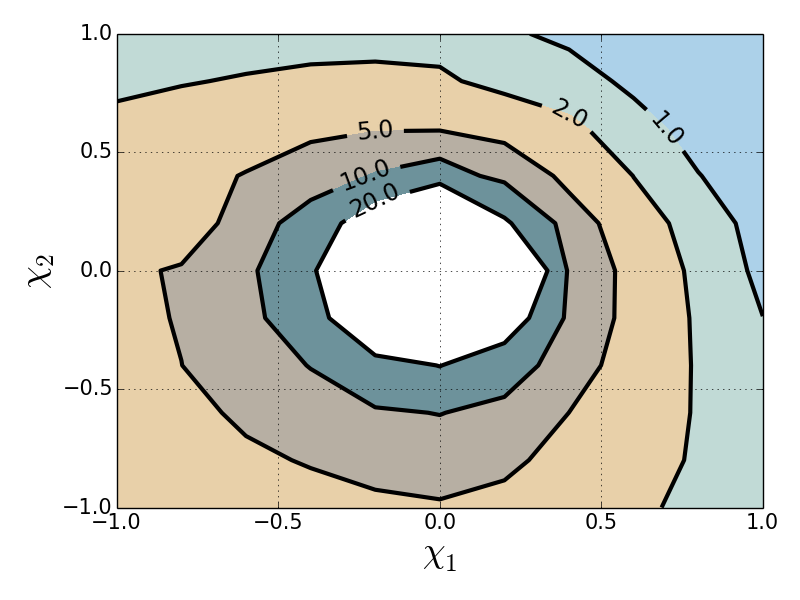 Figure 5
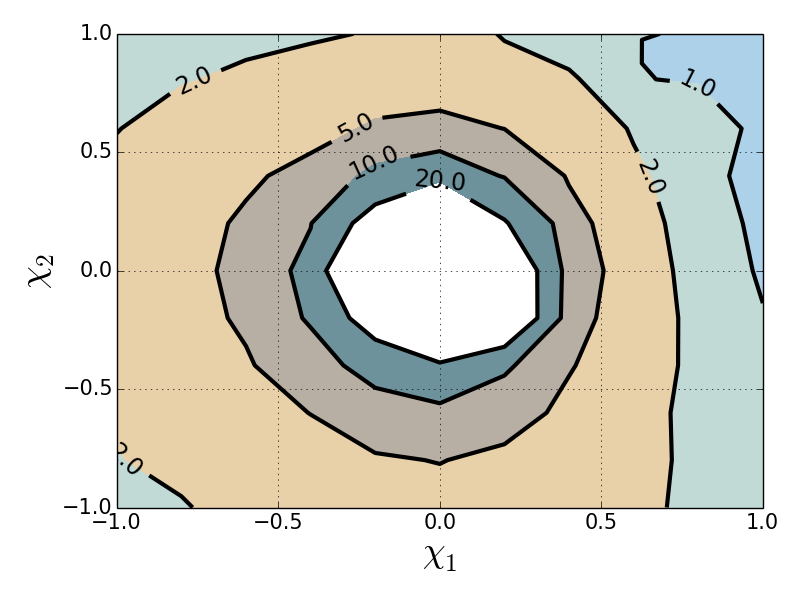 Figure 6
Peer Reviews
No public reviews on file for this paper yet. If you reviewed it on a platform where reviews are public (OpenReview, ICLR, NeurIPS, ICML), you can paste yours below so the community can read it here.
Videos
No videos yet. Explain this paper in a talk, walkthrough, or lecture? Add one.
Testing the Binary Black Hole Nature of a Compact Binary Coalescence
N. V. Krishnendu
Chennai Mathematical Institute, Siruseri, 603103, India.
K. G. Arun
Chennai Mathematical Institute, Siruseri, 603103, India.
Chandra Kant Mishra
Indian Institute of Technology Madras, Chennai - 600036, India.
ICTS-TIFR, Bengaluru (North) - 560089, India.
Abstract
We propose a novel method to test the binary black hole nature of compact binaries detectable by gravitational wave (GW) interferometers and, hence, constrain the parameter space of other exotic compact objects. The spirit of the test lies in the “no-hair” conjecture for black holes where all properties of a Kerr black hole are characterized by its mass and spin. The method relies on observationally measuring the quadrupole moments of the compact binary constituents induced due to their spins. If the compact object is a Kerr black hole (BH), its quadrupole moment is expressible solely in terms of its mass and spin. Otherwise, the quadrupole moment can depend on additional parameters (such as the equation of state of the object). The higher order spin effects in phase and amplitude of a gravitational waveform, which explicitly contains the spin-induced quadrupole moments of compact objects, hence uniquely encode the nature of the compact binary. Thus, we argue that an independent measurement of the spin-induced quadrupole moment of the compact binaries from GW observations can provide a unique way to distinguish binary BH systems from binaries consisting of exotic compact objects.
pacs:
04.30.Db, 04.25.Nx, 04.80.Nn, 95.55.Ym
Introduction: With the twin detections of binary black hole mergers by advanced LIGO interferometers Aasi et al. (2015), black holes (BHs) are no longer just elegant mathematical entities but a physical reality Abbott et al. (2016a, b, c). Now we know that BHs do exist in nature, and they can form a binary BH system and merge emitting gravitational waves (GWs) to form a single BH. Analytical frameworks of post-Newtonian theory (PN) Blanchet (2006) and BH perturbation theory Sasaki and Tagoshi (2003) together with numerical relativity Pretorius (2007) have provided us a theoretical platform to study and interpret the GW observations of compact binary mergers. Both the observed events, GW150914 and GW151226, were found to be consistent with a binary black hole merger with approximate total masses of and , respectively. The strong evidence for their binary black hole (BBH) nature comes from the following facts Abbott et al. (2016d):
- Keplerian estimates of the orbital size are naturally explained by invoking a binary BH system, 2) the observed ringdown waveform is consistent with the least-damped quasinormal mode of a Kerr BH Kerr (1963) (with the inferred final mass and spin), and finally, 3) the reconstructed signal matches excellently with the numerical relativity waveforms of a BBH merger.
With planned upgrades towards operating advanced LIGO detectors at respective design sensitivities and more detectors (such as advanced Virgo Acernese et al. (2015), KAGRA and LIGO-India Iyer et al. (2011)) joining the worldwide network of GW interferometers, many more such detections are likely to happen in the future observation runs Abbott et al. (2016e). One of the important questions from a fundamental physics viewpoint, is whether we can confidently distinguish the mergers of BBHs from that of binaries comprised of exotic compact objects such as gravastars Mazur and Mottola (2004) and boson stars Colpi et al. (1986), which may mimic many features of a BBH merger (see, also Ref.Giudice et al. (2016) for a recent review on possible BH mimickers and their GW signatures).
The definition of a Kerr BH is very closely tied with the the “no-hair” conjecture which says that all the properties of a Kerr BH are completely described by its mass and spin. The quasinormal mode spectrum of a Kerr BH that is formed, say, by the merger of two compact objects would, hence, be completely characterized by the mass and spin of the remnant BH. This is a topic that has been studied in great detail over the past two decades. References Dreyer et al. (2004); Berti et al. (2006) studied the abilities of GW detectors to carry out spectroscopy of a remnant compact object thereby testing its BH nature. The possibility of constraining specific BH mimicker models such as boson stars using quasinormal mode spectrum observations has been discussed in Berti and Cardoso (2006); Macedo et al. (2013). If we have a stellar mass BH orbiting a supermassive BH or an intermediate mass BH the dynamics of the stellar mass BH (treated as a test particle) would encode information about the multipole structure of the central BH, and, therefore constrain any possible deviations from the BH nature Ryan (1997); Brown et al. (2007); Hughes (2001). While these methods are restricted to studying the BH nature of the central compact object, the recent proposals in Refs. Cardoso et al. (2017); Maselli et al. (2017); Sennett et al. (2017) showed how the measurement of the tidal Love number of a compact binary may be used to detect exotic compact objects constituting a compact binary.
In this Letter, we propose a new method to test the binary black hole nature of the detected GW event by measuring the spin-induced quadrupole moments of the binary’s constituents, whose values are unique for Kerr BHs in GR due to the no-hair conjecture. For an isolated Kerr BH, it is wellknown that the quadrupole moment scalar is given by , where is the mass of the BH and is the magnitude of the dimensionless spin parameter defined as (where is the spin angular momentum vector of the BH). For a non-BH compact object, this may be generalized to , with as the BH limit. Depending on the equation of state, studies have shown that for neutron stars (NSs), may range between 2 and 14 Laarakkers and Poisson (1999); Pappas and Apostolatos (2012)), for boson stars between 10 and 150 Ryan (1997), and for (thin shell) gravastars, may even take negative values Uchikata and Yoshida (2016) (which means the spin leads to prolateness of the object instead of oblateness.)
In the PN model of compact binaries, the spin-induced quadrupole moment terms appear at the same order where the leading order quadratic-in-spin terms appear (note, ), which is second PN order Poisson (1998). The parameter that characterizes the magnitude of the spin-induced quadrupole moment (given the nature of the object) for each binary component can be tagged as and following the notation of Ref. Marsat (2015) (throughout the paper, suffix 1 refers to the heavier compact binary component and 2 the lighter one). If we rewrite the waveforms in terms of the symmetric and antisymmetric combinations of and given by and , respectively, then a BBH system is specified by . This suggests, if we can accurately measure and to be 1 and 0, respectively, we have established that the detected compact binary is a BBH.
However, note that and are highly degenerate parameters whose simultaneous extraction turns out to yield almost no constraint on them (this will have to be revisited using Bayesian methods in a future work). Hence, we resort to a method where we fix to be 0, as expected for a Kerr BBH, and then calculate the error bars associated with the measurement of from GW observations. The aim here is to see how well can we estimate around the true value of 1 (for a BBH) and, hence, confirm that the observed system is indeed a BBH. These error bars can be interpreted as upper bounds on the value of allowed for exotic compact objects. In this sense, the proposed test is a “null test” of the BBH nature, where, observations would constrain the allowed range of deviations of from the BBH value. Moreover, since the spirit of the test relies on the fact that quadrupole moments of BHs in a BBH system would depend only on the mass and the spin, the proposed test can be regarded as the no hair theorem test for the BBHs.
We wish to clarify that the error bars here refer to the width of the measured distribution of at a fixed confidence level (in our case, ). Depending on the masses and spins of the system, this width may be much larger than 1, in which case, this may be better interpreted as an upper bound on the allowed value of for the given system. In most cases we have studied (in context of advanced LIGO), it is less than (see Figs. 1 and 2). Since for interesting BH mimickers such as boson stars can be as high as 150, the proposed method will be able to put stringent, model-independent constraints on the parameter space of BH mimickers. It should also be noted that though we have posed this as a null test, the proposed test can detect the signatures of exotic compact objects through a shift in the peak of the measured distribution away from 1, as is expected for BH mimickers.
In general, if we parametrize the deviation of by (where is the deformation parameter, which is 0 for BHs) and assume that the constituents of the binary are of identical types (), then, again, showing is equivalent to showing the BBH nature of the compact binary system. This is because we again have , which is consistent with our original assumption for BBHs. Note that even if the detected compact binary constitutes two stars which have , the proposed method will be sensitive in detecting them as they will add to the systematic offset in the measured value of from 1. Hence, our proposal to measure only should work for compact binaries with any combination of compact objects when applied to the real data.
Waveform model. Because of the recent progresses in the post-Newtonian modeling of spinning compact binaries Buonanno et al. (2013); Arun et al. (2009); Marsat (2015); Bohé et al. (2015); Mishra et al. (2016), we now have access to the higher order spin corrections to the GW phasing and amplitude. Here we use a waveform which is 2PN in amplitude and 4PN (note that the phasing formula at the 4PN only includes spin-orbit tail terms and hence is only partial. See a related discussion in Ref. Mishra et al. (2016)) in phase and spins of the two compact objects are considered to be along or opposite the orbital angular momentum vector of the binary. The spin-induced quadrupole moment coefficient appears at 2PN, 3PN and 3.5PN orders. The spin-induced octupole moment coefficient which appear at 3.5PN is set to 1, the BH value as we focus only on quadrupole here. See the section Supplemental Material below for details of the waveform model.
Estimation of : We use the semianalytical parameter estimation technique based on the Fisher information matrix formalism Cutler and Flanagan (1994) to deduce typical accuracies with which may be estimated from GW observations. The Fisher information matrix approach allows us to calculate the widths of the posterior distribution of various parameters for Gaussian noise and in the limit of high signal-to noise-ratio (SNR) (see Ref. Vallisneri (2008) for a detailed discussion on the possible caveats). Unlike previous works with PN waveforms which have subdominant modes (e.g. Refs. Van Den Broeck and Sengupta (2007); Arun et al. (2007)), we truncate the waveforms at twice the orbital frequency of the binary when it reaches the innermost stable circular orbit () as opposed to the choice of , where is the maximum number of harmonics of the orbital phase present in the waveform. Here, the ISCO frequency is computed using numerical fitting formulas listed in Eqs. (3.7) and (3.8) of Refs. Husa et al. (2016); Favata et al. (In preparation). By doing so, we hope to control the systematics due to the neglect of merger and ringdown. Though much less realistic than numerical methods based on algorithms such as Markov chain Monte Carlo (MCMC) calculations, the semianalytic method used here is significantly inexpensive in terms of computational time and is expected to match the predictions of numerical methods in the high SNR limit Balasubramanian and Dhurandhar (1998). However, we caution that the errors we quote here should be taken as a typical order of magnitude of the expected errors which will be quantified in the future with MCMC investigations.
For every system of interest, we construct a Fisher information matrix using the waveform model discussed above for the set of parameters which describe the signal. Here, and denote time and phase of the waveform at coalescence, two mass parameters and are known as the chirp mass and difference mass ratio of the binary, parameters denote the dimensionless spins of the binary components, and finally, and are the luminosity distance and the inclination angle of the binary, respectively. We consider the problem from a single detector standpoint and, hence, do not include the angles which describe the source location in the set of parameters. We compute the lower bound on the errors of each parameter (Cramer-Rao bound) by taking the square root of the diagonal values of the inverse of the Fisher information matrix (covariance matrix). These errors are calculated for different masses and spins of the compact binary systems as well as for different inclination angles (). We consider the sources to be located and oriented in such a way that they produce a SNR of 10 at the detector. Projected advanced LIGO noise PSD Ajith (2011) is used to compute the errors. The error bars on (with a peak at 1) assume , which is the case for Kerr BBHs. From a GW event, if we find that the posterior distribution for is offset from 1, it may be taken as a signature for at least one of the binary components to be a non-BH object. Throughout the Letter, we quote errors in the measurement of parameters characterizing the spin-induced effects. However, as mentioned earlier, for many parts of the parameter space, we find that errors are larger than 100% for which the quoted errors should be considered as ”bounds’” on the parameter in question.
Results and discussion. The dependences of the errors (for a fixed SNR of 10) in measuring as a function of the total mass, for few mass ratio cases (top panel) and spin configurations for a near-equal mass system (bottom panel) for advanced LIGO sensitivity are shown in Fig. 1. This clearly shows that the proposed test works very well for highly spinning, near-equal mass systems. Evidently, the observed improvement for rapidly spinning systems can be attributed to the large spin-induced quadrupole moment they possess. In addition, for nearly equal mass systems, the best estimates of come from compact binaries in which the spins of both components are aligned with respect to the orbital angular momentum vector of the binary, and the worst estimates are for those cases where the component spins are antialigned with respect to the orbital angular momentum. The decrease in the errors with mass ratio may be attributed to the additional mass ratio and inclination angle dependences that amplitude corrections bring in, which affect the correlation of with other parameters (especially spins) in a nontrivial way leading to the observed trend. On the other hand, the dependence of the errors on the spin orientation is due to its effects on the upper cutoff frequency. The figure shows that even with a moderate SNR of 10, the proposed test works very well for a number of mass ratio and spin configurations, where the best cases have (50%). It is worth recalling that the allowed values of for BBH mimickers, such as binaries involving boson stars, can be as high as 150. Hence, the expected bounds are capable of putting stringent constraints on those models.
Figure 2 displays the dependence of the errors of on the component spins for two representative stellar mass compact binaries with component masses and . The results are very promising and show that for dimensionless spins larger than 0.5, the errors in estimating are smaller than in both the cases. This would mean that the proposed test could be effective in certain cases even with moderate spins.
Since the GW detectors are poised to observe tens to hundreds of BBH mergers in the coming years, we also have the interesting possibility of combining the constraints from these individual observations. If there are detections, the errors go down by roughly a factor of . Hence, the combined posterior of about 100 events on the null hypothesis may narrow down the constraints on by a factor of 10.
Possible constraints on from space-based detectors. With the recent success of of LISA pathfinder mission Armano et al. (2016), there is renewed interest in pursuing a GW detector in space with low frequency sensitivity capable of observing supermassive BBH (SMBBH) mergers. Towards this goal, we extend our study to the case of low frequency space-based detectors like LISA and projected constraints possible on from them. The results are shown in Fig. 3 which uses the noise PSD of Ref. Babak et al. (2017). The SMBBH system is assumed to be at a luminosity distance of 3 Gpc. We find that the LISA observations of SMBBH mergers can very accurately constrain the parameter and, hence, confirm the BBH nature of the observed sources, tightly constraining any alternatives to BBHs. It should be clear from Fig. 3 that errors in measuring are smaller than 10% for a number of configurations with moderate spins, making the test an extremely deep probe of any possible deviation from BBH nature. These results show how LISA can be a very sensitive probe of fundamental physics.
Possible constraints on BH mimickers. Since boson stars can have between and Ryan (1997), binary systems of boson stars may have in the range . This allowed range lies well within the reach of the proposed test. Recently, for slowly rotating thin shell gravastars, Ref. Uchikata and Yoshida (2016) showed that the spin-induced quadrupole can take a wide range of values depending on the specifics of the model (see Fig. 7 of Ref. Uchikata and Yoshida (2016)). This range includes , the BH value, too. Indeed, if , our test will not be able to distinguish it from a BH. Except for this very fine-tuned scenario, the projected bounds from the proposed test might significantly help to constrain the allowed parameter space of gravastars and can influence the theoretical developments in the field. The details of the bounds possible on specific BH mimicker models will be reported elsewhere Krishnendu et al. (In preparation).
We note that the proposed test may not be very sensitive in distinguishing a BH from a BH mimicker in a NSBH system. This is because the neutron stars are expected to have small spins () for which spin-induced quadrupole would be very small. Moreover, since NSs are expected to have value in the range of , very accurate estimation of the parameters of both the binary components is necessary to make the above distinction. This may be possible only with the future generation of GW detectors.
There are some effects which can potentially contaminate the effectiveness of the proposed test. Because the compact objects in binaries are, strictly speaking, not isolated, the no-hair conjecture holds only approximately due to which there can be systematic effects which may affect the test (see Ref. Campanelli et al. (2009) for a discussion on this aspect). Further, if the BHs are charged, then the resulting values of will be offset from the Kerr value. Lastly, the choice of upper cutoff frequency may be different from ours if the object has structure and, hence, can cause systematic errors in our estimates. These issues need more careful examination which will be carried out in the future.
We conclude by noting that once implemented in a Bayesian framework, this proposal can be used to represent every detected compact binary system as contours in the space. Using multiple observations, the joint posteriors can tighten the bounds from this proposed null test, potentially constraining the parameter space allowed for non-BH compact objects. Inclusion of precessional features in the waveform and incorporating this effect into effective one body waveforms or phenomenological waveforms, which capture merger and ringdown phases as well, are likely to yield tighter constraints and will be explored in the future.
Acknowledgement. K. G. A. and N. V. K. were partially supported by a grant from Infosys Foundation. K. G. A. acknowledges the support by the Indo-US Science and Technology Forum through the Indo-US Centre for the Exploration of Extreme Gravity (Grant No. IUSSTF/JC-029/2016). This work was initiated following a suggestion by Luc Blanchet. We thank N. J.-McDaniel for very useful discussions on many aspects, especially those related to boson stars and gravastars. We thank Walter Del Pozzo for useful comments on the manuscript. We are thankful to P. Ajith, G. Faye, B. R. Iyer, S. Kastha, A. Laddha, and B. S. Sathayprakash for very useful discussions. This research has significantly benefitted from the interactions during the ”Future of Gravitational Wave Astronomy Workshop” at the International Centre for Theoretical Sciences (Code No. ICTS/Prog-fgwa/2016/04). This document has LIGO preprint number P1600340.
I Supplemental Material
I.1 Spin-induced quadrupole and
octupole pieces in compact binary waveforms
The waveform used in this work is a variant of the one that is presented in Ref. Mishra et al. (2016). These are constructed by simply making the dependences on parameters characterising the spin-induced quadrupole moment (through and ) and spin-induced octupole moment (through and ) explicit in the waveform, which were set to their respective values for Kerr BHs while writing the waveform model of Ref. Mishra et al. (2016). In this note we list various pieces of the waveform where such dependences occur.
Let us first recall the schematic expression for the frequency domain amplitude of a gravitational wave signal, , given in Ref. Mishra et al. (2016). 111Pre-factor of Eq. 1 of Ref. Mishra et al. (2016) should be multiplied with a factor . We have corrected this in the Eq. (1). This reads
[TABLE]
Here, , and denote the total mass, symmetric mass ratio parameter and the distance to the binary, respectively and the indices and denote the PN order and harmonic number, respectively. The coefficients denote the amplitude corrections associated with the contribution from harmonic at PN order. Related expressions for each of the s can be found in Ref. Arun et al. (2009); Mishra et al. (2016). Here we list the only coefficient which has explicit dependence on the parameters ( and ) and corresponds to the contributions from the nd harmonic at the 2PN order (). In addition, represents the phase of the first harmonic in the frequency domain as obtained under the Stationary Phase Approximation (SPA) (see sec. VI of Ref. Arun et al. (2009) for details on SPA). Schematically the expression for this phase can be written as follows
[TABLE]
where denotes the orbital phase at the instant of coalescence.
Further, one can write the spin part of the SPA phase more explicitly as
[TABLE]
Again expressions for the coefficients can be found in Ref. Arun et al. (2009); Mishra et al. (2016) where explicit dependence on and is suppressed by setting them to their respective values for Kerr BBHs. Here we provide expressions for coefficients that contain explicit dependence on and . Below we list the amplitude/phase coefficients that do contain explicit dependence on and and can be combined to those listed in Ref. Arun et al. (2009); Mishra et al. (2016) to write the final waveform expression.
[TABLE]
[TABLE]
The reference list from the paper itself. Each links out to its DOI / PubMed record.
- 1Aasi et al. (2015) J. Aasi et al. (LIGO Scientific), Class. Quant. Grav. 32 , 074001 (2015), eprint ar Xiv:1411.4547.
- 2Abbott et al. (2016 a) B. P. Abbott et al. (Virgo, LIGO Scientific), Phys. Rev. Lett. 116 , 061102 (2016 a), eprint ar Xiv:1602.03837.
- 3Abbott et al. (2016 b) B. P. Abbott et al. (Virgo, LIGO Scientific), Phys. Rev. Lett. 116 , 241103 (2016 b), eprint ar Xiv:1606.04855.
- 4Abbott et al. (2016 c) B. P. Abbott et al. (Virgo, LIGO Scientific), Phys. Rev. X 6 , 041015 (2016 c), eprint ar Xiv:1606.04856.
- 5Blanchet (2006) L. Blanchet, Living Rev. Rel. 9 , 4 (2006), eprint ar Xiv:1310.1528.
- 6Sasaki and Tagoshi (2003) M. Sasaki and H. Tagoshi, Living Rev. Rel. 6 , 6 (2003), eprint gr-qc/0306120.
- 7Pretorius (2007) F. Pretorius (2007), relativistic Objects in Compact Binaries: From Birth to Coalescence Editor: Colpi et al., eprint ar Xiv:0710.1338.
- 8Abbott et al. (2016 d) B. P. Abbott et al. (Virgo, LIGO Scientific), Phys. Rev. Lett. 116 , 221101 (2016 d), eprint ar Xiv:1602.03841.