Enabling valley selective exciton scattering in monolayer WSe$_2$ through upconversion
M. Manca, M. M. Glazov, C. Robert, F. Cadiz, T. Taniguchi, K., Watanabe, E. Courtade, T. Amand, P. Renucci, X. Marie, G. Wang, and B., Urbaszek

TL;DR
This study demonstrates valley-specific exciton scattering in monolayer WSe₂, revealing that B-excitons predominantly scatter within the same valley, and introduces a selective upconversion technique to probe excitonic interactions.
Contribution
It provides the first experimental evidence of valley-selective exciton scattering and employs a novel upconversion method to generate and study B-excitons in monolayer WSe₂.
Findings
B-excitons scatter mainly within the same valley.
Power-dependent negative polarization of B-exciton emission observed.
Upconversion signal vanishes when laser detuning exceeds 4 meV.
Abstract
Excitons, Coulomb bound electron-hole pairs, are composite bosons and their interactions in traditional semiconductors lead to condensation and light amplification. The much stronger Coulomb interaction in transition metal dichalcogenides such as WSe monolayers combined with the presence of the valley degree of freedom is expected to provide new opportunities for controlling excitonic effects. But so far the bosonic character of exciton scattering processes remains largely unexplored in these two-dimensional (2D) materials. Here we show that scattering between B-excitons and A-excitons preferably happens within the same valley in momentum space. This leads to power dependent, negative polarization of the hot B-exciton emission. We use a selective upconversion technique for efficient generation of B-excitons in the presence of resonantly excited A-excitons at lower energy, we also…
Click any figure to enlarge with its caption.
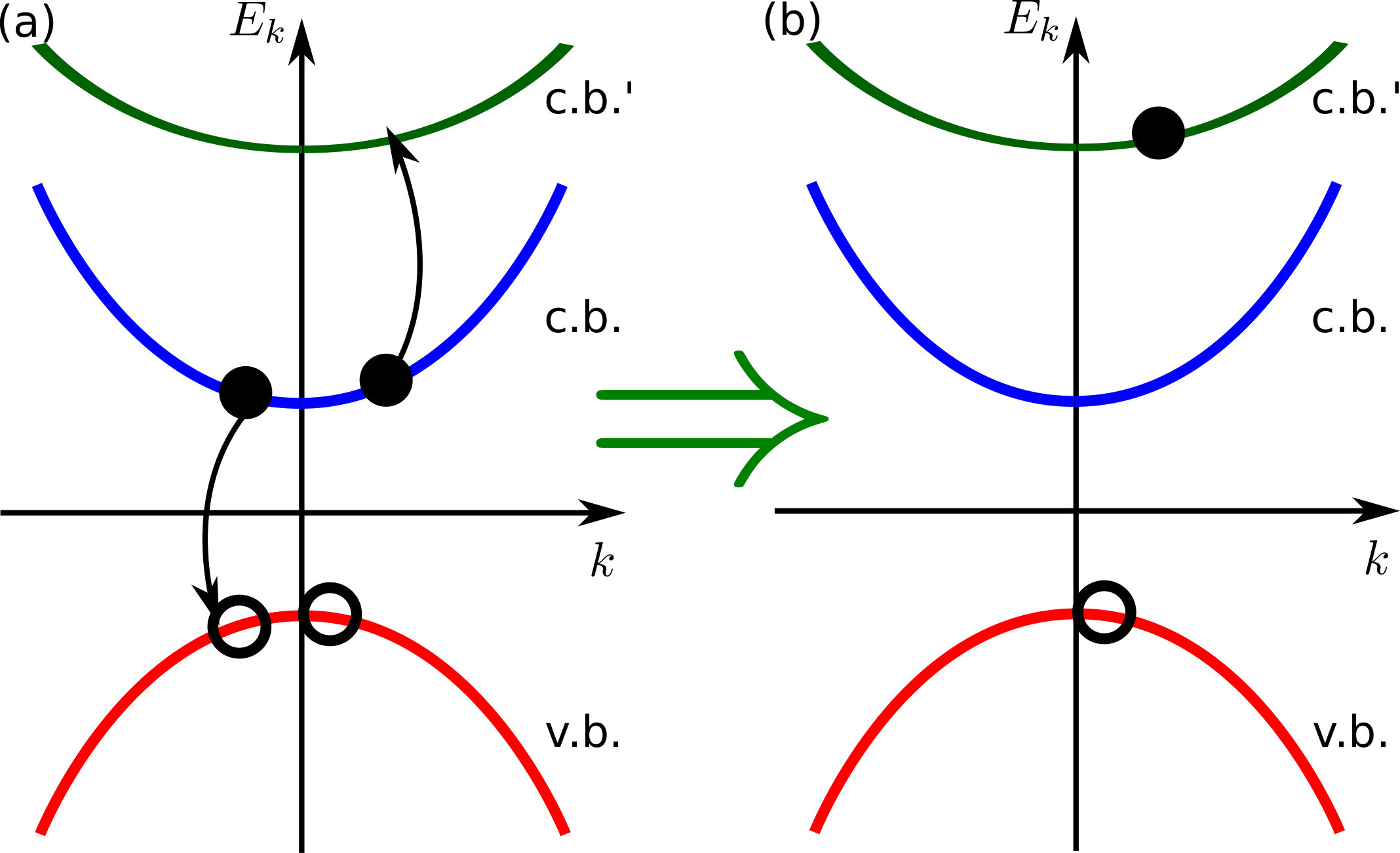 Figure 1
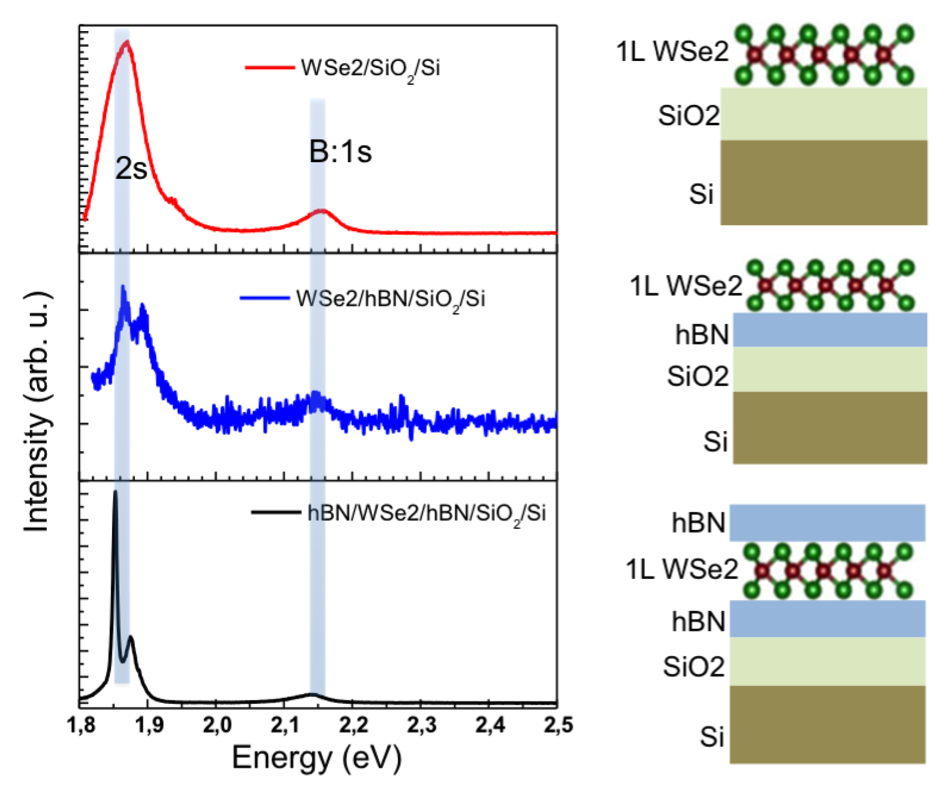 Figure 2
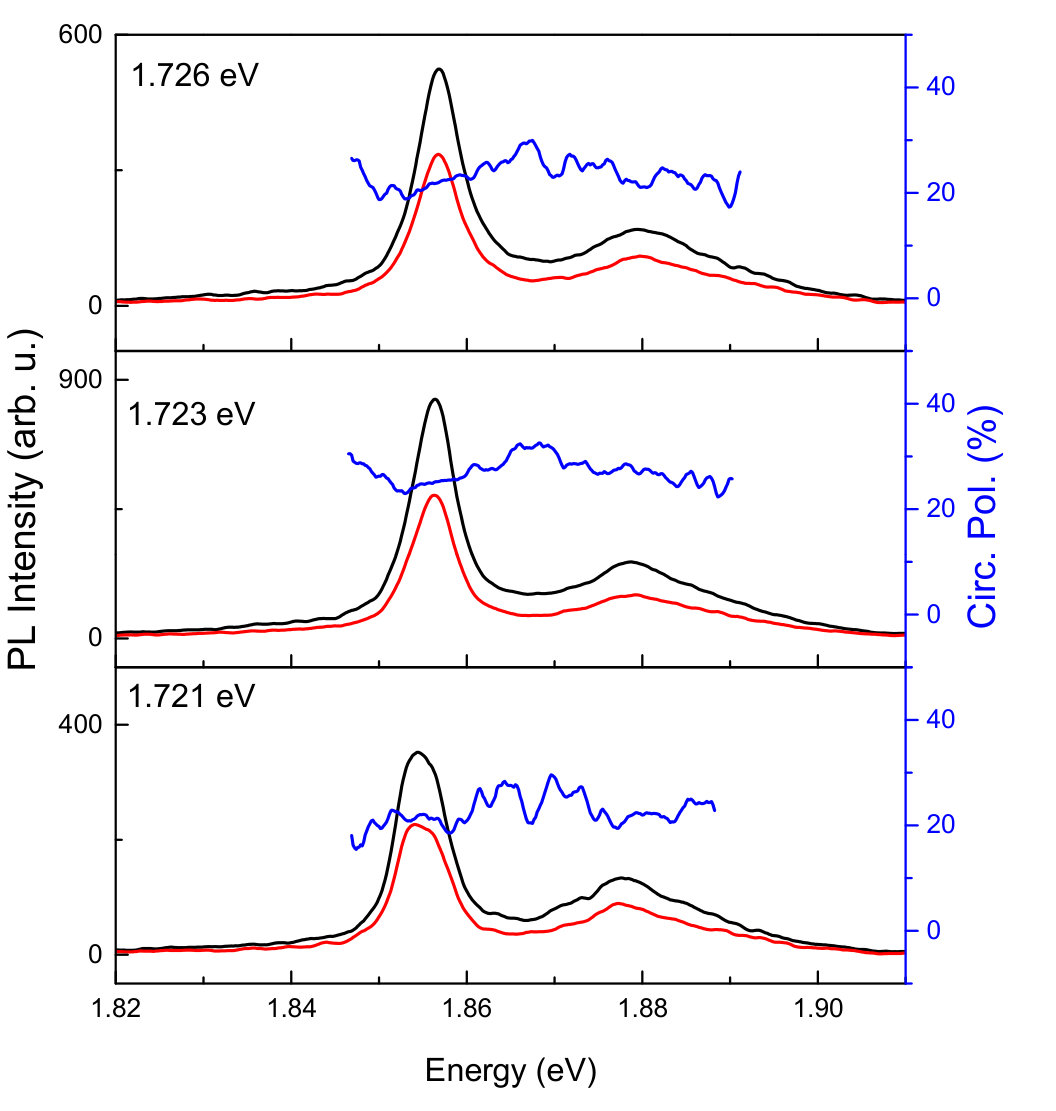 Figure 3
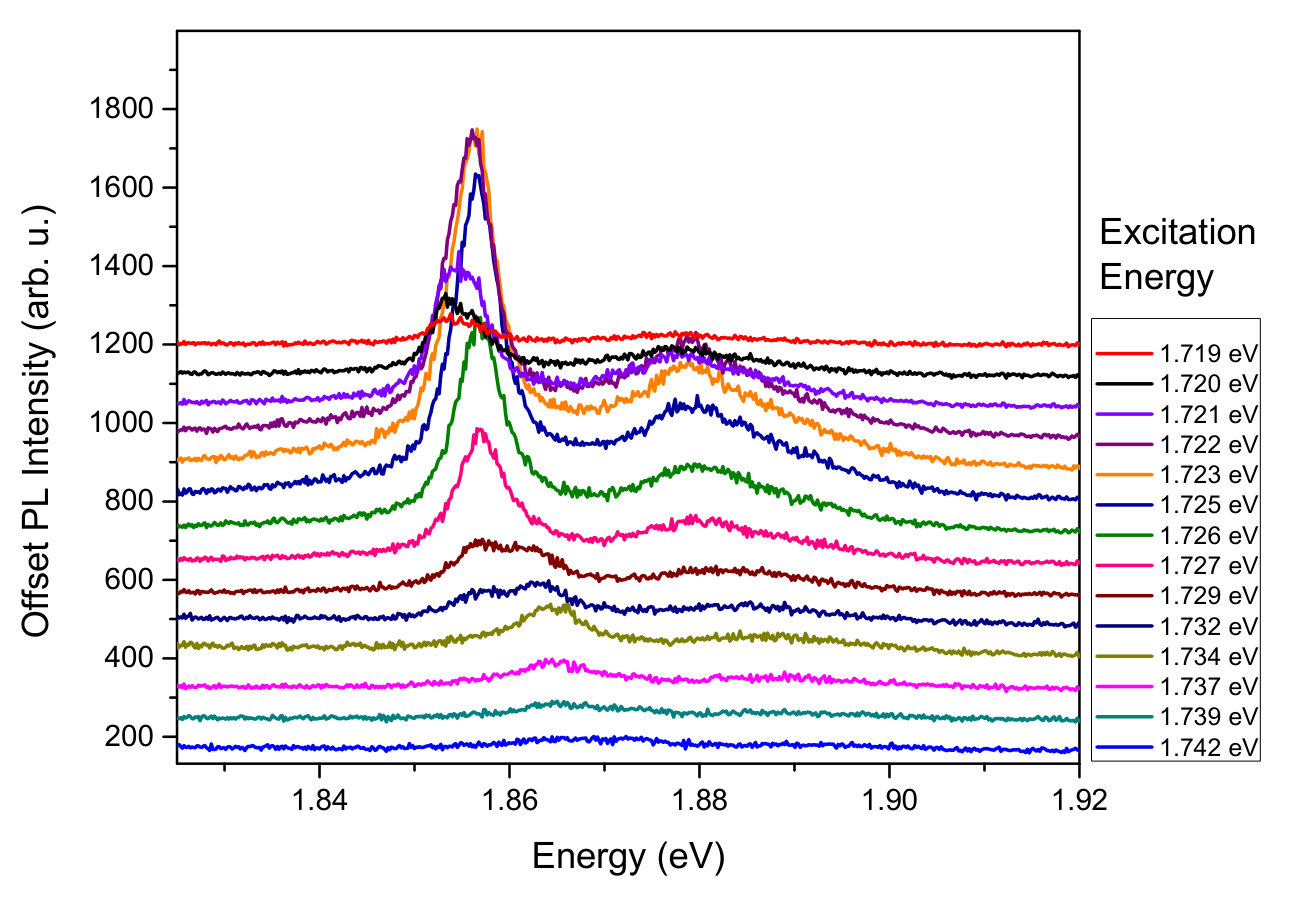 Figure 4
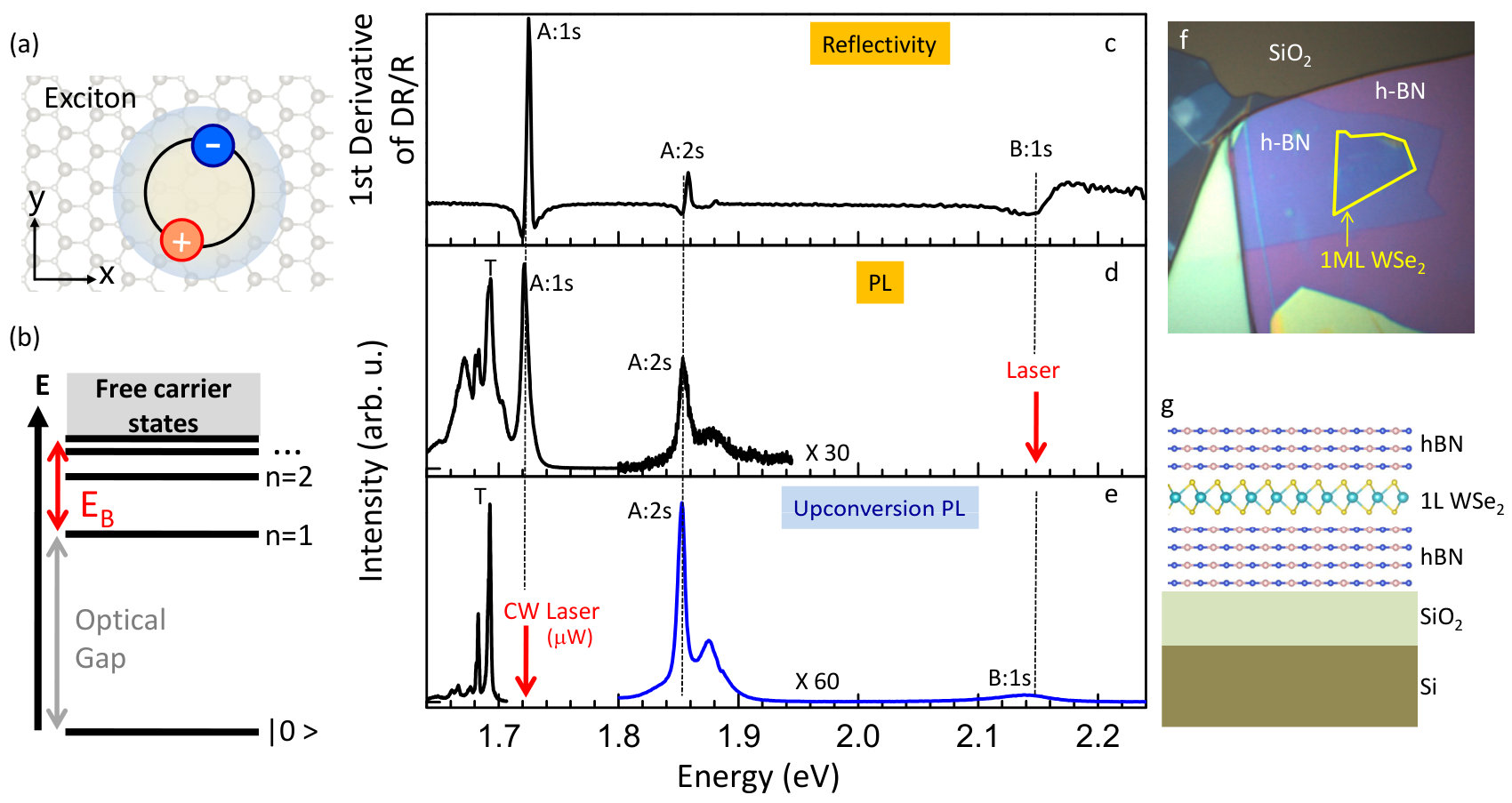 Figure 1
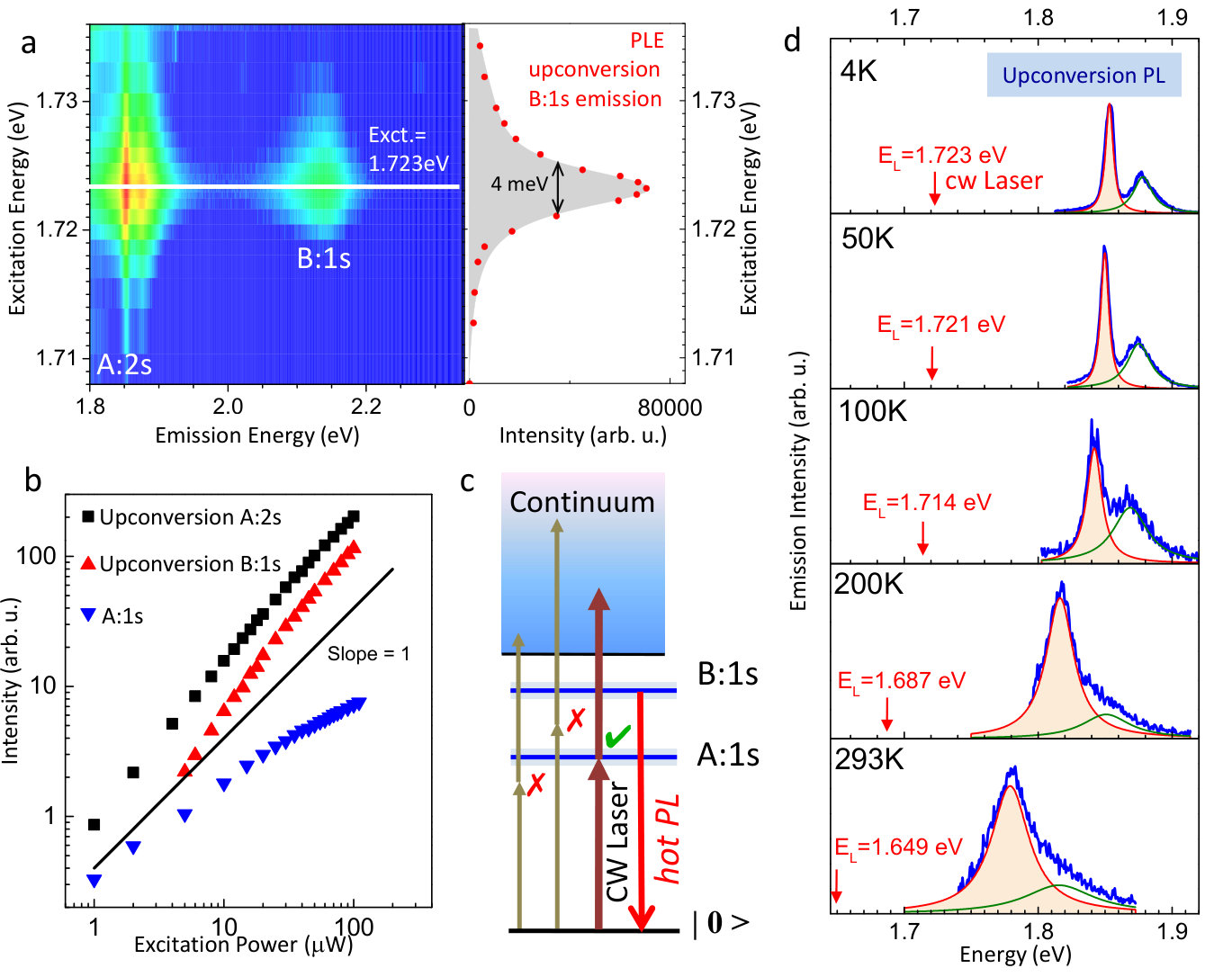 Figure 2
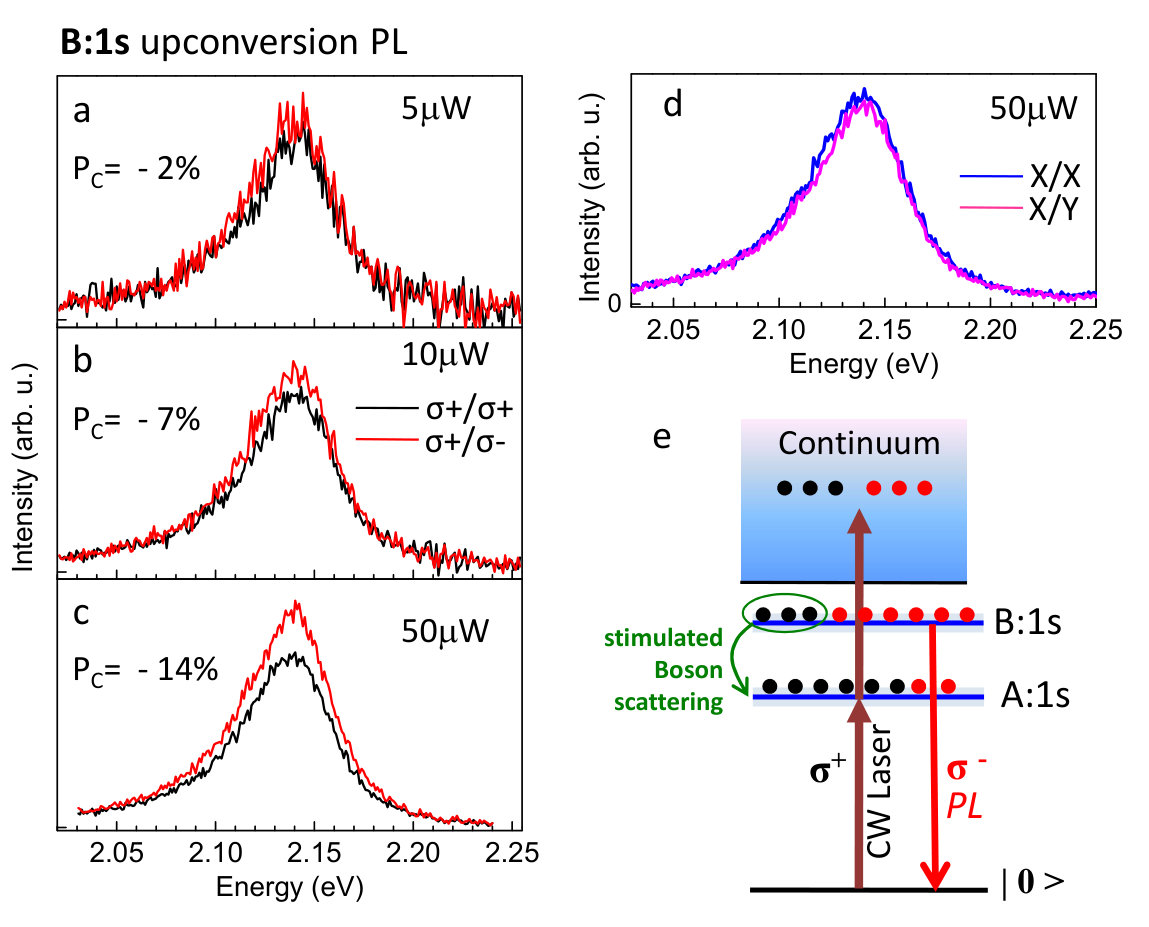 Figure 3
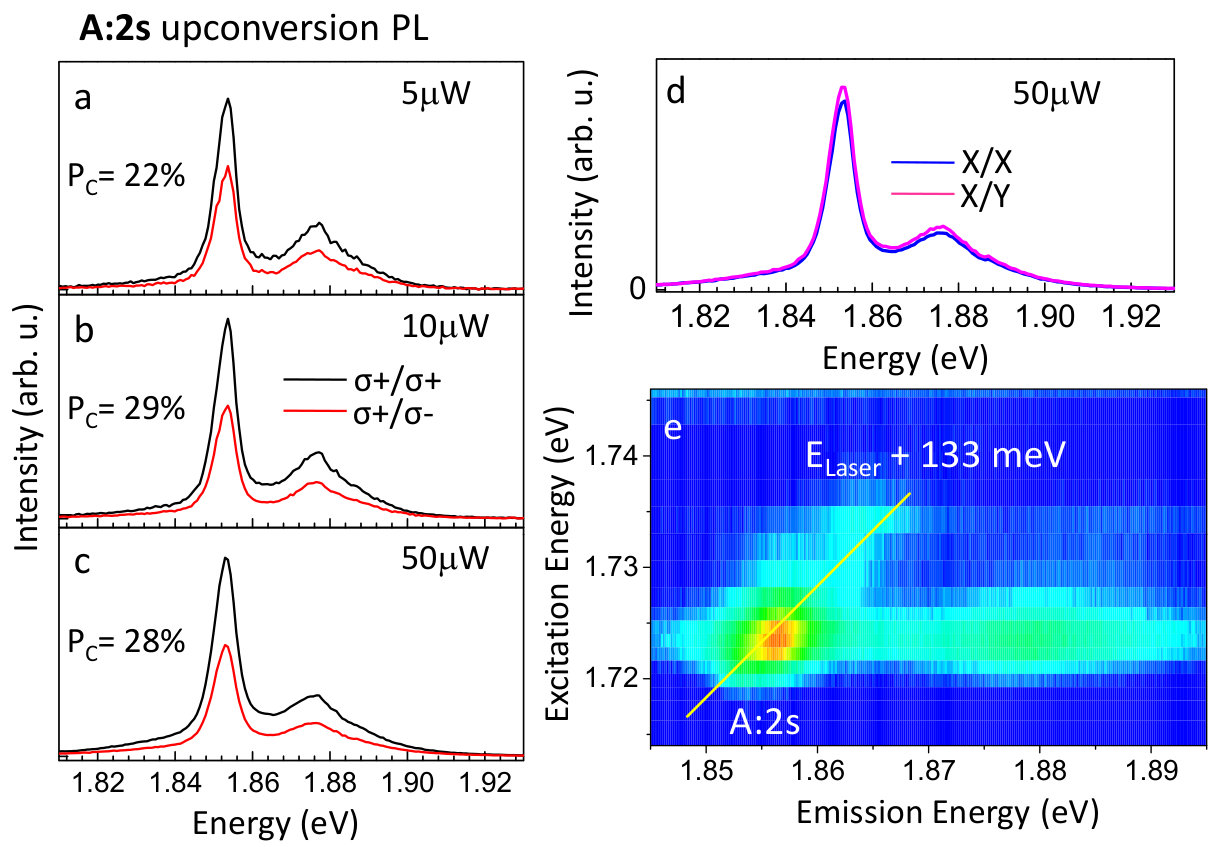 Figure 4
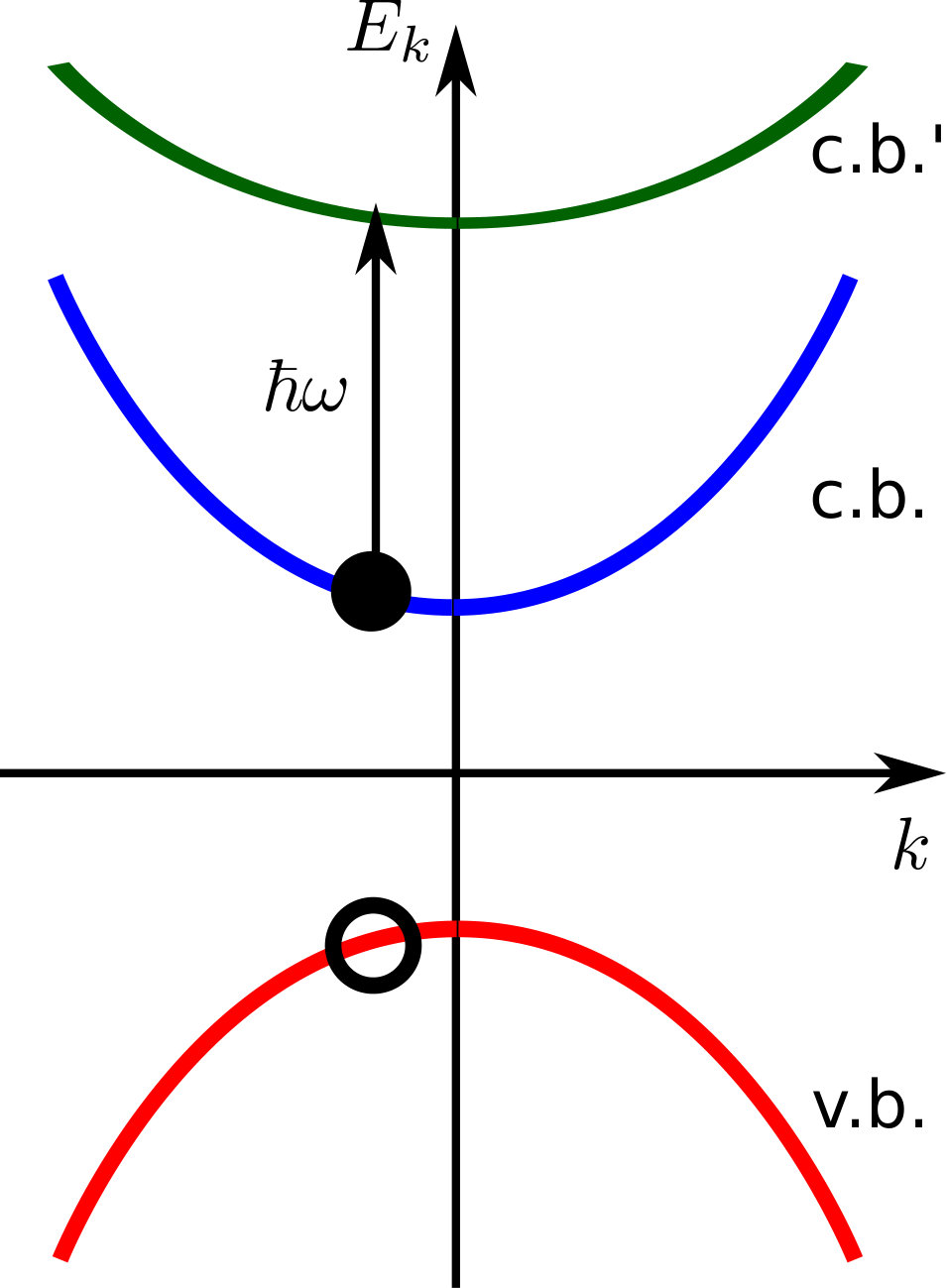 Figure 9
| Process | 2PA | RS-2PA | RS-2PA (sat) | Auger |
|---|---|---|---|---|
| Intermediate | virtual | real | real | |
| state | intermediate states saturate | |||
| Generation rate |
Peer Reviews
No public reviews on file for this paper yet. If you reviewed it on a platform where reviews are public (OpenReview, ICLR, NeurIPS, ICML), you can paste yours below so the community can read it here.
Videos
No videos yet. Explain this paper in a talk, walkthrough, or lecture? Add one.
Enabling valley selective exciton scattering in monolayer WSe2 through upconversion:
Supplementary Information
M. Manca1
M. M. Glazov2
C. Robert1
F. Cadiz1
T. Taniguchi3
K. Watanabe3
E. Courtade1
T. Amand1
P. Renucci1
X. Marie1
G. Wang1
B. Urbaszek1
1 Université de Toulouse, INSA-CNRS-UPS, LPCNO, 135 Av. Rangueil, 31077 Toulouse, France
2 Ioffe Institute, 194021 St. Petersburg, Russia
3 Advanced Materials Laboratory, National Institute for Materials Science, Tsukuba, Ibaraki 305-0044, Japan
EXPERIMENTS
In the main text upconversion and its polarization dependence is studied in detail for ML WSe2 encapsulated in hexagonal boron nitride (hBN) Taniguchi:2007a . This hBN / 1ML WSe2 / hBN has been chosen for its the spectrally sharp and intense exciton transitions, see Fig. S1 bottom panel. But the reported effects are not only observed in encapsulated samples. We also observe very strong upconversion when exciting the A: resonantly in standard WSe2 monolayers directly exfoliated onto SiO2, see Fig. S1 top panel and also in uncovered samples 1ML WSe2 / hBN (middle panel).
In addition to the A: hot PL emission from upconversion we also observe anti-Stokes Raman scattering. This can be seen in Fig. S2, where in addition to the A: a peak 133 meV above the laser energy is clearly visible in each spectrum, shifting as a function of the laser energy . This is the same data as in Fig. 4e in the main text.
In Fig. S3 we plot circularly co- and cross-polarized emission in black and red, respectively, of the A: upconversion PL. The circular polarization degree is plotted in blue. The polarization of the upconverted emission at the A:2s energy does not originate exclusively from the anti-stokes Raman process, the emission is globally polarized, not just at the Raman energy meV. The A: resonance is at 1.723 eV, so the top (bottom) panel shows excitation 3 meV above (2 meV below) resonance. The middle panel corresponds to resonant A: excitation.
MODELS
One-photon absorption. In linear absorption one absorbed photon generates one exciton. Hence, for resonant excitation of the A: state the exciton occupancy is directly proportional to the light intensity . In the linear regime the exciton generation rate can be conveniently presented as Seidel:1994a
[TABLE]
Here is the absorption coefficient of the TMD ML and is the reflection coefficient of the sample, is the photon energy. Due to nonlinear effects, e.g., absorption saturation, or nonlinear (Auger) recombination of excitons the exciton occupancy can be sublinear function of the incident light intensity. The exciton occupancy
[TABLE]
where is the lifetime of the A-exciton. The nonlinearities are either included in the intensity dependence of the absorption coefficient or in the exciton occupancy dependence of exciton lifetime, . The analysis of the particular origin of the sublinear behavior of vs. intensity seen in Fig. 2b of the main text is beyond the scope of the present work.
Two-photon absorption and Auger-like process. The observation of B: exciton emission at A: excitation is possible if any only if, in addition to the photogenerated exciton, another quantum: second exciton, photon or phonon is involved. Otherwise the energy conservation law is violated. Let us consider in more detail the processes without phonon involvement.
Standard two-photon absorption (2PA) involves a virtual intermediate state. In this case the generation rate of the excitons in the highly excited states denoted as in Fig. 2c of the main text (energy equals to , i.e. twice the laser energy) is proportional to the square of incident radiation intensity ivchenko:2005a ; PhysRevB.92.085413 ; 2016arXiv161006780G
[TABLE]
In the studied situation the single photon energy equals to the A:-exciton energy. Hence, the intermediate state for the two-photon process can be real. The two-photon excitation via real state (RS-2PA) can be viewed as a two-step process: creation of the A-exciton at the first step and transition of the A-exciton to the excited state via the second photon absorption. On the level of free electron-hole pairs the process is illustrated in Fig. S4. In this process the generation rate of the excited excitons takes the form
[TABLE]
This dependence is weaker than due to possible saturation of linear absorption. Particularly, if intermediate states saturate .
Moreover, two photons can be absorbed independently resulting in formation of two A:-excitons as schematically shown in Fig. S5a. The Coulomb interaction between the charge carriers forming the excitons results in the redistribution of the excitation in the - and energy-spaces. Particularly, the Auger-like process is possible. In this scenario due to the Coulomb scattering one of the interacting electrons goes to the unoccupied state in the valence band, while another one takes the released energy and gets promoted to the excited energy band abakumov_perel_yassievich . As a result, the excited state of the electron-hole pair is formed, Fig. S5b. The strong Coulomb interaction between the electron and the hole results in the spread of excitonic functions in the -space and relaxes the momentum conservation law. For the Auger-like process the generation rate of excitons in the excited states is quadratic in the occupancy of A: excitons
[TABLE]
Table 1 summarizes the results of the analysis performed above on the dependence of the exciton generation rate on the incident laser intensity. We assume that the relaxation from exciton states towards A:- and B:-excitons is linear,i.e., its rate is proportional to the first power of the states occupancy. Therefore, the upconversion intensity is proportional to the generation rate of the excited excitons, . The comparison of the experimentally observed upconversion PL intensity as a function of the laser power, Fig. 2b of the main text, with the suggested mechanisms shows that the Auger-like process is the plausible source of the upconversion. The 2PA via real states is also possible if the substantial saturation of the intermediate states is assumed. However, the rise of the temperature up to the room temperature keeps upconversion efficient, Fig. 2d of the main text. This rules out trap states, which usually play a role of intermediate states for RS-2PA in the quantum well structures Hellmann:1995a , as the origin of the intermediate states here.
Bose stimulation in the relaxation process. In order to illustrate the build-up of the cross-circular polarization we present the rate equation model accounting for the valley-independent generation of B-excitons via relaxation from excited states and valley-dependent stimulated scattering towards A: excitons. To that end we introduce the generation rate of B-excitons, which is the same in both and polarizations, and present the rate equations for the densities of the -polarized B:-excitons in the form
[TABLE]
where are the occupancies of polarized A:-excitons, is the lifetime of -excitons irrelated with relaxation towards the A-states, describes the rate of the relaxation to A:-excitonic state. This description is simplified as we neglect spin/valley relaxation of excitons and, moreover, the exciton relaxation from B- to A-state can be with multiple steps, in which case a cascaded process may be relevant Liew:2013a . The circular polarization degree of -excitons can be expressed, in the limit as
[TABLE]
where is the circular polarization of the -excitons, is the total number of -excitons. Clearly, the polarization of the upconverted B:-exciton emission is reversed as compared with and it is the larger the more excitons are created by the laser, i.e. the larger . For the incident intensity W/m2 and A-exciton lifetime ps we have, in accordance with Eq. (S1) the A-exciton density cm*-2*. To obtain an estimate of the occupancy of a single quantum state we present
[TABLE]
where with being free electron mass, is the exciton effective mass and is the energy width of exciton distribution. The right hand side of Eq. (S7) plays a role of degeneracy parameter. For fully thermalized excitons meV, . However, the thermalization does not take place under resonant excitation conditions and low temperatures because the exciton-acoustic phonon scattering is relatively weak in TMD materials and strongly exceed the radiative lifetime of excitons PhysRevB.94.205423 . The lowest limit for comes from the laser linewidth, which is extremely narrow in our experiments with cw excitation. Taking meV and (evaluation of these quantities is beyond the scope of the present paper) and % we have for in the order of magnitude agreement with experiment.
The reference list from the paper itself. Each links out to its DOI / PubMed record.
- 1(1) Taniguchi, T. & Watanabe, K. Synthesis of high-purity boron nitride single crystals under high pressure by using ba-bn solvent. Journal of Crystal Growth 303 , 525 – 529 (2007).
- 2(2) Seidel, W., Titkov, A., André, J. P., Voisin, P. & Voos, M. High-efficiency energy up-conversion by an ”auger fountain” at an inp-aiinas type-ii heterojunction. Phys. Rev. Lett. 73 , 2356–2359 (1994).
- 3(3) Ivchenko, E. L. Optical spectroscopy of semiconductor nanostructures (Alpha Science, Harrow UK, 2005).
- 4(4) Berkelbach, T. C., Hybertsen, M. S. & Reichman, D. R. Bright and dark singlet excitons via linear and two-photon spectroscopy in monolayer transition-metal dichalcogenides. Phys. Rev. B 92 , 085413 (2015).
- 5(5) Glazov, M. M. et al. Intrinsic exciton states mixing and non-linear optical properties in transition metal dichalcogenide monolayers. Ar Xiv e-prints (2016). eprint 1610.06780.
- 6(6) Abakumov, V. N., Perel, V. I. & Yassievich, I. N. Nonradiative recombination in semiconductors (North Holland, Amsterdam, 1991).
- 7(7) Hellmann, R. et al. Low-temperature anti-stokes luminescence mediated by disorder in semiconductor quantum-well structures. Phys. Rev. B 51 , 18053–18056 (1995).
- 8(8) Liew, T. C. H. et al. Proposal for a bosonic cascade laser. Phys. Rev. Lett. 110 , 047402 (2013).