On the Dynamics of Supermassive Black Holes in Gas-Rich, Star-Forming Galaxies: the Case for Nuclear Star Cluster Coevolution
Pawel Biernacki, Romain Teyssier, Andreas Bleuler

TL;DR
This paper presents a new simulation model for SMBH evolution in gas-rich galaxies, emphasizing the role of nuclear star clusters and feedback processes in SMBH growth and dynamics.
Contribution
It introduces an improved SMBH formation model in RAMSES, incorporating SMBH-NSC co-evolution and feedback effects to better understand SMBH growth in high-redshift galaxies.
Findings
SN feedback prevents bulge formation and reduces SMBH accretion.
AGN heating balances gas cooling, setting SMBH mass limits.
SMBH/NSC co-evolution is key for SMBH growth in early galaxies.
Abstract
We introduce a new model for the formation and evolution of supermassive black holes (SMBHs) in the RAMSES code using sink particles, improving over previous work the treatment of gas accretion and dynamical evolution. This new model is tested against a suite of high-resolution simulations of an isolated, gas-rich, cooling halo. We study the effect of various feedback models on the SMBH growth and its dynamics within the galaxy. In runs without any feedback, the SMBH is trapped within a massive bulge and is therefore able to grow quickly, but only if the seed mass is chosen larger than the minimum Jeans mass resolved by the simulation. We demonstrate that, in the absence of supernovae (SN) feedback, the maximum SMBH mass is reached when Active Galactic Nucleus (AGN) heating balances gas cooling in the nuclear region. When our efficient SN feedback is included, it completely prevents…
Click any figure to enlarge with its caption.
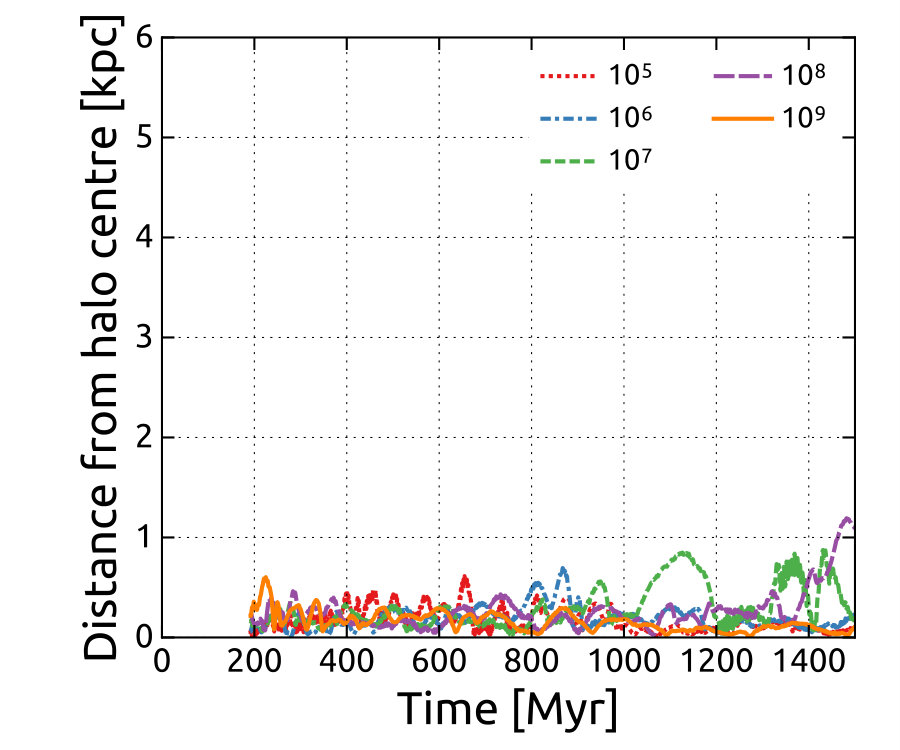 Figure 1
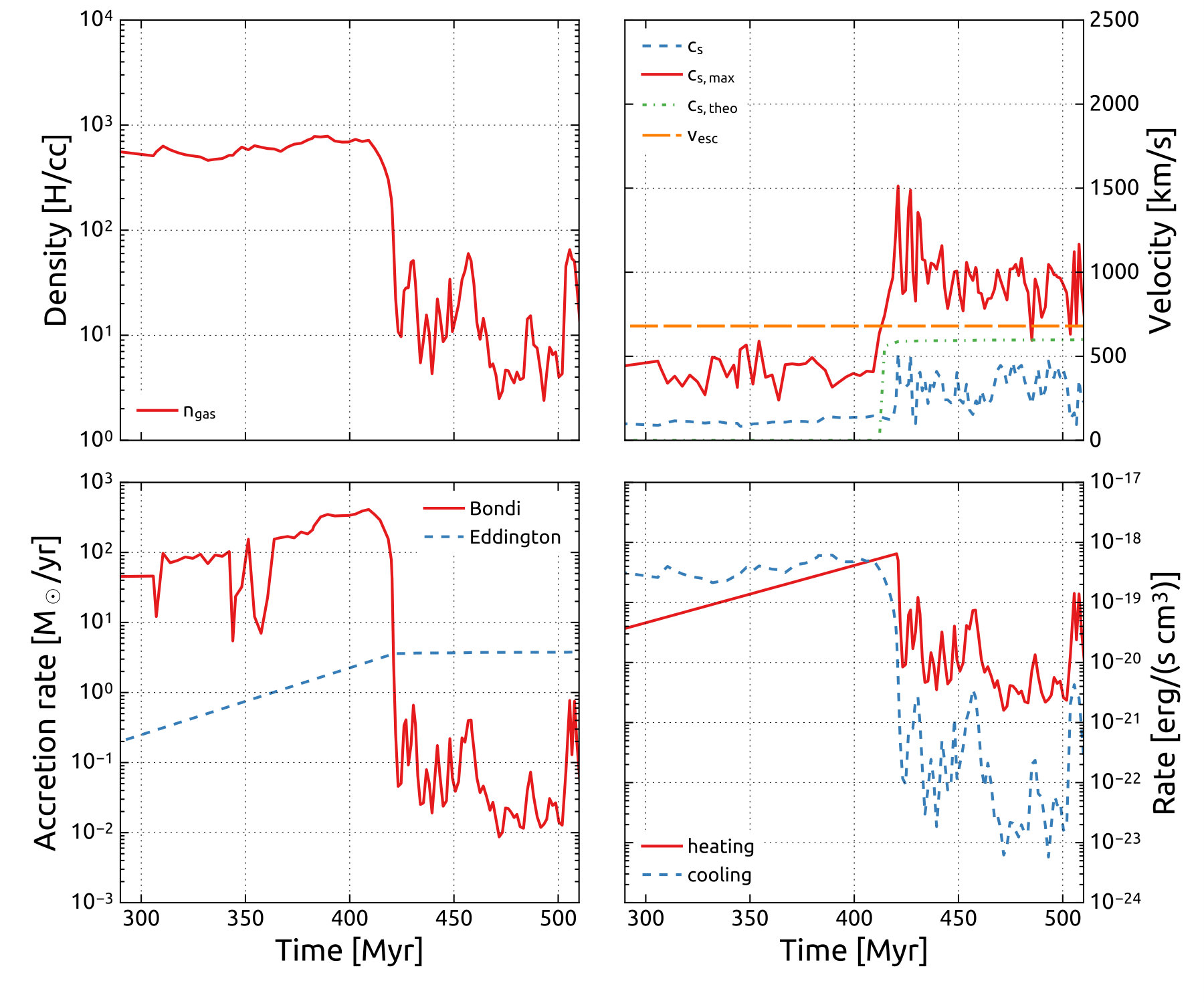 Figure 2
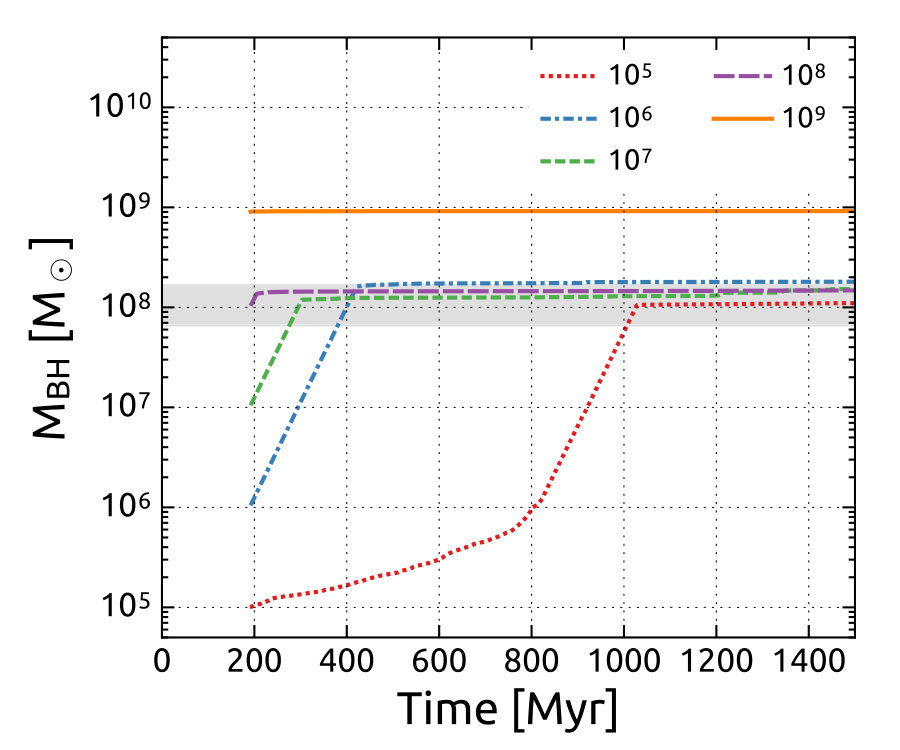 Figure 3
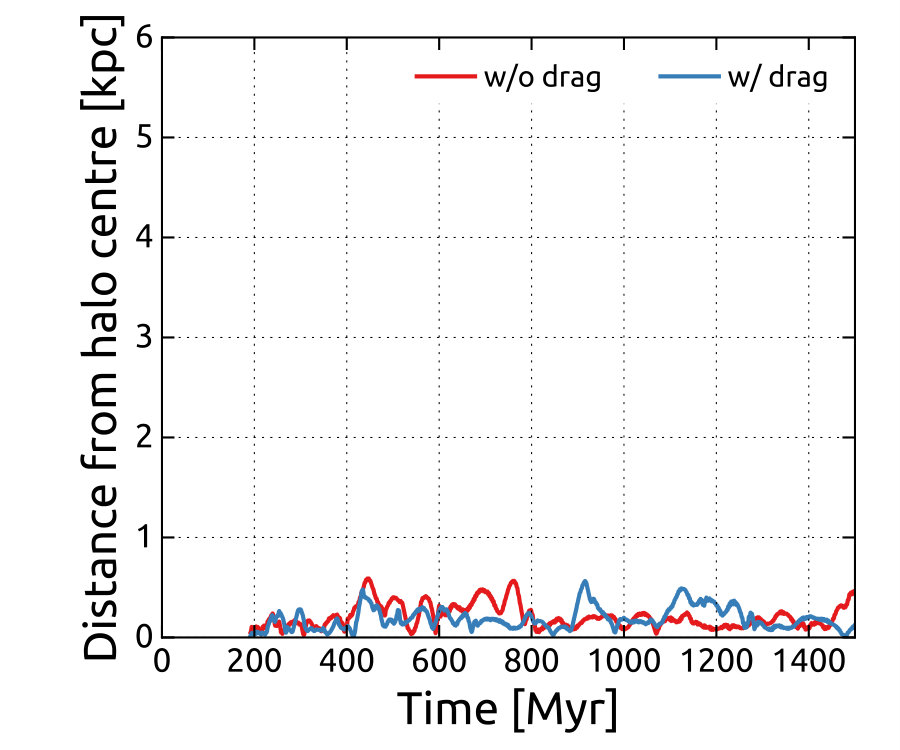 Figure 4
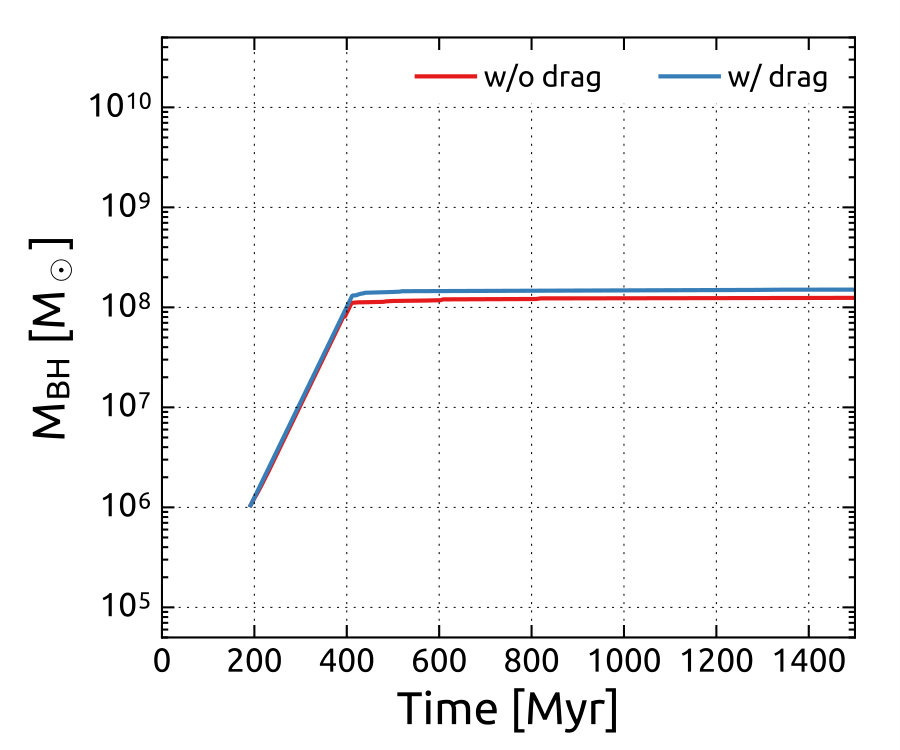 Figure 5
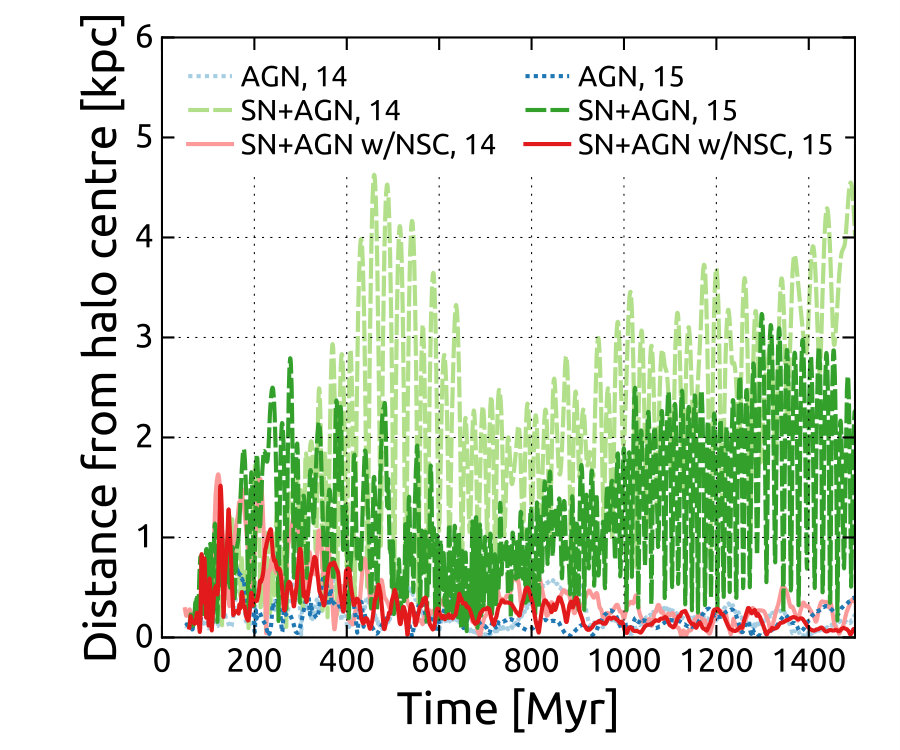 Figure 6
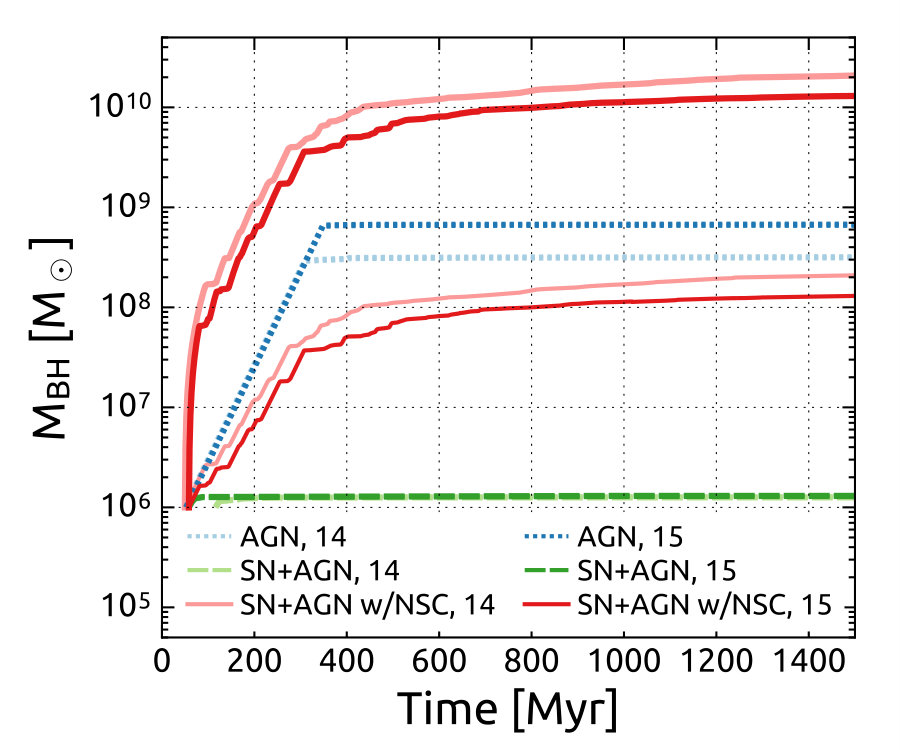 Figure 7
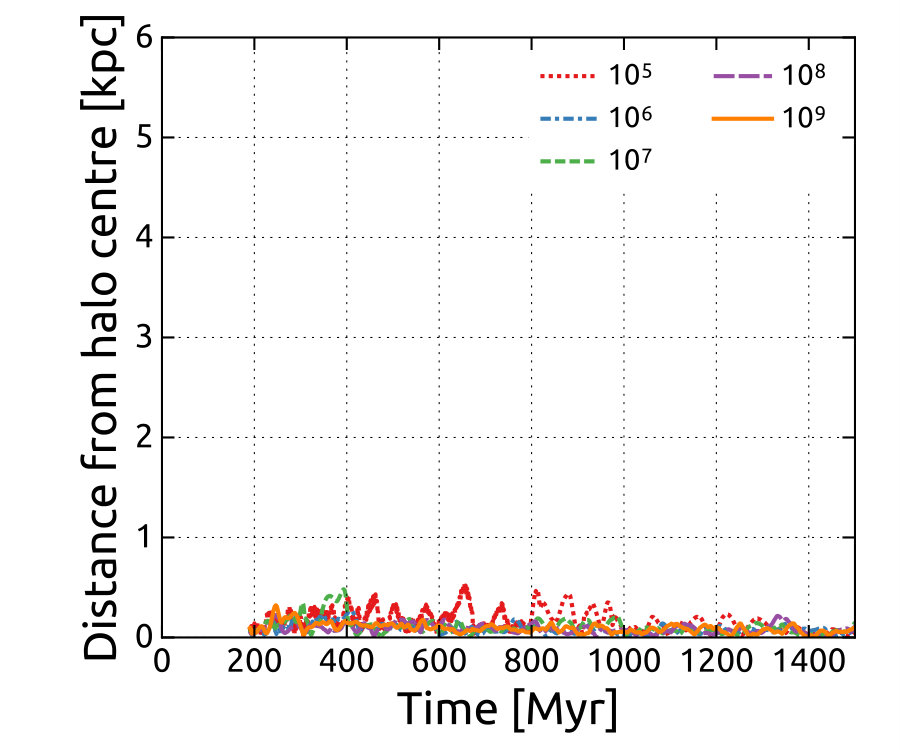 Figure 8
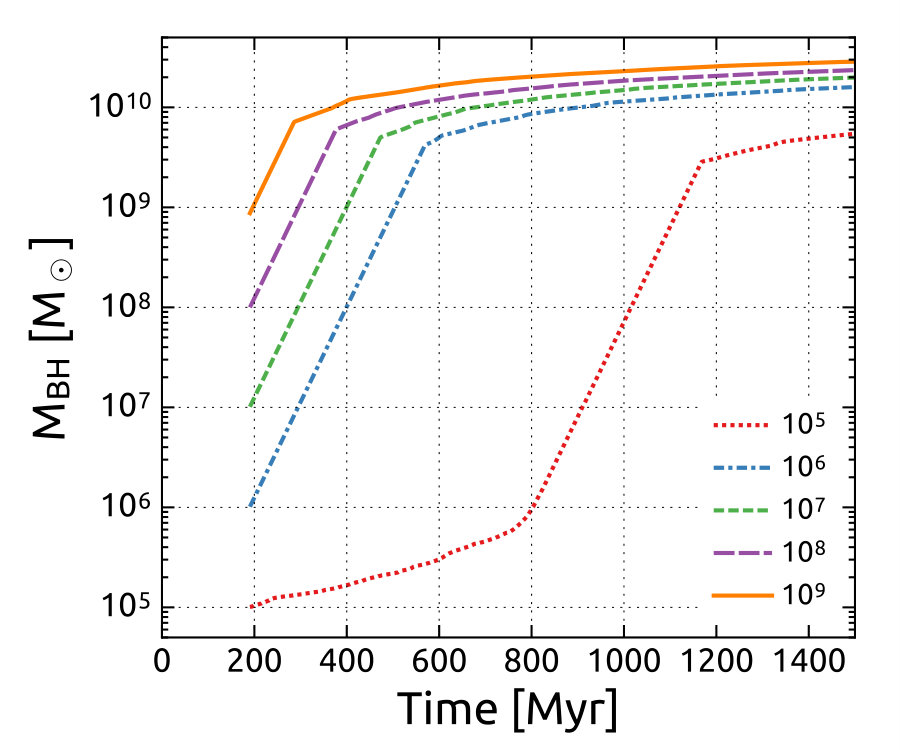 Figure 9
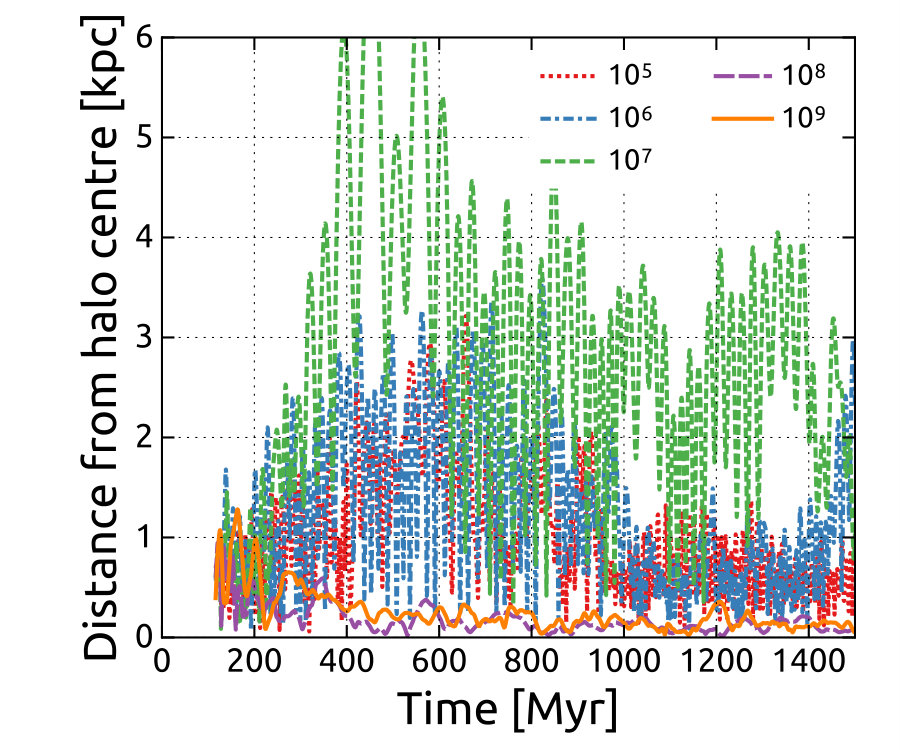 Figure 10
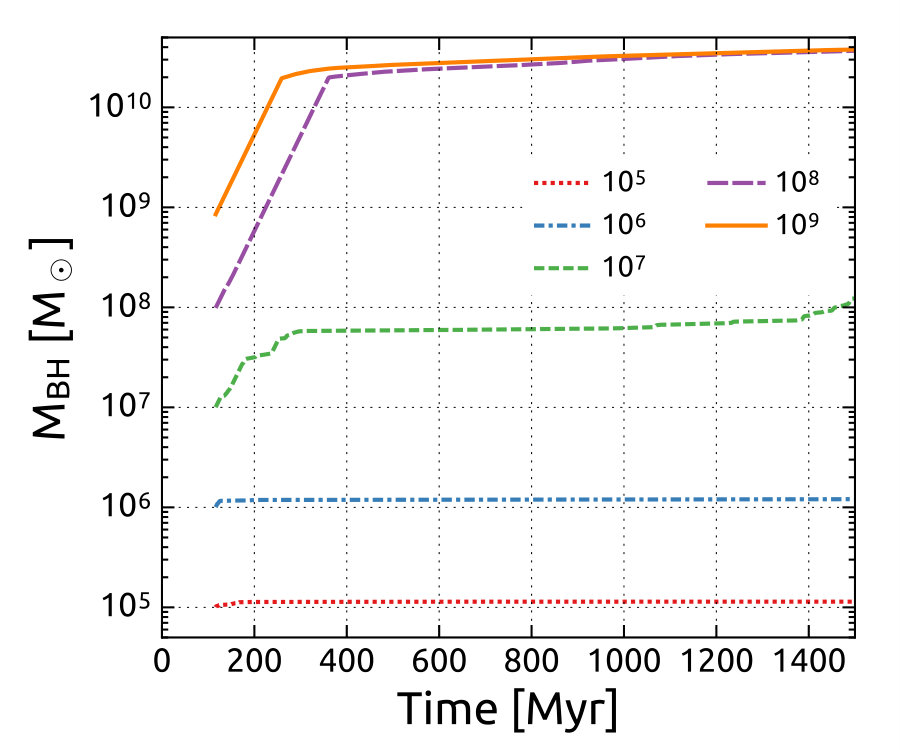 Figure 11
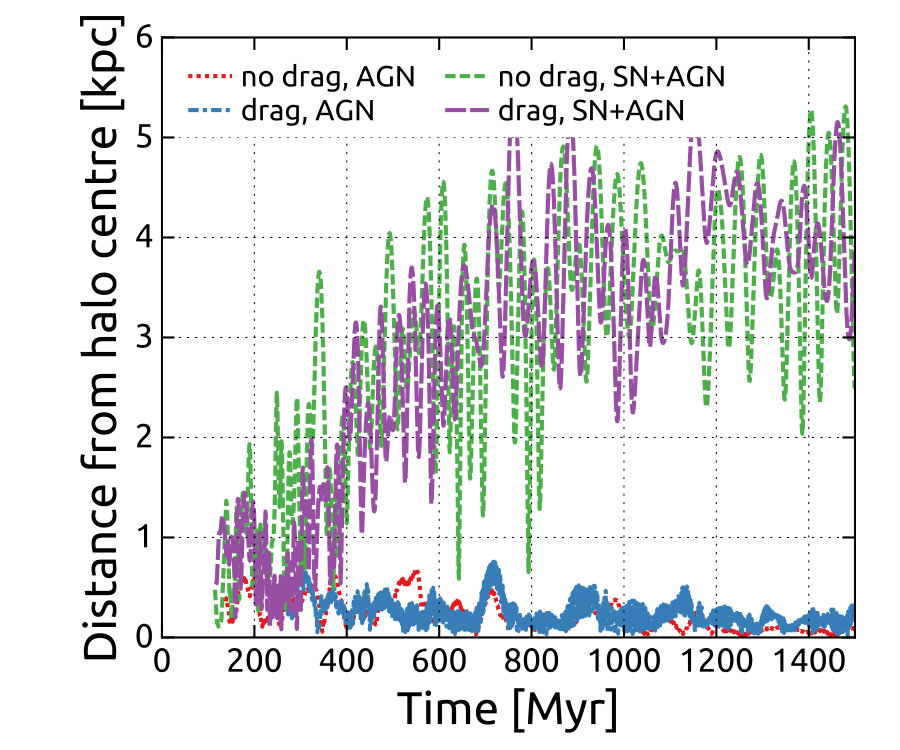 Figure 12
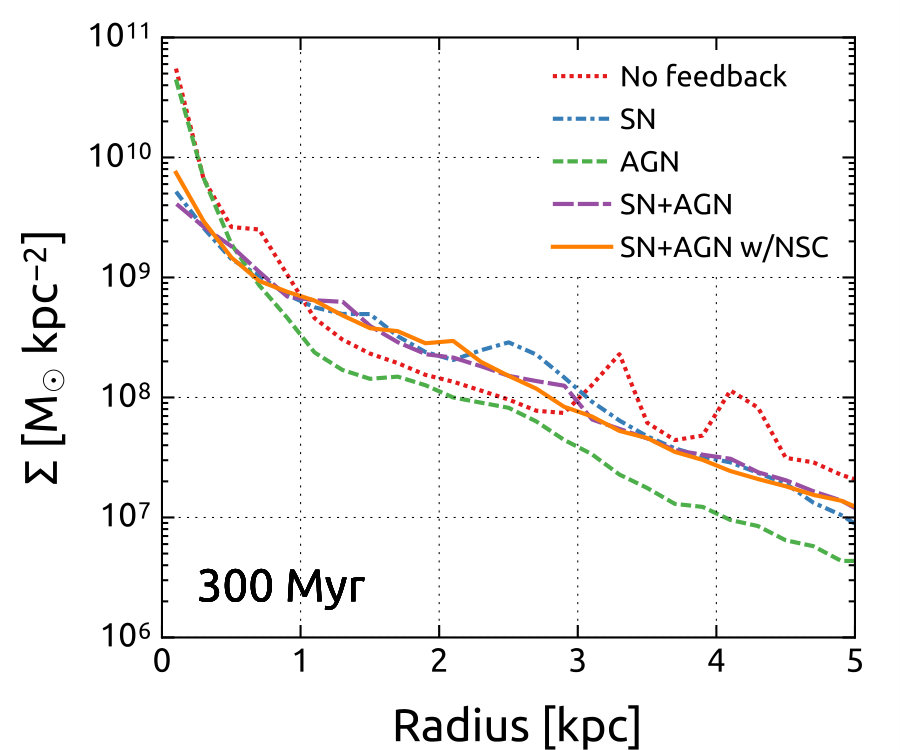 Figure 13
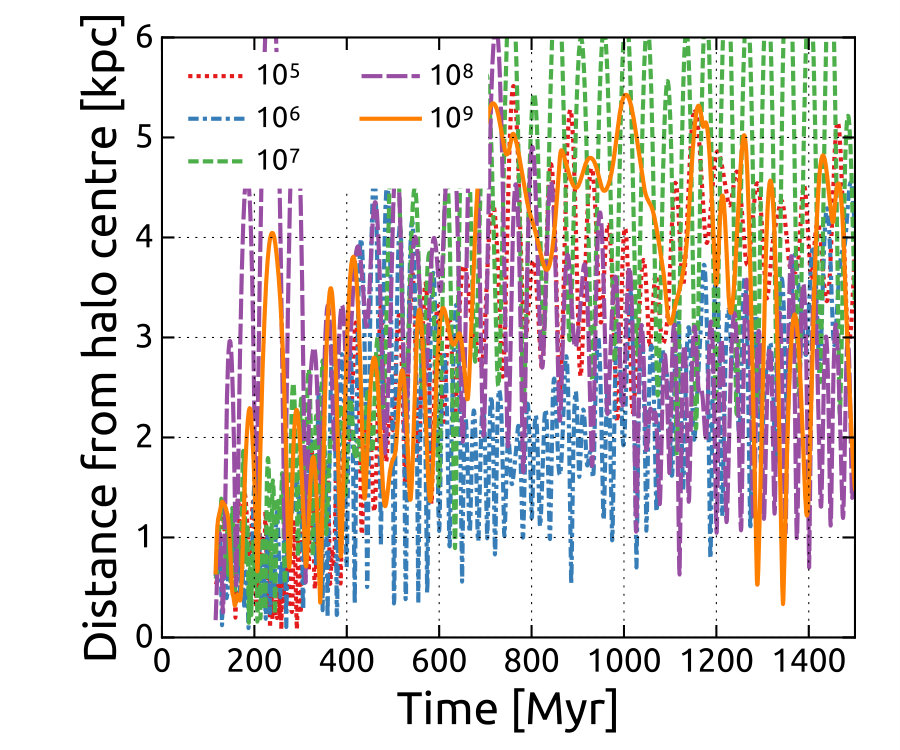 Figure 14
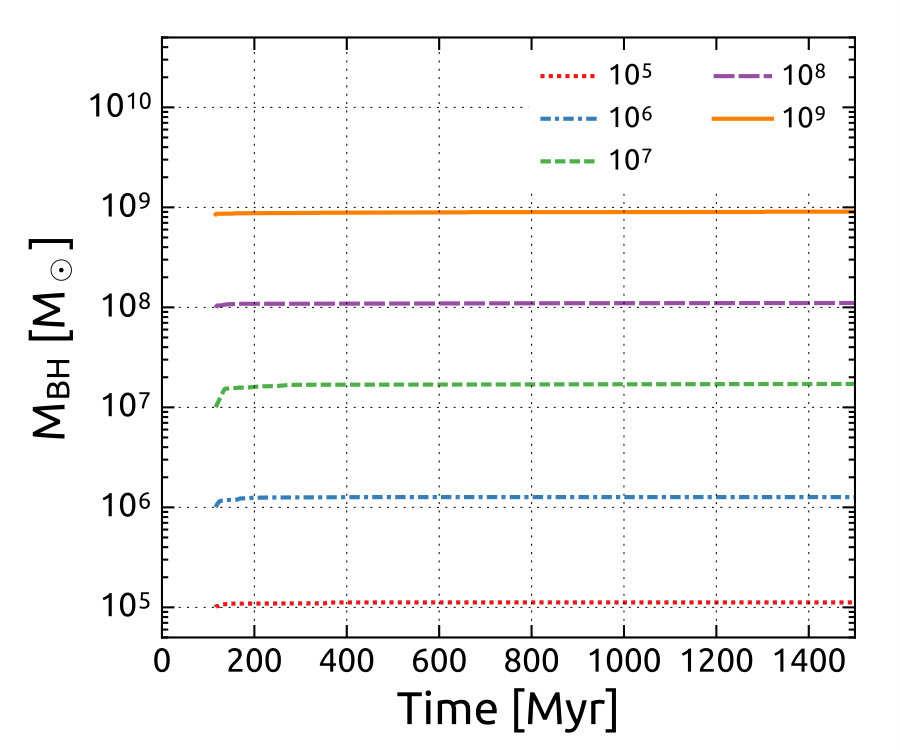 Figure 15
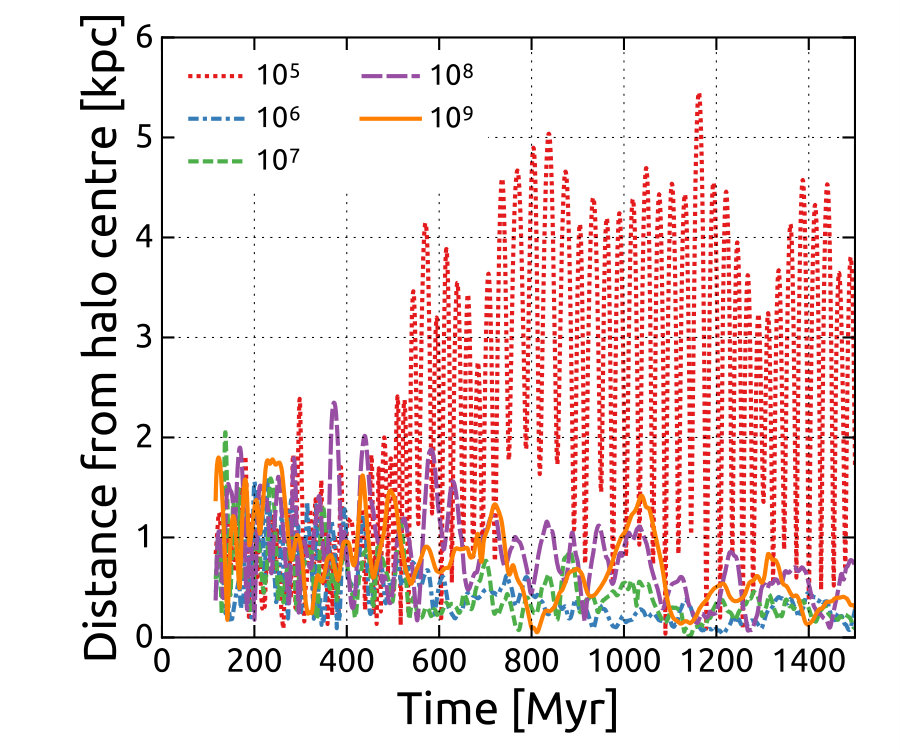 Figure 16
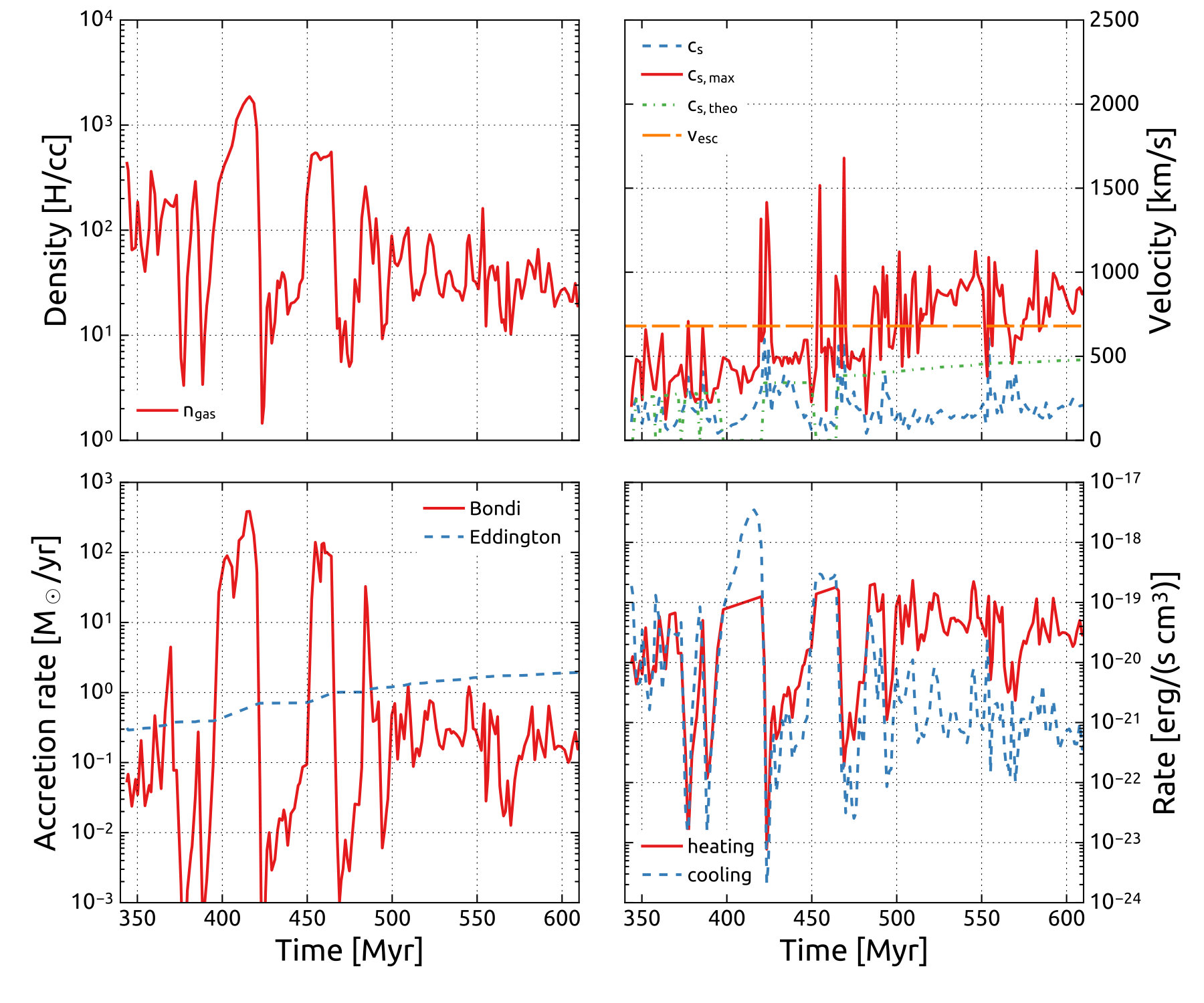 Figure 17
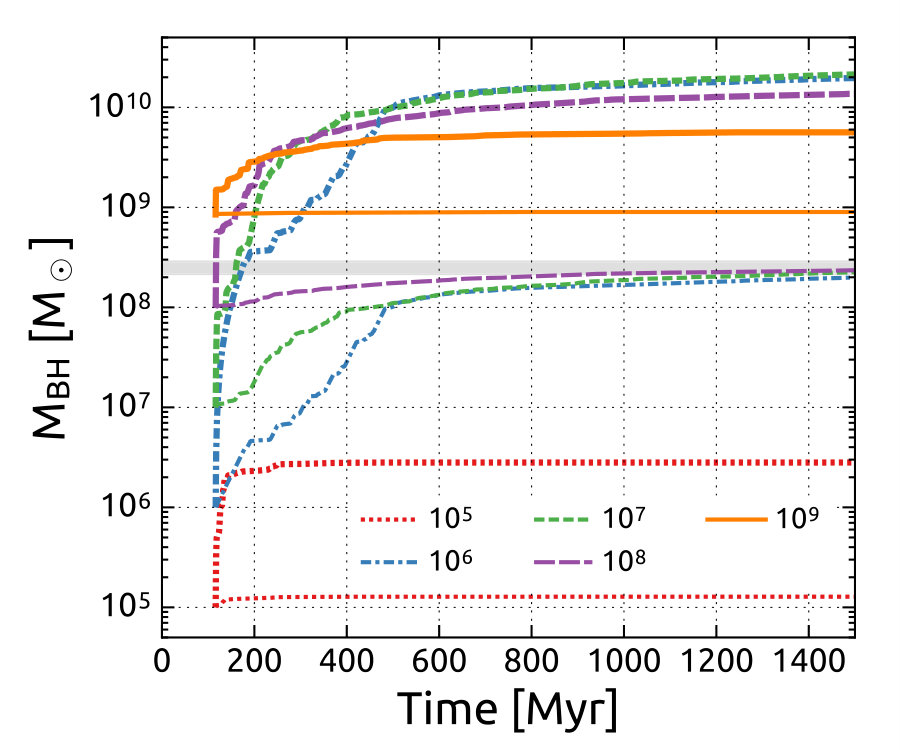 Figure 18
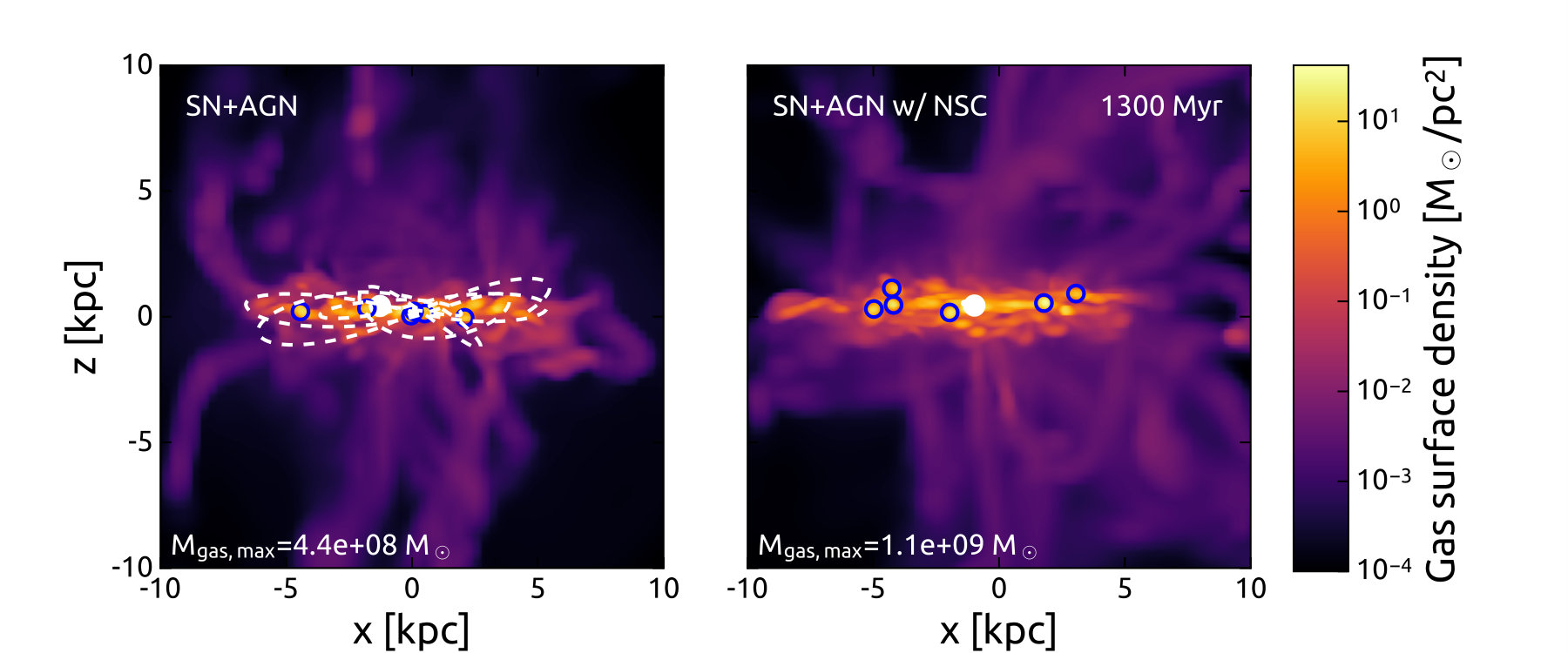 Figure 19
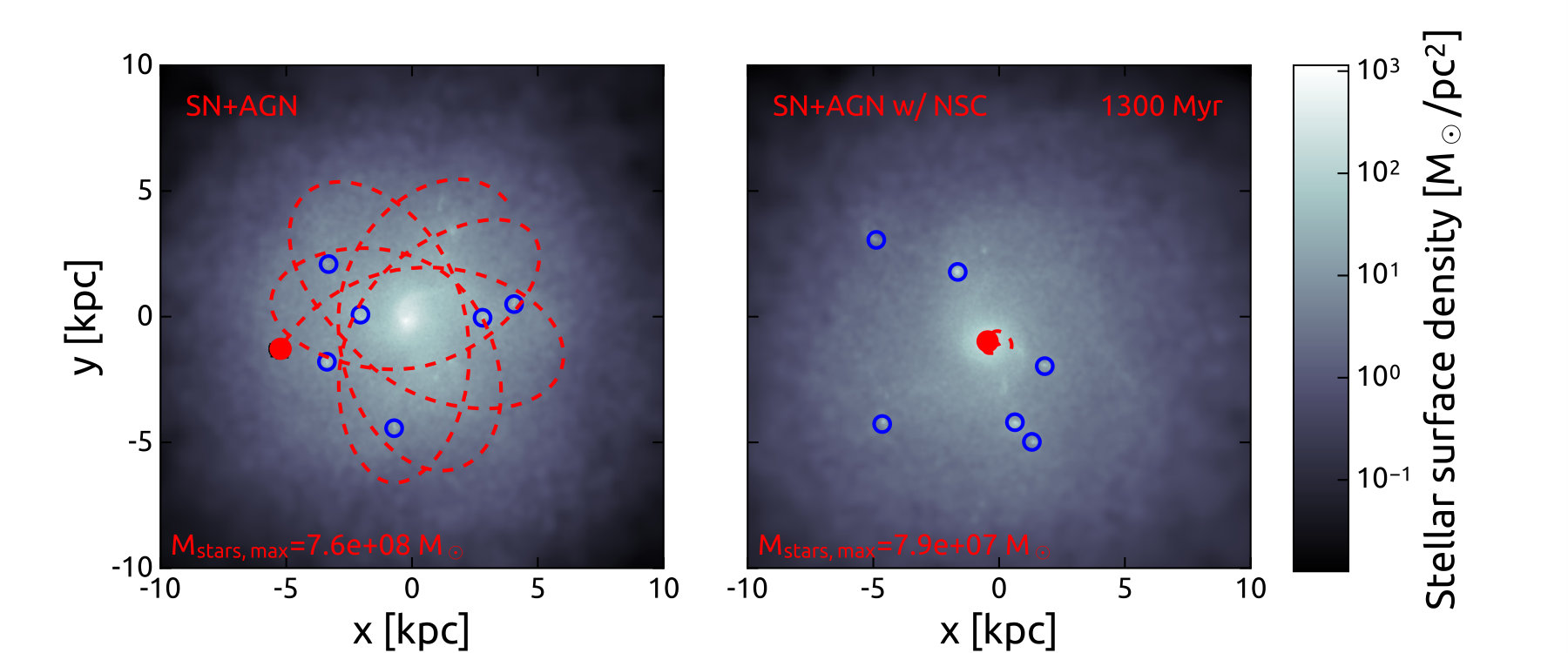 Figure 20
Peer Reviews
No public reviews on file for this paper yet. If you reviewed it on a platform where reviews are public (OpenReview, ICLR, NeurIPS, ICML), you can paste yours below so the community can read it here.
Videos
No videos yet. Explain this paper in a talk, walkthrough, or lecture? Add one.