Cooperative elastic fluctuations provide tuning of the metal-insulator transition
G. G. Guzm\'an-Verri, R. T. Brierley, P. B. Littlewood

TL;DR
This paper demonstrates that cooperative elastic fluctuations significantly influence the metal-insulator transition in transition metal oxides, providing a new perspective on controlling these phase changes through elastic effects.
Contribution
It introduces a statistical mechanical model showing how elastic strain fluctuations affect the MIT, explaining experimental data and emphasizing their importance in transition control.
Findings
Elastic fluctuations have large effects on MIT temperature.
The model reproduces experimental dependence of transition on cation radius.
Elastic couplings are broadly relevant to MITs involving lattice symmetry changes.
Abstract
Metal to insulator transitions (MITs) driven by strong electronic correlations are common in condensed matter systems, and are associated with some of the most remarkable collective phenomena in solids, including superconductivity and magnetism. Tuning and control of the transition holds the promise of novel, low power, ultrafast electronics, but the relative roles of doping, chemistry, elastic strain and other applied fields has made systematic understanding difficult to obtain. Here we point out that existing data on tuning of the MIT in perovskite transition metal oxides through ionic size effects provides evidence of systematic and large effects on the phase transition due to dynamical fluctuations of the elastic strain, which have been usually neglected. This is illustrated by a simple yet quantitative statistical mechanical calculation in a model that incorporates cooperative…
Click any figure to enlarge with its caption.
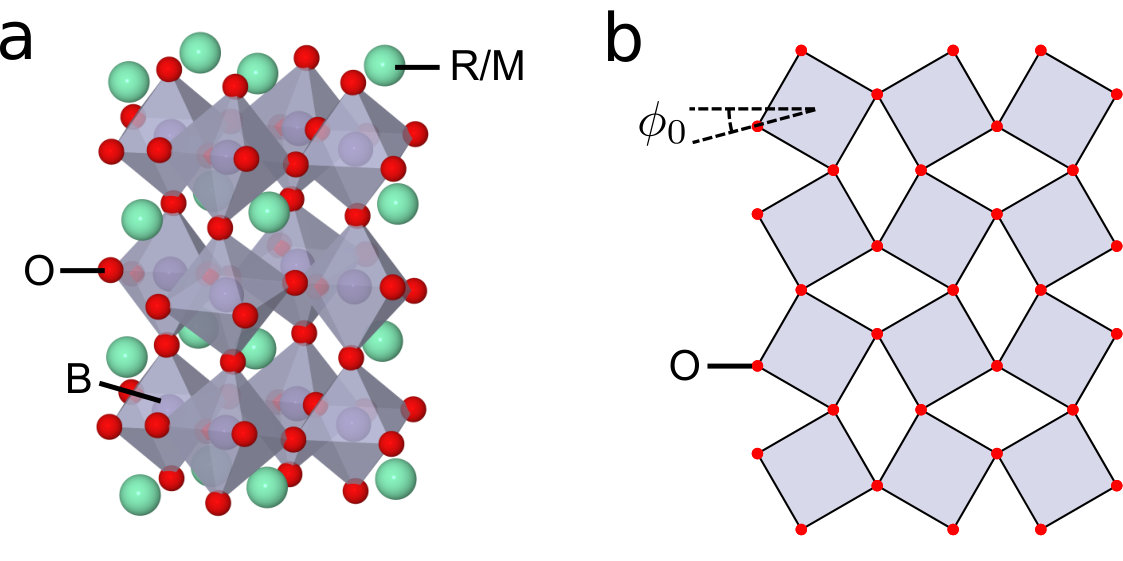 Figure 1
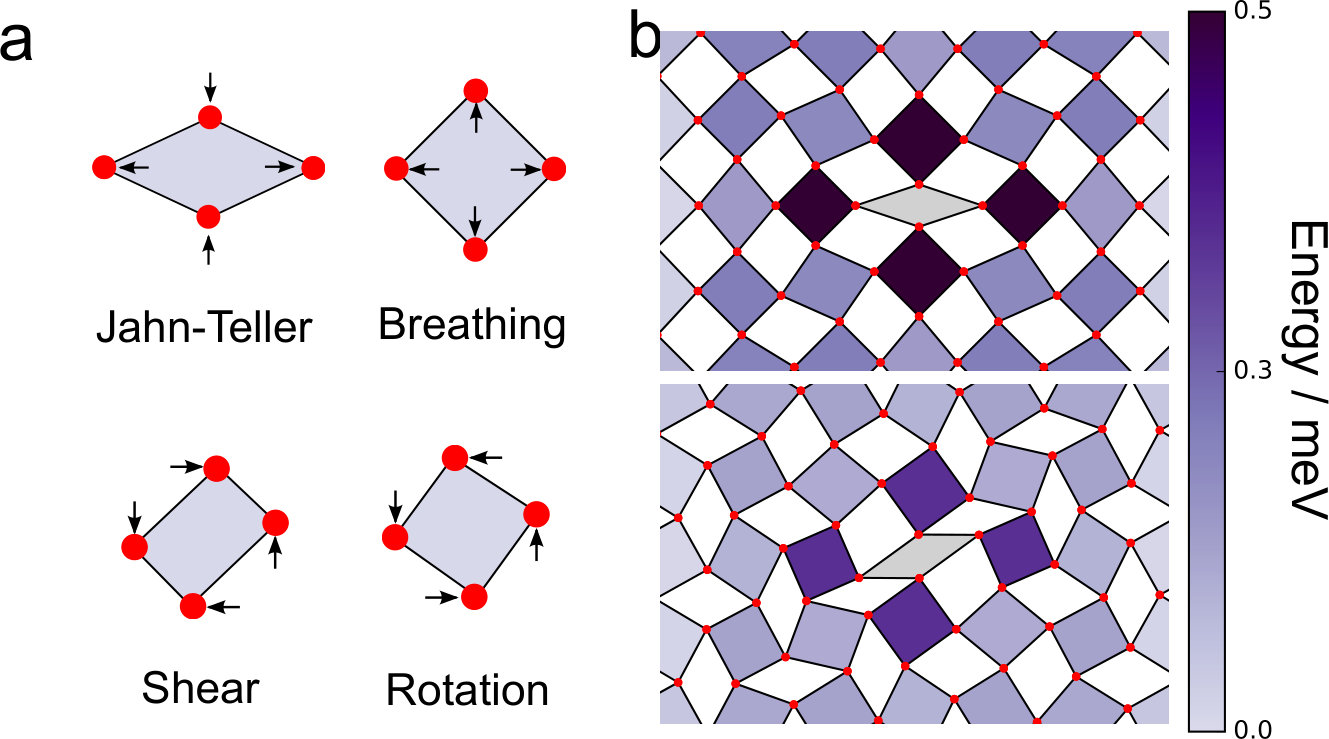 Figure 2
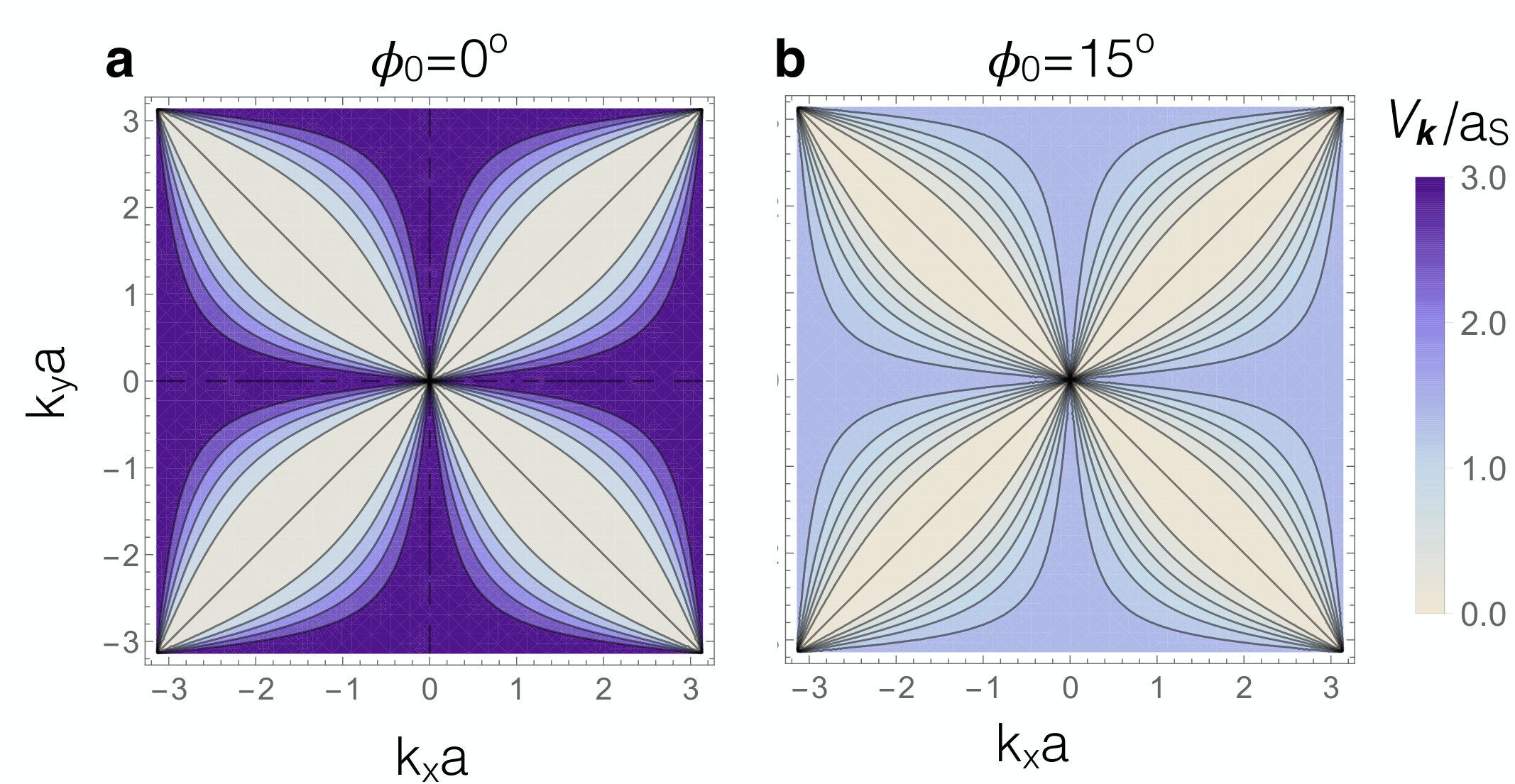 Figure 3
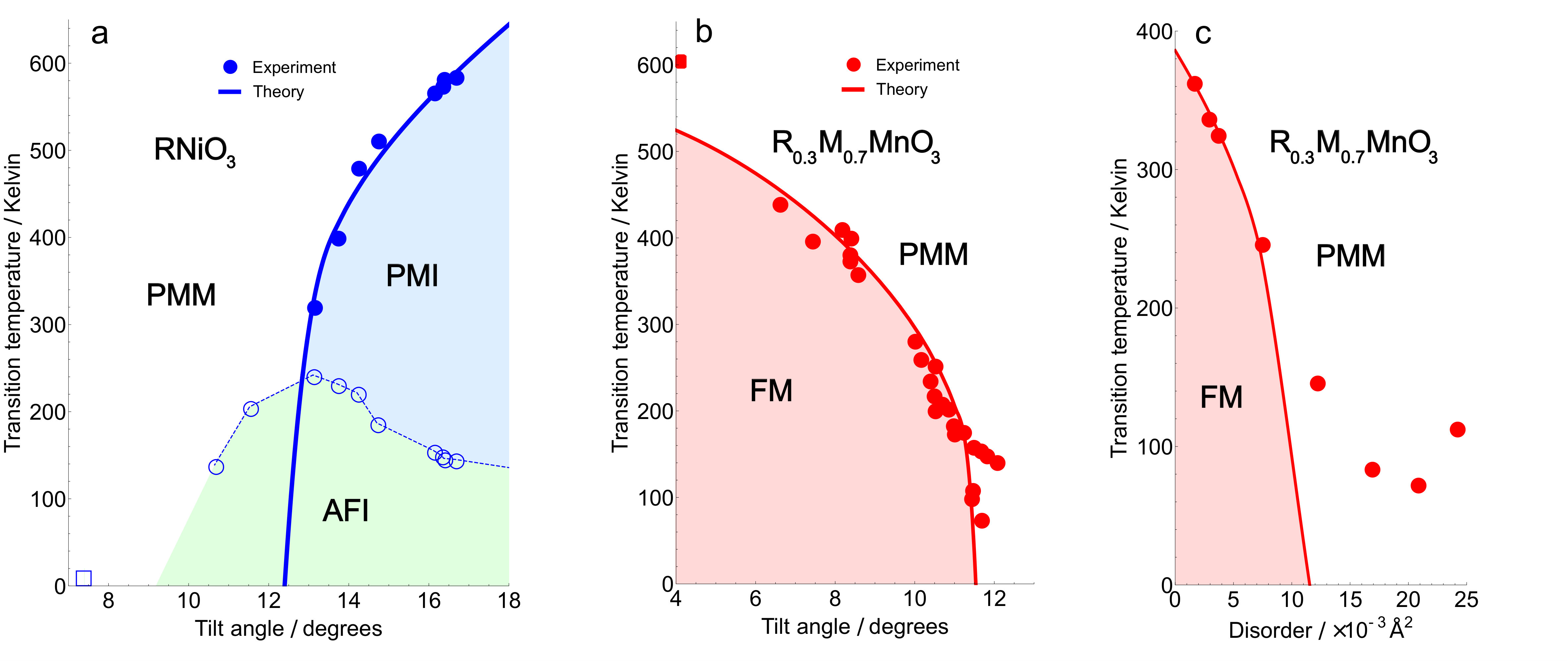 Figure 4
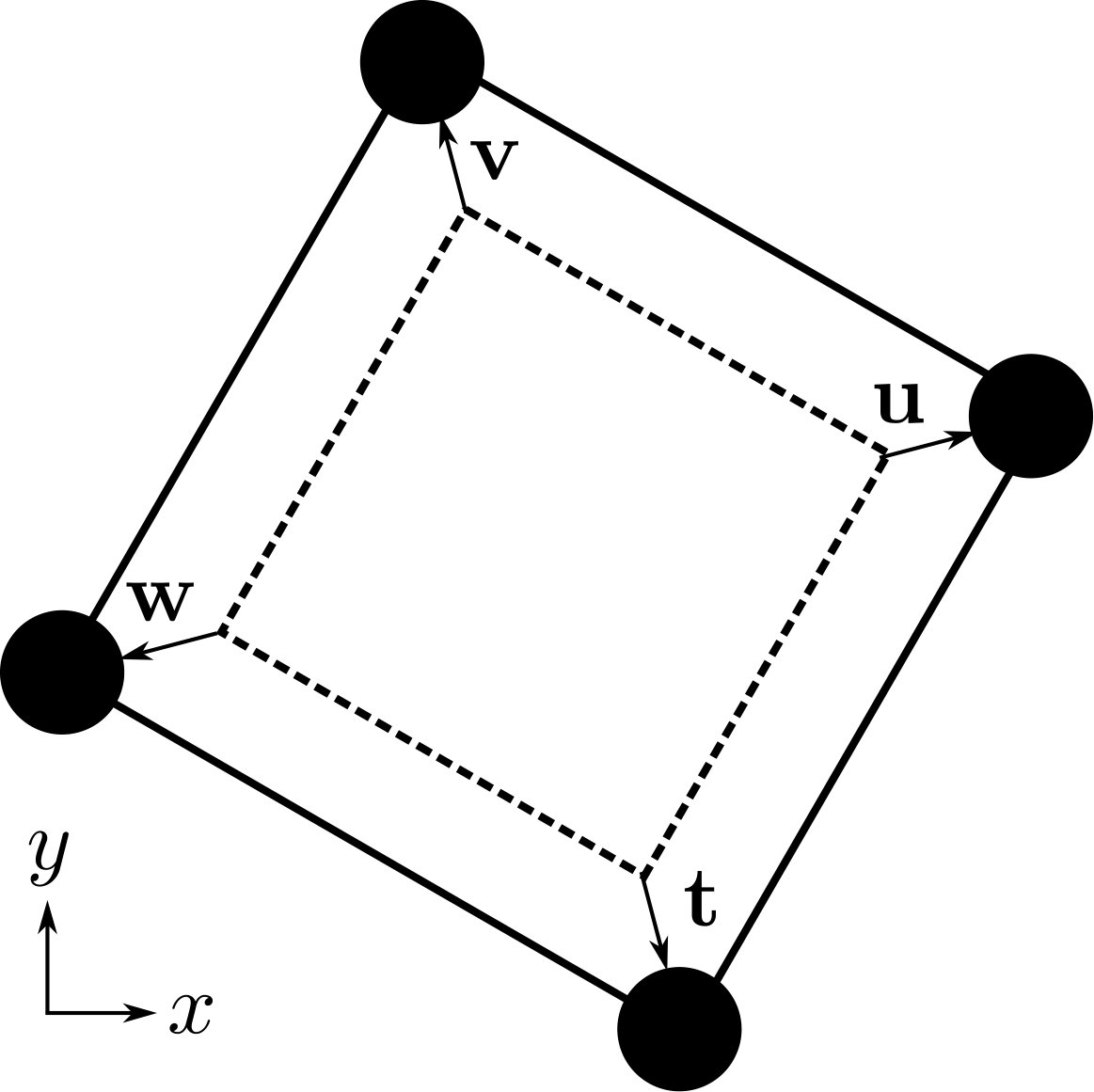 Figure 5
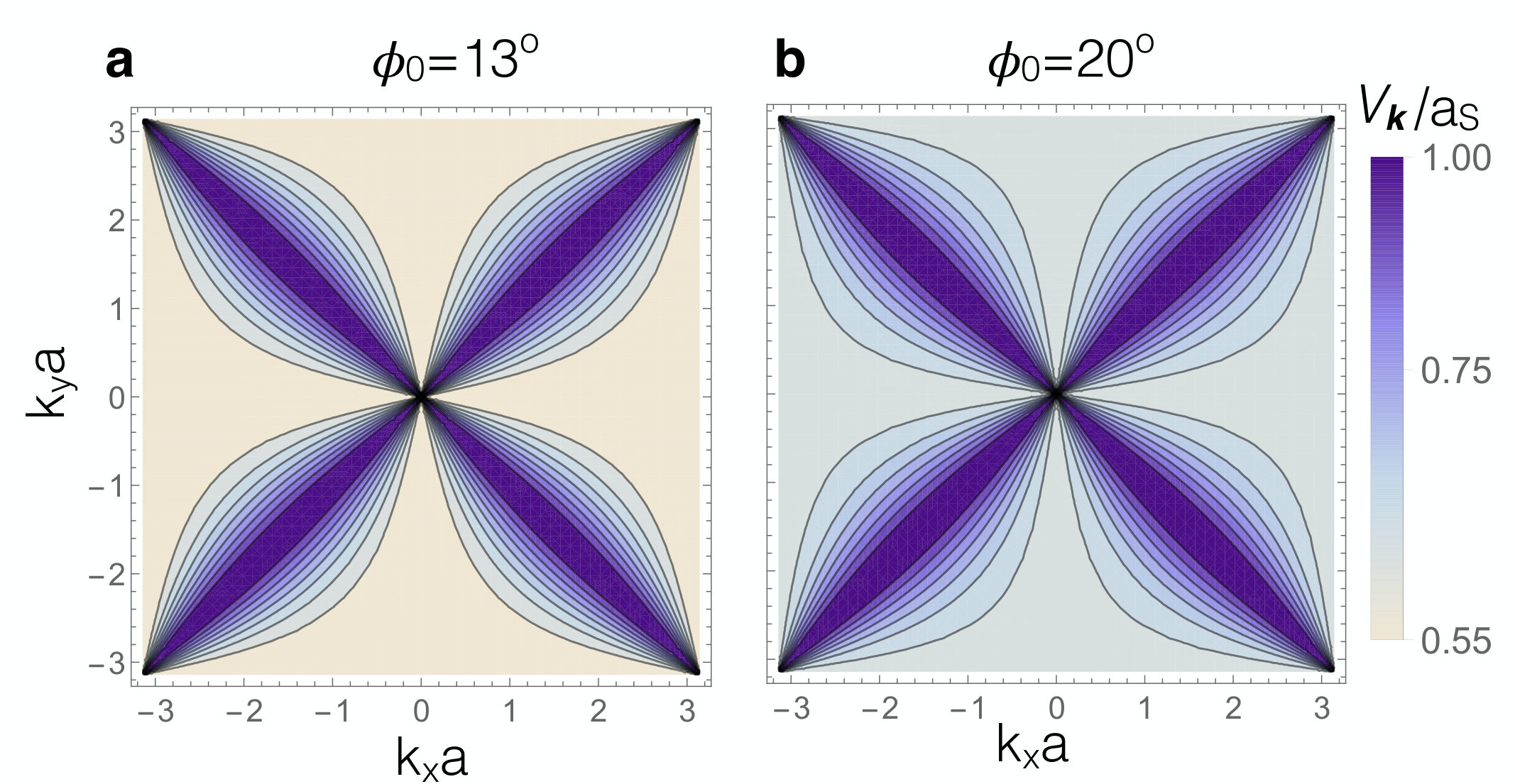 Figure 6
Peer Reviews
No public reviews on file for this paper yet. If you reviewed it on a platform where reviews are public (OpenReview, ICLR, NeurIPS, ICML), you can paste yours below so the community can read it here.
Videos
No videos yet. Explain this paper in a talk, walkthrough, or lecture? Add one.
Taxonomy
TopicsMagnetic and transport properties of perovskites and related materials · Electronic and Structural Properties of Oxides · Chemical and Physical Properties of Materials
Cooperative elastic fluctuations provide tuning of the metal-insulator transition
G. G. Guzmán-Verri1,2,3[email protected], R. T. Brierley4, P. B. Littlewood3,5[email protected]
1Centro de Investigación en Ciencia e Ingeniería de Materiales (CICIMA), Universidad de Costa Rica, San José, Costa Rica 11501,
2Escuela de Física, Universidad de Costa Rica, San José, Costa Rica 11501,
3Materials Science Division, Argonne National Laboratory, Argonne, Illinois, USA 60439,
4Department of Physics, Yale University, New Haven, Connecticut 06511, USA,
5James Franck Institute, University of Chicago, 929 E 57 St, Chicago, Illinois, USA 60637.
Metal to insulator transitions Imada et al. (1998) (MITs) driven by strong electronic correlations are common in condensed matter systems, and are associated with some of the most remarkable collective phenomena in solids, including superconductivity and magnetism. Tuning and control of the transition holds the promise of novel, low power, ultrafast electronics Yang et al. (2011), but the relative roles of doping, chemistry, elastic strain and other applied fields has made systematic understanding difficult to obtain. Here we point out that existing data Torrance et al. (1992); Hwang et al. (1995); Rodríguez-Martinez and Attfield (1996) on tuning of the MIT in perovskite transition metal oxides through ionic size effects provides evidence of systematic and large effects on the phase transition due to dynamical fluctuations of the elastic strain, which have been usually neglected Khomskii (2014). This is illustrated by a simple yet quantitative statistical mechanical calculation in a model that incorporates cooperative lattice distortions coupled to the electronic degrees of freedom. We reproduce the observed dependence of the transition temperature on cation radius in the well-studied manganite Tokura (2006) and nickelate Catalano et al. (2018) materials. Since the elastic couplings are generically quite strong, these conclusions will broadly generalize to all MIT’s that couple to a change in lattice symmetry.
MITs driven by electronic correlations have energy scales in the electron volts, yet it is common to find that these phase transitions happen at temperatures corresponding to much lower energies Imada et al. (1998). In the absence of a mechanism of fine tuning the coupling constants, it is natural to look for entropic rather than enthalpic contributions to describe these transitions. Since all observed MITs couple to the lattice, one is then driven to look for phononic entropic contributions. As a hint to the origin of these interactions,
a large number of transition metal oxides (TMO) with the ABO3 perovskite crystal structure allow tuning of the MIT by not only by the choice and average valence of the electronically active B ion (usually a transition metal) but also by the size of the electronically inactive A ion (usually a rare earth or alkaline earth) Torrance et al. (1992); Hwang et al. (1995); Rodríguez-Martinez and Attfield (1996); Katsufuji et al. (1997). This ‘size effect’ can shift the transition temperature by hundreds of Kelvin, and the widely accepted explanation Fujimori (1992) is that it is due to a reduction in the electron bandwidth as the bond bending induced by ionic size changes the orbital overlap. However, the changes in bandwidth are not sufficiently large to explain such temperature variations Sarma et al. (1994); Radaelli et al. (1997); Medarde et al. (1998); Varignon et al. (2017). Moreover, it seems remarkable that a critical value of the ratio of interaction strength to bandwidth can be crossed in every TMO, solely by varying the counterion Fujimori (1992).
Instead, we propose here that even when the transition is quite clearly driven by local electronic correlations, anisotropic long range forces induced by elastic compatibility conditions produce enormous entropic contributions to the free energy, which we show are crucial to describe the trends of the MIT with cation size. We illustrate this with a model of highly fluctuating cooperative lattice distortions that competes with a low temperature phase of constant free energy, i.e., a ferromagnetic metal (FM) for the manganites and a paramagnetic insulator (PMI) for the nickelates. We do not aim to capture the complex charge, orbital, and magnetic orderings of these materials, but rather their high temperature melted version where the entropy is dominated by the cooperative distortions. Our view is that the natural experiments in the manganite and nickelate series broadly implicate elastic interactions as being important in a wide class of MITs, not only in the perovskites.
In building our model, we account for the electronic degrees of freedom by assuming we can separate the energy into components that can be calculated locally while keeping the long-range physics explicit. At zero Kelvin, state-of-the-art first-principles calculations can give such local free energy containing implicitly electron-phonon coupling on a unit cell as well as band structure energy and Coulomb correlation. We have not performed such calculations here. Instead, we have assumed that there is a simple functional outcome that can be parametrized, is the same across each material series, and is independent of the long-range piece.
Our approach has of course its limitations: not every TMO is electronically the same, e.g., the bandwidth is not the only indicator and/or key parameter of structural changes in the electronic structure when varying the rare-earth ion nor the local electronic correlations are independent of the tolerance factor Pavarini et al. (2005); Han and Millis (2018). These are idealizations which can only describe real materials approximately. Nonetheless, it allow us to illustrate that the non-trivial and surprisingly subtle effects from long range elastic interactions mediated between local degrees of freedom cannot be ignored when it comes to determine the structural trends of MITs that couple to symmetry breaking distortions.
The crystal structure of perovskite TMOs consists of corner-sharing oxygen octahedra surrounding the transition metal ion, as shown in Fig. 1 (a). In general, the octahedra are tilted relative to their neighbors in an alternating pattern, and the tilt angle increases with smaller A-site cation radius . The dramatic changes in the functional behavior of perovskites when varying have led to proposals Rondinelli et al. (2012) to engineer material properties by using a combination of strain, doping and pressure. In addition to variations of the atomic size, doping with A-site cations also introduces disorder in the cation size; careful distinction of the effects of doping and disorder for the manganites demonstrated that disorder reduces the as effectively as varying . Rodríguez-Martinez and Attfield (1996)
Although purely electronic mechanisms to describe TMOs are appealing in their theoretical simplicity, it is known that the strong electron-phonon coupling means that the effects of lattice distortions cannot be neglected, and this is particularly well studied in manganites and nickelates Millis et al. (1995); Mercy et al. (2017). An electron that is localized by correlation effects in a unit cell will lower its energy further by the creation of a lattice distortion, which may be of different symmetry in different materials. In the nickelates this is a simple breathing distortion, and in the manganites a so-called Jahn-Teller (JT) distortion that lowers the cubic symmetry of the octahedon, as shown in Fig. 2 (a). The competition between this potential energy gain and the kinetic energy gained by delocalization to form a metal gives rise to the complex MIT phenomena in these materials.
The corner-sharing constraint on the octahedra introduces compatibility conditions between distortions at different lattice sites; when integrating out the phonon degrees of freedom these yield highly anisotropic, long-range interactions Kartha et al. (1995). Previous studies Khomskii (2014); Ahn et al. (2004, 2013) of phonon cooperativity in the manganites have demonstrated that they can explain the complex charge ordered phases and mesoscopic structures that have been observed in the manganites, and studied some effects of cooperative coupling on the transition Millis (1996). However, these studies did not consider the effect of octahedral tilting on the long-range interaction of the distortions. The purpose of this work is to study such effects, and in doing so, to construct a complete theory for cooperative elastic effects at a phase transition.
For illustration, we use a two-dimensional model of a perovskite, where we replace the octahedra by squares, as shown in Fig. 1(b). Although the physics of bulk perovskites is three-dimensional, two-dimensional models Ahn et al. (2004, 2013) of elastic interactions capture their anisotropy and long-range decay (they fall-off as for , and dimensions) which in turn have been shown to generate structural inhomogeneity over a wide range of length scales. This is the most relevant aspect to our work and one of the most salient features that have been experimentally seen in TMOs.
At a lattice site , the squares can undergo the distortions shown in Fig. 2 (a): deviatoric/JT modes , dilatation/breathing modes , shear modes , and small rotations of the squares from an initial equilibrium antiferrodistortive rotation , i.e., . Assuming a harmonic energy penalty for creating distortions from an equilibrium configuration,
[TABLE]
combined with the corner-sharing constraint, we can find an effective interaction between different types of distortion which gives rise to lattice cooperativity (see Supplementary Note 1). , , and are, respectively, the stiffness of the JT, breathing, and shear distortions in a single, free octahedron and are independent of .
Fig. 3 shows that the interaction strength is reduced by an increase tilt angle for JT distortions. This occurs because in the tilted configuration it is possible for the distortion to be accomodated by additional rotations to the neighbouring sites, rather than changes in the shape. Characteristic strain responses of the lattice to a local JT distortion with and without rotations are shown in Fig. 2 (b).
Both manganites Tokura (2006) and nickelates Catalano et al. (2018) undergo first-order transitions from a characteristic low temperature phase to a high-temperature polaronic phase. This suggests that the motion of conduction electrons through the lattice is associated with the creation of local structural distortions that lead to bad metal behavior Jaramillo et al. (2015). When the distortion interaction is reduced by changes in , the high-temperature phase is favoured by a reduction in the polaron formation energy Millis (1996). To study this behaviour, we use to form a statistical mechanical model for the distortions in this high-temperature phase, with a Hamiltonian,
[TABLE]
where is a JT (breathing) distortion for the manganites (nickelates) and its conjugate momentum. To model the compositional disorder that arises in the manganites from chemical substitution of the alkaline earth element at the site of the perovskite structure, we consider a linear coupling of the lattice distortions to a local quenched random distortion . We choose the ’s to be normally distributed with mean and variance . The negative sign of the term describes the local tendency towards distortion due to the presence of electrons.
As described in Methods and Supplementary Note 2, we use a variational approach to calculate the temperature, tilt angle and disorder dependence of the free energy of Hamiltonian (2); and we identify the location of by comparing to a free energy of the low temperature FM (PMI) phase of the manganites (nickelates). The results are shown in Fig. 4. Despite the over-simplicity of the model, the relationship between tilt angle, disorder, and transition temperature is well reproduced. We do not attempt to describe the effects of the strain interactions on the MIT of the nickelates at low temperatures (see green region in Fig. 4 (a)), as its magnetic ordering is different from that of the insulating phase above it. Similarly for the manganites, at low enough temperatures the PMM phase becomes either charge-ordered or glassy, beyond our approximations.
In this paper we have outlined a systematic theory for the incorporation of long-range elastic couplings into a simplified statistical mechanical theory of Mott-like phase transitions, where the electronic contributions to the free energy are incorporated at the level of Landau theory. That these elastic interactions are explicitly relevant for the manganites and the nickelates is confirmed by the ability of such a theory to systematically explain ‘size effects’ or ‘tolerance factor’ variations which have already been documented. However the couplings, including their rough order-of-magnitude, are generic, and the ideas presented here will surely be relevant to other classes of materials such as the titanates Katsufuji et al. (1997), high temperature superconductors Attfield et al. (1998), ferroelectrics Balachandran et al. (2011), and molecular fullerides Zadik et al. (2015).
At low enough temperatures one should surely take care of other low-energy degrees of freedom such as spin fluctuations and electronic quantum fluctuations which our model does not take into account. Doing so requires explicitly adding them to our model Hamiltonian and to our statistical mechanical solution through, e.g. a variational scheme such as the Lang-Firsov transformation. Nonetheless, the model we employ does generate a quantum critical point on account of elastic interactions alone. Moreover, the long range and anisotropy of these elastic couplings will modify the critical dynamics away from that arising from short-range models generated by purely electronic couplings.
We also note that our simple model provides an explanation for the observed tuning of the MIT under applied pressures. In both the manganites Radaelli et al. (1997) and nickelates Obradors et al. (1993), hydrostatic compression decreases . According to our model, this should result in an increase of promoted by the enhancement of the elastic interaction in the manganites, and viceversa for the nickelates. These are indeed the trends that have been observed in these materials. Fontcuberta et al. (1998); Obradors et al. (1993) We believe a similar mechanism is at play when the transition is tuned with tensile and compressive stresses Liu et al. (2013).
The idea that cooperative phonon-phonon couplings tune the MIT is supported by a recent ab-initio calculation Mercy et al. (2017). By using density functional theory (DFT), it has been found that the tilts of the NiO6 units in the nickelates destabilize their breathing distortions, which in turn are associated with the phase transition, thus providing a mechanism for tuning . However, DFT treats the elastic interactions only in average and it cannot produce finite temperature properties, thus was obtained by fitting it to experiments with a Landau theory that has multiple sets of values for the model parameters depending on the tolerance factor. By contrast, we have calculated from a single set of model parameters, and the MIT is driven by entropic effects that result from elastic couplings, thus providing a physical interpretation of the ab-initio results.
We conclude by noting that the good agreement we found in these two systems suggests that our fundamental assumption that the energy could be separated into a relatively simple local free energy plus a complex long range piece, could provide a basis for a fully computational methodology that could be applied relatively simply to very complex oxides in general.
Acknowledgements. We acknowledge insightful discussions with G. Lonzarich, H. Park and F. Ballar-Trigueros. Work at Argonne National Laboratory is supported by the U.S. Department of Energy, Materials Science Division, Office of Basic Energy Sciences under contract no. DE-AC02-06CH11357. G.G.G.-V. acknowledges support from the Vice-rectory for Research (project no. 816-B7-601), and the Office of International Affairs at the University of Costa Rica, the Royal Society International Exchanges programme (IES\R3\170025), Churchill College (Cambridge), and thanks the Department of Materials Science and Metallurgy and the Cavendish Laboratory at the University of Cambridge for hospitality where part of this work was done. R.T.B. acknowledges support from the Yale Prize Postdoctoral Fellowship and Homerton College (Cambridge).
Methods
Statistical mechanical solution. We use a variational pair-distribution function that incorporates mean-field behavior, Gaussian corrections to the thermal and quantum fluctuations, and averaging over compositional disorder at the level of the replica method Guzmán-Verri et al. (2013). Details are provided in Supplementary Note 2.
Model parameters. Our model has six parameters ( and ), which are reduced to five as () is combined with for the manganites (nickelates). We begin by choosing a set of of physically reasonable parameters which give phonon frequencies that are in order-of-magnitude agreement with the observed relevant modes Zaghrioui et al. (2001); Martín-Carrón et al. (2002). We then take the resulting set of parameters and fine tune them to fit the observed dependence of with the tolerance factor and compositional disorder: is a parameter of the model assumed to be independent of , and , fixed by the observed onset of the MIT, i.e., , where () for the manganites (nickelates). The dependence of on shown in Figs. 4 (a) and 4 (b) is given by , while the dependence of on shown in Fig. 4 (c) is given by and by rescaling by a constant factor () to match the units of cation variance. The resulting values are given in Table 1.
Supplementary Note 1. Distortion interaction
We consider a two-dimensional model of a perovskite, consisting of corner-coupled quadrilaterals that are the analogues of the three-dimensional oxygen octahedra. The displacements of the corners of the quadrilateral centred at a position from their initial positions are the vectors , , and (Supplementary Fig. 1). To simplify the analysis, we assume that the allowed (i.e. low energy) configurations of the quadrilaterals are parallelograms, so that
[TABLE]
This corresponds to assuming there is infinite energy cost associated with “shuffle” modes within the a quadrilateral Ahn et al. (2003). With this assumption, deviations from an initial configuration can be described in terms of four degrees of freedom: a rotation and three “strains”: (dilatation/breathing modes), (shear modes) and (deviatoric/JT modes).
We take the following simple form for the elastic energy,
[TABLE]
where is the energy penalty for the corresponding distortion of a free octahedron. Note that we make the approximation that the cost of rotations is small enough that it can be negelected. Such a term should exist in order for there to be a state with a non-zero , as observed in experiment. In the perovskite model, the constraint that the squares share corners means that and where are the lattice vectors. These constraints reduce the number of degrees of freedom per site to 2. Distortions of neighboring squares are coupled and as a result the energy given in Eq. (S2) actually describes a system with long-range strain interactions.
We can find the constraint equations in terms of the rotation and strain degrees of freedom by expressing them in terms of the atom positions , , and , then using the corner-sharing constraint to eliminate the positions. We assume that rotations of the squares from an initial equilibrium antiferrodistortive rotation are small, writing , where and is the equilibrium lattice spacing. Then, linearising in the small rotations , we can write:
[TABLE]
where we have used the convention for the vector components.
After Fourier transformation, the parallelogram condition Eq. (S1), combined with the corner sharing constraint, can be written as,
[TABLE]
Using this relationship, the Fourier transform of Eq. (S3) is,
[TABLE]
where we have defined,
[TABLE]
Then, using the fact that that when we can write:
[TABLE]
can now be eliminated from Eq. (S5). We obtain compatibility conditions between the distortions:
[TABLE]
where
[TABLE]
In later manipulations it is useful to use the relationship .
These relationships have singular behavior when the approach [math] or . In particular, there is no relationship between the fields when or , i.e. the cases of homogeneous and antiferrodistortive deformations; each strain field is a separate degree of freedom in these cases Larkin and Pikin (1969). In the long-wavelength limit, and when we can write Eq. (S9) as,
[TABLE]
which is the Fourier transform of the usual two-dimensional compatibility relationKartha et al. (1995).
In preparation to find in terms of and we now evaluate:
[TABLE]
By considering both the and parts of the sum the terms that couple fields at and cancel and the rest of the expression can be simplified to:
[TABLE]
Substituting this into the Fourier transform of Eq. (S2) we get the result without separate constraints:
[TABLE]
To obtain the static interaction between the single strain fields or , we can minimize the energy with respect to the other field:
[TABLE]
Substituting these results into Eq. (S13), we obtain the energy for a single strain field, including the long-range interaction term,
[TABLE]
These strain interactions are highly anisotropic (see Fig. 3 in manuscript) and non-analytic; as , the value of the potential depends on the direction of . The potential vanishes for (anti-)ferrodistortive perturbations, corresponding to (), as the different distortion modes are uncoupled at those wavevectors. This implies a discontinuity at , which arises from our assumption that the distortions in Fig. 1 are the only distortions, neglecting the shuffle modes for the octahedra.Ahn et al. (2003) However, as long as such modes are significantly stiffer than the high-symmetry modes we do consider, this should not be an important approximation. In the long-wavelength limit and no rotations, for the manganites matches that of previous work. Kartha et al. (1995); Porta et al. (2009)
Supplementary Note 2. Variational Solution
We consider a trial pair-probability distribution, where is the Hamiltonian of coupled harmonic oscillators in a random field, and its normalization. The Fourier transform of the function gives the frequency squared of the mode at wavevector , i.e., . is a variational function and it is determined by minimization of the free energy of the lattice degrees of freedom, . Here, denotes thermal and compositional averages. The free energy per site is therefore given by,
[TABLE]
where are mean squared fluctuations averaged over compositional disorder at wavevector . is the number of lattice sites and the summations run over the first Brillouin zone of the square lattice. Minimization of the free energy (S17) with respect to gives the following result,
[TABLE]
Equation (S18) determines the temperature and disorder dependence of the mode frequency self-consistently.
Supplementary Note 3. Model parameter dependence of the phase diagrams
Supplementary Fig. 2 shows how the calculated phase diagrams vary with the relevant model parameters. By changing the values of those parameters so as to keep the transition temperatures physical, we find that the trends in remain, while the quantitative agreement with experiments decreases (green curves correspond to those of Fig. 4.). These results also show that we cannot choose parameters that would make the elastic effects on the MIT small. Only a widely different parametrization would lead to different behavior and destroy the agreement.
References
- Ahn et al. (2003) K. H. Ahn, T. Lookman, A. Saxena, and A. R. Bishop, “Atomic scale lattice distortions and domain wall profiles,” Phys. Rev. B 68, 092101 (2003).
- Larkin and Pikin (1969) A. I. Larkin and S. A. Pikin, “Phase transitions of the first order but nearly of the second,” Sov. Phys. JETP 29, 891 (1969).
- Kartha et al. (1995) S. Kartha, J. A. Krumhansl, J. P. Sethna, and L. K. Wickham, “Disorder-driven pretransitional tweed pattern in martensitic transformations,” Phys. Rev. B 52, 803–822 (1995).
- Porta et al. (2009) M. Porta, T. Castán, P. Lloveras, T. Lookman, A. Saxena, and S. R. Shenoy, “Interfaces in ferroelastics: Fringing fields, microstructure, and size and shape effects,” Phys. Rev. B 79, 214117 (2009).
The reference list from the paper itself. Each links out to its DOI / PubMed record.
- 1Imada et al. (1998) M. Imada, A. Fujimori, and Y. Tokura, “Metal-insulator transitions,” Rev. Mod. Phys. 70 , 1039–1263 (1998) . · doi ↗
- 2Yang et al. (2011) Z. Yang, C. Ko, and S. Ramanathan, “Oxide electronics utilizing ultrafast metal-insulator transitions,” Ann. Rev. Mater. Res. 41 , 337–367 (2011) . · doi ↗
- 3Torrance et al. (1992) J. B. Torrance, P. Lacorre, A. I. Nazzal, E. J. Ansaldo, and Ch. Niedermayer, “Systematic study of insulator-metal transitions in perovskites R Ni O 3 (R=Pr,Nd,Sm,Eu) due to closing of charge-transfer gap,” Phys. Rev. B 45 , 8209–8212 (1992) .
- 4Hwang et al. (1995) H. Y. Hwang, S-W. Cheong, P. G. Radaelli, M. Marezio, and B. Batlogg, “Lattice effects on the magnetoresistance in doped La Mn O 3 ,” Phys. Rev. Lett. 75 , 914–917 (1995) .
- 5Rodríguez-Martinez and Attfield (1996) L. M. Rodríguez-Martinez and J. P. Attfield, “Cation disorder and size effects in magnetoresistive manganese oxide perovskites,” Phys. Rev. B 54 , R 15622–R 15625 (1996) . · doi ↗
- 6Khomskii (2014) D. Khomskii, Transition metal compounds (Cambridge University Press, Cambridge, 2014).
- 7Tokura (2006) Y Tokura, “Critical features of colossal magnetoresistive manganites,” Rep. Prog. Phys. 69 , 797–851 (2006) .
- 8Catalano et al. (2018) S. Catalano, M. Gibert, J. Fowlie, J. Íñiguez, J.-M. Triscone, and J. Kreisel, “Rare-earth nickelates R Ni O 3 : thin films and heterostructures,” Rep. Prog. Phys. 81 , 046501 (2018) .