Chiral second-sound collective mode at the edge of 2D systems with nontrivial Berry curvature
Alessandro Principi, Mikhail I. Katsnelson, Alex Levchenko

TL;DR
This paper predicts the existence of chiral second-sound edge modes in 2D systems with nontrivial Berry curvature, such as gapped graphene and topological insulators, leading to ballistic heat transport along edges.
Contribution
It introduces the concept of chiral second-sound collective modes localized at the edges of 2D systems with Berry curvature, highlighting their topological origin and thermal transport properties.
Findings
Chiral second-sound modes propagate along system edges.
Edge mode localization length has topological origin.
Thermal Hall conductance shows a sharp transition indicating ballistic heat transport.
Abstract
We study the thermal transport in two-dimensional systems with a nontrivial Berry curvature texture. The physical realizations are many: for a sake of definiteness we consider undoped graphene gapped by the presence of an aligned hexagonal-Boron-Nitride substrate. The same phenomenology applies, i.e., to surface states of 3D topological insulators in the presence of a uniform magnetization. We find that chiral valley-polarized second-sound collective modes propagate along the edges of the system. The localization length of the edge modes has topological origin stemming from the anomalous velocity term in the quasiparticle current. At low temperature, the single-particle contribution to the transverse thermal conductance is exponentially suppressed and only second-sound modes carry heat along the boundary. A sharp change in the behavior of the thermal Hall conductance, extracted from…
Click any figure to enlarge with its caption.
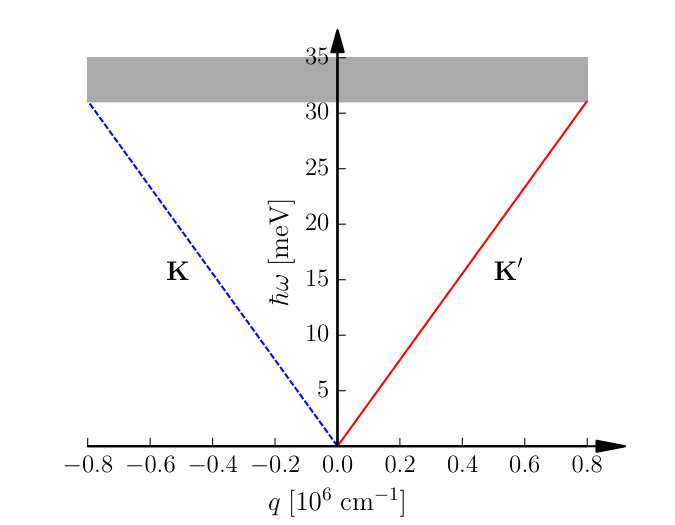 Figure 1
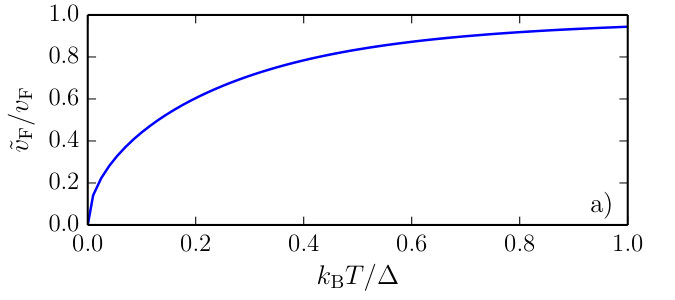 Figure 2
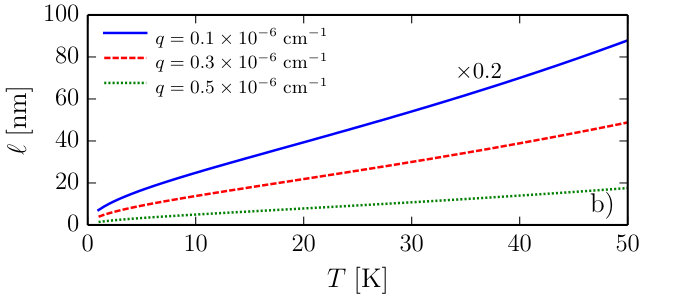 Figure 2
 Figure 3
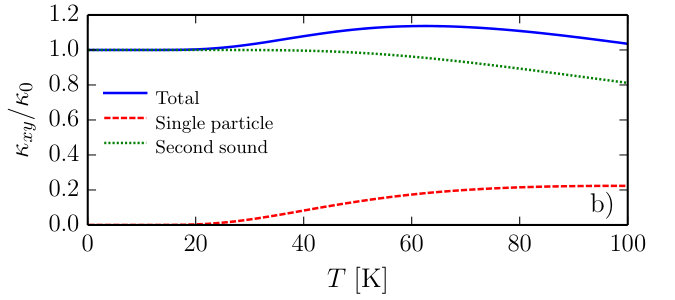 Figure 3
Peer Reviews
No public reviews on file for this paper yet. If you reviewed it on a platform where reviews are public (OpenReview, ICLR, NeurIPS, ICML), you can paste yours below so the community can read it here.
Videos
No videos yet. Explain this paper in a talk, walkthrough, or lecture? Add one.
Chiral second-sound collective mode at the edge of 2D systems with nontrivial Berry curvature
Alessandro Principi
Radboud University, institute for Molecules and Materials, NL-6525 AJ Nijmegen, The Netherlands
Mikhail I. Katsnelson
Radboud University, institute for Molecules and Materials, NL-6525 AJ Nijmegen, The Netherlands
Alex Levchenko
Department of Physics, University of Wisconsin-Madison, Madison, Wisconsin 53706, USA
Abstract
We study the thermal transport in two-dimensional systems with a nontrivial Berry curvature texture. The physical realizations are many: for a sake of definiteness we consider undoped graphene gapped by the presence of an aligned hexagonal-Boron-Nitride substrate. The same phenomenology applies, i.e., to surface states of 3D topological insulators in the presence of a uniform magnetization. We find that chiral valley-polarized second-sound collective modes propagate along the edges of the system. The localization length of the edge modes has topological origin stemming from the anomalous velocity term in the quasiparticle current. At low temperature, the single-particle contribution to the transverse thermal conductance is exponentially suppressed and only second-sound modes carry heat along the boundary. A sharp change in the behavior of the thermal Hall conductance, extracted from nonlocal measurements of the temperature along the edge, marks the onset of ballistic heat transport due to second-sound edge modes.
pacs:
72.80.Vp, 73.22.Lp
Introduction—Managing heat production and transfer is one of the major challenges of the present time Gammaitoni et al. (2015). The constant miniaturization of the electronic circuitry heavily relies on the reduction of the heat produced by a single element or, alternatively, on efficient dissipation mechanisms. The quest for novel materials with either of these properties has become more vibrant in recent years, fueled by the discovery of two-dimensional (2D) materials Novoselov et al. (2004, 2005). Among these, graphene stands out for its record-high thermal conductivities Balandin et al. (2008); Ghosh et al. (2008); Lee et al. (2011); Balandin (2011).
Although materials are new, the theory describing heat conduction in solids is well established Ziman (2001); Ashcroft and Mermin (1976); Landau and Lifshitz (1981). Both electrons and phonons contribute to the transfer of heat from hot to cold regions Ziman (2001); Ashcroft and Mermin (1976); Landau and Lifshitz (1981). While in insulators and semiconductors phonons dominate the heat transport, in metals and semimetals the contribution of electrons can be comparable, or even dominant over that of lattice vibrations Ziman (2001). In this paper we focus on the transfer of heat due to electrons in the hydrodynamic regime Landau and Lifshitz (1987); Giuliani and Vignale (2005); Torre et al. (2015); Principi et al. (2016); Bandurin et al. (2016); Crossno et al. (2016).
Usually, electron-impurity scattering occurs at a much higher rate than electron-electron collisions Giuliani and Vignale (2005). In this case, a “diffusive” regime is established. The evolution of the temperature is well described by the Fourier law of heat conduction Landau and Lifshitz (1987, 1981). Two transport quantities control the density and heat diffusion equations, namely the charge and thermal conductivities. When the system is in the Fermi-liquid regime, they are proportional to each other. This property, the so-called Wiedeman-Franz law Ziman (2001), reflects the fact (i) that the same kind of quasiparticle carries both charge and heat, and (ii) that the scattering mechanism affects in the same way the two transport channels Ashcroft and Mermin (1976); Landau and Lifshitz (1981). However, even weak electron-electron interactions modify this result Castellani and Di Castro (1986); Castellani et al. (1987); Arfi (1992); Schwab and Raimondi (2003); Raimondi et al. (2004); Catelani and Aleiner (2005); Schwiete and Finkel’stein (2016).
When a system is strongly interacting and ultra clean the whole picture of transport changes dramatically: the electron liquid is driven into the hydrodynamic regime Giuliani and Vignale (2005); Andreev et al. (2011); Müller et al. (2009); Principi and Vignale (2015a); Narozhny et al. (2015); Briskot et al. (2015). Electrons are described by a local-equilibrium distribution function, i.e. by a Fermi distribution whose chemical potential and temperature are space- and time-dependent and whose momentum is shifted by the local value of the drift velocity of the fluid Landau and Lifshitz (1981). These three quantities are determined from the knowledge of the local values of the densities of the conserved quantities, i.e. the particle number, energy and momentum, respectively. Their equations of motion, i.e. the continuity, Navier-Stokes and heat-conduction equations, are controlled by a handful of parameters that can be calculated from the microscopic model Landau and Lifshitz (1987); Principi and Vignale (2015a, b); Principi et al. (2016).
Notably, the hydrodynamic equations admit solutions in which the heat is transferred ballistically by means of entropy waves, i.e. the so-called second sound Landau and Lifshitz (1987); Andreev et al. (2011). The cleanest observation of second sound occurred in below the -point (corresponding to a temperature of Ackerman et al. (1966)). Few other systems have been reported to support ballistic heat transfer Ackerman and Overton (1969); Narayanamurti and Dynes (1972); Jackson et al. (1970). Recently, undoped graphene was proposed as a possible material in which this phenomenon could be observed Phan et al. (2013).
When the inversion symmetry of the hexagonal lattice is broken and a gap is opened at the Dirac point, the system exhibits hotspots of Berry curvature at the two inequivalent valleys ( and ) of the Brillouin zone Shapere and Wilczek (1989); Gorbachev et al. (2014). The latter acts as a gauge field in momentum space, and leads to observable physical effects Culcer et al. (2004); Xiao et al. (2006, 2007); Yao et al. (2008); Qin et al. (2011); Gorbachev et al. (2014); Pellegrino et al. (2015). When an external force due, e.g., to an electric field or thermal gradient sets electrons in motion, they “skew” in the orthogonal direction under the effect of the Berry curvature and transverse (electric or thermal) currents appear Gorbachev et al. (2014). Since the time-reversal symmetry is unbroken, electrons in different valleys experience Berry curvatures with opposite signs Xiao et al. (2010). Two counter-propagating transverse currents appear, each of them due to the electrons of one valley. The net current therefore vanishes, but the “valley” current stays finite Xiao et al. (2007); Gorbachev et al. (2014).
The Berry curvature () has also an important impact on the collective modes of the electron liquid Haldane (2004); Son and Yamamoto (2012); Lundgren and Maciejko (2015); Song and Rudner (2016), i.e. the self-sustaining solutions of the coupled Navier-Stokes and Maxwell’s equations (the latter are needed only to determine the charged modes Giuliani and Vignale (2005)). Notably, in two dimensions and in the absence of a magnetic field, the Berry curvature does not appear explicitly in the linearized equations describing the motion of the fluid in the bulk. However, it crucially enters into the boundary conditions, and it has been shown to stabilize charged collective modes localized at the edges of the sample (edge plasmons Song and Rudner (2016)). When an electric field is applied, the quasiparticle velocity acquires an anomalous component, orthogonal to both and the applied force, which adds up to the Bloch band velocity Xiao et al. (2010). Since at the boundaries the total velocity perpendicular to the edges has to vanish, the presence of the anomalous term leads to non-trivial solutions of Navier-Stokes equations Song and Rudner (2016). These solutions would not exist in the absence of the anomalous velocity (or of an external magnetic field Volkov and Mikhailov (1988); Fetter (1985); MacDonald et al. (1985); Fetter (1986)).
In this paper we study the problem of second-sound in graphene, when inversion symmetry is broken by e.g. the presence of an aligned hexagonal Boron Nitride (hBN) substrate Hunt et al. (2013); Dean et al. (2013); Gorbachev et al. (2014). We focus on the physics around the Dirac points, neglecting the effect of mini-Dirac cones stemming from the Moiré superlattice Ponomarenko et al. (2013); Yankowitz et al. (2012). We show that, when the system is undoped and the temperature is smaller than the band gap, it cannot support edge plasmons but only charge-neutral second-sound collective modes localized at the boundary [see Fig. 1]. Notably, since the electrons of each valley experience opposite Berry curvatures, two counter-propagating and completely valley-polarized second-sound edge modes are found. We discuss the experimental conditions and setups under which these can actually be observed.
Model—We consider electrons in gapped graphene in the presence of thermal fluctuations. The Hamiltonian reads (hereafter ) Castro Neto et al. (2009); Goerbig (2011); Das Sarma et al. (2011); Kotov et al. (2012); Grigorenko et al. (2012)
[TABLE]
where () creates (destroys) an electron with momentum in sublattice , , is the Fermi velocity, and is (half) the band gap. For graphene on hBN the band gap is predicted to vary between and , depending e.g. on the misalignment angle between the two structures Woods et al. (2014); Titov and Katsnelson (2014); Bokdam et al. (2014); Slotman et al. (2015). For our estimates we use the fairly small value , which was reported in recent experiments performed on a particular sample of graphene on hBN Woods et al. (2014); Gorbachev et al. (2014). Naturally, if the value of is larger (as it is theoretically predicted for a perfect alignment), we can expect our findings to be relevant also for room-temperature experiments. The band energy is ( label the conduction and valence bands), while the Berry curvature in valley is Xiao et al. (2010)
[TABLE]
Because of the time-reversal symmetry, the Berry curvature of the valley has the opposite sign (i.e. its band gap is ). In the presence of an electric field , the quasiparticle velocity becomes . The second term is the so-called anomalous velocity. Hydrodynamic equations are derived by assuming that the system is in local quasi-equilibrium with the distribution function Haldane (2004); Son and Yamamoto (2012); Lundgren and Maciejko (2015); Song and Rudner (2016)
[TABLE]
where , and are, respectively, the local temperature, chemical potential and fluid velocity, while is the Boltzmann constant. We define and as the (uniform) equilibrium temperature and chemical potential. We will assume that and . The Navier-Stokes equations, obtained by integrating the semiclassical Boltzmann equation over its momenta (), read (we suppress space and time indices) Landau and Lifshitz (1987); Principi et al. (2016); Narozhny et al. (2015); Briskot et al. (2015)
[TABLE]
Here , and are, respectively, the number, entropy and momentum densities, while , and are the corresponding currents. The stress tensor contains also the kinetic contribution to the equation of motion of the momentum density. Finally, is the momentum conductance.
Collective modes are found by solving the system of equations (7) together with the appropriate boundary conditions. We require the component of the particle and heat currents Xiao et al. (2006); Qin et al. (2011),
[TABLE]
perpendicular to the edge to vanish at the edge itself. Here . Note that the last term in Eq. (8b) can be rewritten as , where is the single-particle transverse thermal conductance Qin et al. (2011).
Second sound in the undoped limit—In the undoped regime, our description breaks down if the semiclassical electron wave packets are shared between the bands Xiao et al. (2010). A more complicated non-Abelian description would be needed Xiao et al. (2010). To keep the presentation as simple as possible, we assume that the gap is the largest energy scale, i.e. we restrict to the case (we anyway focus on the case ). In this temperature range interband transitions are exponentially suppressed, and it still makes sense to consider the electronic wave packets as composed by electrons of only one band.
When the chemical potential is exactly in the middle of the gap and in the absence of external electric fields, the continuity equation becomes trivial, since . Moreover, the density remains constant and no self-induced electric field appears. Therefore, we set and we consider the last two Navier-Stokes equations, which read (we set for convenience)
[TABLE]
where is the kinematic viscosity, , and
[TABLE]
These equations agree with those of Ref. Phan et al. (2013) in the limit , and lead to bulk modes with acoustic dispersion , where Note that is always positive and vanishes in the limit [see Fig. (2a)] as .
Let us now consider collective modes localized at the edge. We neglect for the time being the kinematic viscosity , which we will reintroduce at the end of the calculation. Indeed, although it is possible to retain it at all steps, the intermediate equations become quite cumbersome. We look for solutions of Eq. (11) of the form and , assuming that the system occupies the half space . We get
[TABLE]
Note that it is not , but the sum of and an anomalous term analogous to those of Eqs. (8a)-(8b) that vanishes at the boundary. This condition is equivalent to require that the physical energy current (which coincides, apart from numerical factors, with the physical momentum density) across the edge vanishes. Eq. (15) must be solved together with the boundary conditions and . The currents are given in Eq. (8). It turns out that (8a) is always zero. Indeed, both the band and anomalous velocities vanish when integrated over both bands. Therefore, we are left to study Eq. (8b). After some transformations, combining it with the second line of Eq. (15), we get
[TABLE]
where . In the limit , . We remark that the first (second) term inside the square brackets of Eq. (16) corresponds to the normal (anomalous) component of the heat current. The last term on the right-hand side of this equation was obtained from the anomalous part of Eq. (8b) [, with ] by expressing the gradient of the temperature in terms of the gradient of the entropy by using their local-equilibrium relation . For completeness, .
Eq. (16) defines the localization length , which interestingly appears to be a topological property of the system stemming from the presence of the band gap and finite Berry curvature. Importantly, the equation has a solution only if . Recalling that (which controls the sign of the Berry curvature) has opposite signs in different valleys, we find that only modes with () can propagate in valley (). Solving Eq. (16) we find \ell^{-1}=-\omega qB(\Delta/T)/\big{[}TA(\Delta/T)\big{]}. Inserting this back into the first line of Eq. (15) and solving for we find
[TABLE]
which hold for states with . States with cannot propagate. We can at this point reintroduce the viscosity. At small , the boundary conditions and expression for the localization length are unaffected by . However, the kinemaric viscosity introduces dissipation of the second-sound modes, and the frequency is replaced in the limit by .
It is useful to analyze the behavior of the second-sound dispersion and localization length in the limit of small momentum and temperature. We find that and . As Fig. (2b) shows, the localization length decreases at low temperatures, i.e. the second-sound mode becomes more and more localized at the edge. At the same time, its velocity also decreases, and in the limit of zero temperature it becomes a completely-localized non-dispersive edge mode.
Summary and conclusions—In this paper we studied the problem of thermal transport at the edge of a graphene sheet with broken inversion symmetry. The electron liquid is assumed to be in the hydrodynamic regime Landau and Lifshitz (1987); Giuliani and Vignale (2005); Torre et al. (2015); Principi et al. (2016); Bandurin et al. (2016); Crossno et al. (2016). We find that two counter-propagating, valley-polarized second-sound modes exist when the Fermi energy is in the gap. This result is made possible by the Berry curvature of the band structure Xiao et al. (2010). Indeed, even though the latter has no impact on the bulk collective modes, it crucially enters into the boundary conditions ensuring that no particle or heat current flows through the edge. Each of the two inequivalent valleys of the Brillouin zone contributes one second-sound collective mode. They propagate in opposite directions along the edge, due to the opposite sign of the Berry curvature.
This result can be experimentally tested in non-local thermal measurements Gorbachev et al. (2014). Consider for example the multi-terminal Hall-bar geometry of Fig. (3a). When a thermal gradient is applied, two second-sound modes transport the heat along the edge and the temperature distribution becomes therefore strongly anisotropic. Using known techniques Molenkamp et al. (1992); Granger et al. (2009) it is possible to measure the local temperature along the edge, and to relate it to the thermal conductance of the channel. For a bosonic edge mode, assuming the transmission probability to be exactly one, it is possible to determine the thermal conductance from the Landauer-Buttiker formula, Datta (1995) i.e.
[TABLE]
The final result (the quantum of thermal conductance of a perfect 1D channel) holds in the limit of .
In general, a nontrivial Berry curvature induces also a transverse single-particle heat current (the so-called thermal Hall effect Qin et al. (2011)). The total nonlocal thermal conductance is therefore . However, in the limit , is exponentially suppressed Qin et al. (2011). The change in the behavior of versus temperature shown in Fig. (3b) is the hallmark of thermal transport mediated by the edge second-sound modes. Another possibility to reveal the signatures of the localized edge modes is via shot noise experiments where one expects that thermal modes will significantly change the Fano factor. This approach was beautifully explored in the context of counter-propagating neutral modes of the fractional quantum Hall effect Bid et al. (2010).
Apart from graphene, hBN-encapsulated transition metal dichalcogenides, such as WTe2 and MoTe2, that are expected to host time-reversal invariant quantum spin Hall states at monolayer thickness, represent alternative platforms for the observation of the topological collective transport effect we predict in this work.
Acknowledgements—A.P. and M.I.K. acknowledge support from the ERC Advanced Grant 338957 FEMTO/NANO and from the NWO via the Spinoza Prize. This work was financially supported in part by NSF Grants No. DMR-1606517 and ECCS-1560732 (A.L.). Support for this research at the University of Wisconsin-Madison was provided by the Office of the Vice Chancellor for Research and Graduate Education with funding from the Wisconsin Alumni Research Foundation.
The reference list from the paper itself. Each links out to its DOI / PubMed record.
- 1Gammaitoni et al. (2015) L. Gammaitoni, D. Chiuchiú, M. Madami, and G. Carlotti, Nanotechnology 26 , 222001 (2015) .
- 2Novoselov et al. (2004) K. S. Novoselov, A. K. Geim, S. V. Morozov, D. Jiang, Y. Zhang, S. V. Dubonos, I. V. Grigorieva, and A. A. Firsov, Science 306 , 666 (2004) . · doi ↗
- 3Novoselov et al. (2005) K. S. Novoselov, D. Jiang, F. Schedin, T. J. Booth, V. V. Khotkevich, S. V. Morozov, and A. K. Geim, Proceedings of the National Academy of Sciences of the United States of America 102 , 10451 (2005) , http://www.pnas.org/content/102/30/10451.full.pdf . · doi ↗
- 4Balandin et al. (2008) A. A. Balandin, S. Ghosh, W. Bao, I. Calizo, D. Teweldebrhan, F. Miao, and C. N. Lau, Nano Letters 8 , 902 (2008) . · doi ↗
- 5Ghosh et al. (2008) S. Ghosh, I. Calizo, D. Teweldebrhan, E. P. Pokatilov, D. L. Nika, A. A. Balandin, W. Bao, F. Miao, and C. N. Lau, Applied Physics Letters 92 , 151911 (2008) .
- 6Lee et al. (2011) J.-U. Lee, D. Yoon, H. Kim, S. W. Lee, and H. Cheong, Phys. Rev. B 83 , 081419 (2011) . · doi ↗
- 7Balandin (2011) A. A. Balandin, Nature Materials 10 , 569 (2011) . · doi ↗
- 8Ziman (2001) J. M. Ziman, Electrons and Phonons. The Theory of Transport Phenomena in Solids. (Oxford University Press, 2001).