Investigating the Role of Socially Mediated Metacognition During Collaborative Troubleshooting of Electric Circuits
Kevin L. Van De Bogart, Dimitri R. Dounas-Frazer, H. J. Lewandowski,, and MacKenzie R. Stetzer

TL;DR
This study explores how social metacognition influences collaborative troubleshooting in physics electronics labs, revealing key social interactions that support diagnostic strategies and understanding.
Contribution
It applies a social metacognition framework to analyze collaborative troubleshooting, highlighting social dynamics that enhance students' diagnostic processes.
Findings
Students engage in socially mediated metacognition during key troubleshooting transitions.
Reciprocated dialogue supports collective strategizing and shared understanding.
Social metacognitive interactions occur at multiple critical points in troubleshooting.
Abstract
Developing students' ability to troubleshoot is an important learning outcome for many undergraduate physics lab courses, especially electronics courses. In other work, metacognition has been identified as an important feature of troubleshooting. However, that work has focused primarily on individual students' metacognitive processes or troubleshooting abilities. In contrast, electronics courses often require students to work in pairs, and hence students' in-class experiences likely have significant social dimensions that are not well understood. In this work, we use an existing framework for socially mediated metacognition to analyze audiovisual data from think-aloud activities in which eight pairs of students from two institutions attempted to diagnose and repair a malfunctioning electric circuit. In doing so, we provide insight into some of the social metacognitive dynamics that…
Click any figure to enlarge with its caption.
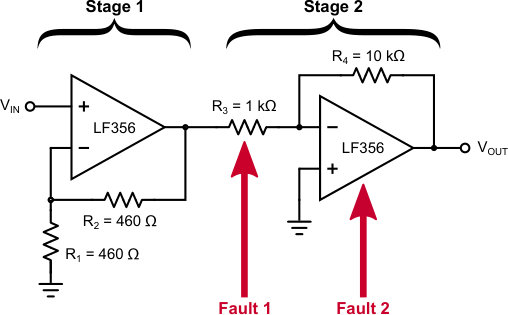 Figure 1
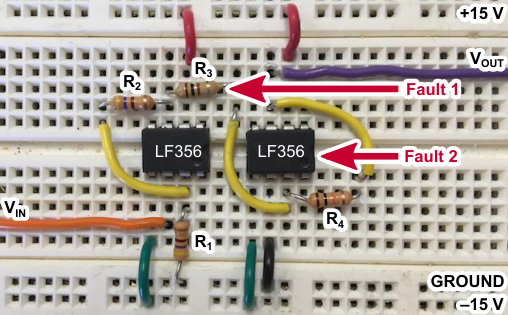 Figure 1
 Figure 2
Peer Reviews
No public reviews on file for this paper yet. If you reviewed it on a platform where reviews are public (OpenReview, ICLR, NeurIPS, ICML), you can paste yours below so the community can read it here.
Videos
No videos yet. Explain this paper in a talk, walkthrough, or lecture? Add one.