Formal Proof of the Weak Goodstein Theorem
Jean-Raymond Abrial

TL;DR
This paper presents a formal proof of the Weak Goodstein Theorem, illustrating how to teach complex mathematical proofs through systematic examples and refinement, aimed at enhancing student understanding.
Contribution
It provides a formal proof of the Weak Goodstein Theorem and demonstrates an effective approach to teaching complex proofs using examples from professional mathematics.
Findings
Formal proof of the Weak Goodstein Theorem
Educational method for teaching complex proofs
Application of proof refinement techniques
Abstract
For many years, I have been interested in introducing students to the development of complex systems by means of modelling and refinement. To this end, I did not find anything better than presenting many examples of system developments. However, I figured out that my examples were not explicit enough on how (mechanical) proofs are performed. So, besides courses presenting these examples and also some courses in various forms of proofs (propositional calculus, first order predicate calculus, set theory), I decided to study the work of professional mathematicians, thinking that it could be good examples for students. Among the works I already studied and reconstructed are the theorem of Zermelo, the theorem of Cantor-Bernstein, the planar graph theorem of Kuratowski, the topological proof of the infinity of primes of Furstenberg, the intermediate value theorem of Bolzano, the Archimedean…
Click any figure to enlarge with its caption.
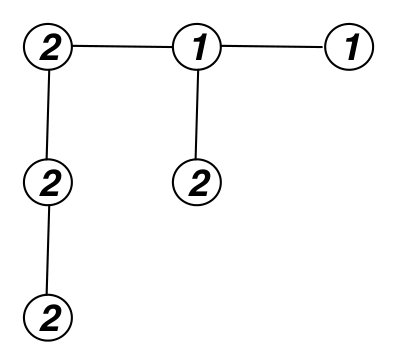 Figure 1
 Figure 2
 Figure 3
 Figure 4
Peer Reviews
No public reviews on file for this paper yet. If you reviewed it on a platform where reviews are public (OpenReview, ICLR, NeurIPS, ICML), you can paste yours below so the community can read it here.
Videos
No videos yet. Explain this paper in a talk, walkthrough, or lecture? Add one.
Taxonomy
TopicsMathematical and Theoretical Analysis · History and Theory of Mathematics · Quantum Mechanics and Applications
11institutetext: Marseille, France
Formal Proof of the Weak Goodstein Theorem
Jean-Raymond Abrial
1 Motivation
For many years, I have been interested in introducing students to the development of complex systems by means of modelling and refinement. To this end, I did not find anything better than presenting many examples of system developments. This is due to my inability to propose a unified theoretical treatment on this matter.
Of course, in these examples, I am always pointing out the importance of using some systematic mathematical approaches. However, I figured out that my examples were not explicit enough on how (mechanical) proofs are performed. So, besides courses presenting these examples and also some courses in various forms of proofs (propositional calculus, first order predicate calculus, set theory), I decided to study the work of professional mathematicians, thinking that it could be good examples for students.
I must say that I was a bit disappointed by what I discovered: proofs made by mathematicians, as presented in textbooks, are sometimes (for me) difficult to follow in details and thus could have some bad effects on students. As a consequence, I decided to reconstruct by myself some of the interesting proofs I found in the mathematical literature.
Among the works I already studied and reconstructed are the theorem of Zermelo, the theorem of Cantor-Bernstein, the planar graph theorem of Kuratowski, the topological proof of the infinity of primes of Fürstenberg, the intermediate value theorem of Bolzano, the Archimedean property of the set of Real numbers, and others.
More recently, I found that the Goodstein theorem was also very interesting. The purpose of this short note is to give some information about this theorem and the way I introduce a weak form of it to students.
2 The Goodstein Theorem
The theorem stated and proved in 1944 by Goodstein [1], is quite counterintuitive. To explain why, let me consider a weak form of it called, for this reason, the weak Goodstein theorem.
Given a number written in base 2 such as 25, that is 11001 (), we transform it by considering the same notation but this time in base 3, that is . We then subtract 1, yielding 108. We write now this number in base 4, and subtract 1 again, yielding 319. With base 5, we obtain 717, with base 6, 1423. We continue like this: increasing the base and decreasing the result. As can be seen from what is already mentioned, the successive numbers obtained in this way seem to grow up very rapidly: 25, 108, 319, 717, 1423, . . . . Nevertheless, the theorem says that this sequence eventually decreases and terminates at 0.
The strong Goodstein theorem is a little more general than the weak form what we have just described in the previous paragraph, and it is even more counterintuitive. It is not expressed with the classical base notation, as was the weak Goodstein theorem, but rather with the, so-called, hereditary base notation (explained in section 3).
Proofs of these theorems in the literature [1] [2] [3] [4] [5] make use of transfinite ordinal numbers. I found that this approach is rather complicated. So, I am looking for another (simpler) possibility. So far, I partially fail, at least for the strong Goodstein theorem. Its weak form however can be proved in a simple fashion. This is what I present here.
3 Hereditary Base Notation
By using the classical notation in base (where is a natural number greater than 1), any natural number is written as follows (base_n()):
[TABLE]
where all are natural numbers smaller than . As a simplification for this written form, we omit , we write as , as , and as 1. As an example, 25 (that is 16+8+1) is written as follows in base 2:
[TABLE]
By using a notation in hereditary base , the exponents used in the notation in base are also written in base and so on ():
[TABLE]
So, all natural numbers appearing when using the hereditary base notation are smaller than or equal to . As an example, 25 is written as follows in hereditary base 2:
[TABLE]
4 Data Structures for Base Notations
As we all know, writing a natural number in a certain base consists quite often in removing the base when it is obvious. As a result, we have just a sequence of digits (all smaller than the base). For example, 25 in base 2 is simply written: 11001. Such a sequence is organised as follows: it starts at index 0 and goes from right to left. Each number at index corresponds to the factor used with exponent . This is illustrated in Fig.1.
Fig. 1. Sequence representation of
Notice that in this representation we do not omit components of the forms , nor do we omit the 1 in those components of the form . We notice that this sequence representation does not depend on the base: corresponds to the same sequence (but not the same number) as or .
We wonder whether we could do the same (omitting the base) when using the hereditary technique. How could we remove all occurrences of 2 in 25 written in hereditary base 2: ? Here is a more elaborate example: in base 3 is and in hereditary base 3 it is . How could we remove all occurrences of 3?
The idea is to observe that we have three operations in such a representation: addition, exponentiation and multiplication by a factor. The outcome is a binary tree, where the horizontal branch corresponds to addition, the vertical branch to exponentiation, and finally the multiplication by a certain factor is just indicated by writing this factor in the corresponding node of the tree. The tree representation of (in hereditary base 3) is shown in Fig. 2.
Fig. 2. Tree representation of in hereditary base 3
As was the case in the previous section for the sequence representation, it is also very important to notice that the tree representation introduced in this section does not depend on the hereditary base. For example, the number is represented by the same tree in hereditary base 4 as is in hereditary base 3. To make the distinction between the two, it is necessary to write next to the tree the hereditary base that is used.
In coming sections, I will use the sequence data structure in order to prove the weak Goodstein theorem. I was hoping to use the tree data structure to prove the strong Goodstein theorem. But, so far, I failed.
5 Decreasing Sequence of Natural Numbers
Before engaging in a study of the weak Goodstein theorem in the next section, it is worth considering a simple decreasing sequence of natural numbers. The purpose of this highly simplified case is to show the main mechanism at work, namely lexicographical ordering. It is based on the following simple lemma valid for all positive natural numbers and :
[TABLE]
This lemma is easily provable by induction on . Applying this lemma to decreasing , we obtain the following:
[TABLE]
This is illustrated in Fig. 3.
Fig. 3. Sequence representations of and
Likewise, in base 3 we have:
[TABLE]
This is illustrated in Fig. 4.
Fig. 4. Sequence representations of and
It is interesting to observe the difference between in Fig. 3 and in Fig. 4. They both come from the same sequence, either understood to be in base 2 or in base 3. In the second one, all 1 used in the first one are replaced by 2. This is because 2 - 1 = 1 and 3 - 1 = 2.
By decreasing successively an initial number written by means of some base, we obtain a certain sequence and we can prove that such a sequence ends up with the natural number 0. More precisely, we have a lexicographical ordering.
6 Informal Proof of the Weak Goodstein Theorem
In the case of weak Goodstein sequences, decreasing is done in the same way as in the previous section except that we increase the base before decreasing. Applying this result to , we obtain the following:
[TABLE]
Although a weak Goodstein sequence seems to be increasing very rapidly, it happens that such a sequence obtained by applying this process in turn ends up eventually at 0. As a matter of fact, we have the following theorem:
Any weak Goodstein sequence eventually terminates at 0
Informal Proof: We already know that increasing the base does not modify the representation of a number as a sequence. Then decreasing by one after increasing the base just makes the resulting sequence lexicographically smaller than the previous one, hence the final result.
Here is the beginning of the weak Goodstein sequence starting at :
[TABLE]
On this sequence, lexicographical decreasing can be seen independently from the current base.
7 A More Formal Treatment of the Weak Goodstein Theorem
7.1 Constructing the sequence associated with a number in base
[TABLE]
[TABLE]
7.2 Value of the number associated with a sequence in base
[TABLE]
[TABLE]
7.3 The Weak Goodstein loop
Next is the loop producing successive elements of the weak Goodstein sequence in the variable .
[TABLE]
Now, the question is: does this loop terminate?
7.4 Formal Development Outline
Here is the way I develop the course for students. As can be seen, it allows me to develop various formal techniques.
-
How to prove loop termination
-
Definitions of well-founded relations (demo with Rodin toolset)
-
Various ways of proving well-foundedness (demo with Rodin toolset)
-
How to prove the termination of the Weak Goodstein loop
-
Refresher on strong well ordering relations (demo with Rodin toolset)
-
Refresher of various lexicographical ordering relations (demo with Rodin toolset)
-
Final Proof for the Weak Goodstein Loop
The reference list from the paper itself. Each links out to its DOI / PubMed record.
- 1[1] R.L. Goodstein On the restricted ordinal theorem. Journal of Symbolic Logic 9(1944)
- 2[2] M. Rathjen Goodstein’s Theorem Revisited Draft (2014)
- 3[3] A. E. Caicedo Goodstein’s Theorem. Revista Columbiana Matematicas (2007)
- 4[4] W. Gasarch Theorems that you simply don’t believe. Computational Complexity blog (2010)
- 5[5] L. Kirby and J. Paris Accessible Independent Results for Peano Arithmetic. Bulletin of the London Mathematical Society 4 (1982)
- 6[6] J. A. Perez A New Proof of Goodstein Theorem. Draft (2009)