Studying the Intervention of an Unusual Term in $f(T)$ Gravity via Noether Symmetry
Behzad Tajahmad

TL;DR
This paper introduces a novel term in $f(T)$ gravity involving a scalar field and its derivatives, analyzed via Noether symmetry, showing it aligns with observational data and supports late-time cosmic acceleration.
Contribution
The study proposes and investigates a new coupling term in $f(T)$ gravity, demonstrating its consistency and potential to explain late-time acceleration without anomalies.
Findings
The new term does not cause anomalies in the theory.
Numerical solutions match observational data on cosmic acceleration.
The term supports late-time accelerated expansion in $f(T)$ gravity.
Abstract
As usual, we observe an unknown coupling function, i.e. , with a function of torsion and also curvature, i.e. and , generally depending on a scalar field. In case, it comes from quantum correlations and other reasons. Now, what if beside this term in -gravity context, we enhance the action through another term which depends on both scalar field and its derivatives? In this paper, we have added such an unprecedented term in the generic common action of -gravity such that in this new term, an unknown function of torsion has coupled with an unknown function of both scalar field and its derivatives. We have explained why we can append such term, in the introduction in details. By the use of Noether symmetry approach, we have considered its behavior and effect. We have shown that it does not produce an anomaly, but rather it works successfully and…
Click any figure to enlarge with its caption.
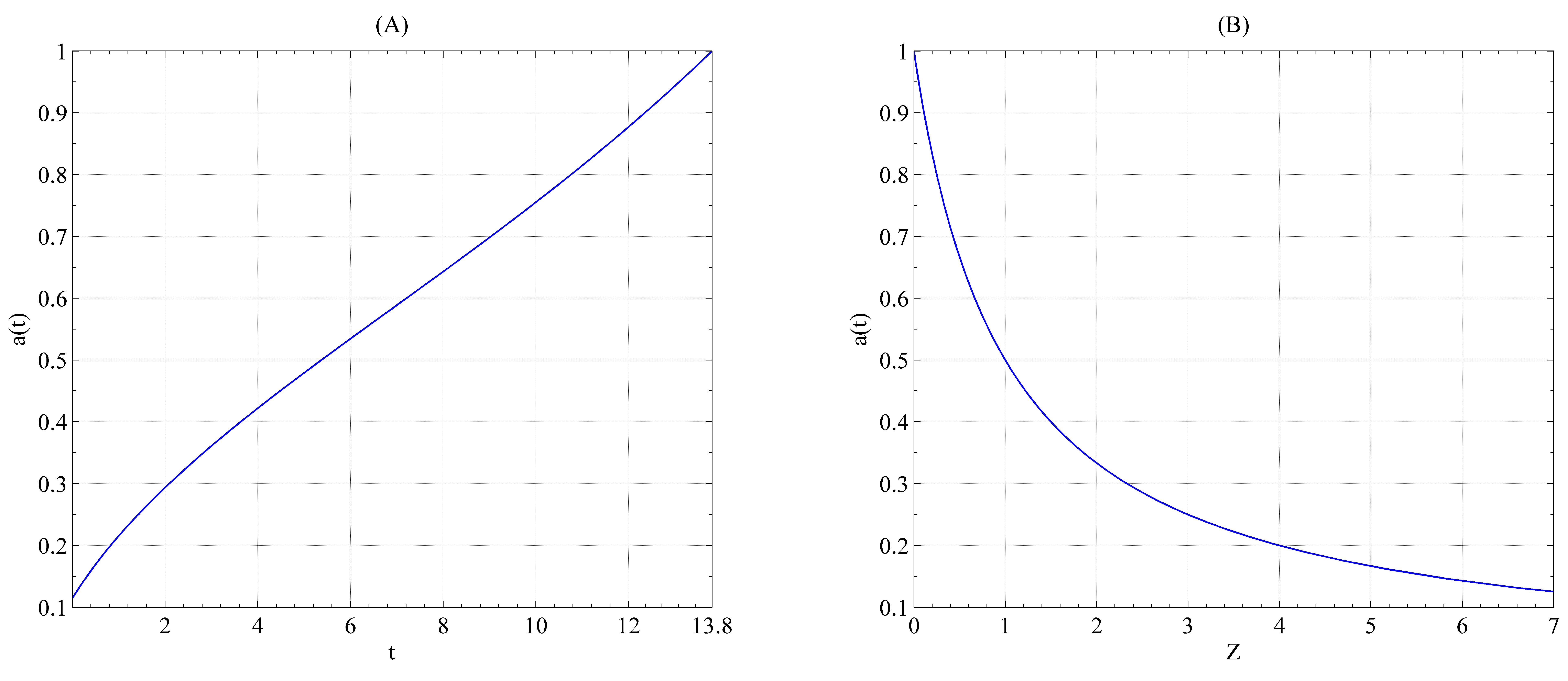 Figure 1
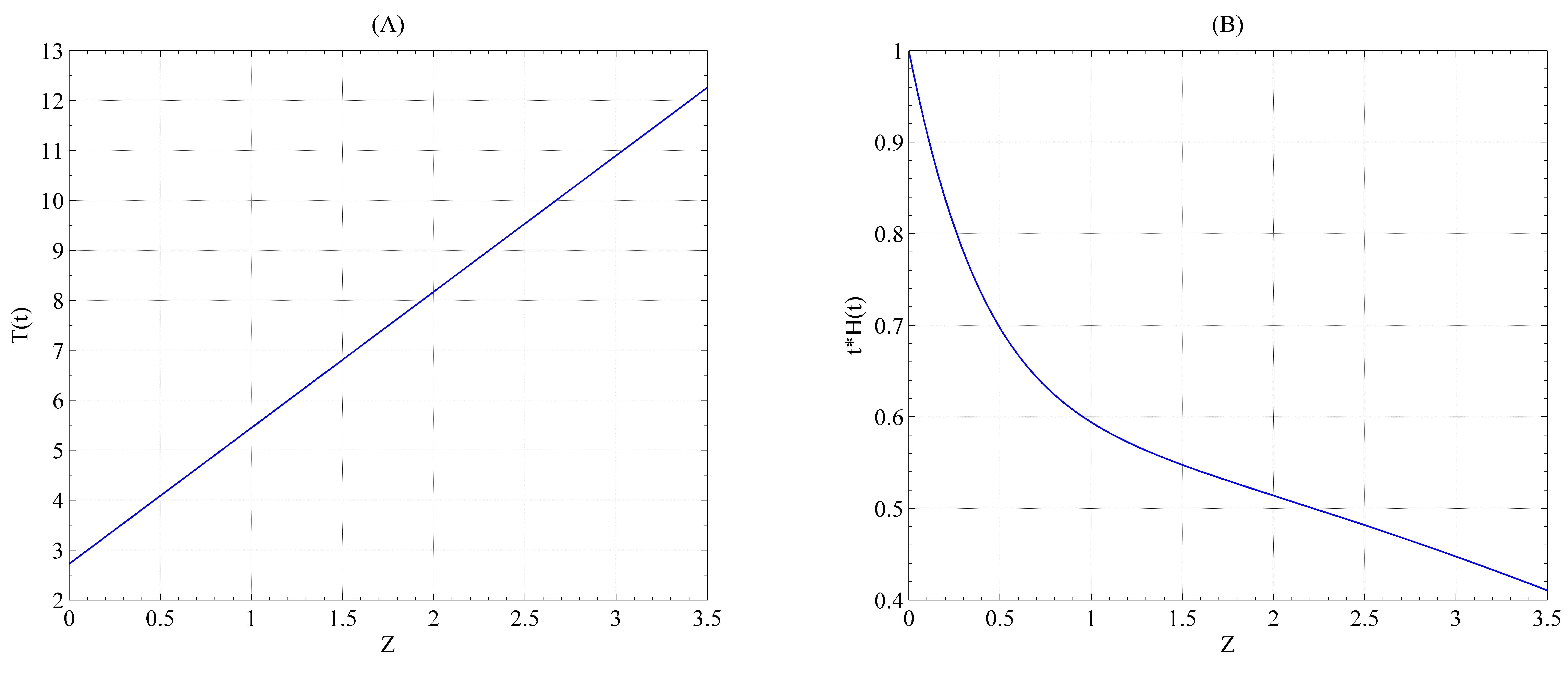 Figure 2
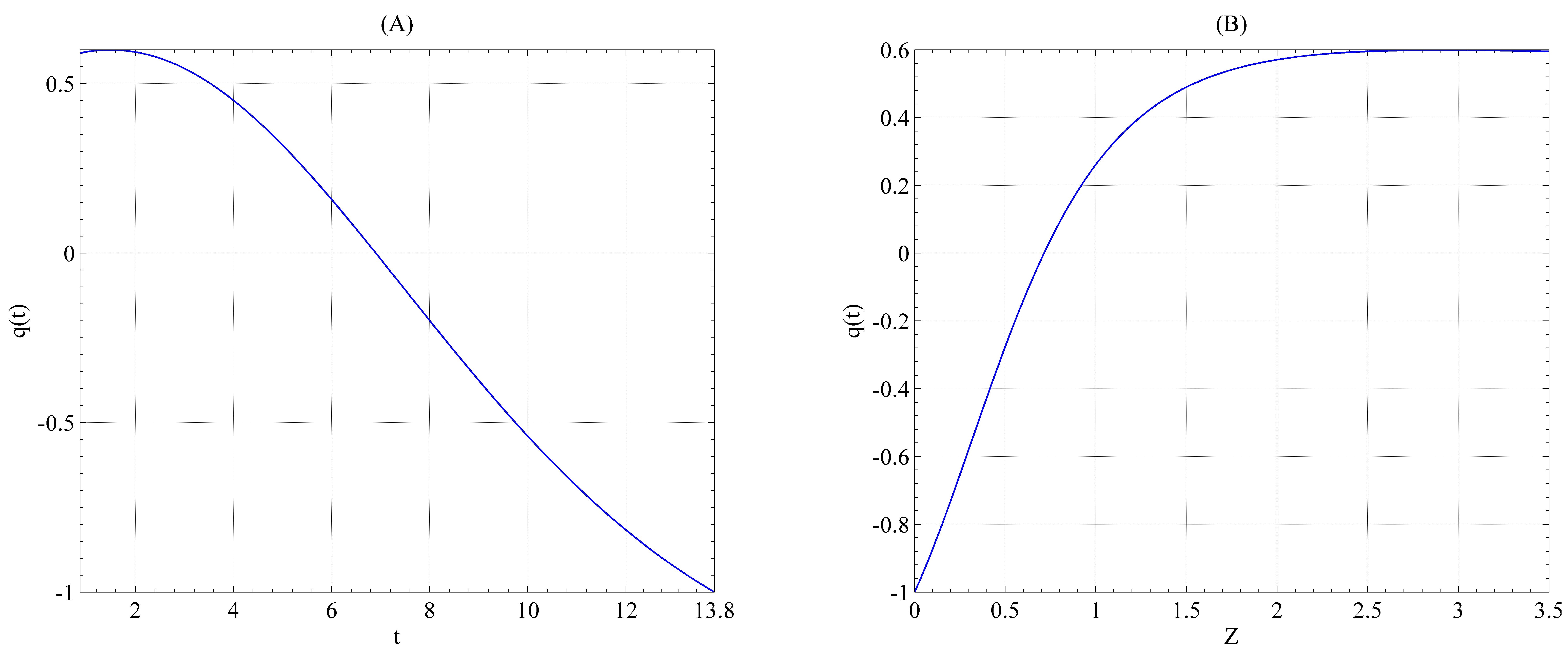 Figure 3
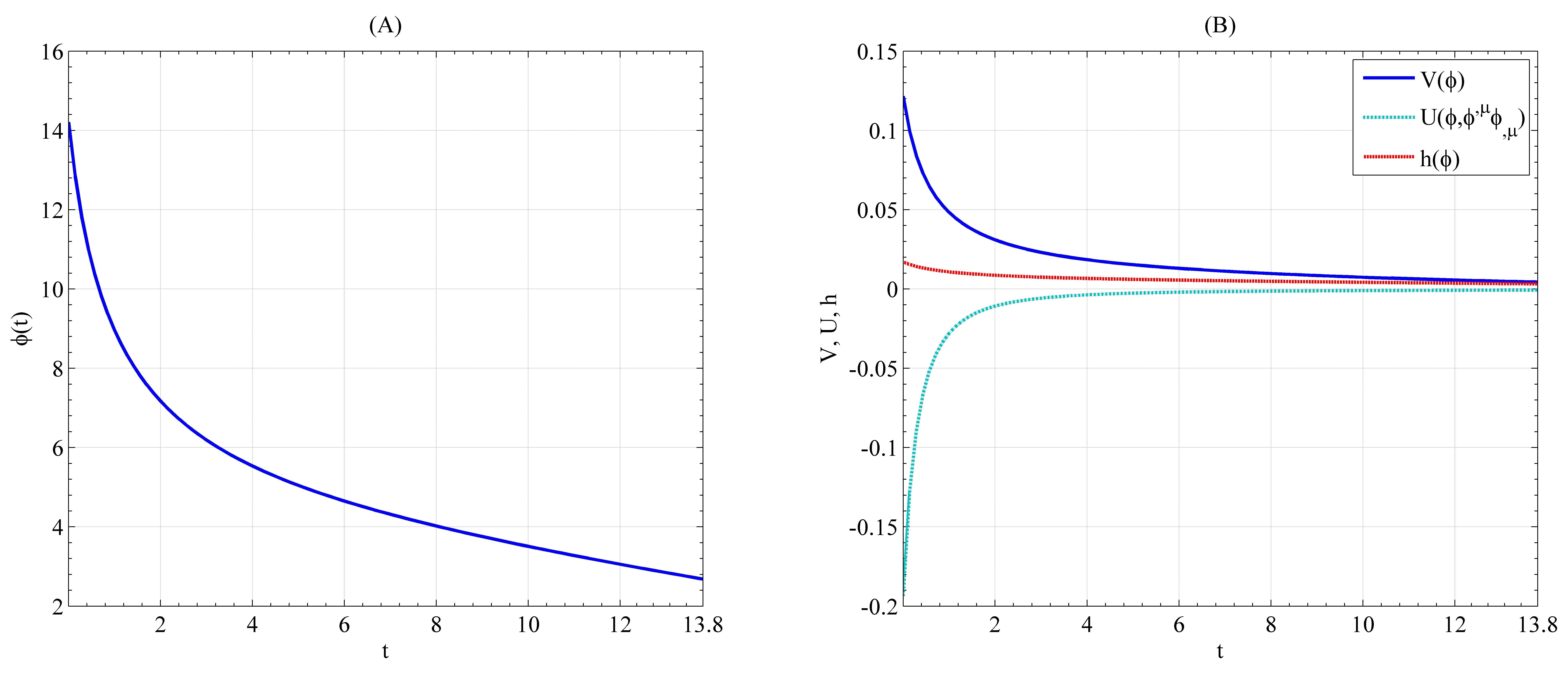 Figure 4
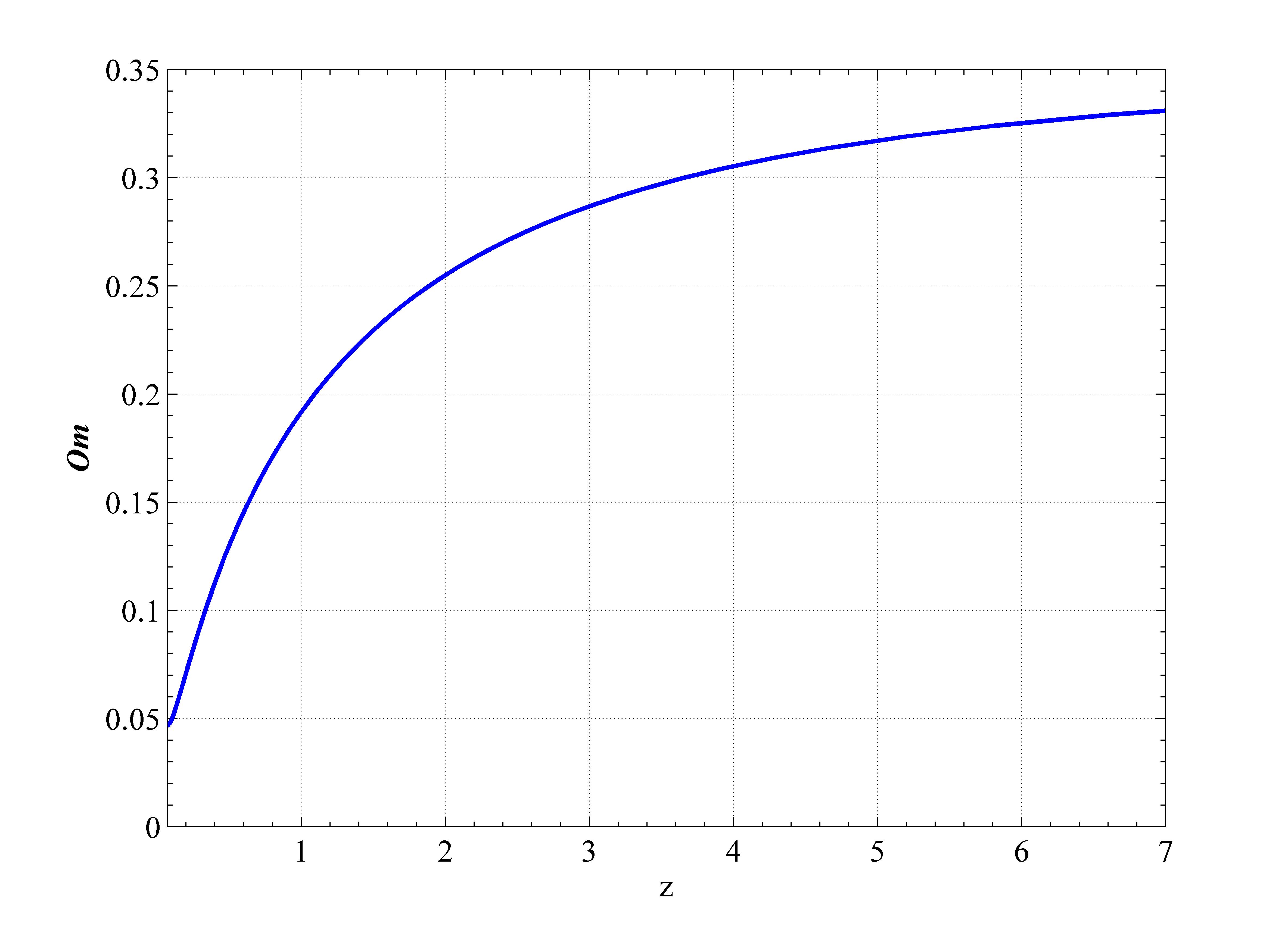 Figure 5
| Amounts of | (general case) | |||
|---|---|---|---|---|
| Named as … coupling | conformal | minimal | strong | (standard) non-minimal |
Peer Reviews
No public reviews on file for this paper yet. If you reviewed it on a platform where reviews are public (OpenReview, ICLR, NeurIPS, ICML), you can paste yours below so the community can read it here.
Videos
No videos yet. Explain this paper in a talk, walkthrough, or lecture? Add one.
Studying the Intervention of an Unusual Term in Gravity via Noether Symmetry
Behzad Tajahmad
Faculty of Physics, University of Tabriz, Tabriz, Iran
Abstract
As usual, we observe an unknown coupling function, i.e. , with a function of torsion and also curvature, i.e. and , generally depending on a scalar field. In case, it comes from quantum correlations and other reasons. Now, what if beside this term in -gravity context, we enhance the action through another term which depends on both scalar field and its derivatives? In this paper, we have added such an unprecedented term in the generic common action of -gravity such that in this new term, an unknown function of torsion has coupled with an unknown function of both scalar field and its derivatives. We have explained why we can append such term, in the introduction in details. By the use of Noether symmetry approach, we have considered its behavior and effect. We have shown that it does not produce an anomaly, but rather it works successfully and numerical analysis of the exact solutions of field equations coincide with all most important observational data particularly late-time-accelerated expansion. So, this new term may be added to the gravitational actions of -gravity.
I **Introduction **
Various astronomical and cosmological observations of the last decade, including CMB studies 1 , supernovae 2 ; 3 and large scale structure 4 , have provided a picture of the universe with accelerating expansion. This profound mystery leads us to the prospect that, either about of the universe is made up of a substance known as dark energy5 , about which we have almost no knowledge at all, or that General Relativity (GR) is modified at cosmological scales 6 ; 7 ; 8 . A simple candidate for the dark energy is the cosmological constant with the equation of state (EoS) parameter . However, the cosmological constant model is subject to the fine-tuning and coincidence problems 9 . In order to solve these problems, various dynamical dark energy models have been proposed consisting quintessence 10 ; 11 , phantom 12 ; 13 and quintom 14 ; 15 ; 16 . Since the quintessence type of matter could not give the possibility that , so the extended paradigms (i.e. phantom and quintom) are proposed 17 . Beside this unknown-nature dark energy, a second way which is about various gravitational modification theories like , and scalar-tensor have been lionized. One of the modifications of the matter part of the Einstein-Hilbert action is gravity as an extension of teleparallel gravity. Teleparallel Gravity (TG), demonstrably equivalent to general relativity, was initially introduced by Einstein for the sake of unifying the gravity and the electromagnetism. In TG we use Weitzenböck connection instead of the Levi-Civita connection, so we have torsion in lieu of curvature only. The field equations in this theory are second-order differential equations, while for the generalized theory they are fourth-order, thus it is simpler to analyze and elaborate the cosmic evolution 18 .
The actions of this context are likely to contain several scalar fields, but it is normally assumed that only one of these fields remains dynamical for a long period, eye-catchingly. We always see the coupling function of and also in the form of a function; that is, or , depending on the scalar field only. The motivation for the non-minimal coupling, in which , in the gravitational Lagrangian comes from many directions. However, this explicit non-minimal coupling was originally introduced in the context of classical radiation problems 19 , and also it is requested by renormalizability in curved space-time 20 . For different amounts of , we have the following table.
However, the values of in renormalizable theories depend on the class of theory 56 ; 57 . A nonzero is generated by first loop corrections even if it is absent in the classical action 21 ; 22 . A non-minimal coupling term is expected at high curvatures 23 , and it has been argued that classicalization of the universe in quantum cosmology indeed requires . Moreover, the non-minimal coupling can solve potential problems of primordial nucleosynthesis 24 and the absence of pathologies in the propagation of -waves seems to require conformal coupling for all non-gravitational scalar fields 25 . Any attempt to formulate quantum field theory on a curved space-time necessarily leads to modifying the Hilbert-Einstein action. This means adding terms containing non-linear invariants of the curvature tensor or non-minimal couplings between matter and the curvature originating in the perturbative expansion 26 ; 27 .
Now, let us take the following incomplete action
[TABLE]
into account. Eliminating the accelerating term by integral by parts, the corresponding point-like Lagrangian reads
[TABLE]
where . Here we assume the signature (+$$-$$-$$-) for the FRW’s metric components. On the other hand, in -gravity, pursuant to torsion’s form, we have no accelerating term, so in this case, we have no the last term in (1) in which derivative of the scalar field couples with scale factor and its derivative. Maybe, it is worth to note what happens when we insert the term as in the actions of f(T)-gravity context. As mentioned in the first paragraph of the introduction, the “Teleparallel” equivalent of General Relativity (TEGR). Altogether, in many cases, the authors construct the actions of -gravity via replacing the torsion insisted of curvature (for example, see 41 ; a1 ). However, when the non-minimal coupling is switched on the resulting theory exhibits different behavior. Hence, the last term in (1) is the inspiring for adding such term. The main purpose of the present work is to answer the aforementioned question by having recourse to the Noether symmetry approach.
Symmetries play a substantial role in the theoretical physics. It can safely be said that Noether symmetries are a powerful implement both to select models at a fundamental level and to find exact solutions for specific Lagrangians. In the literature, applications of the Noether symmetry in generalized theories of gravity have been superabundantly studied (for example see 28 ; 29 ; 30 ; 31 ; 32 ; 33 ; 34 ; 35 ; 36 ; 37 ; 38 ; 39 ; 40 ; 41 ; 42 ; 43 ; 44 ; 45 ; 46 ; 47 ; 48 ; 49 ; 50 ). Beside this useful approach, another lucrative approach as B.N.S. approach has recently been innovated 51 . B.N.S. approach may carry more conserved currents than Noether symmetry approach. Furthermore, sometimes Noether symmetry approach lacks achieving the purpose. In such cases, utilizing the B.N.S. approach is hobson’s choice. Also, with this new procedure, solving process of ordinary differential equation’s system, comprised of field equations and conserved currents, is a paved road.
The Noether theorem states that for a given lagrangian , defined on the tangent space of configurations , if the Lie derivative of the Lagrangian , dragged along a vector field X,
[TABLE]
where dot means derivative with respect to , vanishes 52
[TABLE]
then X is a symmetry for the dynamics and it generates the following conserved quantity (constant of motion)
[TABLE]
Alternatively, utilizing the Cartan one–form
[TABLE]
and defining the inner derivative
[TABLE]
we get,
[TABLE]
provided that (3) holds. The Eq. (7) is coordinate independent. Using a point transformation, the vector field X is rewritten as
[TABLE]
If X is a symmetry, so is (i.e. ), and a point transformation is chosen such that
[TABLE]
It follows that
[TABLE]
therefore, is a cyclic coordinate and the dynamics can be reduced. However, the change of coordinates is not unique and a clever choice would be advantageous 53 .
The structure of the paper is as follows. In section (II) we introduce the model and extract the point-like lagrangian and field equations. In section (III) we present the Noether symmetries, invariants and exact solutions of the model. Moreover, by data analysis, we demonstrate that the observational data corroborate our findings. In section (IV) we sum up the obtained graceful results.
II The model
Regarding the mentioned points in the second and third paragraphs of the introduction (I), we want to investigate the following gravitational action in extended gravity context
[TABLE]
where with being a vierbein (tetrad) basis, is the generic function describing the coupling between the scalar field and scalar torsion , indicates the covariant derivative of , is the unknown coupling function which we hypothesize it, in general, to depend on scalar field and gradients of it. This function coupled with an unknown function of torsion . Here, and are the coupling function and scalar potential, respectively. Note that the scalars here are caused by conformal symmetry 58 . We presume that the geometry of space–time is described by the flat FRW metric which is consistent with the present cosmological observations
[TABLE]
where the scale factor is a function of time. With this background geometry, the scalar torsion takes the form . First, for simplifying the action, we set the following form by assuming that two main parts of are separable
[TABLE]
where is an unknown function of the scalar field , and the dot represents a differentiation with respect to . We can not present any physical argument behind such choice for the unknown function , rather relies on the fact that it works fairly and the Hessian determinant turns out to be zero through this choice of function after finding the other unknown coupling functions via Noether approach. Moreover, speaking of the last term in (1) and mentioned points in the introduction, it is better we fit the second main part as at first. Using (11), (13) and the Lagrange’s method of undetermined coefficients, the action (11) can be written as
[TABLE]
where the Lagrange multiplier is derived by varying the action (14) with respect to
[TABLE]
in which the denotes a differentiation with respect to the torsion . So, the point-like Lagrangian corresponding to the action (11) becomes
[TABLE]
Hence, the Euler-Lagrange equations for the scale factor would be
[TABLE]
where the prime indicates a derivative with respect to . For the scalar field, , the Euler-Lagrange equation takes the following form
[TABLE]
which is the Klein-Gordon equation. The energy function which is the -Einstein equation, associated with the point-like Lagrangian (16) is found as
[TABLE]
And, the Euler-Lagrange equation for the torsion scalar reads
[TABLE]
From Eq. (20), there are three possibilities: (1) implying linearity for which is not interesting, for we have linear form of torsion in the action (11), (2) which leads to the linear form for the scalar field, so it is not suitable and (3) the possibility of
[TABLE]
which is the definition of scalar torsion for flat FRW.
III Exact Solutions Via Noether Symmetry Approach and Data Analysis
In this section, we utilize the Noether symmetry approach for solving Eqs. (17)-(20). The configuration space of the point-like Lagrangian (16) is whose tangent space is . The existence of the Noether symmetry implies the existence of a vector field X,
[TABLE]
where
[TABLE]
such that
[TABLE]
This condition yields the following system of linear partial differential equations
[TABLE]
[TABLE]
[TABLE]
[TABLE]
This system of linear partial differential equations can be solved by using the separation of variables. Hence, one may obtain
[TABLE]
in which , , , , , and are constants of integration and and . This solution holds for , only. Of course, has a physical nature as well, because the common form of can be given by the non-minimal coupling as , however, certain Grand-Unified theories lead to a polynomial coupling of the form , but on the other hand must be dimensionless, so should be equal to . According to (LABEL:sol_for_NS), symmetry generator turns out to be
[TABLE]
Hence corresponding conserved current is found as
[TABLE]
Since the form of has been specified (LABEL:sol_for_NS) and , and on the other hand, regarding the third option in Eq. (20), it is an ineffective shot to tow in . Therefore, the configuration space reduces to two . This means we can rewrite the point-like Lagrangian (16) free of by substituting the form of torsion . Now, by assuming that X is a symmetry, we seek a point transformations on the vector field X such that
[TABLE]
whereas in which and . Here is a cyclic variable. If we were to keep , then it had to be mapped to itself, i.e. . Solving the Eq. (29) leads to
[TABLE]
So, the corresponding inverse transformation is
[TABLE]
It is clear that (30) is an arbitrary choice since more general conditions are possible. The point-like Lagrangian (16) can be rewritten in terms of cyclic variables by (31) as
[TABLE]
in which we put and or equivalently . The Euler-Lagrange equations relevant to (32) are
[TABLE]
[TABLE]
Note that Eq. (33) is equivalent to I which is given by Eq. (28), so rewriting Eq. (28) in terms of cyclic variables does not add a new equation. And Hamiltonian constraint reads
[TABLE]
One can write in right side of Eq. (35) instead of zero, as in general, we have . Solving Eqs. (33)-(34) through (35) leads to
[TABLE]
[TABLE]
where ; are constants of integration. Doing inverse transformations by the use of Eq. (31) give the solutions of Eqs. (17)-(19) and (See Eq. (28)) as
[TABLE]
[TABLE]
Therefore, these solutions carry two conserved currents; (Eq. (19)) and I (Eq. (28)) that correspond to two symmetry generators and X (Eq. (27)), respectively.
For illustrating the descriptions of late-time-accelerated expansion from the perspective of the studied model, we single out the constants as below
[TABLE]
We present five figures with data analysis with time unit 1 Gyr . The behavior of the scale factor versus time and redshift in figure 1 imply; first, the scale factor with increasing nature expressing initially the decelerated and then accelerated expansion of the universe (See figure 1(A)), second, the scale factor versus redshift plot 1(B), confirms that the present value of the scale factor is exactly , so, from figure 1(A) we learn that the age of universe is Gyr. As usual, ignoring small variation of the prefactor, we consider that the CMBR temperature falls as , then, the present value of it is, K (See figure 2(A)). The evolution of the Hubble parameter (not presented) gives its present value, yr*-1* Km.s*-1*.Mpc*-1*. It is a nice result, since the recent observational data tell Km.s*-1*.Mpc*-1* 60 . Therefore , which fits the observational data with high precision, as plotted in figure 2(B). Figure 3(A) indicates deceleration parameter, , versus time plot. It shows a pass from negative to positive values which states first decelerating universe, , then accelerating universe, , and the present value of it, is , as we expect. Limpidly, renders the inflection point (i.e. shifting from decelerated to accelerated expansion in figure 1(A)). So, at redshift or equivalently Gyr acceleration started (See figure 3(B)). It coincides with the astrophysical data, for observational data concede that at redshift , or equivalently at about half the age of the universe acceleration commenced. It is well-known that scalar field must decrease with time. As figure 4(A) shows, our scalar field is consistent with this point. Figure 4(B) indicates the manners of the scalar potential , coupling function and versus time. The behavior of scalar potential is admissible (i.e. detractive in face of time). With an eye to action (11), we found that the terms and have different sign. So, by applying the minus sign of we learn that both and are positive and have subtractive behaviors versus time. A marked difference between those is that falls sharply than . It is obvious that has a narrow band around zero, and may this restricts the behavior of . In addition, all these three functions turn out to be almost constants with a little difference from that of the present time. Before terminating this section, we would like to investigate the Om-diagnostic analysis. In this manner, we present the figure 5 which shows the Om-diagnostic parameter versus redshift. The Om-diagnostic is an important geometrical diagnostic proposed by Sahni et al. 54 , in order to classify the different dark energy (DE) models. The is able to distinguish dynamical DE from the cosmological constant in a robust manner both with and without reference to the value of the matter density. It is defined as 55
[TABLE]
For dark energy with a constant equation of state (EoS) , it reads
[TABLE]
so, states the CDM model, therefore the regions and correspond with quintessence () and phantom (), respectively. The figure 5 indicates phase crossing from quintessence () to phantom (). Hence, now we are in phantom phase.
IV Conclusion
Owing to the mentioned fact in the introduction (I), we applied the term within a generic action in -gravity context in FRW background space-time. Whereas the resulting system was overdetermined, so for simplifying the action we did a suitable choice for the unknown function by assuming the separation of two main parts. Then by applying the Noether symmetry approach and using cyclic variables method, we could reach at nice results as our data analysis showed deep compatible results with observational data.
In a nutshell, some of our noteworthy findings were,
The present value of the scale factor is (i.e. ), so the present value of temperature may be found as K. 2. 2.
Age of the universe Gyr. 3. 3.
The resulting model can give Late-time-accelerated expansion. The universe before entering accelerated expansion epoch, became a victim of Friedmann-like matter dominated era for quite a long time. Thus, acceleration dawns at the redshift value which is equivalent to Gyr that is about half the age of the universe. 4. 4.
The present value of the Hubble parameter is yr*-1* or equivalently
Km.s*-1*.Mpc*-1*. 5. 5.
. 6. 6.
The present value of the deceleration parameter is . 7. 7.
Om-diagnostic shows phase crossing from quintessence to phantom phase.
The added extra function, , affected like the scalar potential with the difference that decayed sharply than . Moreover, around the present time, their amount had negligible difference.
Considering the deep compatible results with astrophysical and observational data, we conclude that entering such term, , to the scope of the actions of -gravity, not only has no anomalous effect (at least in studied case) but it may give desired results.
Acknowledgment
I thank Professor Sergei D. Odintsov for useful remarks.
The reference list from the paper itself. Each links out to its DOI / PubMed record.
- 1(1) C. B. Netterfield, Astrophys. J., 571 , 604 (2002).
- 2(2) D. N. Spergel, et al, Astrophys. J. Suppl. S., 170 , 377 (2007).
- 3(3) S. Perlmutter, et al., Nat., 391 , 51 (1998).
- 4(4) S. Cole, et al., Mon. Not. Roy. Astron. Soc., 362 , 505 (2005).
- 5(5) P. A. R. Ade, et al., Astron. Astrophys., 571 , A 1 (2014).
- 6(6) S. Nojiri, S. D. Odintsov, Int. J. Geom. Methods M., 4 , 115 (2007).
- 7(7) T. P. Sotiriou, V. Faraoni, Rev. Mod. Phys., 82 , 451 (2010).
- 8(8) S. Nojiri, S. D. Odintsov, Phys. Rep., 505 , 59 (2011).