A universal model for carbon dioxide uptake by plants
Han Wang, I. Colin Prentice, William K. Cornwell, Trevor F. Keenan, Tyler W. Davis, Ian J. Wright, Bradley J. Evans, Changhui Peng

TL;DR
This paper introduces a simple, universal model for how plants take up carbon dioxide, based on evolutionary principles and validated with global data.
Contribution
A new theoretical model for plant carbon dioxide uptake grounded in evolutionary optimality and validated across biomes.
Findings
The model accurately predicts carbon isotope data from over 3500 global measurements.
A single equation unifies light use efficiency and C3 photosynthesis models for predicting plant productivity.
The model successfully predicts gross primary production at flux sites with just two parameters.
Abstract
The rate of carbon uptake by land plants depends on the ratio of leaf-internal to ambient carbon dioxide partial pressures1, here termed χ. This quantity is a key determinant of both primary production and transpiration and the relationship between them. But current models for χ are empirical and incomplete, contributing to the many uncertainties afflicting model estimates and future projections of terrestrial carbon uptake2,3. Here we show that a simple evolutionary optimality hypothesis4,5 generates functional relationships between χ and growth temperature, vapour pressure deficit and elevation that are precisely and quantitatively consistent with empirical χ values from a worldwide data set containing > 3500 stable carbon isotope measurements. A single global equation embodying these relationships then unifies the empirical light use efficiency model with the standard model of C3…
Genes, proteins, chemicals, diseases, species, mutations and cell lines named across the full text — each resolved to its canonical identifier and authoritative record.
Click any figure to enlarge with its caption.
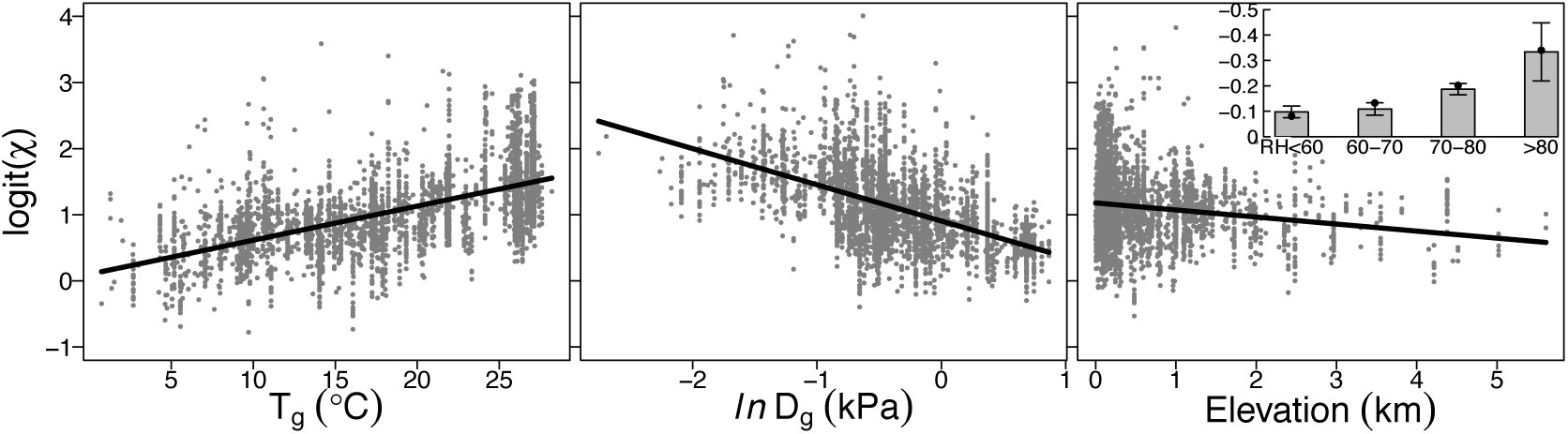 Figure 1
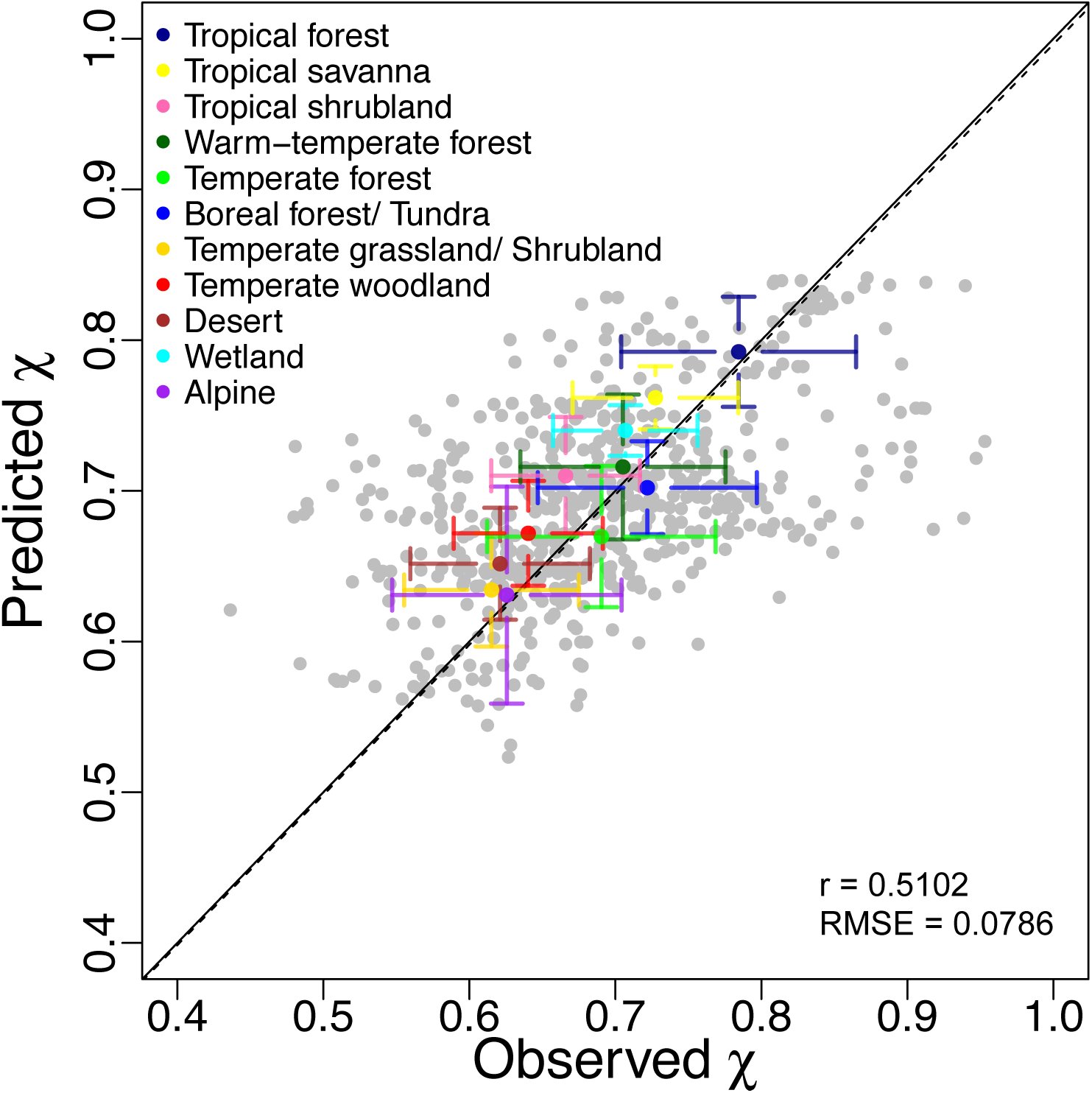 Figure 2
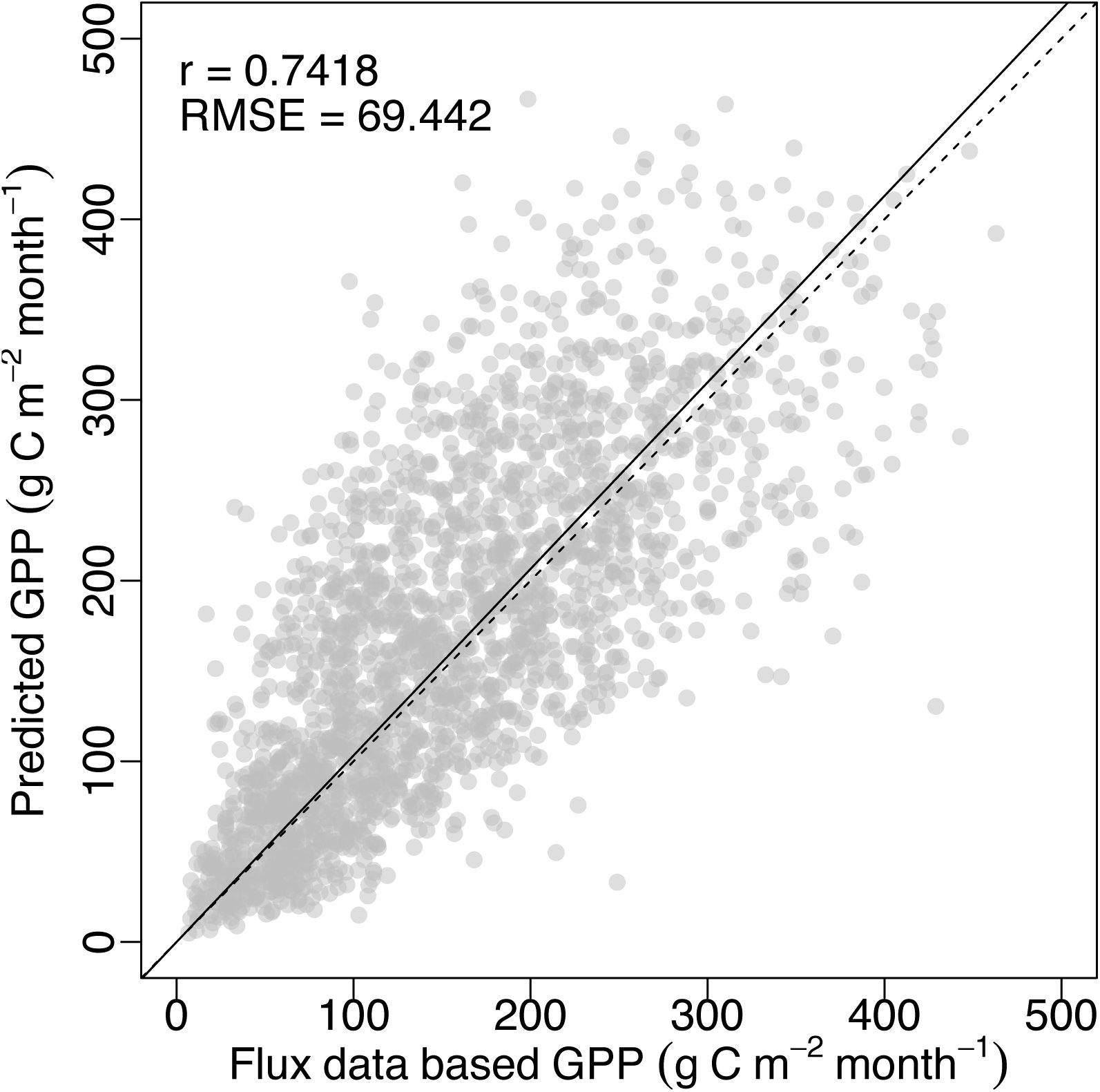 Figure 3










Peer Reviews
No public reviews on file for this paper yet. If you reviewed it on a platform where reviews are public (OpenReview, ICLR, NeurIPS, ICML), you can paste yours below so the community can read it here.
Videos
No videos yet. Explain this paper in a talk, walkthrough, or lecture? Add one.
Taxonomy
TopicsPlant Water Relations and Carbon Dynamics · Plant responses to elevated CO2 · Atmospheric and Environmental Gas Dynamics
Main
Current Earth System Models (ESMs) disagree even on the most basic processes in the global carbon cycle, including terrestrial CO_2_ uptake^2^,^3^ – suggesting a need to revisit foundational questions in ecosystem science^7^,^8^. Depending on their history and purpose, ESMs represent plant CO_2_ uptake either with the standard model of Farquhar et al.^1^, which accurately describes the instantaneous environmental and physiological controls of photosynthesis, or with the empirical light use efficiency (LUE) model, which can predict primary production over weeks to months^6^,^9^. These approaches have served for the past three decades as parallel frameworks for relating primary production to environmental drivers, but the connection between them remains tenuous^9^. Moreover, large-scale implementations of both require independent information to be provided, such as photosynthetic capacities (Vcmax and Jmax) and the ratio of leaf-internal (ci) to ambient (ca) CO_2_ concentrations (here termed χ) in the Farquhar model, and response functions for various environmental factors in the LUE model. There is no accepted general way to do this^10^,^11^, and as a result, different implementations of apparently the same model can give very different answers in different ESMs.
The biochemical reactions of photosynthesis are critically dependent on the value of χ^12^ CO_2_ diffuses into leaves through the stomata (microscopic pores in the leaf surface) towards the chloroplasts, where reducing power derived from solar energy is used to assimilate CO_2_ into organic forms through the Calvin cycle. χ is tightly regulated by the responses of stomatal aperture to environment. χ determines the availability of CO_2_ for assimilation, and thus constrains both the carboxylation‐ and electron transport-limited photosynthetic rates. However, current models that explicitly predict χ represent only its response to moisture, and even this is represented by several approximate and non-equivalent formulations (for more information on the theoretical background see Supplementary Methods S1)^13^. A firm basis for the prediction of χ is thus an essential step towards a first-principles representation of terrestrial plant carbon uptake. Here we derive a theory for the dependencies of χ on growing-season air temperature (Tg), vapour pressure deficit VPD (Dg), and elevation (z) based on the least-cost hypothesis^4^,^5^, which states that plants minimize the combined costs of maintaining the capacities for carboxylation (maintaining the activity of Rubisco, the primary carboxylating enzyme, and other photosynthetic proteins) and transpiration (maintaining living tissues to support water transport) required to achieve a given assimilation rate. The theory is tested against effective growing-season values of χ derived from a global compilation of stable carbon isotope (δ^13^C) measurements on leaves of C_3_ plants (Fig. S1). The additional hypothesis of co-limitation between carboxylation‐ and electron transport-limited photosynthetic rates is then used to provide a universal model of gross primary production (GPP), which unifies the Farquhar and LUE models.
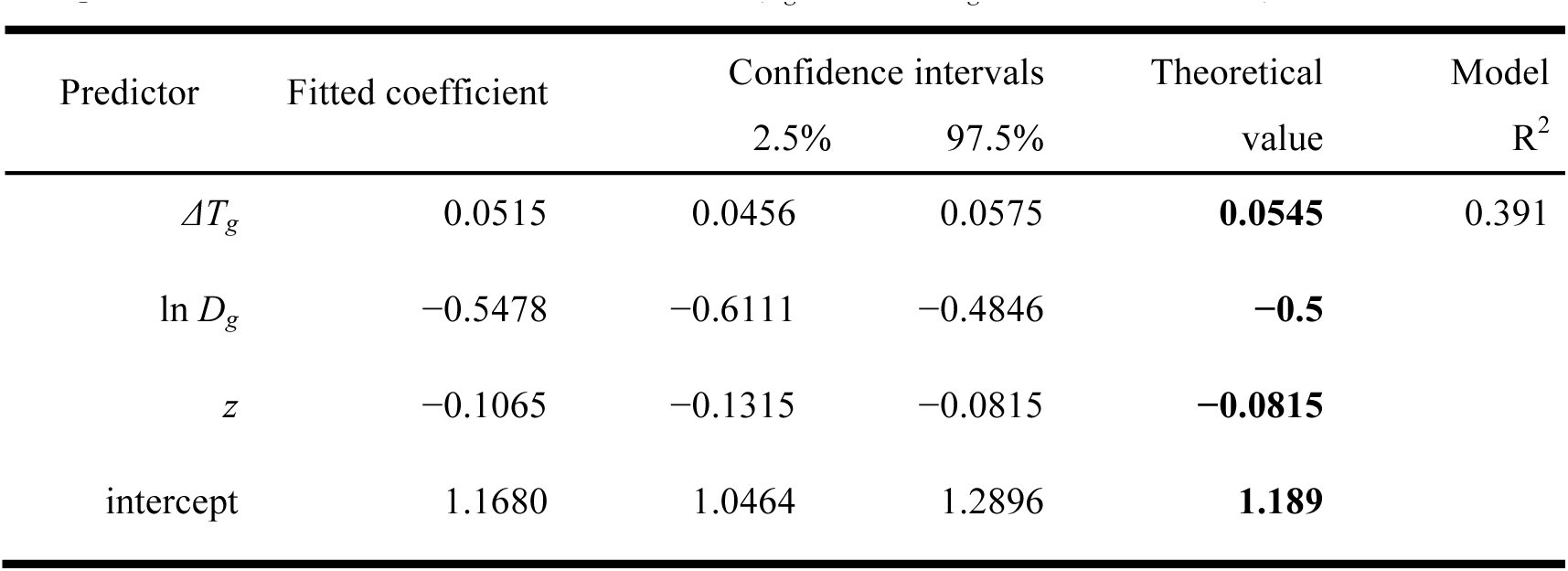
Logit transformation of the predicted optimal value of χ (termed χ∘) yields remarkably simple theoretical partial relationships with each of the three environmental predictor variables (Supplementary Methods S2). The predicted effects of each variable are shown to be quantitatively consistent with those inferred from the data, within their uncertainties (Fig. 1, Table 1). Theory and data agree that logit (χ) rises by ~ 0.0545 per degree due to both increased assimilation costs (the affinity of Rubisco for CO_2_ versus O_2_ declines at higher temperatures) and reduced water transport costs (the viscosity of water also declines); falls by 0.5 per unit increase of ln Dg due to the increase in transpiration costs imposed by increasing D; and falls by ~ 0.0815 per km elevation due to reduced O_2_ pressure (increasing the affinity of Rubisco for CO_2_) and increased transpiration costs (because the saturated vapour pressure of water remains constant while the actual vapour pressure, ceteris paribus, declines). Thus, χ increases with temperature by ~ 0.01 K^−1^, decreases with VPD by ~ 0.1 kPa^−1^, and decreases with elevation by ~ 0.01 km^−1^. By imposing the theoretical values for the three environmental effects on χ, we estimate an intercept of 1.189, close to the fitted value of 1.168. The fully linearized theoretical model is then: [eqn] which is statistically indistinguishable from the fitted model for χ (Table 1).
Partial residual plots from the regression of logit-transformed χ against environmental predictors. χ, the ratio of leaf-internal to ambient CO2 partial pressures. ΔTg, = growing-season mean temperature Tg - 25°C. ln Dg, natural logarithm of growing-season mean vapour pressure deficit. Inset shows elevation responses for relative humidity (RH, %) classes, compared to predicted responses (black dots) evaluated at the centre of each class.
Table 1.: Regression summaries.Logit-transformed values of the ratio of leaf-internal to ambient CO2 partial pressure (χ), derived from δ13C measurements, were regressed against the difference between growing-season mean temperature Tg and 25°C (ΔTg, °C), the natural logarithm of growing-season mean VPD (ln Dg, kPa), and elevation (z, km). Theoretical values are partial derivatives with respect to each predictor, evaluated for standard conditions (Tg = 25 °C, Dg = 1 kPa, z = 0 km).
Equation (1) yields χ∘ = 0.77 under standard conditions (Tg = 25 °C, Dg = 1 kPa, z = 0 km). The predicted elevation effect increases with relative humidity (RH), becoming arbitrarily large as RH approaches 100% (Supplementary Methods S2). As predicted, the fitted (negative) slope of logit (χ) with elevation becomes larger with RH, most steeply at high RH (Fig. 1). Using an independent dataset of instantaneous CO_2_ and water exchange measurements^14^, we also show - consistent with equation (1) - that the single parameter determining the sensitivity of χ∘ to VPD is influenced by temperature, but not by VPD (Table S1).
χ∘ values from equation (1) are consistent with observed χ across biomes (r = 0.51) (Fig. 2). Highest values are in hot, wet, low-elevation sites (tropical forests), lowest in cold and/or dry and/or high-elevation sites (deserts, polar and alpine vegetation). χ∘ ranges globally from 0.4 to almost 1.0 (Fig. S2). The reduction from the equator towards mid-latitudes is due to aridity while that in high latitudes is due to declining temperatures (Fig. S3). The elevation effect on χ is long-known, but has not been satisfactorily explained^15^,^16^. By predicting it in the same framework that accounts for climate effects, we have resolved a long-standing conundrum, showing that the unit cost of photosynthesis is reduced while that of transpiration is increased with elevation, leading to reduced χ∘.
Site-mean leaf-internal to ambient CO2 partial pressures (χ). Predictions from the theoretical model driven by three environmental variables (Table 1); observations from the global δ13C dataset. Mean and standard deviation are shown for each biome. Biome type for each site were assigned based on mega-biome classification from BIOME430 for consistency of definitions and wetland and alpine types from literatures records. The regression line through the origin is imposed as the black solid line; the dashed line is the 1:1 line.
Some published analyses focused on leaf δ^13^C as a palaeoclimate indicator^15,17,18^. Unlike the well-documented effect of aridity on δ^13^C, these analyses detected no temperature effect, even through it is predicted both by the earlier Cowan-Farquhar criterion^19^ and by the least-cost hypothesis^4^ and has been shown both in short-term experiments^14^,^20^ and in field data^4^. Mean annual precipitation (MAP) has previously been used to represent plant water availability; the lack of an observed temperature effect might then be an artefact, because MAP tends to increase with temperature. We showed a significant (but much weakened) effect of temperature when MAP was substituted for VPD (Table S2) based on our much larger data set. However the controlling variable is VPD, not MAP.
No significant difference was found between woody and non-woody plants (Fig. S4). The most parsimonious interpretation for the statistical significance of plant functional type (PFT) differences in χ detected here and elsewhere is as an indirect effect caused by different PFTs’ climatic preferences^14^. This interpretation is strongly supported by Fig. S4, which shows that differences in ^13^C discrimination among PFTs are predicted correctly by the universal model. We did however show a slightly lower χ for evergreen needleleaf trees than the other PFTs (Fig. S4). This is consistent with higher intrinsic water use efficiency in conifer forests than broadleaf forests, and could be attributed to the lower permeability of gymnosperm wood (the consequence of narrower conducting elements)^21^. According to our analysis, the estimated water cost is 20% higher in gymnosperms, even though the resulting difference in χ from this component is slight (3%: Supplementary Methods S2). The slightly overestimated χ for evergreen needleleaf trees by the universal model, and the spread of observed χ values around the central tendency, suggest that distinguishing hydraulic influences on the controls of unit transpiration costs, in particular, might further improve predictability.
We detected a significant negative response of χ to soil pH, explaining an additional 5% of variance. This finding is consistent with a soil-calcium restoration experiment that enhanced annual evapotranspiration by 20%^22^, and other findings of high χ on acid substrates^23^. The framework could be extended to consider N uptake costs, which may be higher (favouring investment in water transport) on less fertile soils.
The co-limitation hypothesis, stating that the two photosynthetic processes of carboxylation and transport are coupled such that photosynthetic rates limited by those two processes are equal under typical daytime conditions, provides the necessary next step towards a universal model of GPP^24^,^25^. The hypothesis implies adjustment of Vcmax in time and space to match environmental conditions^25^. Extensive field measurements also point to an optimal maximum rate of electron transport, Jmax that maximizes the photosynthetic benefits minus the costs of maintaining the electron-transport chain^26^ (Supplementary Methods S4). We can thereby eliminate both Vcmax and Jmax as independent predictors, to derive a first-principles model: [eqn] where [eqn]
Here φ0 is the intrinsic quantum yield of photosynthesis (1.02 g C mol^−1^)^27^, Iabs is the absorbed photosynthetic photon flux density (PPFD, mol m^−2^ s^−1^), Γ^^ is the photorespiratory compensation point (Pa), n^^ is the viscosity of water relative to its value at 25°C, β represents the ratio of carboxylation and transpiration costs at 25°C (β ≈ 240, estimated from the constant in equation 1), and c^^ is the unit carbon cost for the maintenance of electron transport capacity, ≈ 0.41 (estimated from observed J_ma_x-V_cmax_ ratios) (Fig. S5). LUE is the product of φ_0, m and the square-root term in equation (2); thus, GPP is proportional to Iabs*, which can be calculated from incident PPFD and remotely sensed green vegetation cover. Predicted monthly GPP compared well with monthly GPP derived from CO_2 flux measurements (Fig. 3). Predicted global total annual GPP is 120 Pg C, within the accepted range^28^.
Monthly gross primary production (GPP). Predictions from equations (2) and (3); observations based on CO2 flux data in the FLUXNET archive. The regression line through the origin is imposed as the black solid line; the dashed line is the 1:1 line.
Additional testable predictions arise, for example on the controls of net primary production (NPP). Our results intriguingly parallel findings from metabolic scaling theory, whereby monthly NPP was predicted and found to be proportional to growing-season length and biomass but to show a weakly negative response to temperature^29^. Many potential complications, such as the environmental dependencies of mesophyll conductance^20^, the influence of soil fertility factors on nutrient acquisition costs, and the differences among photosynthetic pathways, have been neglected so far; yet this simplistic model’s predictive skill suggests a promising route to an improved predictive understanding of terrestrial carbon and water cycling.
The reference list from the paper itself. Each links out to its DOI / PubMed record.
- 1Farquhar, G. D., von Caemmerer, S., & Berry, J. A., A biochemical model of photosynthetic CO 2 assimilation in leaves of C 3 species. Planta 149, 78–90 (1980).
- 2Ciais, P., et al. Carbon and other biogeochemical cycles. In: Climate Change 2013: the Physical Science Basis. Contribution of Working Group I to the Fifth Assessment Report of the Intergovernmental Panel on Climate Change. 465–570 (Cambridge University Press, 2014).
- 3Friedlingstein, P., et al. Uncertainties in CMIP 5 climate projections due to carbon cycle feedbacks. Journal of Climate 27, 511–526 (2014).
- 4Prentice, I. C., Dong, N., Gleason, S. M., Maire, V., & Wright, I. J., Balancing the costs of carbon gain and water transport: testing a new theoretical framework for plant functional ecology. Ecology letters 17, 82–91 (2014).
- 5Wright, I. J., Reich, P. B., & Westoby, M. Least-cost input mixtures of water and nitrogen for photosynthesis. The American Naturalist 161, 98–111 (2003).
- 6Monteith, J. L., Solar radiation and productivity in tropical ecosystems. Journal of Applied Ecology 9, 747–766 (1972).
- 7Prentice, I. C., Liang, X., Medlyn, B. E., & Wang, Y. P., Reliable, robust and realistic: the three R's of next-generation land-surface modelling. Atmospheric Chemistry and Physics 15, 59876005 (2015).
- 8Wang, H., Prentice, I. C., & Davis, T. W., Biophsyical constraints on gross primary production by the terrestrial biosphere. Biogeosciences 11, 5987–6001 (2014).