Genetic risk for autism spectrum disorders and neuropsychiatric variation in the general population
Elise B. Robinson, Beate St. Pourcain, Verneri Anttila, Jack Kosmicki, Brendan Bulik-Sullivan, Jakob Grove, Julian Maller, Kaitlin E. Samocha, Stephan Sanders, Stephan Ripke, Joanna Martin, Mads V. Hollegaard, Thomas Werge, David M. Hougaard, iPSYCH-SSI-Broad Autism Group

TL;DR
This study shows that genetic risk factors for autism exist in the general population and affect a range of social and developmental traits, not just severe cases.
Contribution
The study demonstrates that both inherited and de novo genetic variations link autism risk to a continuum of behavioral traits in the general population.
Findings
Genetic risk for autism is associated with typical variation in social behavior and adaptive functioning.
Both inherited and de novo genetic variations contribute to a continuum of behavioral and developmental traits.
The continuum model suggests that severe manifestations of these traits can lead to autism or other neuropsychiatric diagnoses.
Abstract
Almost all genetic risk factors for autism spectrum disorders (ASDs) can be found in the general population, but the effects of that risk are unclear in people not ascertained for neuropsychiatric symptoms. Using several large ASD consortia and population based resources, we find genetic links between ASDs and typical variation in social behavior and adaptive functioning. This finding is evidenced through both inherited and de novo variation, indicating that multiple types of genetic risk for ASDs influence a continuum of behavioral and developmental traits, the severe tail of which can result in an ASD or other neuropsychiatric disorder diagnosis. A continuum model should inform the design and interpretation of studies of neuropsychiatric disease biology.
Click any figure to enlarge with its caption.
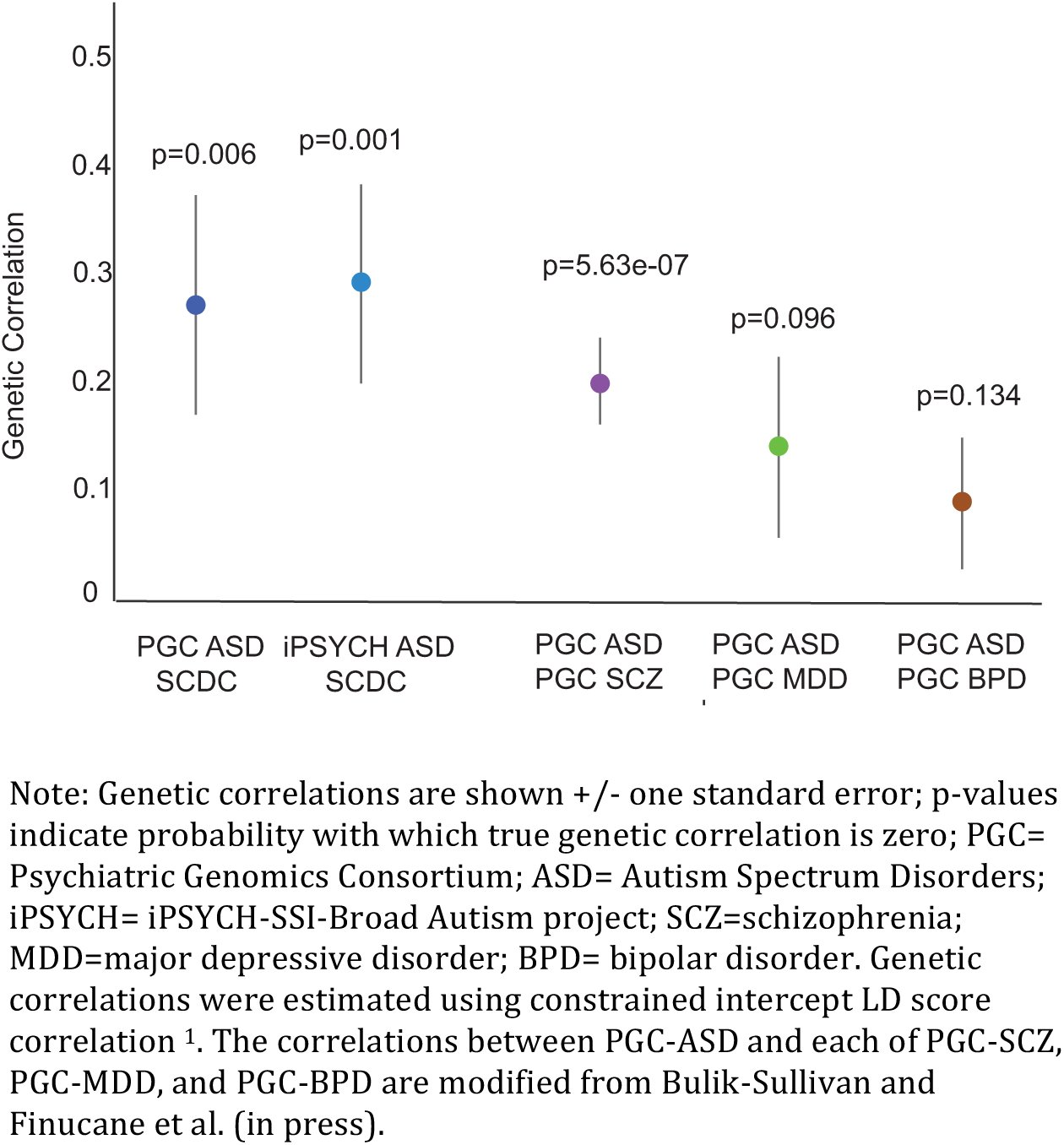 Figure 1
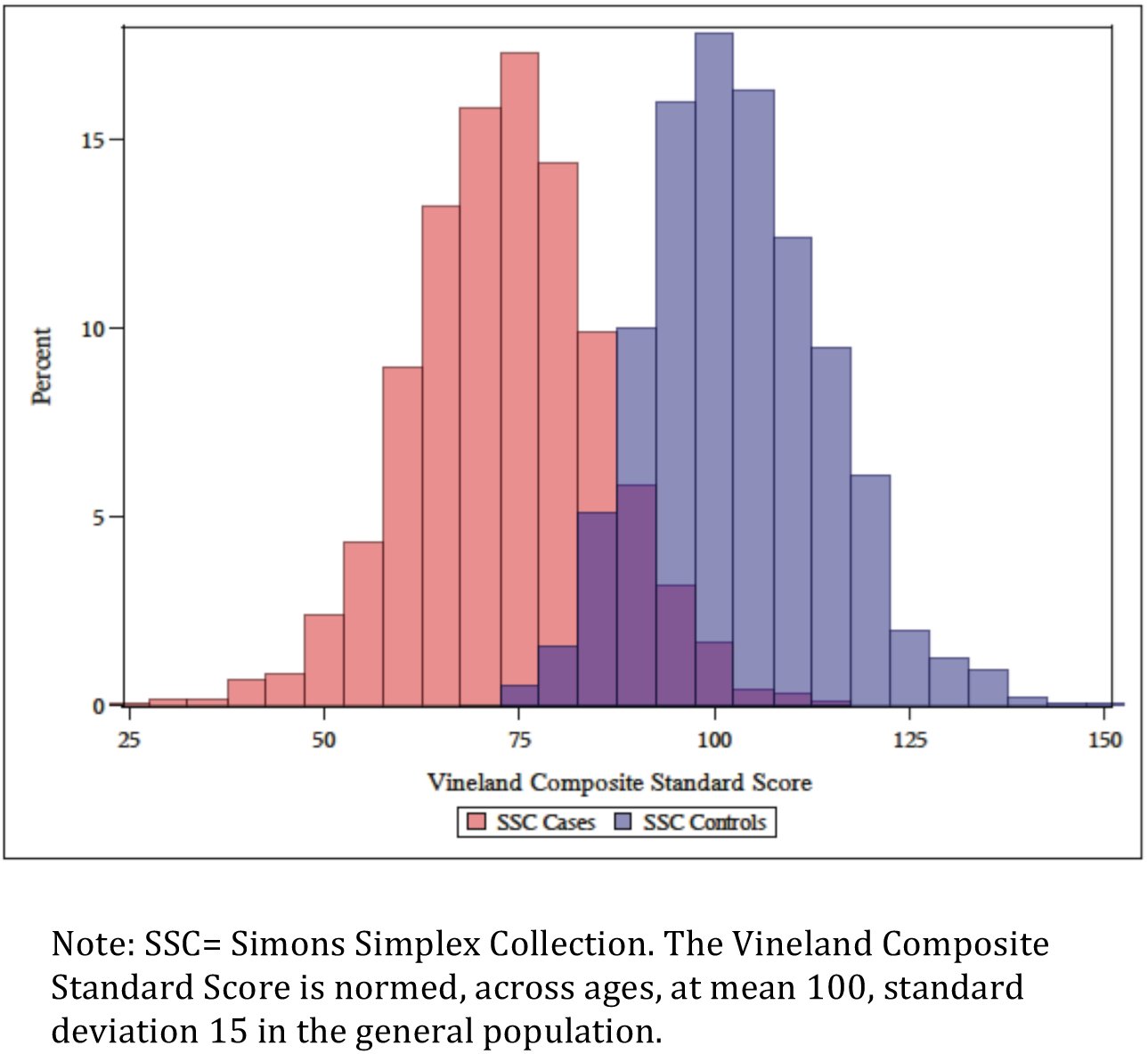 Figure 2a
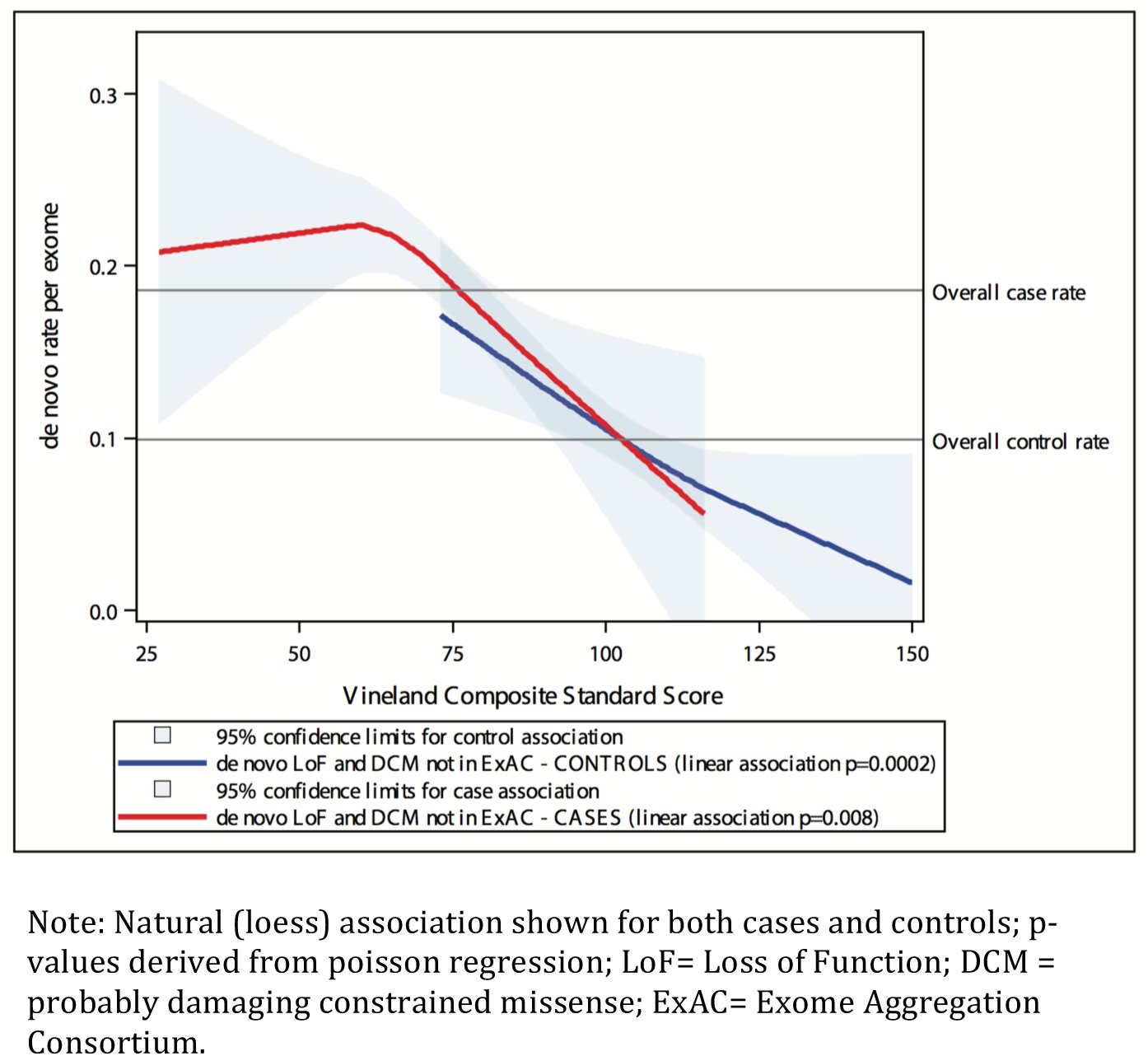 Figure 2b
Peer Reviews
No public reviews on file for this paper yet. If you reviewed it on a platform where reviews are public (OpenReview, ICLR, NeurIPS, ICML), you can paste yours below so the community can read it here.
Videos
No videos yet. Explain this paper in a talk, walkthrough, or lecture? Add one.
Taxonomy
TopicsAutism Spectrum Disorder Research
Autism spectrum disorders (ASDs) are a group of neuropsychiatric conditions defined through deficits in social communication, as well as restricted and repetitive interests. Consistent with traditional approaches to psychiatric phenotypes, most genetic studies of ASDs compare cases to controls in order to identify risk-associated variation. This approach has been highly productive—recent studies have linked common polygenic as well as de novo and inherited rare variation to ASD risk ^2,3^. Common genotyped SNPs are estimated to account for at least 20% of ASD liability ^2,4,5^. Contributing de novo variants are found in 10-20% of cases but de novo mutations collectively explain less than 5% of overall ASD liability ^2,6,7^.
Almost all genetic risk factors for ASDs can be found in unaffected individuals. For example, most people who carry a 16p11.2 deletion, the most common large mutational risk factor for ASDs, do not meet criteria for an ASD diagnosis^8^. Across healthy populations there is also significant variability in capacity for social interaction and social communication ^9^. While such phenotypic variation is well established, the genetic relationship between neuropsychiatric disorders and typical social and behavioral variation remains unclear. From the first published descriptions of ASDs, clinical and epidemiologic reports have commonly noted subthreshold traits of autism in the family members of many diagnosed individuals ^10,11^. Twin and family studies have suggested that those similarities are at least in part inherited ^12-14^, but a correlation between traits and the diagnosis has yet to be identified using genetic data.
We examined the association between genetic risk for ASDs and social and behavioral variation in the general population, and examined the model through which genetic risk for ASDs is conferred. Traditional categorical psychiatric diagnoses (e.g., yes/no ASD) ignore the possibility of intermediate outcomes, long known to be relevant to phenotypes like intellectual disability and IQ that are more easily quantified. Several studies have now associated neuropsychiatric disease associated CNVs with cognitive or educational differences in the general population ^15,16^. De novo deletions at 16p11.2 were recently reported to confer a quantitative effect on intelligence (an average two standard deviation reduction from mean IQ of the parents), rather than creating risk for categorical yes/no intellectual disability^17^. The extent to which such patterns extend to social and behavioral traits is unknown and could substantially influence: 1) the design and interpretation of biological studies of ASDs and other severe mental illnesses, as well as 2) the designation of therapeutic treatment thresholds. We aimed to resolve this question using multiple categories of genetic variation that create risk for ASDs—common, inherited alleles as well as rare, de novo variants.
The genetic correlation between ASDs and typical variation in social and communication ability
Like nearly all common diseases, common variant risk for ASDs is distributed across the genome, with many thousands of contributing loci of small effect ^2,4^. The cumulative contribution of common SNPs to ASD risk (SNP heritability^18^) has been estimated using several methods, most recently and efficiently via LD score regression. LD score regression makes use of GWAS summary statistics to estimate SNP heritability ^5^. The method can also be used to estimate the correlation between common variant influences on two phenotypes (genetic correlation) ^1^. As LD score correlation requires only GWAS summary statistics, genetic correlations can be estimated between distinct data sets and cohorts.
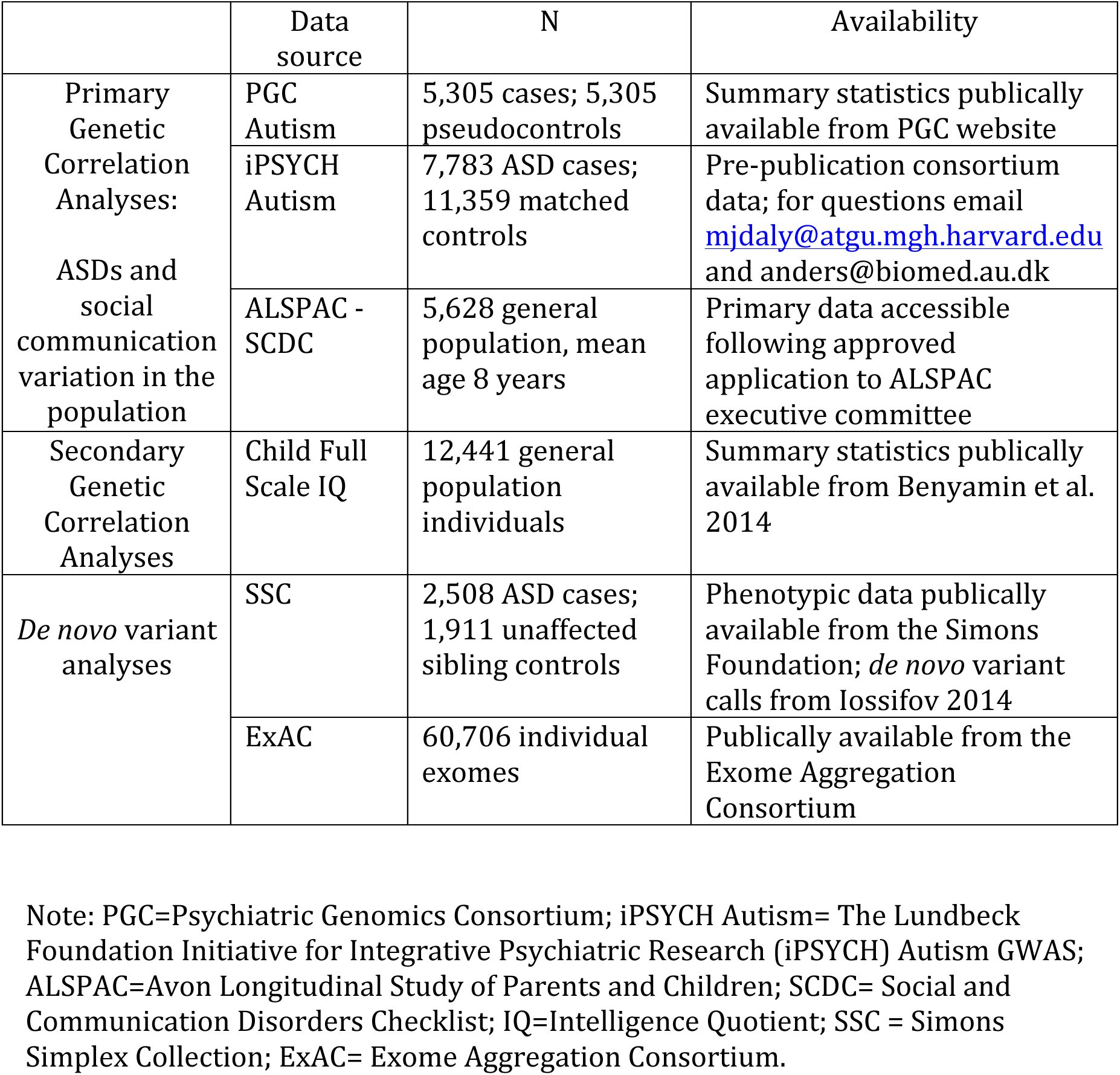
We used three data sets to examine the common variant association between ASDs and social and communication difficulties in the general population (Table S1). First, traits of social and communication impairment were measured using the Social and Communication Disorders Checklist (SCDC) in the Avon Longitudinal Study of Parents and Children (ALSPAC), a general population cohort born in 1991-1992 in Bristol, United Kingdom ^19,20^. The SCDC is a parent-rated quantitative measure of social communication impairment that is continuously distributed and has been extensively studied ^21-23^. There is substantial trait overlap between the SCDC and canonical ASD symptomology (e.g. “Not aware of other people’s feelings”) and children with ASDs have very high average scores (indicating many difficulties) on the SCDC ^21^. The measure does not include items on restricted and repetitive interests. For the purposes of this project, we used summary statistics from a published GWAS of the SCDC, administered when the children were 8 years old (n=5,628) ^23^. The SNP heritability of the SCDC was 0.17 (s.e.=0.09) using LD score regression, similar to the estimate derived from residual maximum likelihood using the software package GCTA (h2g=0.24, s.e.=0.07; n=5,204) ^23^.
We correlated the genetic influences on the SCDC with those on diagnosed ASDs using ASD data from two large consortium efforts. The Psychiatric Genomics Consortium autism group (PGC-ASD) has completed a GWAS of 5,305 ASD cases and 5,305 pseudocontrols constructed from untransmitted parental chromosomes (see Online Methods). Summary statistics from that GWAS are publicly available through the PGC website (URLs: PGC). As a replication set, we recently completed an independent ASD case-control GWAS with 7,783 ASD cases and 11,359 controls from the Danish iPSYCH project (iPSYCH-ASD; Online Methods). Using LD score regression, we estimated that the liability-scale SNP heritability of PGC-ASD was 0.23 (s.e.=0.03; assumed population prevalence 1%), suggesting that approximately one quarter of ASD liability reflects common genotyped variation. The estimated liability-scale SNP heritability of iPSYCH-ASDs was 0.14 (se=0.03; assumed population prevalence 1%). The genetic correlation between PGC-ASD and iPSYCH-ASD was 0.74(se=0.07; p<1e-20), indicating similar common, polygenic architecture between ASDs diagnosed primarily in the United States and Denmark.
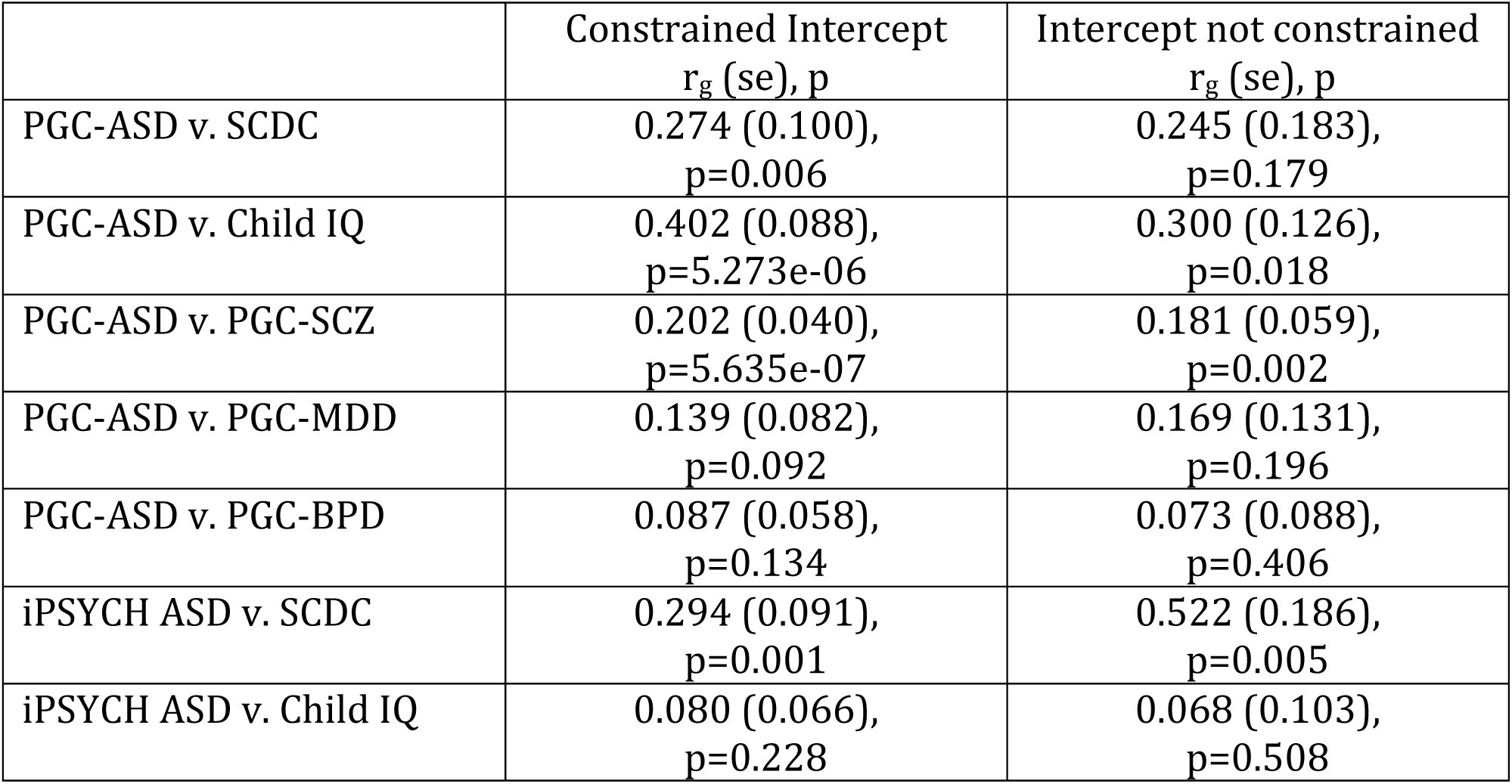
The estimated genetic correlations between the SCDC in ALSPAC and the two ASD GWAS data sets are shown in Figure 1. The estimated genetic correlation between PGC-ASD and the SCDC was 0.27 (s.e.= 0.13, p=0.006), suggesting that approximately one quarter of the genetic influences on ASDs share that influence with the SCDC. The estimated genetic correlation between iPSYCH-ASD and the SCDC was very similar (r_g_=0.29; s.e.=0.09; p=0.001), evidencing substantial and replicable etiologic overlap between ASDs and typical variation in social and communication ability in childhood. The estimated genetic correlations between ASDs and the SCDC exceed those previously estimated between PGC ASD and each of PGC schizophrenia, PGC bipolar disorder, and PGC major depressive disorder as shown in Figure 1. This suggests that ASDs are at least as strongly associated with social and communication trait variation in the population as they are several other categorically diagnosed psychiatric disorders.
The genetic correlation between ASDs and social and communication difficulties in the general population
We next asked whether the correlation between ASDs and the SCDC might be confounded by a negative association between common variant ASD risk and full scale IQ. In fact, a positive genetic association between PGC-ASD and IQ/educational attainment in the general population has been reported several times ^1,24,25^. One of those studies used IQ summary statistics from a child IQ GWAS (mean age 9 years; Benyamin 2014), from which ALSPAC was the largest contributing dataset (Bulik-Sullivan and Finucane, in press; PGC-ASD to IQ r_g_=0.40, s.e.=0.09, p=5.27e-06). We examined the association between the same child IQ GWAS and iPSYCH-ASD. The positive genetic correlation did not replicate (r_g_= 0.08; se= 0.07; p=0.23), but suggests that the common polygenic relationship between ASDs and IQ in the general population is consistently non-negative. This is particularly intriguing given the strong and consistently negative association between de novo variant risk for ASDs and intellectual functioning ^7,26,27^. Genetic correlations from GWAS data are sensitive to case and control selection, for example ascertainment of case families that might be, on average, of higher socioeconomic status than controls. The PGC ASD summary statistics are immune to this sort of confounding, because they were generated using a case/pseudocontrol study design (see Online Methods). Cases and pseudocontrols are matched for genetic load for all phenotypes except those that are genetically correlated with case/control status. This holds irrespective of biases that may exist with respect to the detection and ascertainment of cases and families. The PGC-ASD dataset is therefore particularly well suited for examining the association between common variant risk for ASDs and cognition.
The continuum of behavioral and developmental outcomes associated with de novo variation
We next aimed to examine whether de novo variant data similarly gives evidence of a genetic relationship between ASDs and a continuum of behavioral outcomes in the population. The Simons Simplex Collection (SSC) is a sample of over 2,800 individuals with ASDs and their nuclear family members, with extensive data on unaffected siblings ^28^. To our knowledge, the SSC unaffected siblings are currently the only deeply phenotyped control sample with de novo variant information available. The Vineland Scales of Adaptive Behavior (Vineland) was used in the sequenced SSC cases (n=2,497) and sibling controls (n=1,861). The Vineland captures parent-rated variation in social, communication, and daily living skills, and normalizes those abilities to a mean of 100 and standard deviation of 15 in the population, corrected for age ^29^. On average, individuals with ASDs have mean Vineland scores approximately two standard deviations below the mean (SSC case mean = 73.3; s.d. = 12.17), consistent with the social and communication impairments definitional to the diagnosis. The distribution of the Vineland overlaps between cases and controls, as shown in Figure 2a.
The distribution of Vineland scores overlaps between SSC cases and controls
We examined the association between Vineland scores and de novo variant burden in individuals with and without ASDs. Our previous work demonstrated genotype to phenotype relationships using variant classes that are strongly associated with ASD risk ^26^; subsequently these analyses focused on: 1) de novo loss of function (LoF) variants and 2) de novo missense variants predicted to be damaging by the variant annotation program PolyPhen2 and occurring in a gene known to be intolerant of heterozygous missense variation (DCM) ^30,31^. We found that variants in one of these two categories can be found in 22.1% of SSC cases and 13.2% of SSC unaffected siblings (LoF+DCM RR=1.68; p=1.8e-11; online methods). To enhance signal, we further filtered this list to remove de novo variants that were also seen in adult developmentally normal individuals in the Exome Aggregation Consortium (ExAC) resource (URLs: ExAC) ^32^. The ExAC database includes 60,706 exomes. Variants absent from that reference panel, which is a proxy for standing variation in the human population, are more likely to be deleterious. For example, 18.3% of the de novo LoF and DCM variants in the SSC are found in ExAC and, once those are removed, the relative de novo LoF+DCM burden in cases increases (LoF+DCM not in ExAC RR=1.91; p=7.6e-15).
The natural association between a) de novo LoF+DCM variants not seen in ExAC and b) Vineland score in SSC cases and controls is shown in Figure 2b. The LoF+DCM rate is predicted linearly by functional impairment in both cases (p=0.008) and controls (p=0.0002) using poisson regression, controlling for sex. Cases and controls with equivalent quantitative levels of functional impairment, a key component of all psychiatric diagnoses, are highly similar with regard to de novo variant burden, suggesting that the current categorical clinical threshold is largely arbitrary from both a phenotypic and genetic point of view. The strength of the association between LoF+DCM burden and case status (at p=7.6e-15 without controlling for Vineland scores), is only nominally significant after Vineland score is controlled for (p=0.05). The associations are weaker but similar without the ExAC filter (Figure S1).
De novo variation influences a continuum of functional outcomes in ASD cases and controls
These data strongly suggest that genetic influences on ASD risk – both inherited and de novo— influence typical variation in the population in social and communication ability. They also link clinically significant problems to impairments that are less likely to be ascertained. The results have significant implications for genetic models of neuropsychiatric disorder risk. It is likely that inherited liability to ASDs is reflected in the behavioral traits of some affected individuals’ family members. This links genetic and phenotypic burden in an intuitively consistent fashion with complex, and continuously distributed, polygenic disease risk. For traits such as height, it is simple to conceptualize a model in which tall parents, (e.g. two standard deviations above the mean) are more likely to have a child that is very tall (e.g. three standard deviations above the mean). Historically this has been more complicated in neuropsychiatric disorders. Despite extensive evidence, some have even questioned the role of inheritance given that the parents of individuals with ASDs or schizophrenia rarely carry a diagnosis themselves. These results suggest that familiality should be studied in a manner beyond a count of categorically affected family members, and that trait variation in controls can provide insight into the underlying etiology of severe neurodevelopmental and psychiatric disorders. The behavioral influence of de novo and inherited genetic risk for ASDs can be quantified, and studies assessing continuous trait variation are likely better equipped to examine the phenotypic correlates of neuropsychiatric disease risk.
The reference list from the paper itself. Each links out to its DOI / PubMed record.
- 1Bulik-Sullivan, B.K. et al. An Atlas of Genetic Correlations across Human Diseases and Traits. Nature Genetics (In press).
- 2Gaugler, T. et al. Most genetic risk for autism resides with common variation. Nat Genet 46, 881–5 (2014).
- 3Krumm, N. et al. Excess of rare, inherited truncating mutations in autism. Nat Genet 47, 582–8 (2015).
- 4Lee, S.H. et al. Genetic relationship between five psychiatric disorders estimated from genome-wide SN Ps. Nat Genet 45, 984–94 (2013).
- 5Bulik-Sullivan, B.K. et al. LD Score regression distinguishes confounding from polygenicity in genome-wide association studies. Nat Genet 47, 291–5 (2015).
- 6De Rubeis, S. et al. Synaptic, transcriptional and chromatin genes disrupted in autism. Nature 515, 209–15 (2014).
- 7Iossifov, I. et al. The contribution of de novo coding mutations to autism spectrum disorder. Nature 515, 216–21 (2014).
- 8Hanson, E. et al. The cognitive and behavioral phenotype of the 16p 11.2 deletion in a clinically ascertained population. Biol Psychiatry 77, 785–93 (2015).