Successful asexual lineages of the Irish potato Famine pathogen are triploid
Ying Li, Qian Zhou, Kun Qian, Theo van der Lee, Sanwen Huang

TL;DR
The study finds that asexual lineages of the potato blight pathogen are often triploid, which may contribute to their success and threat to crops.
Contribution
The study reveals a correlation between ploidy levels and reproductive mode in Phytophthora infestans.
Findings
Sexual progeny of P. infestans are diploid, while asexual lineages are mostly triploid.
Successful clonal lineages like US-1 and 13_A2 are triploid.
Polyploidy may increase evolutionary risks for this pathogen.
Abstract
The oomycete Phytophthora infestans was the causal agent of the Irish Great Famine and is a recurring threat to global food security1. The pathogen can reproduce both sexually and asexually and has a potential to adapt both abiotic and biotic environment2. Although in many regions the A1 and A2 mating types coexist, the far majority of isolates belong to few clonal, asexual lineages3. As other oomycetes, P. infestans is thought to be diploid during the vegetative phase of its life cycle3, but it was observed that trisomy correlated with virulence and mating type locus4 and that polyploidy can occur in some isolates5,6. It remains unknown about the frequency of polyploidy occurrence in nature and the relationship between ploidy level and sexuality. Here we discovered that the sexuality of P. infestans isolates correlates with ploidy by comparison of microsatellite fingerprinting,…
Genes, proteins, chemicals, diseases, species, mutations and cell lines named across the full text — each resolved to its canonical identifier and authoritative record.
Click any figure to enlarge with its caption.
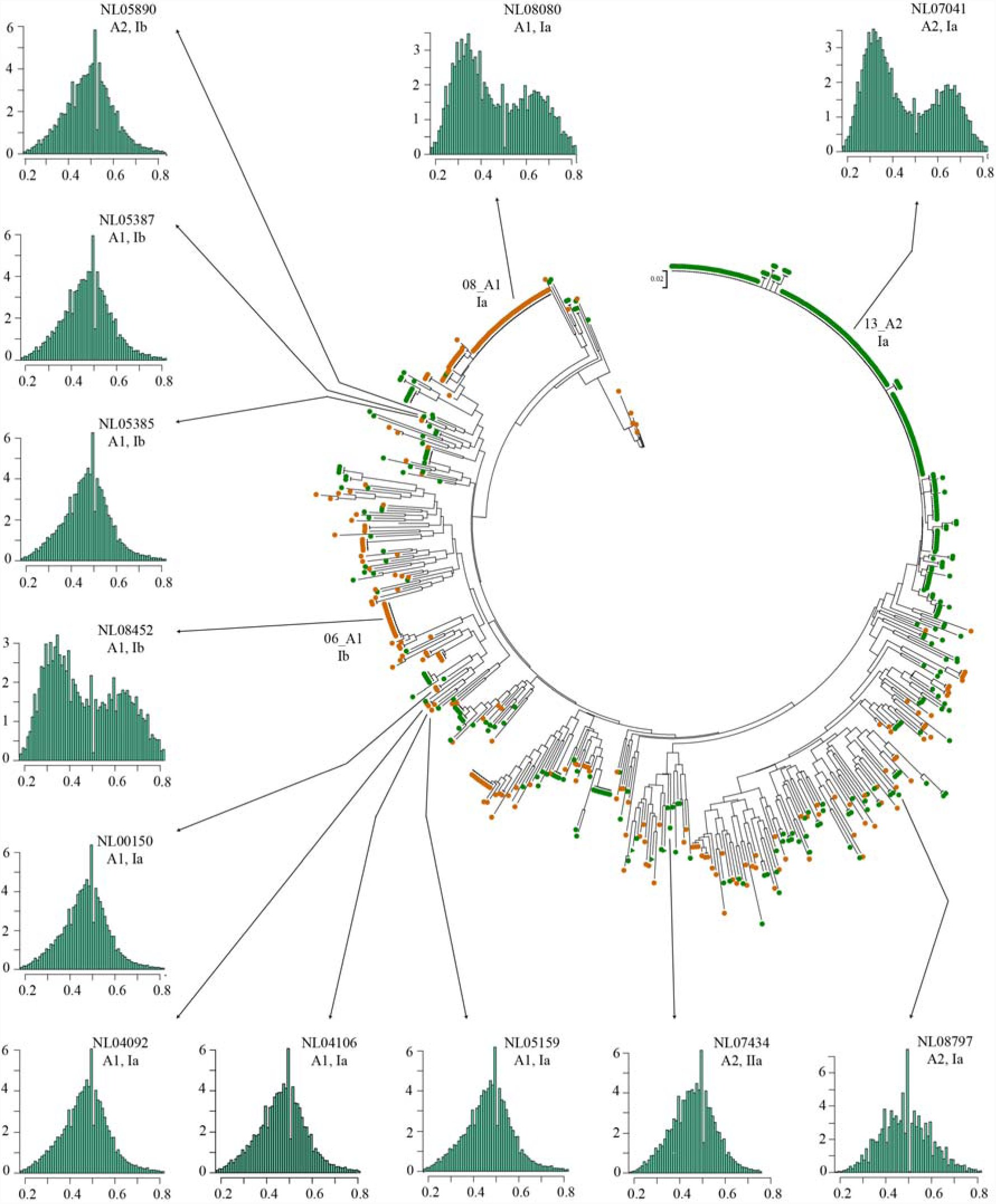 Figure 1
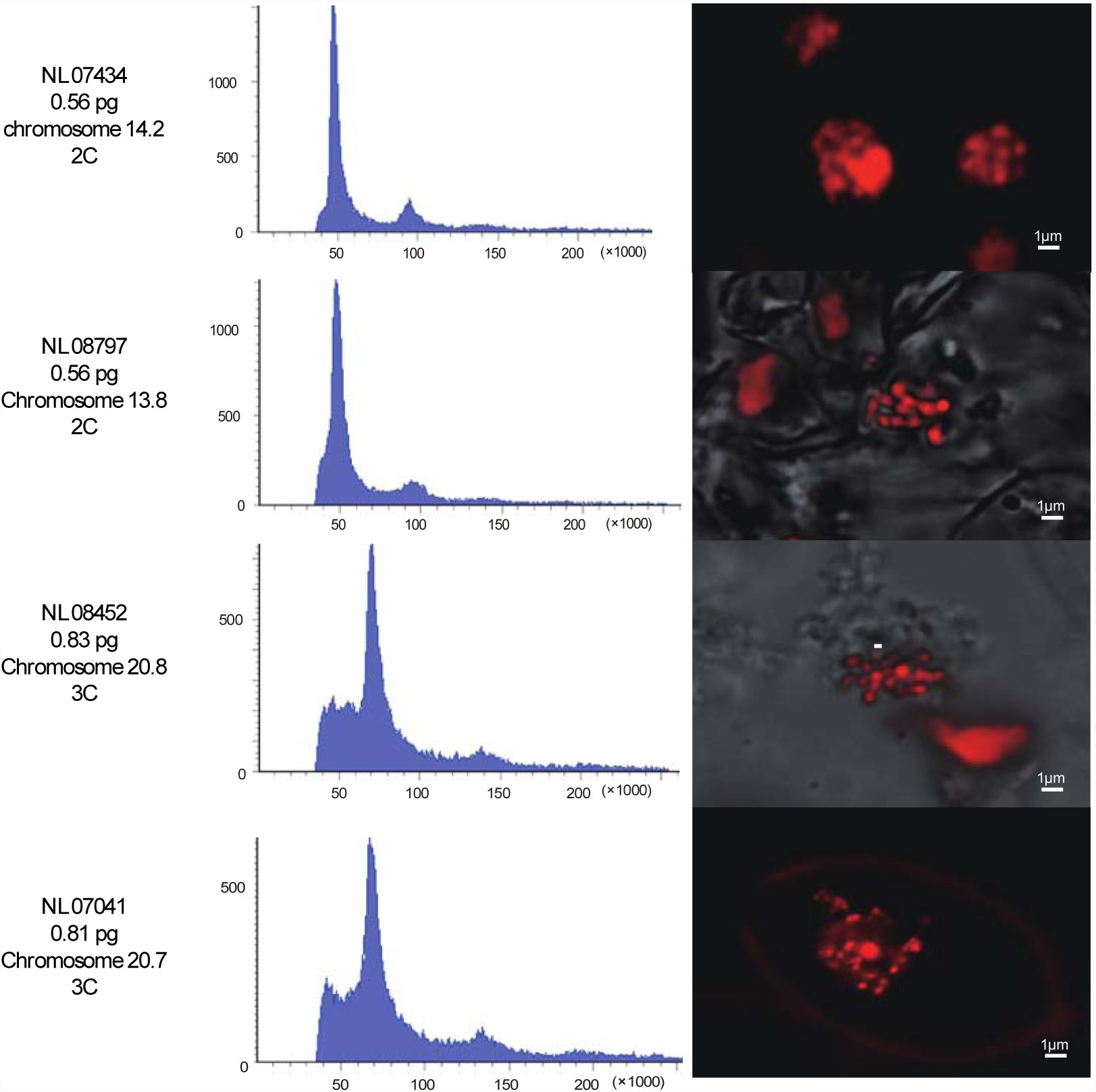 Figure 2
Peer Reviews
No public reviews on file for this paper yet. If you reviewed it on a platform where reviews are public (OpenReview, ICLR, NeurIPS, ICML), you can paste yours below so the community can read it here.
Videos
No videos yet. Explain this paper in a talk, walkthrough, or lecture? Add one.
Taxonomy
TopicsPlant Pathogens and Resistance · Plant Disease Resistance and Genetics · Plant Virus Research Studies
Understanding the mechanisms of rapid adaption in devastating plant pathogens is of critical importance for disease management. Plant oomycete pathogens employed a flexible reproduction system to gain dual advantages in creating both genotype diversity via sexual crosses and in achieving large population expansion via asexual cycles^2^. Compared to other Phytophthora sister species, P. infestans has a much larger genome that is enriched in repetitive DNA (∼74%). The genome can be largely divided into gene-dense and gene-sparse compartments, with the latter containing fast-evolving effector repertoire that is required for virulence and host adaptation^7,8^.
An increasing number of reports showed that most P. infestans field strains from wide geographical distribution were identified as belonging to a few asexual, clonal lineages^9^. The first recorded clonal lineage HERB-1 was dominant in both Europe and North America between 1845 and 1896, which triggered the Great Irish Potato Famine^5^. Its replacement, the US-1 clonal lineage of the A1 mating type, firstly emerged in North America in the 20th century and dominated the globe^5,10^. Rather recently (1990’s), US-1 was supplanted by more aggressive lineages of the A2 mating type, including 13_A2 in Europe and Asia^11^ as well as US-22 in North America^12,13^. As accumulation of deleterious mutations would lead to rapid extinction of asexual lineages, a phenomenon coined as the Muller’s ratchet^14^, it is puzzling that a few clonal lineages could adapt to a wide geographical area for a considerably long period. What is their common denominator? Although P. infestans was known as diploid for decades^3^, several studies indicated trisomy and polyploidy^5,6^. Polyploidy can enhance the vigour in plants and buffer mutational load in asexual reproduction by masking deleterious alleles as reported in both fungi, plants and animals^9,15,16^. It remains unclear to what extent polyploidy contributed to evolutionary advantage of clonal lineages and whether there is link between sexuality and ploidy.
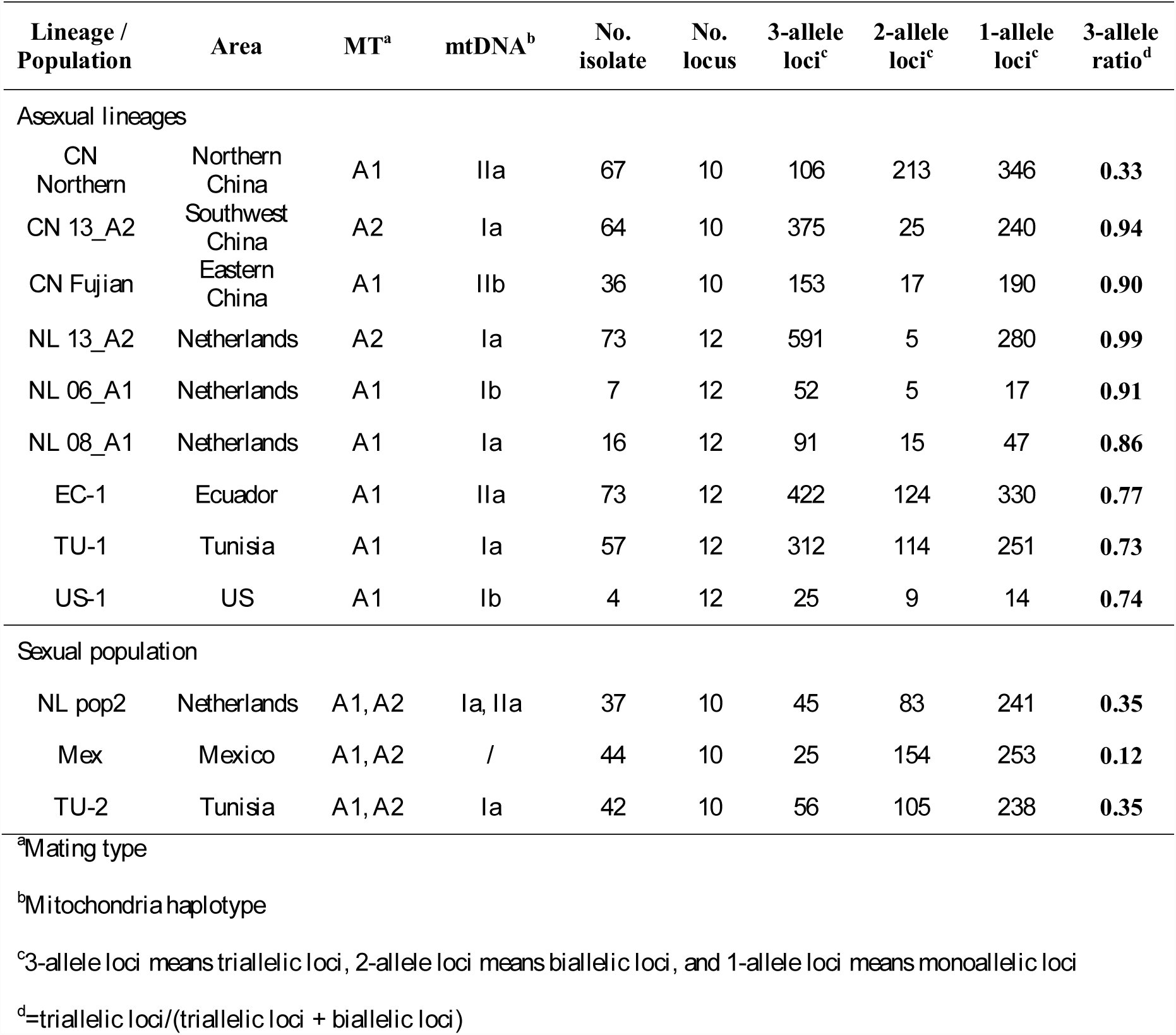
Previously we used multiplex microsatellites to fingerprint 520 P. infestans isolates (Supplementary Table 1), including 397 isolates from nine major clonal lineages in four continents and 123 isolates from three sexual populations from the Netherlands, Mexico and Tunisia^9,17,18^. In previous studies, the analysis was only based on the allele size, although differences of allele dosage were observed by peak height. To survey the frequency of polyploidy occurrence and to gain insights into the relationship of reproduction systems and ploidy levels, we re-analyzed the fingerprinting dataset by including scoring of allele peak height, besides molecular size of alleles. The ratio of allele peak heights allows assessing allele dosage at each microsatellite locus (Supplementary Fig.). Surprisingly, we discovered that eight of nine asexual lineages showed high ratio of triallelic loci (0.73-0.99), whereas the value (0.14-0.35) in the three sexual populations is significantly lower (p=0.008). The only exception is the clonal lineage in Northern China (CN-Northern), which is similar to sexual populations in the percentage of triallelic loci. CN-Northern belongs to the A1 mating type and it is a rather old population, as sub-populations evolved in the same lineage^17^. In China, seed potatoes are produced in the North and shipped elsewhere. Strict quarantine is taken for seed tubers to enter the area domestically and abroad. Therefore, the P. infestans population there should be rather isolated and remains as diploid.
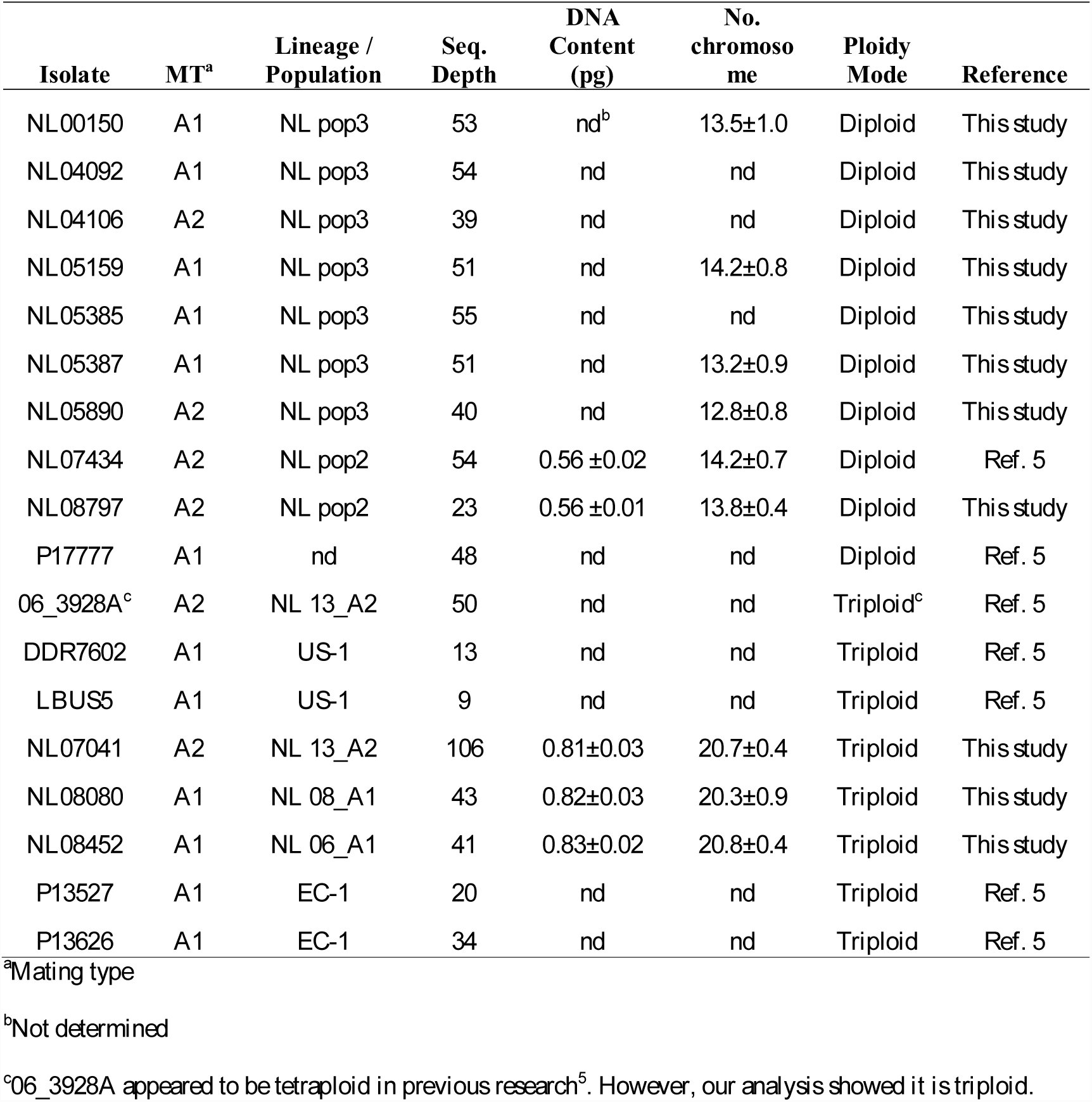
To further analyze the genome-wide ploidy level, we re-sequenced 11 representative isolates for >50X genome depth from a meta-population from the Netherlands, a major source of international seed potato trade. The meta-population includes three asexual lineages (NL 13_A2, NL 06_A1, and NL 08_A1) and two sexual populations (NL pop 2 and NL pop3, Table 1). Sequences were aligned to the T30-4 reference genome to determine single nucleotide polymorphism (SNP). Relative read depth at each heterozygous SNP was used to determine ploidy level. For diploid genome, the mean of read counts at heterozygous positions should have a single mode at 0.5 (1/2) when the allele ratio is 1:1, while there should be two modes, 0.33 and 0.67 (1/3 and 2/3) when the allele ratio is 1:2 and 2:1 for triploid genomes (Supplementary Table 2). Consistent with the microsatellite fingerprinting analyses, all the nine isolates from the sexual populations displayed diploid mode, whereas the three isolates from the asexual lineages showed triploid mode (Table 2, Fig. 1 and Supplementary Table 2). We also re-analyzed sequences of the seven isolates from a previous report^5^ (Table 2 and Fig. 1), which confirmed that all the four isolates from asexual lineage US-1 and EC-1 showed also triploid mode. These analyses indicate that sexuality and ploidy are strongly associated.
Table 1.: The allele dosage of microsatellite loci in asexual and sexual populations
Table 2.: Ploidy analysis of isolates by genome re-sequencing, flow cytometry and microscope observation
Sexuality and ploidy. The phylogeny tree generated in previous study was used for sampling strategy. Green dots show isolates with A2 mating type, while A1 mating type was marked by orange cycles. Three representative isolates (NL07041, NL08080 and NL08452) were selected from three major clonal lineages in the Netherlands, and nine sexual isolates were from genetic neighbor clades. The ploidy mode was determined with the mean frequency of read counts at heterozygous positions, a single and diploid mode at 0.5, while two modes, 0.33 and 0.67 were for triploid genomes.
In addition to deep re-sequencing, we used flow cytometry and microscope observation to directly evaluate the DNA content and count chromosome number, respectively (Fig. 2). The isolate NL07434 (A2) from the sexual population NL pop2was used as control, since it had been investigated previously^5^ as well as in this study. DNA content of the isolate NL08797 (A2) from NL pop 2 is the same as NL07434. As expected, DNA content of the three asexual isolate NL08080 (A1), NL08452 (A1), and NL07041 (A2) is about 1.5 times of that of NL07434 and NL08797, confirming that they are triploid. The average of chromosome number for isolates from sexual populations is 13.6, whereas 20.6 for isolates from asexual lineages (Table 2, Supplementary Table 3). DNA content measurement and chromosome counting further support that these asexual isolates are triploid.
DNA content and chromosome number. Two isolates from asexual lineage (NL08452 and NL07041) and two isolates from sexual populations (NL07434 and NL08797) were investigated. DNA content was determined by flow cytometry. The chromosome number was counted by adjusting the focal levels on Laser Scanning Confocal Microscope (LSM780, Zeiss).
In summary, P. infestans can no longer be considered to be only diploid, which should be taken into account in future studies. The observed triploidy must play an imperative role in the successful global epidemic of modern asexual lineages such as US-1, NL 13_A2, TU-1, NL 06_A1 and NL 08_A1. Polyploidization in P. infestans is likely to enhance fitness, as reported in yeast that tetraploid had a higher beneficial mutation rate than haploid and diploid strains^19^. Ancient or old asexual lineages such as HERB1 and CN Northern are diploids, therefore it is worth further investigation on when and how asexual lineages became triploid. Was the transition of the ploidy level due to survival pressure from disease resistance genes that were incorporated into potato breeding after the Great Famine or linked to the frequent use of pesticide deployed in the last 50 years to control this disease? This study revealed a new dimension of genomic feature of the great evolutionary risk of P. infestans, which should also be considered in future agricultural management.
Methods
Definition of asexual and sexual populations
This study only focuses on field isolates. We adopted the definition of clonality widely accepted in papers dealing with the population structure of pathogens^20^. The definition of asexuality (clonal lineage) and sexuality (sexual population) in this study do not refer to the cytological mechanism of reproduction, but rather to the population structure that results from an absence or restriction of genetic recombination^20^. The asexuality obtains wherever isolates with the same mating type show multilocus genotypes (MLGs) that are identical or nearly identical. In contrast sexual progeny shows extensive recombination of alleles.
Isolate collection
In this study, isolates from China^17^, The Netherlands^9^, Ecuador^18^, Tunisia (manuscript prepared), and Mexico were investigated (Table 2). The clonal lineages and sexual populations have been defined by MLGs in those previous studies. The clonal lineages and sexual populations used in this study have been defined by MLGs in the previous studies.
Microsatellite analysis
Twelve microsatellite markers were used^21^-^24^. Amplification of the SSR markers was carried out as described by Li et. al^24^. The amplicon was capillary electrophoresed on an automated ABI 3730 according to the manufacturer's instructions. SSR allele sizing was performed using GeneMapper v3.7 software (Applied Biosystems, USA).
Re-sequencing data and SNP calling
The reference genome sequence of the artificial strain T30-4 and the re-sequencing data used in this study were published in previous studies^5,7,10,11^. The method of read mapping was used as described^5^. The re-sequenced isolates selected from previous studies were analyzed again here. Since the reference genome has 4921 supercontigs, we only analyzed the first 100 longest supercontigs.
The isolates were sequenced using the Illumina Hi-Seq 2000 sequencer. The sequencing averagely generated 100 million 100-bp paired-end reads for each isolate. The sequencing reads of each isolate were mapped to the T30-4 reference genome using BWA^25^ and SNP calling was conducted subsequently using Sequence Alignment/Maptools^26^. Several criteria was considered in SNP filtering: (1) a SNP should be bi-allelic between the isolate and T30-4 genomes; (2) at the SNP locus, the phred quality score of base sequencing and score of read mapping should be both higher than 30; (3) each allele of a SNP should be supported by at least 4 reads; (4) the non-reference allele frequency should be between 0.2-0.8 at a heterozygous SNP locus.
Flow cytometry
The nuclei were collected by simply chopping hyphae with a scalpel blade in cold phosphate buffered saline (PBS)^27^. Another method used was zoospore cultures. Zoospores were induced at 4⍰ for two hours and harvested in excess of 10^4^ spores ml^-1^. The nuclei were stained by 10ug/ml propidium iodide (Sigma). The samples were delivered into a laser BD FACSCalibur Flow Cytometer for data analysis.
Microscopy observation of chromosomes
The young hyphae stained by 50ug/ml propidium iodide (Sigma) were transferred to a microscope slide for observation. The observation was preformed with Zeiss LSM 780 Laser Scanning Confocal Microscope.
The reference list from the paper itself. Each links out to its DOI / PubMed record.
- 1Jones, N. Planetary disasters: It could happen one night. Nature 493, 154–156 (2013).
- 2Mc Donald, B. A. & Linde, C. Pathogen population genetics, evolutionary potential, and durable resistance. Annu Rev Phytopathol 40, 349–379 (2002).
- 3Grunwald, N. J. & Flier, W. G. The biology of Phytophthora infestans at its center of origin. Annu Rev Phytopathol 43, 171–190 (2005).
- 4van der Lee, T., Testa, A., Robold, A., van 't Klooster, J. & Govers, F. High-density genetic linkage maps of Phytophthora infestans reveal trisomic progeny and chromosomal rearrangements. Genetics 167, 1643–1661 (2004).
- 5Yoshida, K. et al. The rise and fall of the Phytophthora infestans lineage that triggered the Irish potato famine. Elife 2, e 01108 (2013).
- 6Hamed, B. H. & Gisi, U. Generation of pathogenic F 1 progeny from crosses of Phytophthora infestans isolates differing in ploidy. Plant Pathology 62, 708–718 (2013).
- 7Haas, B. J. et al. Genome sequence and analysis of the Irish potato famine pathogen Phytophthora infestans. Nature 461, 393–398 (2009).
- 8Raffaele, S. et al. Genome evolution following host jumps in the Irish potato famine pathogen lineage. Science 330, 1540–1543 (2010).