Complete plastid genome assembly of invasive plant, Centaurea diffusa
Kathryn G. Turner, Christopher J. Grassa

TL;DR
This paper provides the complete plastid genome of Centaurea diffusa, an invasive weed, to help study its evolution and ecology.
Contribution
The paper presents the first complete plastid genome assembly for Centaurea diffusa.
Findings
The complete plastome of Centaurea diffusa is assembled.
The genome will aid future ecological genomics studies of invasive plants and Asteraceae.
Abstract
New genomic tools are needed to elucidate the evolution of invasive, non-model organisms. Here we present the completed plastome assembly for the problematic invasive weed, Centaurea diffusa. This new tool represents a significant contribution to future studies of the ecological genomics of invasive plants, particularly this weedy genus, and studies of the Asteraceae in general.
Genes, proteins, chemicals, diseases, species, mutations and cell lines named across the full text — each resolved to its canonical identifier and authoritative record.
Click any figure to enlarge with its caption.
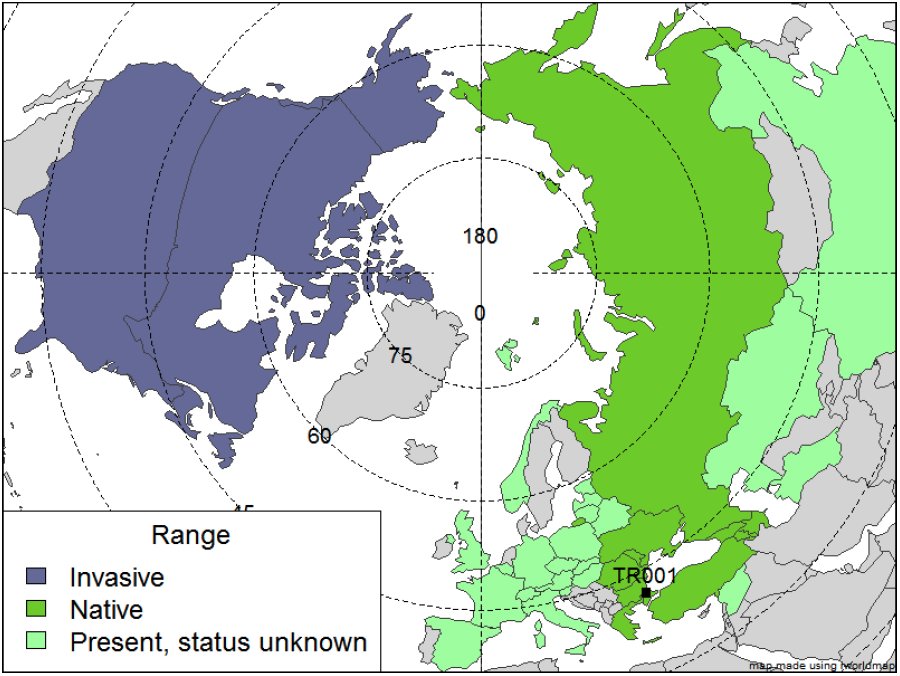 Figure 1
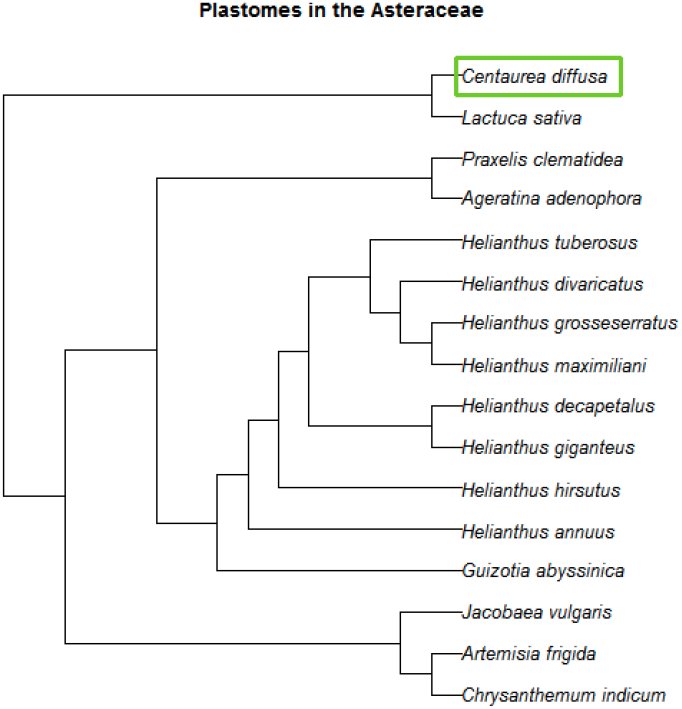 Figure 2
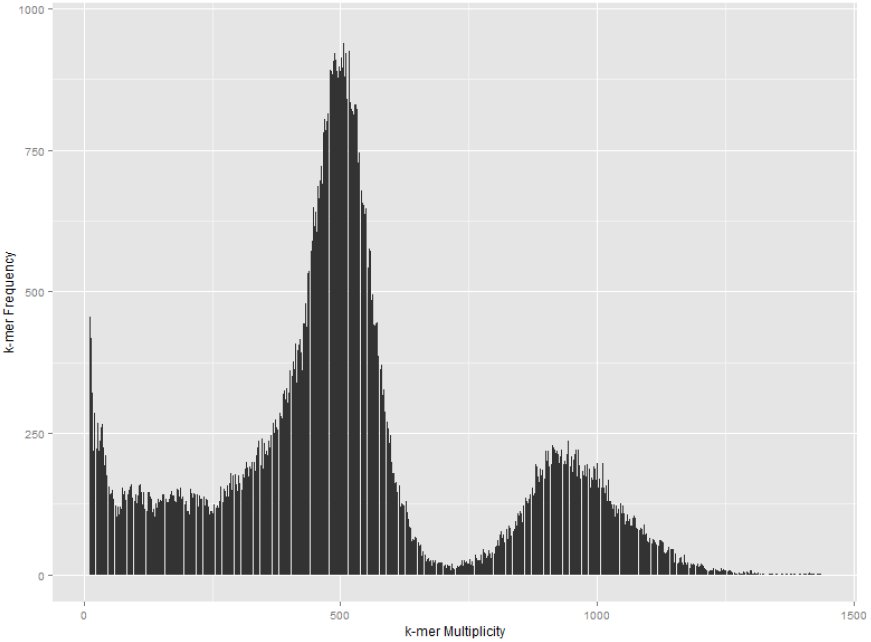 Figure 3
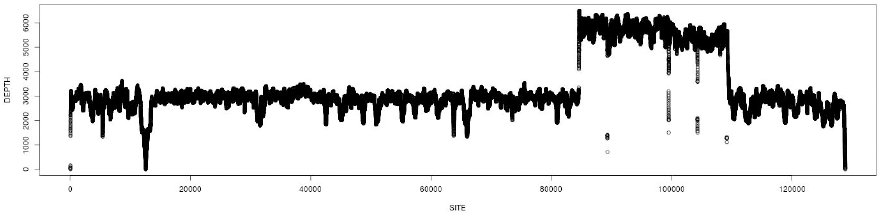 Figure 4
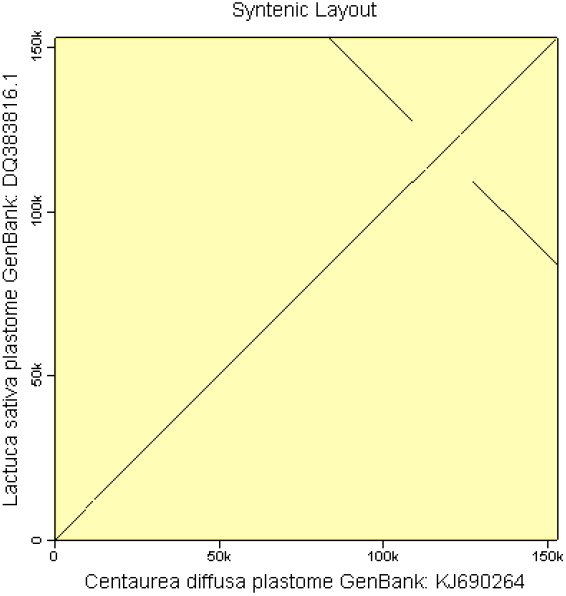 Figure 5
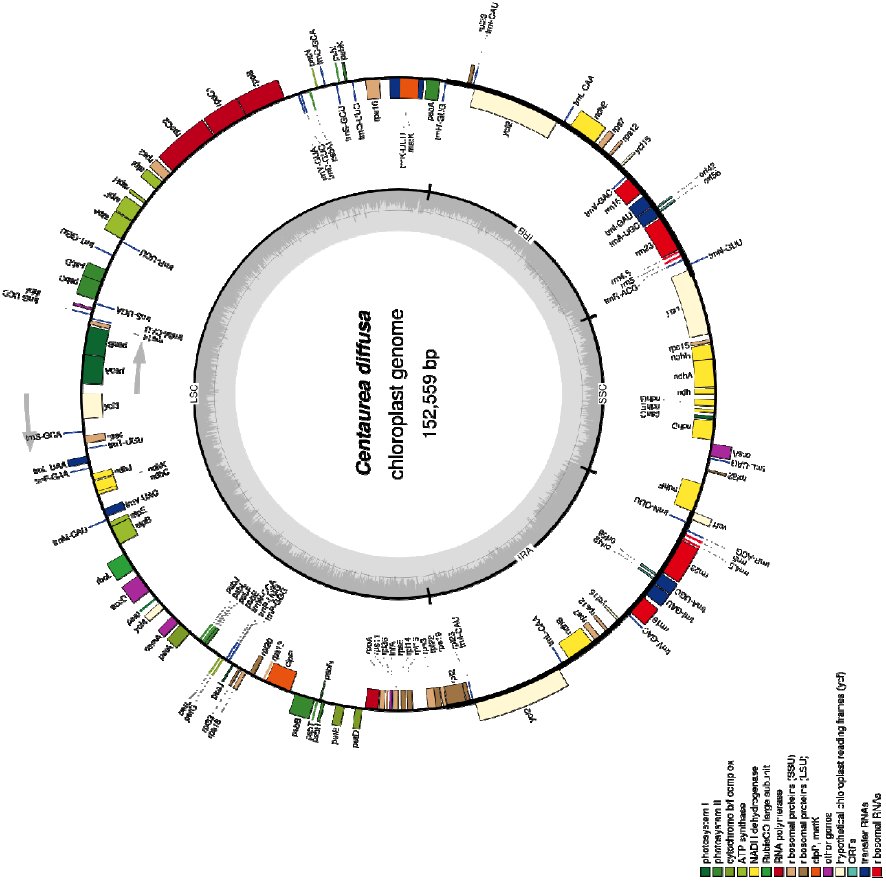 Figure 6
Peer Reviews
No public reviews on file for this paper yet. If you reviewed it on a platform where reviews are public (OpenReview, ICLR, NeurIPS, ICML), you can paste yours below so the community can read it here.
Videos
No videos yet. Explain this paper in a talk, walkthrough, or lecture? Add one.
Taxonomy
TopicsPlant and Fungal Species Descriptions · Biological Control of Invasive Species · Plant Diversity and Evolution
Introduction
Invasive species offer ample incentive and opportunity to address some of the major questions in evolution, ecology, and genetics. The direct costs of weed control and indirect costs of reduced crop production due to weeds are up to $40 billion annually in North America (Pimentel et al., 2005). Rates of adaptive phenotypic change are high in human-disturbed contexts (Hendry et al., 2008), such as invasion, and more common in introduced relative to native species in the same environment (Buswell et al., 2011). Thus, an ecological genomic approach may reveal key insights into a species’ adaptive capacity in the face of human-induced selective pressures.
This work aims to contribute to our genomic knowledge of the largest plant family, Asteraceae, and advance the study of invasion and evolution in Centaurea diffusa, a highly invasive weed species in North America. What genetic changes have occurred between native and invasive ranges of this species? Can these genetic changes be associated with adaptive trait shifts in the invaded range? To answer these questions, first several tools must be developed. Here we present one such tool, the complete plastid genome for C. diffusa, the first plastome from a genera containing approximately 250 species (Susanna and Garcia-Jacas, 2009), and one of only 10 genera in this speciose family with a complete plastome assembly.
Methods
Study Species
Centaurea species (knapweeds, star thistles) comprise the most abundant noxious weed genus in the western US, and are one of only 15 plant genera in the US significantly more likely to contain weedy species than expected by chance (Lejeune and Seastedt, 2001; Kuester et al., 2014). In the century since Centaurea diffusa was first reported there, it has formed dense monocultures, reduced forage quality, and altered soil and water resource availability in invaded grasslands (Lejeune and Seastedt, 2001). Recent work (Turner et al., 2014) has demonstrated the rapid evolution of C.diffusa in the invaded range under an array of benign and stressful conditions including drought. Invasive individuals grew larger, performed better, or matured later than native in nearly all tested conditions. Additionally, invasive individuals may have been released from a trade-off between growth and drought tolerance apparent in the native range.
Collection and DNA extraction
Seed was collected from an individual in the native range of C. diffusa (TR001-1, Turkey, latitude 41.75111, longitude 27.24778). A voucher specimen of this population is located at the UBC Herbarium, accession number V236765. Seed from this collection was grown in a glasshouse at the University of British Columbia during the summer and fall of 2009. Seeds were germinated on filter paper in 1% plant preservative mixture and distilled H_2_O at room temperature. After 12 days seedlings were transplanted into 5 cm diameter cones filled with 80% potting mix and 20% silica sand. After two months, individuals were transplanted into 1 l pots containing potting soil to be used in a crossing experiment (“Maternal common garden”, Turner et al., 2014). Young leaf tissue was sampled from a single individual (TR001-1L) and stored at −80° C to be used for plastome assembly.
DNA was extracted from frozen tissue using a modified DNeasy column-less protocol. Concentration and quality was verified by Nanodrop, Qbit high-sensitivity assay, and gel electrophoresis.
Plastome assembly and annotation
This whole genome shotgun library was sequenced at Genome Quebec, using one half lane of Illumina HiSeq 2000 paired-end sequencing. Raw data as well as scripts used for cleaning, assembly, and annotation of this plastome are available on Figshare.com (See Supplementary Materials). Raw reads were quality trimmed and screened for sequencing artifacts using Trimmomatic (Bolger et al., 2014). Clean reads were aligned to the Lactuca sativa plastome (Timme et al., 2007) using BWA (Li and Durbin, 2009). Pairs in which both reads aligned to the L. sativa plastome were extracted from the Sam files with Picard Tools SamToFastq.jar(Picard, 2009). ALLPATHS-LG (Gnerre et al., 2011) was used to merge overlapping pairs and error-correct the data, which was then assembled with Ray (Boisvert et al., 2010). Ray contigs were aligned to the L. sativa plastome with BLAST+ (Altschul et al., 1990) and scaffolded based on synteny using OSLay (Richter et al., 2007). Gaps were filled with GapFiller (Boetzer and Pirovano, 2012) resulting in a sequence containing a single N. Visual inspection indicated that the N separated an erroneous tandem duplication, which was corrected by hand with Vim. IR boundaries were confirmed with aTRAM (Allen and Huang, 2014) assemblies of flanking regions. Reads were aligned to the assembly with BWA and sorted with SAMTOOLS (Li et al., 2009). Visual inspection of the alignment revealed a few small indel and substitution errors, which were hand-corrected with Vim. A final alignment and inspection revealed no errors. The plastome was annotated using DOGMA (Wyman et al., 2004) and validated for NCBI GenBank submission using Sequin 13.05. The NCBI GenBank accession number for this plastome is KJ690264.
Results
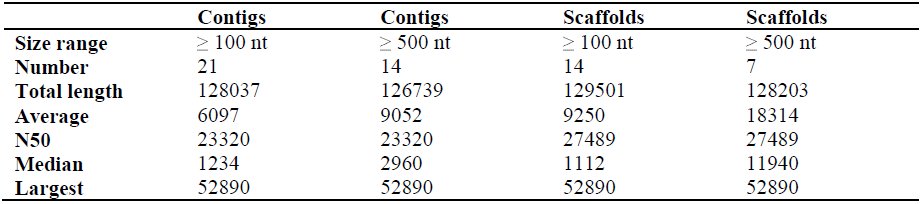
Table 1:: Ray assembly output numerics
Global range map of Centaurea diffusa, by country (modified from Turner et al., 2014). Range status in a particular country is indicated by color. ‘Present, status unknown’ also includes countries where Centaurea diffusa is considered naturalized. Degrees of latitude are indicated on dotted lines, and degrees of longitude, solid lines. Seed collection location for the individual used in this assembly is indicated.
Phylogenetic tree of completed plastomes within the Asteraceae available on NCBI GenBank as of April 17, 2014. Phylogeny based on Smith et al. (2011), using R 3.0.1 (R core team, 2013), taxize (Chamberlain and Szocz, 2013), and Phylomatic (Webb and Donoghue, 2005).
Histogram of 31-mers contained in Centaurea diffusa reads which aligned to Lactuca sativa plastome and their anchored orphans.
Depth of coverage of raw reads to Centaurea diffusa plastome v0.2 after gap filling which suggests: 1) misassembly near supercontig 1 position 12521, and 2) collapse of inverted repeat to a single copy.
Syntenic alignment between Lactuca sativa and Centaurea diffusa plastomes using OSLay v1.0 (Richter et al., 2007).
Map of annotated Centaurea diffusa plastome, produced using OGDraw (Lohse et al., 2013).
The reference list from the paper itself. Each links out to its DOI / PubMed record.
- 1Allen J, Huang D. 2014. [WWW document and Git Hub repository] URL https://github.com/juliema/a TRAM [accessed 25 February 2014]. DOI: 10.5281/zenodo.10431. · doi ↗
- 2Altschul SF, Gish W, Miller W, Myers EW, Lipman DJ. 1990. Basic local alignment search tool. Journal of Molecular Biology 215: 403–410.
- 3Boetzer M, Pirovano W. 2012. Toward almost closed genomes with Gap Filler. Genome Biology 13: R 56.
- 4Boisvert S, Laviolette F, Corbeil J. 2010. Ray: Simultaneous Assembly of Reads from a Mix of High-Throughput Sequencing Technologies. Journal of Computational Biology 17: 1519–1533.
- 5Bolger AM, Lohse M, Usadel B. 2014. Trimmomatic: a flexible trimmer for Illumina sequence data. Bioinformatics: btu 170.
- 6Buswell JM, Moles AT, Hartley S. 2011. Is rapid evolution common in introduced plant species? Journal of Ecology 99: 214–224.
- 7Chamberlain S, Szocs E. 2013. taxize - taxonomic search and retrieval in R. F 1000 Research 2.
- 8Gnerre S, Mac Callum I, Przybylski D, Ribeiro FJ, Burton JN, Walker BJ, Sharpe T, Hall G, Shea TP, Sykes S, et al. 2011. High-quality draft assemblies of mammalian genomes from massively parallel sequence data. Proceedings of the National Academy of Sciences 108: 1513–1518.