Topological odd-parity superconductors
Masatoshi Sato

TL;DR
This paper characterizes topological phases of full-gapped odd-parity superconductors using Z_2 invariants derived from Fermi surface topology, providing criteria for various dimensions and implications for nodal cases.
Contribution
It introduces a method to evaluate Z_2 invariants in odd-parity superconductors based on symmetry and Fermi surface structure, linking topological invariants to Fermi surface topology.
Findings
Z_2 invariants can be evaluated from Fermi surface data.
Criteria for topological phases in various dimensions are established.
Implications for nodal odd-parity superconductors are discussed.
Abstract
In this letter, we investigate topological phases of full-gapped odd-parity superconductors, which are distinguished by the bulk topological invariants and the topologically protected gapless boundary states. Using the particle-hole symmetry, we introduce Z_2 invariants characterizing topological odd-parity superconductors without or with time-reversal invariance. For odd-parity superconductors, a combination of the inversion and the U(1) gauge symmetry is manifestly preserved, and the combined symmetry enables us to evaluate the Z_2 invariants from the knowledge of the Fermi surface structure. Relating the Z_2 invariants to other topological invariants, we establish characterization of topological odd-parity superconductors in terms of the Fermi surface topology. Simple criteria for topological odd-parity superconductors in various dimensions are provided. Implications of our formulas…
Click any figure to enlarge with its caption.
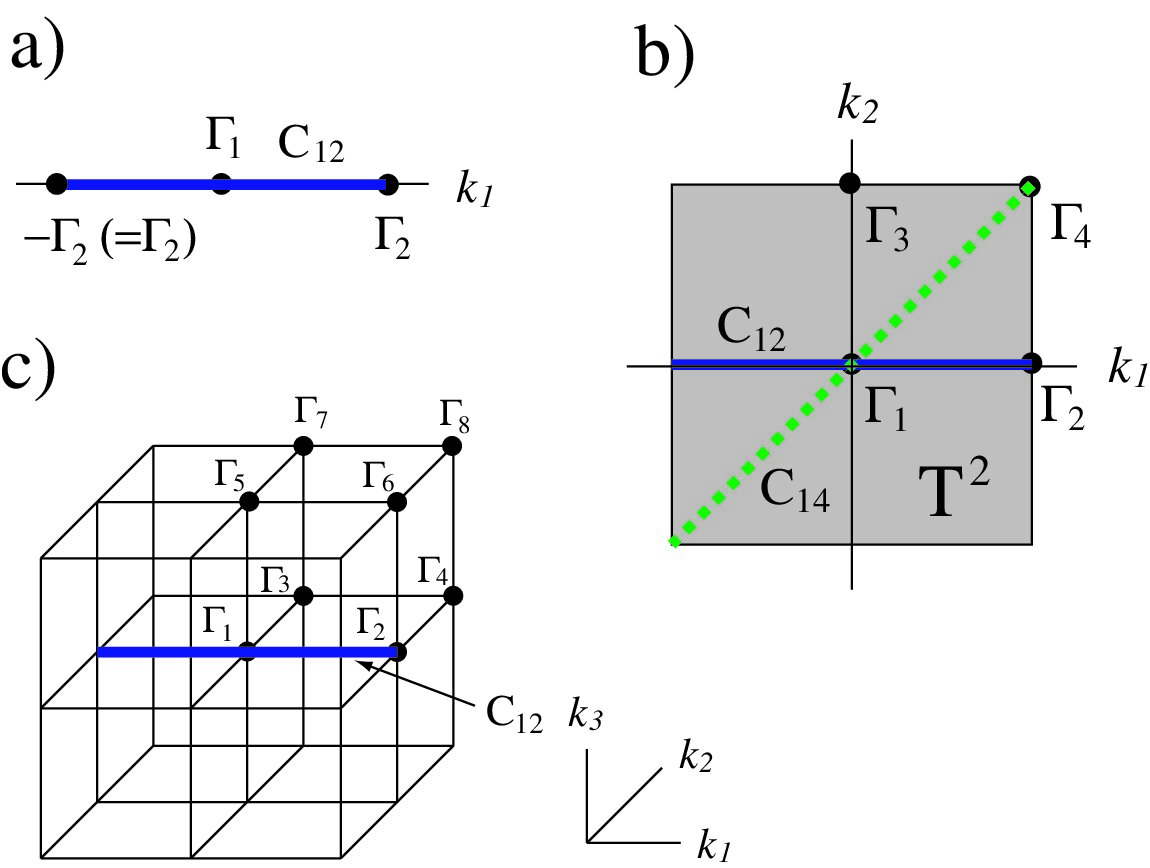 Figure 1
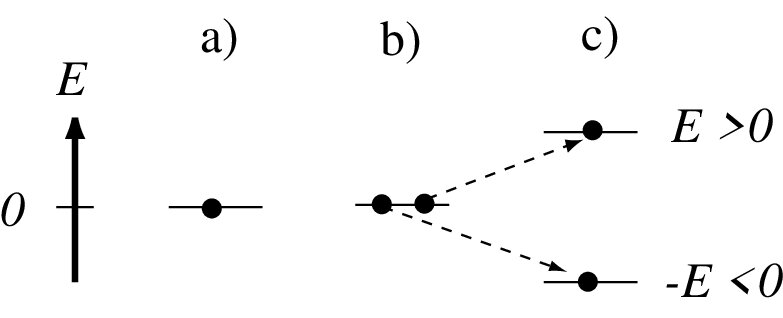 Figure 2
Peer Reviews
No public reviews on file for this paper yet. If you reviewed it on a platform where reviews are public (OpenReview, ICLR, NeurIPS, ICML), you can paste yours below so the community can read it here.
Videos
No videos yet. Explain this paper in a talk, walkthrough, or lecture? Add one.
Topological odd-parity superconductors
Masatoshi Sato
The Institute for Solid State Physics, The University of Tokyo,
Kashiwanoha 5-1-5, Kashiwa, Chiba, 277-8581, Japan,
Abstract
In this letter, we investigate topological phases of full-gapped odd-parity superconductors, which are distinguished by the bulk topological invariants and the topologically protected gapless boundary states. Using the particle-hole symmetry, we introduce invariants characterizing topological odd-parity superconductors without or with time-reversal invariance. For odd-parity superconductors, a combination of the inversion and the gauge symmetry is manifestly preserved, and the combined symmetry enables us to evaluate the invariants from the knowledge of the Fermi surface structure. Relating the invariants to other topological invariants, we establish characterization of topological odd-parity superconductors in terms of the Fermi surface topology. Simple criteria for topological odd-parity superconductors in various dimensions are provided. Implications of our formulas for nodal odd-parity superconductors are also discussed.
pacs:
Valid PACS appear here
Recently, there has been considerable interest in topological phases which are characterized by the bulk topological invariants and the topologically protected gapless boundary states. The prototype of the topological phase is the integer quantum Hall states, where the band TKNN integers or Chern numbers give the integer quantum Hall effects Thouless et al. (1982), and they ensure the stability of the gapless edge states at the same time Hatsugai (1993). While the time-reversal symmetry breaking (TRSB) is necessary to have non-trivial Chern numbers, there exist another topological invariants called the invariants which classify the topological phases of the time-reversal invariant (TRI) insulators Kane and Mele (2005); Moore and Balents (2007); Roy (2009); Fu and Kane (2007). When the invariants are non-trivial, there exist an odd number of the Kramers pairs of gapless edge modes in two dimensions, and an odd number of the Kramers degenerate band crossings (Dirac cones) on the surface in three dimensions, respectively.
The concept of topological phases is also applicable to superconducting states Read and Green (2000); Sato (2006); Qi et al. (2009); Schnyder et al. (2008); Sato and Fujimoto (2009); Sato et al. (2009) because there is a direct analogy between superconductors and insulators: The Bogoliubov de-Gennes (BdG) Hamiltonian for a quasiparticle of a superconductor is analogous to the Hamiltonian of a band insulator, and the superconducting gap corresponds to the gap of the band insulator. Indeed, the TRSB chiral -wave superconductors have non-trivial Chern numbers, and they support topologically protected chiral gapless edge states in analogy with the integer quantum Hall states Read and Green (2000). Topological phases of noncentrosymmetric superconductors and s-wave superfluids, which support non-abelian anyons, were also investigated in Sato (2006); Sato and Fujimoto (2009); Sato et al. (2009).
In addition to the analogous properties, there are topological features inherent to superconductors. Superconductors possess the particle-hole symmetry (PHS) exchanging the quasiparticle with the anti-quasiparticle, which provides additional topological characteristics to superconductors. In particular, for general superconductors without spin rotation symmetry, there arise extra invariants in one dimensional TRSB and TRI systems, and an integer winding number in three dimensional TRI one Schnyder et al. (2008). As a result, the topological superconductors are characterized by the one dimensional invariants and the two dimensional Chern number for the TRSB case, and the one and two dimensional invariants and the three dimensional winding number for the TRI one, respectively.
In this letter, assuming the inversion symmetry in the normal state, we present a theory of topological odd-parity superconductors. For TRI single-band odd-parity superconductors, it has been revealed that the topological properties are characterized by the Fermi surface topology in the normal state Sato (2009). Here we extend these results to general odd-parity superconductors without or with time-reversal invariance, by using the one-dimensional invariants obtained from the PHS. We develop a method to link the invariants to the topology of the Fermi surface, where a combination of the inversion and the gauge symmetry plays an essential role. Moreover, making connections between the invariants and the other topological invariants mentioned above, we provide characterization of topological odd-parity superconductors in terms of the topology of the Fermi surface.
In the following, we consider a general Hamiltonian 111 In the classification of Schnyder et al. (2008), the Hamiltonian is in class D class for the TRSB case, and in class DIII for TRI one, respectively. for full gapped odd-parity superconducting states,
[TABLE]
where () denotes the creation (annihilation) operator of electron with momentum . The suffix labels other degrees of freedom for electron such as spin, orbital degrees of freedom, sub-lattice indeces, and so on. is an hermitian matrix describing the normal dispersion of the electron. Here we assume that the system in the normal state is symmetric under the inversion with , so For an odd-parity superconductor, the gap function satisfies In addition, the Fermi statistics of electron implies
An important ingredient of our theory is the PHS of the BdG Hamiltonian (6),
[TABLE]
From (9), we can say that if is a quasiparticle state with positive energy satisfying then is a quasiparticle state with negative energy . In the following, we use a positive (negative) for to represent a positive (negative) energy quasiparticle state, and set
[TABLE]
To define the topological invariants, we introduce the gauge fields . We also denote their sum as . From (9), we have
[TABLE]
Using this and the fact that is the total derivative of a function, we can prove that the Wilson loop of along the TRI closed path in the Brillouin zone (BZ)
[TABLE]
is quantized as Qi et al. (2008). Therefore, we can introduce a invariant by . As we will discuss later, (+1) corresponds to a topological non-trivial (trivial) phase of the superconducting state.
Now consider the TRI closed path passing through the TRI momenta and in Fig.1. The TRI momentum satisfies with a reciprocal lattice vector , and because of the periodicity of the BZ, forms a closed path. In the following, we evaluate the invariant along by developing the method in Sato (2009).
For an odd-parity superconductor, the combination of the inversion symmetry and the gauge symmetry, is manifestly preserved, although each symmetry is spontaneously broken by the condensation . Therefore, the BdG Hamiltonian has the following symmetry
[TABLE]
From this symmetry, we have for the TRI momentum . Thus, the quasiparticle state at is simultaneously an eigenstate of , Evaluation of is done by using the unitary matrices, and Since we have from (10), is rewritten as
[TABLE]
Here we have used (11) and Furthermore, because is recast into we obtain
[TABLE]
where is independent of because Due to the PHS, and share the same eigenvalue of and each eigenvalue appears twice in the product in (17). Therefore, taking the square root, we find As a result, (16) reduces to
[TABLE]
where we have used .
In order to attribute the Fermi surface properties to the invariants, we make the weak-paring assumption Qi et al. . For ordinary superconductors, the superconducting gap is much smaller than the Fermi energy. Therefore, we reasonably assume that the typical energy scale of the gap function at the TRI momentum is much smaller than that of . Under this assumption, we can take without the gap closing. Because of the topological nature of , this adiabatic process does not change the value of .
In the process , the BdG Hamiltonian at reduces to . By using an eigenstate of satisfying an occupied state of is given by for , and for . Therefore, denoting the parity of as we find
[TABLE]
where the sum of is taken for all eigenstates of . We notice here that the product of the parity, , is independent of since it is determined solely from and the dimensionality of the matrix . Thus if we substitute (19) into (18), the contributions from the parity at and cancel each other, then we obtain the final expression,
[TABLE]
This formula is very powerful: It enables us to calculate the invariants only from the knowledge of the band energy of electron in the normal state. We also notice that the right hand side of (20) has its own topological meaning. By denoting the number of intersection points between the Fermi surface and as , the right hand side is found to be 222In this letter, the degeneracy of the Fermi surface is taken into account to count , and . So, they are different from those in Sato (2009) by factor 2.. Therefore, when is odd (even), the invariant in (20) is non-trivial (trivial).
To see the physical meaning of the invariants, consider a full gapped one-dimensional odd-parity superconductor. In one dimension, we have a single invariant where is the TRI closed path in Fig.1a). When (+1), the system is topologically non-trivial (trivial), and there exist an odd (even) number of the zero energy states on the boundary Qi et al. (2008). Without loss of generality, we can consider the simplest non-trivial topological phase with a single boundary zero mode. See Fig.2a). The PHS ensures the topological stability of the zero mode against small perturbation: From the PHS, a non-zero mode with energy must be paired with a non-zero mode having the opposite energy . Therefore, a zero mode can be a non-zero mode only in pairs. This implies that the single zero mode in Fig.2a) can not aquire non-zero energy and it is stable against small perturbation. The nature of the topological phase is evident if we add another zero mode as depicted in Fig.1b). In this case, we have a pair of zero modes, so they can be non-zero modes by small perturbation as demonstrated in Fig.1c). This argument consistently indicates that the topological phase ensured by the PHS is distinguished by the invariant.
In two and three dimensions, we have multiple one-dimensional invariants corresponding to possible in Fig.1b)-c). When the invariant is non-trivial, we have a gapless state on the surface perpendicular to : By fixing the momenta along the surface perpendicular to , the part of the system can be considered as a one-dimensional gapful system Ryu and Hatsugai (2002). Therefore, from the topological argument above, it is concluded that there exist a gapless mode on the surface.
Following the classification in Schnyder et al. (2008), the two-dimensional Chern numbers also characterize the topological phase of the TRSB superconductors. Now make a connection between the Chern number and the invariants in two dimensions. is defined by
[TABLE]
where is the field strength of , and the two-dimensional BZ in Fig.1b) Thouless et al. (1982). Noting that the field strength of is identically zero, we find from (11). Thus the Chern number is linked to the invariants as
[TABLE]
where is the upper half of . Consequently, from (20), we have the following relation between and the topology of the Fermi surface,
[TABLE]
where is the number of the connected components of the Fermi surface on , and in the second equality, we have used the result in Sato (2009). This formula provide a criterion for non-zero : If is odd, then is non-zero. This simple criterion immediately reproduces the non-zero for the chiral -wave superconductor Read and Green (2000) since it has a single Fermi surface. In a similar manner, it is found that the Chern numbers in three dimensions are also characterized by the topology of the Fermi surface.
Now consider TRI odd-parity superconductors. Because of the time-reversal invariance with , the occupied states of the BdG Hamiltonian are divided into Kramers pairs, ,
[TABLE]
Since the Kramers pair, and at share the same eigenvalue of , (18) leads to . In other words, is always trivial for TRI odd-parity superconductors. However, use of the time-reversal invariance as well makes it possible to define non-trivial invariants.
To define non-trivial invariants, let us introduce the gauge field , and its Wilson loop for the Kramers pairs ,
[TABLE]
Because is divided into and from (24), we find Therefore, using , we obtain the quantization of as . This means that different invariants can be introduced by .
For these invariants , it is shown that
[TABLE]
under the same weak-paring assumption as (20). Here is an eigenvalue of , and we have set by using the Kramers degeneracy. In terms of the topology of the Fermi surface, the right hand side of (26) is expressed by .
For the TRI odd-parity superconductors, we also have two-dimensional invariants which were originally used to characterize topological insulators Kane and Mele (2005), and three dimensional winding number defined in Schnyder et al. (2008). Using the formula (26), we can connect these topological invariants to the Fermi surface topology: First, since the invariant for topological insulators is defined as a product of Fu and Kane (2007), it is also a product of our invariants . Therefore, in two dimensions, the formula (26) leads to
[TABLE]
In a similar manner, the invariant for three dimensional topological insulators Moore and Balents (2007); Roy (2009); Fu and Kane (2007) is represented by a product of our one-dimensional invariants . Moreover, the winding number satisfies Sato (2009). Accordingly, we have
[TABLE]
where is the Euler characteristics of the Fermi surface Sato (2009). While the formulas (27) and (28) have already been reported for TRI single-band spin-triplet superconductors and multi-band odd-parity superconductors with Sato (2009), here they are extended to general TRI odd-parity superconductors 333The recent preprint Fu and Berg also discussed the generalization of (28) for the TRI case in a different manner.. Furthermore, owing to the PHS, we have an additional formula (26), which was not known before.
So far, we have considered full-gapped odd-parity superconductors, but our formulas (20) and (26) are applicable to a nodal odd parity superconductor as well if the TRI path does not intersect a node of the superconducting gap. As was discussed above, fixing the momenta along the surface perpendicular to , we can consider the part of the system as a one-dimensional gapful odd-parity superconductor. When the invariant or is non-trivial, a gapless surface state is predicted on the surface perpendicular to .
To conclude, in this letter, we present a description of topological odd-parity superconductors in terms of the Fermi surface topology in the normal state. All the topological invariants for odd-parity superconductors are directly related to the topology of the Fermi surface by (20) and (23) for the TRSB case, and (26), (27) and (28) for the TRI one, respectively, which provide simple criteria for topological odd-parity superconductors.
The author thanks Y. Asano, S. Fujimoto, M. Oshikawa, T. Takimoto, Y. Tanaka, and X. Wan for helpful discussions. I am also grateful for the hospitality for APCTP, Korea, where a part of this work was done. This work was partly supported by the Sumitomo Foundation.
The reference list from the paper itself. Each links out to its DOI / PubMed record.
- 1Thouless et al. (1982) D. J. Thouless, M. Kohmoto, M. P. Nightingale, and M. den Nijs, Phys. Rev. Lett. 49 , 405 (1982).
- 2Hatsugai (1993) Y. Hatsugai, Phys. Rev. Lett. 71 , 3697 (1993).
- 3Kane and Mele (2005) C. L. Kane and E. J. Mele, Phys. Rev. Lett. 95 , 146802 (2005).
- 4Moore and Balents (2007) J. E. Moore and L. Balents, Phys. Rev. B 75 , 121306(R) (2007).
- 5Roy (2009) R. Roy, Phys. Rev. B 79 , 195322 (2009).
- 6Fu and Kane (2007) L. Fu and C. L. Kane, Phys. Rev. B 76 , 045302 (2007).
- 7Read and Green (2000) N. Read and D. Green, Phys. Rev. B 61 , 10267 (2000).
- 8Sato (2006) M. Sato, Phys. Rev. B 73 , 214502 (2006).