Simplex Subdivisions and Nonnegativity Decision of Forms
Xiaorong Hou, Song Xu

TL;DR
This paper introduces a novel approach using simplex subdivisions to decide the nonnegativity of forms, establishing convergence criteria and developing an algorithm for indefinite forms that extends beyond traditional methods.
Contribution
It presents a new perspective on variable substitutions via simplex subdivisions, introduces convergence concepts, and provides an effective algorithm for nonnegativity decision of forms.
Findings
Established a convergence criterion for subdivision sequences.
Proved the relationship between subdivisions and variable substitutions.
Developed an algorithm for deciding indefinite forms with a counter-example.
Abstract
This paper mainly studies nonnegativity decision of forms based on variable substitutions. Unlike existing research, the paper regards simplex subdivisions as new perspectives to study variable substitutions, gives some subdivisions of the simplex T_n, introduces the concept of convergence of the subdivision sequence, and presents a sufficient and necessary condition for the convergent self-similar subdivision sequence. Then the relationships between subdivisions and their corresponding substitutions are established. Moreover, it is proven that if the form F is indefinite on T_n and the sequence of the successive L-substitution sets is convergent, then the sequence of sets {SLS^(m)(F)} is negatively terminating, and an algorithm for deciding indefinite forms with a counter-example is obtained. Thus, various effective substitutions for deciding positive semi-definite forms and indefinite…
Click any figure to enlarge with its caption.
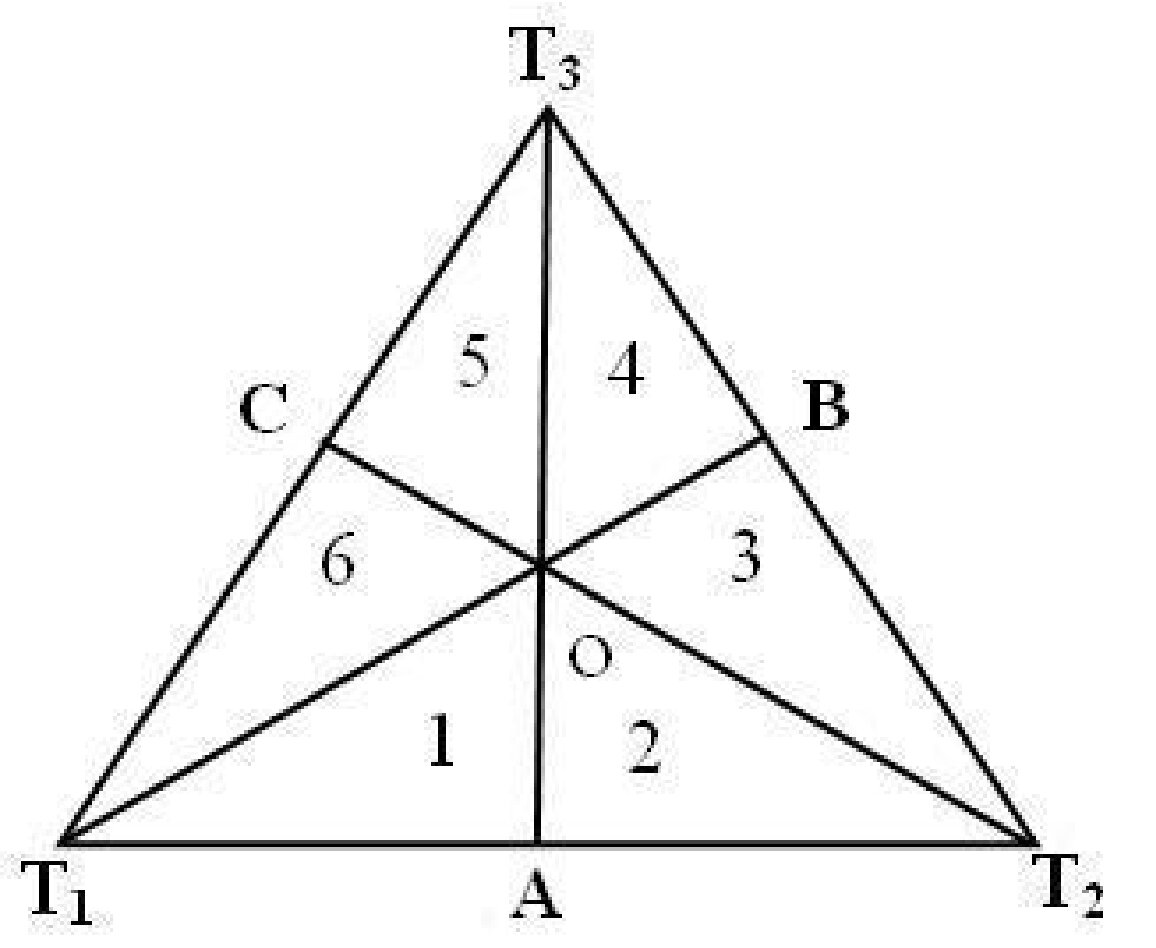 Figure 1
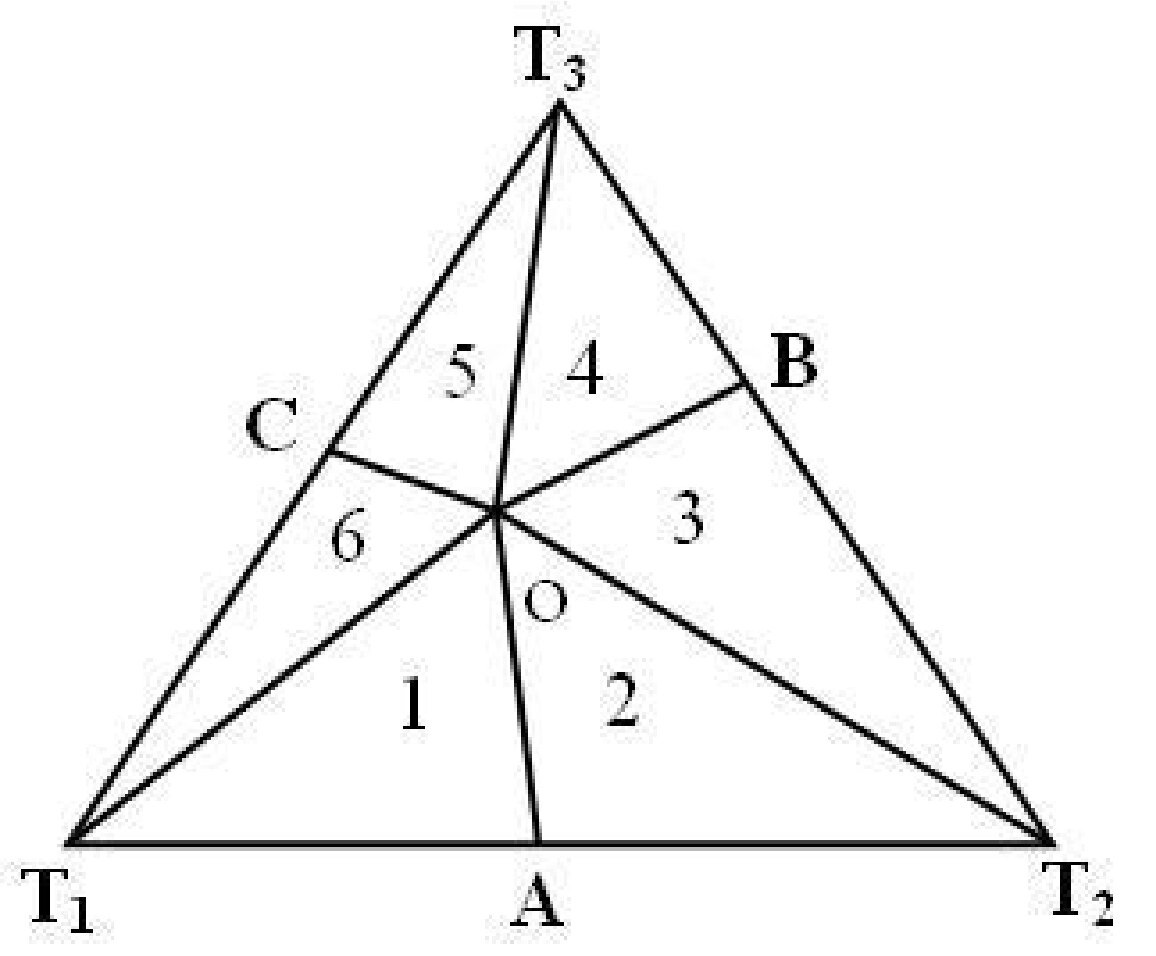 Figure 2
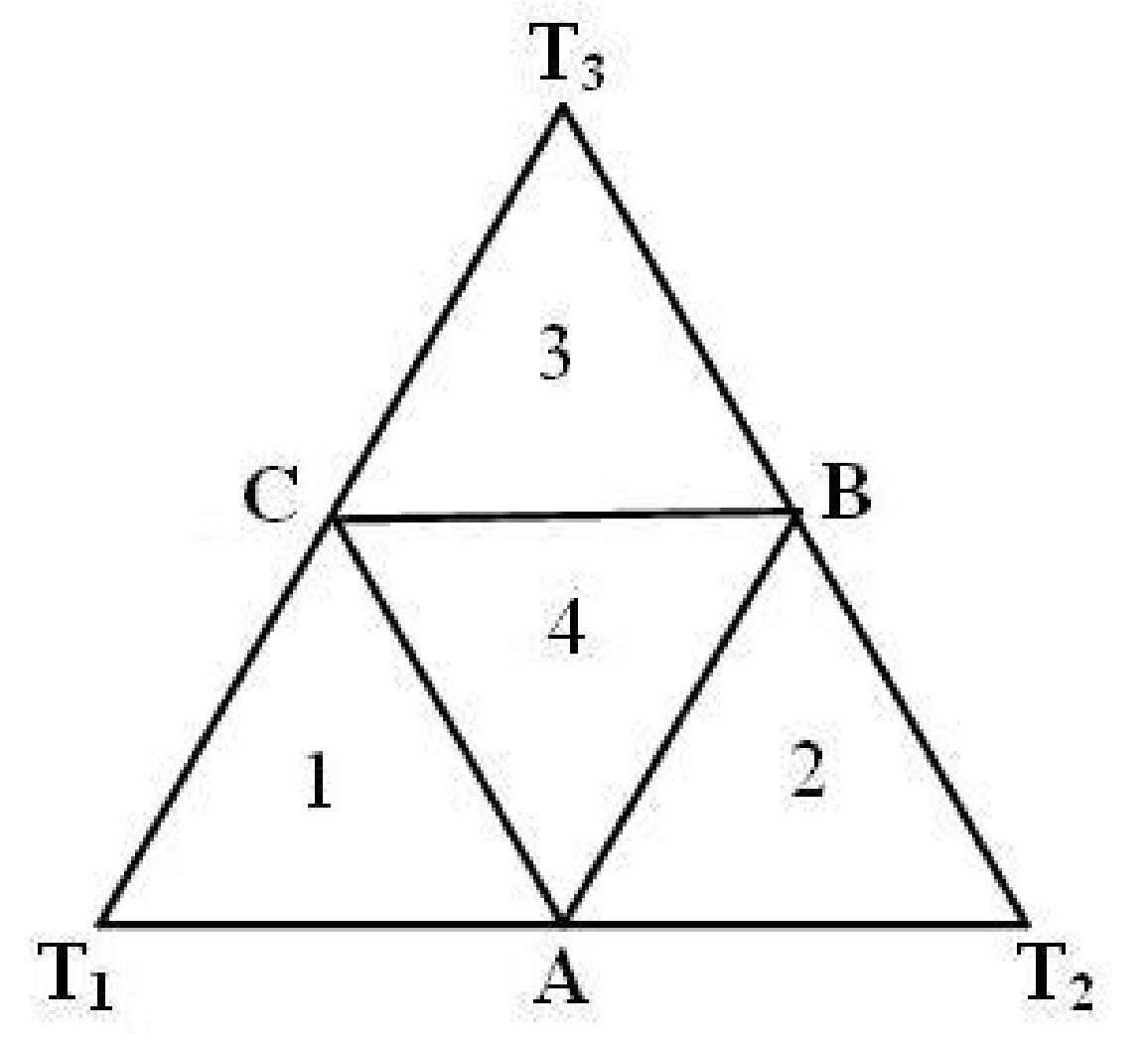 Figure 3
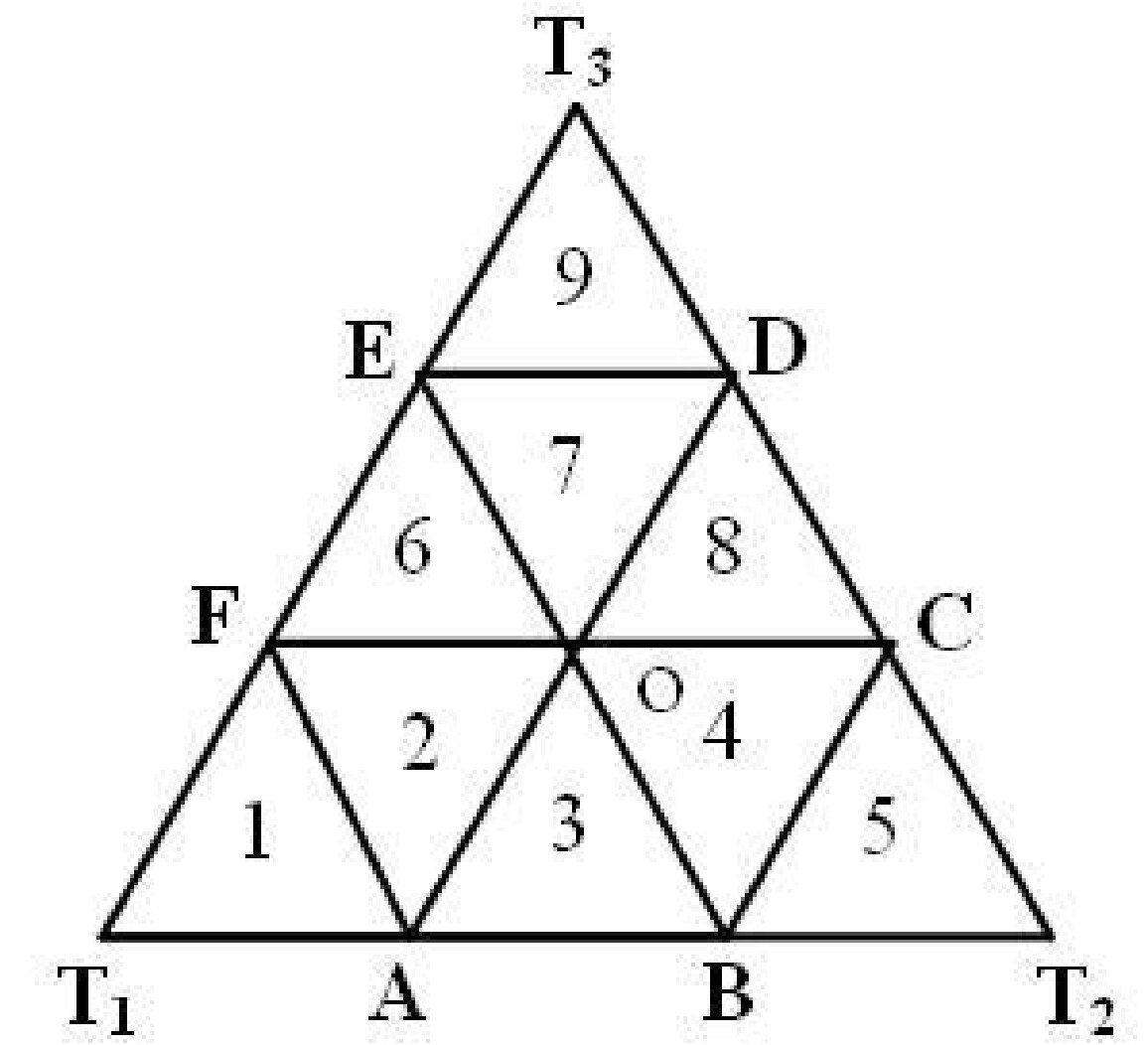 Figure 4
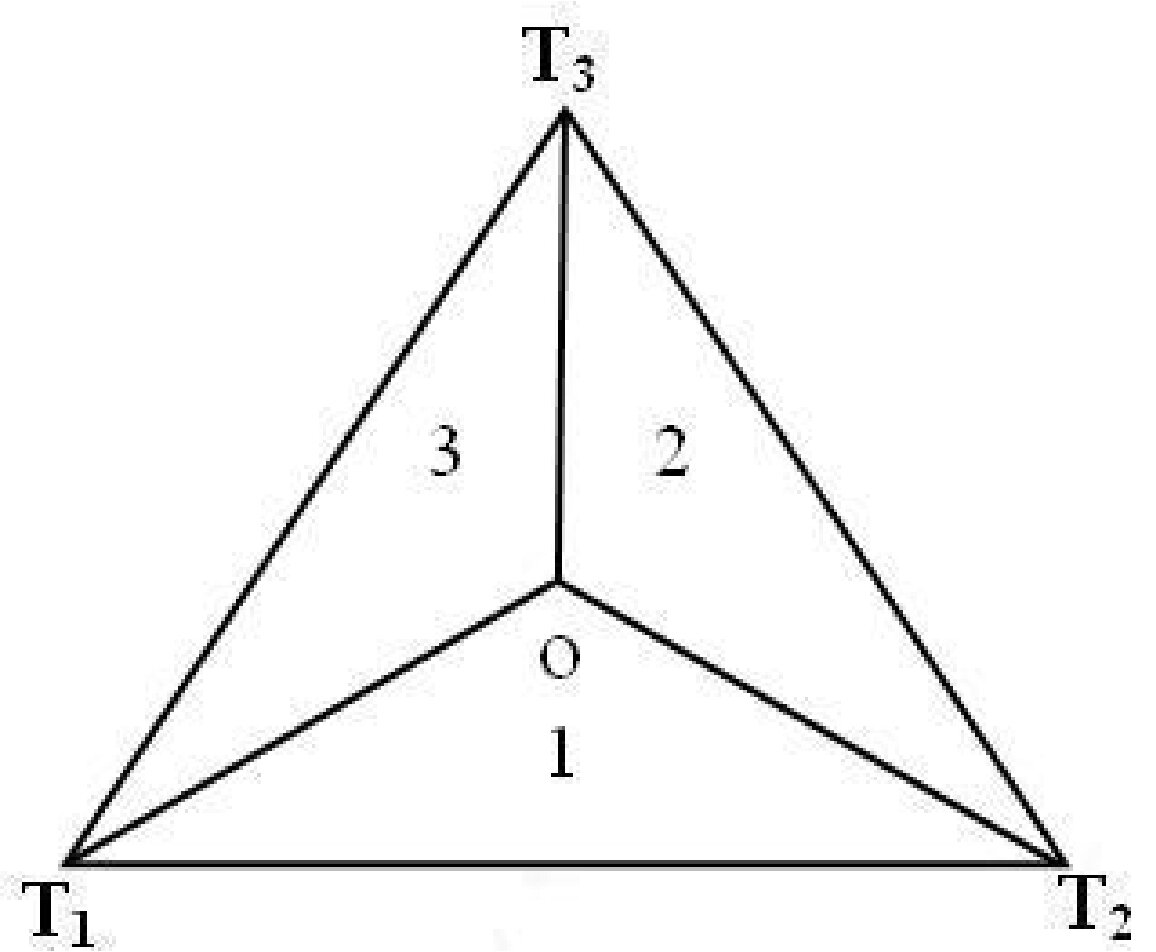 Figure 5
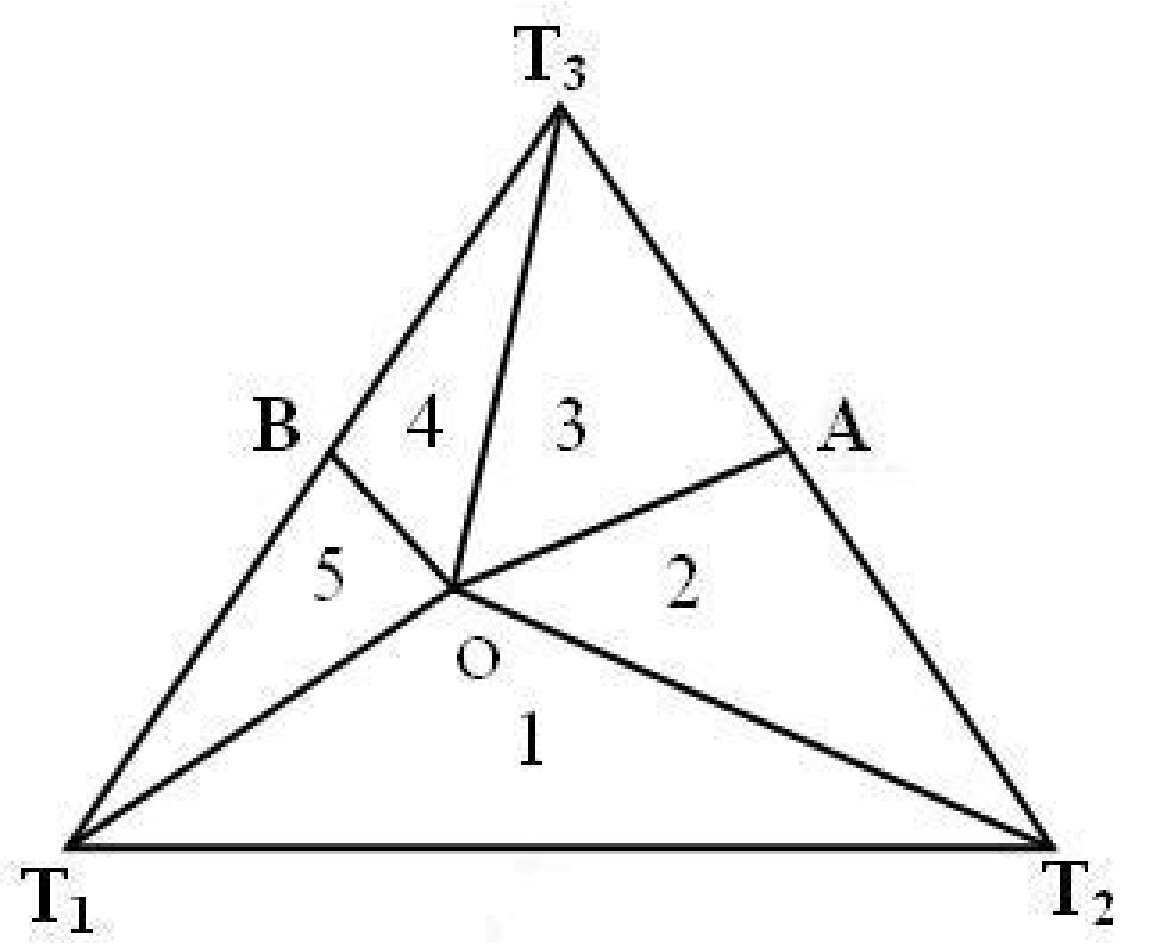 Figure 6
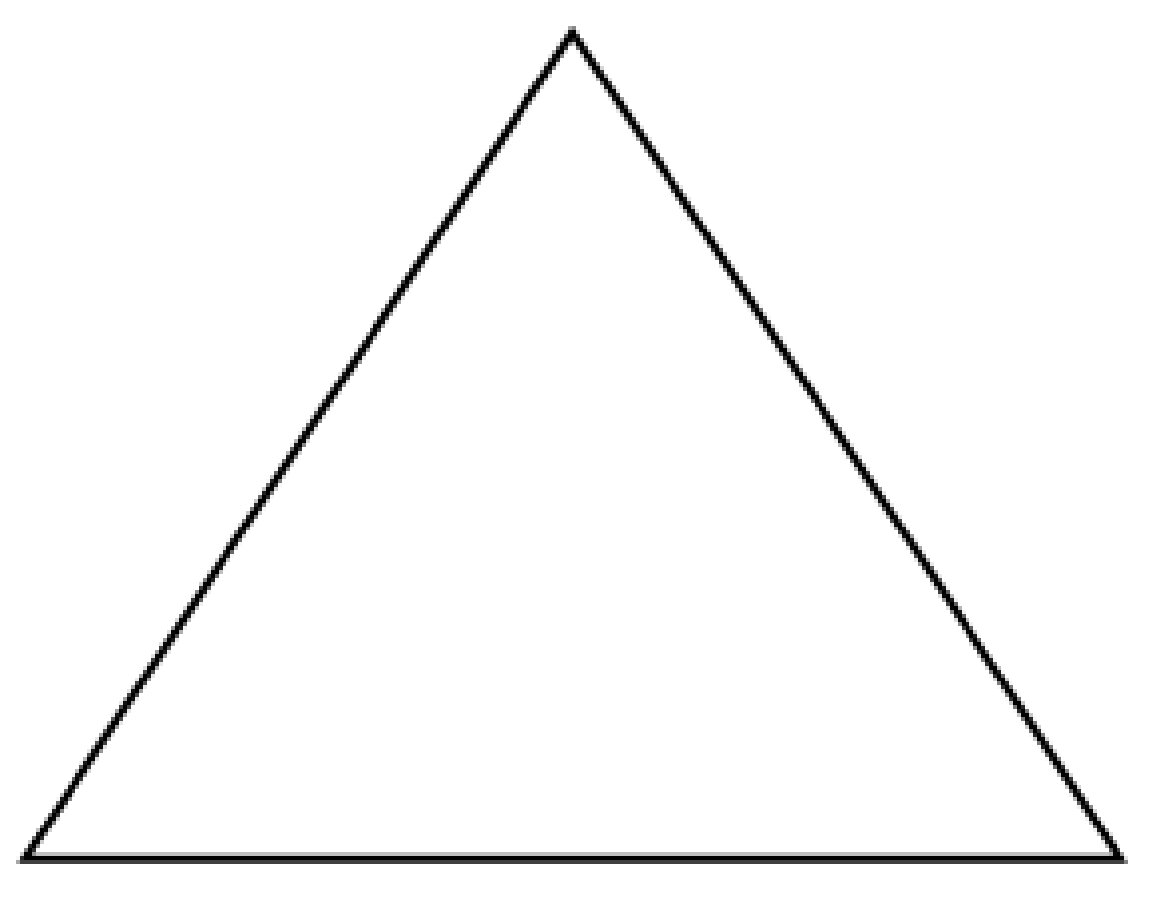 Figure 7
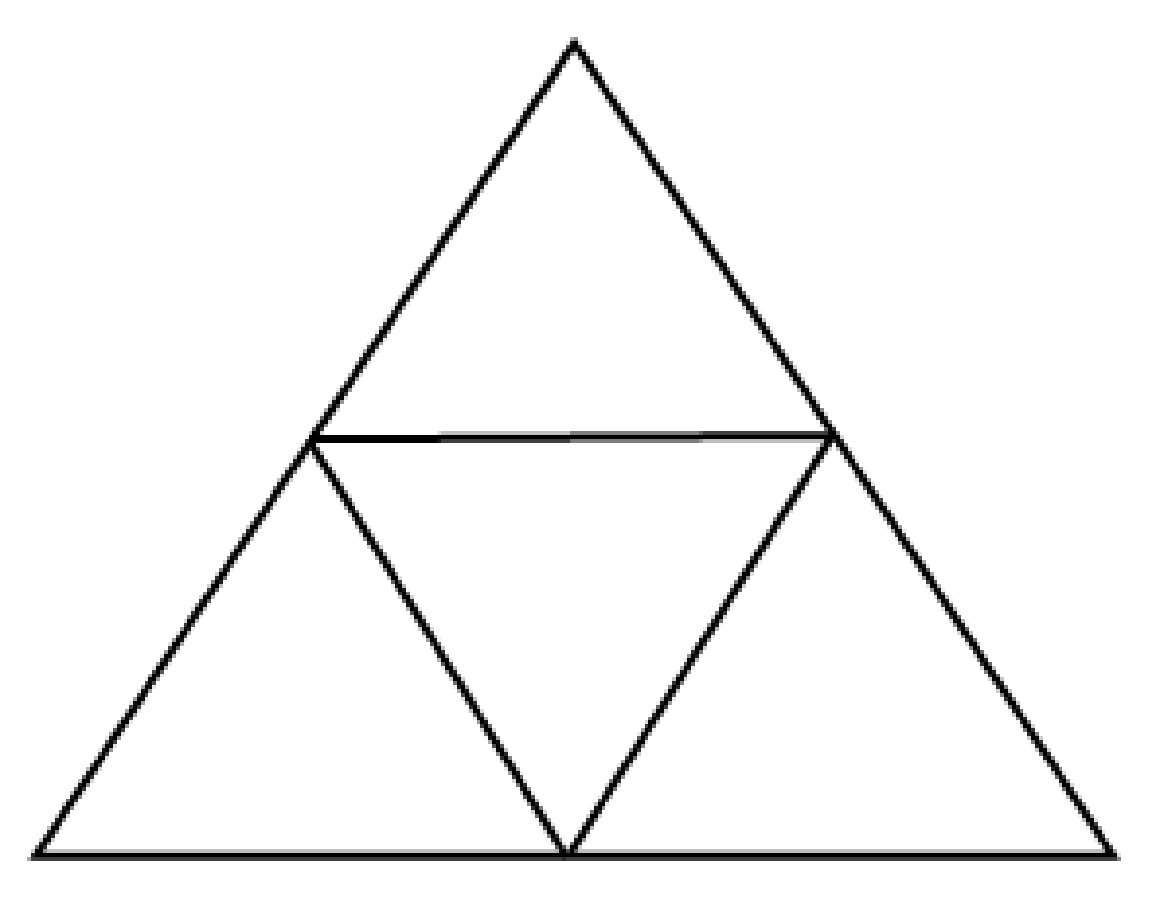 Figure 8
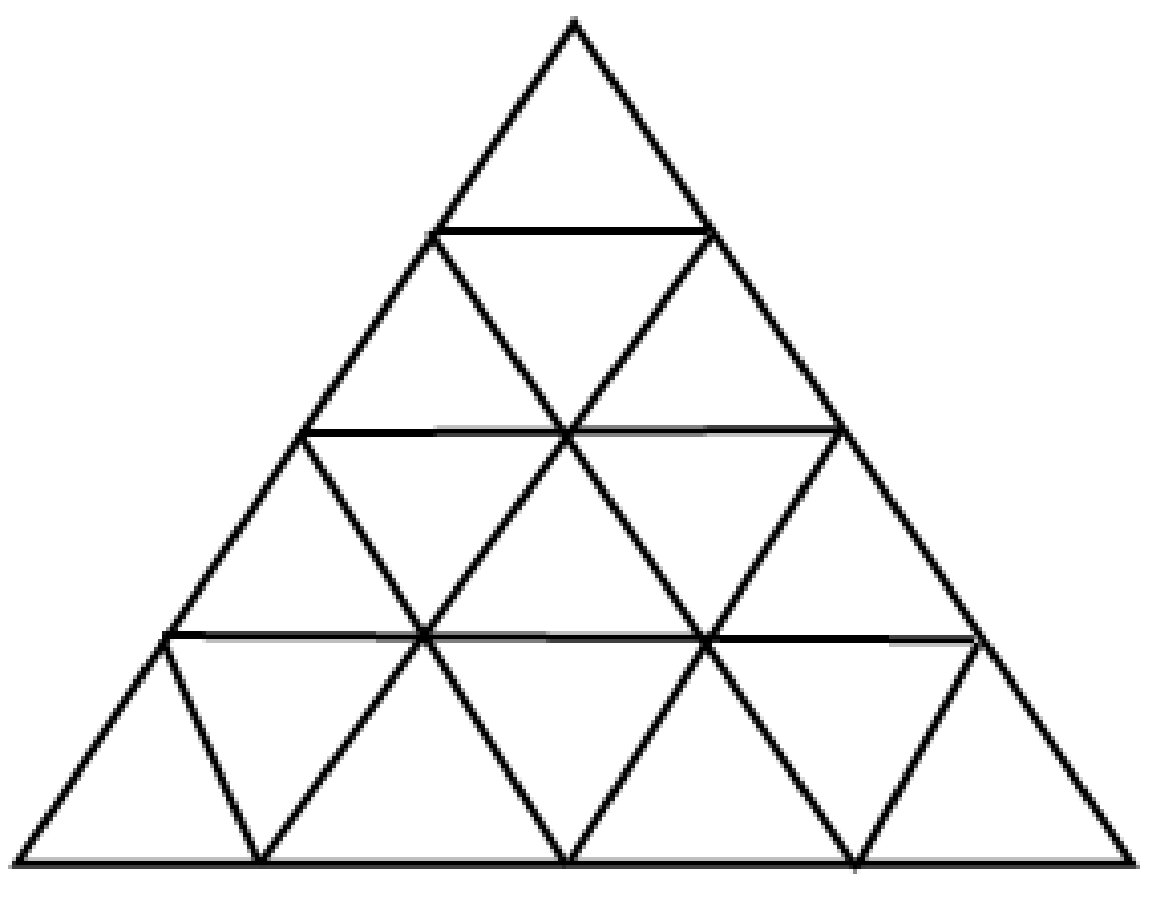 Figure 9
| The substitution set | Running SLS times | Output | CPU time (s) |
| 3 | PSD | 0.016 | |
| 3 | PSD | 0.015 | |
| 2 | PSD | 0.032 | |
| Table 1. | |||
| The substitution set | Running SLS times | Output | CPU time (s) |
| 3 | 0.094 | ||
| 3 | 0.062 | ||
| 2 | 0.094 | ||
| Table 2. | |||
| The substitution set | Running SLS times | Output | CPU time (s) |
| 5 | 582.750 | ||
| 5 | 21.469 | ||
| 3 | 234.484 | ||
| Table 3. | |||
Peer Reviews
No public reviews on file for this paper yet. If you reviewed it on a platform where reviews are public (OpenReview, ICLR, NeurIPS, ICML), you can paste yours below so the community can read it here.
Videos
No videos yet. Explain this paper in a talk, walkthrough, or lecture? Add one.
Taxonomy
TopicsAdvanced Numerical Analysis Techniques · Robotic Mechanisms and Dynamics · Iterative Methods for Nonlinear Equations
Simplex Subdivisions and Nonnegativity Decision of
Forms111 Partially supported by a National Key Basic Research Project of China (2004CB318000) and by National Natural Science Foundation of China (10571095). Sponsored by K.C.Wong Magna Fund in Ningbo University.
Xiaorong Hou1 Song Xu1,2
* College of Automation, University of Electronic Science and Technology of China, Sichuan, PRC
Faculity of Science, Ningbo University, Ningbo, Zhejiang, PRC
E-mail: [email protected], [email protected] *
**Abstract This paper mainly studies nonnegativity decision of forms based on variable substitutions. Unlike existing research, the paper regards simplex subdivisions as new perspectives to study variable substitutions, gives some subdivisions of the simplex , introduces the concept of convergence of the subdivision sequence, and presents a sufficient and necessary condition for the convergent self-similar subdivision sequence. Then the relationships between subdivisions and their corresponding substitutions are established. Moreover, it is proven that if the form is indefinite on and the sequence of the successive -substitution sets is convergent, then the sequence of sets is negatively terminating, and an algorithm for deciding indefinite forms with a counter-example is obtained. Thus, various effective substitutions for deciding positive semi-definite forms and indefinite forms are gained, which are beyond the weighted difference substitutions characterized by “difference”.
**
Key words Simplex Subdivisions; Nonnegativity decision of forms; The weighted difference substitutions
AMS subject classification(2000) 15A18, 65Y99
1 Introduction
Theories and methods of nonnegative polynomials have been widely used in robust control, non-linear control and non-convex optimization [1, 2, 3], etc. Some famous research works on nonnegativity decision of polynomials without cell-decomposition were given by Pólya’s Theorem [4, 5] and papers [6, 7].
Recently, Yang [8, 9, 10] introduced a heuristic method for nonnegativity decision of polynomials, which is now called Successive Difference Substitution (SDS). It has been applied to prove a great many polynomial inequalities with more variables and higher degrees. Yao [11] investigated the weighted difference substitutions instead of the original difference substitutions, and proved that, for a form (namely, a homogeneous polynomial) which is positive definite on , the corresponding sequence of SDS sets is positively terminating, where That is, we can decide the nonnegativity of a positive definite form by successively running SDS finite times. The research results above are all confined to the variable substitutions characterized by “difference”.
Unlike existing research, this paper regards simplex subdivisions as new perspectives to study variable substitutions, and obtains various effective variable substitutions for deciding positive semi-definite forms and indefinite forms on , which are beyond the weighted difference substitutions characterized by “difference”. The paper is organized as follows. Section 2 gives some subdivisions of the simplex , and establishes the relationships between them and their corresponding substitutions. Section 3 introduces the concept of the termination of , which is directly related to the positive semi-definite property of the form . Section 4 proves that if the form is indefinite on and the sequence of the successive -substitution sets is convergent, then the sequence of sets is negatively terminating. An algorithm for deciding an indefinite form with a counter-example is presented in Section 5, and by using the obtained algorithm, several examples are listed in Section 6.
2 Simplex
subdivisions and the corresponding substitutions
We first introduce some definitions and notations.
Definition 2.1**.**
Let be an matrix. If , is called a normalized matrix. And the corresponding linear transformation
[TABLE]
is called a normalized substitution, where , , are respectively the transposes of , , and is called the substitution matrix of (1).**
Lemma 2.1**.**
Let . If are all normalized matrices, then is a normalized matrix , that is,
[TABLE]
And let , then iff .**
The proof of Lemma 2.1 is very straightforward and is omitted.
Definition 2.2**.**
*If the form for all , then is called positive semi-definite on , and the set of all positive semi-definite forms is denoted by PSD; If for all , then is called positive definite on (briefly, a PD); If there are and , such that and , then is called indefinite on . ***
The -dimensional simplex is defined as follows
[TABLE]
Definition 2.3**.**
*If the form for all , then is called positive semi-definite on ; If for all , then is called positive definite on ; If there are and such that and , then is called indefinite on . ***
It is easy to get the following conclusion.
Lemma 2.2**.**
The form is positive semi-definite (positive definite, indefinite) on iff is positive semi-definite (positive definite, indefinite) on .**
According to Lemma 2.2, for brevity, we suppose the form is defined on in the following sections.
2.1 The
barycentric subdivision and the weighted difference substitutions
In this subsection, we focus on the barycentric subdivision and its corresponding substitutions.
See Fig.1. The first barycentric subdivision of the simplex consists of 6 subsimplexes. Consider the subsimplex labeled 1 first, where in the -coordinate system. Consruct the following substitution
[TABLE]
where
[TABLE]
By (2), if , then ; If , then ; If , then . And it is indicated that the subsimplex and the substitution (2) correspond to each other.
Analogously, the other five subsimplexes labeled as 2-6 correspond to the five substitutions, respectively, whose substitution matrices are as follows
[TABLE]
The six substitutions above are just the weighted difference substitutions for , and the set which consists of all the substitutions is called the weighted difference substitution set. Therefore, the fisrt barycentric subdivision of corresponds to the weighted difference substitution set, that is, there is a one-to-one correspondence between the subsimplexes of the first barycentric subdivision of and the weighted difference substitutions.
Definition 2.4**.**
Let be the weighted difference substitution matrix set for . The set of linear transformations
[TABLE]
is called the -times successive weighted difference substitution set, which consists of substitutions.**
By Lemma 2.1 and Definition 2.4, we have that the -th barycentric subdivision of the simplex corresponds to the -times successive weighted difference substitution set.
2.2 Some more subdivisions and the corresponding substitutions
Next, we’ll present some more subdivisions of the simplex and their corresponding substitutions.
Consider Fig.2(a) first. Let , , , , , , . And the first subdivision of the simplex consists of six subsimplexes labeled as 1-6, which correspond to the following substitution matrices, respectively.
[TABLE]
where , and . If , , , , then the subdivision is just the barycentric subdivision.
In Fig.2(b), the first subdivision of the simplex consists of four subsimplexes labeled as 1-4, which correspond to the following substitution matrices, respectively.
[TABLE]
In Fig.2(c), the first subdivision of the simplex consists of nine subsimplexes labeled as 1-9, which correspond to the following substitution matrices, respectively.
[TABLE]
Next, we’ll give the definitions of the self-similar subdivision sequence and the successive substitution set.
Definition 2.5**.**
Given a simplex . Let , and , where is the subdivision of for . For an arbitrary subsimplex of (), if the vertex coordinates of all the subsimplexes of in the -coordinate system equal to the corresponding ones of all the subsimplexes of in the -coordinate system, then is called the -th self-similar subdivision of the simplex , and the subdivision sequence is called self-similar.**
Fig.3 shows the first and second self-similar subdivisions of the simplex .
Definition 2.6**.**
Let be the -substitution matrix set. The set of linear transformations
[TABLE]
is called the -times successive -substitution set, briefly, the -times SLS set.**
Suppose that the the first subdivision of the simplex corresponds to the normalized -substitution set. By Lamma 2.1, Definition 2.5 and Definition 2.6, we conclude that the -th self-similar subdivision of the simplex corresponds to the -times successive -substitution set.
Easily, all the subdivisions of the simplex in the paper can be expanded to the case of the -dimensional simplex .
2.3 Convergence of the subdivision
sequence of a simplex
In this subsection, we’ll introduces the concept of the convergence of the subdivision sequence, and presents a sufficient and necessary condition for the convergent self-similar subdivision sequence.
Definition 2.7**.**
Let be a subsimplex of , the maximum distance between vertexs of is called the diameter of .**
Definition 2.8**.**
Let and be defined as Definition 2.5. If for all , there exists , such that all the diameters of the subsimplexes of are less than , the subdivision sequence is called convergent.**
Definition 2.9**.**
Suppose that the subdivision scheme through which is subdivided into corresponds to the substitution set for . If the subdivision sequence is convergent, then the sequence of substitution sets is called convergent, and if , , briefly, we say that the sequence of the successive -substitution sets is convergent.**
Next, we’ll consider the convergence of the sequence of the successive weighted difference substitution sets.
Lemma 2.3**.**
*[12, 13] Let be a complex. If is the -th barycentric subdivision of , then for all , there exists , such that all the diameters of the subsimplexes of are less than . ***
By Lemma 2.3 , we have the following theorem.
Theorem 2.1**.**
The barycentric subdivision sequence of and the corresponding sequence of the successive weighted difference substitution sets are convergent.**
Now, we present a sufficient and necessary condition for the convergent self-similar subdivision sequence, which plays important roles for nonnegativity decision of forms.
Theorem 2.2**.**
*Let be the self-similar subdivision sequence of , then it is convergent iff an arbitrary -dimensional proper face of subsimplexes of is not the -dimensional one of . ***
Proof.
The proof of necessity is straightforward by Definition 2.5 and Definition 2.8. Next, we prove sufficiency. Let be the diameter of , and be the maximum diameter of subsimplexes of , then . Since an arbitrary -dimensional proper face of subsimplexes of is not the -dimensional one of , we have . Note , then . Obviously, the maximum diameter of subsimplexes of the -th self-similar subdivision of is . When , then , so the self-similar subdivision sequence is convergent. ∎
Consider the following subdivisions of in Fig.4.
In Fig.4(a), the first subdivision of the simplex consists of 3 subsimplexes labeled as 1-3, which correspond to the following substitution matrices, respectively.
[TABLE]
In Fig.4(b), the first subdivision of the simplex consists of 5 subsimplexes labeled as 1-5, which correspond to the following substitution matrices, respectively.
[TABLE]
where , , and .
In Fig.4, it is straightforward that the -dimensional proper face of the subsimplex is just the one of . By Theorem 2.2, we have that the two self-similar subdivision sequences of aren’t convergent.
3 Termination of the Sequence of the Successive
Substitution Sets of a Form
In this section , we’ll define the termination of the sequence of the successive substitution sets of a form, which is directly related to the positive semi-definite property of the form .
Let be the -substitution matrix set.
Definition 3.1**.**
Given the form on , when traverse all the memebers of respectively, we define the set
[TABLE]
which is called the -times successive -substitution set of the form .**
Definition 3.2**.**
We define the sequence of sets as follows**
[TABLE]
Let , and let . Then we write a form with degree as
[TABLE]
Definition 3.3**.**
The form is called trivially positive if the coefficients of every term in are nonnegative; If , then is called trivially negative.**
Lemma 3.1**.**
*Given the form on , if the form is trivially positive, then PSD; If the form is trivially negative, then PSD. ***
Definition 3.4**.**
Given a form on , if there is a positive integer such that every element of the set is trivially positive, then the sequence of sets is called positively terminating; If there is a positive integer and a form such that and is trivially negative, the sequence of sets is called negatively terminating; The sequence of sets is neither positively terminating nor negatively terminating, then it is called not terminating.**
4 Nonnegativity decision of forms
Given a form on . We know that if the sequence of sets is negatively terminating, then we can conclude that the form is positive semi-definite. Thus there is a natural question, that is, which kind of forms can be solved by the method? The following theorem answers the question.
Theorem 4.1**.**
Let the form be positive definite on . If the sequence of the successive -substitution sets is convergent, then the sequence of sets is negatively terminating.**
Proof.
We only give the proof for the ternary form with degree , and the multivariate form can be gotten by induction.
Suppose that . An arbitrary -times successive -substitution can be written as
[TABLE]
Let
[TABLE]
then (10) becomes
[TABLE]
where and .
Let , (11) can be rewritten as
[TABLE]
Thus
[TABLE]
where
[TABLE]
Obviously,
[TABLE]
And since is positive definite on , there exists , such that
[TABLE]
On the one hand, the vertexs of the subsimplex which corresponds to the successive -substitution (11) are respectively
[TABLE]
By Theorem (2.1), can be sufficiently small when is sufficiently large.
On the other hand, for is continuous on and by (14)-(16), we have when are sufficiently small.
Putting together the above two aspects, we have that there exists a sufficiently large integer , such that becomes trivially positive by (11). For the successive -substitution (10) is arbitrary, the sequence of sets is positively terminating. ∎
Let be the Yang-Yao’s substitution set in Theorem 4.1, then the theorem is the main result in [11]. However, the proof of the theorem in this paper is different from the one given in [11].
According to the proof of Theorem 4.1, we obtain the following conclusion.
Corollary 4.1**.**
Let the form be positive definite on . If the sequence of the successive -substitution sets is convergent, then by an arbitrary -times successive -substitution, when is sufficiently larger, can become a nonlacunary form whose coefficients are all positive.**
In Theorem 4.1, if the sequence of the successive -substitution sets isn’t convergent, the conclusion of the theorem is not always true.
Theorem 4.2**.**
Let the form be positive definite on . If the sequence of the successive -substitution sets isn’t convergent, the sequence of sets isn’t always negatively terminating.**
Proof.
Let be the substitution set, which correspands to the subdivision of the simplex given by Fig.4(a). And we have concluded that the sequence of the successive -substitution sets isn’t convergent.
Given the form
[TABLE]
Apparently, is positive definite on . Consider the -times successive -substitution
[TABLE]
where
[TABLE]
And without difficulty, we have
[TABLE]
Then
[TABLE]
When , the coefficient of the term is -2. Therefore, the sequence of sets isn’t terminating. ∎
5 Decision of indefinite forms
Many problems, such as the inequality disproving, are always transformed into decision of indefinite forms. Given a form on . Suppose that there exists such that . It is well-known to us that if the sequence of sets is negatively terminating, then the form is indefinite. Then it follows a question naturally: for a indefinite form on , is the negatively terminating? The question is answered by the following theorem.
Theorem 5.1**.**
Let the form be indefinite on . If the sequence of the successive -substitution sets is convergent, then the sequence of sets is negatively terminating.**
Proof.
Let be the substitution matrix set which corresponds to the substitution set . Since the form is indefinite on , there exists such that . And is continuous on , so there exists a neighborhood of (If is on the boundary of , then we take ) such that for all . For the sequence of the successive -substitution sets is convergent, then there exists a subsimplex of the -th subdivision of , which corresponds to the -times successive -substitution
[TABLE]
satisfying , where is a sufficiently larger integer. Thus, is positive definite on . By Theorem 4.1, the sequence of sets is positively terminating, so there exists a -times successive -substitution
[TABLE]
satisfying that is trivially negative. Therefore, the sequence of sets is negatively terminating.∎
By the proving process of Theorem (5.1), we obtain the following algorithm, which is used to decide the indefinite form with a counter-example.
Algorithm **(SLS)
**Input: the form , where is positive definite or indefinite on .
Output: “PSD”, or “”.
step1: Let .
step2: Compute ,
Let
[TABLE]
where
[TABLE]
step3: Let .
step31: If is null, then output “PSD”, and terminate.
step32: If there is a trivially negative form , then output ,
and terminate, where
[TABLE]
is the -th component of , is the -th component of , and is the
the total number of the components of .
step33: Else, Compute . Let
[TABLE]
where
[TABLE]
and extracts operands from . And let
[TABLE]
then go to step3.
By Algorithm SLS, we design a Maple program called SLS, see Appendix. To the program SLS, there are some positive semi-definite forms making the program do not terminate, that is, we cann’t decide these positive semi-definite forms by the method.
6 Examples
In this section, we demonstrate the program SLS with some examples on a computer with Intel(R) Core(TM)2 Duo CPU (E7200 @ 2.53GHz) and 3.25G RAM.
Let be the substitution sets which correspond to the subdivisions of the simplex given by Fig.1, Fig.2(b) and Fig.2(c), respectively. And let be the -substitution matrix set for .
Example 1. Show that the following form is positive semi-definite on ,
[TABLE]
Utilize the program SLS and execute order SLS for . And the running results are shown in Table 1. So positive semi-definite on .
Example 2. Show that the following form is indefinite on ,
[TABLE]
Execute order SLS for , and the running results are shown in Table 2. Obviously, , so the form is indefinite on .
Example 3. Prove or disprove that, for , and ,
[TABLE]
Take off denominators of the left polynomial, and denote the new polynomial by . Execute order SLS for , the running results are shown in Table 3. So the inequality doesn’t hold.
The examples above indicate the effectiveness of Algorithm SLS. Thus, we obtain various effective substitutions for deciding positive semi-definite forms and indefinite forms which are beyond Yang’s substitutions characterized by “difference”.
Appendix. Maple Program SLS
X
SLS:=proc(poly,A,var)
local f,i,j,k,m,n,p,s,t,F,G,H,M,newvar,st,Var:
uses combinat, LinearAlgebra:
t:=time(): F:=[[poly,[0]]]:n:=nops(var):r =100
Var:=convert(var,Vector):
for i to nops(A) do
for j to n do
newvar[i,j]:=op(j,convert(A[i].Var,list)):
od:
od:
for s to r do
m:=nops(F): f:=[]:
for k to m do
G[k]:=[]:
for i to nops(A) do
st:={seq(Var[j]=newvar[i,j],j=1..n)}:
G[k]:=[op(G[k]),[expand(subs(st,F[k][1])),[op(F[k][2]),i]]]:
od:
od:
F:=[seq(op(G[u]),u=1..nops(F))]:
for i to nops(F) do
if max([coeffs(F[i][1])]) < 0 then
print(F[i][2]):
M :=IdentityMatrix(n):
for j from 2 to nops(F[i][2]) do
M:=M.A[F[i][2][j]]:
od:
print(convert(M.Vectorcolumn,list)):
print(time()-t,second):
return ("The form is indefinite"):
elif min([coeffs(F[i][1])]) >=0 then
f:=[op(f),i]:
fi:
od:
if nops(f)>0 then
F:=subs({seq(F[f[p]]=NULL,p=1..nops(f))},F):
fi:
if nops(F)=0 then
print(s):print(time()-t,second):
return("The form is positive semi-definite"):
fi:
od:
end proc:
The reference list from the paper itself. Each links out to its DOI / PubMed record.
- 1[1] Parrilo P A. Structured semidefinite programs and semialgebraic geometry methods in robustness and optimization. Ph D Thesis, Calif. Inst. Tech, Pasadena. 2000.
- 2[2] Parrilo P A. Semidefinite programming relaxations for semialgebraic problems. Math. Prog. 2003, Ser. B, 96(2), 293 C 320.
- 3[3] Lasserre J B. Global optimization with polynomials and the problem of moments. SIAM J. Opt. 2001, 11(3), 796 C 817.
- 4[4] Pólya G. , Szego G. Problems and Theorems in Analysis(Vol.2), New York Berlin Heideberg: Springer-Verlag, 1972.
- 5[5] Hardy G H. , Littlcwood J E. , Pólya G. , Inequalities [M], Camb Univ. Press. 1952.
- 6[6] Catlin D W. , D’Angelo J P. Positivity conditions for bihomogeneous polynomials. Math. Res.Lett. 1997, 4, 555 - 567.
- 7[7] Handelman D. Deciding eventual positivity of polynomials. Ergod. Th. & Dynam. Sys. 1986, 6, 57-79.
- 8[8] Yang Lu. Solving Harder Problems with Lesser Mathematic. Proceedings of the 10th Asian Technology Conference in Mathematics, ATCM Inc, 2005, 37-46.