Multiplexing Gain of Amplify-Forward Relaying in Wireless Multi-Antenna Relay Networks
Shahab Oveis Gharan, Amir K. Khandani

TL;DR
This paper analyzes the multiplexing gain in multi-antenna relay networks, proving that amplify-forward relaying achieves maximum multiplexing gain equal to the network's minimum vertex cut-set, with extensions to multicast and multi-access scenarios.
Contribution
It establishes the maximum multiplexing gain for multi-antenna relay networks and links it to the network's graph-theoretic minimum cut-set, extending the analysis to multicast and multi-access cases.
Findings
Amplify-forward relaying achieves maximum multiplexing gain.
Maximum multiplexing gain equals the minimum vertex cut-set.
The results extend to multicast and multi-access scenarios.
Abstract
This paper studies the general multi-antenna multiple-relay network. Every two nodes of the network are either connected together through a Rayleigh fading channel or disconnected. We study the ergodic capacity of the network in the high SNR regime. We prove that the traditional amplify-forward relaying achieves the maximum multiplexing gain of the network. Furthermore, we show that the maximum multiplexing gain of the network is equal to the minimum vertex cut-set of the underlying graph of the network, which can be computed in polynomial time in terms of the number of network nodes. Finally, the argument is extended to the multicast and multi-access scenarios.
Click any figure to enlarge with its caption.
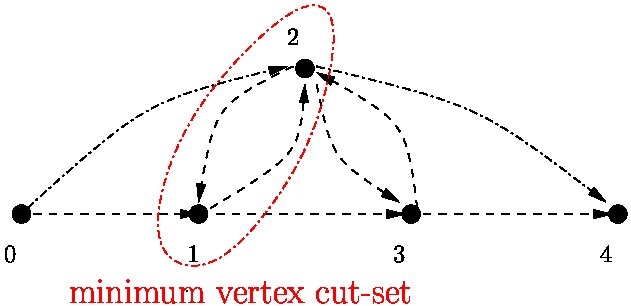 Figure 1
Peer Reviews
No public reviews on file for this paper yet. If you reviewed it on a platform where reviews are public (OpenReview, ICLR, NeurIPS, ICML), you can paste yours below so the community can read it here.
Videos
No videos yet. Explain this paper in a talk, walkthrough, or lecture? Add one.
Taxonomy
TopicsCooperative Communication and Network Coding · Full-Duplex Wireless Communications · Advanced MIMO Systems Optimization