Moment maps and geometric invariant theory
Christopher T. Woodward

TL;DR
This paper explores the Kempf-Ness theorem linking symplectic and algebraic quotients, discusses invariant theory in tensor products, and reviews Teleman's enhancement of the quantization-reduction correspondence.
Contribution
It provides a comprehensive overview of the interplay between moment maps, geometric invariant theory, and recent advancements in quantization techniques.
Findings
Kempf-Ness theorem establishes quotient equivalences
Connections between invariant theory and tensor product invariants
Teleman's improved quantization and reduction results
Abstract
These lectures centered around the Kempf-Ness theorem, which describes the equivalence between notions of quotient in symplectic and algebraic geometry. The text also describes connections to invariant theory, such existence of invariants in tensor products of simple GL(r)-modules, and Teleman's improved version of quantization commutes with reduction.
Click any figure to enlarge with its caption.
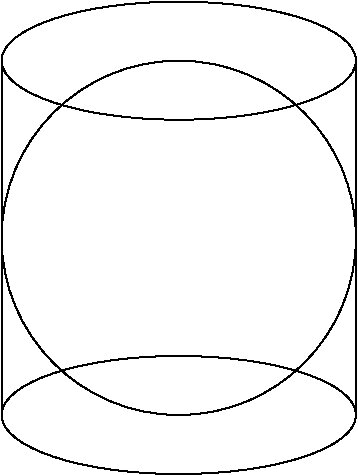 Figure 1
 Figure 2
 Figure 3
 Figure 4
Peer Reviews
No public reviews on file for this paper yet. If you reviewed it on a platform where reviews are public (OpenReview, ICLR, NeurIPS, ICML), you can paste yours below so the community can read it here.
Videos
No videos yet. Explain this paper in a talk, walkthrough, or lecture? Add one.
Taxonomy
TopicsAdvanced Algebra and Geometry · Geometry and complex manifolds · Algebraic Geometry and Number Theory
Moment maps and geometric invariant theory
Chris Woodward, Rutgers University, New Brunswick
Mathematics-Hill Center, Rutgers University, 110 Frelinghuysen Road, Piscataway, NJ 08854-8019, U.S.A.
Partially supported by NSF grants DMS060509 and DMS0904358
Contents
- 1 Introduction
- 2 Actions of Lie groups
- 3 Hamiltonian group actions
- 4 Geometric invariant theory
- 5 The Kempf-Ness theorem
- 6 Schur-Horn convexity and its generalizations
- 7 The stratifications of Hesselink, Kirwan, and Ness
- 8 Moment polytopes
- 9 Multiplicity-free actions
- 10 Localization via sheaf cohomology
1. Introduction
These are expanded notes from a set of lectures given at the school “Actions Hamiltoniennes: leurs invariants et classification” at Luminy in April 2009. The topics center around the theorem of Kempf and Ness [60], which describes the equivalence between the notion of quotient in geometric invariant theory introduced by Mumford in the 1960’s [82], and the notion of symplectic quotient introduced by Meyer [81] and Marsden-Weinstein [79] in the 1970’s. Infinite-dimensional generalizations of this equivalence have played an increasingly important role in geometry, starting with the theorem of Narasimhan and Seshadri [83] connecting unitary structures on a bundle with holomorphic stability, which by historical accident preceded the finite-dimensional theorem.
The proof of the Kempf-Ness theorem depends on the convexity of certain Kempf-Ness functions whose minima are zeros of the moment map. The convexity also plays an important role in the relation to geometric quantization discovered by Guillemin and Sternberg [40]: it corresponds to the fact that “invariant quantum states concentrate near zeros of the moment map”. Roughly speaking these notes were written as an exercise in “just how far” one can carry the convexity of the Kempf-Ness function. For example, using convexity I give alternative proofs of some of the results in Kirwan’s book [61] as well as finite-dimensional versions of Harder-Narasimhan and Jordan-Hölder filtrations; the former appears in the algebraic literature under the name of Hesselink one-parameter subgroups [52] but the latter seems to have been undeveloped.
The text is interspersed with applications to existence of invariants in representation theory, such as the problem of determining the existence of invariants in tensor products of irreducible representations, and various techniques for computing moment polytopes. For example, the last section describes Teleman’s improved version of quantization commutes with reduction [104] which also covers the behavior of the higher cohomology groups, and the non-abelian localization formula which computes the difference between the sheaf cohomology of the quotient and the invariant cohomology of the action. Some of the topics not treated are notably: Duistermaat-Heckman theory, symplectic normal forms, localization theorems in equivariant cohomology, and connections to classical invariant theory, to name a few.
The author is grateful for comments and corrections by Michel Brion, Gert Heckman, and Reyer Sjamaar, and apologizes for any omissions of work in what has become a vast literature.
2. Actions of Lie groups
To establish notation we review the basics of Lie group actions.
2.1. Lie groups
A Lie group is a smooth manifold equipped with a group structure so that group multiplication is a smooth map. The Lie algebra is the space of left-invariant vector fields on , and may be identified with the tangent space of at the identity . The exponential map is defined by evaluating the time-one flow at the identity.
Suppose that is compact and connected. Let be a maximal torus with Lie algebra . We denote by the integral lattice and by its dual, the weight lattice. Any element defines a character given for by . The Weyl group of is denoted . The Lie algebra splits under the action of into the direct sum of the Lie algebra and a finite sum of root spaces where is the set of roots and each is identified with a one complex-dimensional representation on which acts by . The kernels of the roots divide into a set of (open) Weyl chambers; given a generic linear function on there is a unique open positive Weyl chamber on which the function is positive; we denote by its closure and by the image of under an identification induced by an invariant metric on . Simple -modules are classified by the set of dominant weights .
2.2. Smooth actions and quotients
Let be a smooth manifold. A (left) action of on is a smooth map with the properties that and for all and . A -manifold is a smooth manifold equipped with a smooth -action. Let be -manifolds. A smooth map is -equivariant if for all .
Both the Lie algebra and its dual are naturally -manifolds: The adjoint action of an element on the Lie algebra is denoted . The coadjoint action of on the dual is . The group itself is a -manifold in three different ways: the left action, the (inverted) right action, and the adjoint action by conjugation . The exponential map is equivariant with respect to the adjoint action on and . If is compact, then the dual of the Lie algebra of the maximal torus admits a canonical embedding in , whose image is the -fixed point set for the coadjoint action of on , and so admits a canonical projection onto .
Let be -manifold. Let denote the infinite-dimensional group of diffeomorphisms of and the Lie algebra of vector fields on . The -action induces a canonical group homomorphism
[TABLE]
and a Lie algebra homomorphism
[TABLE]
The sign here arises because the Lie bracket is defined using left-invariant vector fields which are the generating vector fields for the right action of the group on itself, whereas our actions are by default from the left. The orbit of a point is the set . The stabilizer of a point is ; its Lie algebra is the set . A (co)adjoint orbit is an orbit of the (co)adjoint action of on resp. .
Let be a homomorphism of Lie groups and let be a -manifold. The action of and the homomorphism induce a -action on by . The orbits of the action are those of the -action, while the stabilizers are inverse images under .
Let be a -manifold. A slice at is a -invariant submanifold containing such that is open in and the natural smooth -equivariant map is a diffeomorphism onto its image. It follows from the existence of geodesic flows etc. that actions of compact groups have slices. A quotient of a -space is a pair consisting of a space and a -invariant morphism such that any other -invariant morphism factors through . The existence of slices implies that any free action of a compact group on a manifold has a manifold quotient ; more generally if the action is not free then the quotient exists in the category of Hausdorff topological spaces. (Strictly speaking one should write the quotient on the left, since our actions are by convention left actions. However, I find this rather cumbersome since in English reads “the quotient of by ”).
2.3. Equivariant differential forms
Recall that a graded derivation of a graded algebra of degree is an operator such that for homogeneous elements . The space of graded derivations (direct sum over degrees) forms a graded Lie algebra with bracket given by the graded commutator: given graded derivations of degrees , define .
Let be a smooth manifold of dimension . We denote by the Lie algebra of smooth vector fields on , and by the graded algebra of smooth forms on . For any we have the derivations defined by contraction and Lie derivative Let denote the de Rham operator, the graded derivation such that for . The operators generate a finite dimensional graded Lie algebra of with graded commutation relations for given by
[TABLE]
It suffices to check the commutation relations by verifying them on generators of . We denote by the space of closed forms by the space of exact forms and by the de Rham cohomology
Suppose that admits a smooth action of a Lie group . Cartan (see [42]) introduced a space of -equivariant forms
[TABLE]
where denotes equivariant polynomial maps of homogeneous degree . The equivariant de Rham operator is defined by
[TABLE]
Let resp. denote the equivariant closed resp. exact forms. The equivariant de Rham cohomology is
[TABLE]
If action is free, is isomorphic to the cohomology of the quotient, see for example [42].
3. Hamiltonian group actions
This section contains a quick review of equivariant symplectic geometry. More detailed treatments can be found in Cannas [23], Guillemin-Sternberg [41], Abraham-Marsden [1], or Delzant’s lectures in this volume.
3.1. Symplectic manifolds
Let be a smooth manifold. A symplectic form on is a closed non-degenerate two-form . A symplectic manifold is a manifold equipped with a symplectic two-form. A symplectomorphism of symplectic manifolds is a diffeomorphism with . The term symplectic is the Greek translation of the Latin word complex, and was used by Weyl to distinguish the classical groups of linear symplectomorphisms resp. complex linear transformations.
The simplest example of a symplectic manifold is equipped with the standard two-form ; Darboux’s theorem says that any symplectic manifold is locally symplectomorphic to equipped with the standard form. There are simple cohomological restrictions on which manifolds admit symplectic forms: Suppose that has dimension . Non-degeneracy of a two-form is equivalent to the non-vanishing of the highest wedge power ; if is compact and is symplectic then the cohomology class must be non-zero, since its integral is non-vanishing, which implies that the classes are also non-vanishing. For example this argument rules out the existence of symplectic structures on spheres except for the two-sphere, where any area form gives a symplectic structure.
Symplectic manifolds provide a natural framework for Hamiltonian dynamics as follows. For any symplectic manifold let denote the group of symplectomorphisms and the Lie subalgebra of symplectic vector fields . Any smooth function defines a symplectic vector field by In local Darboux coordinates, is given by
[TABLE]
The image of in is the space of Hamiltonian vector fields. Thus a vector field is symplectic resp. Hamiltonian iff the associated closed one-form is closed resp. exact. The Poisson bracket is the Lie bracket on defined by the formula
[TABLE]
The map extends to an exact sequence of Lie algebras
[TABLE]
where the Lie bracket on the de Rham cohomology groups is taken to be trivial. A Hamiltonian dynamical system is a pair consisting of a symplectic manifold and an energy function . Time evolution is given by the flow of . If is another function, such as a component of angular momentum, then , so is invariant under the flow generated by iff is conserved in time. This equivalence is often called Noether’s theorem: for every symmetry of a Hamiltonian system there is a conserved quantity.
The cotangent bundle of a smooth manifold possesses a canonical symplectic structure: Let be the canonical projection. The canonical one-form on is
[TABLE]
Local coordinates on induce dual coordinates in which . It follows that the canonical two-form on given by is symplectic. These forms are canonical in the sense that any diffeomorphism induces an isomorphism preserving the canonical one-forms, which is therefore a symplectomorphism. Physically represents the space of states of a classical particle moving on a manifold . However, many Hamiltonian dynamical systems have symplectic manifolds that are not cotangent bundles. For example, the two-sphere is the natural symplectic manifold for the study of the evolution of the angular momentum vector of a rigid body.
Proposition 3.1.1**.**
The following are natural operations on symplectic manifolds:
- (a)
(Sums) Let be symplectic manifolds. Then the disjoint union is a symplectic manifold. 2. (b)
(Products) Let be symplectic manifolds, . Then the product equipped with two-form is a symplectic manifold, where is the projection onto . 3. (c)
(Duals) Let be a symplectic manifold. Then the dual (or more generally, for any non-zero ) is a symplectic manifold.
Symplectomorphism is a very restrictive notion of morphism, since in particular the symplectic manifolds must be the same dimension. A more flexible notion of morphism in the symplectic category is given by the notion of Lagrangian correspondence [108]. (The discussion of correspondences is only used to formulate the universal property for symplectic quotients; readers not interested in this can skip all discussion of correspondences and the symplectic category.) Let be a symplectic manifold. A Lagrangian submanifold of is a submanifold with and . Let be symplectic manifolds. A Lagrangian correspondence from to is a Lagrangian submanifold of . Let and be Lagrangian correspondences. Let denote the projection from . Then
[TABLE]
is, if smooth and embedded, a Lagrangian correspondence in called the composition of and . The graph of any symplectomorphism from to is automatically a Lagrangian correspondence, and if are two such symplectomorphisms then . With this notion of composition, the pair (symplectic manifolds, Lagrangian correspondences) becomes a partially defined category, with identity given by the diagonal correspondence. The partially defined composition leads to an honest category, obtained by allowing sequences of morphisms and identifying sequences if they are related by geometric composition [107].
Symplectic geometry can be considered a special case of Poisson geometry: A Poisson bracket on a manifold is a Lie bracket that is a derivation with respect to multiplication of functions, that is, . A Poisson manifold is a manifold equipped with a Poisson bracket. A morphism of Poisson manifolds is a smooth map such that . Given any Poisson bracket on a manifold , for each the derivation is equal to for some vector field . The span of the vector fields defines a decomposition of into symplectic leaves, each of which is equipped with a symplectic structure so that (1) holds. On the other hand, the notion of symplectic geometry as a special case of Poisson geometry is not particularly compatible with the idea that Lagrangian correspondences should serve as morphisms.
3.2. Hamiltonian group actions
Let be a Lie group acting smoothly on a manifold . The action is symplectic if it preserves the symplectic form, that is, for all , infinitesimally symplectic if for all , and weakly Hamiltonian if for all . A symplectic -manifold is a symplectic manifold equipped with a symplectic action of .
Let be a symplectic -manifold. The action is Hamiltonian if the map lifts to an equivariant map of Lie algebras . Such a map is called a comoment map. A moment map is an equivariant map , satisfying
[TABLE]
Any comoment map defines a moment map by .
Example 3.2.1*.*
Let be a vector space acting on by translation. After identifying and so , a moment map for the action is given by the projection , that is, by the ordinary momentum, hence the terminology moment map.
The notion of moment map was introduced in independent work of Kirillov, Kostant, and Souriau, in connection with geometric quantization and representation theory. See [16] for a discussion of the history of the moment map and the relationship of the work between these authors. Unfortunately there is no standard sign convention for (2); our convention agrees with that of Kirwan [61]. More generally, if is a smooth manifold equipped with a closed two-form and an action of leaving invariant, then we say that is a moment map if (2) holds.
A Hamiltonian resp. degenerate Hamiltonian -manifold is a datum consisting of a symplectic -manifold resp. smooth -manifold equipped with an invariant closed two-form , and a moment map for the action. Let and be Hamiltonian -manifolds. An isomorphism of Hamiltonian -manifolds is a -equivariant symplectomorphism such that .
Example 3.2.2*.*
Archimedes’ computation of the area of the two-sphere is essentially a moment map calculation. Let be the unit sphere in . Let . The two-form restricts to a symplectic form on , invariant under rotation on . A moment map for the action of on by rotation clockwise around the -axis is given by , under the identification of the Lie algebra of and its dual with . Indeed, the generating vector field for is . A computation shows that
To relate this to Archimedes’ area formula, note that if are cylindrical coordinates on , then and so . Thus the area of the unit two-sphere between any two values of is the same as the area of the cylinder between those two values, . In particular (and this is the result reported by Cicero to be inscribed on Archimedes’ tombstone) the area of the unit two-sphere is equal to the area of the cylinder , namely .
We can deduce from the moment map for the circle action the moment map for the full rotation group as follows. We identify so that the infinitesimal rotation around the -th basis vector maps to , and using the standard metric on .
The action of on has moment map the inclusion . Indeed, by symmetry, moment maps for the rotation around the other two axes are given by resp. . Hence the inclusion satisfies the equation (2). In addition is equivariant and so defines a moment map. This ends the example.
The following are natural operations on Hamiltonian -manifolds:
Proposition 3.2.3**.**
- (a)
(Sums) Let be Hamiltonian -manifolds. Then the disjoint union is a Hamiltonian -manifold, equipped with moment map . 2. (b)
(Exterior Products) Let be Hamiltonian -manifolds, . Then the product is a Hamiltonian -manifold, equipped with moment map , where is the projection onto . 3. (c)
(Duals) Let be a Hamiltonian -manifold. Then the dual (or more generally, any rescaling by a non-zero constant) is a Hamiltonian -manifold. 4. (d)
(Pull-backs) Let be a homomorphism of Lie groups, and a Hamiltonian -manifold. The Lie algebra homomorphism induces a dual map . The action of induced by has moment map . 5. (e)
(Interior products) Let be Hamiltonian -manifolds, . Then the product is a Hamiltonian -manifold, equipped with moment map . This is a combination of the previous two items, using the diagonal embedding whose adjoint is .
More generally one can speak of Hamiltonian actions on Poisson manifolds. The dual of the Lie algebra has a canonical Lie-Poisson bracket, with the property that for . A Poisson moment map for a -action on a Poisson manifold is a Poisson map . A Hamiltonian-Poisson -manifold is a Poisson -manifold equipped with a Poisson moment map.
Proposition 3.2.4**.**
Any Hamiltonian -manifold is a Hamiltonian-Poisson -manifold.
Proof.
For we have . The case of non-linear functions is similar. ∎
Conversely, any Poisson moment map induces an ordinary moment map on its symplectic leaves. In particular the coadjoint action is Poisson-Hamiltonian with moment map the identity, and the symplectic leaves are the coadjoint orbits. Thus as observed by Kirillov, Kostant, and Souriau,
Proposition 3.2.5**.**
Any coadjoint orbit of has the canonical structure of a Hamiltonian -manifolds with moment map given by the inclusion .
Example 3.2.6*.*
Identify . The Proposition gives Hamiltonian -structures on the orbits of on , which are either spheres (for non-zero radii ) or a point (if .) This reproduces the moment map in Example 1.
For any transitive Hamiltonian action, the moment map is a local diffeomorphism and so gives a covering of the coadjoint orbit that is its image, see Kostant [70].
The Darboux theorem has various equivariant generalizations that we will not discuss here; we only mention that as a consequence:
Proposition 3.2.7**.**
(see [61]) Let be a Hamiltonian -manifold, compact. For any , the function is a Morse function with even index.
In the remainder of the section we explain two other ways in which moment maps can be naturally interpreted. The first is closely related to the notion of equivariantly closed differential form introduced in Section 2.3, see Atiyah and Bott [9]:
Proposition 3.2.8**.**
Let be a symplectic -manifold. There exists a one-to-one correspondence between moment maps for the action of , and equivariantly closed extensions of to .
Proof.
Since any extension in is equal to for some . The extension if equivariantly closed iff Since is by assumption closed, iff is a moment map. ∎
The second interpretation of a moment map depends on the notion of linearization of an action, as we now explain. Suppose that is a Hermitian line bundle with unit circle bundle with generating vector fields . The circle group acts on by scalar multiplication. Let be a connection one-form with curvature . (That is, to fix conventions, where is the projection.) The group of unitary automorphisms of preserving naturally maps to the symplectomorphism group of , defining an exact sequence A linearization of the action of on is a lift . An infinitesimal linearization is a lift
Proposition 3.2.9**.**
Let be a -manifold, a closed invariant two-form, and a Hermitian line-bundle with connection one-form whose curvature is equal to . The set of moment maps for the -action is in one-to-one correspondence with the set of infinitesimal linearizations of the action of .
Proof.
Let denote the projection. Given a lift , define a moment map by , for any , independent of the choice of . Then
[TABLE]
Since is invariant, is equivariant, and so defines a moment map. Conversely, given a moment map define by . Then the same computation shows that . To see that defines a lift of to , note that given , the vectors and agree up to a vertical vector field. To see that they are equal, note ∎
The following is immediate from the definitions:
Proposition 3.2.10**.**
Suppose that is the moment map induced by a lift of the action to a Hermitian line bundle with connection . Then acts on the fiber via .
In other words, the value of the moment map at a fixed point determines the action of the identity component of the group on the fiber over that point.
The notion of Lagrangian correspondence generalizes to Hamiltonian actions as follows. (again, readers not interested in universal properties of quotients may skip this discussion):
Definition 3.2.11**.**
Let be a Hamiltonian -manifold with moment map . A -Lagrangian submanifold is a -invariant Lagrangian submanifold on which vanishes. Let be Hamiltonian -manifolds for . A -Lagrangian correspondence is a -Lagrangian submanifold of .
Allowing sequences of -Lagrangian correspondences and identifying sequences related by a geometric composition gives an honest category as in non-equivariant case.
3.3. Symplectic quotients
Naturally one would like a notion of quotient of a Hamiltonian -manifold, which should be an object in the symplectic category and satisfy a universal property for morphisms in the equivariant symplectic category. It is easy to see that the most naive definition, of the actual quotient, is unsatisfactory for several reasons. For example, even if the action is free, then the quotient will not necessarily have even dimension, and so may not admit a symplectic structure. Also the action will not in general be free, and so the quotient will not even have the structure of a manifold.
The construction of Meyer [81] and Marsden-Weinstein [79] is free of these problems, at least under suitable hypotheses: Let be a Hamiltonian -manifold with moment map . Define the symplectic quotient
[TABLE]
Theorem 3.3.1** (Meyer [81], Marsden-Weinstein [79]).**
Let be a Hamiltonian -manifold. If acts freely and properly on , then has the structure of a smooth manifold of dimension with a unique symplectic form satisfying , where and are the inclusion and projection respectively.
The double slash in the notation is meant to reflect that the dimension drops by , in contrast to the ordinary quotient for which dimension drops by , if the action is free. The proof depends on the following. Let be the annihilator of .
Lemma 3.3.2**.**
Let be a Hamiltonian -manifold. For any ,
- (a)
. 2. (b)
.
Proof.
(a) We have for which vanishes for all iff . (b) The same identity shows for , so the left-hand-side of (b) is contained in the right. Equality now follows by a dimension count, using (a). ∎
Proof of Theorem.
By part (a) of the Lemma, the pull-back vanishes on the orbits of and is -invariant, and so descends to a form on . Part (b) shows that is non-degenerate. Since , is closed, hence symplectic. ∎
The following is a fundamental example:
Example 3.3.3*.*
(Products of spheres) Let be positive real numbers and , where denotes the unit two-sphere with invariant area form re-scaled by . The group acts diagonally on with moment map
[TABLE]
by 1 and 3.2.3 (e). The symplectic quotient is the moduli space of closed -gons with lengths
[TABLE]
Its topology depends on the choice of , see for example Hausmann-Knutson [47]. In general there are a finite number of “chambers” in which the topology of is constant. The chambers in which is non-empty are described by the following:
Proposition 3.3.4**.**
* iff for all .*
Proof.
For , these are the triangle inequalities. For , we assume without loss of generality that . Then the inequalities above are equivalent to the single inequality . One checks that there exists so that . The general case follows from that for , which implies that there exists a triangle with side lengths . ∎
This ends the example.
We end this section with two remarks on the definition of symplectic quotient. First, the symplectic quotient of a Hamiltonian action can be viewed as a symplectic leaf of the quotient of the corresponding Hamiltonian-Poisson action in the following sense. Suppose that is a Hamiltonian-Poisson -manifold such that acts freely. The restriction of the Poisson bracket to defines a canonical Poisson structure on . Then is a symplectic leaf on the smooth locus in [6]; the other leaves are symplectic quotients at other coadjoint orbits, discussed in Section 8.
Second, the symplectic quotient satisfies the following universal property for quotients. Suppose that is a Hamiltonian -manifold and acts freely on . We denote by the image of under . Then is a -Lagrangian correspondence.
Theorem 3.3.5**.**
Suppose that is a Hamiltonian -manifold. If is a symplectic manifold with trivial -action, then any -Lagrangian correspondence from to factors through .
Proof.
Suppose for simplicity that the morphism consists of a single correspondence . By definition of -Lagrangian correspondence, . Since acts freely on , is a submanifold of and is easily checked to be Lagrangian. Then . ∎
Unfortunately the generalization of this universal property to arbitrary morphisms in the symplectic category requires rather complicated freeness assumptions.
3.4. Fubini-Study actions
Kähler manifolds are complex manifolds with symplectic structures that are compatible, in a certain sense, with the complex structure. An almost complex structure on a manifold is an endomorphism with , where is the identity. An almost complex structure is compatible with a symplectic structure if is a Riemannian metric. Any symplectic manifold admits a compatible almost complex structure; a Kähler manifold is a symplectic manifold equipped with an integrable compatible almost complex structure.
Affine and projective space have natural Fubini-Study Kähler structures as follows. Any Hermitian structure defines a symplectic structure on via its imaginary part,
[TABLE]
while its real part gives a Riemannian metric on . Let be a Lie group acting on . If preserves the Hermitian structure then the action is symplectic and a canonical moment map is given by
[TABLE]
Example 3.4.1*.*
Let be the group of linear symplectomorphisms of then the map defines an isomorphism of the Lie algebra with , analogous to the isomorphism of the orthogonal Lie algebras with . The Lie algebra structure induced on is that induced from the Poisson bracket by the inclusion .
Example 3.4.2*.*
Let act on with weights . If the Hermitian structure on is the standard one then the moment map on is Hamiltonian with moment map
[TABLE]
In particular, if acts by scalar multiplication then the moment map is
[TABLE]
The canonical symplectic quotient is a point. If we shift the moment map by a scalar, , then the symplectic quotient is
[TABLE]
which identifies with the projective space of complex lines in via .
It follows that projective space naturally has a symplectic structure, called the Fubini-Study symplectic form . Explicitly this is given as follows: The tangent space to at naturally identifies with the Hermitian orthogonal to . Then
[TABLE]
If are coordinates corresponding to a unitary basis then
[TABLE]
If acts on preserving the Hermitian structure, then it commutes with the action of . The induced action on is also symplectic, and has canonical moment map
[TABLE]
Suppose that , and acts on with weights . The action of on is Hamiltonian with moment map
[TABLE]
Proposition 3.4.3**.**
Let act on preserving the Hermitian structure. Any smooth invariant subvariety inherits the structure of a Hamiltonian -manifold from the Fubini-Study Hamiltonian -manifold structure on .
Proof.
It suffices to check that the restriction of to is non-degenerate, which holds since for since is -invariant. ∎
3.5. Geometric quantization
The philosophy of geometric quantization played an important role in the development of equivariant symplectic geometry. Unfortunately good quantization schemes exist only for certain classes of Hamiltonian actions.
Suppose that is a manifold and its cotangent bundle. One thinks of as the space of classical states for a particle moving on , with a vector in representing the momentum. In quantum mechanics the state of the system is given by a quantum wave-function , whose norm-square represents the probability of finding the particle at position , if its position is measured. The construction of from can be done in two steps: first cut down the number of directions by half, then pass to functions.
One can try to extend this procedure to arbitrary symplectic manifolds by axiomatizing this two-step process. A Lagrangian distribution resp. complex Lagrangian distribution is a subbundle resp such that each fiber is a Lagrangian subspace of resp. complex Lagrangian subspace of . A polarization is a Hermitian line bundle with connection such that the curvature of is . A quantization datum resp. complex quantization datum consists of a Lagrangian distribution resp. complex Lagrangian distribution together with a polarization. The original literature on geometric quantization uses polarization to refer to the Lagrangian distribution. This conflicts with the use of polarization in the geometric invariant theory literature, which we have adopted. The geometric quantization of (depending on the choice of ) is the vector space of smooth sections of which are covariant constant with respect to along :
[TABLE]
We ignore the problem of defining a Hilbert space structure on , see [40] for more details.
A case for which a good quantization procedure exists is the case that is a compact Kähler Hamiltonian -manifold equipped with polarization . A Lagrangian distribution is provided by the antiholomorphic directions on , that is, . Then In other words, in the language of geometric quantization holomorphic sections of the polarizing line bundle are quantum states.
One can now compare the various operations on symplectic manifolds with those on vector spaces:
Proposition 3.5.1**.**
- (a)
(Duals) If is the complex structure for then is a compatible complex structure for . If then . Furthermore, with connection is naturally a polarization for . Thus is the space of complex-conjugates of sections of , which is naturally identified with the dual of . 2. (b)
(Sums) If are Kähler Hamiltonian -manifolds with polarizations, then . 3. (c)
(Products) With the same assumptions as in (b), .
Example 3.5.2*.*
Let and the standard symplectic form. The moment map for the action of on is has image . The -th tensor product of the hyperplane bundle is a polarization of , so that is the space of homogeneous polynomials in two variables of degree . Note that the weights of are , which are the intersections points of the image with the lattice . The -action on induces on the structure of an -module with highest weight . The product of spheres has quantization the tensor product of simple -modules .
Unfortunately (i) quantizing arbitrary morphisms (i.e. Lagrangian correspondences) is quite difficult, even in this case (ii) there is no good geometric quantization scheme for arbitrary symplectic manifolds. The problem of finding good schemes for say, coadjoint orbits of real Lie groups or moduli spaces of flat connections have vast literatures attached to them.
The reader may notice that we have not said anything yet about the behavior of the quantum state spaces under the symplectic quotient construction. We take this up in Section 5.
4. Geometric invariant theory
In this section we review Mumford’s geometric invariant theory [82], see also Brion’s review in this volume or the reviews by Newstead [86] or Schmitt [93]. For connections to moduli problems see Newstead [85].
4.1. Algebraic group actions and quotients
Let be a complex linear algebraic group. is called reductive iff every -module splits into simple -modules, or equivalently, if is the complexification of a compact Lie group . A Borel subgroup of a reductive group is a maximal closed connected solvable subgroup . The set of Borel subgroups is in bijection with set of right cosets , called the generalized flag variety for , via the map . A subgroup is parabolic iff is complete iff contains a Borel subgroup. The quotient is called a generalized partial flag variety. Let be a maximal torus of (for example, the complexification of a maximal torus of the maximal compact subgroup, which was also somewhat confusingly called .) We denote by the Weyl group of . The action of on the Lie algebra induces a root space decomposition
[TABLE]
where acts trivially on and on by , and is the set of roots of . Given a choice of positive Weyl chamber let be the Borel subgroups whose Lie algebras contain the positive resp. negative root spaces of . Each determines standard parabolic subgroups with Lie algebra , where is the coroot corresponding to . Any parabolic subgroup (in particular, any Borel) is conjugate to a standard parabolic subgroup.
An action of on a variety is a morphism such that and , for all . A variety equipped with a -action is called a -variety. An (étale) slice for the action of at is an affine subvariety and a -morphism that is an isomorphism (étale morphism) onto a neighborhood of . In contrast with the case of compact group actions, reductive group actions do not in general have slices. Luna’s slice theorem [76] asserts that any closed orbit of an action of a reductive group on an affine variety has an étale slice. A categorical quotient of by is a pair where is a variety and is a -invariant morphism that satisfies the universal property for quotients: if is a -invariant morphism then factors uniquely through . A good quotient of is a pair where
- (a)
is -invariant, affine, surjective, 2. (b)
if is open then is an isomorphism 3. (c)
If are disjoint closed -invariant subsets of then are disjoint closed subsets of .
A good quotient is automatically a categorical quotient. A geometric quotient is a good quotient that separates orbits.
Example 4.1.1*.*
The generalized flag variety has is a -variety for the left action. If is connected reductive then has a canonical decomposition into Bruhat cells
[TABLE]
and opposite Bruhat cells
[TABLE]
The codimension resp. dimensions are given by
[TABLE]
where is the minimal number of simple reflections in a decomposition of . We denote by the unique -fixed point in resp. . There is a similar decomposition of any generalized flag variety into cells indexed by . In the special case , the Weyl group is naturally identified with the symmetric group and are the groups of invertible upper resp. lower triangular matrices. We identify ; if has rank then is the group of matrices preserving the subspace . The quotient is isomorphic to the Grassmannian of -dimensional subspaces of . The quotient is natural identified with the set of subsets of size via the map . Let be the standard flag in . Then the opposite Bruhat cell has closure the Schubert variety
[TABLE]
This ends the example.
4.2. Stability conditions
Let be a complex reductive group and a -variety. A polarization of is an ample -line bundle . Its -th tensor power is denoted . Let
[TABLE]
The action of induces an action on by pull-back. We denote by the subring of invariants, and by the part of of positive degree.
Definition 4.2.1**.**
A point is
- (a)
semistable if for some ; 2. (b)
polystable if is semistable and is closed; 3. (c)
stable if is polystable and has finite stabilizer; 4. (d)
unstable if is not semistable.
Example 4.2.2*.*
Suppose that acts on by . Then is spanned by with , which has weight under . Thus the invariant sections have . One sees easily that is
- (a)
semistable iff 2. (b)
polystable iff 3. (c)
stable iff
Let resp. resp resp. denote the semistable resp. polystable resp. stable resp. unstable locus. We will need the following alternative characterizations of poly resp. semistability, see Mumford [82] or Brion’s lectures in this volume:
Lemma 4.2.3**.**
Let be a -variety. A point is polystable (resp. semistable) iff the orbit of any lift in is closed (resp. [math] does not lie in the closure of ).
Define an equivalence relation on orbits as follows:
Definition 4.2.4**.**
Orbit-equivalence is the equivalence relation on defined by iff .
Transitivity of this relation follows from:
Proposition 4.2.5**.**
(see [82]) The closure of any semistable contains a unique polystable orbit. Hence two orbits are orbit-equivalent iff their closures contain the same polystable orbit.
See Theorem 5.5.9 for an analytic proof. The following can be considered the main result of geometric invariant theory [82]:
Theorem 4.2.6** (Mumford).**
Let be a projective -variety equipped with polarization .
- (a)
There exists a categorical quotient . 2. (b)
* is open and is a geometric quotient.* 3. (c)
The topological space underlying is the space of orbits modulo the orbit-closure relation 4. (d)
* is isomorphic to the projective variety with coordinate ring *
Some authors prefer to write for the geometric invariant theory quotient, while we drop the superscript from the notation.
4.3. The Hilbert-Mumford criterion
Mumford [82], based on previous work of Hilbert for the case of the special linear group acting on projective space, gave a method for explicitly identifying the semistable loci:
Theorem 4.3.1**.**
(Hilbert-Mumford criterion) Let be a polarized projective -variety. is semistable iff is semistable for all one-parameter subgroups .
One direction of the Hilbert-Mumford criterion is trivial: Let be a polarized -variety. Suppose that is -semistable, so that there exists with . Then is also invariant for any one-parameter subgroup, hence is semistable for any one-parameter subgroup. The other direction is somewhat harder; the proof given in Mumford [82] uses an algebraic theorem of Iwahori. We will give an alternative analytic proof using the Kempf-Ness function in Section 7.2.
The following is a fundamental example:
Example 4.3.2*.*
Let and the -fold exterior tensor product. The group acts diagonally on . We wish to show
- (a)
X^{{\operatorname{ss}}}=\{(x_{1},\ldots,x_{n})\in(\mathbb{P}^{1})^{n},\ \text{ at most n/2 points equal}\}. 2. (b)
X^{{\operatorname{s}}}=\{(x_{1},\ldots,x_{n})\in(\mathbb{P}^{1})^{n},\ \text{ less than n/2 points equal}\}. 3. (c)
. In other words, are equal and the other are also equal.
Indeed, if are the coordinates on the -factor then is spanned by where . If is the standard maximal torus given by then is spanned by the polynomials with , that is, . Since , this means that at least of the ’s are non-zero. Thus is -semistable iff at most ’s and at most ’s equal zero. Repeating the same for an arbitrary one-parameter subgroup (or equivalently, basis for ) proves the claim.
Example 4.3.3*.*
More generally, suppose that is equipped with the polarization for some positive integers . Then is semistable iff for all ,
[TABLE]
For future use we mention the following equivalent form of the Hilbert-Mumford criterion and Lemma 4.2.3:
Corollary 4.3.4**.**
Let be a reductive group acting linearly on a finite dimensional vector space . For any , contains [math], if and only if contains [math] for some one-parameter subgroup .
Remark 4.3.5*.*
The statement of the corollary does not hold for arbitrary (that is, not linear) actions resp. arbitrary points. An example I learned from Brion: Let with the action induced from the action of on and the trivial action on . Identifying with homogeneous polynomials in two variables , one sees that the orbit of contains the orbit of in its closure. The stabilizer of is a maximal unipotent subgroup of and so does not contain a copy of . Thus cannot be contained in the closure of an orbit of a one-parameter subgroup. On the other hand, the lemma is true for arbitrary actions of abelian groups, as follows from, for example, Atiyah Theorem’ 8.2.1 below.
5. The Kempf-Ness theorem
The material in this section is contained in the original paper of Kempf-Ness [60], the book of Mumford-Fogarty-Kirwan [82], and the paper of Guillemin-Sternberg [38]. The notes of Thomas [105] and the thesis of Székelyhidi [102] also describe the Kempf-Ness theorem with many examples and generalizations.
5.1. Complexification of Lie groups and their actions
We begin with some basic remarks on the relation between complex and compact group actions. Any compact Lie group admits a complexification , a complex reductive Lie group containing as a maximal compact real subgroup, and whose Lie algebra is equal to . The complexification satisfies the universal property that any Lie group homomorphism from to a complex Lie group extends to a complex Lie group homomorphism from . The complexification admits a Cartan decomposition: a diffeomorphism (see Helgason [51, VI.1.1])
[TABLE]
We denote by the quotient by the left action, which is a symmetric space of non-compact type with non-positive curvature [51], [4]. For any point the geodesics through are of the form for (see [51, Exercise 1]) and defines a diffeomorphism of onto .
If is a compact complex manifold then the group of automorphisms is a complex Lie group, with Lie algebra given by the space of holomorphic vector fields on , see for example Akhiezer [3]. Any action of a compact group therefore extends to the complexification .
By a Kähler Hamiltonian -manifold we mean a compact Hamiltonian -manifold equipped with an integrable -invariant complex structure. If is compact then the -action automatically extends to a -action preserving the complex structure but not the symplectic structure. By the Kodaira embedding theorem, if the symplectic form is rational then a compact Kähler Hamiltonian -manifold is isomorphic as a complex -manifold to a smooth complex algebraic -variety. However, the symplectic form may not be the pull-back of the Fubini-Study form under any holomorphic embedding of , see for example Tian [106]. The generating vector fields for are the Hamiltonian flows corresponding to the moment map components , while the generating vectors fields for are the gradient flows corresponding to . In particular, for any , the trajectory converges to a point with . Furthermore, since is a Morse function by Lemma 3.2.7, this convergence is exponentially fast in ; the exponential nature of convergence will be used later.
Example 5.1.1*.*
The example of flag varieties will be particularly important later and we briefly describe these actions from the algebraic and symplectic points of view. Let be a finite dimensional vector space. A partial flag in is a filtration . The type of is the sequence of dimensions . Given a sequence we let denote the set of partial flags of type . The general linear group acts transitively on with stabilizer the parabolic subgroup of transformations preserving the filtration. A -equivariant canonical projective embedding of is given by choosing a basis so that is a basis for for each , and mapping
[TABLE]
Given a Hermitian metric on , any partial flag induces a Hermitian splitting
[TABLE]
and such splittings are in one-to-one correspondence with flags. Given real numbers the flag defines a skew-Hermitian operator acting by on . Conversely, any such Hermitian operator determines a splitting via its eigenspace decomposition. The unitary group acts transitively on the space of such matrices, which form an orbit of the action of on the Lie algebra . Now may be identified with its dual via any invariant inner product, so one sees that is naturally identified with the coadjoint orbit of , identified with an element of via the inclusion and an identification . Given a generic , the stable resp. unstable manifolds of the Morse function are the Bruhat resp. opposite Bruhat cells of (4) resp. (5).
5.2. Statement and proof
The Kempf-Ness theorem states the equivalence of the symplectic and geometric invariant theory quotients; the affine case is treated in [60] and the projective case is similar (Theorem 8.3 in [82]).
Theorem 5.2.1**.**
Let be a compact group and its complexification. Let be a -module equipped with a -invariant Hermitian structure. Let be a smooth projective -variety, and the Fubini-Study moment map. Then and the inclusion induces a homeomorphism .
The proof uses the properties of a Kempf-Ness function for each :
[TABLE]
We denote by the derivative of along the geodesic determined by ; note that this depends on a choice of representative of . The Kempf-Ness function can be viewed as the integral of the moment map in the following sense:
Lemma 5.2.2**.**
For all and we have
Proof.
The proof uses the explicit formula for the Fubini-Study moment map
[TABLE]
∎
Corollary 5.2.3**.**
The gradient of is equal to , that is,
[TABLE]
Proof.
By Lemma 5.2.2,
[TABLE]
∎
The basic property of the Kempf-Ness function is its convexity: its restriction to any geodesic in is a convex function, or equivalently, its second derivatives along geodesics are non-negative [30, Section 6], [59, Section 2].
Corollary 5.2.4**.**
- (a)
For any , is a convex function with critical points given by points such that . 2. (b)
The second derivative along the geodesic determined by is positive iff lies in . 3. (c)
For we have .
Proof.
The claim on the critical points follows from Lemma 5.2.2:
[TABLE]
To prove convexity we compute the second derivatives
[TABLE]
since is a Riemannian metric. The claim on strict convexity and the formula for are immediate from the previous lemma. ∎
Note that if is strictly convex (that is, has trivial infinitesimal stabilizer) and has a critical point, then the critical point is the unique global minimum. The following lemma characterizes for which minima of exist:
Lemma 5.2.5**.**
Let and .
- (a)
* attains a minimum iff is polystable.* 2. (b)
* is bounded from below iff is semistable.*
Proof.
(a) Recall from 4.2.3 that is polystable iff is closed. Suppose is closed. Let be a minimizing sequence for . Then after passing to a subsequence converges to for some , since is closed, and must be a global minimum of , since is convex.
Conversely, suppose that attains a minimum at . After replacing with , we may assume that . Clearly is invariant under the stabilizer of . We claim that the induced map
[TABLE]
is proper. Suppose that is a sequence of points in such that is bounded. Let be the image of under ; since this is proper and is an orbit of , is a closed submanifold. It follows that there exists a minimal length path connecting to . Since any such path is a geodesic, we have
[TABLE]
for some and . The direction of at ,
[TABLE]
is perpendicular to the tangent space to at ,
[TABLE]
since otherwise one could find a shorter path. Thus
[TABLE]
for all . Since the metric is invariant under the right action of , is perpendicular to the projection of on . Note that since is bounded, vanishes on by the last sentence in Corollary 5.2.4. Hence is contained in by Proposition 3.2.10, thus is perpendicular to . Strict convexity of along any geodesic of the form with implies that
[TABLE]
where
[TABLE]
Since is bounded, so is . Hence (8) is proper, which completes the proof of the claim.
To show that is closed, suppose that is a sequence converging to some . Then is bounded, so by the claim on properness of (8), the sequence converges, after passing to a subsequence, to some . Continuity of the action implies that converges to , so lies in .
(b) If is bounded from below, then any minimizing sequence has converging to a critical point of , which is necessarily a zero of . Hence contains a polystable orbit in its closure and is therefore semistable. If is not bounded from below, then contains [math] and so is unstable, see Lemma 4.2.3. ∎
Corollary 5.2.6**.**
.
Proof.
By Lemmas 5.2.5, 5.2.4, 4.2.3. ∎
Proof of the Kempf-Ness theorem 5.2.1.
Consider the inclusion
[TABLE]
First note that is injective: Suppose that are such that for some . Choose a lift of . Then both are global minimum points of , and since is convex this implies that the geodesic connecting also consists of global minima. But then and so . Next note that is surjective by Corollary 5.2.6. Finally is a homeomorphism: Any bijection from a Hausdorff space to a compact space is a homeomorphism. (Alternative, the gradient flow of the norm-square of the moment map discussed in Section 7 defines a continuous inverse to .) ∎
Remark 5.2.7*.*
Let be a compact Kähler Hamiltonian -manifold. An analog of the Kempf-Ness function may be obtained by integrating the one-form given by the moment map: Define by
[TABLE]
Then anti-symmetry of implies that is closed, hence exact by the Poincaré lemma, hence for some . Say that a point is polystable iff attains a minimum, semistable iff is bounded from below. With these definitions the following Kähler analog of the Kempf-Ness theorem holds, c.f. Mundet [56], Heinzner-Loose [49], Heinzner-Huckleberry [50], Bruasse-Teleman [22], Teleman [103]: Let be the quotient of the semistable locus by the orbit closure equivalence relation. Then the same arguments show that is contained in the semistable locus and the inclusion induces a homeomorphism .
We discuss the geometry of the Kempf-Ness function further in Theorem 5.4.2.
Example 5.2.8*.*
We illustrate the theorem with the Clebsch-Gordan theory of existence of invariants in tensor products of representations of . The weight lattice for is naturally identified with the set of non-negative half-integers and for any we denote by the corresponding simple -module. Given we ask whether contains an invariant vector. Now and so If we equip with the ample line bundle then
[TABLE]
So
[TABLE]
This is non-zero if and only if is empty. The Kempf-Ness Theorem 5.2.1 gives where denotes the two-sphere equipped with re-scaled symplectic form and acts via the double cover . By Proposition 3.3.4,
Corollary 5.2.9**.**
* is non-trivial for some iff*
[TABLE]
This gives a geometric proof of the well-known Clebsch-Gordan rules. A basis for the space of invariants is induced from a choice of parenthesization of the tensor product above, see for example [25]. The relation between the different invariants is also connected to symplectic geometry [92].
5.3. Quantization commutes with reduction
The proof of the Kempf-Ness Theorem 5.2.1, which seems otherwise somewhat miraculous, has a conceptual interpretation given by Guillemin-Sternberg [38] in terms of geometric quantization (Section 3.5) as follows. Namely, rather than choosing a lift of to , which is the total space of , it is more natural from the viewpoint of geometric quantization to choose a lift in the positive line bundle . Define the Guillemin-Sternberg stability function
[TABLE]
The same computation as in the Kempf-Ness case, except for a change of sign, implies that the gradient of is minus the moment map, and is concave. In particular, suppose that is an invariant section. Then
[TABLE]
Now concavity of implies that any critical point of occurs at and is a local maximum, and is approximately Gaussian. This type of behavior is quite standard for “typical quantum states”, which introductory physics lectures often show as concentrating near some submanifold of the corresponding classical state space in Gaussian fashion.
Suppose that acts freely on the zero level set . The complex structure on induces an almost complex structure on by identifying with the subbundle of perpendicular to the generating vector fields . This complex structure is integrable since the Nijenhuis tensor vanishes. Similarly the polarization naturally descends to a polarization , defined by restricting to and quotienting by the action of .
Theorem 5.3.1** (Quantization commutes with reduction).**
Let be a compact Hamiltonian -manifold equipped with moment map , polarization and a compatible -invariant Kähler structure , such that acts freely on the zero level set , and let denote the space of sections of as above. For each there is a canonical isomorphism
Proof.
For smooth projective varieties this is a combination of Mumford’s Theorem 4.2.6 and the Kempf-Ness Theorem 5.2.1. More generally let be a compact polarized Kähler Hamiltonian -manifold. Any section naturally defines a section by restriction to and descent to the quotient. Then is an injection, since any invariant section has maximum norm on . Proving surjectivity required a somewhat complicated argument in the approach of Guillemin-Sternberg, and the following alternative algebraic argument is substantially easier: By Kodaira embedding is biholomorphic to smooth subvariety of , and the polarization is isomorphic as a holomorphic line bundle to the pull-back of the hyperplane bundle on , although the symplectic structure and moment map may not be pull-backs. By the extension of Kempf-Ness to Kähler varieties discussed in 5.2.7, the semistable locus corresponding to the polarization has quotient by diffeomorphic to . Given a section , naturally lifts to an invariant section on the semistable locus with maximum on . Since the norm of this section is bounded, it extends over all of . ∎
Guillemin-Sternberg also proved “quantization commutes with reduction” for another of class of Hamiltonian actions for which there exists a good quantization scheme, namely cotangent bundles [39]. Quantization commutes with reduction was generalized to arbitrary compact Hamiltonian manifolds using “Spin-c” quantization by Meinrenken [80], and further generalized to “non-abelian localization” by Teleman and Paradan, see the last section of these notes.
5.4. Convex functions on
In this section we further investigate the geometry of the Kempf-Ness functional, mostly following Kapovich-Leeb-Millson [59, Section 3.1]. The discussion uses some geometry of for which the reader may refer to [4]. We already mentioned that the quotient is a Hadamard manifold, that is, a space of non-positive sectional curvature. Such a manifold has a natural compactification by adding a boundary at infinity , given by equivalence classes of unit-speed geodesics where two unit-speed geodesics are equivalent if they have bounded distance. This boundary is naturally equipped with a Tits metric defined as the supremum of angles of formed by a pair of geodesics approaching the given points at infinity. The topology defined by the Tits metric is discrete iff is higher rank, and defines the standard topology on for any complex maximal torus .
Let be a Lipshitz continuous convex function. The slope at infinity of is the function
[TABLE]
where is any geodesic ray asymptotic to . By [59, Lemma 3.2], is Lipshitz continuous on with respect to the Tits metric with the same Lipshitz constant. The boundary has curvature bounded by ; one says that a function on is convex if it is convex along any geodesic of length at most .
Definition 5.4.1**.**
Let resp. resp. denote the subset of with negative resp. non-positive resp. zero slope.
Theorem 5.4.2**.**
- (a)
* is convex, and the function is convex on and strictly convex on .* 2. (b)
* is proper and bounded below iff everywhere on .* 3. (c)
If , then
- (i)
* has a unique minimum ,* 2. (ii)
* is the closure of , and* 3. (iii)
any gradient trajectory of has asymptotic direction and asymptotic slope . 4. (d)
If is open, then everywhere.
Proof.
Except for the assertion about gradient trajectories, this is Eberlein [32, 4.1.1’] and Kapovich-Leeb-Millson [59, Section 3.1], and is essentially a consequence of convexity of . Indeed convexity of implies that if is the midpoint of a geodesic segment connecting with angles less than then
[TABLE]
and most of the claims follow from this inequality. Angles of must be dealt with separately; in particular, for example, in the case the Tits metric on assigns distance to every pair of distinct points and so the above argument is not particularly helpful.
Suppose that has a direction of negative slope. By Lemma 5.4.3 below, is bounded below by a positive constant. By Caprace-Lytchak [24, Proposition 4.2] all gradient trajectories converge to the same point at infinity and at the same rate of escape. (For the special case of a Kempf-Ness function the existence of a limiting direction follows from Duistermaat’s result Lemma 7.1.5 and Corollary 5.2.3.) Hence there exists such that any gradient trajectory of has limiting direction , that is,
[TABLE]
for some , then
[TABLE]
see Kaimanovich [58, Theorem 2.1]. (In fact Chen-Sun [26] show that, in the Kempf-Ness setting, any gradient trajectory is asymptotic to a geodesic ray.) It follows from Lipshitz continuity of that the rate of decay of along is the same as that along , so that . If then one obtains a contradiction by connecting to by a geodesic and using convexity of : Since goes to at least as fast for as for as ,
[TABLE]
Now implies that is approximately for . On the other hand, by angle comparison the angle formed by and is bounded from below by for . This implies that , which is a contradiction. ∎
It remains to show
Lemma 5.4.3**.**
Let be as in Theorem 5.4.2. Then .
Proof.
Convexity of along implies that for ,
[TABLE]
Taking the infimum over and of unit norm gives the result. ∎
Remark 5.4.4*.*
The direction of maximal descent in Theorem 5.4.2 (c) is not necessarily rational. However, if is negative somewhere then it negative on some rational vector, since the Tits metric is the standard one on for any maximal torus and rational directions are dense in . That is, non-negativity of is equivalent to non-negativity of on the rational vectors, i.e., those generating one-parameter subgroups.
5.5. Polystable points
By Lemma 5.2.6, the polystable orbits are the orbits of points . In this section we investigate these and the orbit-closure equivalence relation in more detail. The following was observed by Kempf-Ness [60] in the linear case and by Slodowy [101] in general, see also Sjamaar [99].
Proposition 5.5.1**.**
Let be a Kähler Hamiltonian -manifold, and . Then is the complexification of ; in particular, is reductive.
Proof.
Suppose that and . Write for some . Let be a Kempf-Ness function for . Since , we have
[TABLE]
By convexity, is constant along the geodesic , so by Corollary 5.2.4. Hence so , which implies . The reverse inclusion is obvious. ∎
Remark 5.5.2*.*
Stabilizer groups are not in general reductive. For example let . Then every stabilizer is either solvable or unipotent, and so no projective embedding of has semistable points.
Second we show that polystable points are “seen by one-parameter subgroups.” For this we need to review some results on existence of holomorphic slices. Let be a complex manifold with a holomorphic action of a group . Let . Recall that a slice at is a -invariant submanifold of containing such that is open in and the natural -equivariant map from is an isomorphism onto . Sjamaar [99] has proved the following analog of slice theorems of Luna [76] and Snow:
Theorem 5.5.3** (Sjamaar).**
Let be a connected complex reductive group with maximal compact . Let be a Kähler Hamiltonian -manifold such that the action of extends to a holomorphic action of . Suppose that . Then there exists a slice at .
Corollary 5.5.4**.**
An orbit contains a polystable point in its closure, iff there exists a one-parameter subgroup and a point such that contains a polystable point in its closure.
Proof.
Let be a polystable point. We may assume that . By Theorem 5.5.3, there exists a slice at . Now is biholomorphic to its tangent space , equivariantly for the action of , in a neighborhood of . Furthermore, since this map is holomorphic, the map is equivariant for the infinitesimal -action. By Lemma 4.3.4, there exists a one-parameter subgroup and a point such that the closure of contains . By choosing sufficiently small, we ensure that is in the image of . Let be the pre-image of . Then contains in its closure, as required. ∎
Using this corollary we prove a finite-dimensional analog of the Jordan-Hölder theory for semistable vector bundles, see for example Seshadri [96].
Definition 5.5.5**.**
For any , let the associated graded point of with respect to .
Remark 5.5.6*.*
The fact that is the gradient flow of a Morse function (see 3.2.7) implies that the gradient trajectory converges exponentially fast to , that is, for some constants .
Definition 5.5.7**.**
is Jordan-Hölder for iff is polystable.
Example 5.5.8*.*
Let and acting by . Then any with is Jordan-Hölder.
Theorem 5.5.9**.**
Let be a compact Kähler Hamiltonian -manifold and a semistable point.
- (a)
If is semistable but not polystable then the set of Jordan-Hölder vectors for is a non-empty -invariant cone in . 2. (b)
The orbit of the associated graded of a Jordan-Hölder is the unique polystable orbit in .
Proof.
(a) Suppose is semistable but not polystable. Since is semistable, contains a polystable in its closure. By Corollary 5.5.4, any polystable is in the closure for some one-parameter subgroup and . Suppose that for some . Then contains in its closure, and is polystable as well. Convexity of the set of Jordan-Hölder vectors follows from Theorem 5.4.2 applied to a Kempf-Ness function . Indeed, by compactness of the norm is bounded, so by Corollary 5.2.3 is Lipshitz continuous. Furthermore, by Lemma 5.2.4, is convex. Hence Theorem 5.4.2 applies. (b) Suppose that are polystable points in the closure of . By Corollary 5.5.4, there exist vectors and points such that . The distance between can be estimated as follows: Suppose that and let so that is the geodesic path in between . Let . The square of the distance from to is given by
[TABLE]
Now converges exponentially to zero along as for , since converges exponentially fast to , see Remark 5.5.6. On the other hand, since are the sides of a geodesic quadrangle with one side of fixed length, there exist constants such that
[TABLE]
for all . Hence
[TABLE]
and the claim follows. ∎
Remark 5.5.10*.*
We have included (b) to emphasize a somewhat confusing point: distant points in may map to near points in if the gradient of on the path between them is sufficiently small.
Remark 5.5.11*.*
In fact, the full strength of Sjamaar’s (or Luna’s) slice theorem is not needed here; it suffices to find a slice for the infinitesimal action of which is substantially easier. Some terminology: If a Lie group with Lie algebra acts on a manifold we say that a submanifold is -invariant if the generating vector fields are tangent to . A slice for the infinitesimal action of at is a -invariant holomorphic submanifold containing , such that the natural map is an isomorphism. Using the implicit function theorem, one sees that any sequence of points converging to may be translated by the action of (which is now only defined in a neighborhood of the identity) into a sequence of points in . Thus if an orbit in contains in its closure, then also contains in its closure, and by Lemma 4.3.4 contains in its closure for some one-parameter subgroup .
6. Schur-Horn convexity and its generalizations
In this section we discuss the generalization of Clebsch-Gordan theory to arbitrary groups, in particular, the theory of existence of invariants in tensor products of representations of , the connections (via the Kempf-Ness theorem) with eigenvalue problems, and a combinatorial answer by Knutson, Tao, and the author [68].
6.1. The Borel-Weil theorem
Let be a connected complex reductive group. Let be any dominant weight for and a simple -module with highest weight . Let be the opposite standard parabolic corresponding to , and the generalized flag variety corresponding to . We denote by the one-dimensional representation of corresponding to , and by .
Theorem 6.1.1** **(Borel-Weil
[95] ).
Let with a weight. Then if is dominant and vanishes otherwise.
Proof.
First consider the case . We identify with . Then is the set of homogeneous polynomials in two variables of degree , if is non-negative, and zero otherwise. In the first case one checks easily that is simple with highest weight .
Next let be an arbitrary connected complex reductive group. Let and the open Bruhat cell, (here is a maximal unipotent) so that Thus contains a unique highest weight vector, which we denote by . We wish to determine whether extends over the complement of in . It suffices to check the order of vanishing of on the divisors , as ranges over simple roots. For each root , we let denote the corresponding coroot, so that is the three-parameter Lie algebra corresponding to . Let denote the homomorphism induced by the inclusion . The orbit of on is isomorphic to . The curve intersects the Bruhat cell in the unique point . The order of vanishing of along is necessarily the order of vanishing of at . Now restricts to the line bundle on , and the section restricts to the highest weight section on . It extends over iff , by the discussion for the case.
Now fibers over with projective fibers and so
[TABLE]
Since the result is proved for , this completes the proof. ∎
From the point of view of symplectic geometry, the Borel-Weil theorem says that the geometric quantization of a coadjoint orbit equipped with an integral symplectic form (that is, one that is the curvature of some line bundle) is a simple -module. Indeed, let denote the moment map induced by the action of on . Since the weight of on the fiber of over is , maps onto the coadjoint orbit through , see Proposition 3.2.10. Thus in the notation introduced in Section 3.5, .
6.2. The Schur-Horn-Kostant problem
The Schur-Horn theorem [94], [54] reads:
Theorem 6.2.1**.**
The set of possible diagonal entries of a Hermitian operator with eigenvalues is the hull of the set of permutations of .
Example 6.2.2*.*
If then by Proposition 1 the coadjoint orbit through may be identified with the sphere of radius via the isomorphism , and the moment map for the maximal torus action is projection onto the -axis, and so has moment image . The action of the Weyl group on is identified with the sign representation, and so as claimed.
Kostant [71] generalized this result to arbitrary compact connected groups:
Theorem 6.2.3**.**
Let be a compact connected group. The projection of a coadjoint orbit of an element is the convex hull of the orbit of under the Weyl group .
Using the Kempf-Ness and Borel-Weil theorems 5.2.1, 6.1.1, the Schur-Horn-Kostant theorem is equivalent to the following well-known fact in representation theory:
Theorem 6.2.4**.**
With as above, let be a dominant weight. The set of such that the weight space is non-trivial for some is the rational convex hull of .
Proof.
We identify and the trivial bundle over with -weight so that by Borel-Weil 6.1.1, which is the space of sections over the quotient by Mumford’s Theorem 4.2.6. We may use the Hilbert-Mumford criterion to determine whether there are any semistable points: Given a one-parameter subgroup generated by some , a point flows under to as where is the opposite Bruhat cell, see (4). The weight of on the fiber over is . Thus is semistable for iff iff . In particular is contained in the semistable locus for the one-parameter subgroup generated by with dominant iff . The semistable locus for the torus action is non-empty iff a generic point is semistable for all one-parameter subgroups iff
[TABLE]
The dual cone to at is generated by where ranges over simple roots, which is equal to . It follows that (11) is equivalent to as claimed. ∎
Proof of Theorem 6.2.3.
Let be as above. The moment map corresponding to the projective embedding is the projection of onto by Proposition 3.2.3 (d). Hence the moment map for the projective embedding is . By Kempf-Ness , where is the complexification of . Finally non-trivial iff [math] is in the image of iff is contained in the image of . ∎
6.3. The Horn-Klyachko problem
In the previous section we investigated the existence of semistable points for an action of a torus. Horn [55] deals with the following question, which we will rephrase in terms of existence of semistable points for the action of a non-abelian group:
Question 6.3.1**.**
Given the eigenvalues of Hermitian matrices