A magneto-electric quantum wheel
Alexander Feigel

TL;DR
This paper proposes that magneto-electric nano-particles can achieve self-propulsion through quantum vacuum interactions, potentially enabling applications like satellite orientation correction and advancing understanding of quantum phenomena.
Contribution
It introduces a novel mechanism for quantum vacuum propulsion using magneto-electric nanoparticles, linking zero-point fluctuations to practical motion control.
Findings
Self-propulsion via magneto-electric nanoparticles demonstrated
Potential for space satellite orientation correction
New insights into quantum vacuum interactions
Abstract
Here we show that self-propulsion in quantum vacuum may be achieved by rotating or aggregating magneto-electric nano-particles. The back-action follows from changes in momentum of electro-magnetic zero-point fluctuations, generated in magneto-electric materials. This effect may provide new tools for investigation of the quantum nature of our world. It might also serve in the future as a "quantum wheel" to correct satellite orientation in space.
Click any figure to enlarge with its caption.
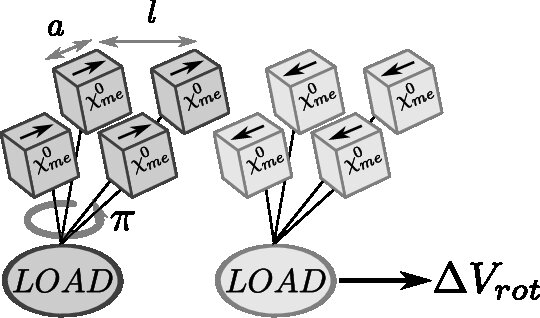 Figure 1
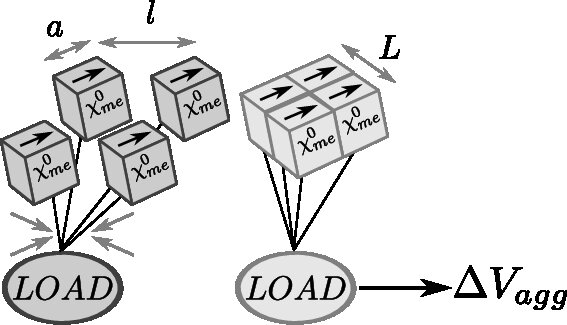 Figure 2
Peer Reviews
No public reviews on file for this paper yet. If you reviewed it on a platform where reviews are public (OpenReview, ICLR, NeurIPS, ICML), you can paste yours below so the community can read it here.
Videos
No videos yet. Explain this paper in a talk, walkthrough, or lecture? Add one.
Taxonomy
TopicsSolar and Space Plasma Dynamics · Quantum and Classical Electrodynamics · Cosmology and Gravitation Theories
A magneto-electric quantum wheel.
Alexander Feigel111Electronic address: [email protected]
Soreq NRC,
Yavne 81800, Israel
Abstract
Here we show that self-propulsion in quantum vacuum may be achieved by rotating or aggregating magneto-electric nano-particles. The back-action follows from changes in momentum of electro-magnetic zero-point fluctuations, generated in magneto-electric materials. This effect may provide new tools for investigation of the quantum nature of our world. It might also serve in the future as a “quantum wheel” to correct satellite orientation in space.
Despite some initial claims of negligible or even zero momentum transferTiggelen2004 ; Obukhov2008 , recent theoretical studies concur that material objects may acquire momentum from quantum vacuumFeigel2004 ; Tiggelen2006 ; Birkeland2007 ; Shen2008 ; Tiggelen2008 ; Tiggelen2009 . This can be explained qualitatively by considering quantum vacuum as a random fluctuating electromagnetic field (so called zero fluctuations) composed of propagating modes. Each mode possesses both energy and momentum, causing Lamb splitting of spectral levels Lamb1947 ; Bethe1947 , Casimir attraction of objects in an empty spaceCasimir1948 ; Lamoreaux1997 ; Bressi2002 and other mechanical interactions from nano to astrophysical scalesDavies2005 ; Capasso2007 ; Dupays2008 . The total momentum vanishes if the counter-propagating modes cancel mutually. It occurs in all materials except magneto-electrics, which lack both space and time symmetriesFiebig2005 ; Eerenstein2006 ; Arima2008 .
Self-propulsion requires mechanical back-action from an external medium such as ground, water, air or even a quantum liquidDreyfus2005 ; Avron2006 . This can be provided by wheels or propellor-like devices. Mechanical interaction with electro-magnetic radiation can also serve as a mean for moving matter on macro- and nano-scalesArcizet2006 ; Eichenfield2009 ; Groblacher2009 ; Hugel2002 ; Kippenberg2008 . It seems that self-propulsion in vacuum, however, can be achieved only by a rocket-like disposal of mass, at least in foreseeable futureMillis2009 .
In this article we demonstrate that aggregating or rotating magneto-electric particles change the momentum of quantum vacuum and, as a consequence they acquire the resulting difference. It follows from momentum conservation: any change in momentum of zero fluctuations is compensated by a corresponding change in the momentum of a material object or electromagnetic field. These new occurrences of the vacuum momentum transfer do not require external means, such as previously proposed modification of the magneto-electric constant by applying external electric and magnetic fieldsFeigel2004 ; Tiggelen2009 or suppressing the quantum vacuum modes by cavity-imposed boundary conditionsTiggelen2006 ; Birkeland2007 .
Consider an object in crossed electric and magnetic fields (respectively in and directions). It will experience a Lorentz force given by:
[TABLE]
where is its average electric polarisation. For the sake of simplicity, will include only the linear dielectric and magneto-electric terms:
[TABLE]
Merging eqs. (1) and (2) results in:
[TABLE]
The first term describes a linear dielectric in external fields and includes no quantum vacuum contribution. The second and the third terms describe both classical and quantum phenomena, since does not vanish due to zero fluctuations of electro-magnetic field.
According to eq. (3), momentum can be extracted from quantum vacuum by four different approaches. One way is to suppress zero fluctuations by applying some dynamic boundary conditions (by a shrinking cavity for instance) which eliminate the low frequency modes of quantum vacuum, modifying in this way the valueTiggelen2006 ; Birkeland2007 . In this case will be given by:
[TABLE]
Another way is based on achieving a non-zero value for the time derivative of , resulting in:
[TABLE]
The magneto-electric constant consists of intrinsic and induced terms:
[TABLE]
where is the intrinsic magneto-electricity, while , and are the responses to external fields. This leads to a second approach by using time dependant external electric and magnetic fieldsFeigel2004 ; Tiggelen2009 .
The third, previously unforeseen, method to extract momentum is based on rotation of the electro-magnetic material. The magneto-electric constant is a tensor and its value may be changed, therefore, by rotation. The corresponding force is:
[TABLE]
For instance, rotation by around the axis changes the sign of . In this case, the maximum momentum transfer is obtained by maximum change of the magneto-electric constant .
The total velocity gain of a magneto-electric particle rotated by in quantum vacuum is:
[TABLE]
where is a numerical constant, is the density, is the size and is the mass of the particle. The size defines the highest frequencies of quantum vacuum contributing to the particle’s momentumFeigel2004 . The modes with wavelength (, where is velocity of light) which are smaller than do not contribute to the net polarization of the object and, therefore, vanish in (1). The same expression follows from a change in momentum of quantum vacuum
[TABLE]
derived by the rigorous renormalization formalismBirkeland2007 ; Tiggelen2008 ; Tiggelen2009 .
Another method for momentum transfer may be based on separation or aggregation of the magneto-electric particles while preserving their orientation. Momentum of quantum vacuum in magneto-electrics of size is greater than in a single object of size (see (9). The difference in momenta corresponds to the velocities:
[TABLE]
Aggregation of the particles affects the boundary conditions of the high-frequency vacuum modes generating greater forces than a shrinking external cavity, which modifies only the low-frequency ones.
An experimental investigation of momentum transfer in quantum vacuum would be preferably based on rotation or aggregation of magneto-electric materials. In these configurations the contribution of quantum vacuum can be easily isolated, while with alternating electric or magnetic fieldsFeigel2004 ; Tiggelen2009 the quantum and classical forces are difficult to distinguish, see (3).
The discussed effect does not interfere with other quantum effects at nano-scales. Quantum fluctuations of the position or of the magneto-electric constant of particles do not affect the average value of their momentum, as a consequence of the conservation of momentum law.
A propulsion engine may be designed by using for instance an addressable array of small magneto-electric particles or wires. Rotating (see Fig. 1) or aggregating (see Fig. 2) these particles will result in velocity:
[TABLE]
where is given either by (8) or by (10), and are the masses of the rotated particles and the entire load correspondingly. Although the proposed engine will consume energy for manipulation of the particles, the propulsion will occur without any loss of mass.
To correct the attitude of a satellite, several degrees per day are requiredMontenbruckGill200509 . This corresponds to a tangential velocity of at radius. This value may be obtained with a magneto-electric constant of and particles, assuming that roughly half of the satellite mass is composed of magneto-electric material (see eqs. (8) and (11) taking ). Materials with magneto-electric constants up to at nanometric scale have been already reported, for instance in a weak () external magnetic fieldKubota2004 . One may reasonably assume that this gap will be closed in the future due to investigations in new compositesArima2008 and advances in micro-patterning techniquesKida2006 .
To conclude, mechanical action of quantum vacuum on magneto-electric objects may be observable and have a significant value. Rotation or self-assembly of the nano-particles is enough to generate a back-action from zero electro-magnetic fluctuations. The amount of momentum that can be extracted from quantum vacuum by this effect, may have in the future practical implications, depending on advances in magneto-electric materials.
The reference list from the paper itself. Each links out to its DOI / PubMed record.
- 1(1) van Tiggelen, B. A. & Rikken, G. L. J. A. Comment on ”quantum vacuum contribution to the momentum of dielectric media”. Phys. Rev. Lett. 93 , 268903 (2004).
- 2(2) Obukhov, Y. N. & Hehl, F. W. Forces and momenta caused by electromagnetic waves in magnetoelectric media. Phys. Lett. A 372 , 3946–3952 (2008).
- 3(3) Feigel, A. Quantum vacuum contribution to the momentum of dielectric media. Phys. Rev. Lett. 92 , 020404 (2004).
- 4(4) van Tiggelen, B. A., Rikken, G. L. J. A. & Krstic, V. Momentum transfer from quantum vacuum to magnetoelectric matter. Phys. Rev. Lett. 96 , 130402 (2006).
- 5(5) Birkeland, O. J. & Brevik, I. Feigel effect: Extraction of momentum from vacuum? Phys. Rev. E 76 , 066605 (2007).
- 6(6) Shen, J. Q. Momentum transfer between quantum vacuum and anisotropic medium. Prog. Theor. Phys. 119 , 351–360 (2008).
- 7(7) van Tiggelen, B. A. Zero-point momentum in complex media. Europ. Phys. J. D 47 , 261–269 (2008).
- 8(8) Kawka, S. & van Tiggelen, B. A. Quantum electrodynamics of casimir momentum. Arxiv 0908.4390 (2009).