Finite Weyl groupoids of rank three
M. Cuntz
Michael Cuntz,
Fachbereich Mathematik,
Universität Kaiserslautern,
Postfach 3049,
D-67653 Kaiserslautern, Germany
[email protected]
and
I. Heckenberger
István Heckenberger, Philipps-Universität Marburg,
Fachbereich Mathematik und Informatik,
Hans-Meerwein-Straße,
D-35032 Marburg, Germany
[email protected]
Abstract.
We continue our study of Cartan schemes and their Weyl groupoids.
The results in this paper provide an algorithm to
determine connected simply connected Cartan schemes of rank three,
where the real roots form a finite irreducible root system.
The algorithm terminates: Up to equivalence there are
exactly 55 such Cartan schemes, and the number of corresponding real roots
varies between 6 and 37. We identify those Weyl groupoids which appear
in the classification of Nichols algebras of diagonal type.
I.H. is
supported by the German Research Foundation (DFG) via a Heisenberg
fellowship
1. Introduction
Root systems associated with Cartan matrices are widely studied structures in
many areas of mathematics, see [Bou68] for the fundaments.
The origins of the theory of root systems go back at least to the study
of Lie groups by Lie, Killing and Cartan. The symmetry of the root system is
commonly known as its Weyl group. Root systems associated with a
family of Cartan matrices appeared first in connection with Lie superalgebras
[Kac77, Prop. 2.5.6]
and with Nichols algebras [Hec06], [Hec08].
The corresponding symmetry is not a group but a
groupoid, and is called the Weyl groupoid of the root system.
Weyl groupoids of root systems properly generalize Weyl groups. The
nice properties of this more general structure
have been the main motivation to develop an axiomatic
approach to the theory, see [HY08], [CH09c].
In particular, Weyl groupoids are generated by reflections and Coxeter
relations, and they satisfy a Matsumoto type theorem [HY08].
To see more clearly the extent of generality it would be desirable to have a
classification of finite Weyl
groupoids.111In this introduction by a Weyl groupoid
we will mean the Weyl groupoid of a connected Cartan scheme, and
we assume that the real roots associated to the Weyl groupoid form an
irreducible root system in the sense of [CH09c].
However, already the appearance of a large family of examples of Lie
superalgebras and
Nichols algebras of diagonal type indicated that a classification of
finite Weyl groupoids is probably much more complicated than the
classification of finite Weyl groups. Additionally,
many of the usual classification tools
are not available in this context because of the lack of the adjoint action
and a positive definite bilinear form.
In previous work, see [CH09b] and [CH09a],
we have been able to determine all finite
Weyl groupoids of rank two.
The result of this classification
is surprisingly nice: We found a close relationship to the
theory of continued fractions and to cluster algebras of type A.
The structure of finite rank two Weyl groupoids and the associated root
systems has a natural characterization in terms of triangulations
of convex polygons by non-intersecting diagonals. In particular, there are
infinitely many such groupoids.
At first view there is no reason to assume
that the situation for finite Weyl groupoids of rank three
would be much different
from the rank two case.
In this paper we give some theoretical indications which strengthen the
opposite point of view. For example in Theorem 3.13 we show that the
entries of the Cartan matrices in a finite Weyl groupoid cannot be smaller
than −7. Recall that for Weyl groupoids there is no lower bound for the
possible entries of generalized Cartan matrices.
Our main achievement in this paper is to provide an algorithm
to classify finite Weyl groupoids of rank three. Our algorithm terminates
within a short time, and produces a finite list of examples.
In the appendix we list the root systems characterizing
the Weyl groupoids of the classification: There are
55 of them which correspond to pairwise
non-isomorphic Weyl groupoids. The number of positive roots in these root
systems varies between 6 and 37. Among our root systems are the usual root
systems of type A3, B3, and C3, but for most of the other
examples we don’t have yet an explanation.
It is remarkable that the number 37 has a particular
meaning for simplicial arrangements in the real projective plane.
An arrangement is the complex generated by a family of straight lines not
forming a pencil. The vertices of the complex are the intersection points
of the lines, the edges are the segments of the lines between two vertices,
and the faces are the connected components of the
complement of the set of lines generating the arrangement. An arrangement is
called simplicial, if all faces are triangles. Simplicial arrangements have
been introduced in [Mel41]. The classification of simplicial
arrangements in the real projective plane is an open problem.
The largest known exceptional example is generated by 37 lines. Grünbaum
conjectures that the list given in [Grü09] is complete. In our
appendix we provide some data of our root systems which can be used to compare
Grünbaum’s list with Weyl groupoids. There is an astonishing analogy between
the two lists, but more work has to be done to be able to explain the precise
relationship. This would be desirable in particular since
our classification of finite Weyl groupoids of rank three does not give any
evidence for the range of solutions besides the explicit computer calculation.
In order to ensure the termination of our algorithm,
besides Theorem 3.13 we use a weak convexity property of certain
affine hyperplanes, see Theorem 3.11: We
can show that any positive root in an affine hyperplane “next to the origin”
is either simple or can can be written as the sum of a simple root and
another positive root.
Our algorithm finally becomes practicable by the use of
Proposition 3.6, which can be interpreted as another
weak convexity property
for affine hyperplanes. It is hard to say which of these theorems
are the most valuable because avoiding any of them makes the
algorithm impracticable (unless one has some replacement).
The paper is organized as follows. We start with two sections
proving the necessary theorems to formulate the algorithm:
The results which do not require that the rank is three are
in Section 2, the obstructions for rank three in
Section 3.
We then describe the algorithm in the next section. Finally
we summarize the resulting data and make some observations in
the last section.
Acknowledgement. We would like to thank B. Mühlherr
for pointing out
to us the importance of the number 37 for simplicial arrangements in the
real projective plane.
2. Cartan schemes and Weyl groupoids
We mainly follow the notation in [CH09c, CH09b].
The fundaments of the general theory have been developed in
[HY08] using a somewhat different terminology.
Let us start by recalling the main definitions.
Let I be a non-empty finite set and
{αi∣i∈I} the standard basis of ZI.
By [Kac90, §1.1] a generalized Cartan matrix
C=(cij)i,j∈I
is a matrix in ZI×I such that
- (M1)
cii=2 and cjk≤0 for all i,j,k∈I with
j=k,
2. (M2)
if i,j∈I and cij=0, then cji=0.
Let A be a non-empty set, ρi:A→A a map for all i∈I,
and Ca=(cjka)j,k∈I a generalized Cartan matrix
in ZI×I for all a∈A. The quadruple
[TABLE]
is called a Cartan scheme if
- (C1)
ρi2=id for all i∈I,
2. (C2)
cija=cijρi(a) for all a∈A and
i,j∈I.
Let C=C(I,A,(ρi)i∈I,(Ca)a∈A) be a
Cartan scheme. For all i∈I and a∈A define σia∈Aut(ZI) by
[TABLE]
The Weyl groupoid of C
is the category W(C) such that Ob(W(C))=A and
the morphisms are compositions of maps
σia with i∈I and a∈A,
where σia is considered as an element in Hom(a,ρi(a)).
The category W(C) is a groupoid in the sense that all morphisms are
isomorphisms.
The set of morphisms of W(C) is denoted by Hom(W(C)),
and we use the notation
[TABLE]
For notational convenience we will often neglect upper indices referring to
elements of A if they are uniquely determined by the context. For example,
the morphism σi1ρi2⋯ρik(a)⋯σik−1ρik(a)σika∈Hom(a,b),
where k∈N, i1,…,ik∈I, and
b=ρi1⋯ρik(a),
will be denoted by σi1⋯σika or by
idbσi1⋯σik.
The cardinality of I is termed the rank of W(C).
A Cartan scheme is called connected if its Weyl groupoid
is connected, that is, if for all a,b∈A there exists w∈Hom(a,b).
The Cartan scheme is called simply connected,
if Hom(a,a)={ida} for all a∈A.
Let C be a Cartan scheme. For all a∈A let
[TABLE]
The elements of the set (Rre)a are called real roots (at a).
The pair (C,((Rre)a)a∈A) is denoted by Rre(C).
A real root α∈(Rre)a, where a∈A, is called positive
(resp. negative) if α∈N0I (resp. α∈−N0I).
In contrast to real roots associated to a single generalized Cartan matrix,
(Rre)a may contain elements which are neither positive nor negative. A good
general theory, which is relevant for example for the study of Nichols
algebras, can be obtained if (Rre)a satisfies additional properties.
Let C=C(I,A,(ρi)i∈I,(Ca)a∈A) be a Cartan
scheme. For all a∈A let Ra⊂ZI, and define
mi,ja=∣Ra∩(N0αi+N0αj)∣ for all i,j∈I and a∈A. We say that
[TABLE]
is a root system of type C, if it satisfies the following
axioms.
- (R1)
Ra=R+a∪−R+a, where R+a=Ra∩N0I, for all
a∈A.
2. (R2)
Ra∩Zαi={αi,−αi} for all i∈I, a∈A.
3. (R3)
σia(Ra)=Rρi(a) for all i∈I, a∈A.
4. (R4)
If i,j∈I and a∈A such that i=j and mi,ja is
finite, then
(ρiρj)mi,ja(a)=a.
The axioms (R2) and (R3) are always fulfilled for Rre.
The root system R is called finite if for all a∈A the
set Ra is finite. By [CH09c, Prop. 2.12],
if R is a finite root system
of type C, then R=Rre, and hence Rre is a root
system of type C in that case.
In [CH09c, Def. 4.3] the concept of an irreducible
root system of type
C was defined. By [CH09c, Prop. 4.6], if C is a
Cartan scheme and R is a finite root system of type C, then R
is irreducible if and only if
for all a∈A
the generalized Cartan matrix Ca is indecomposable.
If C is also connected, then it suffices
to require that there exists a∈A such that Ca is indecomposable.
Let C=C(I,A,(ρi)i∈I,(Ca)a∈A) be a Cartan
scheme.
Let Γ be a nondirected graph,
such that the vertices of Γ correspond to the elements of A.
Assume that for all i∈I and a∈A with ρi(a)=a
there is precisely one edge between the vertices a and ρi(a)
with label i,
and all edges of Γ are given in this way.
The graph Γ is called the object change diagram of C.
In the rest of this section
let C=C(I,A,(ρi)i∈I,(Ca)a∈A) be a Cartan scheme
such that Rre(C) is a finite root system.
For brevity we will write Ra instead of (Rre)a for all a∈A.
We say that a subgroup H⊂ZI
is a hyperplane if ZI/H≅Z. Then rkH=#I−1
is the rank of H. Sometimes we will identify ZI with its image under
the canonical embedding ZI→Q⊗ZZI≅QI.
Lemma 2.1**.**
Let a∈A and let H⊂ZI be a hyperplane.
Suppose that H contains rkH linearly independent elements of Ra.
Let nH be a normal vector of H in QI with respect
to a scalar product (⋅,⋅) on QI.
If (nH,α)≥0 for all α∈R+a, then H contains
rkH simple roots,
and all roots contained in H are linear combinations
of these simple roots.
Proof.
The assumptions imply that any positive root in H is a linear
combination of simple roots contained in H. Since Ra=R+a∪−R+a,
this implies the claim.
∎
Lemma 2.2**.**
Let a∈A and let H⊂ZI be a hyperplane.
Suppose that H contains rkH linearly independent elements of Ra.
Then there exist b∈A and w∈Hom(a,b) such that w(H) contains
rkH simple roots.
Proof.
Let (⋅,⋅) be a scalar product on QI. Choose a normal
vector nH of H in QI with respect to (⋅,⋅).
Let m=#{α∈R+a∣(nH,α)<0}. Since Rre(C)
is finite, m is a nonnegative integer. We proceed by induction on m.
If m=0, then H contains rkH simple roots
by Lemma 2.1.
Otherwise let j∈I with (nH,αj)<0.
Let a′=ρj(a) and H′=σja(H).
Then σja(nH) is a normal vector of H′ with respect to the
scalar product (⋅,⋅)′=(σjρj(a)(⋅),σjρj(a)(⋅)).
Since σja:R+a∖{αj}→R+a′∖{αj} is a
bijection and
σja(αj)=−αj, we conclude that
[TABLE]
By induction hypothesis there exists b∈A and w′∈Hom(a′,b) such
that w′(H′) contains rkH′=rkH simple roots.
Then the claim of the lemma holds for w=w′σja.
∎
The following “volume” functions will be useful for our analysis.
Let k∈N with k≤#I.
By the Smith normal form there is a unique left
GL(ZI)-invariant right GL(Zk)-invariant function
Volk:(ZI)k→Z such that
[TABLE]
where ∣⋅∣ denotes absolute value.
In particular, if k=1 and β∈ZI∖{0}, then Vol1(β) is the largest integer v such that β=vβ′ for some
β′∈ZI. Further, if k=#I and
β1,…,βk∈ZI,
then Volk(β1,…,βk) is the absolute
value of the determinant of the matrix with columns β1,…,βk.
Let a∈A, k∈{1,2,…,#I},
and let β1,…,βk∈Ra
be linearly independent elements.
We write Va(β1,…,βk) for the unique maximal
subgroup V⊆ZI of rank k which contains
β1,…,βk.
Then ZI/Va(β1,…,βk) is free.
In particular, Va(β1,…,β#I)=ZI for all a∈A and
any linearly independent subset {β1,…,β#I} of Ra.
Definition 2.3**.**
Let W⊆ZI be a cofree subgroup (that is, ZI/W is free)
of rank k.
We say that {β1,…,βk} is a base for W
at a, if βi∈W for all i∈{1,…,k} and
W∩Ra⊆∑i=1kN0βi∪−∑i=1kN0βi.
Now we discuss the relationship of linearly independent roots in a root
system. Recall that C is a Cartan scheme such that Rre(C)
is a finite root system of type C.
Theorem 2.4**.**
Let a∈A, k∈{1,…,#I},
and let β1,…,βk∈Ra be
linearly independent roots.
Then there exist b∈A, w∈Hom(a,b),
and a permutation τ of I such that
[TABLE]
for all i∈{1,…,k}.
Proof.
Let r=#I.
Since Ra contains r simple roots, any linearly independent subset of
Ra can be enlarged to a linearly independent subset of r elements.
Hence it suffices to prove the theorem for k=r.
We proceed by induction on r.
If r=1, then the claim holds.
Assume that r>1.
Lemma 2.2 with
H=Va(β1,…,βr−1)
tells that there exist d∈A and v∈Hom(a,d) such that
v(H) is spanned by simple roots.
By multiplying v from the left with
the longest element of W(C) in the case that
v(βr)∈−N0I,
we may even assume that v(βr)∈N0I.
Now let J be the subset of I such that #J=r−1 and
αi∈v(H) for all i∈J. Consider the restriction
Rre(C)∣J
of Rre(C) to the index set J, see [CH09c, Def. 4.1].
Since v(βi)∈H for all i∈{1,…,r−1},
induction hypothesis provides us with b∈A, u∈Hom(d,b),
and a permutation τ′ of J
such that u is a product of simple reflections σi, where i∈J,
and
[TABLE]
for all n∈{1,2,…,r−1}, where J={j1,…,jr−1}.
Since v(βr)∈/v(H) and v(βr)∈N0I,
the i-th entry of
v(βr), where i∈I∖J, is positive. This entry does not
change if we apply u. Therefore
uv(βr)∈N0I,
and hence the theorem holds with w=uv∈Hom(a,b) and with
τ the unique permutation with τ(n)=τ′(jn)
for all n∈{1,…,r−1}.
∎
Corollary 2.5**.**
Let a∈A, k∈{1,…,#I},
and let β1,…,βk∈Ra
be linearly independent elements. Then {β1,…,βk} is a
base for Va(β1,…,βk) at a if and only if
there exist b∈A, w∈Hom(a,b),
and a permutation τ of I such that
w(βi)=ατ(i) for all i∈{1,…,k}.
In this case Volk(β1,…,βk)=1.
Proof.
The if part of the claim holds by definition of a base and by
the axioms for root systems.
Let b,w and τ be as in Theorem 2.4. Let i∈{1,…,k}.
The elements w(β1),…,w(βi) are linearly
independent and are contained in Vb(ατ(1),…,ατ(i)). Thus
ατ(i) is a rational linear combination of
w(β1),…,w(βi). Now by assumption,
{w(β1),…,w(βk)} is a base for
Vb(w(β1),…,w(βk)) at b. Hence ατ(i) is a linear combination of the positive roots
w(β1),…,w(βi) with nonnegative integer coefficients.
This is possible only if {w(β1),…,w(βi)} contains
ατ(i). By
induction on i we obtain that ατ(i)=w(βi).
∎
In the special case k=#I the above corollary tells that the bases of ZI at an object a∈A are precisely those subsets which
can be obtained as the image, up to a permutation, of
the standard basis of ZI
under the action of an element of W(C).
In [CH09a] the notion of an F-sequence was given, and it was used
to explain the structure of root systems of rank two.
Consider on N02 the total ordering ≤Q,
where (a1,a2)≤Q(b1,b2)
if and only if a1b2≤a2b1. A finite sequence (v1,…,vn) of
vectors in N02 is an F-sequence if and only if v1<Qv2<Q⋯<Qvn and one of the following holds.
n=2, v1=(0,1), and v2=(1,0).
n>2 and there exists i∈{2,3,…,n−1}
such that vi=vi−1+vi+1 and (v1,…,vi−1.vi+1,…,vn)
is an F-sequence.
In particular, any F-sequence of length ≥3 contains (1,1).
Proposition 2.6**.**
[CH09a, Prop. 3.7]**
Let C be a Cartan scheme of rank two.
Assume that Rre(C) is a finite root system.
Then for any a∈A
the set R+a ordered by ≤Q is an F-sequence.
Proposition 2.7**.**
[CH09a, Cor. 3.8]**
Let C be a Cartan scheme of rank two.
Assume that Rre(C) is a finite root system.
Let a∈A and let β∈R+a. Then either β is simple or it
is the sum of two positive roots.
Corollary 2.8**.**
Let a∈A, n∈N,
and let α,β∈Ra such that β−nα∈Ra.
Assume that {α,β−nα} is a base for Va(α,β) at a.
Then β−kα∈Ra for all k∈{1,2,…,n}.
Proof.
By Corollary 2.5 there exist b∈A, w∈Hom(a,b),
and i,j∈I such that w(α)=αi, w(β−nα)=αj.
Then nαi+αj=w(β)∈R+b.
Hence (n−k)αi+αj∈Rb
for all k∈{1,2,…,n} by Proposition 2.7 and (R2).
This yields the claim of the corollary.
∎
Corollary 2.9**.**
Let a∈A, k∈Z, and i,j∈I such that i=j.
Then αj+kαi∈Ra if and only if 0≤k≤−cija,
Proof.
Axiom (R1) tells that αj+kαi∈/Ra if k<0.
Since cijρi(a)=cija by (C2), Axiom (R3) gives that αj−cijaαi=σiρi(a)(αj)∈Ra and that
αj+kαi∈/Ra if k>−cija. Finally, if 0<k<−cija
then αj+kαi∈Ra by Corollary 2.8
for α=αi, β=αj−cijaαi, and n=−cija.
∎
Proposition 2.7 implies another important fact.
Theorem 2.10**.**
Let C be a Cartan scheme. Assume that Rre(C) is a finite
root system of type C. Let a∈A and α∈R+a.
Then either α is simple, or it is the sum of two positive roots.
Proof.
Assume that α is not simple.
Let i∈I, b∈A, and w∈Hom(b,a) such that α=w(αi).
Then ℓ(w)>0.
We may assume that for all j∈I, b′∈A, and w′∈Hom(b′,a)
with w′(αj)=α we have ℓ(w′)≥ℓ(w).
Since w(αi)∈N0I, we obtain that ℓ(wσi)>ℓ(w)
[HY08, Cor. 3].
Therefore, there is a j∈I∖{i} with ℓ(wσj)<ℓ(w).
Let w=w1w2 such that ℓ(w)=ℓ(w1)+ℓ(w2),
ℓ(w1) minimal and w2=…σiσjσiσjb.
Assume that w2=σi⋯σiσjb — the case
w2=σj⋯σiσjb
can be treated similarly.
The length of w1 is minimal,
thus ℓ(w1σj)>ℓ(w1), and ℓ(w)=ℓ(w1)+ℓ(w2) yields
that ℓ(w1σi)>ℓ(w1).
Using once more [HY08, Cor. 3] we conclude that
[TABLE]
Let β=w2(αi). Then β∈N0αi+N0αj,
since ℓ(w2σi)>ℓ(w2). Moreover, β is not
simple. Indeed, α=w(αi)=w1(β), so β is not simple, since
ℓ(w1)<ℓ(w) and ℓ(w) was chosen of minimal length.
By Proposition 2.7 we conclude that
β is the sum of two positive roots
β1, β2∈N0αi+N0αj.
It remains to check that w1(β1), w1(β2)
are positive. But this follows from (2.3).
∎
3. Obstructions for Weyl groupoids of rank three
In this section we analyze the structure of finite Weyl groupoids of rank
three.
Let C be a Cartan scheme of rank
three, and assume that Rre(C)
is a finite irreducible root system of type
C. In this case a hyperplane in ZI is the same as a cofree
subgroup of rank two, which will be called a plane in the sequel.
For simplicity we will take I={1,2,3}, and we write Ra for the set of
positive real roots at a∈A.
Recall the definition of the functions Volk,
where k∈{1,2,3}, from the previous section.
As noted, for three elements α,β,γ∈Z3 we have
Vol3(α,β,γ)=1 if and only if {α,β,γ}
is a basis of Z3.
Also, we will heavily use the notion of a base, see Definition 2.3.
Lemma 3.1**.**
Let a∈A and α,β∈Ra.
Assume that
α=±β and that
{α,β}
is not a base for Va(α,β) at a.
Then there exist k,l∈N and δ∈Ra
such that β−kα=lδ and {α,δ} is a base for
Va(α,β) at a.
Proof.
The claim without the relation k>0 is a special case of
Theorem 2.4. The relation β=δ follows from the
assumption that {α,β} is not a base for Va(α,β) at
a.
∎
Lemma 3.2**.**
Let a∈A and α,β∈Ra such that α=±β.
Then
{α,β} is a base for Va(α,β) if and only if
Vol2(α,β)=1 and α−β∈/Ra.
Proof.
Assume first that {α,β} is a base for Va(α,β) at a.
By Corollary 2.5 we may assume that α and β are
simple roots. Therefore
Vol2(α,β)=1 and α−β∈/Ra.
Conversely, assume that
Vol2(α,β)=1, α−β∈/Ra, and
that {α,β} is not a base for Va(α,β) at a.
Let k,l,δ as in Lemma 3.1. Then
[TABLE]
Hence l=1, and {α,δ}={α,β−kα} is
a base for Va(α,β) at a. Then β−α∈Ra
by Corollary 2.8 and since k>0. This gives
the desired contradiction to the assumption α−β∈/Ra.
∎
Recall that a semigroup ordering < on a commutative semigroup (S,+)
is a total ordering
such that for all s,t,u∈S with s<t the relations
s+u<t+u hold.
For example, the lexicographic ordering on ZI
induced by any total ordering on I is a semigroup ordering.
Lemma 3.3**.**
Let a∈A, and let V⊂ZI be a plane
containing at least two positive roots of Ra.
Let < be a semigroup ordering on ZI such that 0<γ
for all γ∈R+a, and let
α,β denote the two smallest elements in V∩R+a with respect
to <. Then {α,β}
is a base for V at a.
Proof.
Let α be the smallest element of V∩R+a
with respect to <, and let β be the smallest element of
V∩(R+a∖{α}). Then V=Va(α,β) by (R2).
By Lemma 3.1 there exists δ∈V∩Ra such that {α,δ} is a base for V at a.
First suppose that δ<0. Let m∈N0 be the smallest
integer with δ+(m+1)α∈/Ra. Then δ+nα<0
for all n∈N0 with n≤m. Indeed, this holds for n=0 by
assumption. By induction on n we obtain from δ+nα<0
and the choice of α that δ+nα<−α, since δ and
α are not collinear. Hence δ+(n+1)α<0.
We conclude that −(δ+mα)>0. Moreover,
{α,−(δ+mα)} is a base for V at a by
Lemma 3.2 and the choice of m. Therefore,
by replacing {α,δ} by {α,−(δ+mα)},
we may assume that δ>0.
Since β>0, we conclude that β=kα+lδ for some k,l∈N0. Since β is not a multiple of α, this implies that
β=δ or β>δ. Then the choice of β and the
positivity of δ yield that δ=β,
that is, {α,β} is a base for V at a.
∎
Lemma 3.4**.**
Let k∈N≥2, a∈A, α∈R+a, and
β∈ZI such that α and β are not collinear and
α+kβ∈Ra.
Assume that Vol2(α,β)=1 and that (−Nα+Zβ)∩N0I=∅. Then β∈Ra
and α+lβ∈Ra for all l∈{1,2,…,k}.
Proof.
We prove the claim indirectly. Assume that β∈/Ra.
By Lemma 3.3 there exists a base {γ1,γ2} for Va(α,β) at a such that γ1,γ2∈R+a.
The assumptions of the lemma imply that there exist
m1,l1∈N0 and m2,l2∈Z
such that γ1=m1α+m2β, γ2=l1α+l2β.
Since β∈/Ra, we obtain that m1≥1 and m2≥1.
Therefore relations α,α+kβ∈R+a imply that
{α,α+kβ}={γ1,γ2}. The latter
is a contradiction to
Vol2(γ1,γ2)=1 and Vol2(α,α+kβ)=k>1.
Thus β∈Ra. By Lemma 3.1
we obtain that {β,α−mβ} is a
base for Va(α,β) at a for some m∈N0. Then
Corollary 2.8 and the assumption that α+kβ∈Ra
imply the last claim of the lemma.
∎
We say that a subset S of Z3 is convex,
if any rational convex
linear combination of elements of S is either in S or not in Z3.
We start with a simple example.
Lemma 3.5**.**
Let a∈A. Assume that c12a=0.
(1) Let k1,k2∈Z. Then
α3+k1α1+k2α2∈Ra if and only if 0≤k1≤−c13a
and 0≤k2≤−c23a.
(2) Let γ∈(α3+Zα1+Zα2)∩Ra.
Then γ−α1∈Ra or γ+α1∈Ra. Similarly
γ−α2∈Ra or γ+α2∈Ra.
Proof.
(1) The assumption c12a=0 implies that c23ρ1(a)=c23a,
see [CH09c, Lemma 4.5].
Applying σ1ρ1(a), σ2ρ2(a), and
σ1σ2ρ2ρ1(a) to α3 we conclude that
α3−c13aα1, α3−c23aα2, α3−c13aα1−c23aα2∈R+a.
Thus Lemma 3.4 implies that
α3+m1α1+m2α2∈Ra
for all m1,m2∈Z with 0≤m1≤−c13a
and 0≤m2≤−c23a.
Further, (R1) gives that
α3+k1α1+k2α2∈/Ra if k1<0 or k2<0.
Applying again the simple reflections σ1 and σ2, a similar
argument proves the remaining part of the claim.
Observe that the proof does not use the fact
that Rre(C) is irreducible.
(2) Since c12a=0, the irreducibility of Rre(C) yields that
c13a,c23a<0 by [CH09c, Def. 4.5, Prop. 4.6].
Hence the claim follows from (1).
∎
Proposition 3.6**.**
Let a∈A and let γ1,γ2,γ3∈Ra.
Assume that Vol3(γ1,γ2,γ3)=1
and that γ1−γ2,γ1−γ3∈/Ra.
Then γ1+γ2∈Ra or γ1+γ3∈Ra.
Proof.
Since γ1−γ2∈/Ra and Vol3(γ1,γ2,γ3)=1, Theorem 2.4 and Lemma 3.2 imply
that there exists b∈A, w∈Hom(a,b) and i1,i2,i3∈I
such that w(γ1)=αi1, w(γ2)=αi2,
and w(γ3)=αi3+k1αi1+k2αi2 for some
k1,k2∈N0.
Assume that γ1+γ2∈/Ra. Then ci1i2b=0.
Since γ3−γ1∈/Ra, Lemma 3.5(2)
with γ=w(γ3) gives that γ3+γ1∈Ra.
This proves the claim.
∎
Lemma 3.7**.**
Assume that Ra∩(N0α1+N0α2) contains at most 4
positive roots.
(1) The set S3:=(α3+Zα1+Zα2)∩Ra is convex.
(2) Let γ∈S3. Then γ=α3 or γ−α1∈Ra or
γ−α2∈Ra.
Proof.
Consider the roots of the form w−1(α3)∈Ra,
where w∈Hom(a,W(C))
is a product of reflections σ1b, σ2b with b∈A. All of these
roots belong to S3. Using
Lemma 3.4 the claims of the lemma can be checked case by case,
similarly to the proof of Lemma 3.5.
∎
Remark 3.8*.*
The lemma can be proven by elementary calculations, since all nonsimple
positive roots in (Zα1+Zα2)∩Ra
are of the form say α1+kα2, k∈N.
We will see in Theorem 4.1
that the classification of connected Cartan schemes of rank three
admitting a finite irreducible root system has a finite set of solutions.
Thus it is possible to check the claim of the lemma for any such Cartan
scheme. Using computer calculations one obtains that
the lemma holds without any restriction on the (finite) cardinality of
Ra∩(N0α1+N0α2).
Lemma 3.9**.**
Let α,β,γ∈Ra such that
Vol3(α,β,γ)=1. Assume that α−β,
β−γ, α−γ∈/Ra and that {α,β,γ}
is not a base for ZI at a. Then the following hold.
(1) There exist w∈Hom(a,W(C)) and n1,n2∈N such that
w(α), w(β), and w(γ−n1α−n2β) are simple roots.
(2) None of the vectors
α−kβ, α−kγ, β−kα, β−kγ,
γ−kα, γ−kβ, where k∈N,
is contained in Ra.
(3) α+β, α+γ, β+γ∈Ra.
(4) One of the sets {α+2β,β+2γ,γ+2α} and
{2α+β,2β+γ,2γ+α} is contained in Ra, the
other one has trivial intersection with Ra.
(5) None of the vectors
γ−α−kβ, γ−kα−β,
β−γ−kα, β−kγ−α,
α−β−kγ, α−kβ−γ, where k∈N0,
is contained in Ra.
(6) Assume that α+2β∈Ra. Let k∈N such that
α+kβ∈Ra, α+(k+1)β∈/Ra.
Let α′=α+kβ, β′=−β, γ′=γ+β.
Then Vol3(α′,β′,γ′)=1, {α′,β′,γ′} is
not a base for ZI at a, and none of α′−β′, α′−γ′,
β′−γ′ is contained in Ra.
(7) None of the vectors
α+3β, β+3γ, γ+3α,
3α+β, 3β+γ, 3γ+α is contained in Ra.
In particular, k=2 holds in (6).
Proof.
(1) By Theorem 2.4 there exist m1,m2,n1,n2,n3∈N0, i1,i2,i3∈I, and w∈Hom(a,W(C)), such that
w(α)=αi1, w(β)=m1αi1+m2αi2, and
w(γ)=n1αi1+n2αi2+n3αi3. Since detw∈{±1} and Vol3(α,β,γ)=1,
this implies that m2=n3=1. Further, β−α∈/Ra,
and hence w(β)=αi2 by Corollary 2.9.
Since {α,β,γ} is not a base for ZI at a,
we conclude that w(γ)=αi3. Then
Corollary 2.9 and the assumptions γ−α, γ−β∈/Ra imply that
w(γ)∈/αi3+N0αi1 and
w(γ)∈/αi3+N0αi2.
Thus the claim is proven.
(2) By (1), {α,β} is a base for Va(α,β) at a.
Thus α−kβ∈/Ra for all k∈N.
The remaining claims follow by symmetry.
(3) Suppose that α+β∈/Ra.
By (1) there exist b∈A, w∈Hom(a,b),
i1,i2,i3∈I and n1,n2∈N
such that w(α)=αi1, w(β)=αi2, and
w(γ)=αi3+n1αi1+n2αi2∈R+b.
By Theorem 2.10 there exist
n1′,n2′∈N0 such that n1′≤n1, n2′≤n2,
n1′+n2′<n1+n2, and
[TABLE]
Since α+β∈/Ra, Proposition 2.6 yields
that R+b∩spanZ{αi1,αi2}={αi1,αi2}.
Thus γ−α∈Ra or γ−β∈Ra. This is a
contradiction to the assumption of the lemma. Hence α+β∈Ra.
By symmetry we obtain that α+γ, β+γ∈Ra.
(4) Suppose that α+2β, 2α+β∈/Ra.
By (1) the set {α,β} is a base for Va(α,β) at a,
and α+β∈Ra by (3). Then Proposition 2.6
implies that
Ra∩spanZ{α,β}={±α,±β,±(α+β)}. Thus (1) and Lemma 3.7(2) give that γ−α∈Ra or γ−β∈Ra, a contradiction to the initial assumption
of the lemma. Hence by symmetry each of the sets {α+2β,2α+β}, {α+2γ,2α+γ}, {β+2γ,2β+γ} contains at least one element of Ra.
Assume now that γ+2α, γ+2β∈Ra. By changing the
object via (1) we may assume that α, β, and
γ−n1α−n2β
are simple roots for some n1,n2∈N. Then Lemma 3.4
applies to γ+2α∈R+a and β−α, and tells that β−α∈Ra. This gives a contradiction.
By the previous two paragraphs we conclude that if γ+2α∈Ra,
then γ+2β∈/Ra, and hence β+2γ∈Ra.
Similarly, we also obtain that α+2β∈Ra. By symmetry this
implies (4).
(5) By symmetry it suffices to prove that
γ−(α+kβ)∈/Ra for all k∈N0. For k=0 the
claim holds by assumption.
First we prove that γ−(α+2β)∈/Ra.
By (3) we know that γ+α, α+β∈Ra, and
γ−β∈/Ra by assumption.
Since Vol2(γ+α,α+β)=1, Lemma 3.2 gives that
{γ+α,α+β} is a base for
Va(γ+α,α+β) at a.
Since γ−(α+2β)=(γ+α)−2(α+β), we conclude that
γ−(α+2β)∈/Ra.
Now let k∈N. Assume that γ−(α+kβ)∈Ra and
that k is minimal with this property. Let α′=−α, β′=−β,
γ′=γ−(α+kβ). Then α′,β′,γ′∈Ra
with Vol3(α′,β′,γ′)=1. Moreover, α′−β′∈/Ra by assumption, α′−γ′=−(γ−kβ)∈/Ra by (2),
and β′−γ′=−(γ−α−(k−1)β)∈/Ra
by the minimality of k.
Further, {α′,β′,γ′} is not a base for Ra, since
γ=γ′−α′−kβ′. Hence Claim (3) holds for α′,β′,γ′. In particular,
[TABLE]
This and the previous paragraph imply that k≥3.
We distinguish two cases depending on the parity of k.
First assume that k is even. Let α′=γ+α and
β′=−(α+k/2β). Then Vol2(α′,β′)=1 and
α′+2β′=γ−(α+kβ)∈Ra.
Lemma 3.4 applied to α′,β′ gives that γ−k/2β=α′+β′∈Ra, which contradicts (2).
Finally, the case of odd k can be excluded similarly by considering
Va(γ+α,γ−(α+(k+1)β)).
(6) We get Vol3(α′,β′,γ′)=1
since Vol3(α,β,γ)=1 and
Vol3 is invariant under the right action of GL(Z3).
Further, β′−γ′=−(2β+γ)∈/Ra by (4), and
α′−γ′∈/Ra by (5). Finally, (α′,β′,γ′) is
not a base for ZI at a, since
Ra∋γ−n1α−n2β=γ′−n1α′+(1+n2−kn1)β′,
where n1,n2∈N are as in (1).
(7) We prove that γ+3α∈/Ra. The rest follows by symmetry.
If 2α+β∈Ra, then γ+2α∈/Ra by (4), and hence
γ+3α∈/Ra. Otherwise
α+2β,γ+2α∈Ra by (4).
Let k, α′, β′, γ′ be as in (6). Then (6) and (3) give
that
Ra∋γ′+α′=γ+α+(k+1)β. Since γ+α∈Ra, Lemma 3.4 implies that
γ+α+2β∈Ra. Let w be as in (1).
If γ+3α∈Ra, then Lemma 3.4
for the vectors w(γ+α+2β) and w(α−β) implies that
w(α−β)∈Ra, a contradiction. Thus γ+3α∈/Ra.
∎
Recall that C is a Cartan scheme of rank three and Rre(C) is
a finite irreducible root system of type C.
Theorem 3.10**.**
Let a∈A and α,β,γ∈Ra.
If Vol3(α,β,γ)=1
and none of α−β, α−γ, β−γ are contained in
Ra, then {α,β,γ} is a base for ZI at a.
Proof.
Assume to the contrary that {α,β,γ} is not a base for
ZI at a.
Exchanging α and β if necessary, by
Lemma 3.9(4)
we may assume that α+2β∈Ra.
By Lemma 3.9(6),(7) the triple (α+2β,−β,γ+β) satisfies the assumptions of
Lemma 3.9, and (α+2β)+2(−β)=α∈Ra.
Hence 2α+3β=2(α+2β)+(−β)∈/Ra by
Lemma 3.9(4). Thus Va(α,β)∩Ra={±α,±(α+β),±(α+2β),±β} by
Proposition 2.6, and hence, using
Lemma 3.9(1), we obtain from Lemma 3.7(2)
that γ−α∈Ra or γ−β∈Ra. This is a
contradiction to our initial assumption, and hence {α,β,γ}
is a base for ZI at a.
∎
Corollary 3.11**.**
Let a∈A and γ1,γ2,α∈Ra.
Assume that {γ1,γ2} is a base for Va(γ1,γ2)
at a and that Vol3(γ1,γ2,α)=1. Then
either {γ1,γ2,α} is a base for ZI at a,
or one of α−γ1, α−γ2 is contained in Ra.
For the proof of Theorem 4.1 we need a bound for the entries of the
Cartan matrices of C. To get this bound we use the following.
Lemma 3.12**.**
Let a∈A.
(1) At most one of c12a, c13a, c23a is zero.
(2) α1+α2+α3∈Ra.
(3) Let k∈Z.
Then kα1+α2+α3∈Ra if and only if k1≤k≤k2, where
[TABLE]
(4) We have
2α1+α2+α3∈Ra if and only if either
c12a+c13a≤−3 or c12a+c13a=−2, c23ρ1(a)<0.
(5) Assume that
[TABLE]
Then there
exist k∈N0 such that kα1+2α2+α3∈Ra. Let k0
be the smallest among all such k. Then k0 is given by the following.
[TABLE]
Further, if c13a=0 then k0≤2.
Proof.
We may assume that C is connected. Then, since Rre(C) is irreducible,
Claim (1) holds by [CH09c, Def. 4.5, Prop. 4.6].
(2) The claim is invariant under permutation of I.
Thus by (1) we may assume that c23a=0. Hence α2+α3∈Ra. Assume first that c13a=0. Then c13ρ1(a)=0 by (C2),
c23ρ1(a)=0 by (1), and α2+α3∈R+ρ1(a).
Hence σ1ρ1(a)(α2+α3)=−c12aα1+α2+α3∈Ra. Therefore (2) holds by Lemma 3.4
for α=α2+α3 and β=α1.
Assume now that c13a=0. By symmetry and the previous paragraph we
may also assume that c12a,c23a=0. Let b=ρ1(a).
If c23b=0 then α1+α2+α3∈Rb by the previous
paragraph. Then
[TABLE]
and the coefficient of α1 is positive.
Further, α2+α3∈Ra, and hence (2) holds in this case by
Lemma 3.4. Finally, if c23b=0, then α2+α3∈R+b, and hence (−c12a−c13a)α1+α2+α3∈Ra.
Since −c12a−c13a>0, (2) follows again from
Lemma 3.4.
(3) If c23a<0, then α2+α3∈Ra and
−kα1+α2+α3∈/Ra for all k∈N.
If c23a=0, then α1+α2+α3∈Ra by (2), and
−kα1+α2+α3∈/Ra for all k∈N0.
Applying the same argument to Rρ1(a) and using the reflection
σ1ρ1(a) and Lemma 3.4 gives the claim.
(4) This follows immediately from (3).
(5) The first case follows from Corollary 2.9 and the second and
third cases are obtained from (4) by interchanging the elements 1 and 2
of I. We also obtain that if k0 exists then
k0≥2 in all other cases. By (3.1) and
Proposition 2.6 we conclude that α1+α2∈Ra. Then
c21a<0 by Corollary 2.9, and hence
we are left with calculating k0 if
−1≤c23a≤0, c21a+c23a=−2, c13ρ2(a)=0, or
c21a=−1, c23a=0. By (1), if c13ρ2(a)=0 then
c23ρ2(a)=0, and hence c23a<0 by (C2).
Thus we have to consider the elements kα1+2α2+α3, where
k≥2, under the assumption that
[TABLE]
Since c21a=−1, Condition (3.1) gives that
[TABLE]
see [CH09c, Lemma 4.8]. Further,
the first set of equations in (3.2)
implies that c13ρ1ρ2(a)=0,
and hence c23ρ1ρ2(a)<0 by (1).
Since σ2a(2α1+2α2+α3)=2α1+α3−c23aα2, the first set of equations in (3.2) and (4) imply that
k0=2. Similarly, Corollary 2.9 tells that
k0=2 under the second set of conditions in (3.2)
if and only if c13ρ2(a)≤−2.
It remains to consider the situation for
[TABLE]
Indeed, equation c23a=0 implies that
c23ρ2(a)=0 by (C2), and hence
c13ρ2(a)<0 by (1),
Assuming (3.3) we obtain that
σ2a(3α1+2α2+α3)=3α1+α2+α3,
and hence (3) implies that k0=3 if and only if the corresponding
conditions in (5) are valid.
The rest follows by looking at σ1σ2a(4α1+2α2+α3) and is left to the reader. The last claim holds since c13a=0
implies that c23a=0 by (1).
The assumption #(R+a∩(Zα1+Zα2))≥5
is needed to exclude the case
c21a=−1, c12ρ2(a)=−2, c21ρ1ρ2(a)=−1, where
R+a∩(Zα1+Zα2)={α2,α1+α2,2α1+α2,α1}, by using Proposition 2.6 and
Corollary 2.9, see also the proof of
[CH09c, Lemma 4.8].
∎
Theorem 3.13**.**
Let C be a Cartan scheme of rank three. Assume that Rre
is a finite irreducible root system
of type C. Then all entries of the Cartan matrices of C are greater or
equal to −7.
Proof.
It can be assumed that C is connected.
We prove the theorem indirectly. To do so we may assume that a∈A such
that c12a≤−8. Then Proposition 2.6 implies that
#(R+a∩(Zα1+Zα2))≥5.
By Lemma 3.12 there exists k0∈{0,1,2,3,4} such that
α:=k0α1+2α2+α3∈R+a and
α−α1∈/Ra.
By Lemma 3.2 and the choice of k0 the set {α,α1}
is a base for Va(α,α1) at a. Corollary 2.5
implies that there exists a root
γ∈Ra such that {α,α1,γ} is a base for ZI
at a. Let d∈A, w∈Hom(a,d), and i1,i2,i3∈I
such that w(α)=αi1, w(α1)=αi2,
w(γ)=αi3.
Let b=ρ1(a). Again by
Lemma 3.12 there exists k1∈{0,1,2,3,4} such that
β:=k1α1+2α2+α3∈R+b.
Thus
[TABLE]
Further,
[TABLE]
since k0≤2 if c13a=0. Hence αi1+(1−c12a)αi2∈Rd, that is, ci2i1d<c12a≤−8.
We conclude that there exists
no lower bound for the entries of the Cartan matrices of C,
which is a contradiction to the finiteness of Rre(C).
This proves the theorem.
∎
Remark 3.14*.*
The bound in the theorem is not sharp. After completing the classification
one can check that the entries of the Cartan matrices of C are always
at least −6. The entry −6 appears for example in the Cartan scheme
corresponding to the root system with number 53, see
Corollary 2.9.
Proposition 3.15**.**
Let C be an irreducible connected simply connected Cartan scheme of rank three.
Assume that Rre(C) is a finite root system of type
C.
Let e be the number of vertices, k the number of edges, and f the
number of (2-dimensional)
faces of the object change diagram of C. Then e−k+f=2.
Proof.
Vertices of the object change diagram correspond to elements of A.
Since C is connected and Rre(C) is finite, the set A is
finite.
Consider the equivalence relation on I×A, where (i,a) is
equivalent to (j,b) for some i,j∈I and a,b∈A,
if and only if i=j and b∈{a,ρi(a)}. (This is also known as the
pushout of I×A along the bijections id:I×A→I×A
and ρ:I×A→I×A, (i,a)↦(i,ρi(a)).)
Since C is simply
connected, ρi(a)=a for all i∈I and a∈A. Then
edges of the object change diagram
correspond to equivalence classes in I×A.
Faces of the object change diagram can be defined as equivalence classes of
triples (i,j,a)∈I×I×A∖{(i,i,a)∣i∈I,a∈A}, where (i,j,a) and (i′,j′,b) are
equivalent for some i,j,i′,j′∈I and a,b∈A if and only if
{i,j}={i′,j′} and b∈{(ρjρi)m(a),ρi(ρjρi)m(a)∣m∈N0}. Since C is simply
connected, (R4) implies that the face corresponding to
a triple (i,j,a) is a polygon with 2mi,ja vertices.
For each face choose a
triangulation by non-intersecting diagonals.
Let d be the total number of diagonals
arising this way.
Now consider the following two-dimensional simplicial complex C:
The [math]-simplices are the objects. The 1-simplices are the edges and the
chosen diagonals of the faces of the
object change diagram.
The 2-simplices are the f+d triangles.
Clearly, each edge is contained in precisely two triangles.
By [tD91, Ch. III, (3.3), 2,3]
the geometric realization X of C is a closed 2-dimensional
surface without boundary. The space X is connected and compact.
Any two morphisms of W(C) with same source and target are
equal because C is simply connected.
By [CH09c, Thm. 2.6] this equality follows from
the Coxeter relations. A Coxeter relation means for the object
change diagram that for the corresponding face and vertex the two paths
along the sides of the face towards the opposite vertex yield the same
morphism. Hence diagonals can be interpreted as representatives of paths in a
face between two vertices, and then all loops in C
become homotopic to the trivial loop.
Hence X is simply connected
and therefore homeomorphic to a two-dimensional sphere by
[tD91, Ch. III, Satz 6.9].
Its Euler characteristic is 2=e−(k+d)+(f+d)=e−k+f.
∎
Remark 3.16*.*
Assume that C is connected and simply connected, and let a∈A.
Then any pair of opposite 2-dimensional faces of the object change diagram
can be interpreed as a plane in ZI containing at least
two positive roots α,β∈R+a.
Indeed, let b∈A and i1,i2∈I with i1=i2. Since C is
connected and simply connected, there exists a unique w∈Hom(a,b). Then
Va(w−1(αi1),w−1(αi2)) is a plane in ZI
containing at least two positive roots. One can easily check that this plane
is independent of the choice of the representative of the face determined by
(i1,i2,b)∈I×I×A. Further, let w0∈Hom(b,d), where
d∈A, be the longest element in Hom(b,W(C)). Let j1,j2∈I such
that w0(αin)=−αjn for n=1,2. Then (j1,j2,d) determines
the plane
[TABLE]
This way we attached to any pair of (2-dimensional) opposite faces
of the object change diagram a plane containing at least two positive roots.
Let < be a semigroup ordering on ZI such that 0<γ for
all γ∈R+a. Let α,β∈R+a with α=β, and
assume that α and β are the smallest elements in R+a∩Va(α,β) with respect to <. Then {α,β} is a base for
Va(α,β) at a by Lemma 3.3. By
Corollary 2.5 there exists b∈A and w∈Hom(a,b) such
that w(α),w(β)∈R+b are simple roots.
Hence any plane in ZI containing at least two elements of R+a
can be obtained by the construction in the previous paragraph.
It remains to show that different pairs of opposite faces give rise to
different planes. This follows from the fact that for any b∈A and
i1,i2∈I with i1=i2 the conditions
[TABLE]
have precisely two solutions: u=idb on the one side, and
u=w0wi1i2 on the other side, where
wi1i2=⋯σi1σi2σi1idb∈Hom(b,W(C))
is the longest product of reflections σi1, σi2,
and w0 is an appropriate longest element of W(C).
The latter follows from the fact that u has to map the base {αi1,αi2,αi3} for ZI at b,
where I={i1,i2,i3}, to another base, and any base consisting of two
simple roots can be extended precisely in two ways to a base of ZI: by
adding the third simple root or by adding a uniquely determined negative root.
It follows from the construction and by [CH09b, Lemma 6.4]
that the faces corresponding to a plane
Va(α,β), where α,β∈R+a with α=β, have
as many edges as the cardinality of Va(α,β)∩Ra (or twice the
cardinality of Va(α,β)∩R+a).
Theorem 3.17**.**
Let C be a connected simply connected
Cartan scheme of rank three. Assume that
Rre(C) is a finite irreducible root system of type C.
Let a∈A and let M be the set of planes containing at least two elements
of R+a. Then
[TABLE]
Proof.
Let e,k,f be as in Proposition 3.15.
Then #M=f/2 by Remark 3.16.
For any vertex b∈A there are three edges starting at b,
and any edge is bounded by two vertices. Hence counting vertices in two
different ways one obtains that 3e=2k.
Proposition 3.15 gives that e−k+f=2. Hence
2k=3e=3(2−f+k), that is, k=3f−6.
Any plane V corresponds to a face which is a polygon consisting of
2#(V∩R+a) edges, see Remark 3.16.
Summing up the edges
twice over all planes (that is summing up over all faces of the
object change diagram), each edge is counted twice.
Hence
[TABLE]
which is the formula claimed in the theorem.
∎
Corollary 3.18**.**
Let C be a connected simply connected Cartan scheme of rank three.
Assume that Rre(C) is a finite irreducible root system of type C.
Then there exists an object a∈A and
α,β,γ∈R+a such that
{α,β,γ}={α1,α2,α3} and
[TABLE]
Further α+γ,β+γ,α+β+γ∈R+a.
Proof.
Let M be as in Thm. 3.17. Let a be any object and
assume #(V∩R+a)>2 for all V∈M, then
∑V∈M#(V∩R+a)≥3#M contradicting Thm. 3.17.
Hence for all objects a there exists a plane V with #(V∩R+a)=2.
Now consider the object change diagram and count the number of faces:
Let 2qi be the number of faces with 2i edges. Then Thm. 3.17
translates to
[TABLE]
Assume that there exists no object adjacent to a square and a hexagon.
Since Rre(C) is irreducible, no two squares have a common edge, see
Lemma 3.12(1).
Look at the edges ending in vertices of squares, and count each edge once for
both polygons adjacent to it. One checks that there are
at least twice as many
edges adjacent to a polygon with at least 8 vertices as edges
of squares.
This gives that
[TABLE]
By Equation (3.5) we then have
−3+3∑i≥2qi≥4q2+2q2+3q3, that is, q2<∑i≥4qi.
But then in average each face has more than 6 edges which
contradicts Thm. 3.17.
Hence there is an object a such that there exist
α,β,γ∈R+a
as above satisfying Equation (3.4).
We have
α+γ,β+γ,α+β+γ∈R+a
by Lemma 3.12(1),(2) and Corollary 2.9.
∎
4. The classification
In this section we explain the classification of connected simply connected
Cartan schemes of rank three such that Rre(C) is a finite
irreducible root system.
We formulate the main result in Theorem 4.1.
The proof of Theorem 4.1 is performed using computer calculations
based on results of the previous sections.
Our algorithm described below is sufficiently powerful: The
implementation in C terminates within a few hours on a usual computer.
Removing any of the theorems,
the calculations would take at least several weeks.
Theorem 4.1**.**
(1) Let C be a connected Cartan scheme of rank three with I={1,2,3}.
Assume that Rre(C) is a finite
irreducible root system of type C. Then there exists an object a∈A
and a linear map τ∈Aut(ZI)
such that
τ(αi)∈{α1,α2,α3} for all i∈I and
τ(R+a) is one of the sets listed in
Appendix A. Moreover, τ(R+a) with this property is
uniquely determined.
(2) Let R be one of the 55 subsets of Z3 appearing in
Appendix A. There exists up to equivalence a unique
connected simply connected
Cartan scheme C(I,A,(ρi)i∈I,(Ca)a∈A)
such that R∪−R is the set of real roots Ra in an object a∈A.
Moreover Rre(C) is a finite irreducible root system of type C.
Let < be the lexicographic ordering on Z3 such
that α3<α2<α1.
Then α>0 for any α∈N03∖{0}.
Let C be a connected Cartan scheme with I={1,2,3}.
Assume that Rre(C) is a
finite irreducible root system of type C.
Let a∈A.
By Theorem 2.10 we may construct R+a inductively
by starting with R+a={α3,α2,α1}, and
appending in each step a sum of a pair of positive roots which is greater
than all roots in R+a we already have.
During this process, we keep track of all planes containing at least two
positive roots, and the positive roots on them.
Lemma 3.3 implies that for any known root α and new
root β either Va(α,β) contains no other known positive
roots,
or β is not part of the unique base for Va(α,β) at a
consisting of positive roots.
In the first case the roots α,β generate a new plane. It can happen
that Vol2(α,β)>1, and then {α,β} is not a base
for Va(α,β) at a,
but we don’t care about that.
In the second case the known roots in Va(α,β)∩R+a
together with β have to form an F-sequence by
Proposition 2.6.
Sometimes, by some theorem (see the details below)
we know that it is not possible to add more
positive roots to a plane. Then we can mark it as “finished”.
Remark that to obtain a finite number of root systems as output,
we have to ensure that we compute only irreducible systems since there are
infinitely many inequivalent reducible root systems of rank two.
Hence starting with {α3,α2,α1} will not work.
However, by Corollary 3.18, starting
with {α3,α2,α2+α3,α1,α1+α2,α1+α2+α3}
will still yield at least one root system for each desired Cartan scheme
(notice that any roots one would want to add are lexicographically greater).
In this section, we will call root system fragment (or rsf) the
following set of data associated to a set of positive roots R
in construction:
normal vectors for the planes with at least two positive roots
labels of positive roots on these planes
Cartan entries corresponding to the root systems of the planes
an array of flags for finished planes
the sum sR of #(V∩R) over all planes V with at least two positive
roots, see Theorem 3.17
for each root r∈R the list of planes it belongs to.
These data can be obtained directly from R, but the calculation is faster
if we continuously update them.
We divide the algorithm into three parts.
The main part is Algorithm 4.4, see below.
The first part updates a root system fragment to a new root and uses
Theorems 3.10 and 3.13 to possibly refuse doing so:
Algorithm 4.2.
AppendRoot(α,B,B~,α^)
Append a root to an rsf.
Input: a root α, an rsf B, an empty rsf B~, a root α^.
Output: \begin{cases}0:&\mbox{if }\alpha\mbox{ may be appended, new rsf is then in }\tilde{B},\\
1:&\mbox{if }\alpha\mbox{ may not be appended},\\
2:&\mbox{if \alpha\in R^{a}{+}impliestheexistenceof\beta\in R^{a}{+}}\\
&\mbox{with \hat{\alpha}<\beta<\alpha.}\end{cases}
Let r be the number of planes containing at least two elements of R.
For documentation purposes let V1,…,Vr denote these planes.
For any i∈{1,…,r} let vi be a normal vector for Vi,
and let Ri be the F-sequence of Vi∩R. Set
i←1, g←1, c←[],
p←[], d←{}. During the algorithm c will be
an ordered subset of {1,…,r}, p a corresponding list of
“positions”, and d a subset of R.
If i≤r and g=0, then compute the scalar product
g:=(α,vi). (Then g=det(α,γ1,γ2)=±Vol3(α,γ1,γ2), where {γ1,γ2}
is the basis of Vi
consisting of positive roots.) Otherwise go to Step 6.
If g=0 then do the following:
If Vi is not finished yet, then check if α extends Ri to a
new F-sequence.
If yes, add the roots of Ri to d,
append i to c, append the position of the insertion of α in
Ri to p,
let g←1, and go to Step 5.
If g2=1, then use Corollary 3.11:
Let γ1 and γ2 be the beginning and the end of the F-sequence Ri, respectively. (Then {γ1,γ2} is a
base for Vi at a). Let
δ1←α−γ1,
δ2←α−γ2.
If δ1,δ2∈/R, then return 1 if δ1,δ2≤α^ and return 2 otherwise.
Set i←i+1 and go to Step 2.
If there is no objection appending α so far, i.e. g=0, then
copy B to B~ and include α into B~:
use c,p to extend existing F-sequences, and use (the complement of)
d to create new planes.
Finally, apply Theorem 3.13:
If there is a Cartan entry lesser than −7
then return 1, else return 0.
If g=0 then return 2.
The second part looks for small roots which we must include
in any case. The function is based on Proposition 3.6.
This is a strong restriction during the process.
Algorithm 4.3.
RequiredRoot(R,B,α^)
Find a smallest required root under the assumption that all roots ≤α^ are known.
Input: R a set of roots, B an rsf for R, α^ a root.
Output: \begin{cases}0&\mbox{if we cannot determine such a root},\\
1,\varepsilon&\mbox{if we have found a small missing root \varepsilonwith\varepsilon>\hat{\alpha}},\\
2&\mbox{if the given configuration is impossible}.\end{cases}
Initialize the return value f←0.
We use the same notation as in Algo. 4.2, step 1.
For all γ1 in R and all
(j,k)∈{1,…,r}×{1,…,r}
such that j=k, γ1∈Rj∩Rk, and both Rj,Rk
contain two elements,
let γ2,γ3∈R such that Rj={γ1,γ2},
Rk={γ1,γ3}.
If Vol3(γ1,γ2,γ3)=1,
then do Steps 3 to 6.
ξ2←γ1+γ2,
ξ3←γ1+γ3.
If α^≥ξ2:
If α^≥ξ3 or plane Vk is already finished,
then return 2.
If f=0 or ε>ξ3, then
ε←ξ3, f←1.
Go to Step 2 and continue loop.
If α^≥ξ3:
If plane Vj is already finished, then return 2.
If f=0 or ε>ξ2, then
ε←ξ2, f←1.
Go to Step 2 and continue loop.
Return f,ε.
Finally, we resursively add roots to a set, update the rsf and
include required roots:
Algorithm 4.4.
CompleteRootSystem(R,B,α^,u,β)
Collects potential new roots, appends them and calls itself again.
Input: R a set of roots, B an rsf for R,
α^ a lower bound for new roots, u a flag,
β a vector which is necessarily a root if u= True.
Output: Root systems containing R.
Check Theorem 3.17: If sR=3(r−1), where r is the
number of planes containing at least two positive roots, then
output R (and continue). We have found a potential root system.
If we have no required root yet, i.e. u= False, then
f,ε:=RequiredRoot(R,B,α^).
If f=1, then we have found a required root; we call
CompleteRootSystem(R,B,α^,True,ε) and terminate.
If f=2, then terminate.
Potential new roots will be collected in Y←{};
B~ will be the new rsf.
For all planes Vi of B which are not finished,
do Steps 5 to 7.
ν←0.
For ζ in the set of roots that may be added to the
plane Vi such that ζ>α^, do the following:
set ν←ν+1.
If ζ∈/Y, then Y←Y∪{ζ}.
If moreover u= False or β>ζ, then
y← AppendRoot(ζ,B,B~,α^);
if y=0 then CompleteRootSystem(R∪{ζ},B~,ζ,u,β).
if y=1 then ν←ν−1.
If ν=0, then mark Vi as finished in B~.
if u= True and AppendRoot(β,B,B~,α^) = 0,
then call
CompleteRootSystem(R∪{β},B~,β,False,β).
Terminate the function call.
Note that we only used necessary conditions for root systems,
so after the computation we still need to check which of the sets
are indeed root systems.
A short program in Magma confirms that Algorithm 4.4 yields
only root systems, for instance using this algorithm:
Algorithm 4.5.
RootSystemsForAllObjects(R)
Returns the root systems for all objects if R=R+a determines a Cartan
scheme C such that Rre(C) is an irreducible root system.
Input: R the set of positive roots at one object.
Output: the set of root systems at all objects, or {} if R does
not yield a Cartan scheme as desired.
N←[R], M←{}.
While ∣N∣>0, do steps 3 to 5.
Let F be the last element of N. Remove F from N and include it to M.
Let C be the Cartan matrix of F. Compute the three simple reflections given by C.
For each simple reflection s, do:
Compute G:={s(v)∣v∈F}. If an element of G has positive and negative coefficients, then return {}. Otherwise mutliply the negative roots of G by −1.
If G∈/M, then append G to N.
Return M.
We list all 55 root systems in Appendix A.
It is also interesting to
summarize some of the invariants, which is done in Table 1.
Let O={Ra∣a∈A} denote the set
of different root systems. By identifying objects with the same root system
one obtains a quotient Cartan scheme of the simply connected Cartan scheme of
the classification. In the fifth column we give the automorphism group of one
(equivalently, any) object of this quotient.
The last column gives the multiplicities of planes;
for example 37 means that there are 7 different planes containing
precisely 3 positive roots.
Table 1: Invariants of irreducible root systems of rank three
At first sight, one is tempted to look for a formula for the number of objects
in the universal covering depending on the number of roots. There is an
obvious one: consider the coefficients of 4/((1−x)2(1−x4)). However, there
are exceptions, for example nr. 29 with 20 positive roots
and 216 objects (instead of 220).
Rank 3 Nichols algebras of diagonal type with finite irreducible
arithmetic root system are classified in [Hec05, Table 2]. In
Table 2 we identify the Weyl groupoids of these Nichols
algebras.
[TABLE]
Table 2: Weyl groupoids of rank three Nichols algebras of
diagonal type
Appendix A Irreducible root systems of rank three
We give the roots in a multiplicative notation to save
space: The word 1x2y3z corresponds to
xα3+yα2+zα1.
Notice that we have chosen a “canonical” object for each
groupoid. Write π(R+a) for the set R+a where the coordinates
are permuted via π∈S3. Then the set listed below is the minimum
of {π(R+a)∣a∈A,π∈S3} with respect
to the lexicographical ordering on the sorted sequences of roots.
Nr. 1 with 6 positive roots:
1, 2, 3, 12, 13, 123
Nr. 2 with 7 positive roots:
1, 2, 3, 12, 13, 23, 123
Nr. 3 with 8 positive roots:
1, 2, 3, 12, 13, 122, 123, 1223
Nr. 4 with 9 positive roots:
1, 2, 3, 12, 13, 122, 123, 1223, 12232
Nr. 5 with 9 positive roots:
1, 2, 3, 12, 23, 122, 123, 1223, 12223
Nr. 6 with 10 positive roots:
1, 2, 3, 12, 13, 122, 123, 123, 1223, 1323
Nr. 7 with 10 positive roots:
1, 2, 3, 12, 13, 23, 122, 123, 1223, 12223
Nr. 8 with 11 positive roots:
1, 2, 3, 12, 13, 122, 123, 123, 1223, 1323, 13223
Nr. 9 with 12 positive roots:
1, 2, 3, 12, 13, 122, 123, 132, 1223, 1323, 13223, 14223
Nr. 10 with 12 positive roots:
1, 2, 3, 12, 13, 122, 123, 123, 1223, 1323, 12223, 13223
Nr. 11 with 13 positive roots:
1, 2, 3, 12, 13, 122, 123, 132, 1223, 1322, 1323, 13223, 14223
Nr. 12 with 13 positive roots:
1, 2, 3, 12, 13, 122, 123, 123, 132, 1223, 1323, 1423, 14223
Nr. 13 with 13 positive roots:
1, 2, 3, 12, 13, 122, 123, 123, 1223, 1323, 12223, 13223, 14223
Nr. 14 with 13 positive roots:
1, 2, 3, 12, 13, 122, 123, 132, 1223, 1232, 12232, 13232, 132232
Nr. 15 with 14 positive roots:
1, 2, 3, 12, 13, 122, 123, 123, 132, 1223, 1323, 1423, 13223, 14223
Nr. 16 with 15 positive roots:
1, 2, 3, 12, 13, 122, 123, 123, 132, 1223, 1323, 1423, 13223, 14223, 15223
Nr. 17 with 16 positive roots:
1, 2, 3, 12, 13, 122, 123, 123, 132, 1223, 1322, 1323, 1423, 13223, 14223, 15223
Nr. 18 with 16 positive roots:
1, 2, 3, 12, 23, 122, 123, 132, 1223, 1223, 1323, 12223, 13223, 14223, 14233, 142332
Nr. 19 with 17 positive roots:
1, 2, 3, 12, 13, 122, 123, 123, 132, 1223, 142, 1323, 1423, 1523, 14223, 15223, 16223
Nr. 20 with 17 positive roots:
1, 2, 3, 12, 13, 122, 123, 123, 132, 1223, 1322, 1323, 1423, 13223, 14223, 15223, 152232
Nr. 21 with 17 positive roots:
1, 2, 3, 12, 13, 122, 123, 132, 1223, 1323, 12223, 13223, 14223, 15223, 15233, 152332,
162332
Nr. 22 with 18 positive roots:
1, 2, 3, 12, 13, 122, 123, 123, 132, 1223, 1322, 1323, 1423, 13223, 14223, 15223, 15233,
16233
Nr. 23 with 18 positive roots:
1, 2, 3, 12, 13, 23, 122, 123, 132, 1223, 1223, 1323, 12223, 13223, 14223, 13233, 14233,
142332
Nr. 24 with 19 positive roots:
1, 2, 3, 12, 13, 122, 123, 132, 1223, 142, 1323, 1423, 13223, 14223, 15223, 16223, 16233,
17233, 172332
Nr. 25 with 19 positive roots:
1, 2, 3, 12, 23, 122, 123, 132, 1223, 142, 1323, 12223, 1423, 13223, 14223, 15223, 16223,
16233, 162332
Nr. 26 with 19 positive roots:
1, 2, 3, 12, 13, 23, 122, 122, 123, 132, 1223, 1223, 1323, 12223, 13223, 14223, 13233, 14233,
142332
Nr. 27 with 19 positive roots:
1, 2, 3, 12, 13, 23, 122, 123, 132, 1223, 1223, 1322, 1323, 12223, 13223, 14223, 13233,
14233, 142332
Nr. 28 with 19 positive roots:
1, 2, 3, 12, 23, 122, 123, 132, 1223, 1322, 1323, 12223, 13223, 14223, 13233, 14233,
15233, 16233, 16243
Nr. 29 with 20 positive roots:
1, 2, 3, 12, 13, 122, 123, 132, 1223, 142, 1322, 1323, 1423, 13223, 1522, 14223, 15223,
16223, 16233, 17233
Nr. 30 with 20 positive roots:
1, 2, 3, 12, 13, 122, 123, 132, 1223, 142, 1322, 1323, 1423, 13223, 14223, 15223, 16223,
16233, 17233, 172332
Nr. 31 with 20 positive roots:
1, 2, 3, 12, 13, 122, 123, 123, 132, 1223, 1322, 1323, 12223, 1423, 13223, 14223, 15223,
14233, 15233, 162332
Nr. 32 with 21 positive roots:
1, 2, 3, 12, 13, 122, 123, 132, 1223, 142, 1322, 1323, 1423, 13223, 1522, 14223, 15223,
16223, 16233, 17233, 172332
Nr. 33 with 21 positive roots:
1, 2, 3, 12, 13, 122, 123, 123, 132, 1223, 1322, 1323, 12223, 1423, 13223, 14223, 15223,
14233, 15233, 16233, 162332
Nr. 34 with 21 positive roots:
1, 2, 3, 12, 13, 122, 123, 123, 132, 1223, 1322, 1323, 1423, 13223, 14223, 15223, 15233,
152232, 16233, 162332, 172332
Nr. 35 with 22 positive roots:
1, 2, 3, 12, 13, 122, 123, 123, 132, 1223, 1322, 1323, 12223, 1423, 13223, 14223, 15223,
14233, 15233, 152232, 152332, 162332
Nr. 36 with 25 positive roots:
1, 2, 3, 12, 13, 122, 123, 123, 132, 1223, 142, 1322, 1323, 1423, 13223, 1522, 1523, 14223,
15223, 16223, 17223, 16233, 17233, 18233, 182332
Nr. 37 with 25 positive roots:
1, 2, 3, 12, 13, 122, 123, 123, 132, 1223, 142, 1323, 1423, 13223, 1523, 14223, 15223, 16223,
17223, 16233, 17233, 18233, 172332, 182332, 192332
Nr. 38 with 25 positive roots:
1, 2, 3, 12, 13, 122, 123, 122, 123, 132, 1223, 1223, 1323, 12223, 1423, 13223, 14223, 13233,
132232, 14233, 15233, 142332, 152332, 162332, 172432
Nr. 39 with 25 positive roots:
1, 2, 3, 12, 13, 122, 123, 123, 132, 1223, 1322, 1323, 12223, 1423, 13223, 14223, 15223,
14233, 15233, 152232, 16233, 152332, 162332, 172332, 172432
Nr. 40 with 26 positive roots:
1, 2, 3, 12, 13, 122, 123, 123, 132, 1223, 142, 1322, 1323, 1423, 13223, 1522, 1523, 14223,
15223, 16223, 17223, 16233, 17233, 18233, 172332, 182332
Nr. 41 with 26 positive roots:
1, 2, 3, 12, 13, 122, 123, 123, 132, 1223, 142, 1322, 1323, 1423, 13223, 1523, 14223, 15223,
16223, 17223, 16233, 17233, 18233, 172332, 182332, 192332
Nr. 42 with 27 positive roots:
1, 2, 3, 12, 13, 122, 123, 123, 132, 1223, 142, 1322, 1323, 1423, 13223, 1522, 1523, 14223,
15223, 16223, 17223, 16233, 17233, 18233, 172332, 182332, 192332
Nr. 43 with 27 positive roots:
1, 2, 3, 12, 13, 122, 123, 123, 132, 1223, 142, 1322, 1323, 1423, 13223, 1523, 14223, 15223,
16223, 152232, 17223, 16233, 17233, 18233, 172332, 182332, 192332
Nr. 44 with 27 positive roots:
1, 2, 3, 12, 13, 122, 123, 123, 132, 1223, 142, 1322, 1323, 1423, 13223, 1523, 14223, 15223,
16223, 17223, 16233, 17233, 172232, 18233, 172332, 182332, 192332
Nr. 45 with 28 positive roots:
1, 2, 3, 12, 13, 122, 123, 123, 132, 1223, 142, 1322, 1323, 1423, 13223, 1522, 1523, 14223,
15223, 16223, 152232, 17223, 16233, 17233, 18233, 172332, 182332, 192332
Nr. 46 with 28 positive roots:
1, 2, 3, 12, 13, 122, 123, 123, 132, 1223, 142, 1322, 1323, 1423, 13223, 1523, 14223, 15223,
16223, 152232, 17223, 16233, 17233, 18233, 172332, 182332, 192332, 192432
Nr. 47 with 28 positive roots:
1, 2, 3, 12, 13, 122, 123, 123, 132, 1223, 142, 1322, 1323, 1423, 13223, 1523, 14223, 15223,
16223, 152232, 17223, 16233, 17233, 18233, 172332, 182332, 192332, 1112432
Nr. 48 with 29 positive roots:
1, 2, 3, 12, 13, 122, 123, 123, 132, 1223, 142, 1322, 1323, 1423, 13223, 1522, 1523, 14223,
15223, 16223, 152232, 17223, 16233, 17233, 172232, 18233, 172332, 182332,
192332
Nr. 49 with 29 positive roots:
1, 2, 3, 12, 13, 122, 123, 123, 132, 1223, 142, 1322, 1323, 1423, 13223, 1522, 1523, 14223,
15223, 16223, 152232, 17223, 16233, 17233, 18233, 172332, 182332, 192332,
192432
Nr. 50 with 29 positive roots:
1, 2, 3, 12, 13, 122, 123, 123, 132, 1223, 142, 1322, 1323, 1423, 13223, 1522, 1523, 14223,
15223, 16223, 152232, 17223, 16233, 17233, 18233, 172332, 182332, 192332,
1112432
Nr. 51 with 30 positive roots:
1, 2, 3, 12, 13, 122, 123, 123, 132, 1223, 142, 1322, 1323, 1423, 13223, 1522, 1523, 14223,
15223, 16223, 152232, 17223, 16233, 17233, 172232, 18233, 172332, 182332,
192332, 192432
Nr. 52 with 31 positive roots:
1, 2, 3, 12, 13, 122, 123, 123, 132, 1223, 142, 1323, 152, 1423, 162, 1523, 14223, 1623, 15223,
1723, 16223, 17223, 18223, 19223, 110223, 19233, 110233, 111233, 1102332, 1112332,
1122332
Nr. 53 with 31 positive roots:
1, 2, 3, 12, 13, 122, 123, 123, 132, 1223, 142, 1322, 1323, 1423, 13223, 1522, 1523, 14223,
15223, 16223, 152232, 17223, 16233, 17233, 172232, 18233, 172332, 182332,
192332, 192432, 1112432
Nr. 54 with 34 positive roots:
1, 2, 3, 12, 13, 122, 123, 123, 132, 1223, 142, 1322, 1323, 1423, 13223, 1522, 1523, 14223,
15223, 16223, 15233, 17223, 16233, 17233, 18233, 172332, 18243, 182332, 19243,
192332, 192432, 1112432, 1112532, 1122532
Nr. 55 with 37 positive roots:
1, 2, 3, 12, 13, 122, 123, 123, 132, 1223, 142, 1322, 1323, 1423, 13223, 1522, 1523, 14223,
15223, 16223, 15233, 17223, 16233, 17233, 18233, 172332, 19233, 18243, 182332,
19243, 192332, 110243, 192432, 1112432, 1112532, 1122532, 1132532

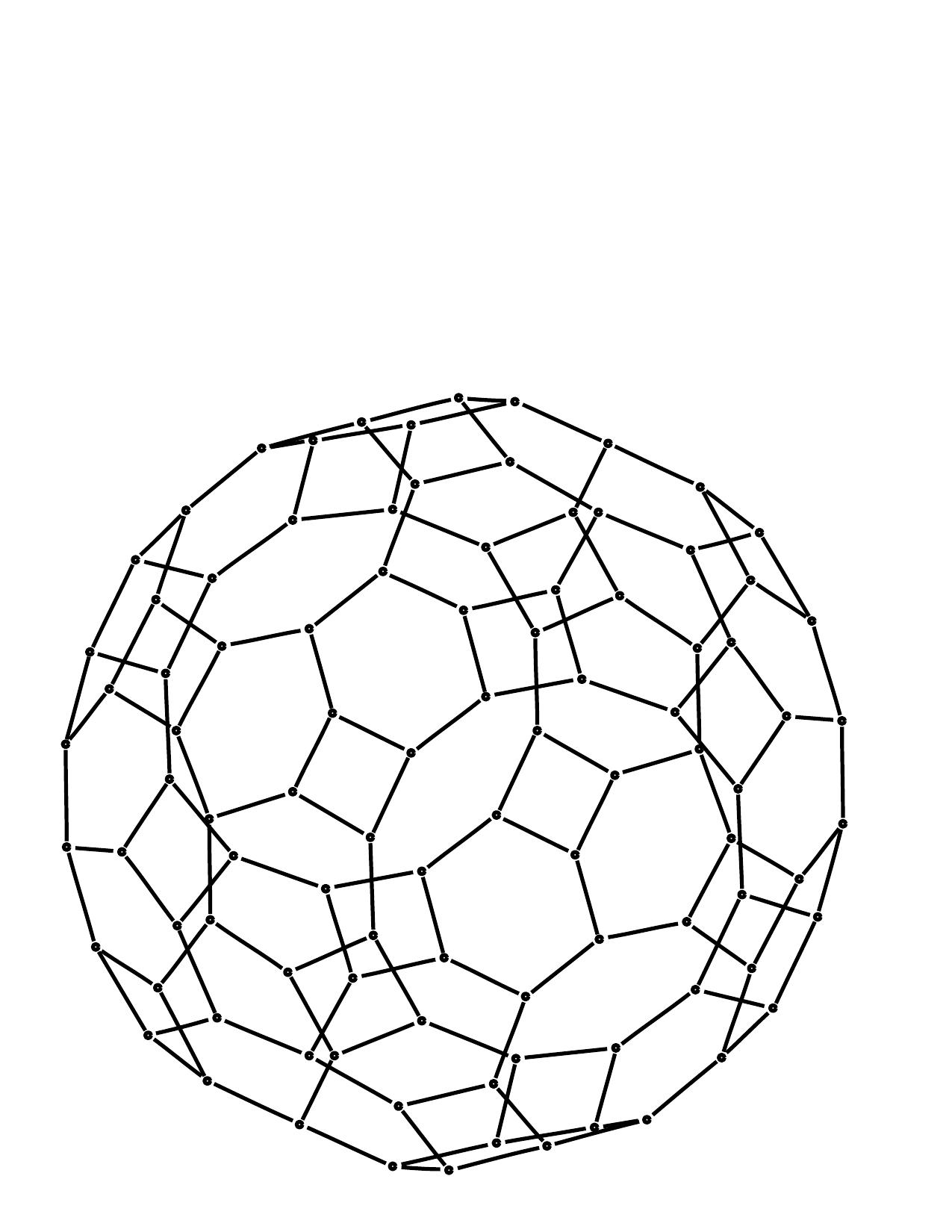 Figure 1
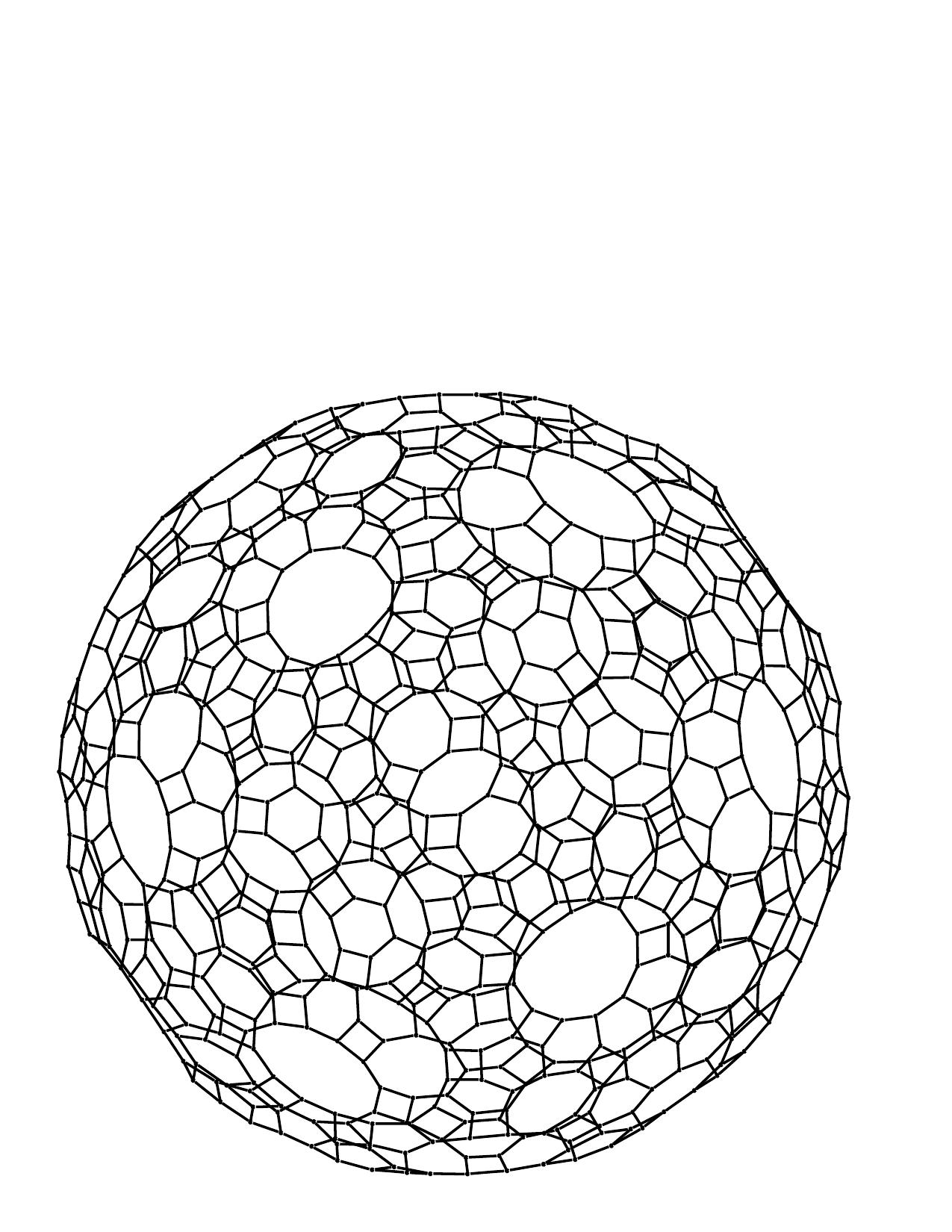 Figure 2