Chiral flavors and M2-branes at toric CY4 singularities
Francesco Benini, Cyril Closset, Stefano Cremonesi

TL;DR
This paper explores the extension of AdS4/CFT3 dualities to toric CY4 singularities with degenerating M-theory circles, incorporating D6-branes and chiral flavors, and provides a method to derive the moduli space of flavored quiver gauge theories.
Contribution
It introduces a general recipe for deriving the geometric moduli space of flavored Abelian toric quiver gauge theories with new duals for various geometries.
Findings
Derived the moduli space of flavored theories using quantum F-term relations.
Found new field theory duals to geometries including Q111.
Extended dualities to cases with degenerating M-theory circles and D6-branes.
Abstract
We extend the stringy derivation of N=2 AdS4/CFT3 dualities to cases where the M-theory circle degenerates at complex codimension-two submanifolds of a toric conical CY4. The type IIA backgrounds include D6-branes, and the dual N=2 quiver gauge theories contain chiral flavors. We provide a general recipe to derive the geometric moduli space of flavored versions of Abelian toric quiver gauge theories. The CY4 cone is reproduced thanks to a non-trivial quantum F-term relation between diagonal monopole operators and bifundamental fields. We find new field theory duals to many geometries, including Q111.
Click any figure to enlarge with its caption.
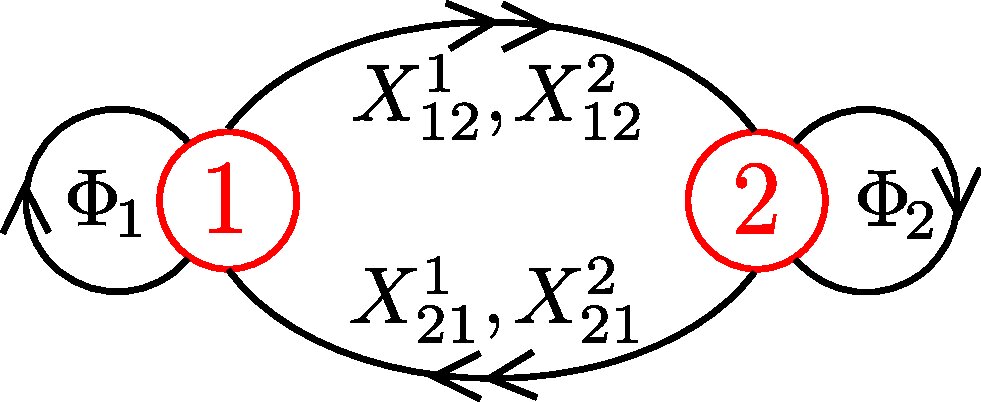 Figure 1
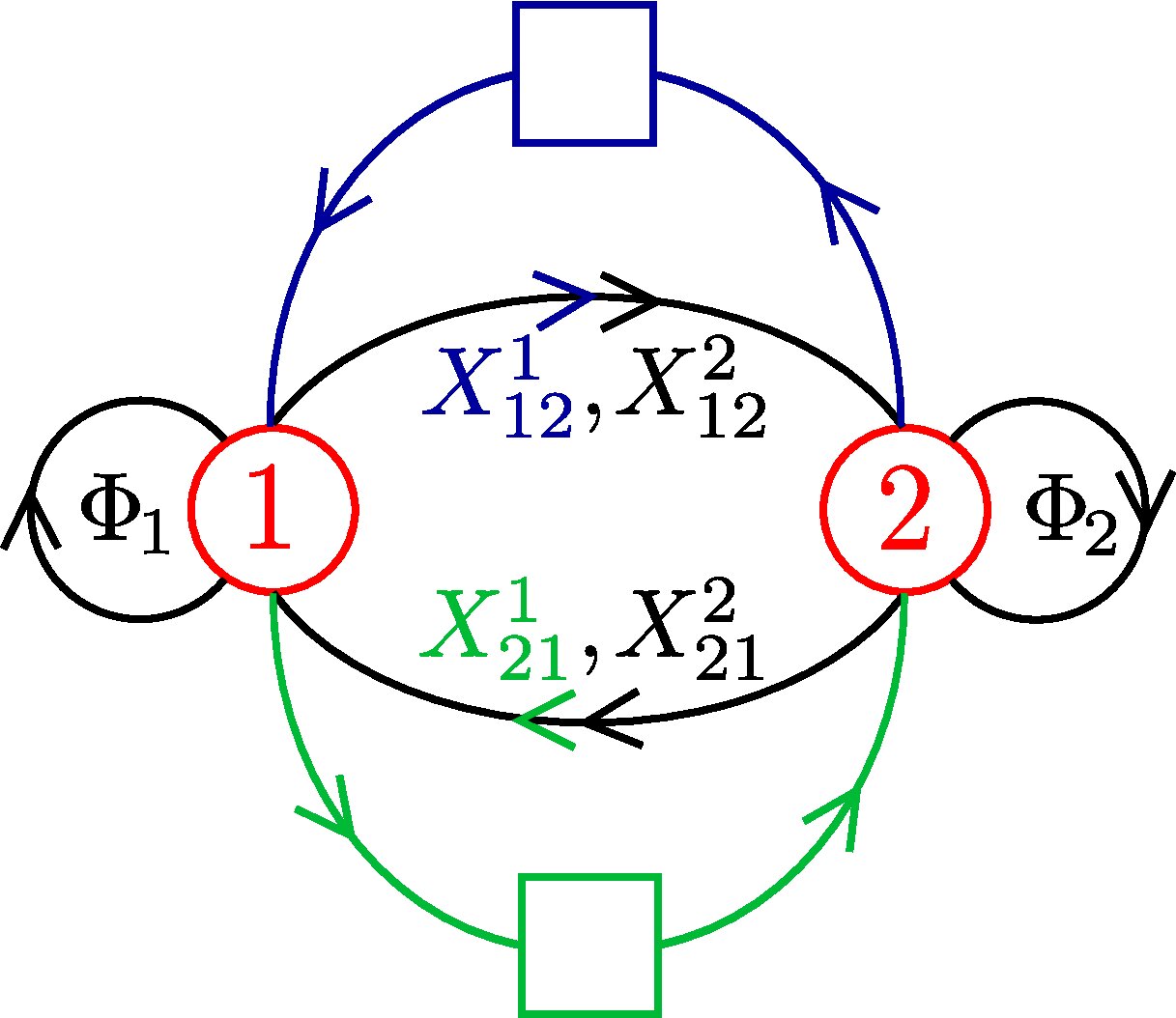 Figure 2
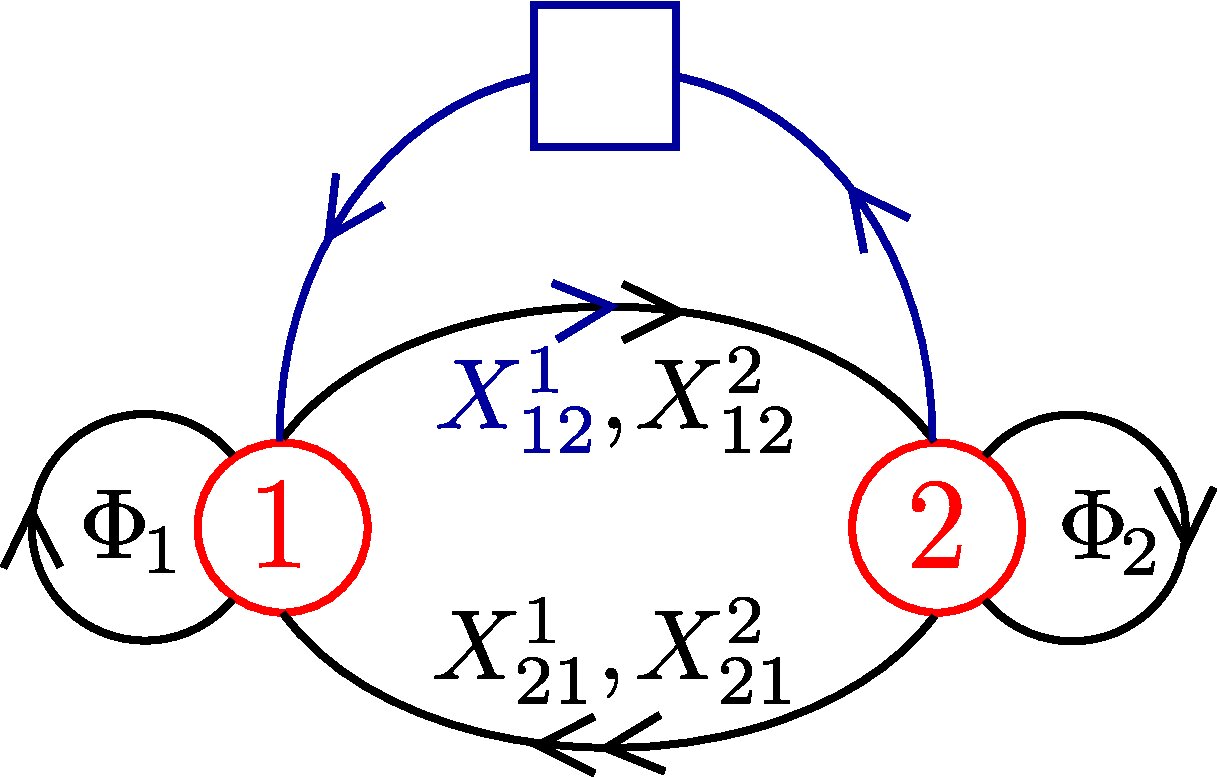 Figure 3
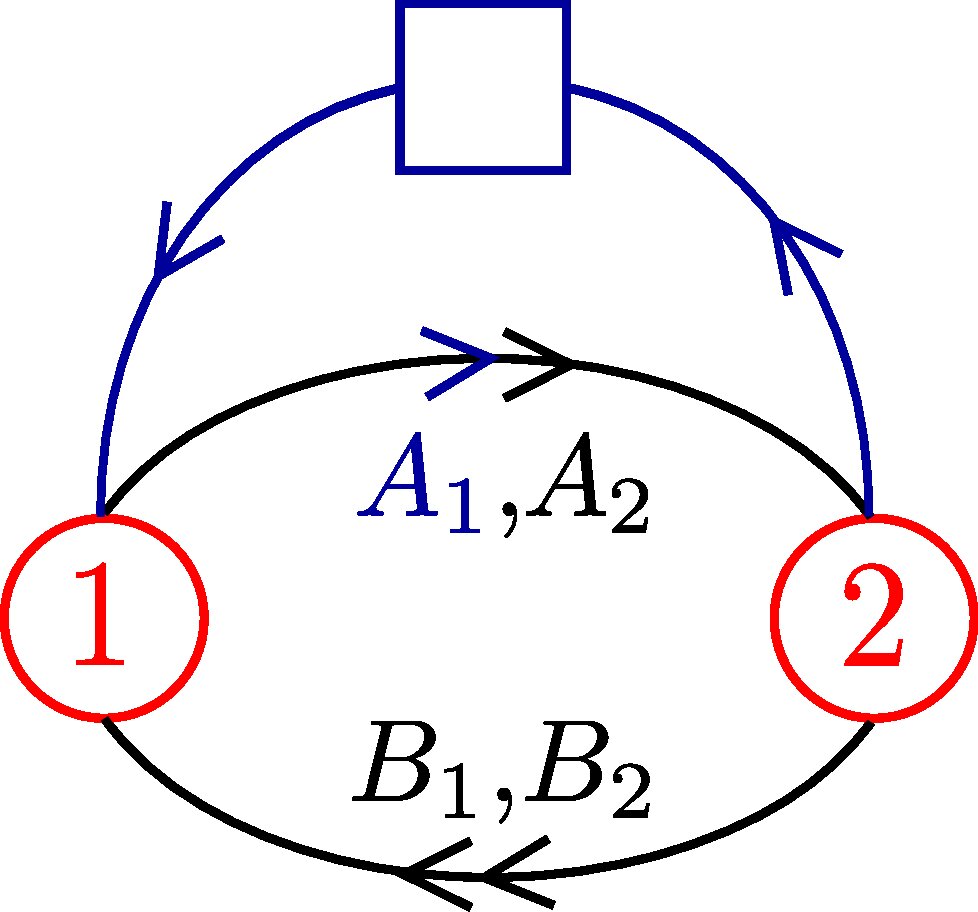 Figure 4
 Figure 5
 Figure 6
 Figure 7
 Figure 8
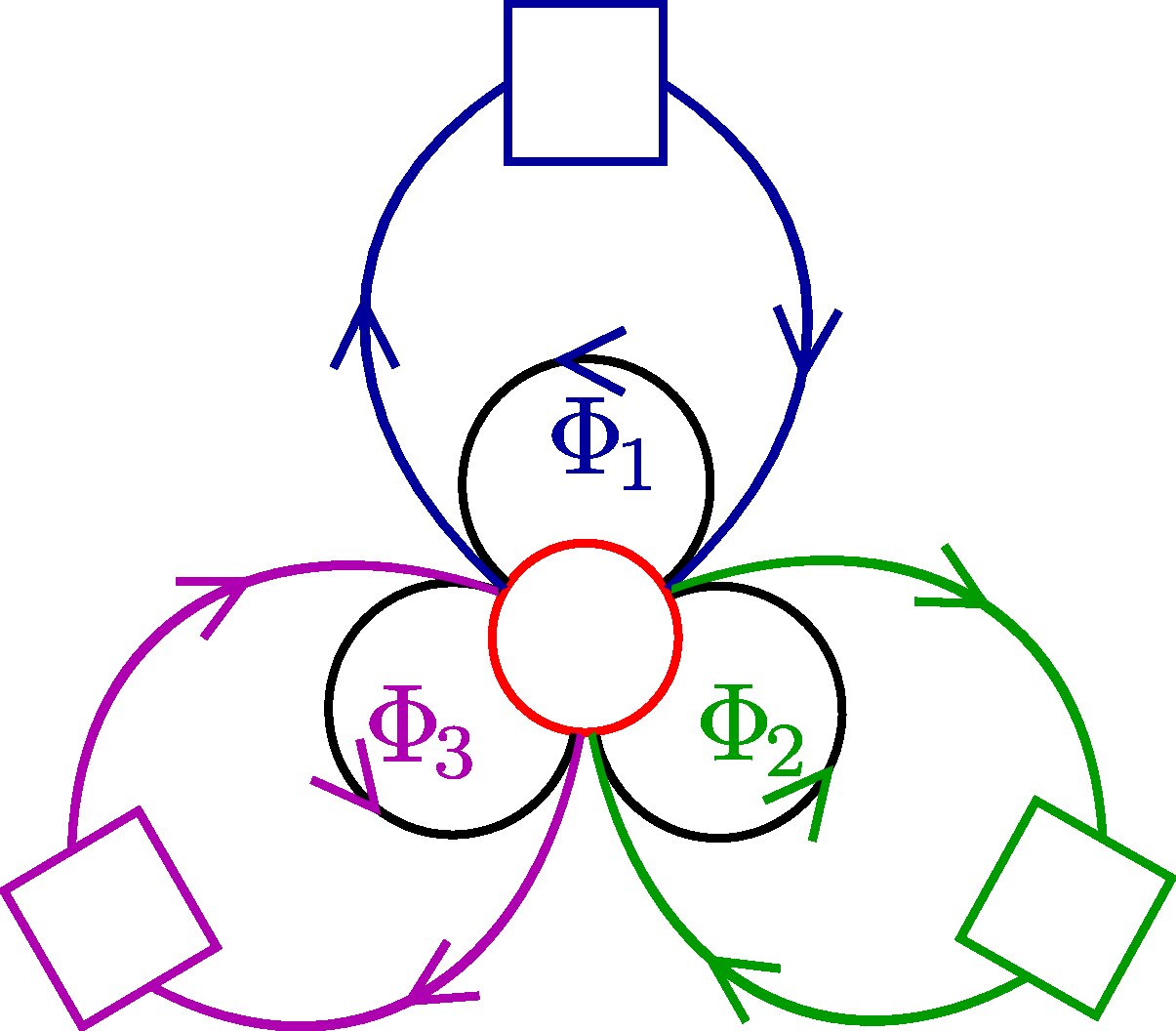 Figure 9
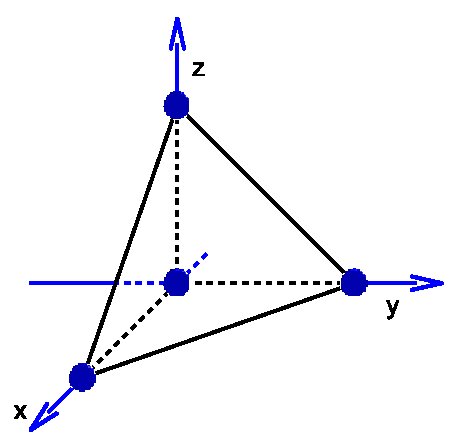 Figure 10
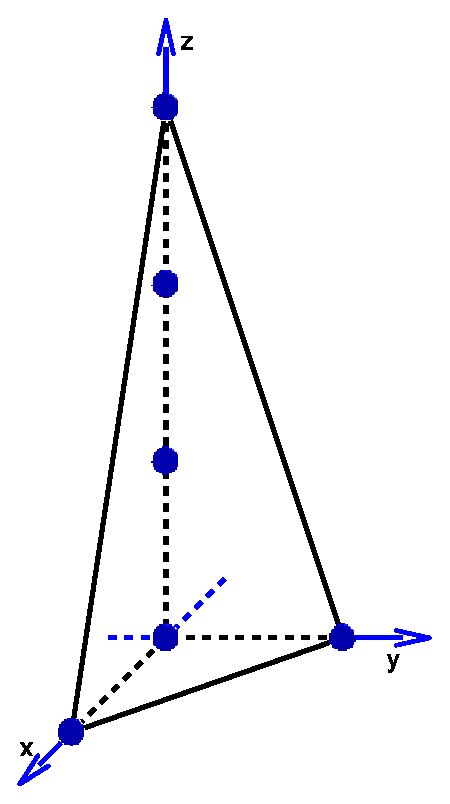 Figure 11
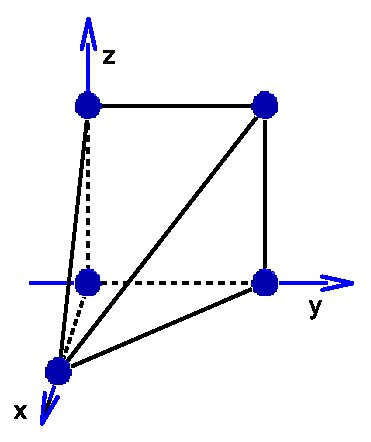 Figure 12
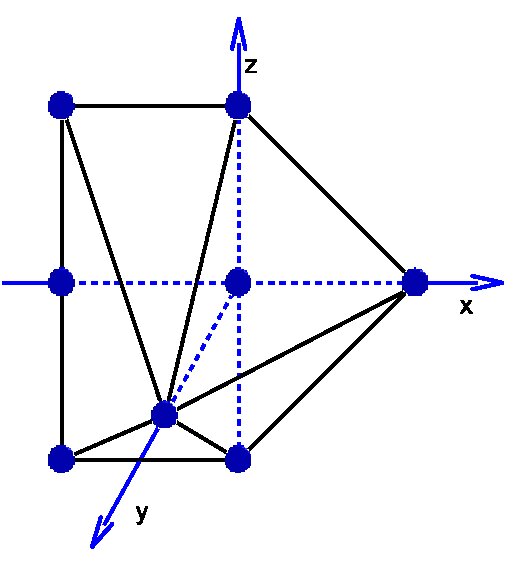 Figure 13
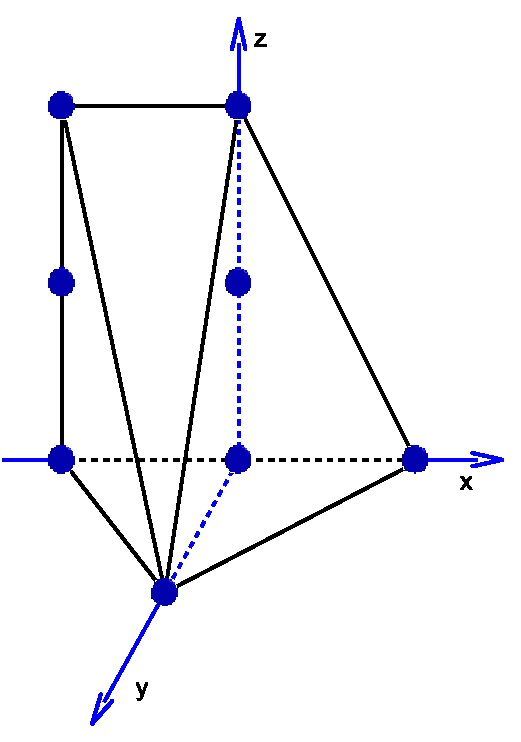 Figure 14
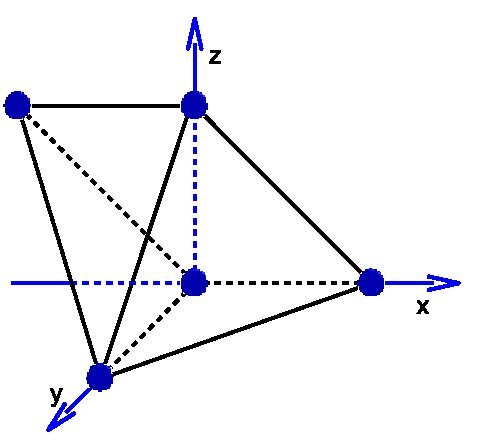 Figure 15
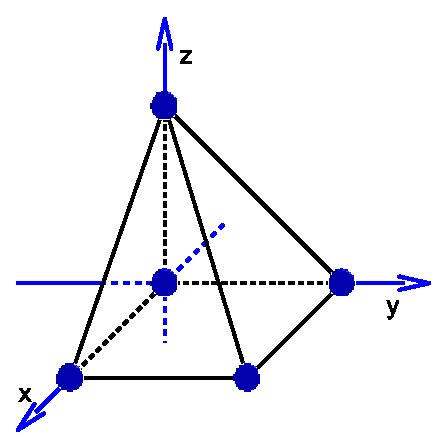 Figure 16
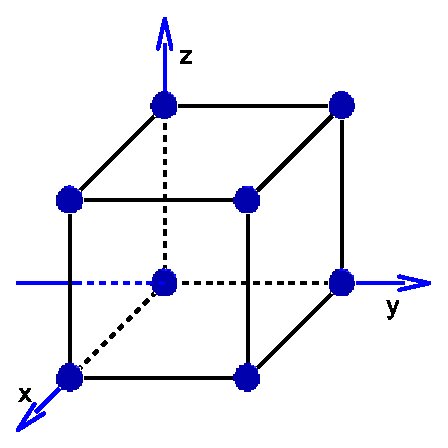 Figure 17
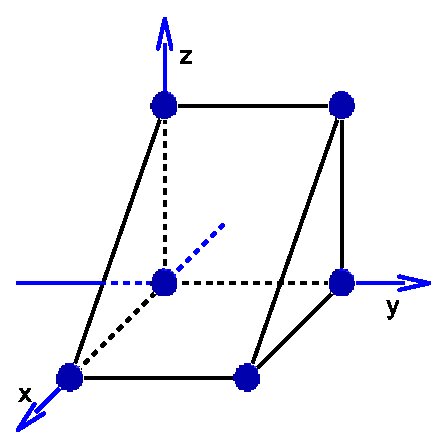 Figure 18
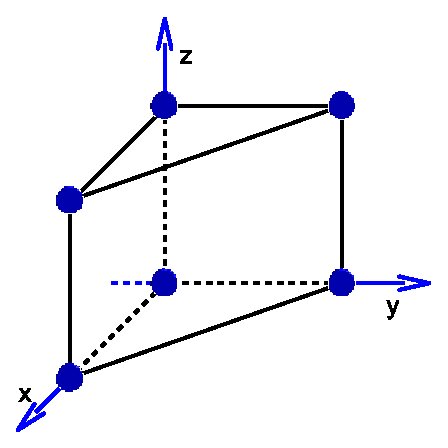 Figure 19
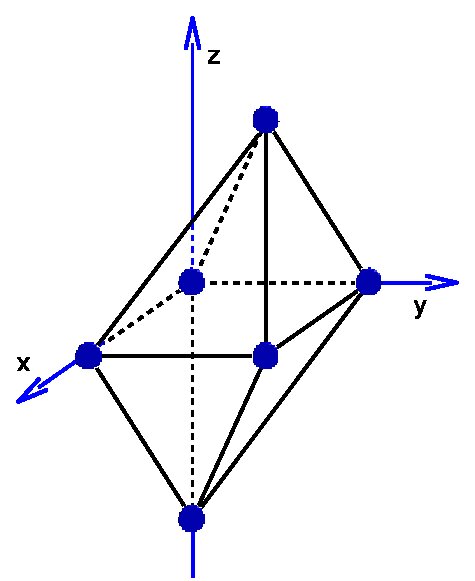 Figure 20
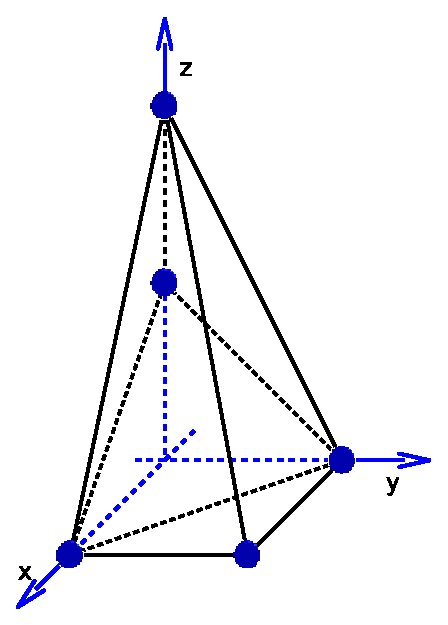 Figure 21
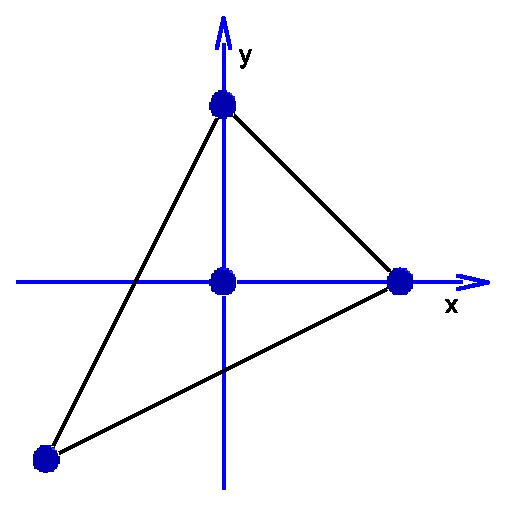 Figure 22
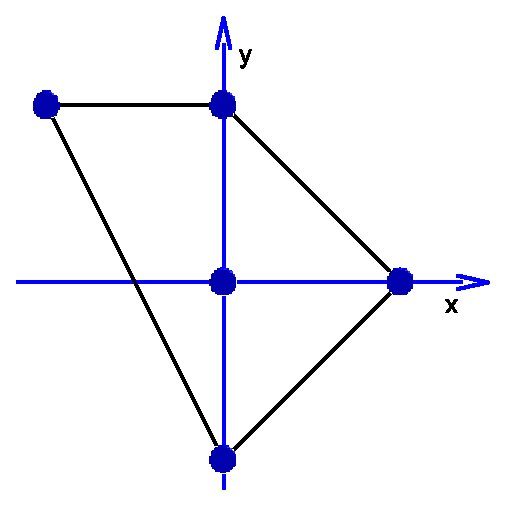 Figure 23
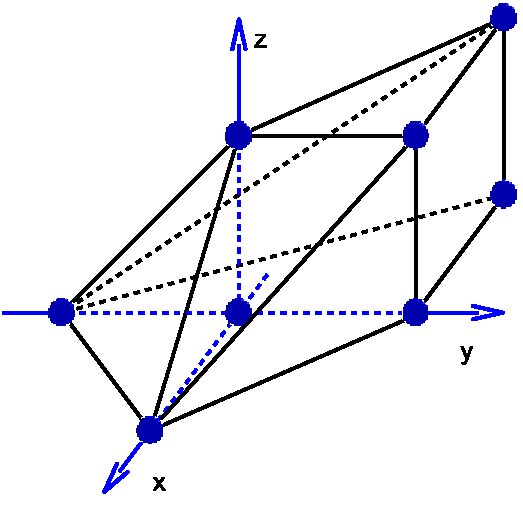 Figure 24
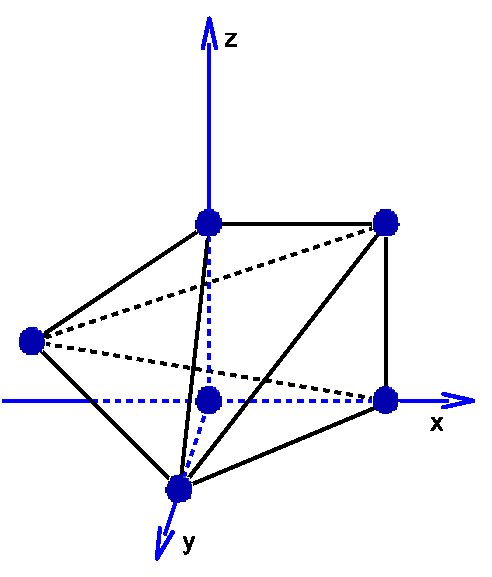 Figure 25
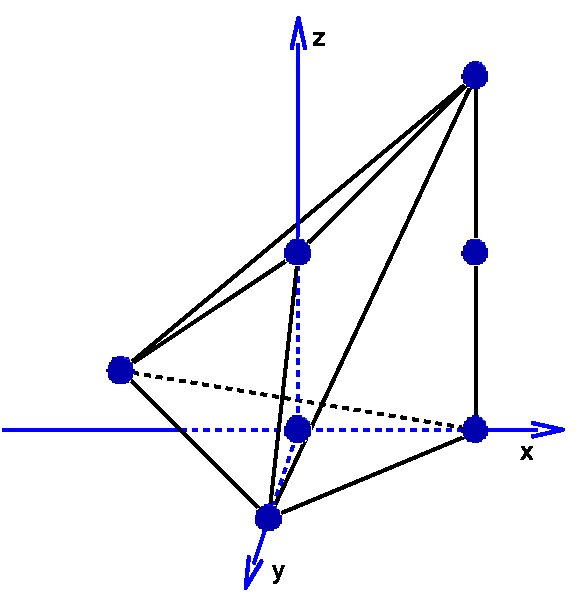 Figure 26
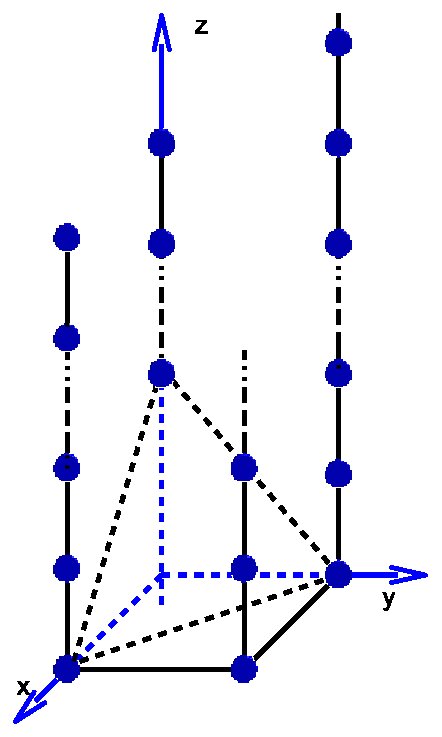 Figure 27
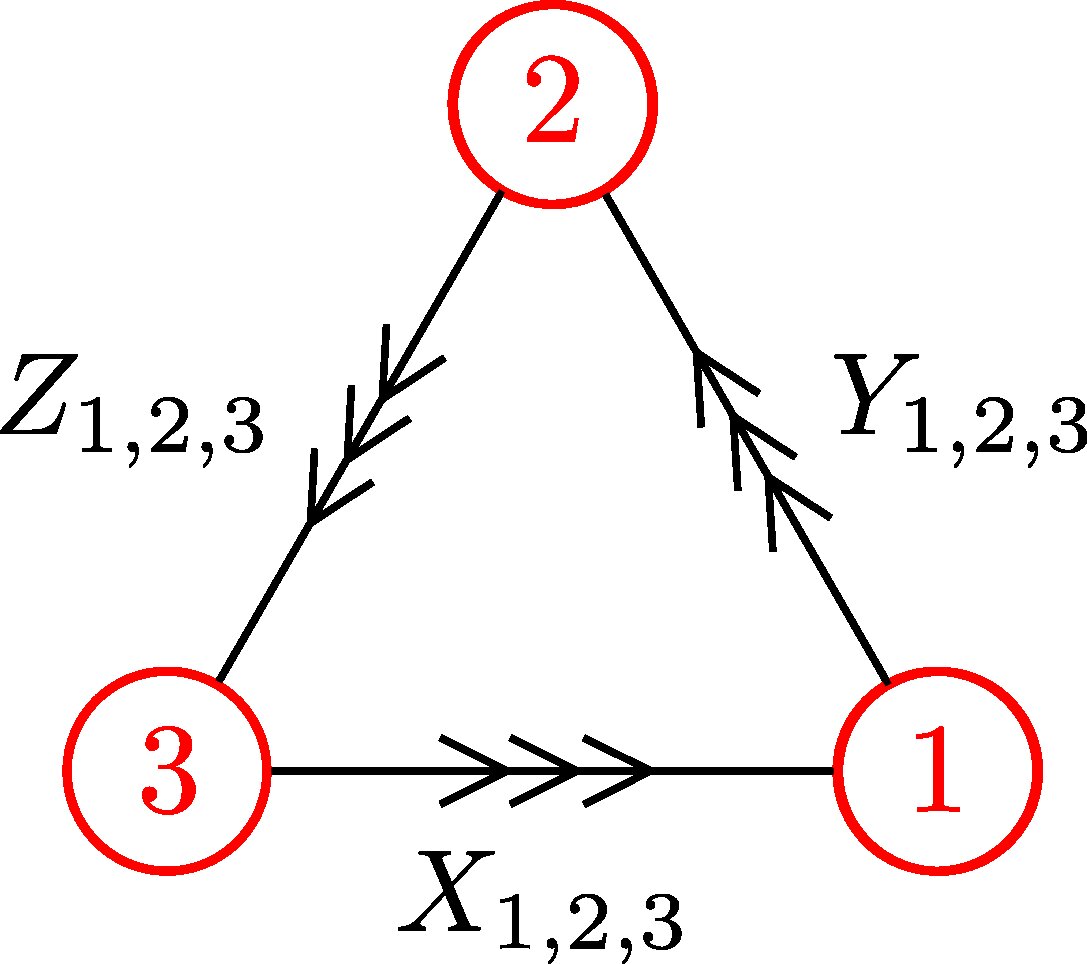 Figure 28
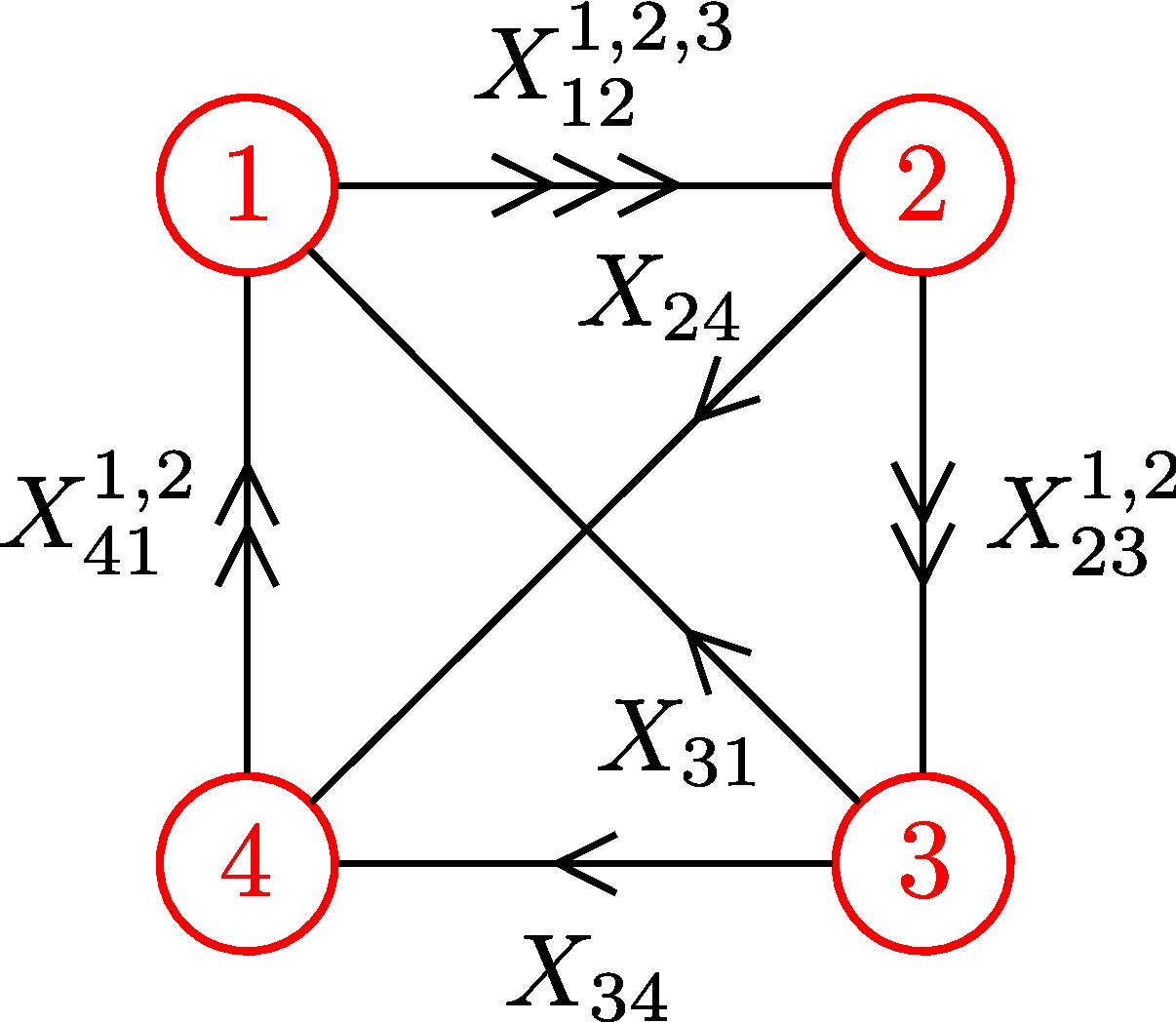 Figure 29
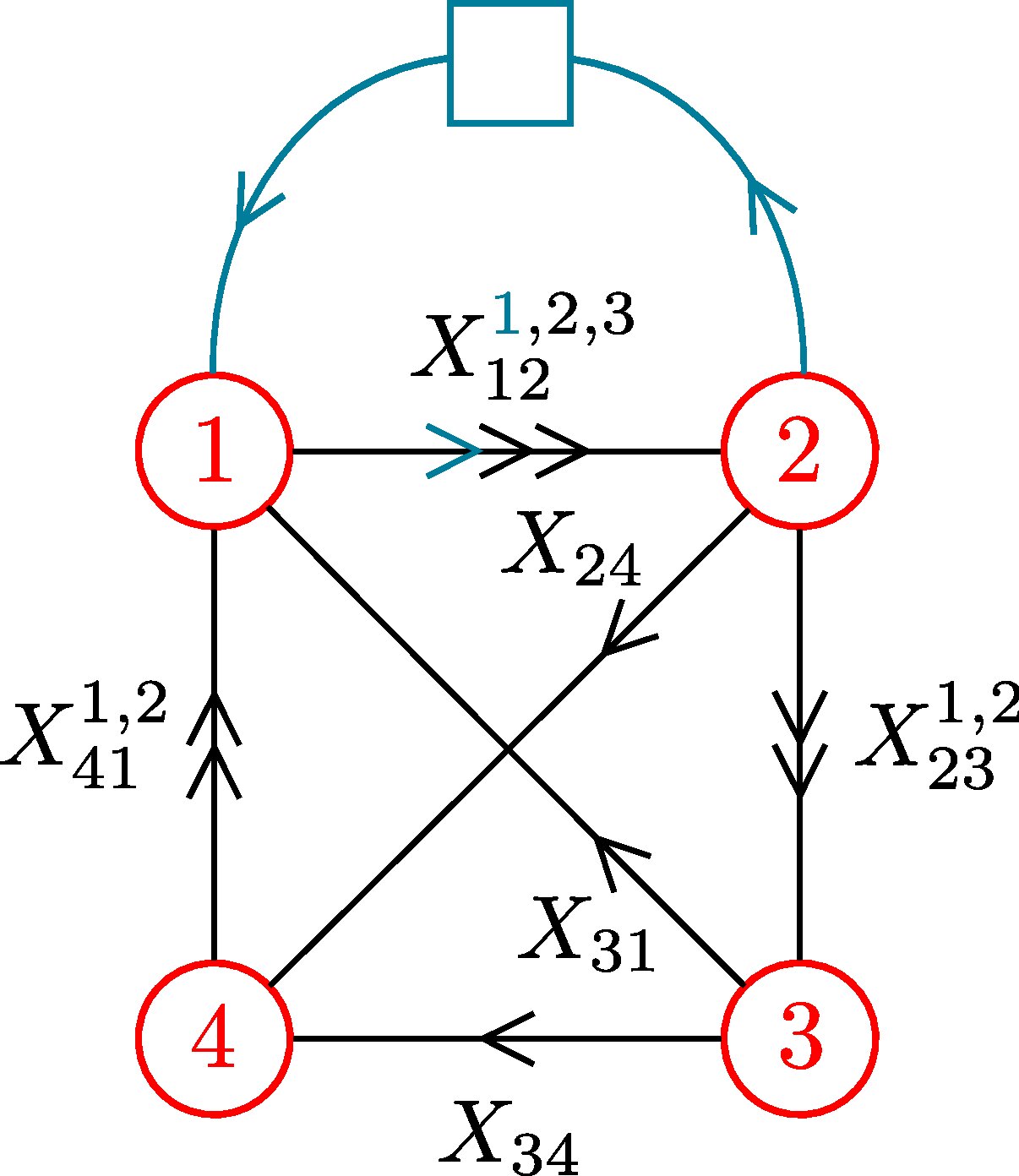 Figure 30
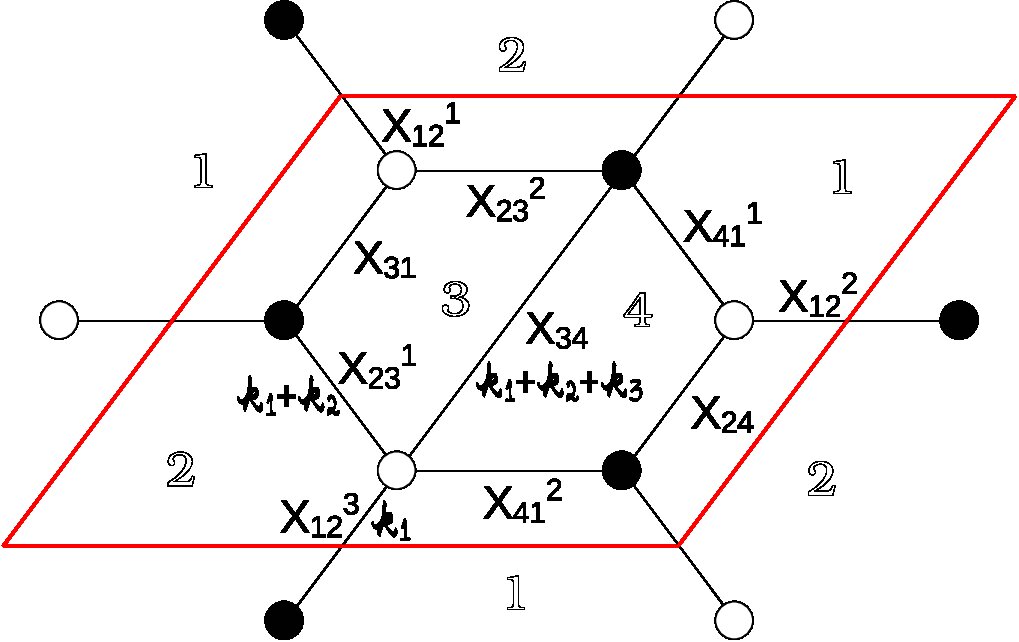 Figure 31
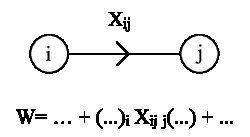 Figure 32
 Figure 33
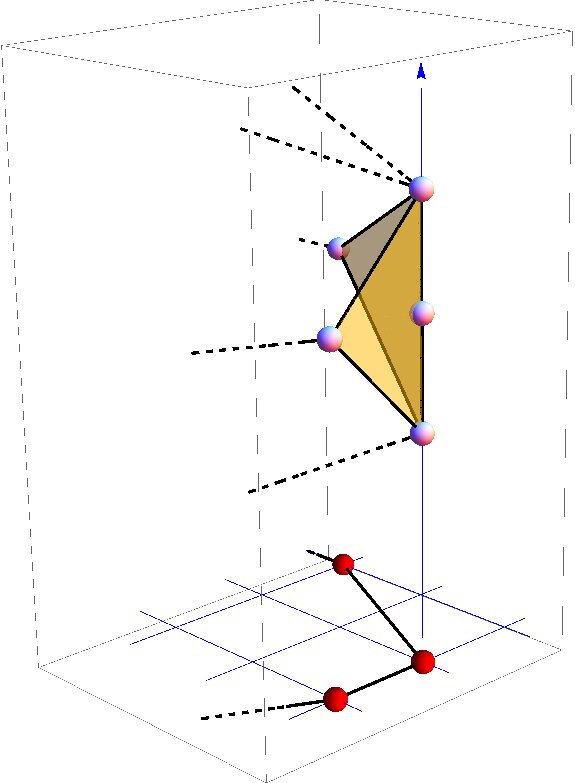 Figure 34
Peer Reviews
No public reviews on file for this paper yet. If you reviewed it on a platform where reviews are public (OpenReview, ICLR, NeurIPS, ICML), you can paste yours below so the community can read it here.
Videos
No videos yet. Explain this paper in a talk, walkthrough, or lecture? Add one.
Chiral flavors and M2-branes at toric CY4 singularities
Francesco Benini♠, Cyril Closset◆, Stefano Cremonesi♣
♠ Department of Physics, Princeton University,
Princeton, NJ 08544, USA
◆ Physique Théorique et Mathématique and International Solvay Institutes
Université Libre de Bruxelles, C.P. 231, 1050 Bruxelles, Belgium
♣ Raymond and Beverly Sackler School of Physics and Astronomy
Tel-Aviv University, Ramat-Aviv 69978, Israel
Abstract:
We extend the stringy derivation of AdS4/CFT3 dualities to cases where the M-theory circle degenerates at complex codimension-two submanifolds of a toric conical CY4. The type IIA backgrounds include D6-branes, and the dual quiver gauge theories contain chiral flavors. We provide a general recipe to derive the geometric moduli space of flavored versions of Abelian toric quiver gauge theories. The CY4 cone is reproduced thanks to a non-trivial quantum F-term relation between diagonal monopole operators and bifundamental fields. We find new field theory duals to many geometries, including .
Chern-Simons Theories, AdS-CFT Correspondence, M-Theory, Solitons Monopoles and Instantons
††preprint: PUTP-2324
TAUP-2906/09
1 Introduction
Conformal field theories (CFT) living on a stack of M2-branes at the tip of eight-dimensional cones are attracting a lot of attention. In the large limit, such theories are holographically dual to Freund-Rubin solutions of M-theory, where is the seven-dimensional base of the cone. In a seminal paper [1], Aharony, Bergman, Jafferis and Maldacena (ABJM) proposed an supersymmetric three-dimensional quiver Chern-Simons (CS) theory with two gauge groups at levels and and bifundamental matter as a dual of M-theory on . When , non-perturbative effects enhance the supersymmetry to . The proposal was gradually extended to lower supersymmetry. If , is 3-Sasakian and hyper-Kähler geometry can be used to construct dual pairs [2, 3, 4, 5, 6]. If , the cone is a Calabi-Yau (CY) four-fold and is a Sasaki-Einstein manifold. The study of quiver Chern-Simons theories dual to Calabi-Yau cones was initiated in [7, 8], followed by a large number of works [9, 10, 11, 12, 13, 14, 15, 16, 17, 18, 19, 20, 21, 22]. Examples with minimal supersymmetry [23, 24, 25, 26] have also been proposed.
All these CFTs involve gauge groups with only adjoint and bifundamental matter, like conformal quiver gauge theories in 3+1 dimensions. More recently, it has been proposed that the dynamics of M2-branes on some hyper-Kähler cones ( SUSY) is described by flavored quiver CS theories, including matter in the fundamental and antifundamental representation of the gauge groups [27, 28, 29]. Flavors were further studied in [30, 31, 32, 33]. We aim to extend this program to M2-branes probing toric CY4 singularities ( SUSY).
One of the problems we want to address is what happens when the four-fold has conical complex codimension-two singularities, which means that the base itself has codimension-two singularities: this is related to the addition of flavors – fields in the fundamental representation of the gauge groups. An complex codimension-two singularity locally looks like . M-theory on such a background develops gauge fields living along the singularity, and by the AdS/CFT map there must be an global symmetry in the boundary theory. Many models in the literature have such singularities, however the large non-Abelian symmetry is not manifest. It is natural to look for a description in terms of flavors in the quiver theory.
Another way to understand the issue is to select a isometry of the CY4 that preserves the holomorphic 4-form , quotient the geometry by and reduce along the circle to type IIA. The resulting background is a warped product , with RR fluxes and varying dilaton. If type IIA is weakly coupled, whereas for one expects a Lagrangian description for the 2-brane theory with weakly coupled gauge groups. If the circle shrinks on a complex codimension-two surface in the CY4, we get D6-branes in the type IIA background, filling and wrapping a 3-cycle in . In fact, is the complex structure of a multi-Taub-NUT which, if reduced along its isometry, gives rise to D6-branes. It is known that the D2-D6 system introduces flavors in the theory living on D2-branes, as happens in the case [27, 28, 29].
A more systematic tool to derive the theory on M2-branes probing a CY4 geometry is the Kähler quotient developed in [17]. Every toric conical CY4 can be written as a fibration over a seven-manifold, which is a toric conical CY3 fibered along . Under some regularity conditions (stressed in Section 2.1), the theory living on M2-branes on the CY4 can be written as the theory living on D3-branes on the CY3, dimensionally reduced and refined by Chern-Simons couplings, which encode the details of the fibration. This approach is powerful because it does not need metric details of the four-fold, but only algebraic geometric data. When the fiber shrinks on codimension-two submanifolds of the CY4, we get D6-branes wrapping divisors of the CY3, and the theory on M2-branes has the same quiver and superpotential as the theory on D3-branes on the CY3 in the presence of D7-branes wrapping the same divisors. For D7-branes wrapping an irreducible divisor, the effect is that of introducing pairs of quarks coupled via the superpotential term
[TABLE]
where the divisor equation is written in terms of the bifundamental matter fields in the theory.
Led by these considerations, we can study what happens if we start with an quiver Chern-Simons theory, dual to a toric CY4 geometry, and we flavor it. We mean that we select a subset of bifundamental fields in the quiver, and for each of them we introduce pairs of chiral multiplets in the (anti)fundamental representation of the gauge groups, coupled by the superpotential term
[TABLE]
being the “unflavored” superpotential. Because of the parity anomaly, this has to be accompanied by a shift of Chern-Simons levels. A concept of “chirality” is induced by supersymmetry, and inherited from four dimensions.
To study the chiral ring and moduli space of this theory, a crucial rôle is played by BPS diagonal monopole operators [34, 35, 36, 37, 38, 39, 40, 41]. Due to quantum corrections, they acquire global and gauge charges in the presence of flavors. Generically there is only one possible non-trivial OPE compatible with all the symmetries, that in the Abelian case reads
[TABLE]
We conjecture that this quantum F-term relation holds, since our results strongly support this claim from the AdS/CFT point of view. The moduli space has Higgs and Coulomb branches. We show that the geometric branch, in which , is described by the matter fields plus the two monopole operators and , subject to the classical F-term relations from plus this quantum F-term relation, modded out by the full gauge group . The geometric moduli space is still a toric CY4, that we precisely identify. Similar ideas appeared in [42].
The paper is organized as follows. In Section 2 we start with a top-down perspective, and analyze the Kähler quotient reduction of M-theory in the presence of KK monopoles. In Section 3 we turn to a bottom-up approach and flavor quiver Chern-Simons theories; their moduli space is studied in Section 4. Section 5 is devoted to deformations by real and complex masses. In Section 6 we work out many examples. We conclude in Section 7, followed by two Appendices.
Note added: While writing up our results, we became aware of the related work of Daniel Jafferis [43], with whom we coordinated the release of the paper.
2 M-theory reduction and D6-branes
A top-down perspective
Let us consider M2-branes probing a toric conical Calabi-Yau four-fold in M-theory.111We refer the reader to [44, 45, 46, 47] for a simple introduction to basic facts about toric geometry and its relevance for quiver gauge theories. We are interested in the type IIA string theory background that one obtains by reducing along a isometry, in particular in the case that the four-fold contains KK monopoles and the shrinks along them. The isometry group of a toric four-fold contains . A specific or more generally subgroup is the superconformal R-symmetry, while the remaining commuting leaves the holomorphic 4-form invariant. Reduction along a circle in manifestly preserves eight supercharges in type IIA.
The toric data of the four-fold are specified by a Lagrangian fibration over a strictly convex rational polyhedral cone. Each facet of the cone represents a toric divisor. In fact the normal vector to a facet, normalized to have integer components, represents the cycle that shrinks on the facet. The collection in of the normal vectors to all facets is called the toric fan. The Calabi-Yau condition is equivalent to the end-points of all vectors in the toric fan being coplanar; one can then use an transformation to rewrite them as , with vectors in . The information encoded in the toric fan can be summarized by the 3d toric diagram: a 3d convex polyhedron whose strictly external points are . We will call strictly external, among the external points, a point which does not lie along a line connecting two external points – this means that strictly external points are not inside an edge nor a face of the toric diagram. Each strictly external point represents a conical toric divisor. The elements , , in the ambient space of the toric fan generate the flavor symmetry group that commutes with the R-symmetry.
Over the intersection of two adjacent facets, two cycles in the fiber shrink. Suppose that the shrinking cycles are and (two points vertically aligned) in : at the intersection of the two facets the cycle , linear difference of the previous ones, shrinks as well. This happens along a complex codimension-two conical submanifold of the four-fold, and one can locally view the M-theory background as a KK monopole for that action. Reducing along , one gets a D6-brane on some type IIA background.
As shown in [17], the type IIA background can be written as the fibration of a CY3 cone over a real line , where the Kähler moduli of vary linearly (according to the CY4 being conical) along the line. The full type IIA background has also RR fluxes, as required by supersymmetry and corresponding to the fibration of , as well as non-trivial dilaton and warping. Degeneration loci of the fiber result in various “objects” in the type IIA background. More precisely, the three-fold is the result of the Kähler quotient . is toric, and defined by a 2d toric diagram which is the projection of the 3d toric diagram to a plane orthogonal to the primitive vector222A primitive vector is a vector in with coprime components. that represents the cycle used for the reduction (more details below). Equivalently, we can always perform an transformation of the 3d toric diagram and map to ; then the 2d toric diagram of is the “vertical” projection of the 3d diagram to the plane .
In our example, the fact that two adjacent external points333Points are adjacent if the line connecting them is strictly external, not contained in a face. in the 3d toric diagram project to the same point (which is then necessarily strictly external) in the 2d toric diagram, implies the presence of a D6-brane wrapping a toric divisor of the CY3 in type IIA (spanning the spacetime and localized at ). The toric divisor is specified by the projected point. More generally, if the 3d toric diagram has a collection of aligned adjacent external points with , , …, , and we reduce along the cycle , all points project down to the same strictly external point in the 2d toric diagram and give rise to coincident D6-branes wrapping a toric divisor of the CY3 (see Figure 1).
Along the D6-branes lives a gauge theory, which by the AdS/CFT map corresponds to a global symmetry on the boundary. We could then expect the boundary theory to admit a description in which such a symmetry is manifest. The same conclusion can be reached in M-theory: adjacent external points in the 3d toric diagram indicate KK monopoles in (a multi-Taub-NUT geometry), whose complex structure is locally ; the singularity carries gauge fields, besides the gauge field from the KK reduction of the M-theory potential . More precisely, in the near core limit the latter KK mode is non-normalizable – correspondingly in the dual theory the diagonal in is actually gauged.
2.1 CY4 as a fibration
Let us explain how to rewrite a toric CY -fold as a (possibly singular) fibration over a manifold, which in turn is the fibration of a toric CY -fold along a real line, with Kähler moduli that vary linearly along the line. In the first part, we follow the exposition in [17].
Consider a toric CY -fold, realized as the moduli space of a gauged linear sigma-model (GLSM). There are chiral superfields with , and gauge groups with integer charges (of maximal rank) with . The CY condition is for all . The number of fields can be taken to be equal to the number of dots in the -dimensional toric diagram. Then the charge matrix encodes the linear relations between the vectors in the toric fan. The CY is simply the Kähler quotient , which corresponds to imposing the moment map (D-term) equations
[TABLE]
and quotienting by the gauge group
[TABLE]
The moment map (or FI) parameters are the resolution parameters of . We will be mainly interested in the conical case . Moreover, for each the charges can be taken coprime without loss of generality.
To exhibit the fibered structure, we add the complex variable and choose a set of charges satisfying the CY condition . Then we impose one more equation and divide by one more gauge symmetry:
[TABLE]
It is easy to check that the manifold is the same as before: using (2.3) can be eliminated while can be gauged away (without leaving any residual gauge transformation).
On the other hand, we can fix and think of as a fibration. The base manifold is then the Kähler quotient :
[TABLE]
modded out by
[TABLE]
is toric and Calabi-Yau. Moreover, is fibered over the real line , with a particular combination of the resolution parameters (set by ) varying linearly with . The tip of is at .
Projecting the toric diagram.
Given the set of charges , the toric fan of is given by primitive vectors in which solve the