The representativity of pretzel knots
Makoto Ozawa

TL;DR
This paper characterizes when certain pretzel knots have a specific property called representativity 3, and shows that large algebraic knots have representativity at most 3, contributing to knot theory classification.
Contribution
It provides a complete characterization of pretzel knots with representativity 3 and bounds the representativity of large algebraic knots, advancing understanding in knot invariants.
Findings
Pretzel knots with parameters ±(-2,3,3) or ±(-2,3,5) have representativity 3.
Large algebraic knots have representativity ≤ 3.
The results classify knots based on their representativity values.
Abstract
In the present paper, we will show that a -pretzel knot has the representativity 3 if and only if is either or . We also show that a large algebraic knot has the representativity less than or equal to 3.
Click any figure to enlarge with its caption.
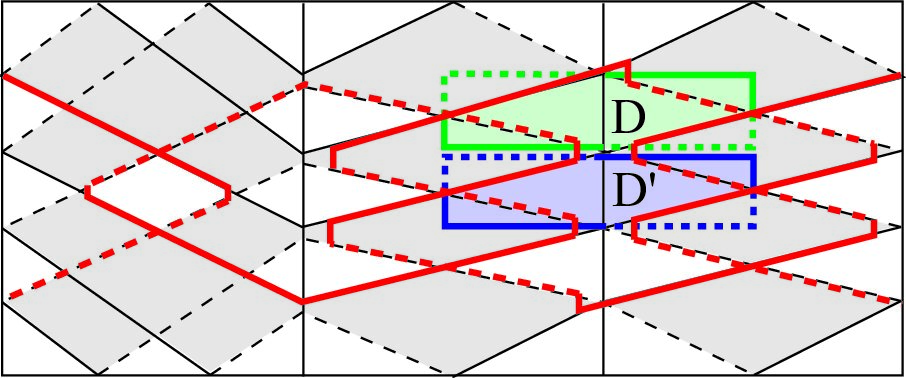 Figure 1
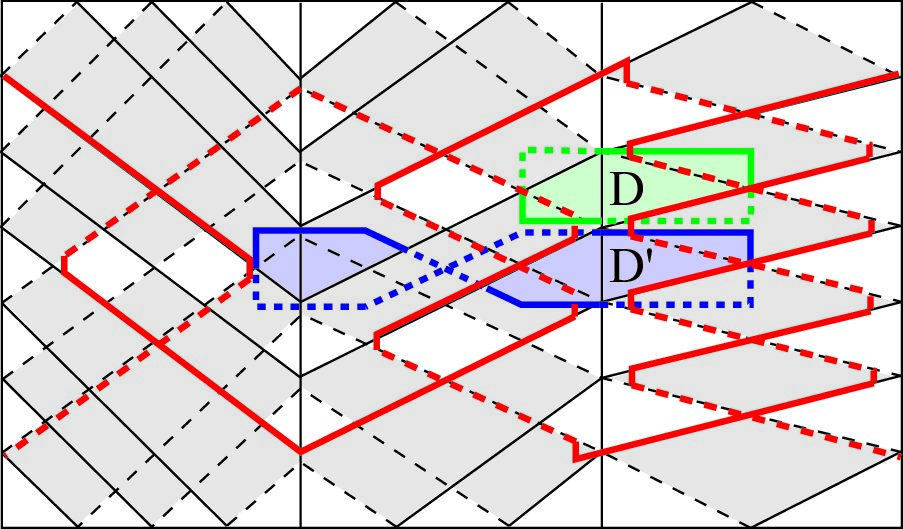 Figure 2
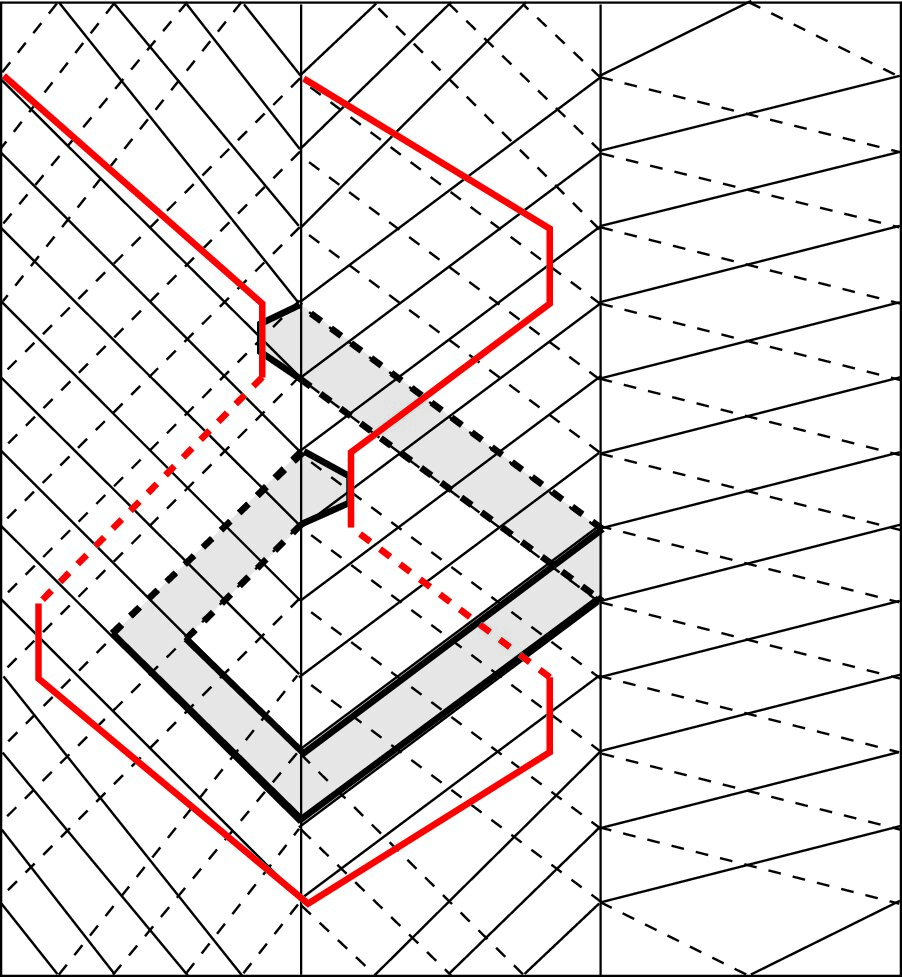 Figure 3
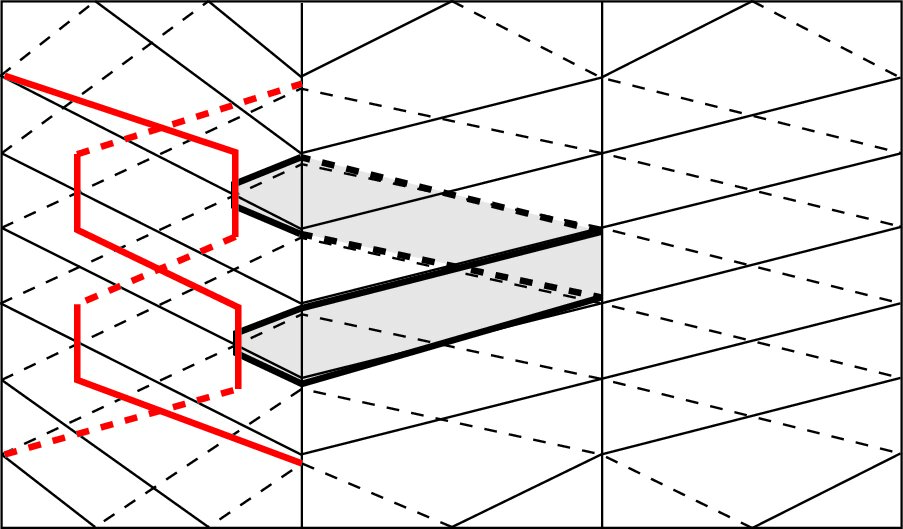 Figure 4
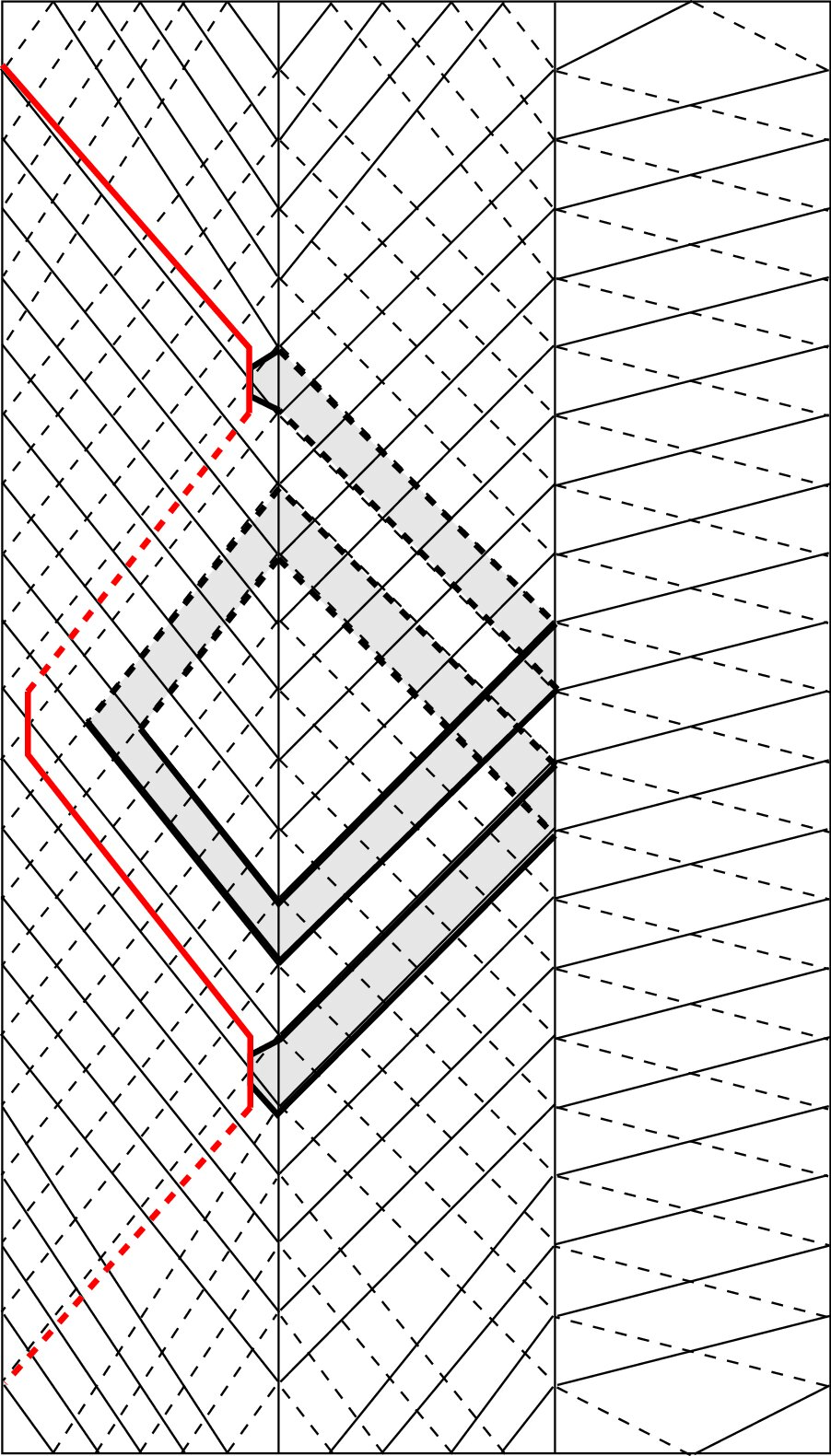 Figure 5
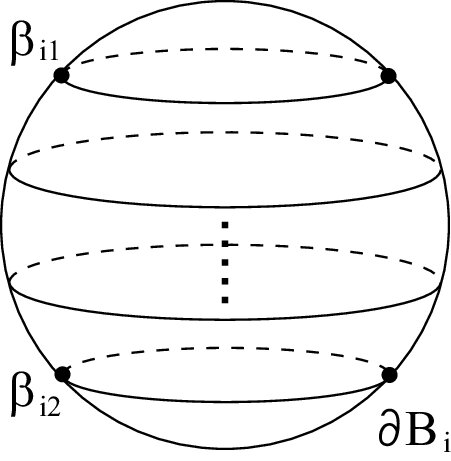 Figure 6
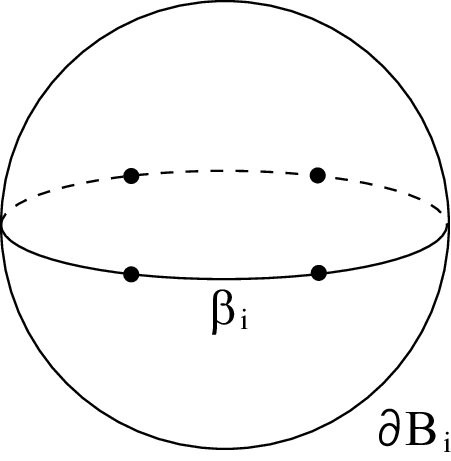 Figure 7
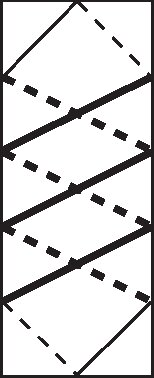 Figure 8
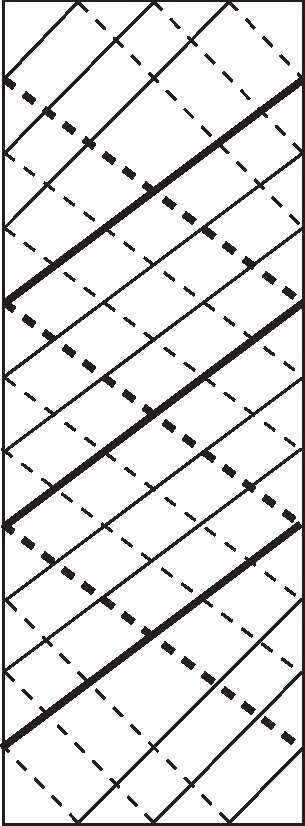 Figure 9
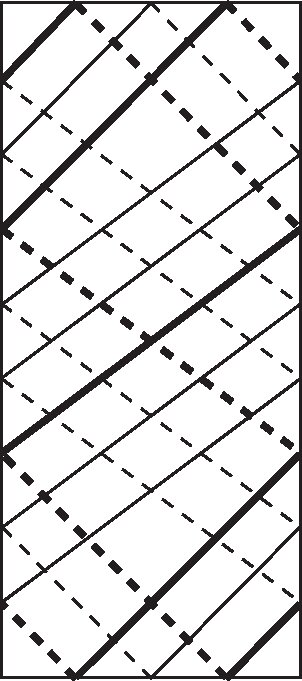 Figure 10
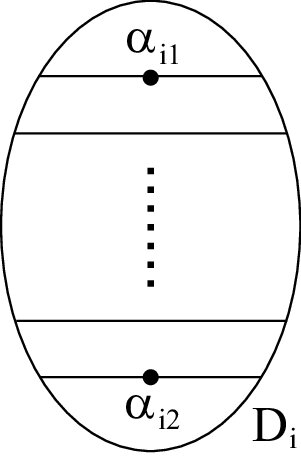 Figure 11
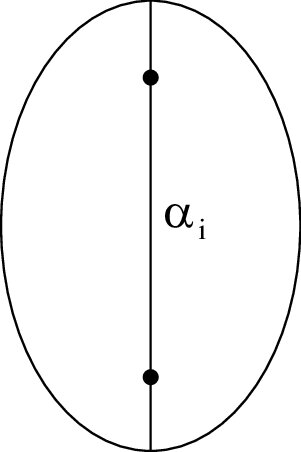 Figure 12
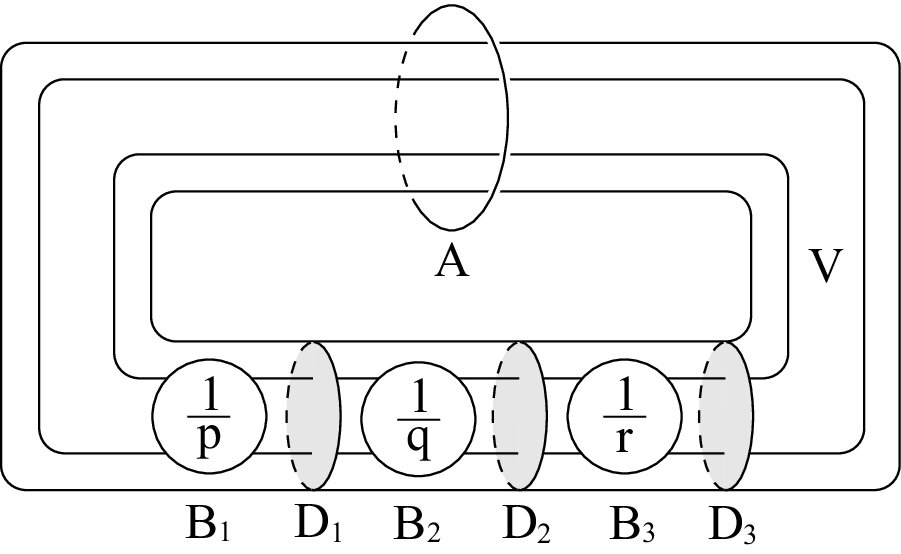 Figure 13
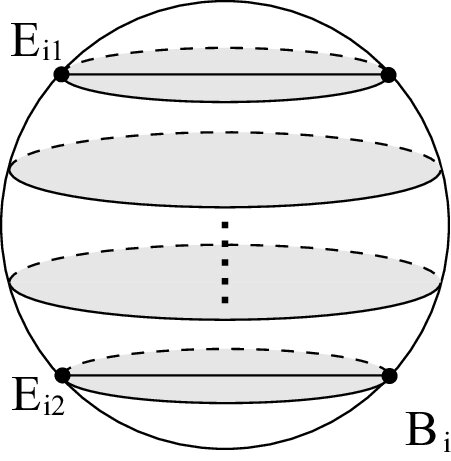 Figure 14
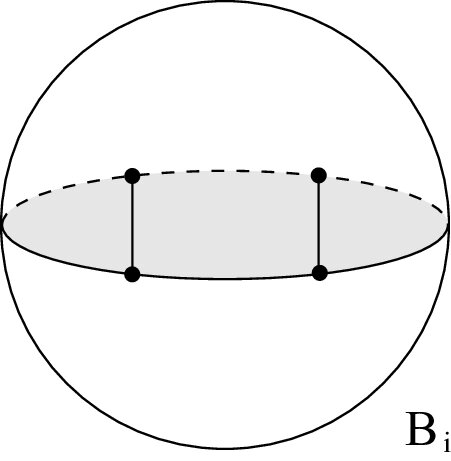 Figure 15
Peer Reviews
No public reviews on file for this paper yet. If you reviewed it on a platform where reviews are public (OpenReview, ICLR, NeurIPS, ICML), you can paste yours below so the community can read it here.
Videos
No videos yet. Explain this paper in a talk, walkthrough, or lecture? Add one.
Taxonomy
TopicsGeometric and Algebraic Topology · semigroups and automata theory · Connective tissue disorders research
The representativity of pretzel knots
Makoto Ozawa
Department of Natural Sciences, Faculty of Arts and Sciences, Komazawa University, 1-23-1 Komazawa, Setagaya-ku, Tokyo, 154-8525, Japan Department of Mathematics and Statistics, The University of Melbourne Parkville, Victoria 3010, Australia (temporary) [email protected], [email protected] (temporary)
In hope of recovery of my father
Abstract.
In the previous paper, the representativity of a knot was defined as
[TABLE]
where is the set of all closed surfaces of positive genus containing and is the set of all compressing disks for in . Then an inequality has shown, where denotes the bridge number of . This shows that a -pretzel knot has the representativity less than or equal to .
In the present paper, we will show that a -pretzel knot has the representativity if and only if is either or . We also show that a large algebraic knot has the representativity less than or equal to .
Key words and phrases:
pretzel knot, Montesinos knot, algebraic knot, representativity, bridge number
2000 Mathematics Subject Classification:
Primary 57M25; Secondary 57Q35
1. Introduction
Let be a knot in the 3-sphere and a closed surface of positive genus containing . In [2], the representativity of a pair is defined as the minimal number of intersecting points of and , where ranges over all compressing disks for in . Furthermore, we defined in [3] the representativity of a knot as the maximal number of over all closed surfaces of positive genus containing . The representativity of a knot is a new knot invariant.
The following inequality is the first fundamental result for the representativity. Let denote the bridge number of .
Theorem 1.1** ([3, Theorem 1.2]).**
For a knot , .
This shows that a -pretzel knot has the representativity less than or equal to . In the present paper, we characterize -pretzel knots with the representativity .
Theorem 1.2**.**
Let be a -pretzel knot in . Then if and only if or .
Remark 1.3*.*
It was shown in [1, Theorem III] that a -pretzel knot is a torus knot if and only if , or , and observed that a -pretzel knot is a -torus knot and a -pretzel knot is a -torus knot. In the proof of Theorem 1.2, we will give unknotted tori containing these pretzel knots directly.
Let be a tangle composite knot, that is, which admits at least one essential tangle decomposition. We define the tangle string number of as the minimal number of over all -string essential tangle decompositions of .
Proposition 1.4** ([3, Example 3.6]).**
For a tangle composite knot , .
By Proposition 1.4, if is a composite knot, and if has an essential Conway sphere. Nonetheless, the representativity of a large algebraic knot (i.e. algebraic knot with an essential Conway sphere) has more sharp upper bound.
Theorem 1.5**.**
Let be a large algebraic knot. Then .
2. Proofs
Proof.
(of Theorem 1.2) Let be a -pretzel knot with a form of a Montesinos knot of type . Thus is obtained from three rational tangles , and of slopes , and respectively by connecting them in series. Let be the “axis” of the Montesinos knot , that is, an unknotted loop in the complement of such that there exist three meridian disks , and in the solid torus which cut into three rational tangles , and , where , and . See Figure 1.
Suppose that and let be a closed surface containing which satisfies . We assume that is minimal up to isotopy of . Moreover, we assume that is minimal up to isotopy of . Then, each component of is a longitude of which intersects in one point for each , and consists of -arcs and loops.
Claim 2.1**.**
.
Proof.
If , then is a connected sum of two torus knots, a torus knot, or a 2-bridge knot. In either cases, we have , a contradiction. ∎
In the following, we show that has no loop and consists of mutually parallel -arcs.
Claim 2.2**.**
There exists no outermost arc of with .
Proof.
Let be an outermost arc of with , and be the corresponding outermost disk. Since each component of intersects in one point for each , connects two longitudinal components of . Hence by an isotopy of along , can be reduced, a contradiction. ∎
Claim 2.3**.**
There exists no innermost loop of with .
Proof.
Let be an innermost loop of with , and be the corresponding innermost disk. If is essential in , then , a contradiction. Otherwise, bounds a disk in and we can remove from by isotoping into .
Next let be an innermost loop of with , and be the corresponding innermost disk. Since , is essential in . Then , a contradiction. ∎
Claim 2.4**.**
There exists no innermost loop of with .
Proof.
Suppose there exists an innermost loop of with . Then bounds a disk in since . Let be a loop of which is innermost in , and be the corresponding innermost disk in . By Claim 2.3, and contains one subarc of . Since is parallel into some , at least one of is equal to [math]. This contradicts Claim 2.1. ∎
By Claims 2.2, 2.3 and 2.4, has one of the following configurations. See Figure 2.
- (1)
consists of mutually parallel arcs whose two outermost arcs , satisfying for .
- (2)
consists of one arc satisfying .
In the following, we show that Configuration (2) does not exist.
Lemma 2.5**.**
Let be a trivial tangle and is a properly embedded surface in which contains . Let be the standard Morse function with one critical point and suppose that each component of has exactly one maximal point with respect to . Then a pair can be isotoped so that has no inessential saddle point and each component of has one maximal point with respect to .
Proof.
This lemma essentially follows [3, Lemma 2.1, 2.2]. ∎
Claim 2.6**.**
In Configuration (2), consists of a disk.
Proof.
In Configuration (2), consists of one loop satisfying . If was not a disk, then by Lemma 2.5, there exists an essential saddle point of and this shows that as the proof of [3, Theorem 1.2]. ∎
By Claim 2.6, we have . This contradicts Claim 2.1. Hence Configuration (2) does not exist. Hereafter, we assume Configuration (1). Since each component of is a longitude of which intersects in one point for each , has either following two cases. See Figure 3.
- (A)
consists of mutually parallel loops whose two innermost loops satisfying for .
- (B)
consists of one loop satisfying .
Claim 2.7**.**
In either cases, consists of disks.
Proof.
In Case (A), without loss of generality, let be the innermost disk in bounded by . Since , bounds a disk in . Let be a loop of which is innermost in , and be the corresponding innermost disk in . Note that is a loop of , and contains exactly one subarc of if and only if is either or .
If is contained in , then an algebraic tangle is inessential. It follows that or and it contradicts Claim 2.1. Hence is contained in .
If and it bounds a disk in , then a loop of which is next to on , say , also bounds a disk in such that . Since , bounds a disk in and there is an isotopy sending to . By the minimality of and , bounds a disk of . Continuing this argument, each loop of except for bounds a disk of in . Now we apply Lemma 2.5 to and . If does not bound a disk of , then by Lemma 2.5, there exists an essential saddle point of and this shows that , a contradiction. Hence each loop of bounds a disk of if .
If , then by the same argument as above, we can show that each loop of bounds a disk of .
In Case (B), we apply Lemma 2.5 to and . If was not a disk, then by Lemma 2.5, there exists an essential saddle point of and this shows that , a contradiction. ∎
We call *Type *(A) or *Type *(B) if has Case (A) or Case (B) respectively. See Figure 4.
- (A)
consists of mutually parallel -disks whose two outermost disks and contain one string of .
- (B)
consists of one disk which contains two strings of .
Claim 2.8**.**
For Type (A), the boundary slope of is equal to the rational tangle slope of .
Proof.
This claim follows the definition of the slope of rational tangle. ∎
Claim 2.9**.**
For Type (B), let be the slope of a rational tangle and be the boundary slope of . Then one of the following conditions holds.
- (I)
.
- (II)
and .
Proof.
There are two possibility of the arrangement of in . Depending on them, we have two conditions (I) and (II). See Figure 5. We remark that it is required in Condition (II). ∎
Claim 2.10**.**
In Claim 2.9, .
Proof.
Since is a disk in , for each region between two consecutive arcs of , there exists a disk in such that is an arc connecting the two consecutive arcs and . If , then .
For the next tangle which has a common disk , we have a similar disk in as , for some region between two consecutive arcs of , such that .
Then we have a disk such that , a contradiction. ∎
Hence, only (I) in Claim 2.9 occurs, and we have the following claim.
Claim 2.11**.**
For Type (B), the boundary slope of is equal to if the slope of a rational tangle is .
Since consists of longitudes, the next equation holds.
[TABLE]
where , and denote the boundary slopes of , and respectively. Without loss of generality, we assume that and . We note that the common denominator in the equation (*) is equal to . In the following, we will give a condition for .
Lemma 2.12**.**
Generally, suppose that
[TABLE]
Then there exists a pair of coprime integers such that and an integer such that
[TABLE]
Proof.
Put , , where are coprime integers. Then
[TABLE]
[TABLE]
Since divides , putting ,
[TABLE]
Hence, , and . Moreover, since , we have . ∎
Claim 2.13**.**
If , then there exists a positive integer such that . Here, is of Type (A) with , and and are of Type (B).
Proof.
If , then , since and are coprime. Then we have , and in Lemma 2.12. Since is a knot, it follows that and , thus and are of Type (B) by Claim 2.11. Then the common denominator in the equation (*) must be , is of Type (A) with . ∎
Example 2.14**.**
A -pretzel knot is of this type in Claim 2.13.
Claim 2.15**.**
If , then there exists positive integers such that . Here, is of Type (A) with , is of Type (A) with , and is of Type (B).
Proof.
If is even, then both of and are also even. Since , both of and are of Type (A) to have a common denominator in the equation (*). Thus by Claim 2.8, the slopes of rational tangles and coincide with those boundary slopes of and . Therefore, and are even, this shows that has more than two components.
Hence is odd, and one of and is even. It follows that one of and is even and is even. Since and has exactly one component, is of Type (B) by Claim 2.11. Then,
[TABLE]
[TABLE]
Since , and . Hence , and , and is of Type (A) with , is of Type (A) with and is of Type (B). ∎
Example 2.16**.**
A -pretzel knot is of this type in Claim 2.15, where and .
Claim 2.17**.**
In Claim 2.15, .
Proof.
Suppose . There are -arcs of . Let be the -th arc and be the -th arc, and be the region of between and . Then there exists a disk in such that is an subarc of intersecting in one point and is an arc connecting and . There also exists a disk in such that is an subarc of intersecting in one point and is an arc connecting and . Then a disk obtained from and gives a compressing disk for whose boundary intersects in two points. This shows that , a contradiction. ∎
Therefore, we have two Types for the triple .
- (1)
for some integer .
- (2)
for some integer .
Claim 2.18**.**
In Type (1), .
Proof.
If , then we can find a compressing disk for such that , a contradiction. See Figure 6. ∎
Claim 2.19**.**
In Type (2), .
Proof.
If , then we can find a compressing disk for such that , a contradiction. See Figure 7 for a -pretzel knot. See Figure 8 for a -pretzel knot. For , there exists a disk similar to Figure 8. ∎
Conversely, let be a -pretzel knot. Then has a closed surface of Type (1), where is of Type (A) with and and are of Type (B). See Figure 9. By the calculation of the Euler characteristic of ,
[TABLE]
we know that is a torus, and there exist a meridian disks and for each solid torus component obtained by splitting along such that and . By checking that the algebraic intersection number of and are equal to and respectively, it follows that is a -torus knot and is an unknotted torus for .
Next, let be a -pretzel knot. Then has a closed surface of Type (2), where is of Type (A) with , is of Type (A) with and are of Type (B). See Figure 10. By the calculation of the Euler characteristic of ,
[TABLE]
we know that is a torus, and there exist a meridian disks and for each solid torus component obtained by splitting along such that and . By checking that the algebraic intersection number of and are equal to and respectively, it follows that is a -torus knot and is an unknotted torus for .
∎
Proof.
(of Theorem 1.5) Let be a large algebraic knot. Then admits an essential -string tangle decomposition by a Conway sphere such that is obtained from two rational tangles and by gluing along a disk . Suppose that and let be a closed surface containing so that .
We assume that is minimal up to isotopy of . Then consists of one loop intersecting in four points. Moreover, we assume that is minimal up to isotopy of . Then consists of mutually parallel arcs whose two outermost arcs intersect in one point (c.f. Configuration (1)) or one arc intersecting in two points (c.f. Configuration (2)). These are similar configurations as in Figure 2.
In Configuration (1), let be the outermost disk in bounded by an outermost arc of . By cutting a disk in bounded by along an arc , and pasting one of the resultant subdisks and , we obtain a compressing disk for such that , a contradiction.
In Configuration (2), consists of one loop. By applying Lemma 2.5 to , there exists a compressing disk for such that or is a disk. In the formar case, we have a contradiction. Hence is a disk and is also a disk. However, this shows that a tangle is inessential, a contradiction. ∎
The reference list from the paper itself. Each links out to its DOI / PubMed record.
- 1[1] A. Kawauchi, Classification of pretzel knots , Kobe J. Math. 2 (1985) 11–22.
- 2[2] M. Ozawa, Non-triviality of generalized alternating knots , J. Knot Theory and its Ramifications 15 (2006) 351–360.
- 3[3] M. Ozawa, Bridge position and the representativity of spatial graphs , ar Xiv:0909.1162 (2009).