Tutorial on ABC rejection and ABC SMC for parameter estimation and model selection
Tina Toni, Michael P. H. Stumpf

TL;DR
This tutorial explains four algorithms based on Approximate Bayesian Computation (ABC), including rejection and Sequential Monte Carlo (SMC) methods, for parameter estimation and model selection in complex models.
Contribution
It provides a clear schematic illustration of four ABC algorithms, enhancing understanding of their implementation for parameter estimation and model selection.
Findings
Clarifies the differences between rejection and SMC ABC methods.
Provides schematic guidance for implementing ABC algorithms.
Facilitates understanding of ABC for model selection.
Abstract
In this tutorial we schematically illustrate four algorithms: (1) ABC rejection for parameter estimation (2) ABC SMC for parameter estimation (3) ABC rejection for model selection on the joint space (4) ABC SMC for model selection on the joint space.
Click any figure to enlarge with its caption.
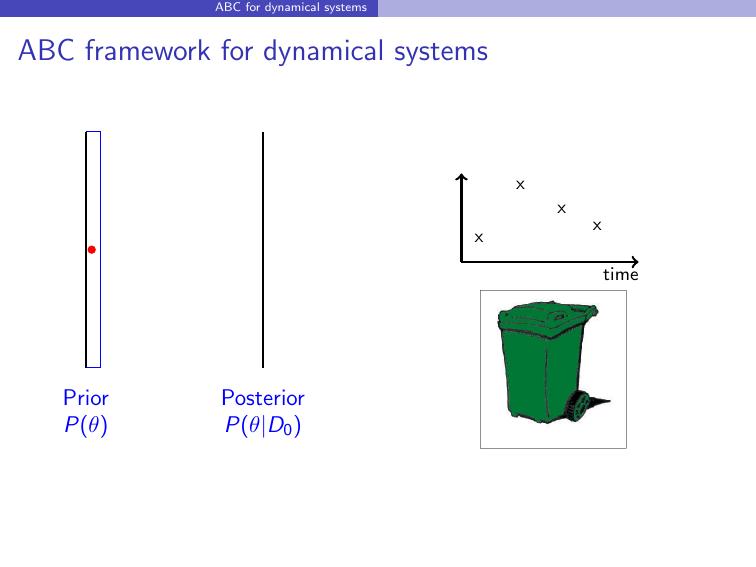 Figure 1
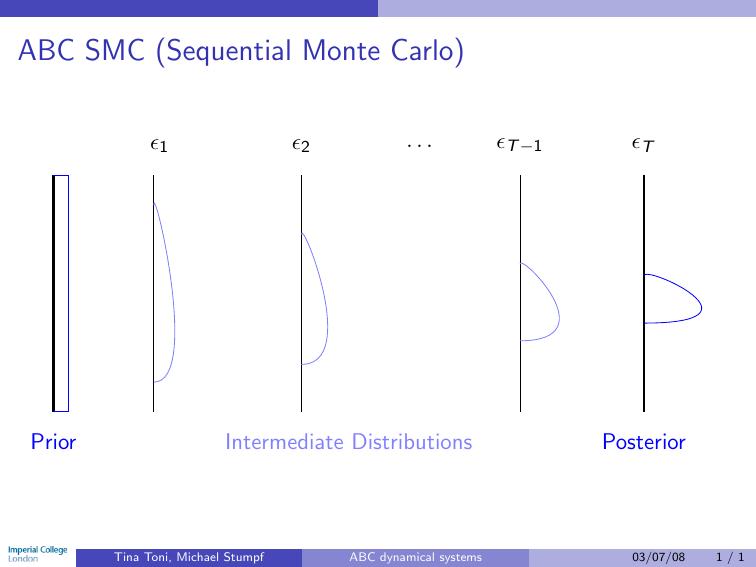 Figure 2
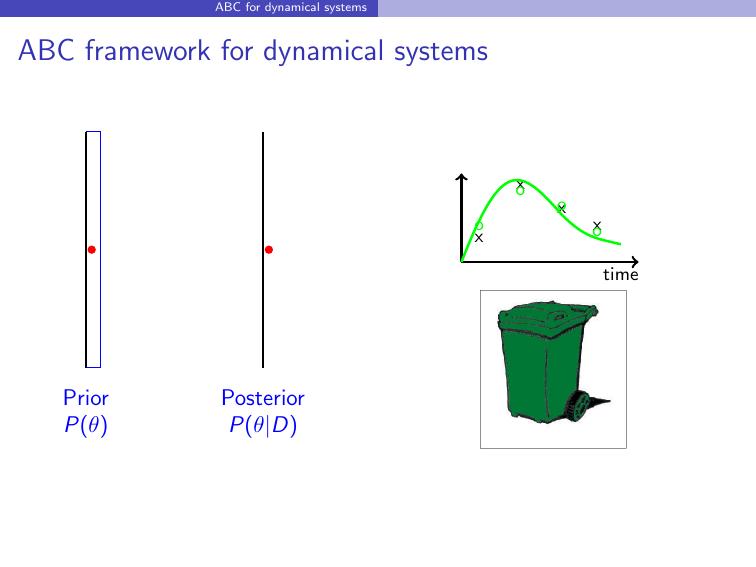 Figure 3
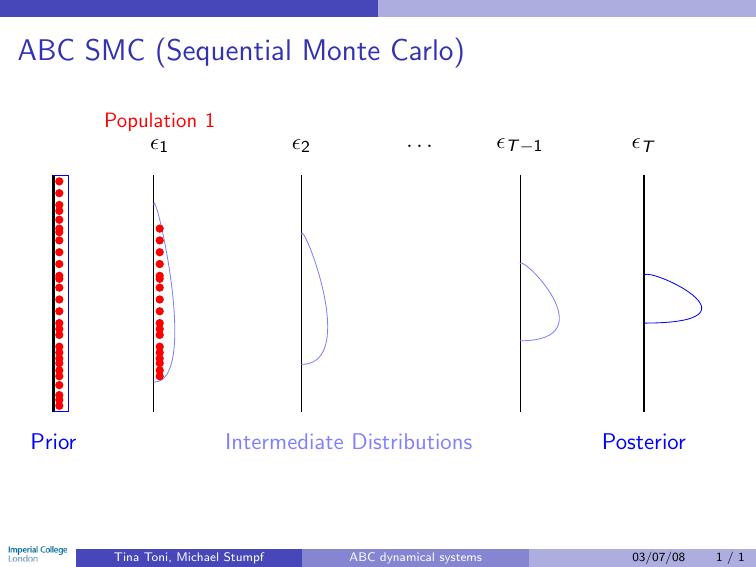 Figure 4
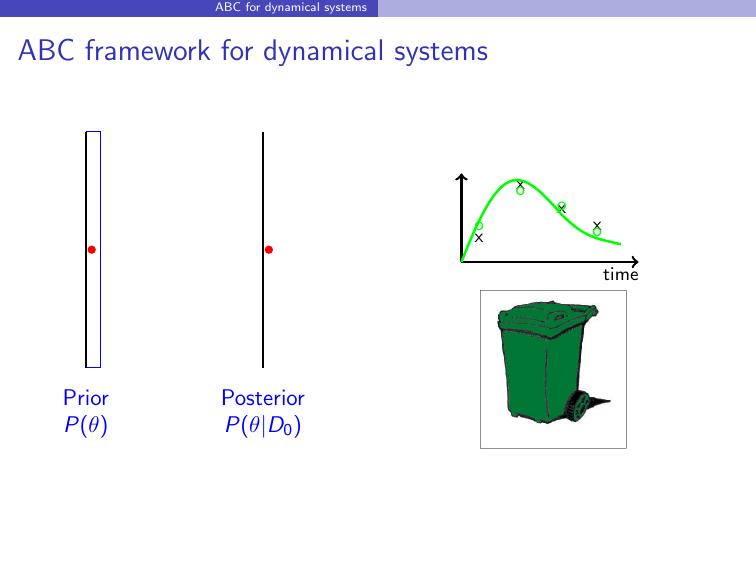 Figure 5
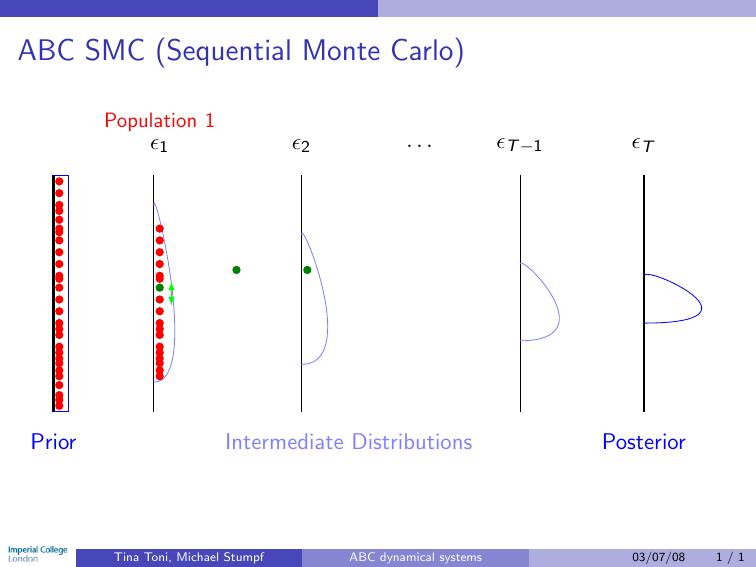 Figure 6
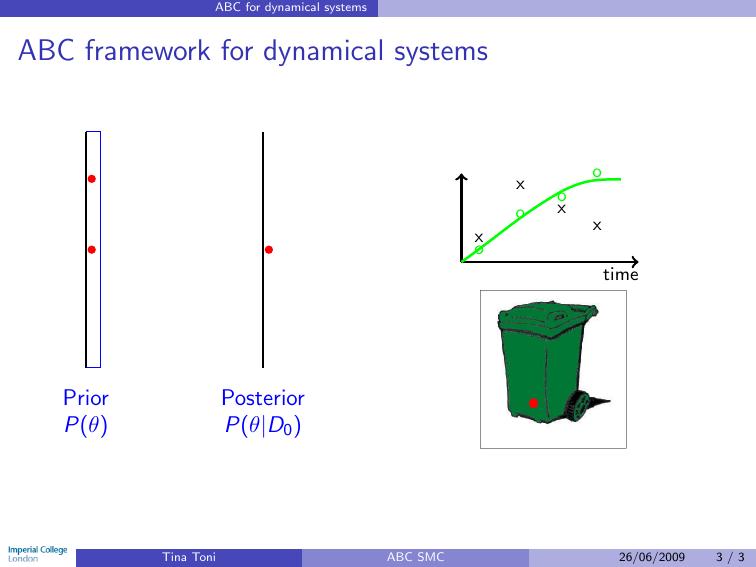 Figure 7
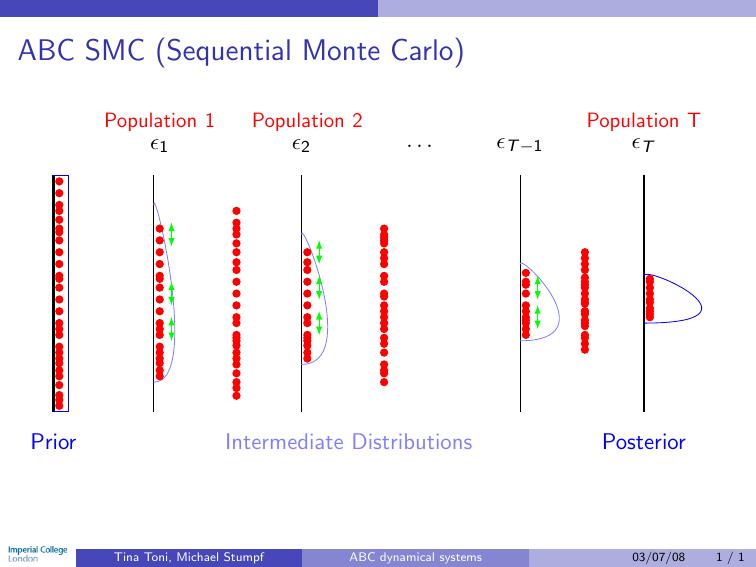 Figure 8
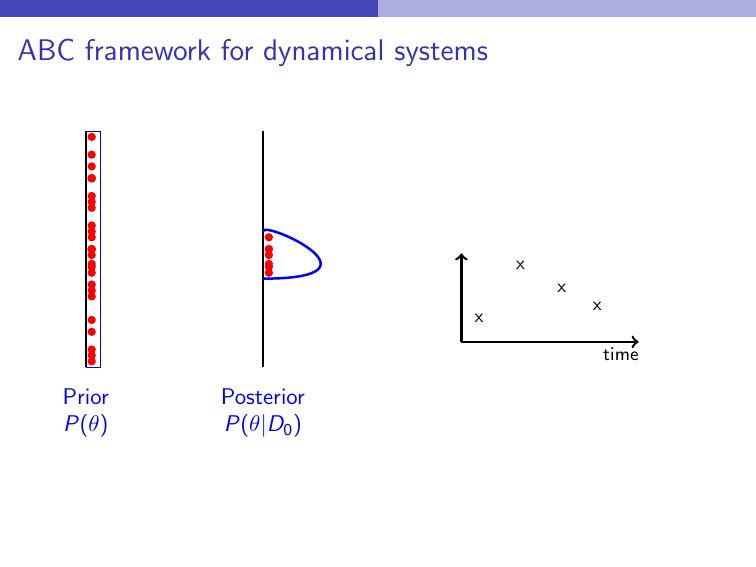 Figure 9
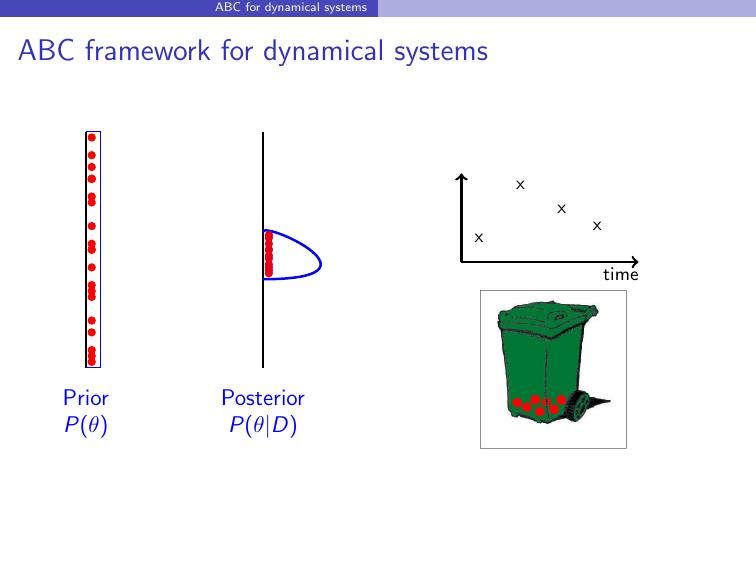 Figure 10
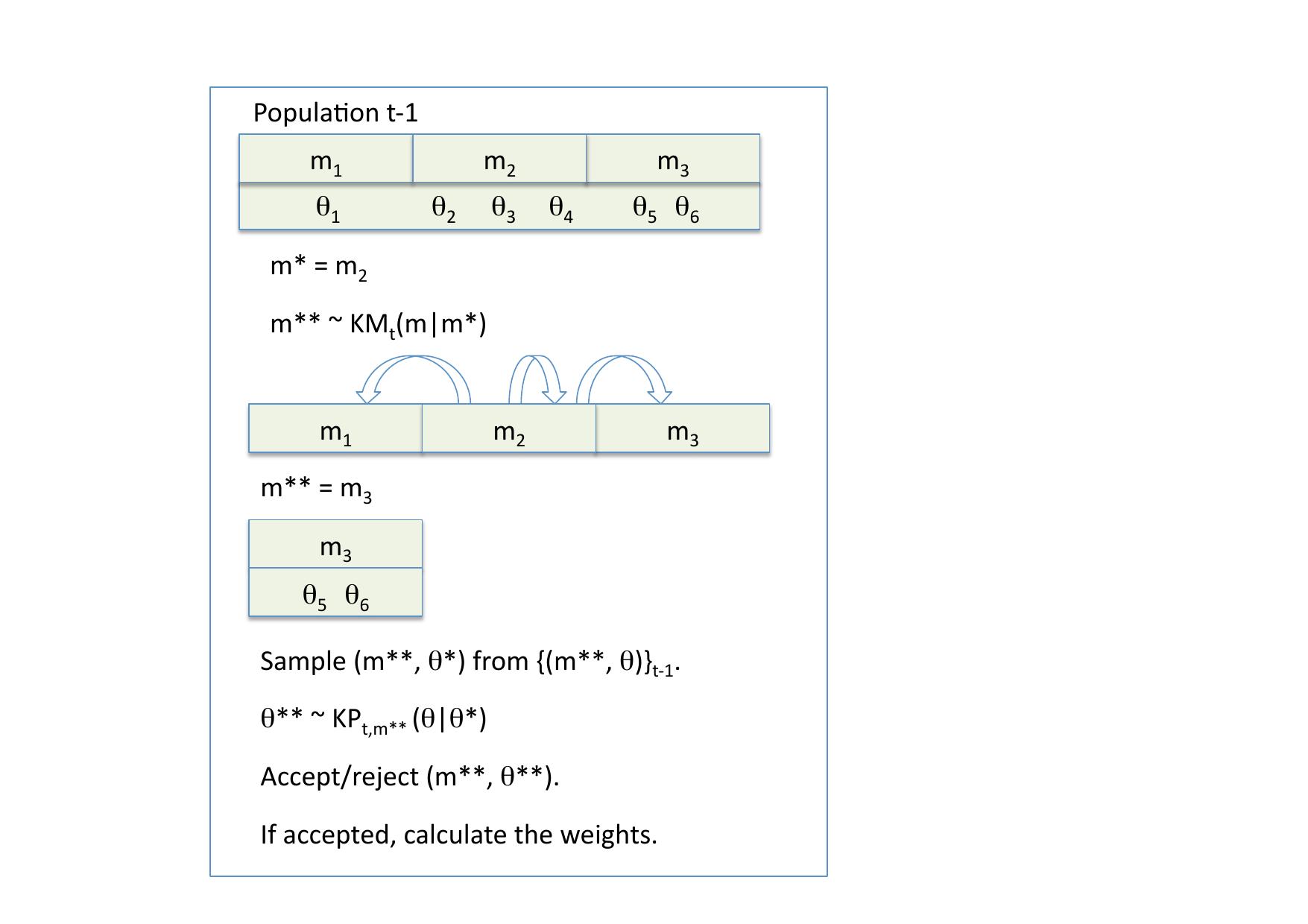 Figure 11
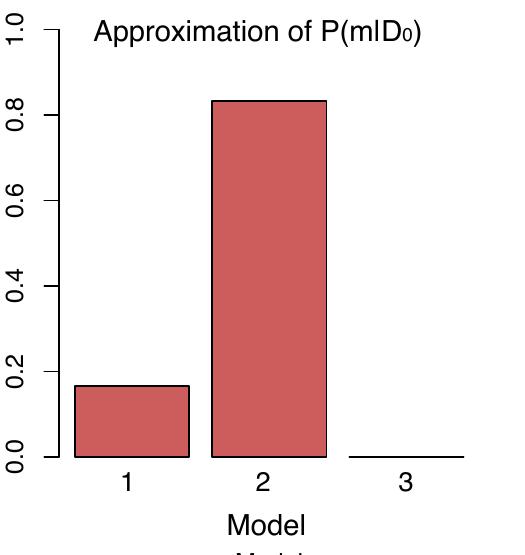 Figure 12
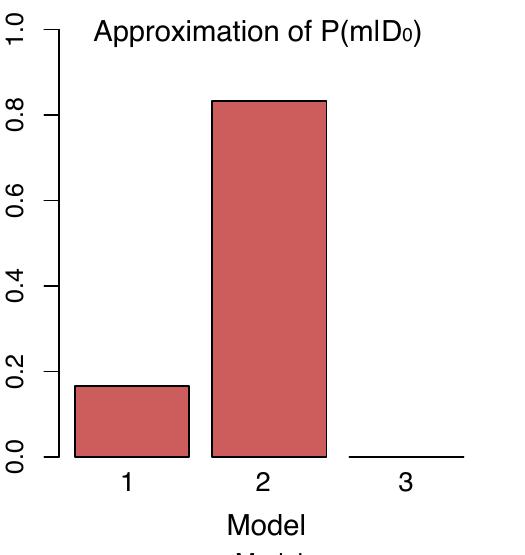 Figure 13
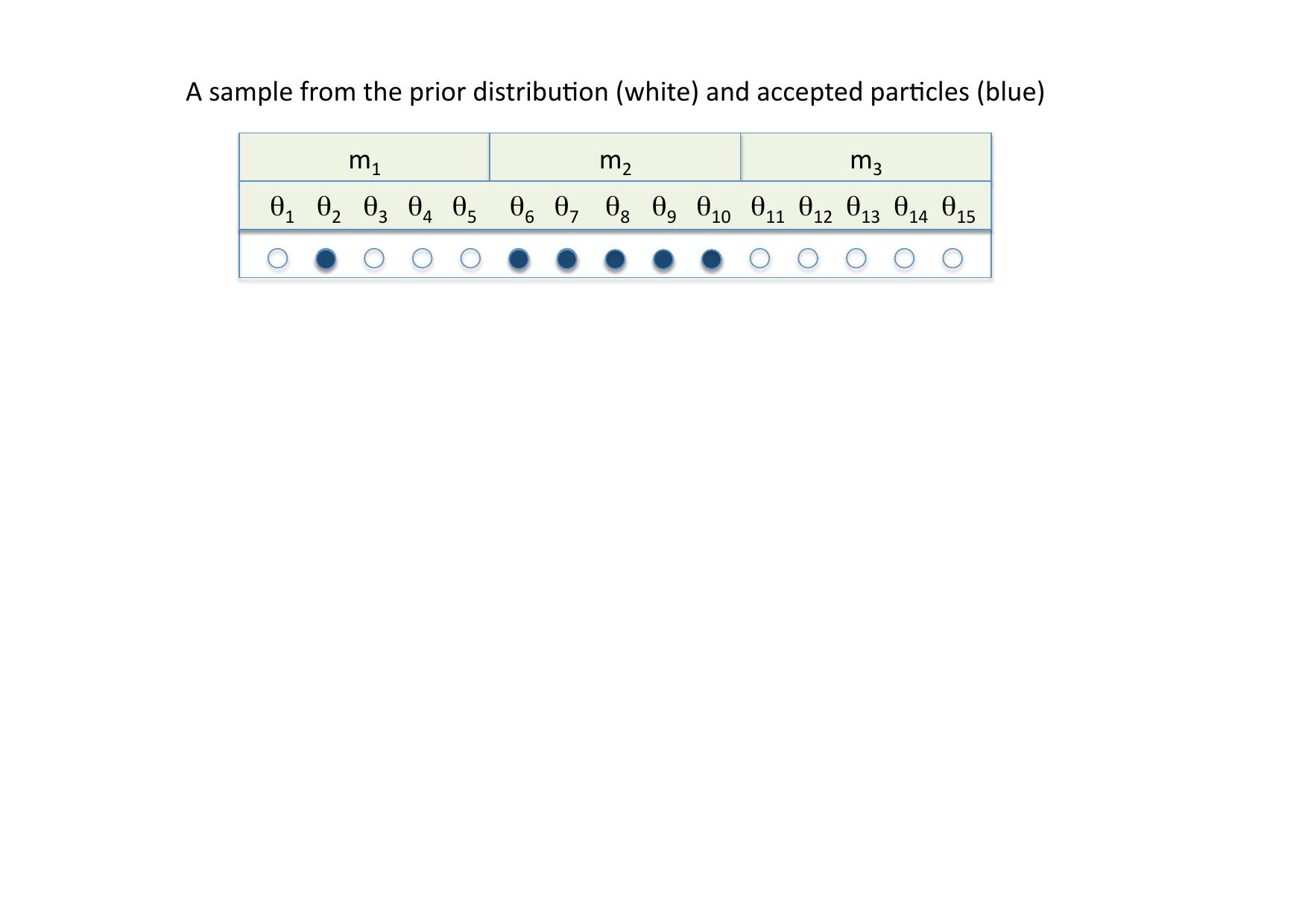 Figure 14
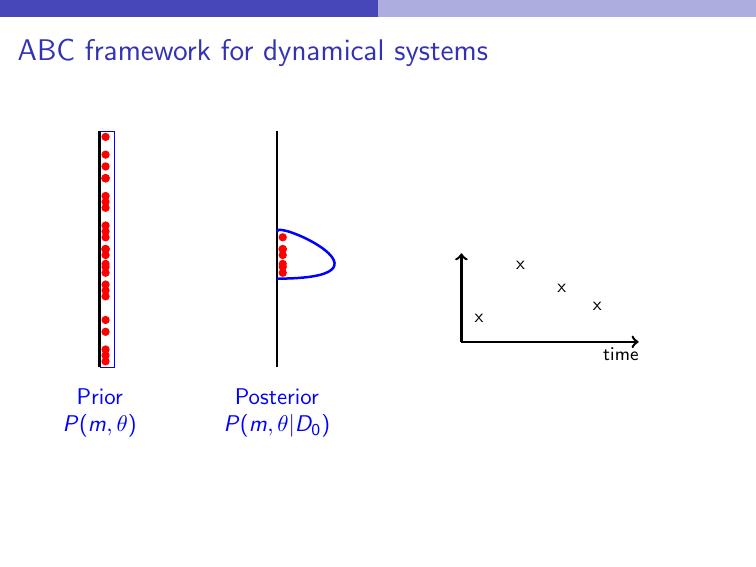 Figure 15
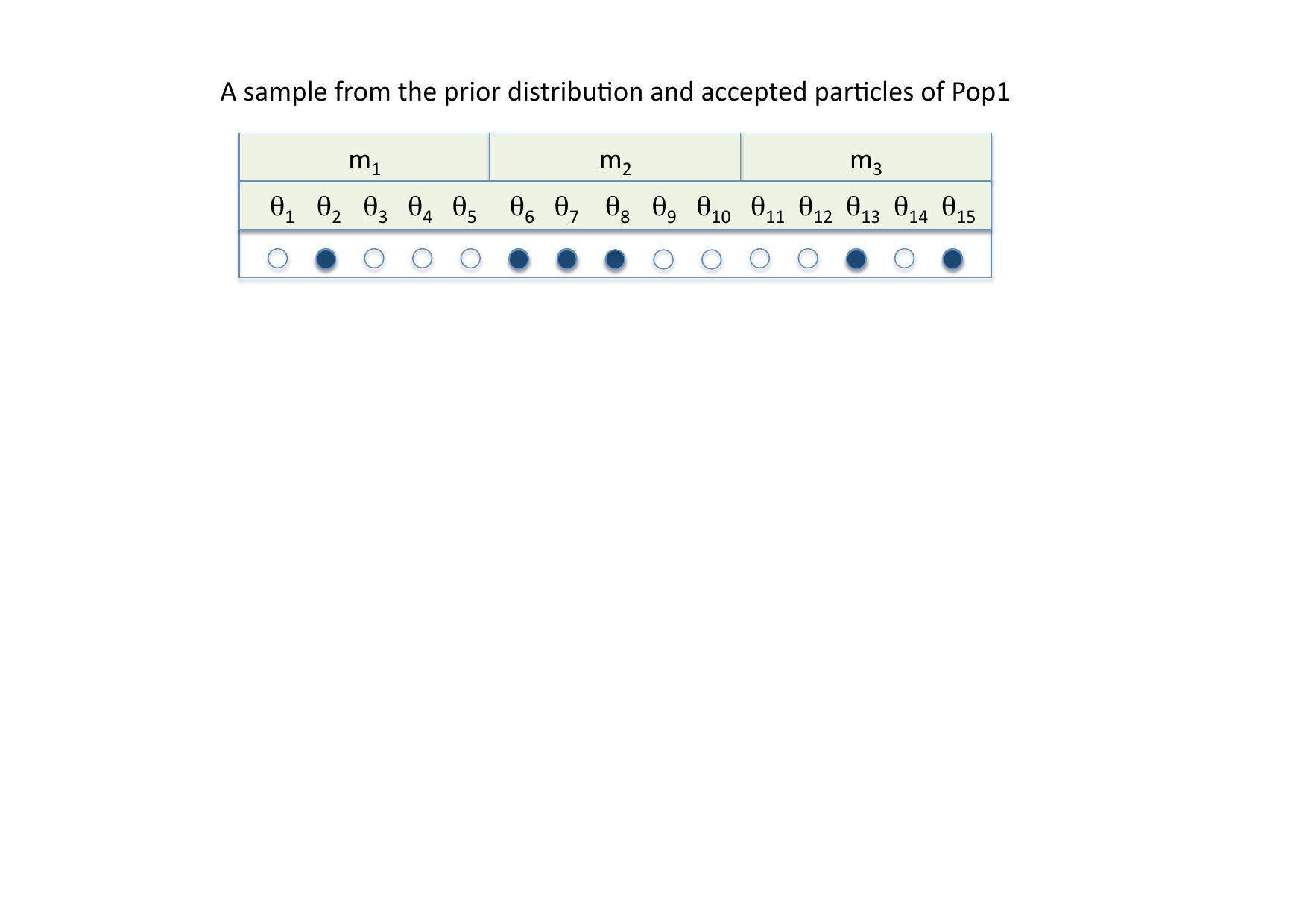 Figure 16
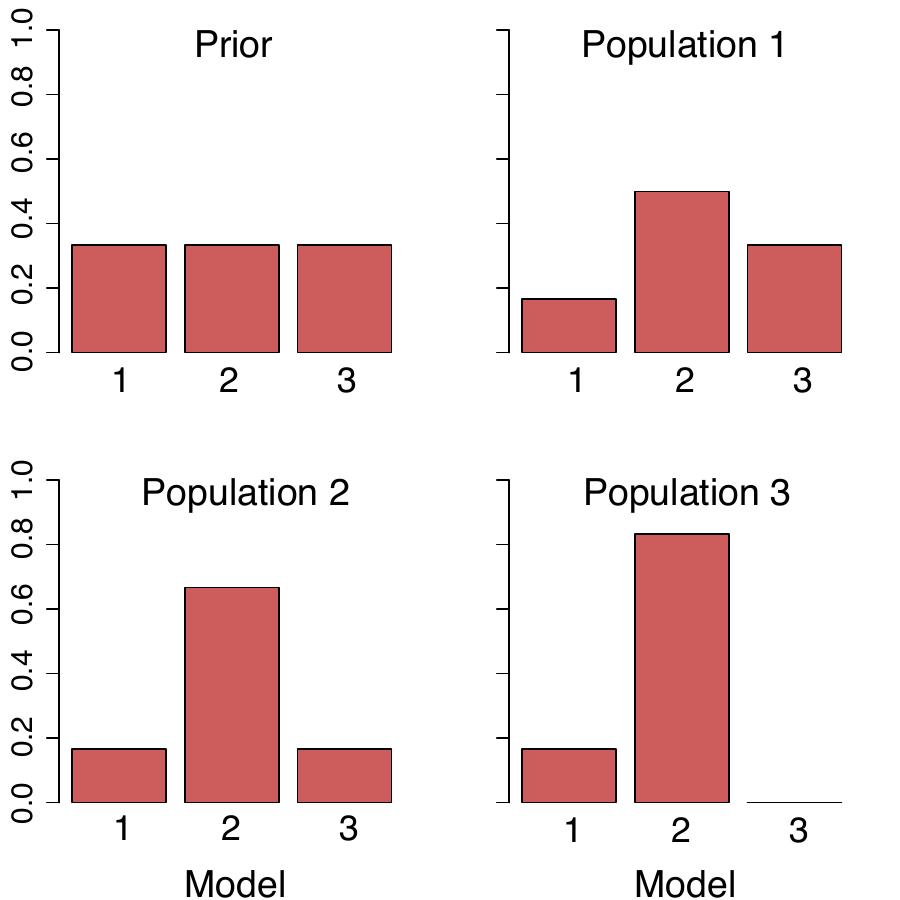 Figure 17
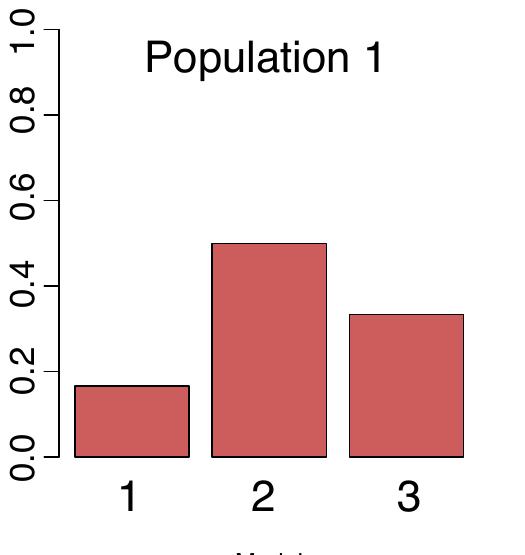 Figure 18
Peer Reviews
No public reviews on file for this paper yet. If you reviewed it on a platform where reviews are public (OpenReview, ICLR, NeurIPS, ICML), you can paste yours below so the community can read it here.
Videos
No videos yet. Explain this paper in a talk, walkthrough, or lecture? Add one.
Taxonomy
TopicsMarkov Chains and Monte Carlo Methods · Nuclear reactor physics and engineering · NMR spectroscopy and applications
Tutorial on ABC rejection and ABC SMC for parameter estimation and model selection
Tina Toni, Michael P. H. Stumpf
[email protected], [email protected]
In this tutorial we schematically illustrate four algorithms:
ABC rejection for parameter estimation [1, 2], 2. 2.
ABC SMC for parameter estimation [3, 4, 5], 3. 3.
ABC rejection for model selection on the joint space [6], 4. 4.
ABC SMC for model selection on the joint space [7].
We suggest to read this tutorial from the beginning. We start with a detailed explanation of the ABC rejection algorithm, which later helps to understand ABC SMC as it is based on the same concepts. Also, both model selection algorithms are closely related to parameter estimation algorithms and it is therefore helpful to understand those first.
This tutorial forms a part of the supplementary material of the paper ”Simulation-based model selection for dynamical systems in systems and population biology, Bioinformatics, 26 (1), 104-110, 2010” (T. Toni, M. P. H. Stumpf).
**ABC rejection
(a) We define a prior distribution and we would like to approximate the posterior distribution . We start by sampling a parameter from the prior distribution. We call this sampled parameter a particle.
(b) We simulate a data set according to some simulation framework . In our examples we use different simulation frameworks. If we simulate a deterministic dynamical model, we add some noise at the time points of interest. If we simulate a stochastic dynamical model, we do not add any additional noise to the trajectories. We compare the simulated data set (circles) to the experimental data (crosses) using a distance function, , and tolerance ; if , we accept . The tolerance is the desired level of agreement between and .
(c) The particle is accepted because and are sufficiently close.
(d) We sample another parameter from the prior distribution and simulate a corresponding dataset . In this case and are very different and we reject the particle (we ”throw it away”).
(e) We repeat the whole procedure until N particles have been accepted. They represent a sample from , which approximates the posterior distribution. If is sufficiently small then the distribution will be a good approximation for the “true” posterior distribution, .
(f) Many particles were rejected in the procedure, for which we have spent a lot of computational effort for simulation. ABC rejection is therefore computationally inefficient. We can use ABC SMC to reduce the computational cost.**
**ABC SMC (Toni et al., 2009)
(a) As in ABC rejection, we define a prior distribution and we would like to approximate a posterior distribution . In ABC SMC we do this sequentially by constructing intermediate distributions, which converge to the posterior distribution. We define a tolerance schedule .
(b) We sample particles from a prior distribution until particles have been accepted (have reached the distance smaller than ). For all accepted particles we calculate weights (see [4] for formulas and derivation). We call the sample of all accepted particles ”Population 1”.
(c) We then sample a particle from population 1 and perturb it to obtain a perturbed particle , where K is a perturbation kernel (for example a Gaussian random walk). We then simulate a dataset and accept the particle if . We repeat this until we have accepted particles in population 2. We calculate weights for all accepted particles.
(d) We repeat the same procedure for the following populations, until we have accepted particles of the last population and calculated their weights. Population is a sample of particles that approximates the posterior distribution.
ABC SMC is computationally much more efficient than ABC rejection (see [4] for comparison).**
**ABC rejection for model selection
**
**ABC SMC for model selection
**
The reference list from the paper itself. Each links out to its DOI / PubMed record.
- 1[1] Beaumont MA, Zhang W and Balding DJ. Approximate Bayesian computation in population genetics. Genetics , 162(4):2025–2035, 2002.
- 2[2] Marjoram P, Molitor J, Plagnol V and Tavare S. Markov chain Monte Carlo without likelihoods. Proc Natl Acad Sci USA , 100(26):15324–8, 2003.
- 3[3] Sisson SA, Fan Y and Tanaka MM. Sequential Monte Carlo without likelihoods. Proc Natl Acad Sci USA , 104(6):1760–5, 2007.
- 4[4] Toni T, Welch D, Strelkowa N, Ipsen A and Stumpf MPH. Approximate Bayesian computation scheme for parameter inference and model selection in dynamical systems. J. R. Soc. Interface , 6:187–202, 2009.
- 5[5] Beaumont MA, Cornuet JM, Marin JM and Robert CP. Adaptive approximate Bayesian computation. Biometrika , 96(4):983–990, 2009.
- 6[6] Grelaud A, Robert CP, Marin JM, Rodolphe F and Taly JF. ABC likelihood-free methods for model choice in Gibbs random fields. Bayesian Analysis , 4(2):317–336, 2009.
- 7[7] Toni T and Stumpf MPH. Simulation-based model selection for dynamical systems in systems and population biology. Bioinformatics , 26(1):104–10, 2010.