Chromoelectric and chromomagnetic fields for the static gluon-quark-antiquark system
Marco Cardoso, Nuno Cardoso, Pedro Bicudo

TL;DR
This study uses lattice QCD to analyze the chromoelectric and chromomagnetic fields in a static gluon-quark-antiquark system, shedding light on hadron structure and confinement mechanisms.
Contribution
It provides the first detailed lattice QCD analysis of flux tubes in gluon-quark-antiquark systems with different geometries, including hybrid states.
Findings
Flux tubes of chromoelectric fields observed in different geometries.
Differences between fundamental and adjoint flux tube models identified.
Insights into the microscopic structure of hybrid hadrons gained.
Abstract
The chromoelectric and chromomagnetic fields, created by a static gluon-quark-antiquark system, are computed in the quenched approximation of lattice QCD, in a lattice at . We study two geometries, one with a U shape and another with an L shape. The degenerate case of the two gluon glueball is also studied. This is relevant to understand the microscopic structure of hadrons, in particular of hybrids. This also contributes to understand confinement with flux tubes of the chromoelectric field, and to discriminate between the models of fundamental or adjoint tubes.
Click any figure to enlarge with its caption.
 Figure 1
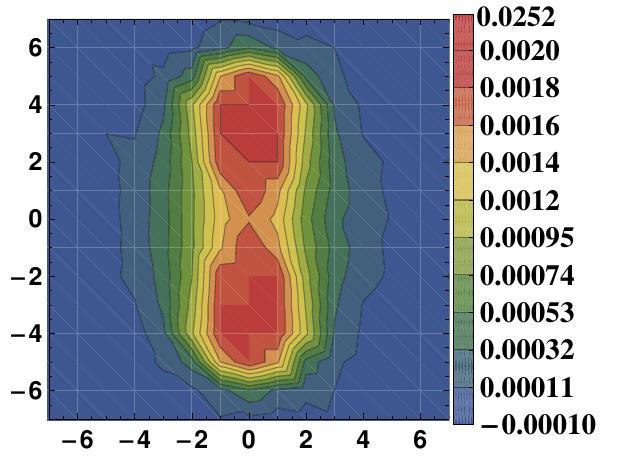 Figure 2
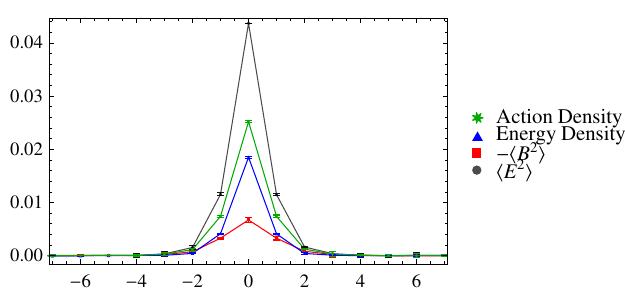 Figure 3
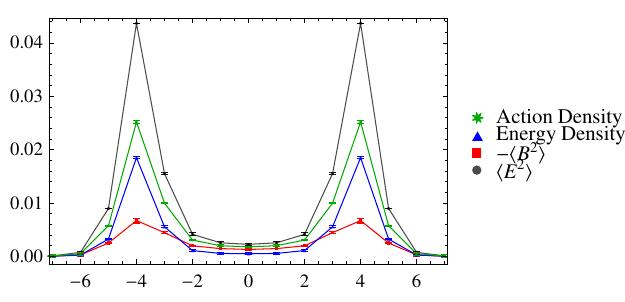 Figure 4
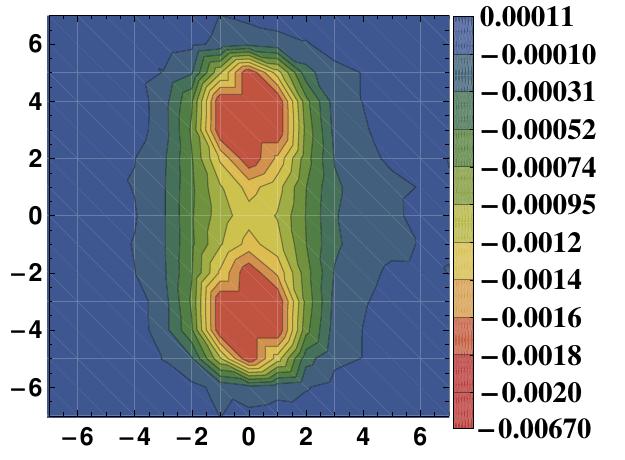 Figure 5
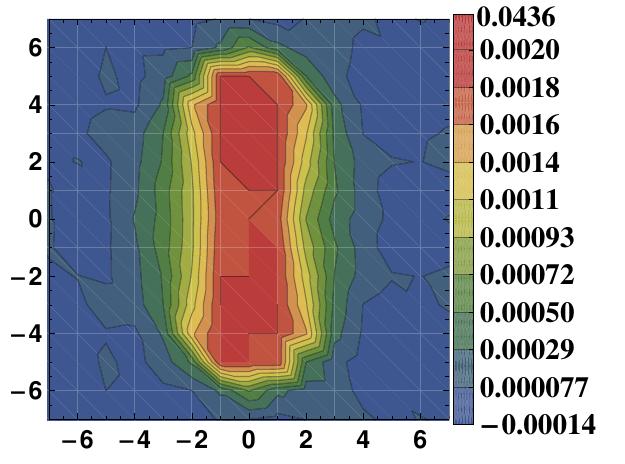 Figure 6
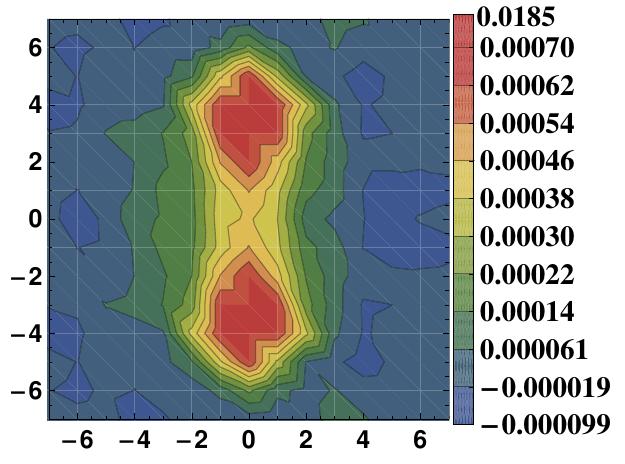 Figure 7
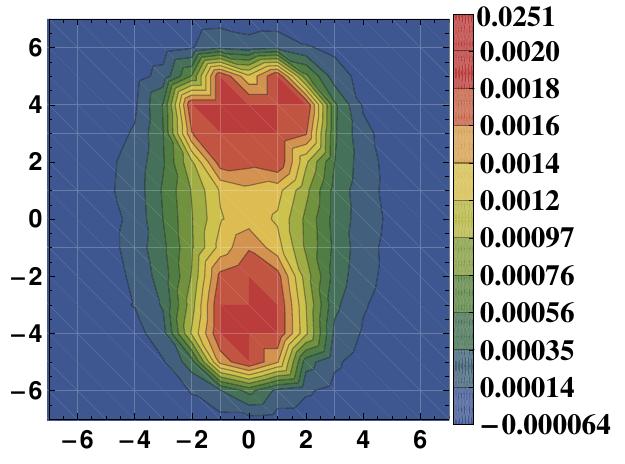 Figure 8
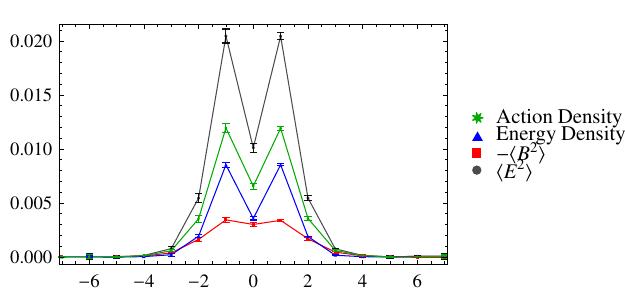 Figure 9
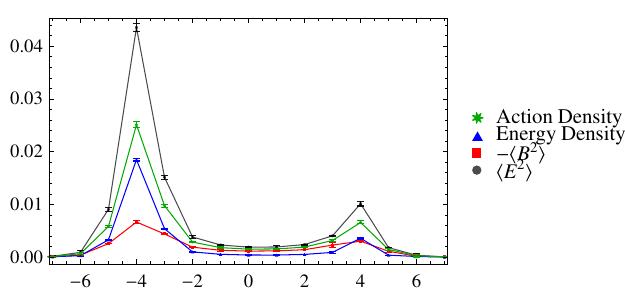 Figure 10
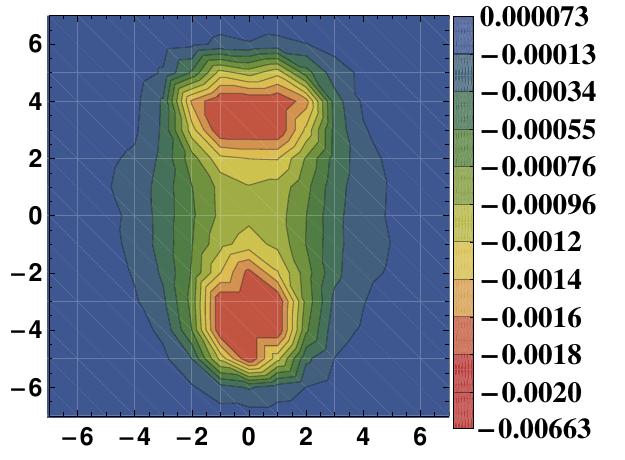 Figure 11
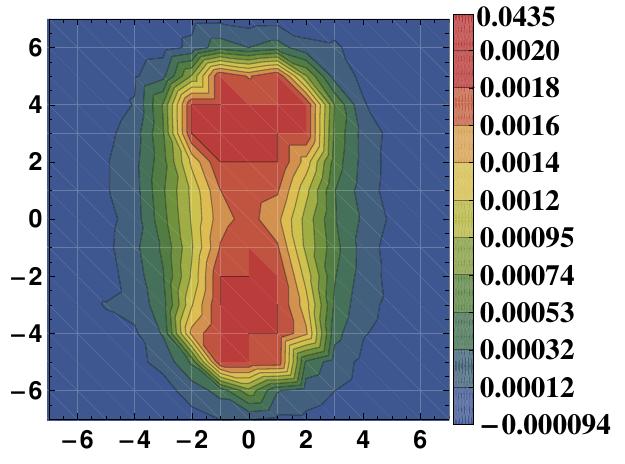 Figure 12
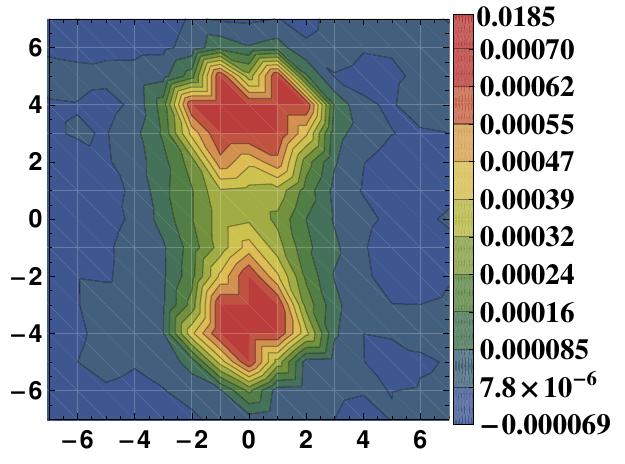 Figure 13
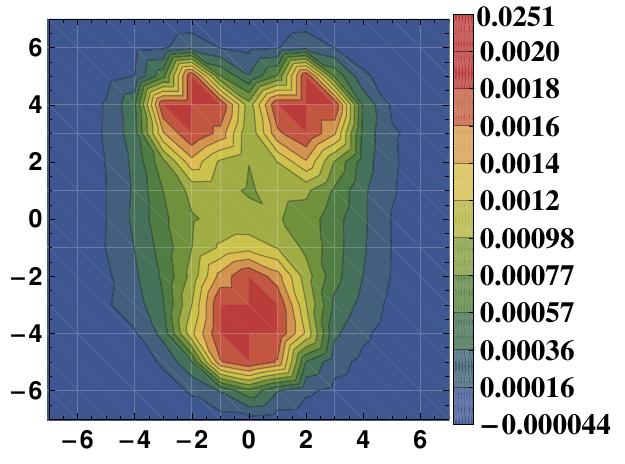 Figure 14
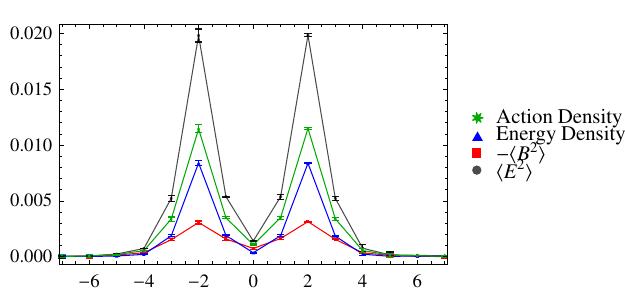 Figure 15
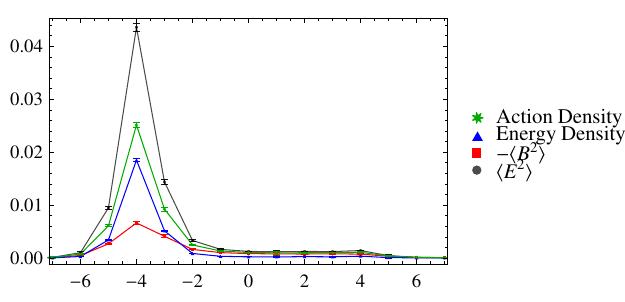 Figure 16
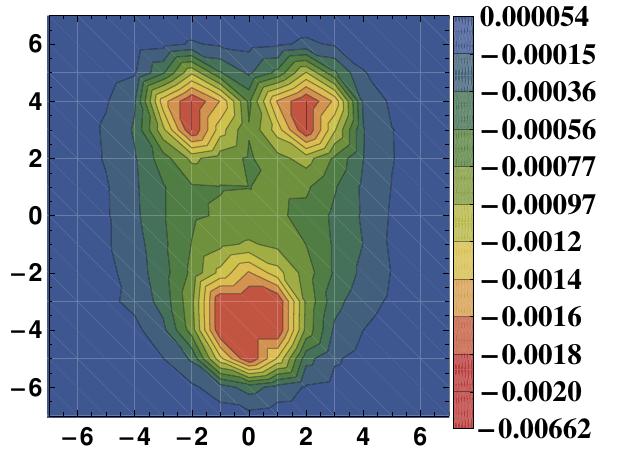 Figure 17
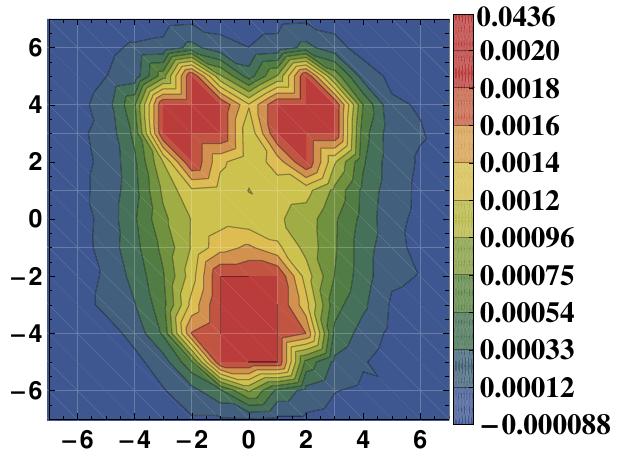 Figure 18
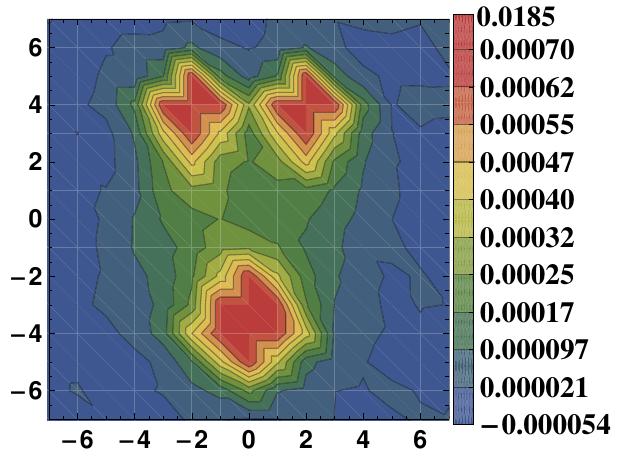 Figure 19
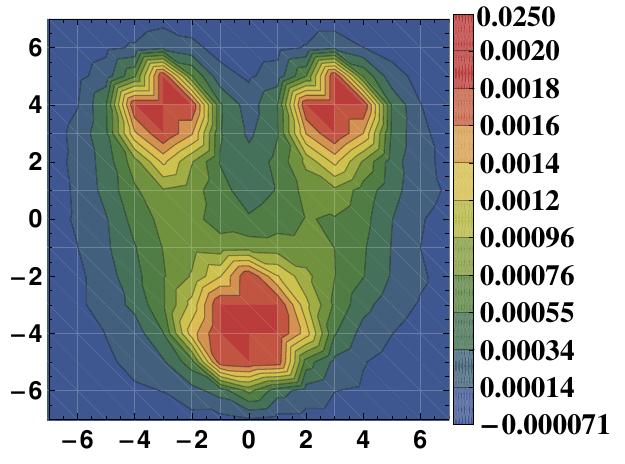 Figure 20
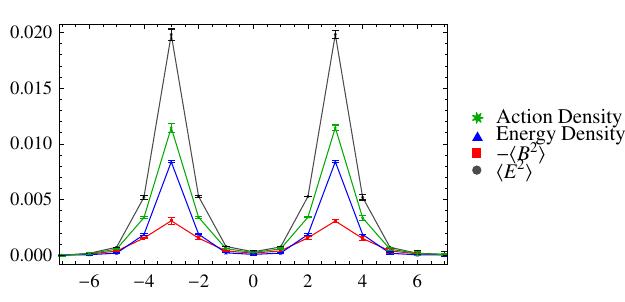 Figure 21
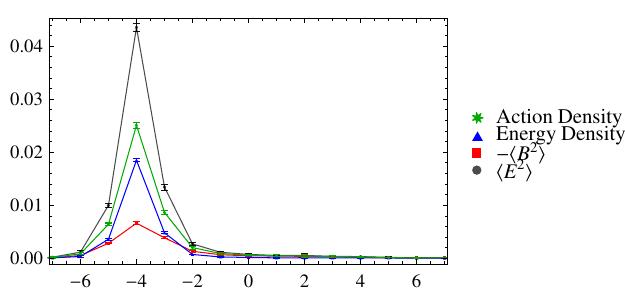 Figure 22
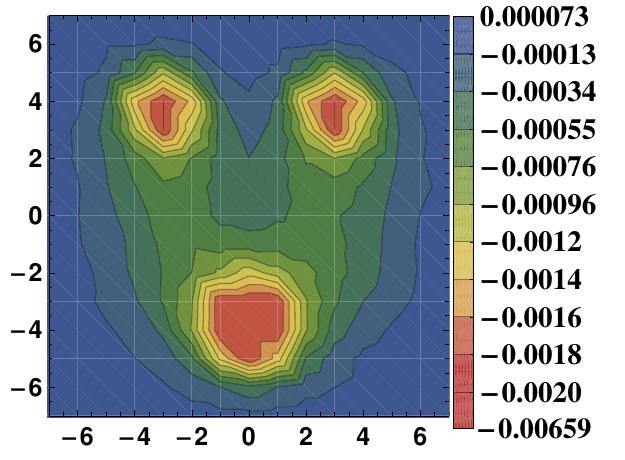 Figure 23
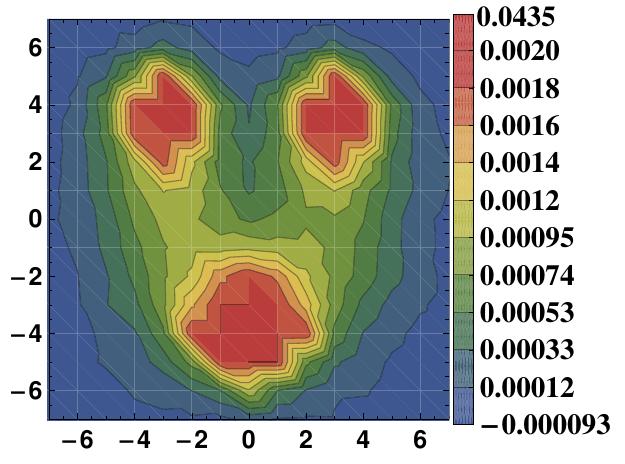 Figure 24
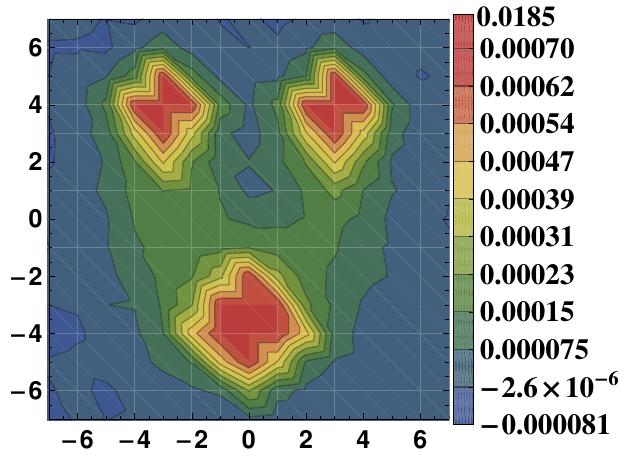 Figure 25
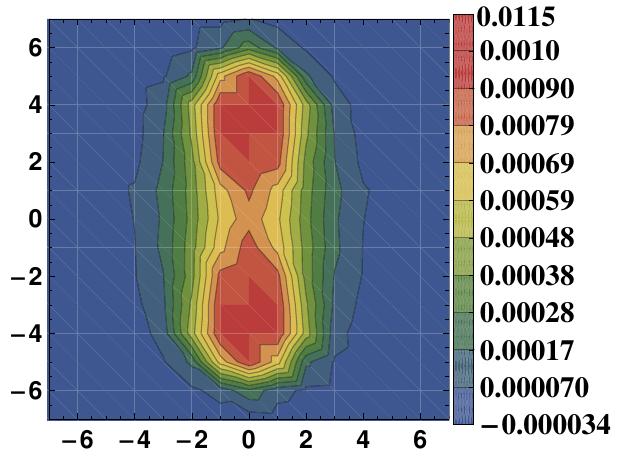 Figure 26
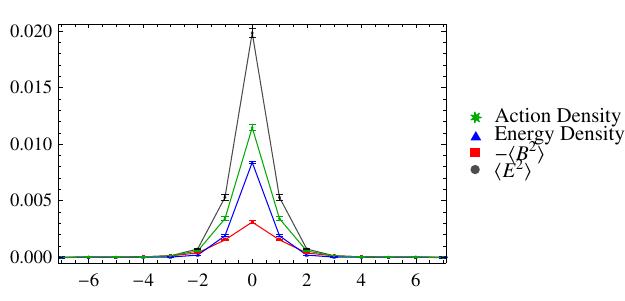 Figure 27
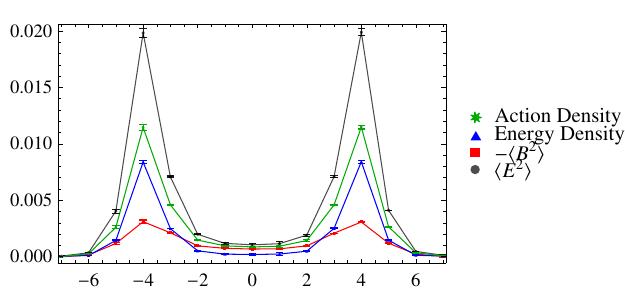 Figure 28
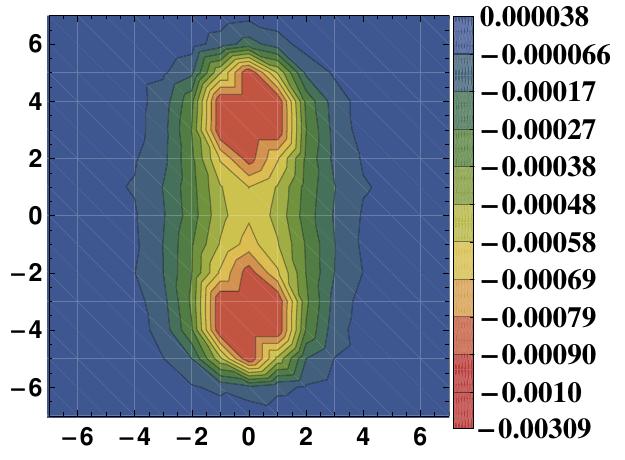 Figure 29
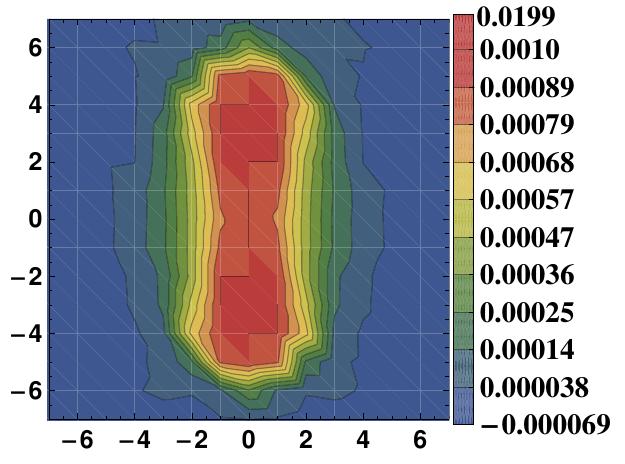 Figure 30
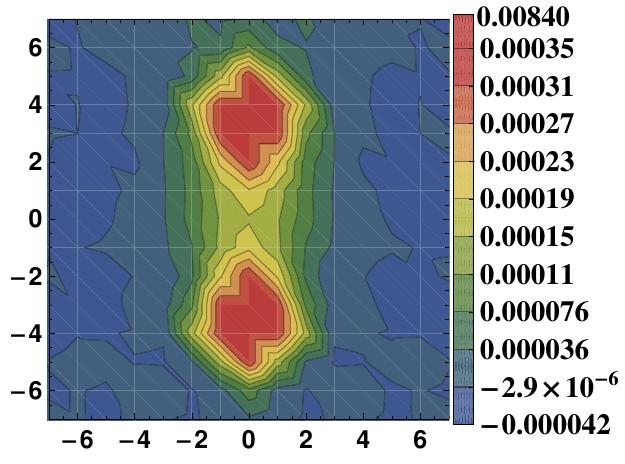 Figure 31
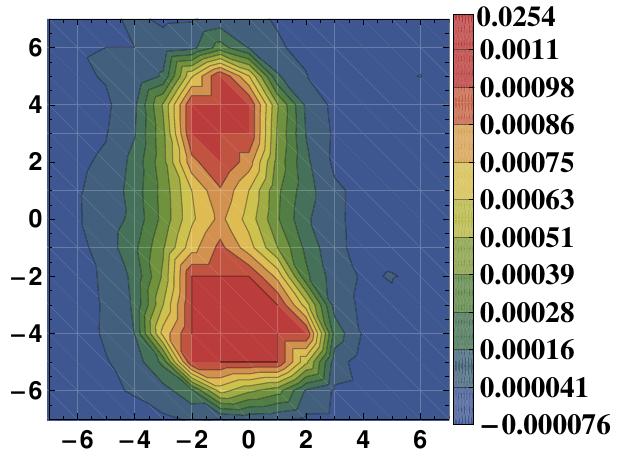 Figure 32
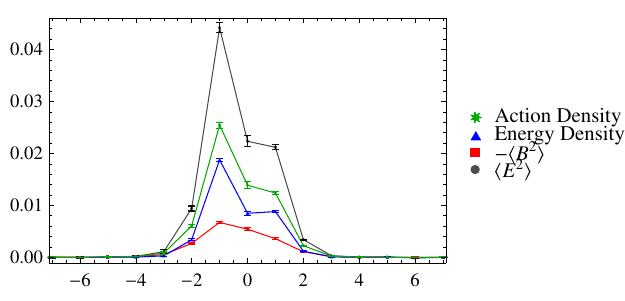 Figure 33
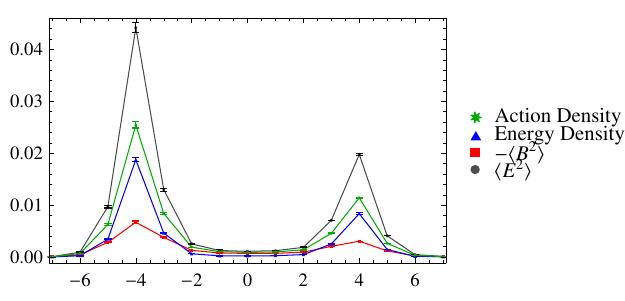 Figure 34
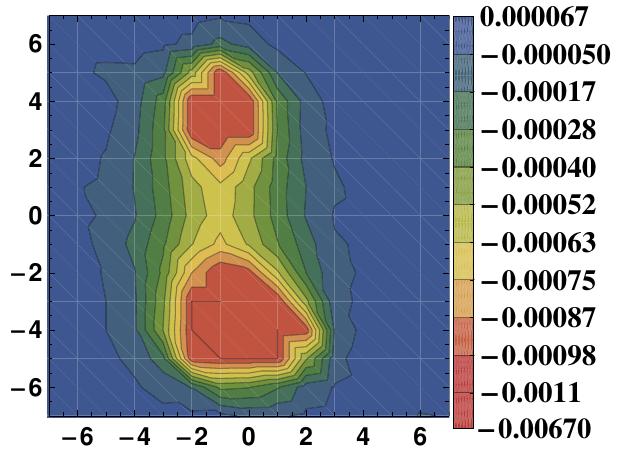 Figure 35
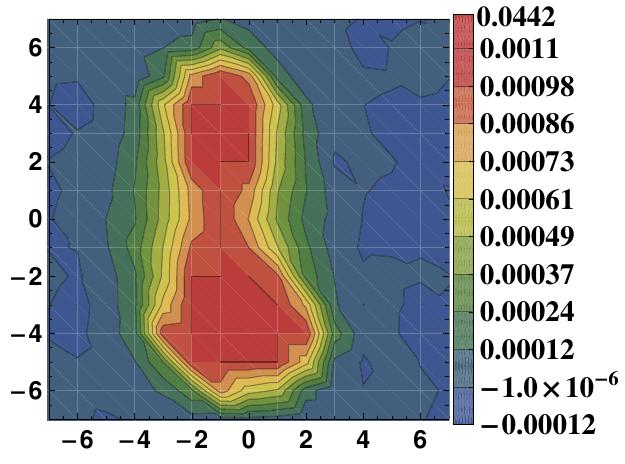 Figure 36
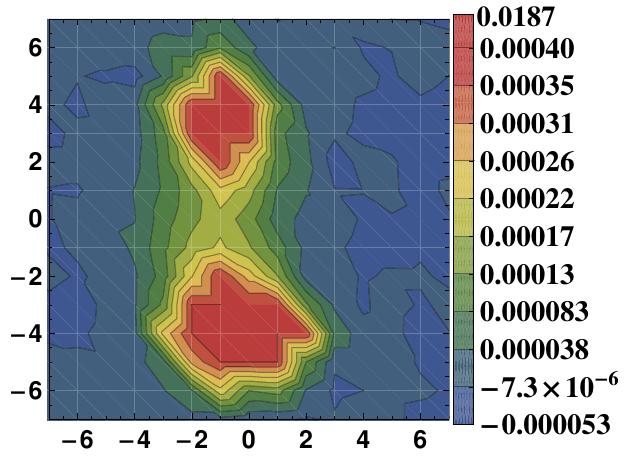 Figure 37
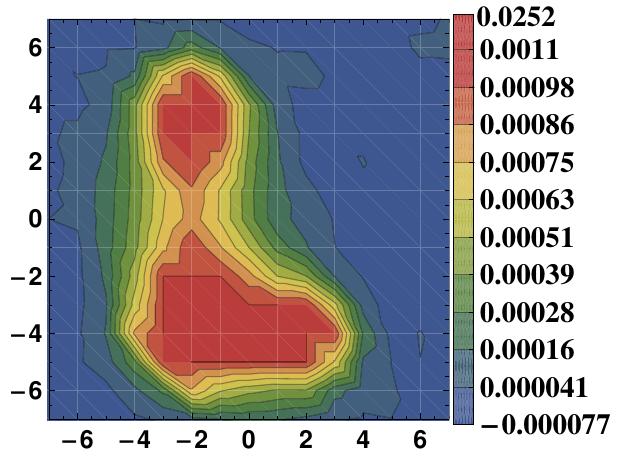 Figure 38
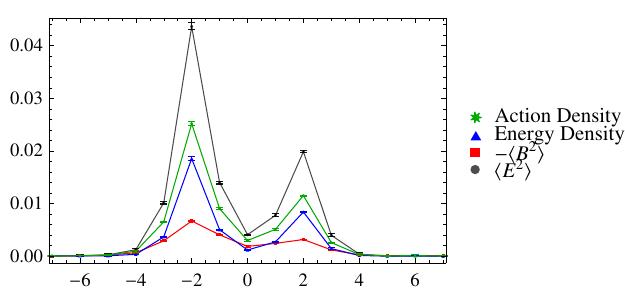 Figure 39
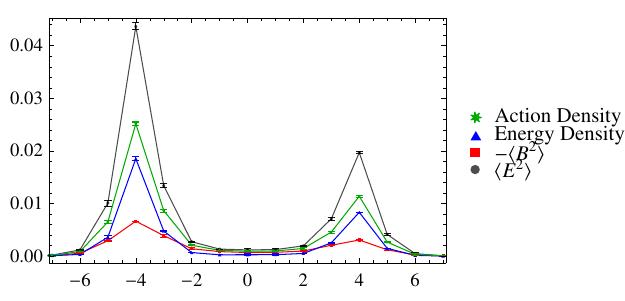 Figure 40
Peer Reviews
No public reviews on file for this paper yet. If you reviewed it on a platform where reviews are public (OpenReview, ICLR, NeurIPS, ICML), you can paste yours below so the community can read it here.
Videos
No videos yet. Explain this paper in a talk, walkthrough, or lecture? Add one.
Taxonomy
TopicsQuantum Chromodynamics and Particle Interactions · Particle physics theoretical and experimental studies · High-Energy Particle Collisions Research
Chromoelectric and chromomagnetic fields for the static gluon-quark-antiquark system
Marco Cardoso
CFTP, Instituto Superior T cnico
CFTP, Instituto Superior T cnico
Pedro Bicudo
CFTP, Instituto Superior T cnico
Abstract:
The chromoelectric and chromomagnetic fields, created by a static gluon-quark-antiquark system, are computed in the quenched approximation of lattice QCD, in a lattice at . We study two geometries, one with a U shape and another with an L shape. The degenerate case of the two gluon glueball is also studied. This is relevant to understand the microscopic structure of hadrons, in particular of hybrids. This also contributes to understand confinement with flux tubes of the chromoelectric field, and to discriminate between the models of fundamental or adjoint tubes.
1 Introduction
The aim of this work is to compute the chromoelectric and chromomagnetic fields and study the shape of the flux-tubes for the hybrid gluon-quark-antiquark system. We study two different geometries for the hybrid system, one with a U shape and another with L shape, figure. 1.
2 The Wilson Loops and Chromo Fields for exotic systems
In principle, any Wilson loop with a geometry similar to that represented in figure 2a, describing correctly the quantum numbers of the hybrid, is appropriate, although the signal to noise ratio may depend on the choice of the Wilson loop. A correct Wilson loop must include an SU(3) octet (the gluon), an SU(3) triplet (the quark) and an SU(3) antitriplet (the antiquark), as well as the connection between the three links of the gluon, the quark and the antiquark.
The Wilson loop for this system is given by:
[TABLE]
where , and are the simple Wilson loops shown in figure 2b. When , and , the operator reduces to the mesonic Wilson loop and when and , and , reduces to , that is the Wilson loop in the adjoint representation used to compute the potential between two static gluons.
In order to improve the signal to noise ratio of the Wilson loop, the links are replaced by ”fat links”,
[TABLE]
We use and iterate this procedure 25 times in the spatial direction.
We ontain the chromoelectric and chromomagnetic fields on the lattice, by using:
[TABLE]
[TABLE]
and the plaquette is given by
[TABLE]
We only apply the smearing technique to the Wilson loop. The relationship between various plaquettes and the field components is:
[TABLE]
The energy () and action () density is given by
[TABLE]
[TABLE]
3 Results for the gluon-quark-antiquark
Here we present the results of our simulations with 141 , configurations generated with the version 6 of the MILC code [1], via a combination of Cabbibo-Mariani and overrelaxed updates. The results are presented in lattice spacing units.
In the following pictures we present the results for the chromolectric and chromomagnetic fields and for the energy and action density. The figures 3 to 6 show the results for the U shape geometry and figures 7 to 10 the results for the L shape geometry.
In figure 11 we present the results for the U geometry along , this corresponds to the axis along gluon and the middle distance between quark-antiquark, and , this corresponds to the axis along quark-antiquark. This results show that when the quark and the antiquark are superposed the results are consistent with the degenerate case of the two gluon glueball. In figure 12 we present the results for the L geometry along the segment gluon-antiquark and along segment gluon-quark. And finally, in figure 13 we show a comparison between the results for and along segment gluon-antiquark in the L geometry, when the gluon and the antiquark are superposed this results are consistent with the static quark-antiquark case.
4 Conclusions
In Bicudo et al. [2] and Cardoso et al. [3] it was shown that for the static gluon-quark-antiquark potential when the segments between gluon-quark and gluon-antiquark are perpendicular, is compatible with confinement realized with a pair of fundamental strings, one linking the gluon to the quark and the other linking the same gluon to the antiquark. However, if the segments are parallel and superposed, the total string tension becomes larger and agrees with Casimir Scaling measured by Bali [4]. This can be interpreted with a type-II superconductor analogy for the confinement in QCD, see figure 14, with repulsion of the fundamental strings and with the string tension of the first topological excitation of the string (the adjoint string) larger than the double of the fundamental string tension.
The general shape of the flux-tubes observed here reinforce the conclusions of Bicudo et al. [2] and Cardoso et al. [3].
We study the fields with two geometries, U and L shaped for the Wilson loops. Here, the components of the chromoelectric and chromomagnetic fields around a static gluon-quark-antiquark are investigated. This allows us to determine the shape of the flux-tubes with respect both to the energy and action densities. When the quark and the antiquark are superposed the results are consistent with the degenerate case of the two gluon glueball, and when the gluon and the antiquark are superposed the results are consistent with the static quark-antiquark case. Another interesting result is that the absolute value of the chromoelectric field dominates over the absolute value of the chromomagnetic field.
Acknowledgments.
This work was financed by the FCT contracts POCI/FP/81933/2007 and CERN/FP/83582/2008. We thank Orlando Oliveira for useful discussions.
The reference list from the paper itself. Each links out to its DOI / PubMed record.
- 1[1] This work was in part based on the MILC collaboration’s public lattice gauge theory code. http://physics.indiana.edu/~sg/milc.html .
- 2[2] P. Bicudo, M. Cardoso, O. Oliveira, First study of the gluon-quark-antiquark static potential in SU(3) Lattice QCD, Phys.Rev.D 77:091504.
- 3[3] M. Cardoso, P. Bicudo, O. Oliveira, Static potential for the quark-antiquark-gluon hybrid system in lattice QCD, [Po SLAT 2007:293].
- 4[4] G. S. Bali, Casimir scaling of SU(3) static potentials, Phys.Rev. D 62, [ar Xiv:hep-lat/0006022].