The Fourth Standard Model Family and the Competition in Standart Model Higgs Boson Search at Tevatron and LHC
N. Becerici Schmidt, S. A. Cetin, S. Istin, S. Sultansoy

TL;DR
This paper reviews how the existence of a fourth Standard Model family influences Higgs boson searches at Tevatron and LHC, highlighting potential impacts on experimental strategies.
Contribution
It introduces the implications of a fourth Standard Model family on current Higgs search methodologies at major colliders.
Findings
Fourth family affects Higgs production rates
Modifies Higgs decay channels
Impacts search strategies at Tevatron and LHC
Abstract
The impact of the fourth Standard Model family on Higgs boson search at Tevatron and LHC is reviewed.
Click any figure to enlarge with its caption.
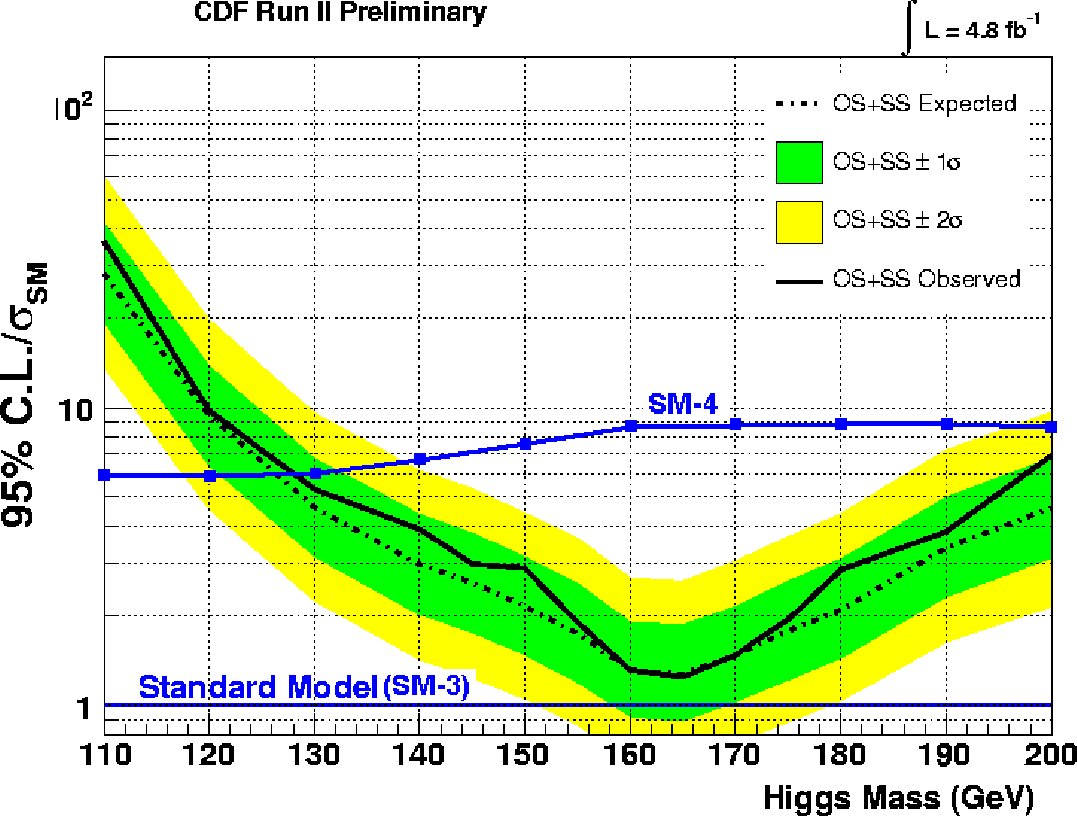 Figure 1
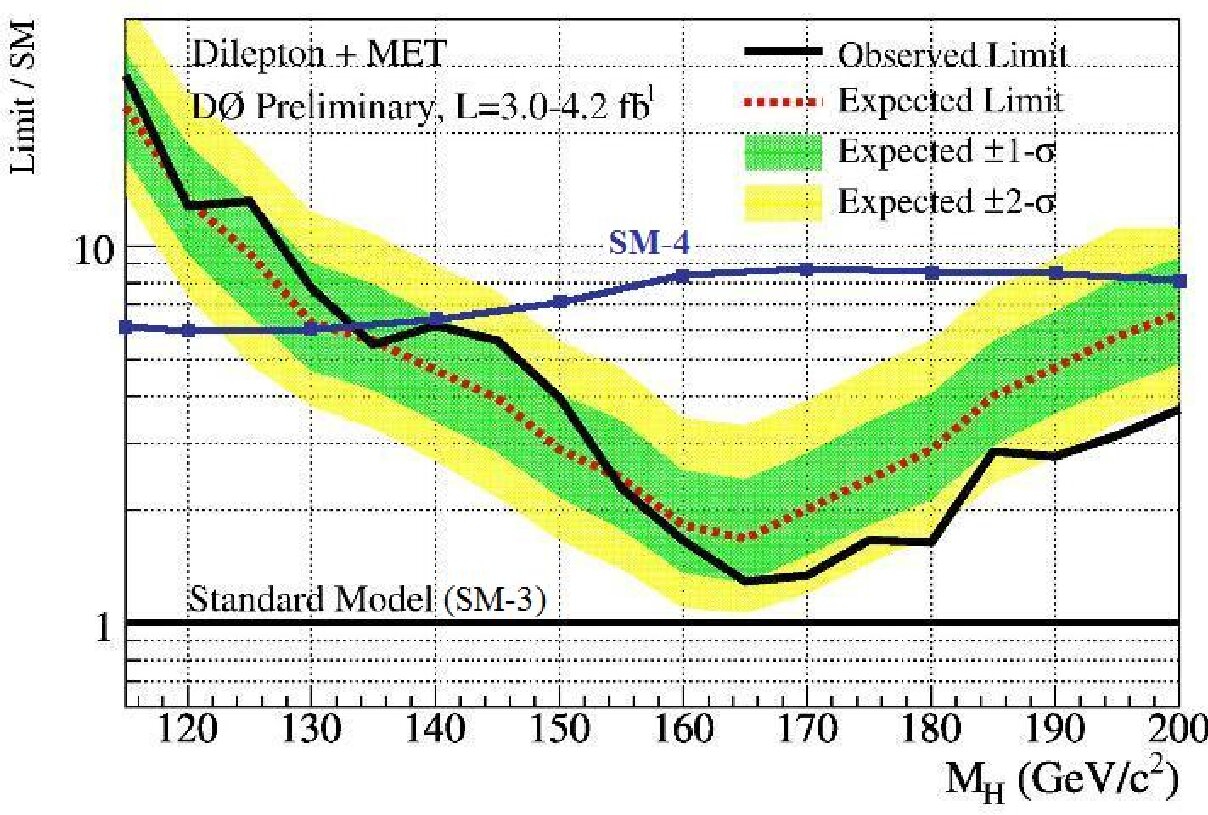 Figure 2
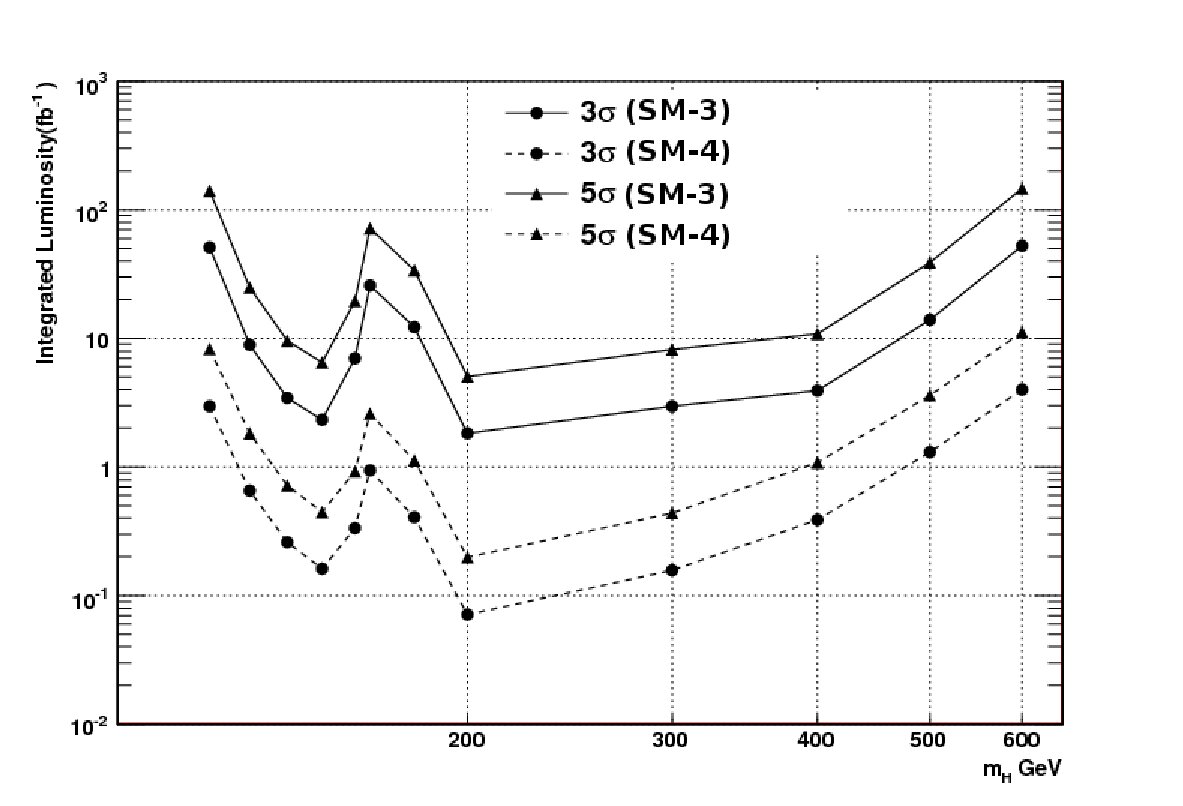 Figure 3
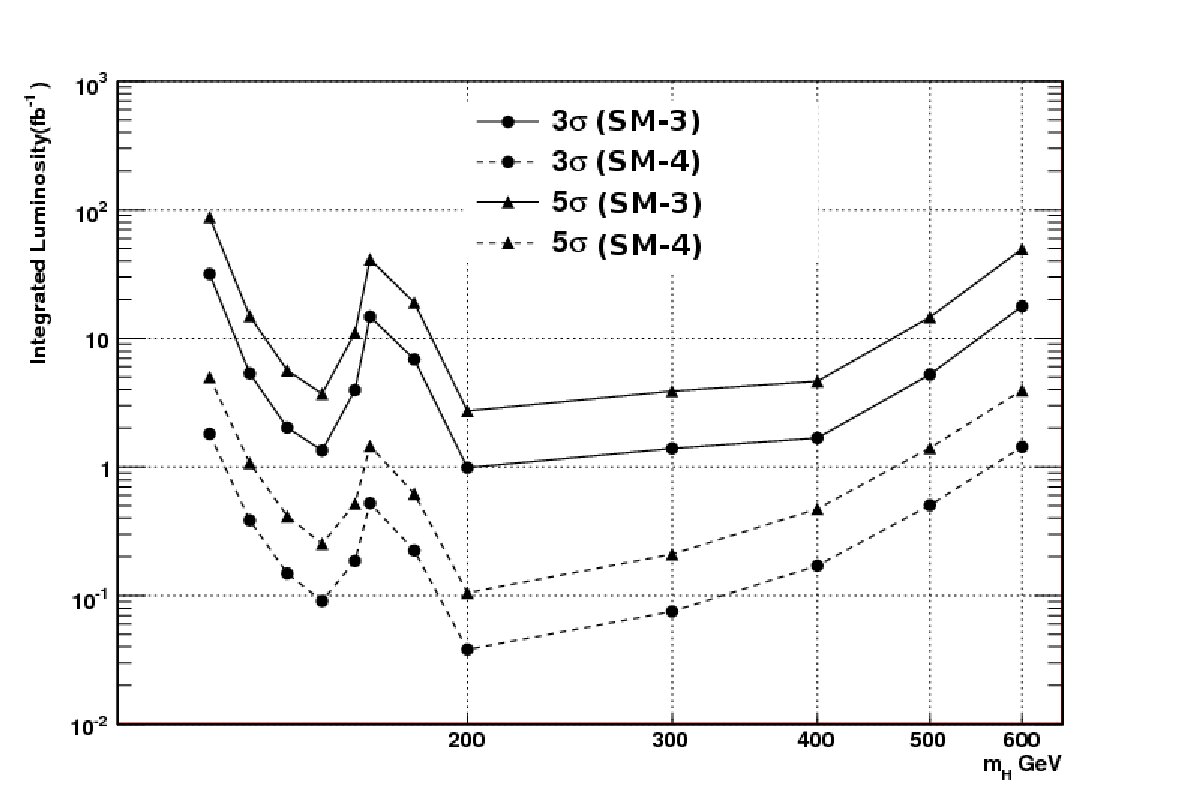 Figure 4
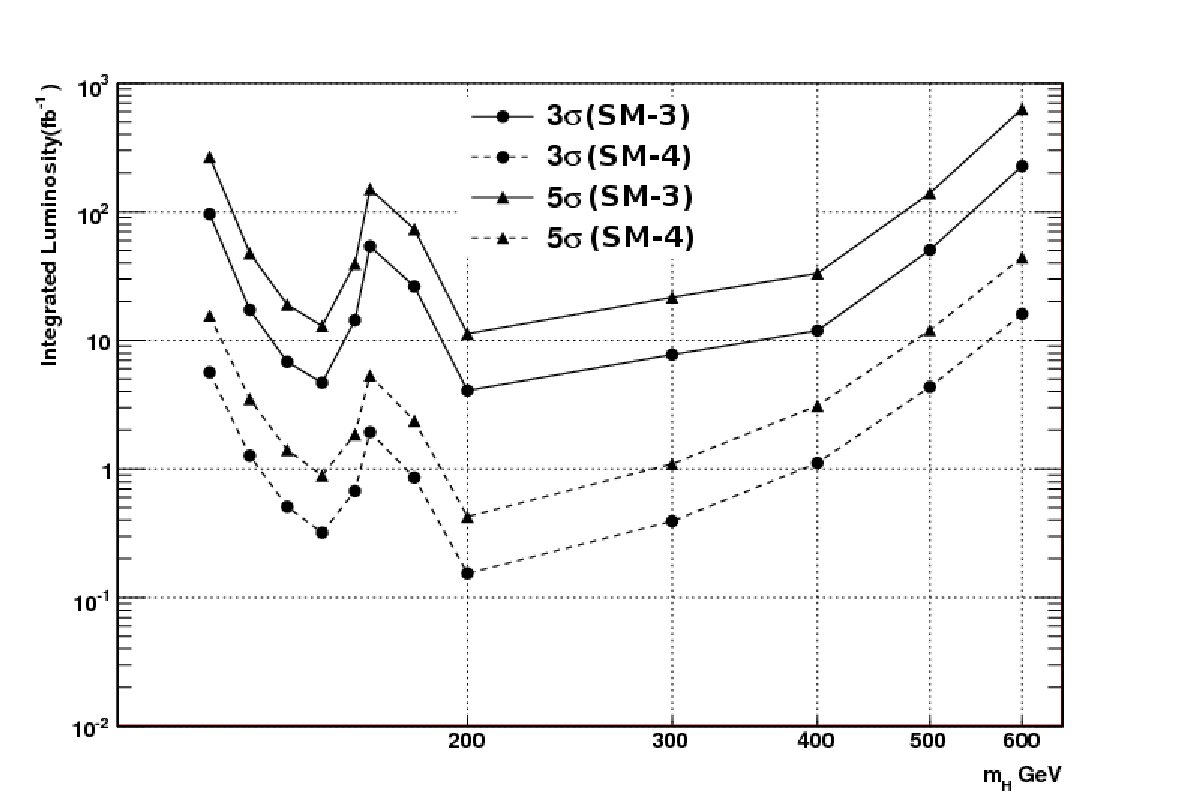 Figure 5
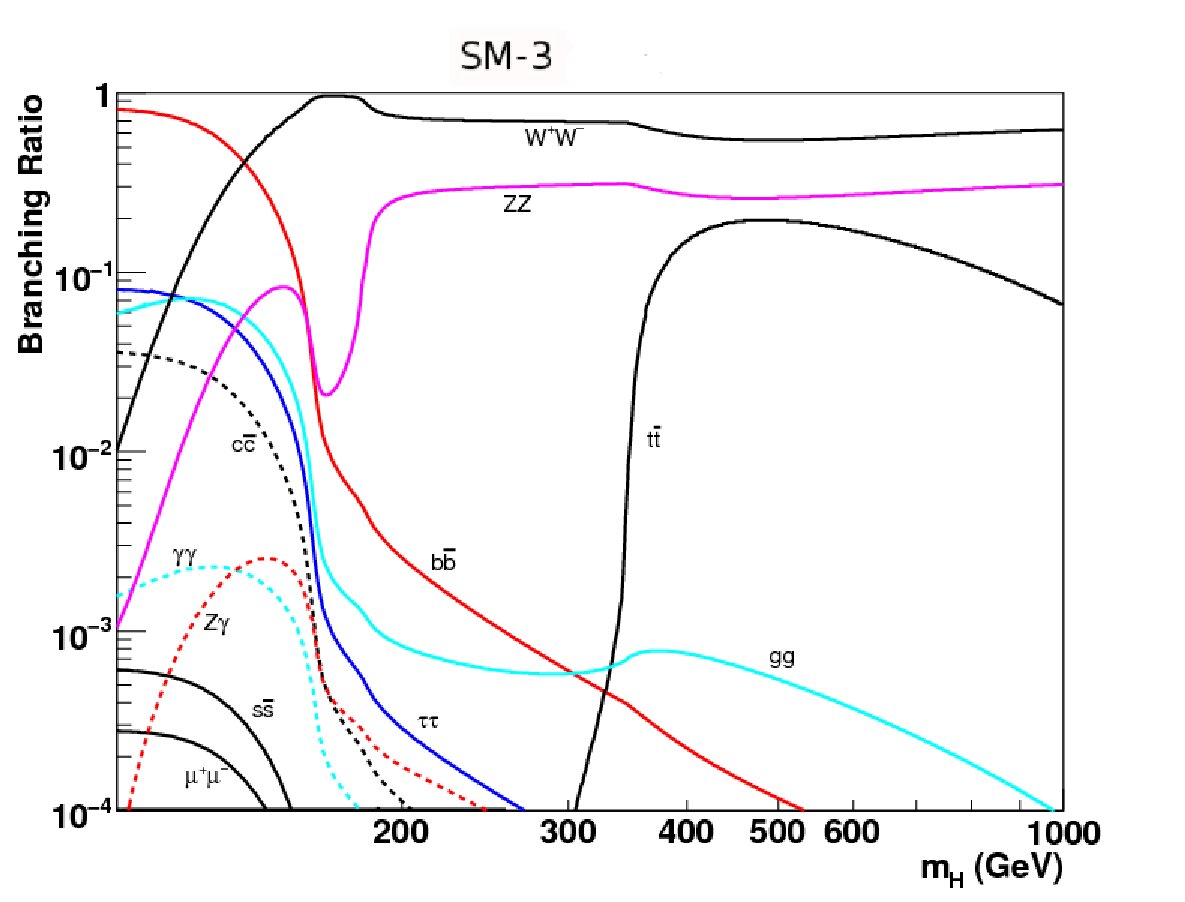 Figure 6
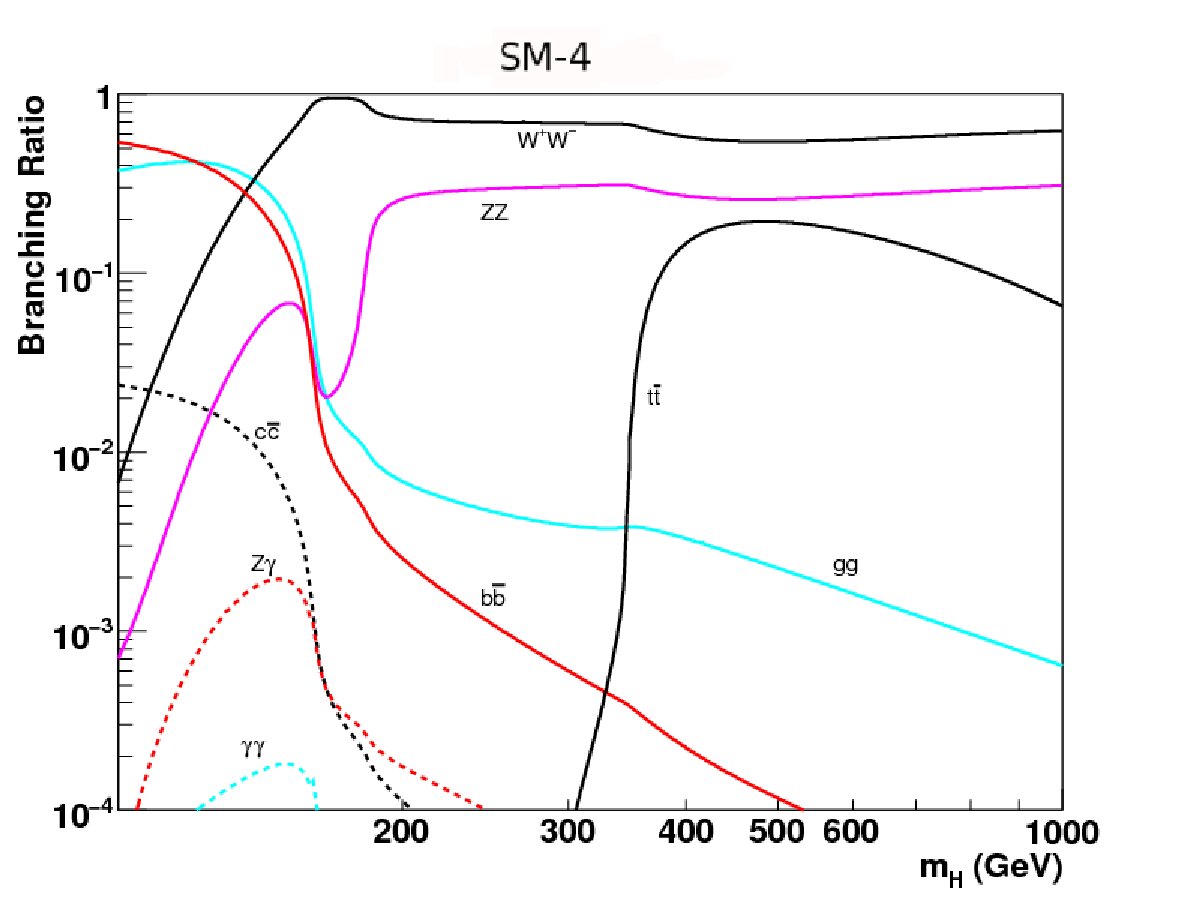 Figure 7
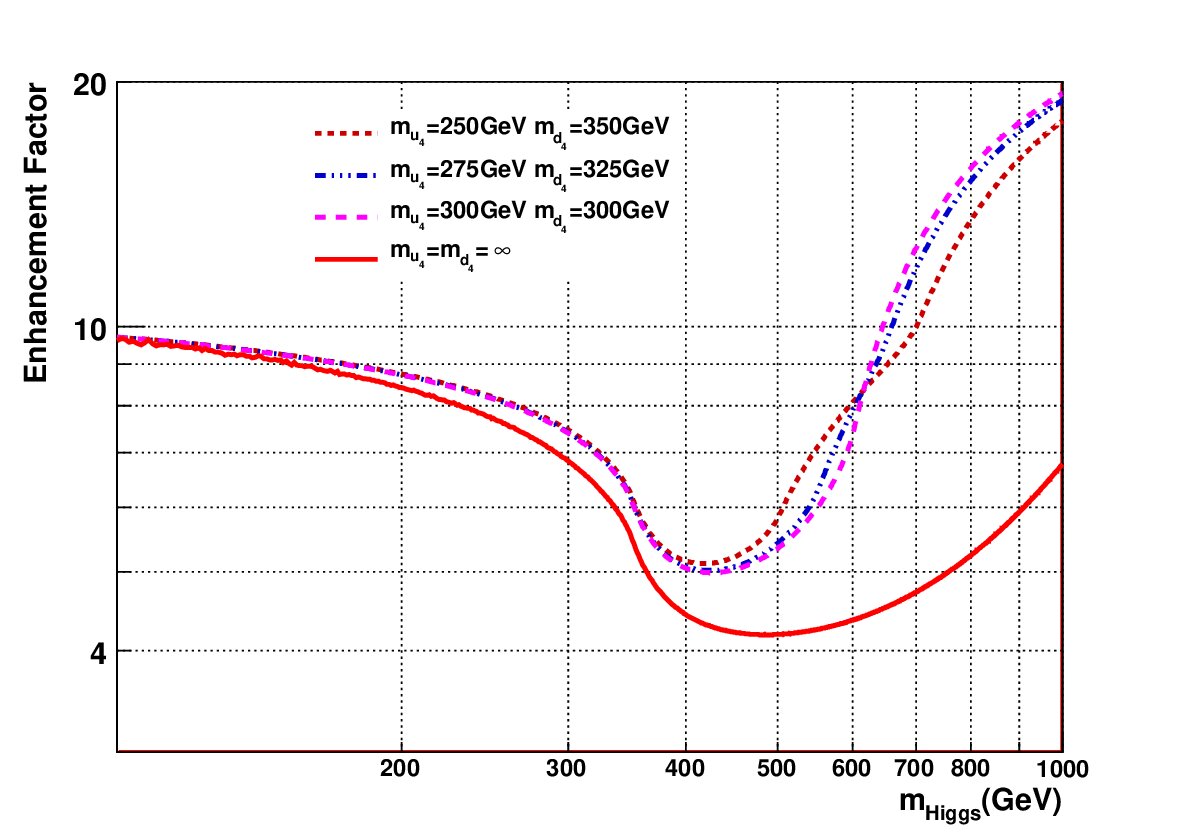 Figure 8
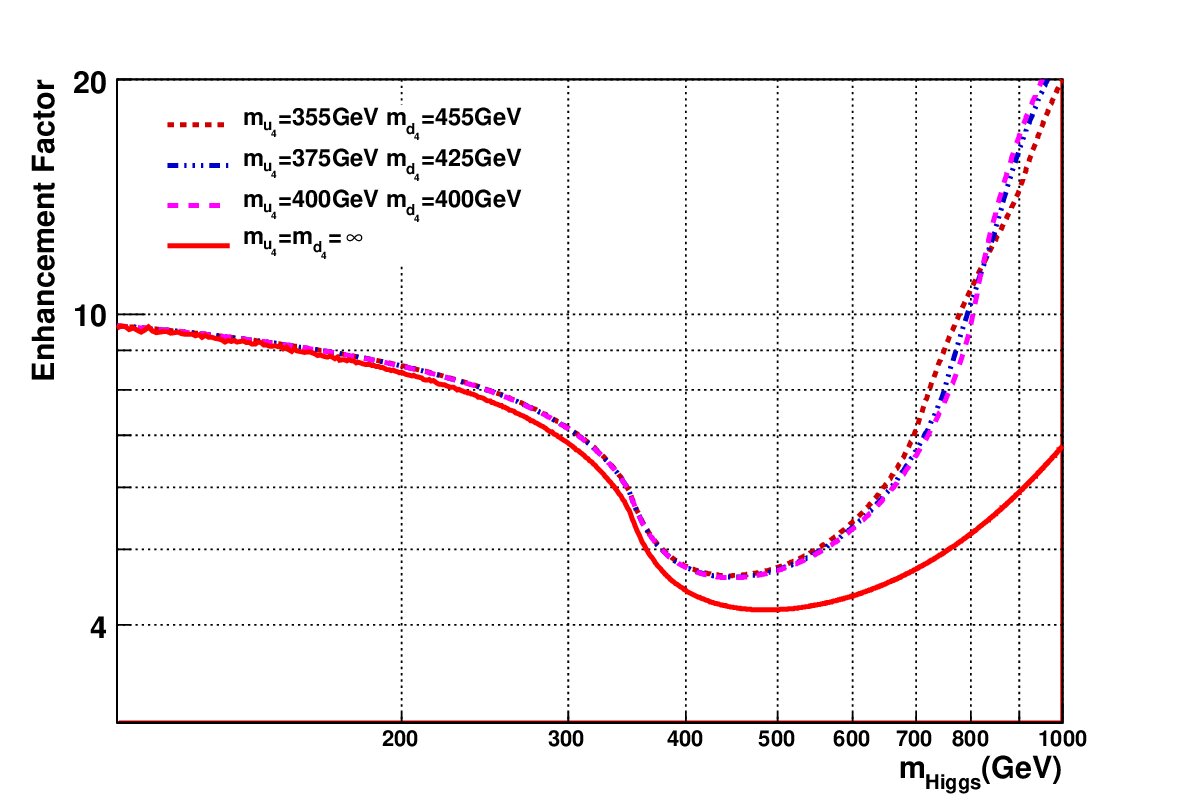 Figure 9
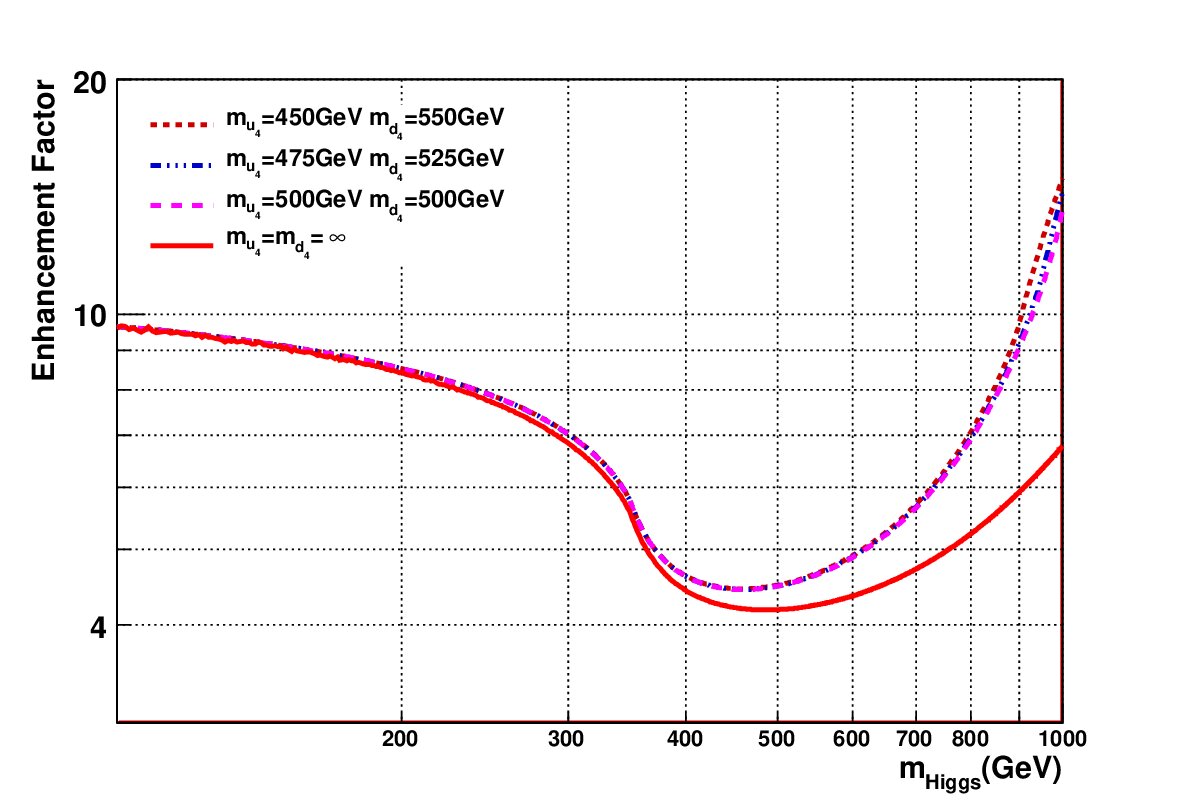 Figure 10
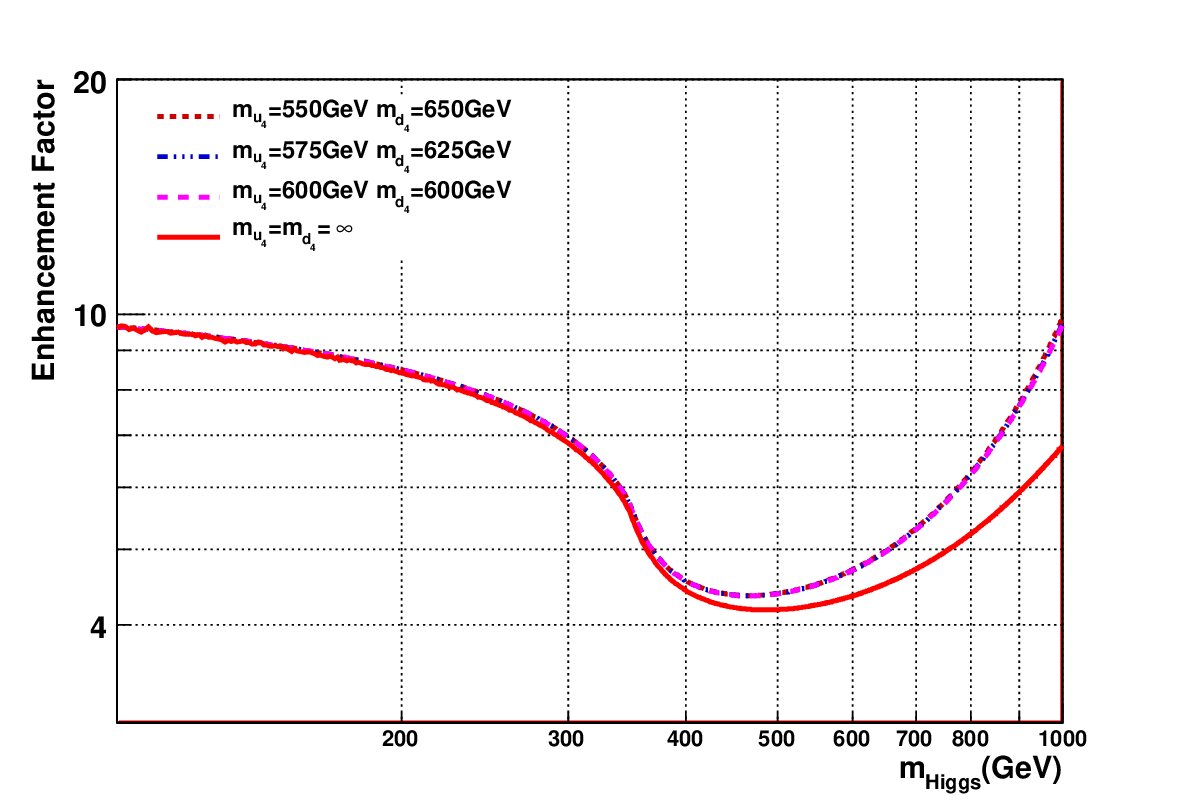 Figure 11
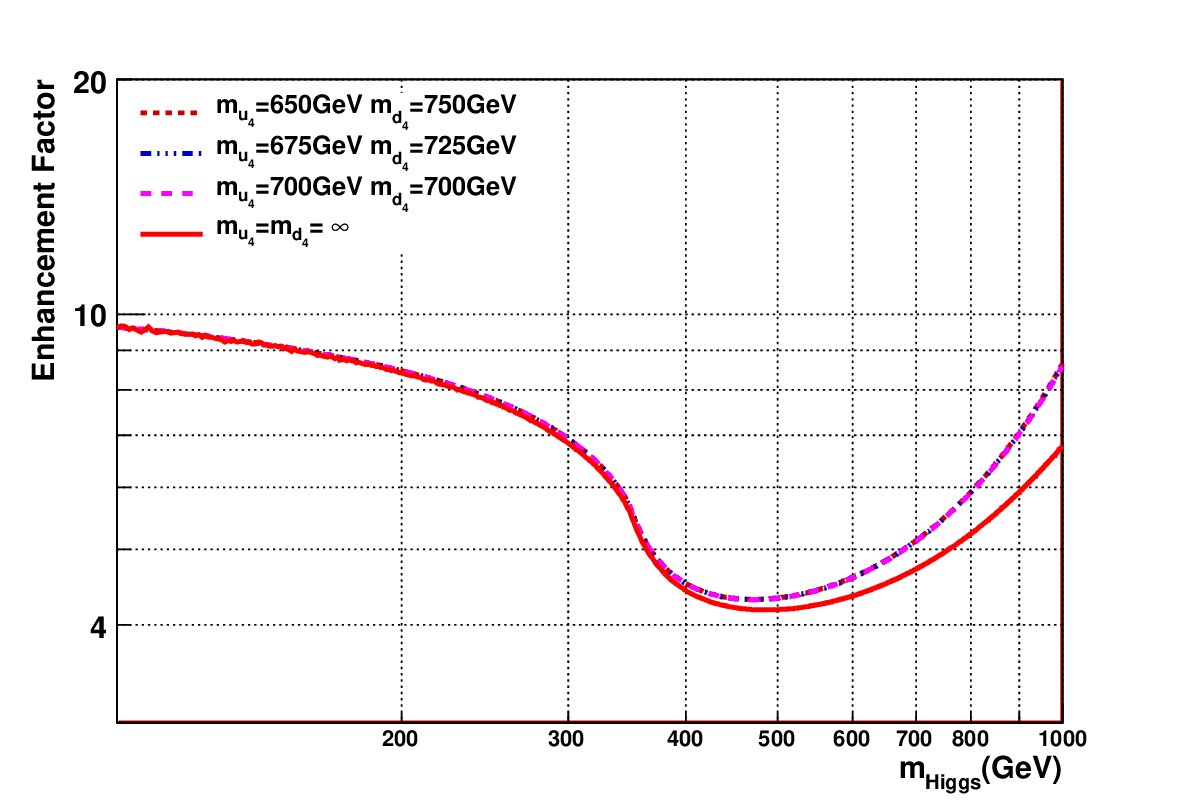 Figure 12
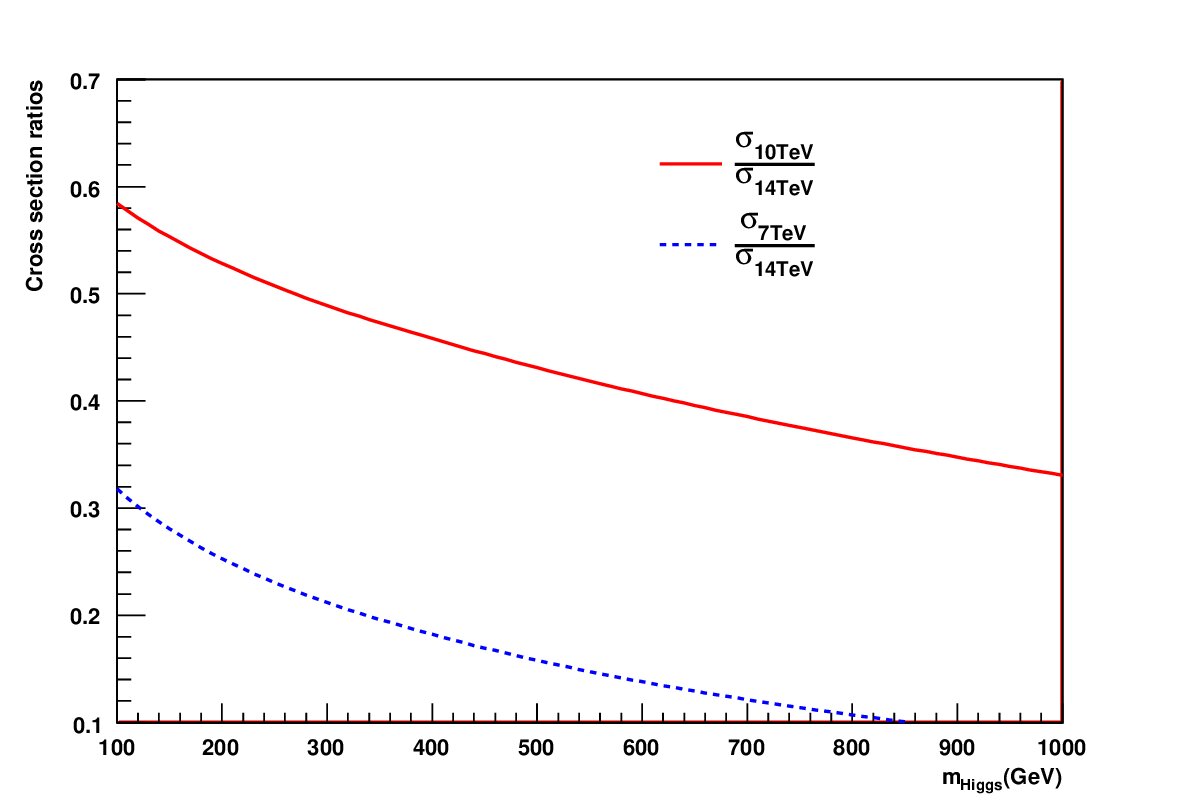 Figure 13
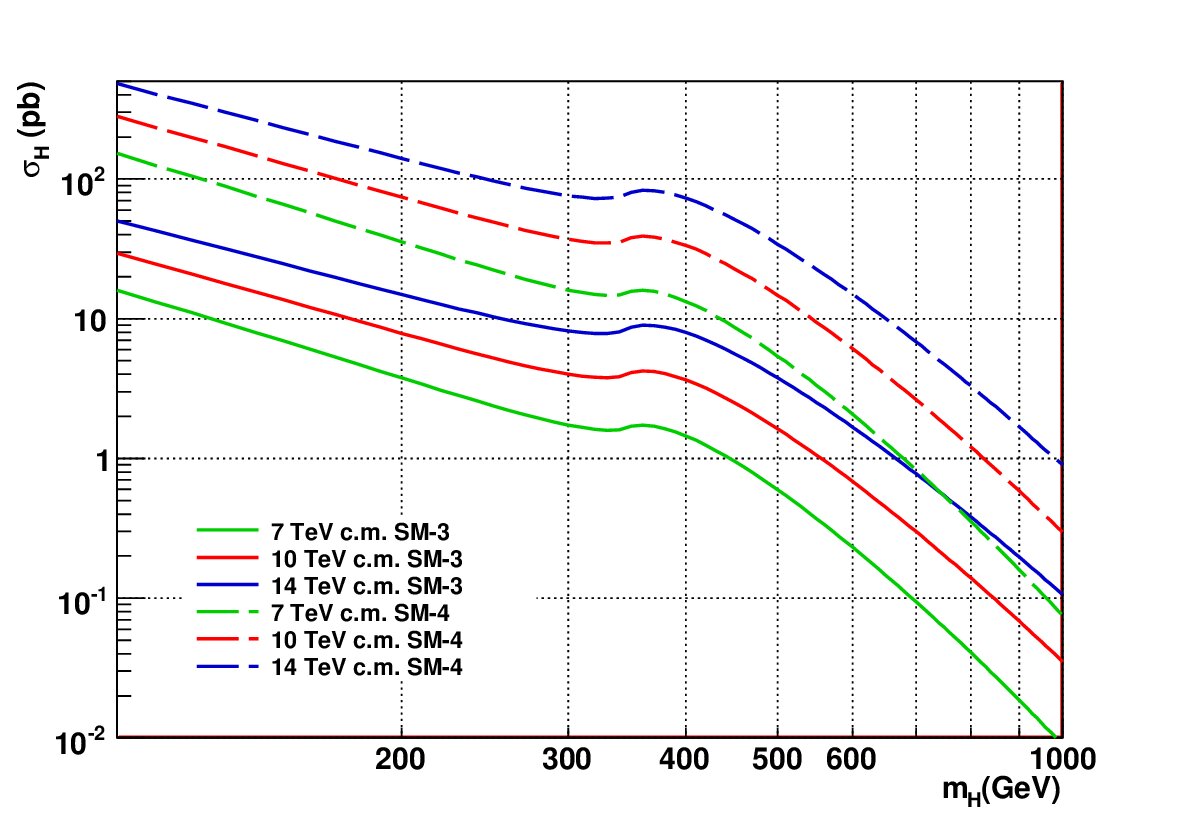 Figure 14
| at 14 TeV | |||
|---|---|---|---|
| (GeV) | Cross section (fb) | ||
| Signal | Background | ||
| SM-3 | SM-4 | SM-3 & SM-4 | |
| 120 | 0.281 | 1.658 | 0.198 |
| 130 | 0.816 | 4.902 | 0.197 |
| 140 | 1.511 | 9.885 | 0.189 |
| 150 | 1.94 | 14.214 | 0.172 |
| 160 | 1.03 | 8.692 | 0.223 |
| 165 | 0.484 | 4.197 | 0.253 |
| 180 | 1.32 | 11.339 | 0.951 |
| 200 | 6.68 | 55.935 | 3.09 |
| 300 | 4.21 | 28.697 | 1.65 |
| 400 | 3.34 | 14.747 | 1.21 |
| 500 | 1.66 | 6.937 | 1.14 |
| 600 | 0.76 | 3.308 | 0.914 |
| at 14 TeV | ||||||||
|---|---|---|---|---|---|---|---|---|
| mH | 0.3fb-1 | 1fb-1 | 3fb-1 | 10fb-1 | ||||
| (GeV) | SM-3 | SM-4 | SM-3 | SM-4 | SM-3 | SM-4 | SM-3 | SM-4 |
| 120 | 0.29 | 1.22 | 0.53 | 2.23 | 0.92 | 3.87 | 1.68 | 7,07 |
| 130 | 0.71 | 2.65 | 1.29 | 4.83 | 2.24 | 8.37 | 4.10 | 15,29 |
| 140 | 1.15 | 4.25 | 2.10 | 7.77 | 3.65 | 13.45 | 6.66 | 24,56 |
| 150 | 1.42 | 5.45 | 2.59 | 9.95 | 4.48 | 17.23 | 8.19 | 31,45 |
| 160 | 0.82 | 3.81 | 1.50 | 6.95 | 2.60 | 12.05 | 4.76 | 21,99 |
| 165 | 0.42 | 2.27 | 0.78 | 4.14 | 1.35 | 7.17 | 2.46 | 13,08 |
| 180 | 0.62 | 3.47 | 1.14 | 6.34 | 1.98 | 10.98 | 3.62 | 20,06 |
| 200 | 1.65 | 8.42 | 3.02 | 15.37 | 5.23 | 26.63 | 9.55 | 48,61 |
| 300 | 1.39 | 5.98 | 2.53 | 10.92 | 4.39 | 18.92 | 8.02 | 34,55 |
| 400 | 1.27 | 3.98 | 2.31 | 7.27 | 4.01 | 12.59 | 7.33 | 22,98 |
| 500 | 0.71 | 2.31 | 1.30 | 4.21 | 2.26 | 7.30 | 4.13 | 13,32 |
| 600 | 0.39 | 1.15 | 0.71 | 2.51 | 1.23 | 4.35 | 2.25 | 7,94 |
| at 14 TeV | ||||
|---|---|---|---|---|
| (GeV) | Luminosity (fb-1) | |||
| for 3 | for 5 | |||
| SM-3 | SM-4 | SM-3 | SM-4 | |
| (14 TeV) | (14 TeV) | (14 TeV) | (14 TeV) | |
| 120 | 31.65 | 1.80 | 87.92 | 5.00 |
| 130 | 5.34 | 0.38 | 14.83 | 1.06 |
| 140 | 2.02 | 0.15 | 5.62 | 0.41 |
| 150 | 1.34 | 0.01 | 3.72 | 0.25 |
| 160 | 3.97 | 0.19 | 11.03 | 0.52 |
| 165 | 14.80 | 0.52 | 41.11 | 1.46 |
| 180 | 6.85 | 0.22 | 19.03 | 0.62 |
| 200 | 0.98 | 0.04 | 2.73 | 0.10 |
| 300 | 1.39 | 0.07 | 3.88 | 0.21 |
| 400 | 1.67 | 0.17 | 4.65 | 0.47 |
| 500 | 5.25 | 0.51 | 14.60 | 1.41 |
| 600 | 17.78 | 1.42 | 49.40 | 3.97 |
| at 10 TeV | |||
|---|---|---|---|
| (GeV) | Cross section (fb) | ||
| Signal | Background | ||
| SM-3 | SM-4 | SM-3 & SM-4 | |
| (10 TeV) | (10 TeV) | (10 TeV) | |
| 120 | 0.160 | 0,948 | 0.100 |
| 130 | 0.460 | 2,763 | 0.100 |
| 140 | 0.844 | 5,521 | 0.096 |
| 150 | 1.07 | 7,840 | 0.087 |
| 160 | 0.56 | 4,726 | 0.113 |
| 165 | 0.263 | 2,280 | 0.128 |
| 180 | 0.71 | 6,099 | 0.484 |
| 200 | 3.52 | 29,475 | 1.572 |
| 300 | 2.05 | 13,974 | 0.839 |
| 400 | 1.53 | 6,755 | 0.615 |
| 500 | 0.71 | 2,967 | 0.580 |
| 600 | 0.31 | 1,349 | 0.465 |
| at 10 TeV | ||||||||
|---|---|---|---|---|---|---|---|---|
| mH | 0.1fb-1 | 0.2fb-1 | 0.3fb-1 | 0.5fb-1 | ||||
| (GeV) | SM-3 | SM-4 | SM-3 | SM-4 | SM-3 | SM-4 | SM-3 | SM-4 |
| 120 | 0.13 | 0.55 | 0.19 | 0.78 | 0.23 | 0.95 | 0.30 | 1.23 |
| 130 | 0.31 | 1.17 | 0.45 | 1.65 | 0.55 | 2.02 | 0.71 | 2.61 |
| 140 | 0.51 | 1.86 | 0.72 | 2.63 | 0.88 | 3.22 | 1.14 | 4.16 |
| 150 | 0.62 | 2.36 | 0.88 | 3.34 | 1.07 | 4.09 | 1.39 | 5.28 |
| 160 | 0.35 | 1.64 | 0.50 | 2.32 | 0.62 | 2.84 | 0.80 | 3.67 |
| 165 | 0.18 | 0.98 | 0.26 | 1.38 | 0.32 | 1.69 | 0.42 | 2.18 |
| 180 | 0.27 | 1.49 | 0.38 | 2.10 | 0.47 | 2.57 | 0.61 | 3.32 |
| 200 | 0.70 | 3.55 | 0.99 | 5.02 | 1.21 | 6.15 | 1.57 | 7.94 |
| 300 | 0.55 | 2.39 | 0.78 | 3.37 | 0.95 | 4.13 | 1.23 | 5.34 |
| 400 | 0.48 | 1.52 | 0.68 | 2.15 | 0.83 | 2.63 | 1.07 | 3.39 |
| 500 | 0.25 | 0.83 | 0.36 | 1.17 | 0.44 | 1.43 | 0.57 | 1.85 |
| 600 | 0.13 | 0.47 | 0.18 | 0.67 | 0.23 | 0.81 | 0.29 | 1.05 |
| at 10 TeV | ||||
|---|---|---|---|---|
| (GeV) | Luminosity (fb-1) | |||
| for 3 | for 5 | |||
| SM-3 | SM-4 | SM-3 | SM-4 | |
| (10TeV) | (10 TeV) | (10 TeV) | (10 TeV) | |
| 120 | 50.88 | 2.97 | 141.35 | 8.26 |
| 130 | 8.91 | 0.65 | 24.76 | 1.83 |
| 140 | 3.46 | 0.26 | 9.61 | 0.72 |
| 150 | 2.33 | 0.16 | 6.49 | 0.45 |
| 160 | 7.02 | 0.33 | 19.50 | 0.93 |
| 165 | 25.91 | 0.94 | 72.00 | 2.61 |
| 180 | 12.22 | 0.40 | 33.95 | 1.13 |
| 200 | 1.82 | 0.07 | 5.07 | 0.20 |
| 300 | 2.95 | 0.16 | 8.21 | 0.44 |
| 400 | 3.91 | 0.38 | 10.87 | 1.08 |
| 500 | 14.01 | 1.30 | 38.91 | 3.62 |
| 600 | 52.39 | 4.01 | 145.53 | 11.15 |
| at 7 TeV | |||
|---|---|---|---|
| (GeV) | Cross section (fb) | ||
| Signal | Background | ||
| SM-3 | SM-4 | SM-3 & SM-4 | |
| 120 | 0.085 | 0.502 | 0.053 |
| 130 | 0.240 | 1.44 | 0.053 |
| 140 | 0.434 | 2.84 | 0.051 |
| 150 | 0.544 | 3.99 | 0.046 |
| 160 | 0.282 | 2.39 | 0.060 |
| 165 | 0.131 | 1.14 | 0.068 |
| 180 | 0.347 | 2.99 | 0.255 |
| 200 | 1.689 | 14.14 | 0.830 |
| 300 | 0.892 | 6.08 | 0.443 |
| 400 | 0.608 | 2.69 | 0.325 |
| 500 | 0.262 | 1.096 | 0.306 |
| 600 | 0.105 | 0.457 | 0.245 |
| at 7 TeV | ||||||||
|---|---|---|---|---|---|---|---|---|
| mH | 0.1fb-1 | 0.2fb-1 | 0.3fb-1 | 0.5fb-1 | ||||
| SM-3 | SM-4 | SM-3 | SM-4 | SM-3 | SM-4 | SM-3 | SM-4 | |
| 120 | 0.097 | 0.400 | 0.137 | 0.566 | 0.167 | 0.693 | 0.216 | 0.894 |
| 130 | 0.229 | 0.843 | 0.323 | 1.192 | 0.396 | 1.460 | 0.511 | 1.885 |
| 140 | 0.363 | 1.330 | 0.514 | 1.880 | 0.629 | 2.303 | 0.812 | 2.974 |
| 150 | 0.438 | 1.677 | 0.620 | 2.371 | 0.759 | 2.904 | 0.980 | 3.749 |
| 160 | 0.251 | 1.157 | 0.355 | 1.637 | 0.435 | 2.004 | 0.561 | 2.587 |
| 165 | 0.129 | 0.684 | 0.182 | 0.967 | 0.223 | 1.184 | 0.288 | 1.529 |
| 180 | 0.184 | 1.024 | 0.261 | 1.449 | 0.320 | 1.774 | 0.413 | 2.291 |
| 200 | 0.471 | 2.416 | 0.666 | 3.417 | 0.815 | 4.184 | 1.053 | 5.402 |
| 300 | 0.341 | 1.514 | 0.482 | 2.141 | 0.590 | 2.623 | 0.762 | 3.386 |
| 400 | 0.274 | 0.897 | 0.388 | 1.268 | 0.475 | 1.553 | 0.614 | 2.005 |
| 500 | 0.134 | 0.455 | 0.189 | 0.644 | 0.232 | 0.789 | 0.299 | 1.019 |
| 600 | 0.063 | 0237 | 0.089 | 0.335 | 0.109 | 0.411 | 0.141 | 0.530 |
| at 7 TeV | ||||
|---|---|---|---|---|
| (GeV) | Luminosity (fb-1) | |||
| for 3 | for 5 | |||
| SM-3 | SM-4 | SM-3 | SM-4 | |
| 120 | 96.4 | 5.62 | 268 | 15.6 |
| 130 | 17.2 | 1.27 | 47.8 | 3.52 |
| 140 | 6.82 | 0.51 | 18.9 | 1.41 |
| 150 | 4.68 | 0.32 | 13.0 | 0.89 |
| 160 | 14.3 | 0.67 | 39.7 | 1.87 |
| 165 | 54.0 | 1.92 | 150 | 5.35 |
| 180 | 26.4 | 0.86 | 73.4 | 2.38 |
| 200 | 4.06 | 0.15 | 11.3 | 0.43 |
| 300 | 7.75 | 0.39 | 21.5 | 1.09 |
| 400 | 11.9 | 1.12 | 33.2 | 3.11 |
| 500 | 50.3 | 4.34 | 140 | 12.1 |
| 600 | 227 | 16.0 | 632 | 44.4 |
| Energy | (fb-1) for | (fb-1) for |
|---|---|---|
| 14 TeV | 0.07 | 0.21 |
| 10 TeV | 0.16 | 0.44 |
| 7 TeV | 0.39 | 1.09 |
Peer Reviews
No public reviews on file for this paper yet. If you reviewed it on a platform where reviews are public (OpenReview, ICLR, NeurIPS, ICML), you can paste yours below so the community can read it here.
Videos
No videos yet. Explain this paper in a talk, walkthrough, or lecture? Add one.
11institutetext: Physics Department, Boğaziçi University, Istanbul, Turkey 22institutetext: Physics Division, Doğuş University, Istanbul, Turkey 33institutetext: Physics Division, TOBB University of Economics and Technology, Ankara, Turkey 44institutetext: Institute of Physics, Academy of Sciences, Baku, Azerbaijan
The Fourth Standard Model Family and the Competition in Standard Model Higgs Boson Search at Tevatron and LHC
N. Becerici Schmidt 11
S. A. Çetin 22
S. Iştın 11
S. Sultansoy 3344
Abstract
The impact of the fourth Standard Model family on Higgs boson search at Tevatron and LHC is reviewed.
1 Introduction
Recent changes in the schedule of the LHC operation has resulted in an additional two years extension of Tevatron discovery challenges in the search for the Higgs boson (H), the fourth Standard Model family and so on (including SUSY). The fourth family is a natural consequence of the Standard Model (SM) basic principles and the actual patterns of the first three family fermion masses and mixings fritzsch ; datta ; celikel (for reviews see sultansoy1 ; sultansoy2 ; frampton ; sultansoy3 ; sultansoy4 ; sultansoy5 ; holdom ). We should once again note that, in contrast to the widespread opinion, electroweak precision data does not exclude the fourth familyhe ; novikov ; kribs ; ozcan . The fourth family matters were discussed in detail during the topical workshop held in September 2008 at CERN b3sm (see holdom for resume of the workshop).
Concerning the Higgs boson, the existence of the fourth Standard Model family has a strong impact on the search strategies of Tevatron and LHC kribs ; arik1 ; ginzburg ; sultansoy6 ; arik2 ; cakir1 ; arik3 ; arik4 ; arik5 mainly due to the essential enhancement of the ggH production channel. In this paper, SM-4 (SM-3) denotes Standard Model with 4 (3) families.
2 Fourth SM family effects on the Higgs boson
The crucial contribution of the new heavy quarks to the ggH vertex via the triangular loop has been realized many years ago barger . Additional quark loops introduced by the fourth SM family quarks strengthens the ggH vertex by a factor of about 3, hence causing an enhancement in the cross section by about 9. The actual values depend on the mass of the Higgs boson and fourth SM family fermions. Figures 1-5 demonstrate this dependence for different scenarios. As seen from these figures, the choice of infinitely heavy fourth SM family quarks corresponds to the most conservative scenario which will be the assumption in the rest of this work.
The fourth SM family fermions will affect a number of other vertices kribs ; arik1 ; ginzburg ; sultansoy6 ; arik2 ; cakir1 ; arik3 ; arik4 ; arik5 ; gokhan1 ; gokhan2 along with ggH resulting in new branching ratio values of the Higgs decays. Figure 6 illustrates Higgs decay branching ratios in SM-3 and Figure 7 in SM-4 with infinitely heavy fourth family.
In principle if the neutrino has Majorana nature, could be essentialy lighter than the other members of the fourth family and the Higgs boson could decay into the fourth family neutrinos; this scenario is considered in gokhan1 ; gokhan2 .
3 The Tevatron Perspective
(where denotes or ) is the most promising channel in SM-4 case. Figures 8 and 9 show recent results fnal-cdf ; fnal-d0 on this channel where we add the curves corresponding to SM-4. It is clear that Higgs boson with mass 130 - 200 GeV is excluded if a fourth SM family exists while only the 160 - 170 GeV region is excluded in the SM-3 case. As seen from Figure 9, D0 actually excludes even higher Higgs masses (presumably up to 240 GeV) in SM-4, however the analysis ends at 200 GeV.
Although the contribution coming from WH, ZH and VBF processes to the total production cross section is about 20, the selection criteria for signature would suppress this contribution to the level of a few percent. Hence, the current CDF and D0 results shown in Figures 8 and 9 can be considered to be coming from alone.
Taking into account the fact that nature could prefer the SM-4 case, both D0 and CDF should extend the horizontal axis up to 300 GeV and, moreover, combine their results on the channel. Furthermore, combined analysis of all channels and both experiments done for SM-3 should be repeated for SM-4. Examples of proper approach are tevatron1 ; tevatron2 ; tevatron3 ; tevatron4 ; tevatron5 ; tevatron6 ; tevatron7 ; tevatron8 ; tevatron9 ; tevatron10 .
4 The LHC Perspective
As an example for the LHC perspectives, we restrict ourselves to a detailed consideration of the Golden Mode at the ATLAS experiment atlas-jinst ; atlas-csc . A similar analysis can be carried out for CMS as well. Moreover, a combined analysis of both LHC experiments could be useful.
The design center of mass energy of 14 TeV is the basic scenario, in addition, we also consider 10 TeV and 7 TeV cases for early phase operation. As input parameters, we use the most recent ATLAS simulation results for 14 TeV published in atlas-csc . The analysis for 10 and 7 TeV cases is performed using the Higgs production cross section ratio given in Figure 10a (calculations are performed using HIGLU higlu ). The backgrounds considered in atlas-csc are rescaled using the calculations performed in COMPHEP comphep in a similar manner. It is recently shown in bruce that the theoretical uncertainties on the SM background via two weak boson production is around 5-20. This uncertainity merely effects the significance results presented in this section.
4.1 TeV case
The ATLAS simulation results for the signature are presented in column 2 and 4 of Table 1 where we add the SM-4 case in column 3. Using these foreseen reconstructed signal and background cross sections and the statistical significance (SS) formula
we calculate SS for different integrated luminosities () as shown in Table 2. The necessary values to achieve and significance are also shown in Table 3 and plotted in Figure 11.
It is clear that with only 500 pb*-1* Higgs boson will be observed at level in the golden mode for the SM-4 case if the mass of the Higgs is between 130 - 500 GeV. An integrated luminosity of 100 pb*-1* will be more than enough to scan 200 - 300 GeV Higgs at level. One should note that 130 - 200 GeV Higgs in SM-4 is already excluded by Tevatron.
4.2 TeV case
Table 4 shows expected cross sections after reconstruction of channel and its backgrounds. Corresponding statistical significance for various integrated luminosities are shown in Table 5 and needed for and significance are given in Table 6 and plotted in Figure 12.
It is seen that 200 - 250 GeV Higgs will be covered by 100 pb*-1* and an additional 100 pb*-1* will increase the reach up to 350 GeV.
4.3 TeV case
Table 7 shows expected cross sections after reconstruction of channel and its backgrounds. Corresponding statistical significance for various integrated luminosities are shown in Table 8 and needed for and significance are given in Table 9 and plotted in Figure 13. 200 pb*-1* will scan 200 - 250 GeV Higgs whereas an additional 200 pb*-1* will scan up to 300 GeV.
4.4 300 GeV Higgs with 500 GeV fourth family
If the common Yukawa coupling constant is equal to SU(2) gauge coupling then flavour democracy predicts the mass value about 500 GeV for fourth family quarks. It is interesting to note that this mass value also allows to explain several ”anomalies” in , mixings and decays involving CP observables amarjit1 ; amarjit2 . If one considers the quartic coupling constant of the Higgs self interaction also to be equal to , the Higgs boson mass is predicted to be around 300 GeV. In such a case the enhancement factor in production is 7 (Figure 3) and the branching ratio is 0.3 (Figure 7). The integrated luminosity to achieve and significance in such a situation at different center of mass energies are shown in Table 10.
5 Conclusions
Assuming that nature prefers the SM-4 case, Fermilab already excludes Higgs masses up to 200 GeV. In contrast to SM-3, in SM-4 case electroweak precision data favors a heavier Higgs kribs . Hence, during the next couple of years we will experience tough competition between the two hadron colliders: running Tevatron and soon to run LHC. In our opinion, corresponding experiments at both machines should seriously consider SM-4 predictions.
Acknowledgements.
We are grateful to V. N. enoguz and G. Ünel for useful discussion and crucial remarks. This work is supported in part by the Turkish Atomic Energy Authority (TAEK).
The reference list from the paper itself. Each links out to its DOI / PubMed record.
- 1(1) H. Fritzsch, ”Light neutrinos, nonuniversality of leptonic weak interaction and a fourth massive generation” , MPI-PH-92-42, Phys. Lett. B 289 (1992) 92.
- 2(2) A. Datta, ”Flavor democracy calls for the fourth generation” , hep-ph/9207248, PRINT-92-0285 (JADAVPUR), IC-92-164, Pramana 40 (1993) L 503.
- 3(3) A. Celikel, A. K. Ciftci and S. Sultansoy, ”A Search for fourth SM family” , AU-HEP-94-12, Phys. Lett. B 342 (1995) 257.
- 4(4) S. Sultansoy, ”Four ways to Te V scale” , AU-HEP-97-04, Turk. J. Phys. 22 (1998) 575.
- 5(5) S. Sultansoy, ”Four remarks on physics at LHC” , AU-HEP-97-05, Invited talk given at the ATLAS week, Geneva, Switzerland,
- 6(6) P. H. Frampton, P. Q. Hung and M. Sher, ”Quarks and leptons beyond the third generation” , hep-ph/9903387, IFP-759-UNCA, WM-99-104, Phys. Rept. 330 (2000) 263.
- 7(7) S. Sultansoy, ”Why the four SM families” , AU-HEP-00-04, hep-ph/0004271, (2000).
- 8(8) S. Sultansoy, ”Flavor Democracy in Particle Physics” , hep-ph/0610279, AIP Conf. Proc. 899 (2007) 49.