Photons with tunable spectral shapes: The transition from frequency anticorrelated to correlated photon pairs
M. Hendrych, M. Mi\v{c}uda, A. Valencia, J. P. Torres

TL;DR
This paper demonstrates experimental control over the spectral correlations of entangled photon pairs, enabling continuous tuning from anticorrelation to correlation without altering wavelength or crystal, even with ultrafast laser pumping.
Contribution
It introduces a method for full spectral correlation control of entangled photons without changing wavelength or nonlinear crystal.
Findings
Achieved continuous tuning of photon spectral correlations from anticorrelation to correlation.
Produced highly entangled frequency-anticorrelated photon pairs with ultrafast laser pump.
Controlled spectral correlations without modifying wavelength or nonlinear crystal.
Abstract
We present an experimental demonstration of the full control of the frequency correlations of entangled photon pairs. The joint spectrum of photon pairs is continuously varied from photons that exhibit anticorrelation in frequency to photons that exhibit correlation in frequency, passing through the case of uncorrelated photons. Highly entangled frequency-anticorrelated photon pairs were obtained even when an ultrafast laser was used as a pump. The different kinds of correlations are obtained without changing neither the wavelength, nor the nonlinear crystal.
Click any figure to enlarge with its caption.
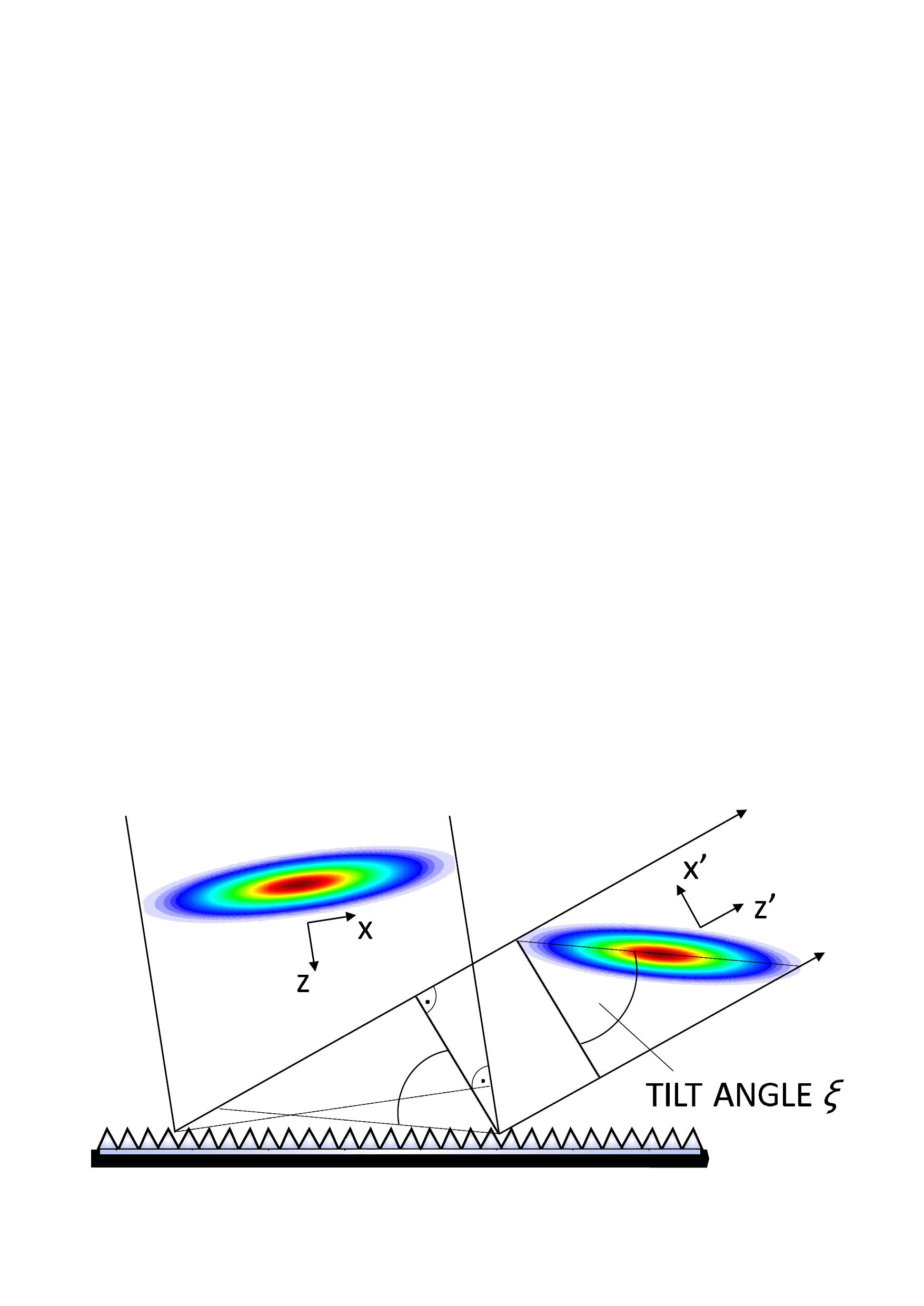 Figure 1
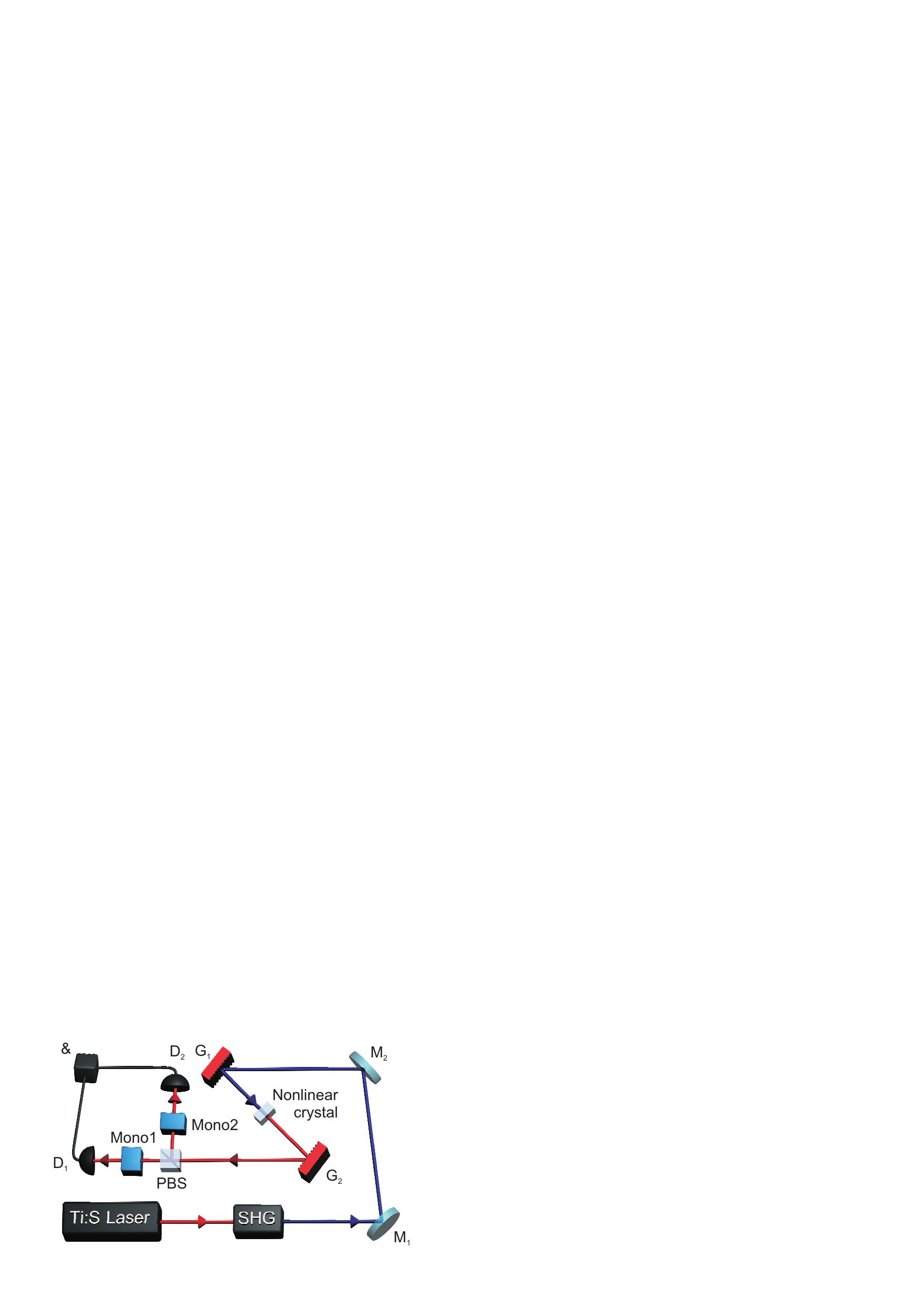 Figure 2
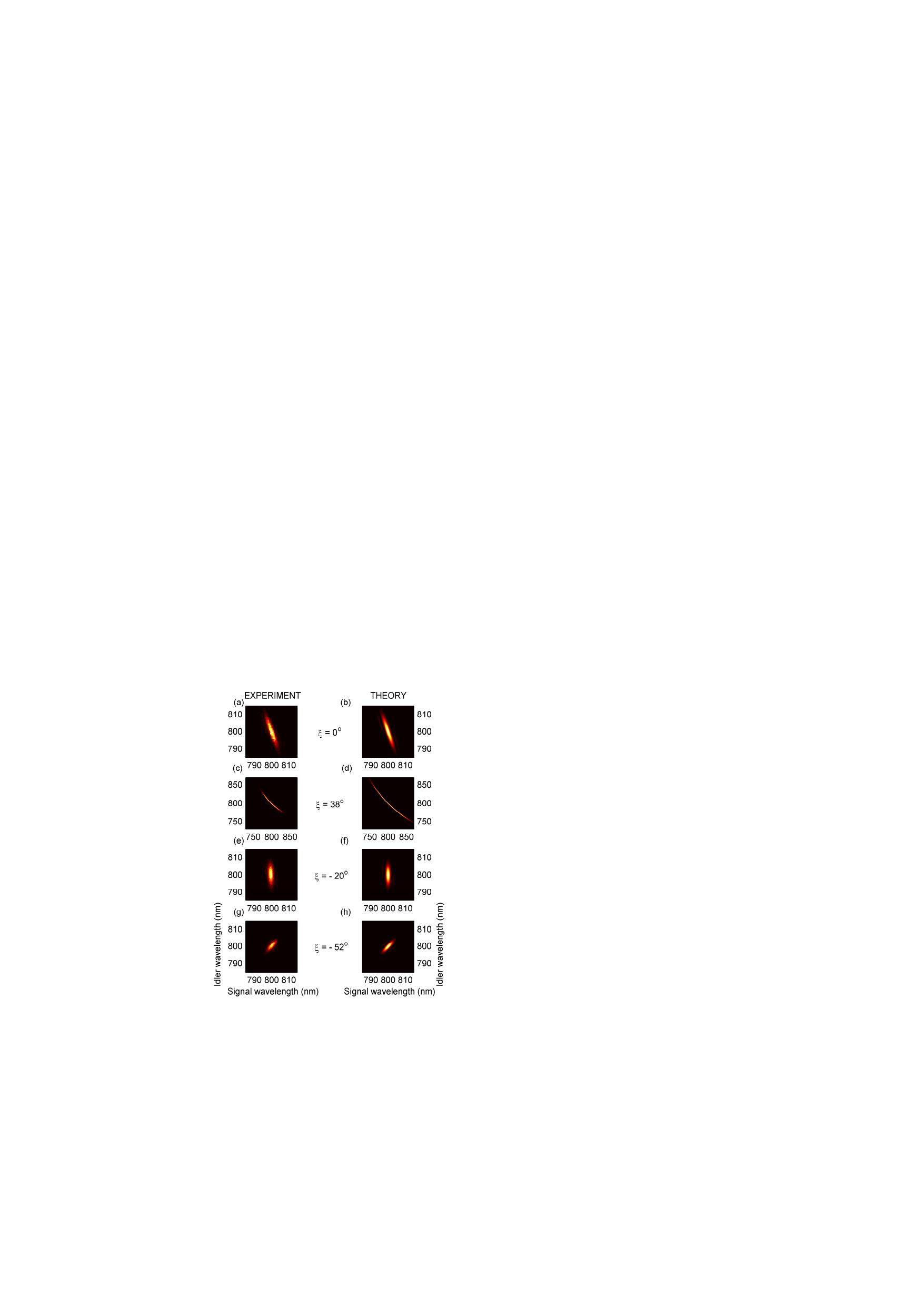 Figure 3
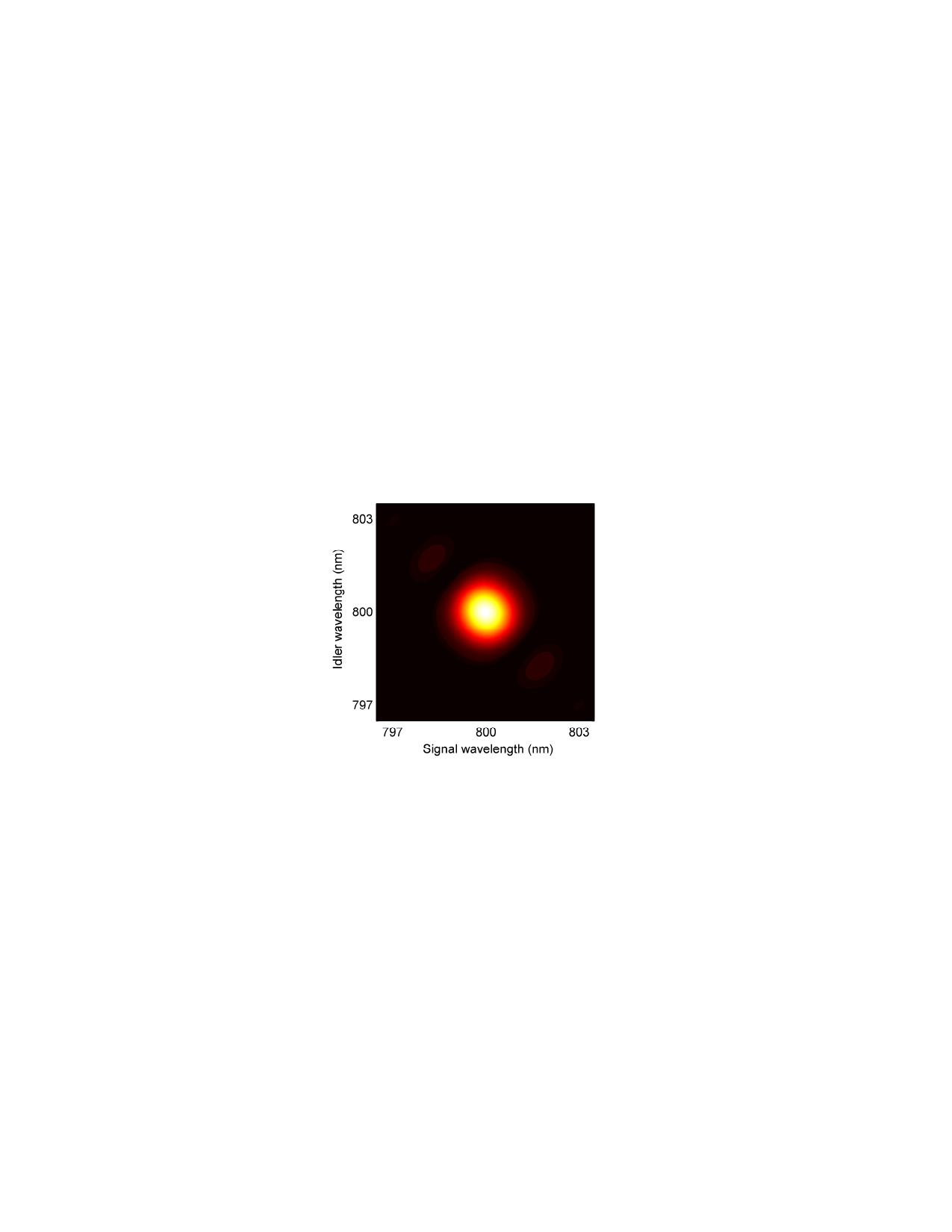 Figure 4
Peer Reviews
No public reviews on file for this paper yet. If you reviewed it on a platform where reviews are public (OpenReview, ICLR, NeurIPS, ICML), you can paste yours below so the community can read it here.
Videos
No videos yet. Explain this paper in a talk, walkthrough, or lecture? Add one.
Taxonomy
TopicsMechanical and Optical Resonators · Photonic and Optical Devices · Advanced Fiber Laser Technologies
Photons with tunable spectral shapes: The transition from frequency
anticorrelated to correlated photon pairs
M. Hendrych1, M. Mičuda1,3, A. Valencia1 and J. P. Torres1,2
1ICFO-Institut de Ciències Fotòniques, Mediterranean Technology Park, Castelldefels (Barcelona), Spain,
2Universitat Politècnica de Catalunya, Department of Signal Theory and Communications, Barcelona, Spain,
3Department of Optics, Palacký University, Olomouc, Czech Republic.
Abstract
We present an experimental demonstration of the full control of the frequency correlations of entangled photon pairs. The joint spectrum of photon pairs is continuously varied from photons that exhibit anticorrelation in frequency to photons that exhibit correlation in frequency, passing through the case of uncorrelated photons. Highly entangled frequency-anticorrelated photon pairs were obtained even when an ultrafast laser was used as a pump. The different kinds of correlations are obtained without changing neither the wavelength, nor the nonlinear crystal.
pacs:
42.65.Lm, 03.67.–a, 06.30.Ft, 42.50.Dv
The motivations to control the joint spectrum of paired photons come from both, the applied and fundamental points of view. Frequency-uncorrelated photons are desired because they provide a source of heralded pure single photons, an important tool in quantum computing and communications singlephotons . On the other hand, frequency-correlated and anticorrelated photons are important for quantum metrology, because these types of correlations can enhance the precision of some existing time measurement and synchronization techniques metrology . Moreover, the possibility to generate symmetric spectral shapes of entangled photons guarantees that all the distinguishing information that may come from the spectra of the photons is erased. This is a key issue when considering applications based on interferometric techniques, where any distinguishability reduces the visibility of the interference pattern distinguishability .
The search for a way to control the joint spectrum of paired photons has been of paramount importance in the past few years. In particular, techniques based on the choice of specific materials and wavelengths have been used to obtain frequency-uncorrelated mosley1 and frequency-correlated photons kuzucu1 . Experiments that allow a tunable control of the joint spectrum have also been reported Martin_OL07 ; Ale_PRL07 ; Walmsley_PRL09 . However, a unique experiment showing the transition from anti-correlated to correlated frequency photons passing through the uncorrelated case has not been reported so far.
In this Letter, the technique reported in Ref. torres1 is used to directly manifest the full control over the joint spectrum of paired photons generated in spontaneous parametric down conversion (SPDC). It is possible to generate any desired type of frequency correlations with the same nonlinear material and at the same wavelength of the pump laser. Experimental data that clearly demonstrate the tunability from frequency-anticorrelated photons to frequency-correlated photons passing through the case of uncorrelated photons pairs are reported. The measurement of the joint spectrum is performed directly by measuring the wavelength of each of the photons that constitute the pair and therefore a visual and immediate understanding of the type of frequency correlations can be clearly seen. Interestingly, the joint spectrum of frequency-correlated photons and the joint spectrum of frequency-anticorrelated photons generated with a femtosecond pump are reported. To the best of our knowledge, it is the first time that the joint spectra for these two cases are measured directly. The other papers that report the generation of frequency-correlated photons do not measure the joint spectrum directly, but rather indirectly deduce the type of frequency correlations by means of interferometric techniques kuzucu1 ; Martin_OL07 or by using frequency-conversion processes to measure in the temporal domain kuzucu2 . It is worth stressing that the correlated and ultrashort-pulsed frequency-anticorrelated cases are just two particular possibilities of all the correlations and bandwidths that can be achieved with the experimental technique reported here.
Generally, when we are interested in the frequency properties of paired photons, the light beams are projected into single modes by, for example, coupling the light into singlemode fibers. All the information concerning the frequency correlations of paired photons with frequencies can thus be obtained from the joint spectrum, or biphoton, of the two-photon state, distinguishability . The joint spectral intensity, which corresponds to the probability of detecting a photon with frequency in coincidence with the other photon with frequency , writes .
One of the most convenient ways of generating paired photons is the process of spontaneous parametric down-conversion in which the interaction of a strong pump beam with a nonlinear medium occasionally results in the production of two photons known as the signal and idler, whose energies sum up to that of the pump photon. When the pump beam is chosen to be a continuous wave beam, energy conservation imposes frequency anti-correlation between the downconverted photons. This is not so in the general case when the nonlinear medium is illuminated by a broadband pump. In this case, the nature of the frequency correlations of the paired photons is determined by both, the energy conservation and phase-matching conditions distinguishability . It is precisely the proper control of the phase-matching conditions what allows us to tune the type of frequency correlations at will.
The experimental results reported in this Letter measure the joint spectral intensity, , of signal and idler photons with frequencies and . The two-photon state at the center of the nonlinear crystal () writes , where
[TABLE]
is the frequency amplitude distribution of the pump beam at , is the length of the crystal, and is the phase-mismatch function, with being the longitudinal component of the pump, signal and idler wavevectors, respectively.
The control over the joint spectrum experimentally reported in this Letter is based on the possibility of modifying by introducing angular dispersion into the pump and the downconverted beams. The introduction of angular dispersion enables us to tune the frequency characteristics of paired photons by manipulating the transverse momentum. In general, when angular dispersion is applied to a pulse, it causes the front of the pulse to be tilted by an angle (see Fig. 1). It means that the front of the pulse acquires a temporal delay that depends on its transversal coordinate UltrafastBook .
The introduction of angular dispersion into the pump and the down converted photons results in an effective inverse group velocity and inverse group velocity dispersion torres2
[TABLE]
where and are the inverse group velocity and group velocity dispersion due to the the material dispersive properties, denotes the Poynting-vector walk-off angle, and is the speed of light. By performing a second-order Taylor expansion, can be written as a function of the effective inverse group velocities and group velocity dispersion of the interacting waves
[TABLE]
where is the frequency detuning of signal and idler photons from the central frequency. The possibility to tune , and thereby the frequency correlations, by introducing angular dispersion can be understood by inspecting the effective group velocities and group velocity dispersion of Eq. (Photons with tunable spectral shapes: The transition from frequency anticorrelated to correlated photon pairs).
The effective dispersive properties of arise from two sources: from the material dispersion of the nonlinear crystal and from the presence of pulse-front tilt . A quantitative comparison shows that both contributions are of the same order. For example, at a pump wavelength of nm, the difference of group velocities is equal to fs/mm. Comparatively, a typical value of walk-off results in a contribution of the tilt to the effective group velocity mismatch of fs/mm. This implies that the spectral shape of the entangled photons can be greatly tuned by modifying the amount of angular dispersion.
To demonstrate the full tunability of the type of frequency correlations by means of angular dispersion, an experiment was performed. As depicted in Fig. 2, a mm BBO crystal cut for degenerate collinear type-II phase-matching was placed between a pair of diffraction gratings: G1 in the path of the pump photons and G2 in the path of the downconverted photons. The first grating introduces the pulse-front tilt and the second grating removes the angular dispersion from the downconverted beam. The crystal was pumped by the second harmonic (220 mW of average power) of a femtosecond Ti:sapphire laser tuned at nm. The measured bandwidth (FWHM) of the pump beam at 400 nm was nm. After the second grating, the downconverted photons were separated by a polarizing beam splitter (PBS) and collected into multimode fibers. To perform the direct measurement of the joint spectral intensity , the signal and idler photons were sent to two monochromators (Jobin Yvon MicroHR) Mono1 and Mono2, respectively. The outputs of the monochromators were coupled into optical fibers and detected by single-photon counting modules (Perkin-Elmer SPCM-AQR-14-FC) in order to record singles and coincidence counts between the two detectors. The joint spectral intensity is measured by scanning the central wavelengths of the bandpass of the monochromators.
The effect of the gratings G1 and G2 is to introduce the appropriate amount of angular dispersion, or equivalently pulse-front tilt , into the pulsed pump and the down converted photons. The tilt is introduced in the plane determined by the pump beam and the optic axis of the nonlinear crystal. The gratings were chosen and placed in the setup in such a way that they introduce opposite angular dispersion; this guaranties that the tilt only modifies . The groove densities of G1 and G2 were 1200 and 600 grooves per mm, resp., in the anticorrelated and uncorrelated cases. In the correlated case, the same pair of gratings could have been used, but in order to improve the diffraction efficiency, a pair of gratings with 2400 and 1200 grooves per mm were used instead.
The left column of Fig. 3 displays the experimental measurements that demonstrate the full tunability of the frequency correlations of paired photons. The different joint spectral intensities were measured in the same experimental setup at the same pump wavelength and with the same crystal. The only varying parameter was the amount of pulse-front tilt introduced by the gratings. Practically, the tilt tuning was achieved by changing the angle of incidence at the gratings. For the sake of comparison, the theoretical predictions are depicted in the right column. They are obtained by plotting , where the pump frequency distribution is assumed to be Gaussian with a FWHM bandwidth of nm and is expanded up to the second order in a Taylor series. The second order, however, introduces only a slight correction as it is the first order that dominates in type-II phase-matching.
The first row of Fig. 3 shows the case with no tilt. As expected for a pulsed pump and type-II phase-matching, the spectra of the signal and idler are different, one being narrower than the other. This is due to the fact that the downconverted photons have different polarizations and by extension different group velocities and group velocity dispersion. The joint spectrum lies neither along the diagonal (), nor the antidiagonal line (). The distinguishability between the spectra of the signal and idler photons results in low visibility in interference experiments with pulsed sources distinguishability .
The second row of Fig. 3 depicts frequency-anticorrelated photons, the same type of frequency correlations that would be obtained with a continuous-wave pump, but in this case the entangled photon pairs were generated with a broadband pump. The pulse-front tilt needed to produce these extremely highly entangled and indistinguishable photons was . The possibility to generate frequency-anticorrelated photons with pulsed lasers without the need for filtering is of particular interest in order to obtain high-visibility interference in experiments when the timing information provided by the pump is crucial. This type of frequency correlations exhibit high visibility in a Hong-Ou-Mandel interferometer Martin_OL07 . The increase in the singles’ bandwidth to nm results in theoretical temporal correlations of the entangled photons of fs hendrych_PRA09 . Furthermore, the entropy of entanglement is boosted as well, as it is a function of the ratio of the bandwidth of the downconverted photons to the bandwidth of the pump plenio_PRA00 ; hendrych_PRA09 .
The third row of Fig. 3 depicts the case of frequency-uncorrelated photons that was obtained for . We performed the Schmidt decomposition of the state given by Eq. (1) that showed the entropy of entanglement to be nearly 0 torres1 . Therefore, the frequency uncorrelation observed in Fig. 3(e) is indeed a signature of the presence of a separable quantum state.
To quantify the degree of frequency uncorrelation of our two-photon state, we fit the experimental data with a Gaussian function of the form plenio_PRA00 . that describes its orientation and ellipticity, takes on values between 0 and 1 that correspond to frequency-uncorrelated and maximally entangled states, resp. The obtained value is with an overlap of the fit and the experimental data of 98.1%.
Figures 3(e) and (f) show photons with distinguishable spectra. It is worth mentioning, however, that a circular distribution of the joint spectrum can also be obtained for a type-II crystal with the help of angular dispersion (see Fig. 4). If the bandwidth of the pump is reduced to 0.5 nm (e.g., by an interference filter), frequency-uncorrelated, and in this case also indistinguishable, photons are generated. Their bandwidth is nm. The case where the two photons are frequency uncorrelated and have the same bandwidth is of particular interest, because it provides a source of heralded, indistinguishable single photons for quantum communications and processing applications singlephotons ; mosley1 . Also, this source would allow the implementation of superpositions of quantum operators to generate different quantum states Bellini .
The last row of Fig. 3 depicts the direct measurement of photons with frequency correlation. Unlike in Ref. kuzucu2 , where the nonlinear crystal and the wavelength were chosen such as to generate frequency-correlated photons, here we obtain the frequency correlation by applying a pulse-front tilt of with no need for changing the material, neither the wavelength. Photons with this type of correlations exhibit high visibility in interferometric applications, can be used in quantum metrology to enhance the precision of measurements, and can enhance the transmission of polarization entanglement in optical fibers with polarization mode dispersion pmd .
In conclusion, we have demonstrated experimentally the tunability of the frequency correlations of paired photons by applying pulse-front tilt with no further changes of the SPDC source. The transition from frequency-anticorrelated to correlated photons is clearly seen from the experimental data. As cases of particular interest, we have shown the first direct measurement of the joint spectra in which frequency-correlated photons, and anticorrelated photons pumped by an ultrafast pump were generated. We have also demonstrated the generation of frequency-uncorrelated photons. In the case of anticorrelated photons, the bandwidth, and thus the entropy of entanglement, were increased resulting in theoretically extremely short temporal correlations. The results reported here are of valuable interest, as the used technique works independently of the wavelength and the nonlinear crystal, and therefore it can be implemented in materials and at wavelengths where conventional solutions do not hold.
We would like to appreciate fruitful discussions with G. Molina-Terriza. This work was supported by European Commission (QAP, contract 015848) and by Government of Spain (Consolider Ingenio CSD2006-00019, FIS2007-60179). M.M. thanks to project MSM 6198959213.
The reference list from the paper itself. Each links out to its DOI / PubMed record.
- 1(1) I.A. Walmsley and M.G. Raymer, Science 307 , 1733 (2005), L.M. Duan, M. Lukin, J.I. Cirac, and P. Zoller, Nature 414 , 413 (2001).
- 2(2) V. Giovannetti, S. Lloyd, and L. Maccone, Science 306 , 1330 (2004). V. Giovannetti, L. Maccone, and S. Lloyd, Nature 412 , 417 (2001), A. Valencia, G. Scarcelli, and Y.H. Shih, Appl. Phys. Lett. 85 , 2655 (2004).
- 3(3) T.E. Keller, M.H. Rubin, Phys. Rev. A 56 , 1534 (1997), W.P. Grice and I.A. Walmsley, ibid. 56 , 1627 (1997), G. Di Giuseppe, L. Haiberger, F. De Martini, and A.V. Sergienko, ibid. 56 , R 21 (1997).
- 4(4) P.J. Mosley et al. , Phys. Rev. Lett. 100 , 133601 (2008).
- 5(5) O. Kuzucu et al. , Phys. Rev. Lett. 94 , 083601 (2005).
- 6(6) M. Hendrych, M. Mičuda, and J. P. Torres, Opt. Lett. 32 , 2339 (2007).
- 7(7) A. Valencia et al. , Phys. Rev. Lett. 99 , 243601 (2007).
- 8(8) O.Cohen et al. , Phys. Rev. Lett. 102 , 123603 (2009).