On Fibonacci Knots
Pierre-Vincent Koseleff (UPMC Paris 6, INRIA Rocquencourt), Daniel, Pecker (UPMC Paris 6)

TL;DR
This paper explores the properties of Fibonacci knots, revealing their Conway polynomials relate to Fibonacci polynomials modulo 2 and identifying conditions under which these knots are not Lissajous knots.
Contribution
It establishes a connection between Fibonacci polynomials and Conway polynomials of Fibonacci links, and determines when Fibonacci knots are not Lissajous knots.
Findings
Conway polynomials of Fibonacci links are Fibonacci polynomials modulo 2.
Fibonacci knots are not Lissajous knots for certain parameters.
Conditions involving n and j determine the Lissajous knot status of Fibonacci knots.
Abstract
We show that the Conway polynomials of Fibonacci links are Fibonacci polynomials modulo 2. We deduce that, when and the Fibonacci knot is not a Lissajous knot.
Click any figure to enlarge with its caption.
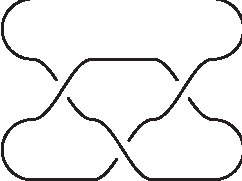 Figure 1
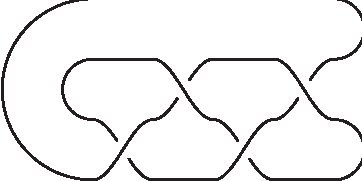 Figure 2
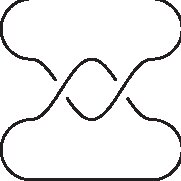 Figure 3
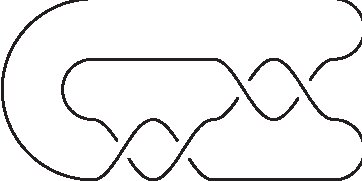 Figure 4
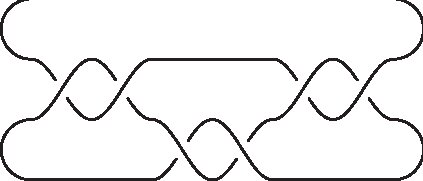 Figure 5
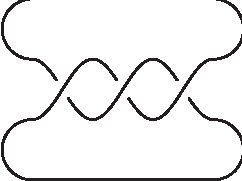 Figure 6
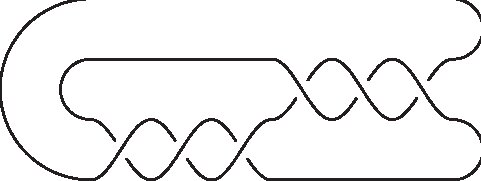 Figure 7
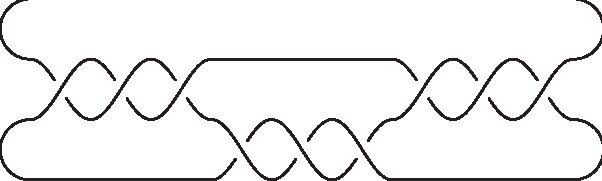 Figure 8
 Figure 9
 Figure 10
Peer Reviews
No public reviews on file for this paper yet. If you reviewed it on a platform where reviews are public (OpenReview, ICLR, NeurIPS, ICML), you can paste yours below so the community can read it here.
Videos
No videos yet. Explain this paper in a talk, walkthrough, or lecture? Add one.
Taxonomy
TopicsAdvanced Mathematical Theories and Applications · Digital Image Processing Techniques · Mathematics and Applications
On Fibonacci knots
P. -V. Koseleff, D. Pecker
Abstract
We show that the Conway polynomials of Fibonacci links are Fibonacci polynomials modulo 2. We deduce that, when and the Fibonacci knot is not a Lissajous knot.
keywords: Fibonacci polynomials, Fibonacci knots, continued fractions
1 Introduction
Fibonacci knots (or links) were defined by J. C. Turner ([11]) as rational knots with Conway notation He also considered the generalized Fibonacci knots where is a fixed integer and the sequence has length .
In this paper we determine the Conway and Alexander polynomials modulo 2 of Fibonacci knots. We show that the Conway polynomial of a generalized Fibonacci knot is a Fibonacci polynomial modulo .
As an application, we show that if and the Fibonacci knot is not a Lissajous knot.
Our results are obtained by continued fraction expansions.
2 Conway notation and Fibonacci knots
The Conway notation (J. H. Conway, [3]) is particularly convenient for the important class of rational (or two-bridge) knots. The Conway normal form of a rational knot (or link), is best explained by the following figure.
The number of twists is denoted by the integer , and the sign of is defined as follows: if is odd, then the right twist is positive, if is even, then the right twist is negative. On Fig. 1 the are positive (the first twists are right twists).
The rational links are classified by their Schubert fractions
[TABLE]
Two rational links of fractions and are equivalent if and only if and The integer is the determinant of the link, it is odd for a knot, and even for a two-component link.
The following result is a useful consequence of the continued fraction description of rational links (see [4] p. 207).
Theorem 1
Any rational link has a Conway normal form
The Fibonacci knots (or links) are defined by their Conway notation where is the number of crossings. The Schubert fraction of is and its determinant is the Fibonacci number It is the reason why J. C. Turner named these knots Fibonacci knots. He also introduced the generalized Fibonacci knots where is a fixed integer.
We first observe
Proposition 2
* is a knot if and only if and or and .*
Proof. Let us consider the Möbius transformation . It is convenient to consider its matrix notation P=\left(\hbox{}\,\vbox{\halign{ \hfil{#}\ \hfil& \hfil\ {#}\ \hfil&& \hfil\ {#}\ \hfil& \hfil\ {#}\hfil\cr n&1\cr 1&0\crcr}}\right). Let , it is also
[TABLE]
If then P\equiv\left(\hbox{}\,\vbox{\halign{ \hfil{#}\ \hfil& \hfil\ {#}\ \hfil&& \hfil\ {#}\ \hfil& \hfil\ {#}\hfil\cr 1&1\cr 1&0\crcr}}\right)\,(\hbox{\rm mod}\,2),\ P^{2}\equiv\left(\hbox{}\,\vbox{\halign{ \hfil{#}\ \hfil& \hfil\ {#}\ \hfil&& \hfil\ {#}\ \hfil& \hfil\ {#}\hfil\cr 0&1\cr 1&1\crcr}}\right)\,(\hbox{\rm mod}\,2),\ P^{3}\equiv{\mathchoice{\rm 1\mskip-4.0mul}{\rm 1\mskip-4.0mul}{\rm 1\mskip-4.5mul}{\rm 1\mskip-5.0mul}}\,(\hbox{\rm mod}\,2). We deduce that when , when and when . The case is similar.
3 The Conway and Alexander polynomials
The Alexander polynomial, discovered in 1928, is one of the most famous invariant of knots. J. H. Conway discovered an easy way to calculate it. He introduced the “Skein relations” which relate the polynomial of a link to the polynomials of links obtained by changing one crossing of .
The following result is a beautiful application of his algorithm.
Theorem 3** ([4])**
*Let be a rational knot (or link).
The Conway polynomial of is*
[TABLE]
The Alexander polynomial of is
[TABLE]
Let us consider a simple example.
Example 4** (The torus links)**
The torus link has Conway normal form . It is the link of fraction or We have the continued fraction (of length )
[TABLE]
Hence, the Conway polynomial is
[TABLE]
It is well known that
[TABLE]
where are the Fibonacci polynomials defined by ([12]). We conclude that the Conway polynomial of is the Fibonacci polynomial (see also [6]). If (i.e. is a knot) we obtain the Alexander polynomial
[TABLE]
The recently introduced Lissajous knots ([2, 5, 10, 4]) are non singular Lissajous space curves. We will show that in many cases, Fibonacci knots are not Lissajous knots. Let us first recall the following
Theorem 5** ([5, 10])**
If is a rational Lissajous knot then
Consequently, we see that a non trivial torus knot is never a Lissajous knot.
Moreover, Theorem 3 provides many examples of knots which are not Lissajous knots.
Corollary 6
Let The Conway polynomial of is equivalent to
Corollary 7
If the modulo Conway polynomial of is
Hence these knots are not Lissajous knots by Theorem 5.
The following result is an immediate consequence of Theorem 3.
Corollary 8
If the modulo Conway polynomial of is [math] if is odd, and if is even.
It is not known whether the knot is Lissajous or not (see [1]).
4 The modulo 2 Conway polynomial of Fibonacci knots
We shall now study the knots where is an odd integer.
Lemma 9
Let We have the identities
[TABLE]
[TABLE]
Proof. Let us prove the first formula. We shall use matrix notations for Möbius transformations. Let Its matrix is G=\left(\hbox{}\,\vbox{\halign{ \hfil{#}\ \hfil& \hfil\ {#}\ \hfil&& \hfil\ {#}\ \hfil& \hfil\ {#}\hfil\cr 3&2\cr-2&-1\crcr}}\right), and consequently we get by induction
[TABLE]
Let
[TABLE]
The corresponding matrices are
[TABLE]
Consequently
[TABLE]
that is which proves the first identity. If we substitute in Formula (2), we obtain the second identity (3).
Corollary 10
Let We have the continued fractions
[TABLE]
Let us denote If we get the continued fractions
[TABLE]
When , there is no continued fraction expansion of with even quotients, by Prop. 2. In this case, we shall get a continued fraction expansion for which is another fraction of the same knot. Let be the Möbius transformation defined by We have
Proposition 11
Let We have the continued fractions
[TABLE]
[TABLE]
.
Proof. The first formula has already been proved. Let us prove the second formula. We shall use the Möbius maps corresponding to
[TABLE]
Let us define the Möbius transformation We obtain, using Form. (8)
[TABLE]
Let be a matrix corresponding to the Möbius map . We have
[TABLE]
and then
[TABLE]
This means that s\bigl{(}[n,n,n,x]\bigr{)}=h\circ s(x), which proves our formula.
Remark 12
By considering the case where , we obtain the following interesting continued fractions of length :
[TABLE]
Using the corollary 10 we obtain similarly
[TABLE]
of length and of length
Of course, these fractions correspond to Fibonacci knots (or links). They are not Lissajous knots because of corollary 6.
It is straightforward to calculate the Conway polynomials of our Fibonacci knots, using Prop. 11.
Theorem 13
Let us denote by the modulo 2 Conway polynomial of the Fibonacci link We have where
[TABLE]
Corollary 14
If and the Fibonacci link is not a Lissajous knot.
It is not known whether the knot is a Lissajous knot ([1]).
Question 15
It would be interesting to study the wider classes of knots defined by their Conway notation
If we obtain all the rational knots ([8, 9]).
If we obtain the important class of rational fibered knots (see [7]).
In general, we obtain knots with fractions such that
Acknowledgements: We would like to thank Pr. C. Lamm for having suggested this problem to us.
The reference list from the paper itself. Each links out to its DOI / PubMed record.
- 1[1] A. Boocher, J. Daigle, J. Hoste, W. Zheng, Sampling Lissajous and Fourier knots , ar Xiv:0707.4210 , 2007
- 2[2] M. G. V. Bogle, J. E. Hearst, V. F .R. Jones, L. Stoilov, Lissajous knots , Journal of Knot Theory and its Ramifications, 3(2): 121-140 (1994)
- 3[3] J. H. Conway, An enumeration of knots and links, and some of their algebraic properties, Computational Problems in Abstract Algebra (Proc. Conf., Oxford, 1967), 329-358 Pergamon, Oxford (1970)
- 4[4] P. Cromwell, Knots and links. Cambridge University Press, 2004
- 5[5] V. F. R. Jones, J. Przytycki, Lissajous knots and billiard knots, Banach Center Publications, 42:145-163 (1998)
- 6[6] L.H. Kauffman , On knots , Annals of Mathematics Studies, 115. Princeton University Press, Princeton, NJ, 1987
- 7[7] A. Kawauchi A survey of knot theory , Birkhäuser Verlag, Basel, 1996
- 8[8] P. -V. Koseleff, D. Pecker, Chebyshev knots , ar Xiv:0812.1089 , 2008