A Soft Interaction Model at Ultra High Energies: Amplitudes, Cross Sections and Survival Probabilities
E. Gotsman, E. Levin, U. Maor (Tel Aviv Univ.)
TL;DR
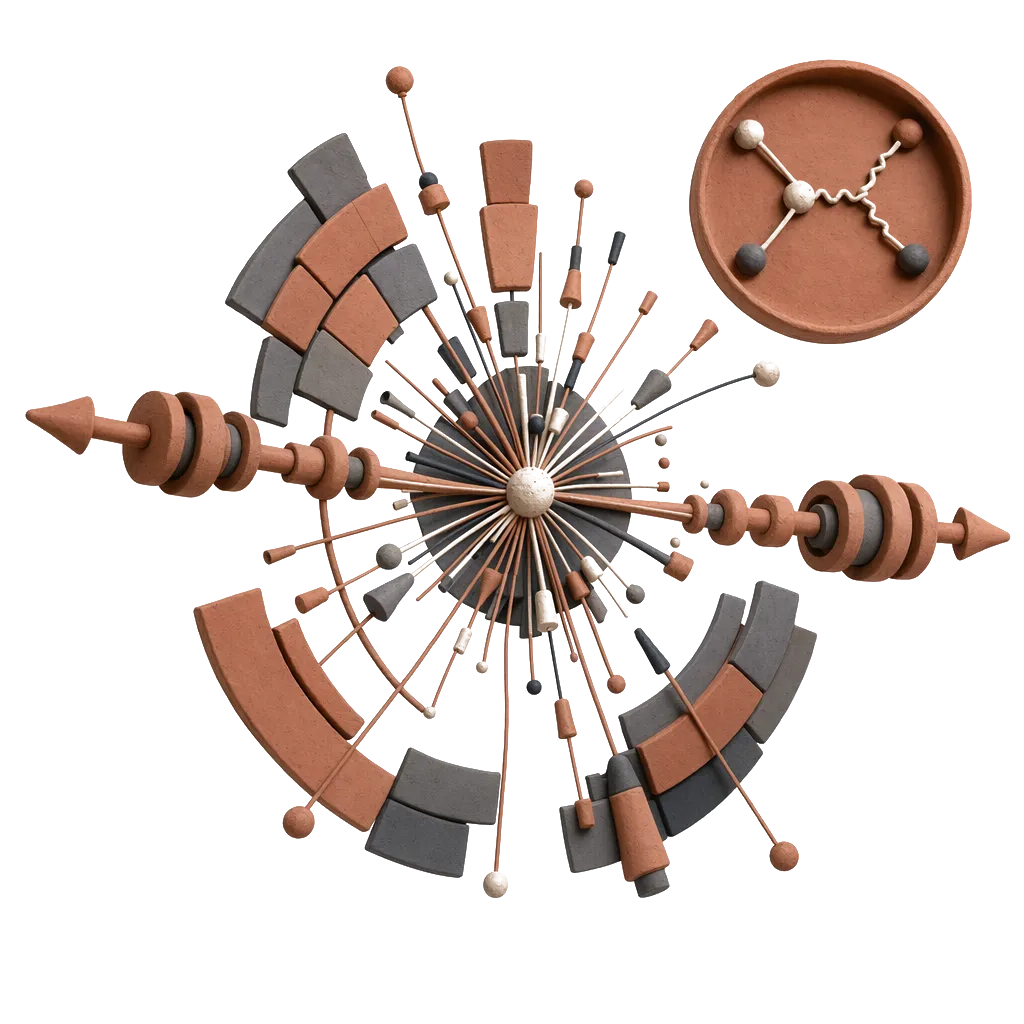
This paper develops a two-channel model to describe soft scattering data across a wide energy range, predicting slow amplitude growth and a low survival probability for Higgs production at the LHC, aligning with a partonic saturation framework.
Contribution
It introduces a novel two-channel model that simplifies diffractive states and extends predictions to high energies, including LHC and cosmic ray scales.
Findings
Elastic amplitude approaches the black disc limit very slowly.
Predicted survival probability for Higgs production at LHC is 0.7%.
Model aligns with a partonic saturation picture.
Abstract
In this paper we present a two channel model with the goal of reproducing the soft scattering data available in the ISR-Tevatron energy range, and extend the model results to LHC and Cosmic Rays energies. A characteristic feature of the model is that we represent the sum of all diffractive final states at a vertex, by a single diffractive state. Our two main results are: (i) The approach of the elastic scattering amplitude to the black disc bound is very slow, reaching it at energies far higher than the GZK ankle cutoff. (ii) Our predicted survival probability for Higgs exclusive central diffractive production at the LHC is 0.7%, which is considerably smaller than our previous estimate. The above features are compatible with a parton-like model in which the traditional soft Pomeron is replaced by an amplitude describing the partonic system, which issaturated in the soft (long distance)…
Peer Reviews
No public reviews on file for this paper yet. If you reviewed it on a platform where reviews are public (OpenReview, ICLR, NeurIPS, ICML), you can paste yours below so the community can read it here.
Videos
No videos yet. Explain this paper in a talk, walkthrough, or lecture? Add one.
Taxonomy
TopicsHigh-Energy Particle Collisions Research · Quantum Chromodynamics and Particle Interactions · Particle physics theoretical and experimental studies
The reference list from the paper itself. Each links out to its DOI / PubMed record.
- 1[1] E. Gotsman, E. Levin and U. Maor, Phys. Lett. B 452 , (1999) 387.
- 2[2] E. Gotsman, E. Levin and U. Maor, Phys. Rev. D 49 , (1994) R 4321.
- 3[3] J. Bartels, E. Gotsman, E. Levin, M. Lublinsky and U. Maor, Phys. Rev. D 68 (2003) 054008; Phys.Lett. B 556 (2003) 114.
- 4[4] K. J. Golec-Biernat and M. Wusthoff, Phys.Rev. D 59 (1999) 014017; Phys.Rev. D 60 (1999) 114023. E. Gotsman, E. Levin, M. Lublinsky, U. Maor, E. Naftali and K. Tuchin, J. Phys. G 27 (2001) 2297. J. Bartels, K. J. Golec-Biernat and H. Kowalski, Phys. Rev. D 66 (2002) 014001.
- 5[5] H.Kowalski and D. Teaney, Phys. Rev. D 68 (2003) 114005.
- 6[6] T. Affolderr et al., Phys. Rev. Lett. 87 , (2001) 141802.
- 7[7] J. D. Bjorken, Int. J. Mod. Phys. A 7 , (1992) 4189; Phys. Rev. D 47 , (1993) 101.
- 8[8] E. Gotsman, E.M. Levin and U. Maor, Phys. Lett. B 309 , (1993) 199.