Polarization aspects in radiative neutralino production
Herbert K. Dreiner, Olaf Kittel, and Ulrich Langenfeld
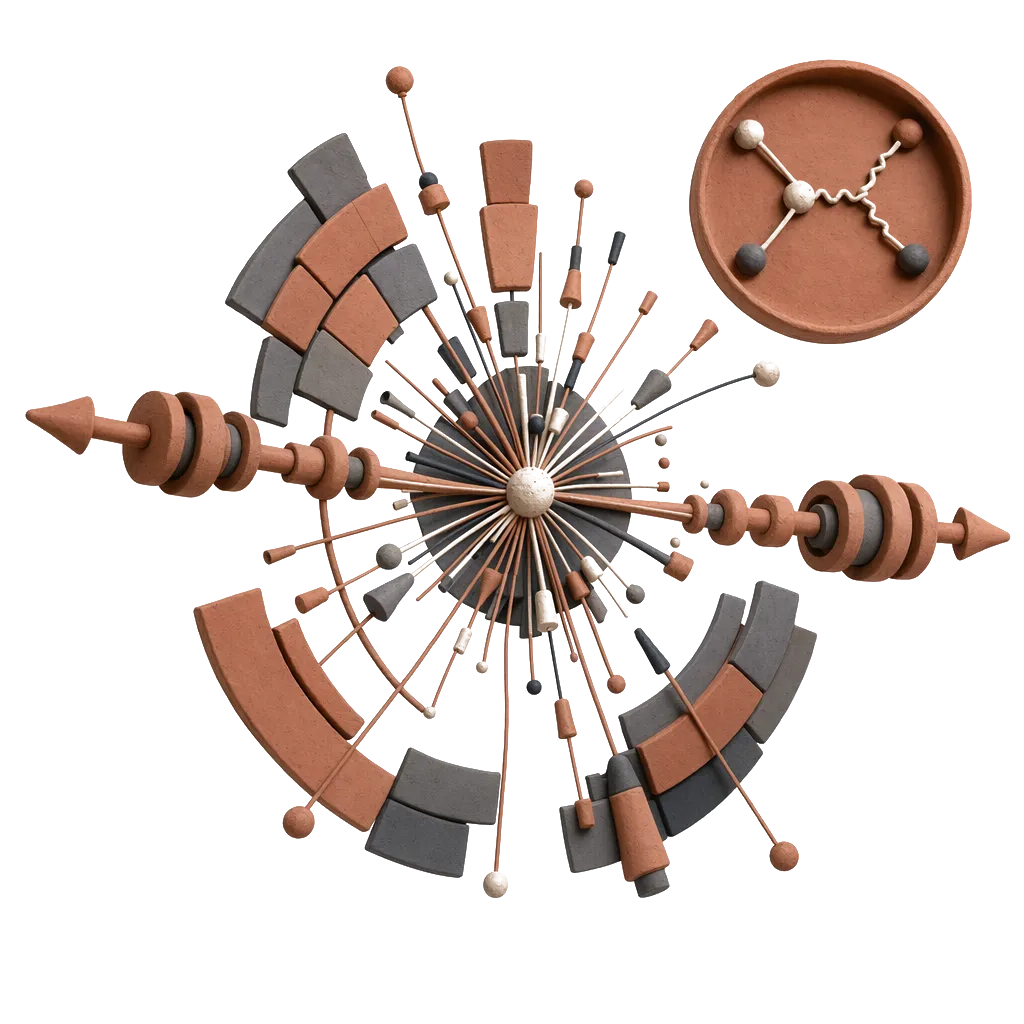
TL;DR
This paper investigates how beam polarization at the International Linear Collider can enhance the detection of radiative neutralino production, potentially allowing observation of SUSY particles that are otherwise too heavy to produce in pairs.
Contribution
It demonstrates that longitudinal beam polarization significantly boosts the signal and reduces background, highlighting a method to detect neutralinos in scenarios with heavy SUSY particles.
Findings
Polarized beams enhance neutralino production signal.
Beam polarization reduces Standard Model background.
Radiative neutralino production could be the only accessible SUSY process at 500 GeV.
Abstract
We study the impact of beam polarization on radiative neutralino production e+e- \to \chi^0_1 \chi^0_1 photon at the International Linear Collider. We show that longitudinal polarized beams significantly enhance the signal and simultaneously reduce the Standard Model background from radiative neutrino production e+e- \to \nu \bar\nu photon. We point out that the radiative production of neutralinos could be the only accessible SUSY particles, if neutralinos, charginos, sleptons, as well as squarks and gluinos are too heavy to be pair-produced in the first stage of the ILC at sqrt{s} = 500 GeV.
Peer Reviews
No public reviews on file for this paper yet. If you reviewed it on a platform where reviews are public (OpenReview, ICLR, NeurIPS, ICML), you can paste yours below so the community can read it here.
Videos
No videos yet. Explain this paper in a talk, walkthrough, or lecture? Add one.
Taxonomy
TopicsParticle physics theoretical and experimental studies · Dark Matter and Cosmic Phenomena · Particle Detector Development and Performance
The reference list from the paper itself. Each links out to its DOI / PubMed record.
- 1[1] Slides: http://ilcagenda.linearcollider.org/ contribution Display.py?contrib Id=53&session Id=69&conf Id=1296 and contribution Display.py?contrib Id=247&session Id=92&conf Id=1296
- 2[2] H. E. Haber and G. L. Kane, Phys. Rept. 117 , 75 (1985).
- 3[3] http://www.linearcollider.org/wiki/doku.php
- 4[4] See, for example, J. A. Aguilar-Saavedra et al. , Eur. Phys. J. C 46 (2006) 43 [ar Xiv:hep-ph/0511344].
- 5[5] A. Datta, A. Datta and S. Raychaudhuri, Phys. Lett. B 349 (1995) 113 [ar Xiv:hep-ph/9411435].
- 6[6] S. Ambrosanio, B. Mele, G. Montagna, O. Nicrosini and F. Piccinini, Nucl. Phys. B 478 (1996) 46 [ar Xiv:hep-ph/9601292].
- 7[7] A. Datta, A. Datta and S. Raychaudhuri, Eur. Phys. J. C 1 (1998) 375 [ar Xiv:hep-ph/9605432].
- 8[8] S. Y. Choi, J. S. Shim, H. S. Song, J. Song and C. Yu, Phys. Rev. D 60 (1999) 013007 [ar Xiv:hep-ph/9901368].