Quasi-periodic oscillations, charge and the gravitomagnetic theory
Jacob Biemond
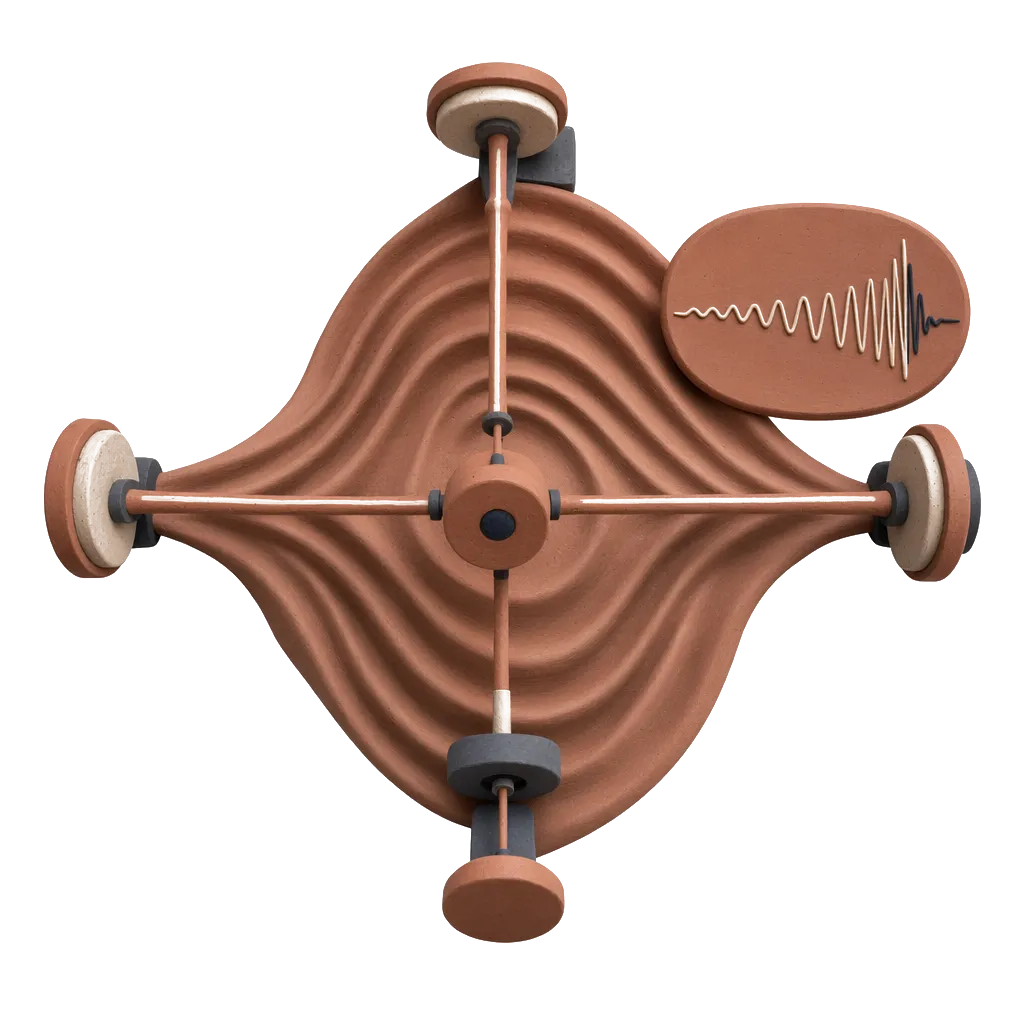
TL;DR
This paper introduces a new model explaining high and low frequency quasi-periodic oscillations in compact stars using charged tori and gravitomagnetic theory, providing predictions aligned with observational data.
Contribution
It presents a novel model combining charged tori and a modified gravitomagnetic theory to explain QPOs across different compact objects, including white dwarfs.
Findings
Model explains high and low frequency QPOs in pulsars and black holes.
Predictions match observed QPO frequencies in specific astrophysical sources.
Charge flow mechanisms may account for frequency drifts and enigmatic QPOs.
Abstract
A new model for the explanation of the high frequency quasi-periodic oscillations (QPOs) in pulsars, black holes and white dwarfs is presented. Three circular tori are assumed to be present around the star: an inner torus with charge , an outer torus with charge and a torus with electrically neutral mass in the middle, whereas the star bears a charge ( and have the same sign, the opposite one). The frequency of the mass current is approximately given by the Kepler frequency, whereas the frequencies of and , and , respectively, are calculated from classical mechanics and Coulomb's law. For the explanation of the low frequency QPOs in pulsars and black holes a special interpretation of the gravitomagnetic theory may be essential. From the latter theory four new gravitomagnetic precession frequencies are deduced,…
Peer Reviews
No public reviews on file for this paper yet. If you reviewed it on a platform where reviews are public (OpenReview, ICLR, NeurIPS, ICML), you can paste yours below so the community can read it here.
Videos
No videos yet. Explain this paper in a talk, walkthrough, or lecture? Add one.
Taxonomy
TopicsPulsars and Gravitational Waves Research · Quantum and Classical Electrodynamics · Astrophysical Phenomena and Observations