Simulation of four-body interaction in a nuclear magnetic resonance quantum information processor
Wen-Zhang Liu, Jin-Fu Zhang, Gui Lu Long

TL;DR
This paper demonstrates the experimental simulation of four-body interactions using a four-qubit nuclear magnetic resonance quantum processor, highlighting the potential for simulating complex quantum systems.
Contribution
It presents the first experimental realization of four-body interactions in a NMR quantum processor using strongly modulating pulses.
Findings
Good agreement between experimental results and theoretical predictions
Successful implementation of spin selective excitation for four-body interactions
Advancement in quantum simulation capabilities for many-body systems
Abstract
Four-body interaction plays an important role in many-body systems, and it can exhibit interesting phase transition behaviors. Historically it was the need to efficiently simulate quantum systems that lead the idea of a quantum computer. In this Letter, we report the experimental demonstration of a four-body interaction in a four- qubit nuclear magnetic resonance quantum information processor. The strongly modulating pulse is used to implement spin selective excitation. The results show a good agreement between theory and experiment.
Click any figure to enlarge with its caption.
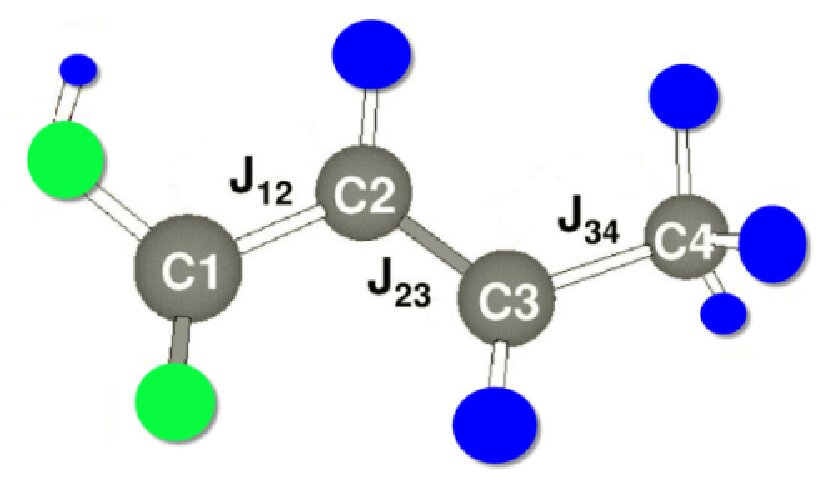 Figure 1
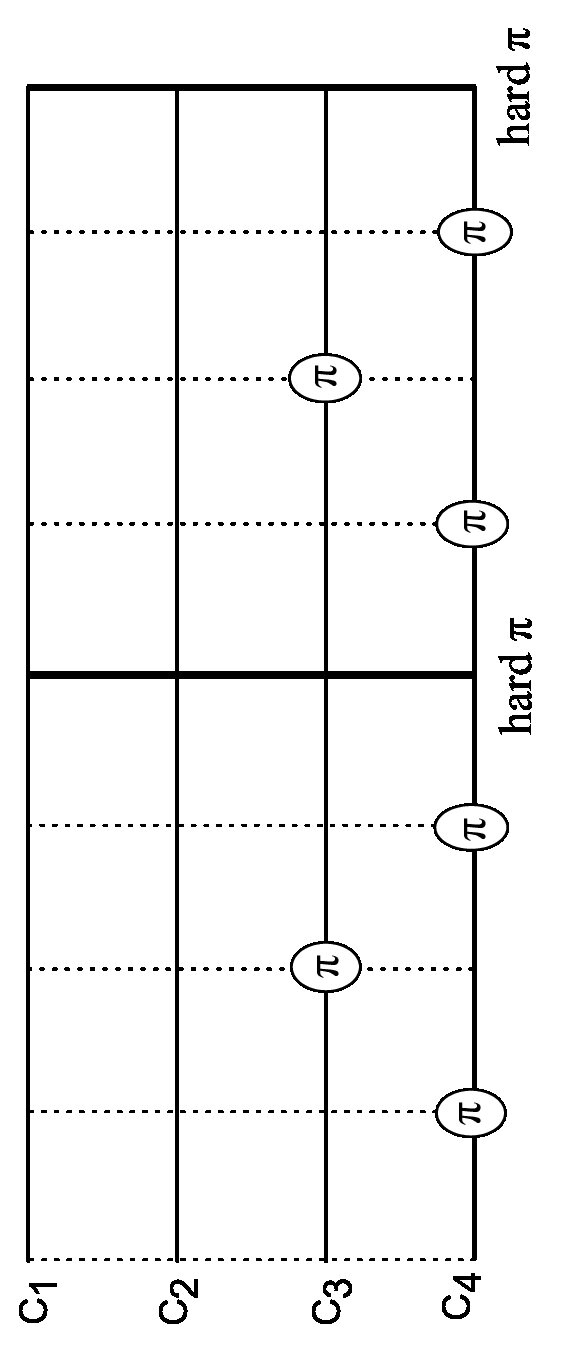 Figure 2
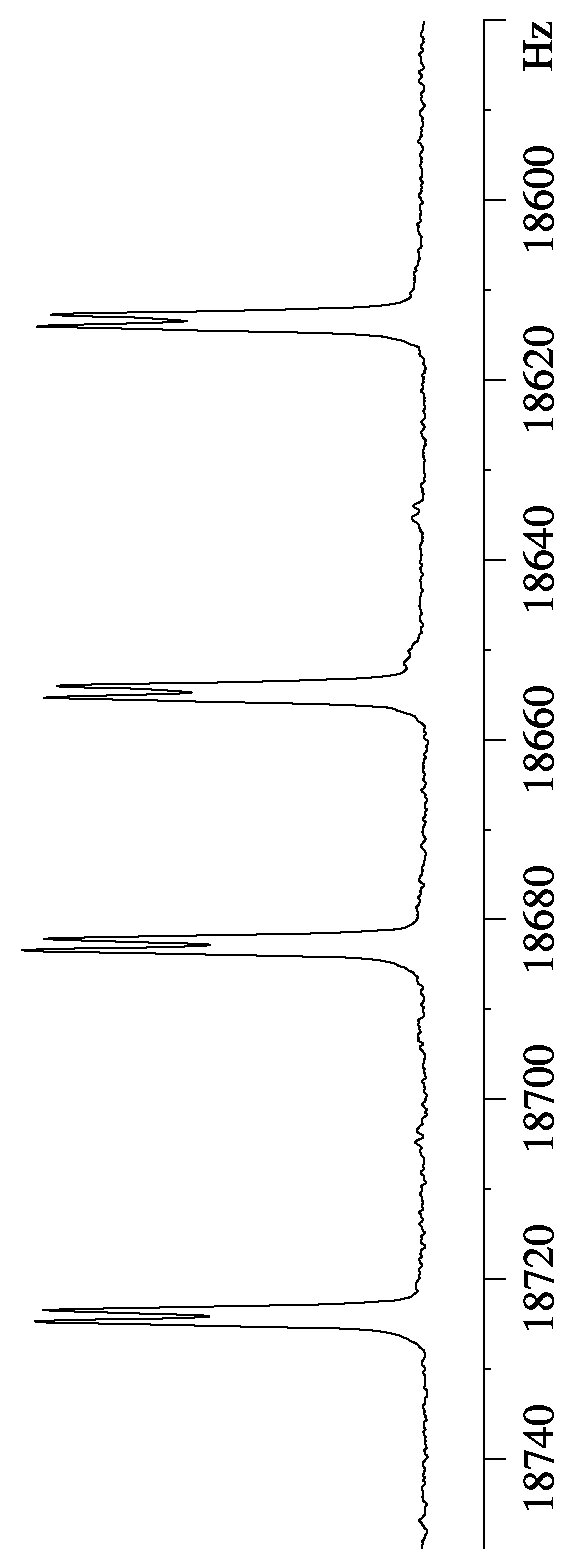 Figure 3
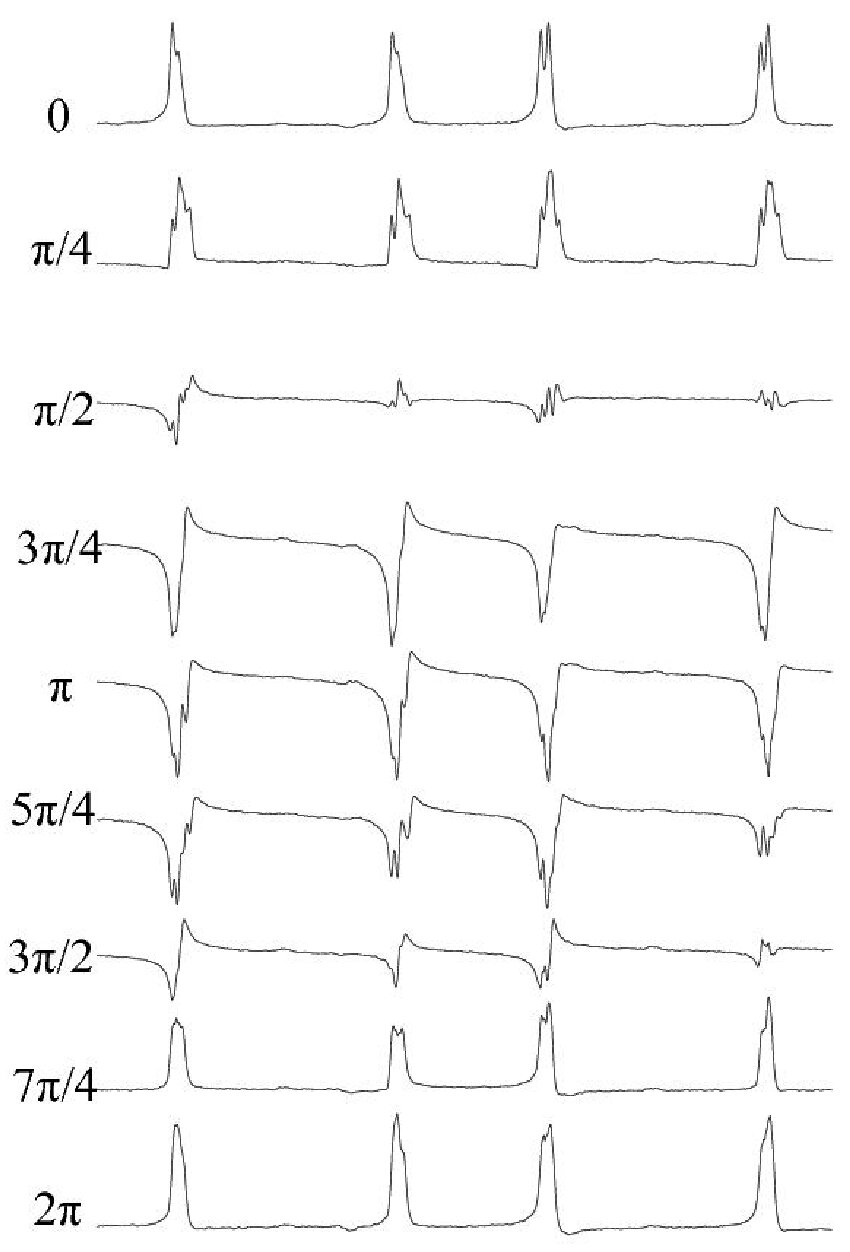 Figure 4
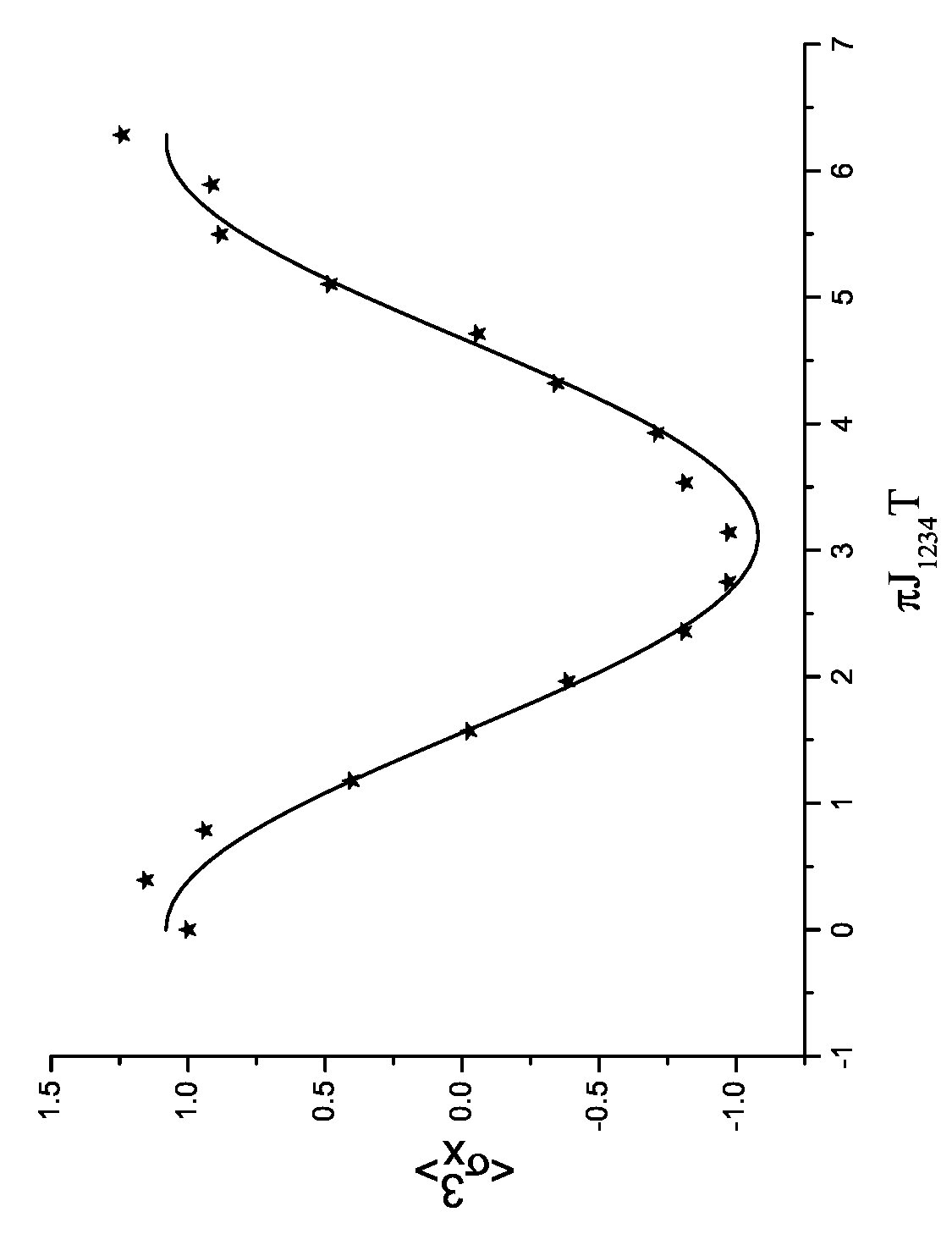 Figure 5
Peer Reviews
No public reviews on file for this paper yet. If you reviewed it on a platform where reviews are public (OpenReview, ICLR, NeurIPS, ICML), you can paste yours below so the community can read it here.
Videos
No videos yet. Explain this paper in a talk, walkthrough, or lecture? Add one.
Taxonomy
TopicsQuantum Computing Algorithms and Architecture · Quantum and electron transport phenomena · Spectroscopy and Quantum Chemical Studies
Simulation of four-body interaction in a nuclear magnetic resonance
quantum information processor 111 Correspondence should be sent to: Gui Lu Long, gllong @mail. tsinghua. edu.cn
Wen-Zhang Liu1, Jin-Fu Zhang1, and Gui Lu Long1,2
1Key Laboratory for Atomic and Molecular NanoSciences and Department of Physics, Tsinghua University, Beijing 100084, China
2 Tsinghua National Laboratory For Information Science and Technology, Beijing 100084, China
Abstract
Four-body interaction plays an important role in many-body systems, and it can exhibit interesting phase transition behaviors. Historically it was the need to efficiently simulate quantum systems that lead the idea of a quantum computer. In this Letter, we report the experimental demonstration of a four-body interaction in a four- qubit nuclear magnetic resonance quantum information processor. The strongly modulating pulse is used to implement spin selective excitation. The results show a good agreement between theory and experiment.
pacs:
03.67.Lx
pacs:
03.67.Lx
I Introduction
Quantum computers have advantages over the classical counterparts in simulating quantum systems Feynman and solving some hard problems, such as factoring large number and searching unsorted databases shor . Among the various candidates for implementing the large- scale quantum computer in the future and demonstrating quantum algorithms to corroborate existing theories, liquid nuclear magnetic resonance (NMR) has been proven a convenient and practical method to learn lessons for the other physical systems book . NMR quantum computer is an Ising-type computer Bowdrey where two-body interactions take the form of , known as couplings in NMR, where denotes the Pauli matrix of the -th spin, and denotes the strength of coupling between two spins.
There have been much interests in many-body interactions. Besides two-body interactions, many-body interactions are valuable sources for quantum information processors. For example, the three-spin interactions can speed up the quantum state transfer in the Heisenberg spin chain zhang06 . Four-body interactions have attracted much interests recentlyfour . The systems with many-body interactions can exhibit interesting phase transition behaviors four , such as quantum entanglement phase transitions Yang . The three spin-interactions in the spin chain can induce the quantum criticality that cannot be measured by concurrence, because three-spin interactions generate three-qubit entanglement Yang . Four-body interaction may play an important role in phase transition in some condensed mattersfour .
Simulation of quantum system is one of main applications of future quantum computers. Practical factoring and searching applications of quantum computer usually require hundreds even thousands of qubits. But the simulation of quantum systems may require only a few dozens of qubits. Thus simulating quantum systems may well be the first practical application of the early practical quantum computer. It is helpful now to study the simulations of quantum system with a few qubit quantum information processer, to locate problems and gather experiences, in particular the unitary operations and the extent of decoherence in existing apparatus. In fact, it has been successfully demonstrated that three-body interaction can be simulated very well in NMR quantum computerszhang06 ; Tseng . It is a reasonable assumption that the four-spin interactions relate to four-qubit entanglement, which is still unclear for us currently. In this paper we focus on implementing the four-spin interactions in a NMR quantum computer. Our work is a valuable step in exploring quantum simulations, and also a crucial step for implementing the quantum phase transitions induced by four-body interactions and investigating the relation between the four-spin interactions and four-qubit entanglement experimentally.
II Generating four-spin interactions using NMR
Our task is to decompose the four- spin evolution into a series of one-spin operations and -couplings. The one-spin operations are realized by radio frequency pulses. The -coupling evolution
[TABLE]
can be realized by standard NMR spin-echo techniques Linden . Under , evolutes as
[TABLE]
where .
Through some calculations decompose one finds that the - spin interaction can be decomposed as the - spin interactions by iteration
[TABLE]
By introducing
[TABLE]
Eq. (3) can be further expressed as
[TABLE]
From Eq. (6) one finds that the many- spin interaction can be decomposed into the operations that can be directly realized by NMR. When one obtains
[TABLE]
where is the effective strength of the four- spin interaction. The above equation can also be represented as
[TABLE]
III implementation
We use Carbon-13 labelled crotonic acid dissolved in D2O as the sample. The chemical sketch of crotonic acid is shown as Fig. 1, where C1 - C4 are assigned as qubits 1 - 4, respectively. The protons are decoupled during the whole experiment. The experiments are implemented on a Bruker DRX 500 MHz spectrometer. The temperature is controlled at 22 *∘*C.
The Hamiltonian of the NMR system reads
[TABLE]
where - are the resonance frequencies of C1 - C4. The coupled-spin evolution between two spins is denoted as
[TABLE]
where , and . can be realized by averaging the coupling constants other than to zero Linden . The pulse sequence to implement is shown in Fig.2, where the evolution time is divided into eight identical segments.
We use Eq. (7) to implement through the pulse sequence
[TABLE]
where denotes a pulse along axis on C2. The corresponding evolution is . All spin selective pulses are strongly modulated pulses (SMPs) cory2002 . A SMP consists of a series of non-selective (hard) pulses that modulate the system’s dynamics strongly to produce precisely a desired spin-selective unitary propagator. In our experiments the fidelity of each SMP is larger than 0.99. The total duration time of the whole experiment is about ms.
We choose the state
[TABLE]
as the initial state, which is prepared by
[TABLE]
from the thermal equilibrium Tseng ; zhang06 ; zhang05 . Here we use the deviation density matrix to describe the state of the NMR system Chuang ; fplong . The carbon spectrum for the system in is shown in Fig. 3, where the signals are chosen as the reference signals for the following spectra. The small causes the partial overlapping peaks.
Under the four-body interaction, the state of this system changes from to
[TABLE]
When with , , …, , the spectra of C3 are shown as Fig. 4. The experimental results agree on the theoretical expectations. By integrating over the eight peaks we obtain the evolution of as a function of time, , and is shown in Fig. 5. The curve can be fitted as , which agrees well with the theoretical expectation . The small discrepancy is due to the imperfection of pulse and decoherence.
IV Summary
We have experimentally simulated the four-body interaction in a four-qubit NMR quantum information processor. The experiment results show good agreement with the theoretical expectations. The SMP makes the simulation in NMR very well. With this experiment, one can proceed to demonstrate large quantum system simulations, and look into interesting physical phenomenon such as phase transitions in quantum systems with four-body interaction. The simulation method used here in NMR techniques can be generalized to other Ising type quantum computer.
V Acknowledgment
The experiments were performed at physic department of Dortmund University. We thank the support given by Prof. D. Suter. Liu thanks Dr. T. S. Mahesh for his help in SMPs. This work is supported by the National Natural Science Foundation of China under Grant No. 10374010, 60433050, 10325521, the National Fundamental Research Program Grant No. 2006CB921106, the Hang-Tian Science Fund, the SRFDP program of Education Ministry of China.
The reference list from the paper itself. Each links out to its DOI / PubMed record.
- 1(1) R. P. Feynman, Int. J. Theor. Phys. 21 , 467 (1982); S. Lloyd, Science 273 , 1073 (1996).
- 2(2) P. W. Shor, in Proceedings of the 35th Annual Symposium on the Foundations of Computer Science, Santa Fe, NM, 1994 (IEEE Computer Society Press, New York 1994); L. K. Grover, Phys. Rev. Lett. 79 , 325 (1997)
- 3(3) M. A. Nielsen and I. L. Chuang, Quantum Computation and Quantum Information , Page 353 (Cambridge University Press, Cambridge, 2000); The Physics of Quantum Information , edited by D. Bouwmeester, A. Ekert, and A. Zeilinger, Page 221 (Springer, Berlin, 2000); D. G. Cory, A. Fahmy and T. F. Havel, Proc. Natl. Acad. Sci. USA 94 ,1634(1997); N. Gershenfeld and I. Chuang, Science 275 ,350(1997); D. G. Cory, M. D. Price, and T. F. Havel, Physica D 120 , 82 (1998); L. M. K. Vandersypen and
- 4(4) M. D. Bowdrey, J. A. Jones, E. Knill, R. Laflamme, Phys. Rev. A 72 , 032315 (2005)
- 5(5) J.-F. Zhang, X.-H. Peng, D. Suter, Phys. Rev. A 73 , 062325 (2006)
- 6(6) O. G. Mouritsen, B. Frank, D. Mukamel, Phys. Rev. B 27 , 3018 (1983); V. Mastropietro, Journal of Statistical Physics, 111 , 201 (2003); S. S. Aplesnin and N. I. Piskunova, J. Phys.: Condens. Matter 17 , 5881 (2005); A. Lipowski, Physica A 248 , 207 (1997); T. Iwashita, K. Uragami, K. Goto, T. Kasama, T. Idogaki, Physica B 329 C 333 , 1284 (2003); B. Boechat, et al., Phys. Rev. B 61 , 14327 (2000); D. F. Styer, M. K. Phani, and J. L. Lebowitz, Phys. Rev. B 34 , 3361 (1986).
- 7(7) P. Lou, W.-C. Wu, and M.-C. Chang, Phys. Rev. B 70 , 064405 (2004); M.-F. Yang, Phys. Rev. A, 71 , 030302(R) (2005)
- 8(8) C. H. Tseng, et al ,Phys. Rev.A 61, 012302 (1999)