Negative- and positive-phase-velocity propagation in an isotropic chiral medium moving at constant velocity
Tom G.Mackay (University of Edinburgh), Akhlesh Lakhtakia, (Pennsylvania State University)

TL;DR
This paper investigates how electromagnetic plane waves behave in a moving isotropic chiral medium, revealing that phase velocity can appear positive or negative depending on the observer's frame of reference due to relativistic effects.
Contribution
It demonstrates that phase velocity signs are frame-dependent in a moving chiral medium, using Lorentz transformations to analyze electromagnetic wave propagation.
Findings
Positive phase velocity in co-moving frame can appear negative in non-co-moving frames.
Negative phase velocity in co-moving frame can appear positive in non-co-moving frames.
Electromagnetic wave behavior is affected by relativistic motion of the medium.
Abstract
Analysis of electromagnetic planewave propagation in a medium which is a spatiotemporally homogeneous, temporally nonlocal, isotropic, chiral medium in a co-moving frame of reference shows that the medium is both spatially and temporally nonlocal with respect to all non-co-moving inertial frames of reference. Using the Lorentz transformations of electric and magnetic fields, we show that plane waves which have positive phase velocity in the co-moving frame of reference can have negative phase velocity in certain non-co-moving frames of reference. Similarly, plane waves which have negative phase velocity in the co-moving frame can have positive phase velocity in certain non-co-moving frames.
Click any figure to enlarge with its caption.
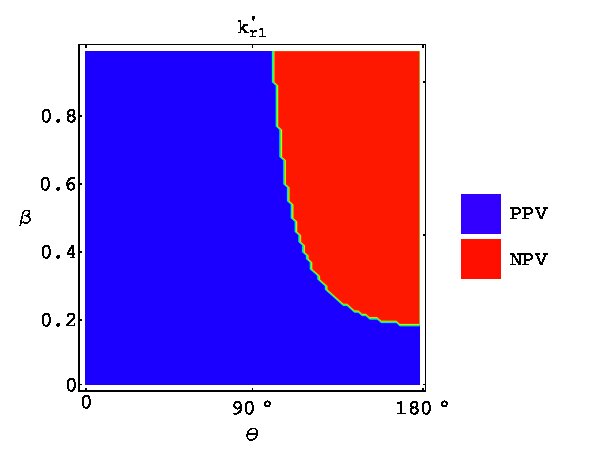 Figure 1
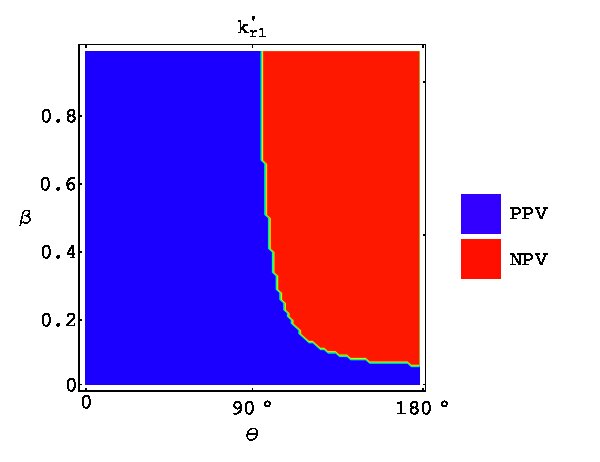 Figure 2
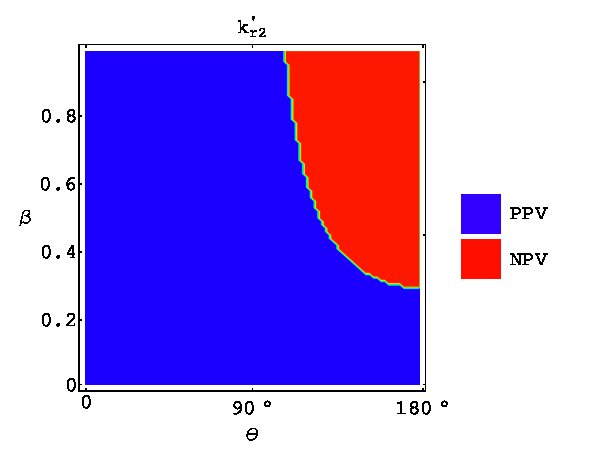 Figure 3
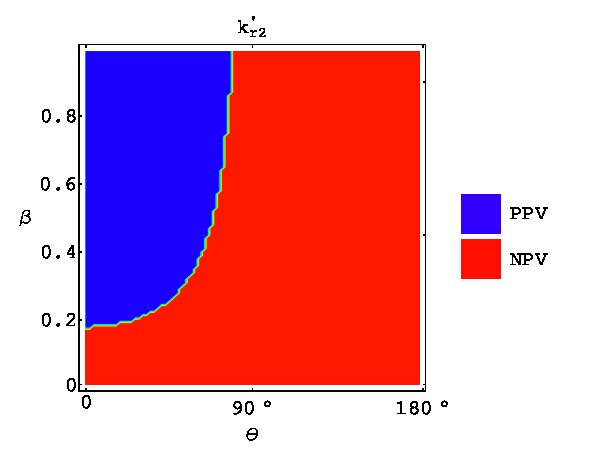 Figure 4
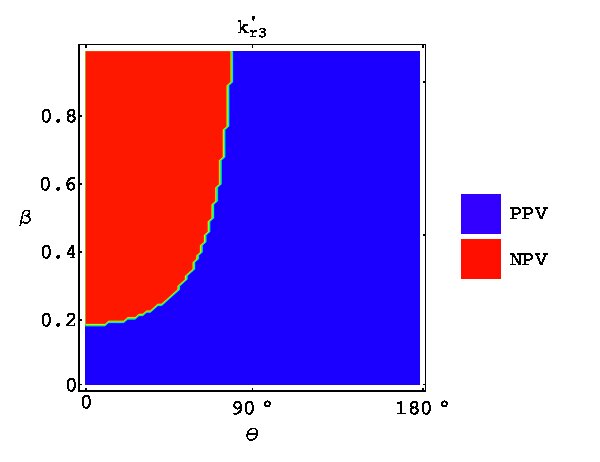 Figure 5
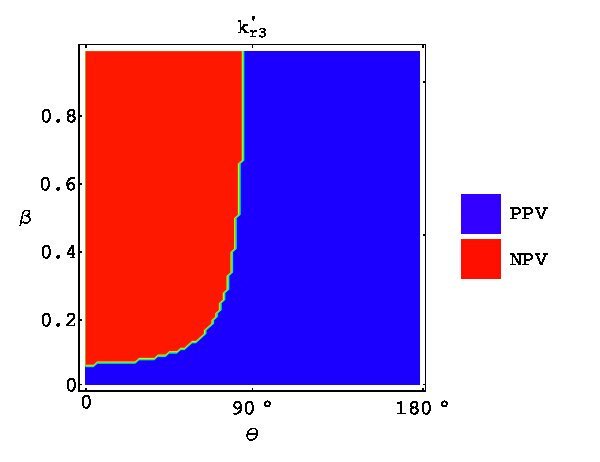 Figure 6
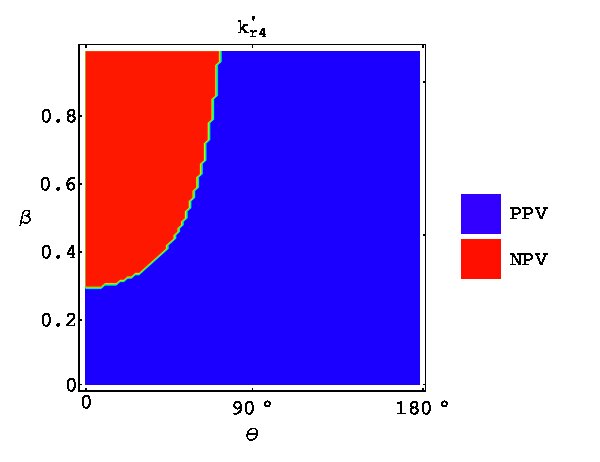 Figure 7
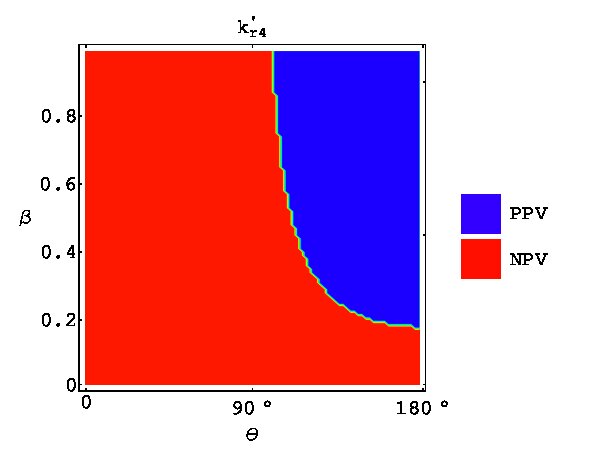 Figure 8
Peer Reviews
No public reviews on file for this paper yet. If you reviewed it on a platform where reviews are public (OpenReview, ICLR, NeurIPS, ICML), you can paste yours below so the community can read it here.
Videos
No videos yet. Explain this paper in a talk, walkthrough, or lecture? Add one.
Taxonomy
TopicsMetamaterials and Metasurfaces Applications · Orbital Angular Momentum in Optics · Quantum Mechanics and Non-Hermitian Physics
Negative– and positive–phase–velocity propagation in an isotropic chiral medium moving at constant velocity
Tom G. Mackaya and Akhlesh Lakhtakiab
a School of Mathematics
James Clerk Maxwell Building
University of Edinburgh
Edinburgh EH9 3JZ, United Kingdom
email: [email protected]
b CATMAS — Computational & Theoretical Materials Sciences Group
Department of Engineering Science & Mechanics
212 Earth & Engineering Sciences Building
Pennsylvania State University, University Park, PA 16802–6812
email: [email protected]
Abstract
Analysis of electromagnetic planewave propagation in a medium which is a spatiotemporally homogeneous, temporally nonlocal, isotropic, chiral medium in a co–moving frame of reference shows that the medium is both spatially and temporally nonlocal with respect to all non–co–moving inertial frames of reference. Using the Lorentz transformations of electric and magnetic fields, we show that plane waves which have positive phase velocity in the co–moving frame of reference can have negative phase velocity in certain non–co–moving frames of reference. Similarly, plane waves which have negative phase velocity in the co–moving frame can have positive phase velocity in certain non–co–moving frames.
Keywords: Isotropic chiral medium, Lorentz transformation, negative phase velocity, nonlocality
1 Introduction
Analysis of planewave propagation in a frame of reference that is uniformly moving with respect to the medium of propagation can lead to the emergence and understanding of new phenomenons. In this respect, the Minkowski constitutive relations, as widely described in standard books [1, 2], are strictly appropriate to instantaneously responding mediums only [3]. For realistic material mediums, recourse should be taken to the Lorentz transformation of electromagnetic field phasors [4, 5].
In an earlier study on plane waves in a medium that is spatiotemporally homogeneous, temporally nonlocal, isotropic and chiral in a co–moving frame of reference, we reported that planewave propagation with negative phase velocity (NPV) is possible with respect to a non–co–moving frame of reference, even though the medium does not support NPV propagation in the co–moving frame [6]. That study applies strictly only at low translational speeds. In this paper, we demonstrate by means of an analysis based on the Lorentz–transformed electromagnetic fields in the non–co-moving frame, that our conclusion remains qualitatively valid for realistic mediums even at high translational speeds.
2 Planewave analysis
We consider a spatiotemporally homogeneous, spatially local, temporally nonlocal, isotropic chiral medium, characterized in the frequency domain by the Tellegen constitutive relations [7]
[TABLE]
in an inertial frame of reference . The relative permittivity , relative permeability and chirality parameter are complex–valued functions of the angular frequency if the medium is dissipative, and real–valued if it is nondissipative [1, p. 71]; and are the permittivity and permeability of free space, respectively. The electromagnetic field phasors are related by the Maxwell curl postulates as
[TABLE]
Our attention is focused on a plane wave, described by the phasors
[TABLE]
which propagates in the medium characterized by (1), with wavevector and wavenumber . There are four possibilities for the relative wavenumber: where
[TABLE]
With respect to frame , the plane wave is assumed to be uniform; i.e., .
Suppose that the inertial frame is moving at constant velocity relative to another inertial frame . The electromagnetic field phasors in are related to those in by the Lorentz transformations [4, 5]
[TABLE]
where is the 33 identity dyadic, and the relative translational speed , with being the speed of light in free space. In terms of the phasors, the plane wave is described by
[TABLE]
The phasor amplitude vectors and are related via the transformations (5), whereas [4]
[TABLE]
Since for a dissipative medium, we have from (9) that with , , , and , but in general; i.e., the plane wave is generally nonuniform with respect to . Similarly, from (10) we have that with and . Expressing the phasors as
[TABLE]
we note that that the periodic propagation of phase is governed by and , whereas attenuation or growth of the wave amplitude is governed by and . By writing the phasor amplitudes as and , the corresponding cycle–averaged Poynting vector may be expressed as
[TABLE]
for a cycle beginning at time . The phase velocity is given by
[TABLE]
Whether the plane wave has positive phase velocity (PPV) or negative phase velocity (NPV) in the reference frame is determined by the sign of {\bf v}_{p}\mbox{ \tiny{{}^{\bullet}} }{\bf P}: positive for PPV and negative for NPV. Criterions for determining whether the phase velocity is positive or negative with respect to the reference frame are presented elsewhere [8, 9].
3 Numerical results and discussion
For the sake of illustration, let us consider the cycle–averaged Poynting vector evaluated at the point with the temporal averaging starting from ; i.e.,
[TABLE]
Without loss of generality, let us assume that the plane wave propagates along the Cartesian axis; i.e., . It follows then from the Maxwell curl postulates (2) that lies in the plane with
[TABLE]
Further, we take the velocity to lie in the Cartesian plane as per
[TABLE]
In Figure 1 the distributions of PPV and NPV in the reference frame for the dissipative scenario wherein , and are displayed for . Clearly, for all four values of , propagation is of the PPV type for (i.e., with respect to the frame). As the relative translational speed increases, the phase velocity of the plane waves corresponding to and eventually becomes negative provided that . In contrast the plane waves corresponding to and have NPV at sufficiently large values of provided that .
Now, let us look at the scenario where the isotropic chiral medium supports NPV propagation in the co–moving reference frame. This situation arises when , for example [8, 9]. We take , and . The corresponding distributions of NPV and PPV are mapped against and in Figure 2. We see that the plane waves corresponding to relative wavenumbers and have NPV when is small but have PPV when is sufficiently large. On the other hand, the plane waves corresponding to relative wavenumbers and have PPV when is small but have NPV when is sufficiently large.
To conclude, by means of the Lorentz–transformed electromagnetic fields, we have demonstrated that a plane wave with PPV in an isotropic chiral medium can have NPV when observed from a no–co–moving inertial reference frame. Similarly a NPV plane wave in the co–moving frame can be PPV from a non–co–moving frame.
Acknowledgements The authors are most grateful to Professor I.M. Besieris (Virginia Polytechnic Institute and State University) for a discussion on the Minkowski constitutive relations for realistic mediums. TGM is supported by a Royal Society of Edinburgh/Scottish Executive Support Research Fellowship.
The reference list from the paper itself. Each links out to its DOI / PubMed record.
- 1[1] H.C. Chen, Theory of electromagnetic waves, Mc Graw–Hill, New York, NY, USA, 1983.
- 2[2] J.A. Kong, Electromagnetic wave theory, Wiley, New York, NY, USA 1986.
- 3[3] I.M. Besieris and R.T. Compton Jr., Time–dependent Green’s function for electromagnetic waves in moving conducting media, J. Math. Phys. 8 (1967), 2445–2451.
- 4[4] C.H. Pappas, Theory of electromagnetic wave propagation, Mc Graw–Hill, New York, NY, USA, 1965.
- 5[5] A. Lakhtakia and W.S. Weiglhofer, Lorentz covariance, Occam’s razor, and a constraint on linear constitutive relations, Phys. Lett. A 213 (1996), 107–111; correction 222 (1996), 459.
- 6[6] T.G. Mackay and A. Lakhtakia, On electromagnetics of an isotropic chiral medium moving at constant velocity, Proc. R. Soc. A 463 (2007), 397–418; corrections (submitted).
- 7[7] A. Lakhtakia, Beltrami fields in chiral media, World Scientfic, Singapore, 1994.
- 8[8] T.G. Mackay, Plane waves with negative phase velocity in isotropic chiral mediums, Microwave Opt Technol Lett 45 (2005), 120–121; corrections: 47 (2005), 406.