Form factors of the exotic baryons with isospin I=5/2
S. M. Gerasyuta, M. A. Durnev

TL;DR
This paper calculates the electromagnetic form factors of exotic baryons with isospin I=5/2 using a relativistic quark model, providing insights into their charge distribution and radii at various momentum transfers.
Contribution
It introduces a calculation of form factors for exotic baryons with I=5/2 within a relativistic quark model, focusing on their charge radii.
Findings
Charge radii of E+++ baryons are determined.
Form factors are computed at small and intermediate momentum transfer.
Provides theoretical predictions for exotic baryon properties.
Abstract
The electromagnetic form factors of the exotic baryons are calculated in the framework of the relativistic quark model at small and intermediate momentum transfer. The charge radii of the E+++ baryons are determined.
Click any figure to enlarge with its caption.
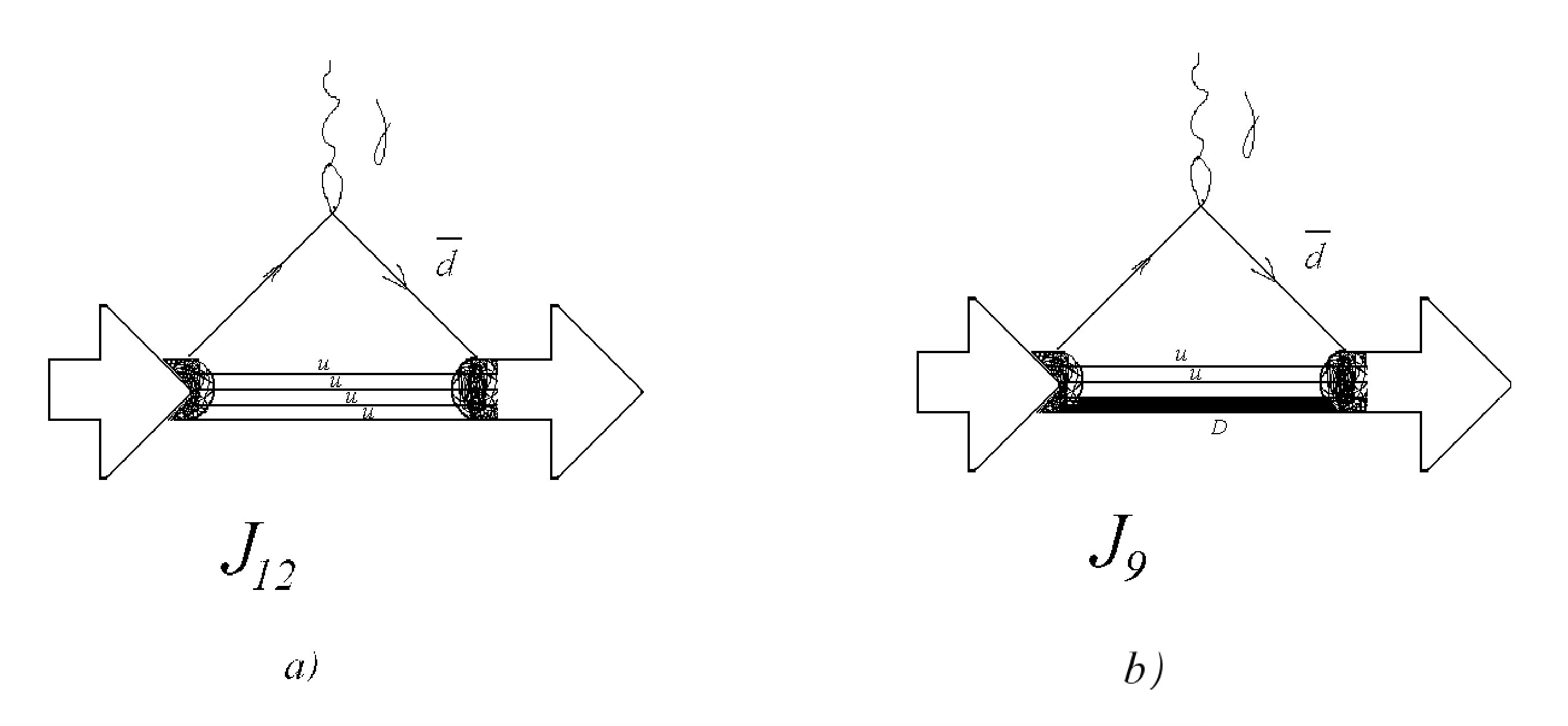 Figure 1
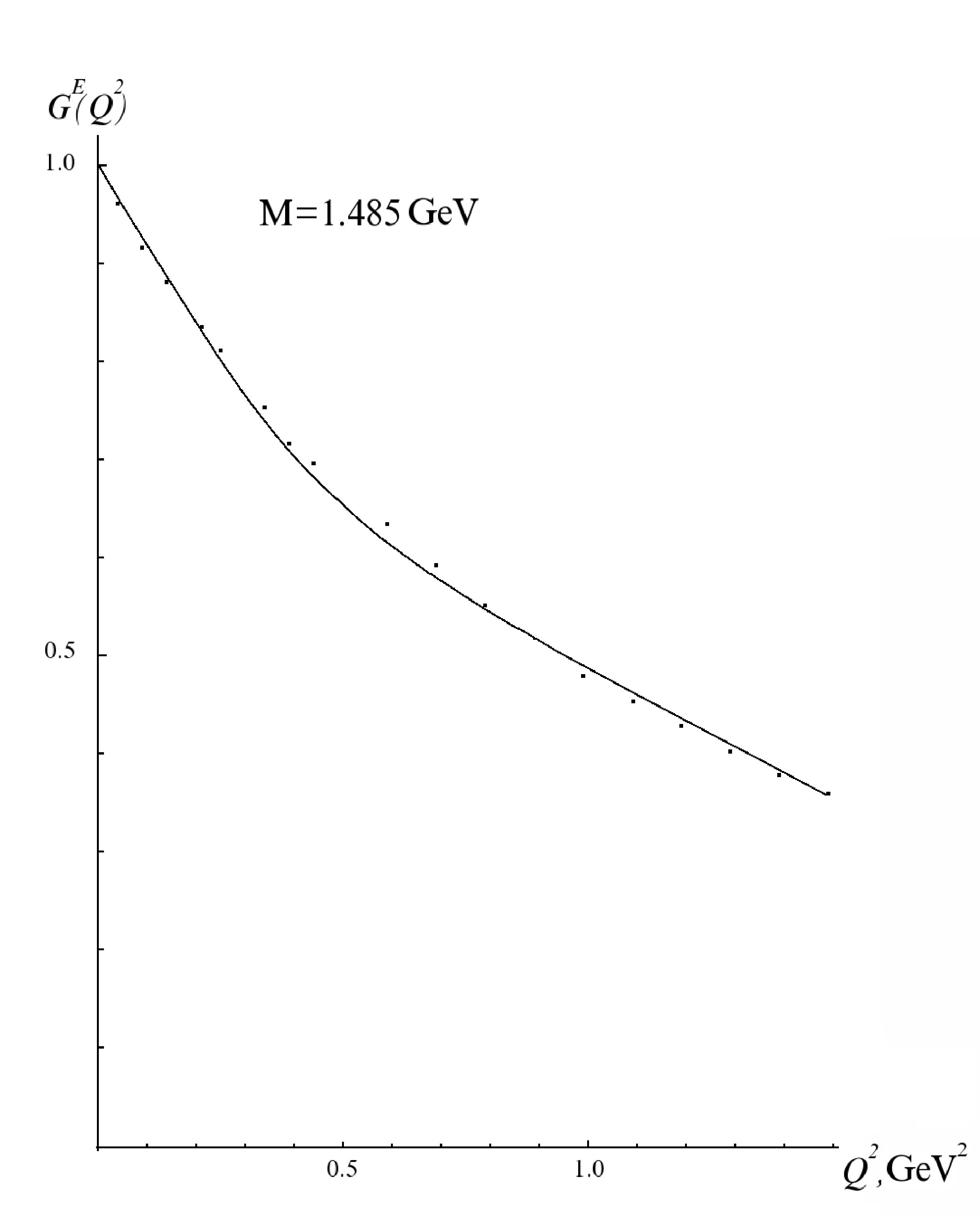 Figure 2
Peer Reviews
No public reviews on file for this paper yet. If you reviewed it on a platform where reviews are public (OpenReview, ICLR, NeurIPS, ICML), you can paste yours below so the community can read it here.
Videos
No videos yet. Explain this paper in a talk, walkthrough, or lecture? Add one.
Form factors of the exotic baryons with isospin I=5/2
S. M. Gerasyuta 1,2, M. A. Durnev 1
1* Department of Theoretical Physics
St. Petersburg State University, 198904,
St. Petersburg, Russia
2 Department of Physics, LTA, 194021,
St. Petersburg, Russia
Abstract
The electromagnetic form factors of the exotic baryons are calculated in the framework of the relativistic quark model at small and intermediate momentum transfer GeV2. The charge radii of the baryons are determined.
PACS numbers: 11.55.Fv, 12.39.Ki, 12.39.Mk, 12.40.Yx
**I. Introduction
**
The consideration of relativistic effects in the composite systems is sufficiently important when the quark structure of the hadrons is studied [1-10]. The dynamical variables (form factors, scattering amplitudes) of composite particles can be expressed in terms of the Bethe-Salpeter equations or quasipotentials. The form factors of the composite particles were considered by a number of authors, who have in particular applied a ladder approximation for the Bethe-Salpeter equation [11], ideas of conformal invariance [12], a number of results was obtained in the framework of three-dimensional formalisms [13]. It seems that an application of the dispersion integrals over the masses of the composite particles may be sufficiently convenient to the description of the relativistic effects in the composite systems. On the one hand, the dispersion relation technique is relativistically invariant one and it is not determined with a consideration of any distinguished frame of reference. On the other hand, there is no problem of additional states arising, because contributions of intermediate states are controlled in the dispersion relations. The dispersion relation technique allows to determine the form factors of the composite particles [14].
The relativistic generalization of the Faddeev equations was constructed in the form of dispersion relations in the pair energy of two interacting particles and the integral equations were obtained for the three-particle amplitudes of -wave baryons: for the octet and the decuplet [15]. The approximate solution of the relativistic three-particle problem using the method based on the extraction of the leading singularities of the scattering amplitudes about was proposed. The three-quark amplitudes given in Refs. [15,16] could be used for the calculation of electromagnetic nucleon form factors at small and intermediate momentum transfers [17].
In the present paper the computational scheme of the electromagnetic form factors of the exotic baryons , consisted of five particles, in the infinite momentum frame is given.
The nucleon form factors are calculated in Refs. [15, 17] with the help of the dispersion relation technique. The proposed approach is generalized to the case of five particles.
Section II is devoted to the calculation of electromagnetic exotic baryon form factors in the infinite momentum frame. The calculation results of electric form factors of the lowest exotic baryons with I=5/2 are given in Section III. The last section is devoted to our discussion and conclusion.
**II. The calculation of electromagnetic exotic baryon form factors in the infinite momentum frame
**
Let us consider the electromagnetic form factor of a system of five particles (an exotic baryon), shown in Fig.1a. The momentum of the exotic baryon is treated to be large: , the momenta and correspond to the initial and final momenta of the system. Let us assume and . and are the initial and final energy of the system (). Then we have some conservation laws for the input momenta
[TABLE]
By analogy for the output momenta :
[TABLE]
It is introduced in (1) and (2) and . The form factor of the five-quark system can be obtained with the help of the double dispersion integral:
[TABLE]
[TABLE]
The invariant phase space , which enters in the double dispersion integral, has the form:
[TABLE]
where the five-particle phase space is introduced:
[TABLE]
After the transformation we have:
[TABLE]
For the diquark-spectator (Fig.1b) the invariant phase space takes the more simplified form:
[TABLE]
where the phase space of the diquark is determined by .
To find the exotic baryon form factor one needs to account the interaction of each quark with the external electromagnetic field using the form factor of nonstrange quarks [18]. We calculate the -functions and obtain for the electromagnetic exotic baryon form factor in the case of the normalization :
[TABLE]
where:
[TABLE]
(=1,3,4) determine relative contributions of the subamplitudes in the total amplitude of the exotic baryon [19], where and are the baryon and the meson respectively, while is the diquark.
( MeV :
MeV : )
[TABLE]
[TABLE]
**III. Calculation results
**
The electromagnetic exotic baryon form factor is the sum of two terms(8). The phase space of the diquark contributes to the first term GeV2. The vertex functions and are taken in the middle point of the physical region. The mass of the quarks is equal to GeV. The cutoff parameter over the pair energy for the diquarks with and the gluon coupling constant were obtained in Ref. [19]. It is possible to calculate the dimensional cutoff parameters over the total energy and the transvers momentum GeV2, GeV2 respectively. It is necessary to account that the dressed quarks have own form factors [18]: for - quarks GeV*-2*. We can use (8) for the numerical calculation of the exotic baryon form factor. It should be noted, that the calculation has not any new parameters as compared to the calculation of the exotic baryon mass spectrum [19]. The similar calculation of the proton charge radius gives rise to the value fm, that is almost a factor of two smaller than the experimental value fm [20]. It is usually for the quark models with the one-gluon input interaction [21, 22], when only the presence of the new parameters or the introduction of an additional interaction allows to achieve a good agreement with the experiment [23, 24].
The behaviour of the electromagnetic form factor of the exotic baryon with the mass MeV is shown in Fig.2. The calculations were carried out for two exotic baryons with the small masses and the decay widths. We have obtained the orbital angular momentum degeneracy [19]. The exotic baryons with the quantum numbers with the masses =1485 MeV (the width =15 MeV) and MeV (the width MeV) are calculated. The results turned out to be equal: the charge radius of the baryons fm. The charge radius was found to be approximately equal to the charge radius of the proton, that qualitatively corresponds to the result of Ref. [25] for the charge radius of the pentaquark . It can be concluded that exotic baryons are more compact systems than ordinary baryons. The review of experimental results for the baryons is given in Ref. [26].
**IV. Conclusion
**
The method applied in the present work for the study of the exotic baryon form factors and based on the transition from the Feynman amplitude to the dispersion integration over the masses of the composite particles may be extended to the system of quarks for the multiquark states. One the one hand, the calculated result for the form factor of the proton is considerably smaller than the experimental value of the proton charge radius. On the other hand, the absence of any new parameters introduced in the model for the computation of the exotic baryon form factors is an advantage of this method. The qualitative agreement of the results obtained with the calculations in the chiral quark-soliton model [25] should be noted.
**Acknowledgments
**
The authors would like to thank T. Barnes, S. V. Chekanov, D. I. Diakonov, A. Hosaka and H.-Ch. Kim for useful discussions. This research was supported by Russian Ministry of Education (Grant 2.1.1.68.26).
**References
** F. Gross, Phys. Lett. B140, 410 (1965).
H. Melosh, Phys. Rev. D9, 1095 (1974).
G. B. West, Ann. Phys. (N. Y.) 74, 464 (1972).
S. J. Brodsky and G. R. Farrar, Phys. Rev. D11, 1309 (1975).
M. V. Terentyev, Yad. Fiz. 24, 207 (1976).
V. A. Karmanov, ZhETF 71, 399 (1976).
I. G. Aznauryan and N. L. Ter-Isaakyan, Yad. Fiz. 31, 1680 (1980).
A. Donnachie, R. R. Horgen and P. V. Landshoft, Z. Phys. C10, 71
(1981).
L. L. Frankfurt and M. I. Strikman, Phys. Rep. C76, 215 (1981).
L. A. Kondratyuk and M. I. Strikman, Nucl. Phys. A426, 575 (1984).
R. N. Faustov, Ann. Phys. (N. Y.) 78, 176 (1973).
A. A. Migdal, Phys. Lett. B7, 98 (1971).
R. N. Faustov, Teor. Mat. Fiz. 3, 240 (1970).
V. V. Anisovich and A. V. Sarantsev, Yad. Fiz. 45, 1479 (1987).
S. M. Gerasyuta, Yad. Fiz. 55, 3030 (1992).
S. M. Gerasyuta, Z. Phys. C60, 683 (1993).
S. M. Gerasyuta, Nuovo Cimento A106, 37 (1993).
V. V. Anisovich, S. M. Gerasyuta and A. V. Sarantsev, Int. J. Mod.
Phys. A6, 625 (1991).
S. M. Gerasyuta and V. I. Kochkin, Phys. Rev. D75, 036005 (2007).
M. Gourdin, Phys. Rep. C11, 29 (1974).
A. A. Kvitsinsky et. al., Yad. Fiz. 38, 702 (1986).
A. A. Kvitsinsky et. al., Fiz. Elem. Chastits At. Yadra 17, 267 (1986).
F. Cardarelli, E. Pace, G. Salme, and S. Simula, Phys. Lett. B357, 267
(1995).
F. Cardarelli, E. Pace, G. Salme, and S. Simula, nucl-th/9809091.
T. Ledwig, H.-Ch. Kim, A. J. Silva, K. Goeke, hep-ph/0603122.
A. F. Nilov, Yad. Fiz. 69, 918 (2006).
Fig.1 Triangle diagrams, which determine the form factors of exotic baryons.
Fig.2 The electromagnetic form factor of the exotic baryon with mass =1485 MeV and decay width =15 MeV.