Kadowaki-Woods Ratio of Strongly Coupled Fermi Liquids
Takuya Okabe

TL;DR
This paper evaluates the Kadowaki-Woods ratio in strongly coupled Fermi liquids using first-principles calculations, revealing differences between $d$ and $f$ electron systems linked to Fermi surface characteristics.
Contribution
It provides a first-principles analysis of the Kadowaki-Woods ratio, highlighting the impact of Fermi surface properties on quasiparticle transport in different electron systems.
Findings
$d$ electron systems have smaller ratios than $f$ systems.
Fermi surface differences influence quasiparticle relaxation.
Comparison of Pd and USn$_3$ illustrates Fermi surface dependence.
Abstract
On the basis of the Fermi liquid theory, the Kadowaki-Woods ratio is evaluated by using a first principle band calculation for typical itinerant and electron systems. It is found as observed that the ratio for the electron systems is significantly smaller than the normal systems, even without considering their relatively weak correlation. The difference in the ratio value comes from different characters of the Fermi surfaces. By comparing Pd and USn as typical cases, we discuss the importance of the Fermi surface dependence of the quasiparticle transport relaxation.
Click any figure to enlarge with its caption.
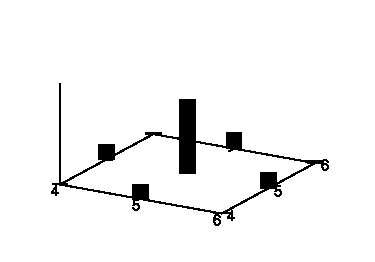 Figure 1
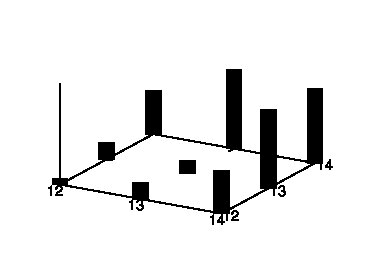 Figure 2
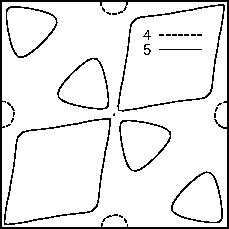 Figure 3
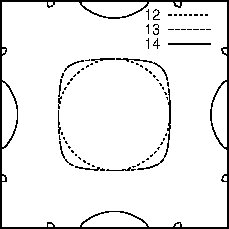 Figure 4
| (Å) | 111In unit of . | 222In unit of [10-5 cm (mol K/mJ)2]. | |||
|---|---|---|---|---|---|
| USn3 | 4.60 | 3.1 | 4.0 | 3 | 0.39 |
| UIn3 | 4.61 | 4.9 | 1.6 | 3 | 0.16 |
| UGa3 | 4.24 | 3.9 | 2.5 | 3 | 0.23 |
| Pd | 3.86 | 7.4 | 0.23 | 3 | 0.019 |
| Pt | 3.91 | 8.4 | 0.15 | 4 | 0.012 |
Peer Reviews
No public reviews on file for this paper yet. If you reviewed it on a platform where reviews are public (OpenReview, ICLR, NeurIPS, ICML), you can paste yours below so the community can read it here.
Videos
No videos yet. Explain this paper in a talk, walkthrough, or lecture? Add one.
Kadowaki-Woods Ratio of
Strongly Coupled Fermi Liquids
Takuya Okabe
Faculty of Engineering, Shizuoka University, 3-5-1 Johoku, Hamamatsu 432-8561,Japan
Abstract
On the basis of the Fermi liquid theory, the Kadowaki-Woods ratio is evaluated by using a first principle band calculation for typical itinerant and electron systems. It is found as observed that the ratio for the electron systems is significantly smaller than the normal systems, even without considering their relatively weak correlation. The difference in the ratio value comes from different characters of the Fermi surfaces. By comparing Pd and USn3 as typical cases, we discuss the importance of the Fermi surface dependence of the quasiparticle transport relaxation.
pacs:
71.10.Ay, 71.18.+y, 71.20.Be, 71.27.+a, 72.15.-v
It is widely known as a universal feature of heavy fermion systems that there holds the Kadowaki-Woods (KW) relation cm(mol K/mJ)2 between the electronic specific heat coefficient of and the coefficient of the resistivity in the clean and low temperature limit.Kadowaki and Woods (1986) According to the Fermi liquid theory, this is interpreted as an indication of the fact that is squarely proportional to quasiparticle mass enhancement due to strong electron correlation. On the other hand, transition metal systems are reported since before to obey a similar relation with a more than an order of magnitude smaller value of .Rice (1968); Miyake et al. (1989) In view of the observation that there seems to exist several types of systems in this regard, the recent finding by Tsujii et al.Tsujii et al. (2005) is quite impressive that many Yb-based compounds show the KW ratio as small as the transition metals. Kontani derived the small ratio as a result of the large orbital degeneracy of the the state of trivalent Yb by applying the dynamical mean field approximation to a periodic Anderson model of an orbitally degenerate electron states coupled with a single conduction band.Kontani (2004)
To discuss the KW ratio and the many-body mass enhancement effect, a simple model is usually adopted at the cost of neglecting material specific individual factors. In the present work, we are interested in such an effect as caused by a system-dependent factor, that is, the Fermi surface dependence of quasiparticle current relaxation. The system should have a large enough Fermi surface relative to the Brillouin zone boundary in order for the quasiparticle current to dissipate effectively into an underlying lattice through mutual quasiparticle scatterings. In other words, the effectiveness of the transport relaxation may depend on the size and shape of the Fermi surface. To investigate this point definitely, we discuss the quasiparticle transport by taking account of the momentum dependence of quasiparticle scattering on the basis of realistic band structures. This has been hampered so far by a task required for not so simple Fermi surfaces of many band systems as could be simply modelled analytically. In terms of fairly realistic energy bands obtained from a first principle calculation, we evaluate those quantities which are not affected severely by the electron correlation effect. The theory in use is essentially within the phenomenological Fermi liquid theory described by renormalized quantities, and unlike a model calculation no bare microscopic quantities appear explicitly. Schematic results using simple abstract models have been given before, in which a tight binding square lattice model and a two-band model are investigated.Okabe (1998a, b, 1999)
For the ratio we make use of the expression,
[TABLE]
which corresponds to Eq. (4.11) in Ref. Okabe, 1998b where we set Å for the lattice constant. In what follows we substitute a calculated value for . Below we follow how to derive , where is a coupling constant, and is a factor determined by the Fermi surface.
Following a microscopic analysis of the quasiparticle transport with vertex corrections properly taken into account,Yamada and Yosida (1986) we may derive a phenomenological linearized Boltzmann equation.Okabe (1998b) Generalizing the theory to take a many-band effect into account, in the low temperature we end up with the equation
[TABLE]
where and are the velocity component and the local density of state of the renormalized (mass-enhanced) quasiparticle with the crystal momentum in the -th band. The superscripts and are the band indices, while the subscript are Cartesian coordinates. In the right hand side of Eq. (2), the 2nd to 4th terms in the parenthesis represent vertex corrections in the microscopic formulation. In terms of the solution , which physically represents stationary deviation of the Fermi surface in an applied electric field , the conductivity is given by
[TABLE]
The above equations (2) and (3) correspond to Eqs. (3.10) and (3.15) of Ref. Okabe, 1999 respectively. We may suppress the index () in Eq. (3) as we discuss the cubic systems in what follows.
Instead of solving the simultaneous matrix equations (2) exactly, we use trial functions for as commonly applied in a variational principle formulation of the transport problems.Ziman (1960) Assuming
[TABLE]
we obtain
[TABLE]
where
[TABLE]
and
[TABLE]
We define coupling constants , where is the density of states of the -th band at the Fermi level and denotes the quasiparticle scattering probability averaged over the momenta and . As the double sum in (2), dominated by Umklapp processes, covers a complicated shaped phase space over the Fermi surface, it is generally a good approximation to take out of the momentum sum as an averaged quantity. The total density of states is substituted for .
In heavy fermion systems, the momentum dependence of could be generally neglected, for the quasiparticle scattering is primarily caused by strong on-site Coulomb repulsion . Then we can make an order of magnitude estimate of in terms of Landau parameters and . For an anisotropic Fermi liquid, as in an isotropic case, one can derive that the charge and spin susceptibilities are given by and , respectively. Thus, for the systems in which charge fluctuations are suppressed, , we obtain . On the other hand, in terms of , one obtains a rough estimate of the coupling . Therefore, under the normal condition that the spin enhancement is moderate, , should universally stay around a constant of an order of unity.Okabe (1998b) This corresponds to the condition to make the Wilson ratio in the impurity model.Nozières (1974); Yosida and Yamada (1975) We discuss a normal state that the system is well away from critical instabilities, around which will be strongly enhanced at variance with experimental results under consideration.Takimoto and Moriya (1996) We evaluate numerically for to obtain , and investigate the Fermi surface dependence.
It is noted that the factor is determined by the shape and extent of the Fermi surfaces relative to the Brillouin zone boundary. Microscopically, the mass enhancement due to the many-body effect is represented by the -derivative of the electron self-energy , or by the renormalization factor as , where is a bare density of states. It is easily checked that the factor cancels in when is independent of . Otherwise, in case that a dominant contribution to the resistivity comes from an electron-correlated main band, then the other bands may be neglected and becomes independent of of the main band. As we see below numerically, it is found indeed that is dominated by a few scattering channels within a main band or two. Hence, we elaborate on a numerical estimate of on the basis of a realistic band calculation reproducing reliable Fermi surfaces of relevant bands, even if it may not take account of local many-body correlation effects fully enough for the renormalized quantities like and to be separately compared with experiments. As a matter of course, we must exclude the extreme case in which strong correlation modifies electron states around the Fermi level qualitatively from those of a band calculation. We apply our theory to those itinerant electron systems in which correlation strength is not negligible but not so strong.
To calculate for some typical cubic and itinerant electron systems in the fcc and Cu3Au structures, we have performed ab initio band calculations within density functional theory using the plane wave pseudopotential code VASP with the Perdew-Wang 1991 generalized gradient approximation to the exchange correlation functional .Kresse and Furthmüller (1996a); Kresse and Furthmüller (1996b); Kresse and Joubert (1999); Perdew et al. (1992) By minimizing the total energy we obtain the lattice constant , which is accurate enough to be used in Eq. (1).
To evaluate numerically, we have to broaden the delta function by to pick up electron states around the Fermi level. The width of the order of real temperature should be decreased as the number of the -points is increased until we confirm to have a convergent result. For the number of subdivisions along reciprocal lattice vectors, band calculations are performed with , from which we obtain the band energies on the finer -mesh of by interpolation. As the four-fold -sum in the numerator of Eq. (4), especially for the most important terms coming from the main or correlated bands, constitutes the most time consuming part of the calculation, we have to reduce the numerical task by some symmetry considerations not only on the cubic symmetry of the quasiparticle states, but on the relative directions of the four momentum vectors of the scattering quasiparticle states and the -direction of the current flow. The reduction is particularly effective for the intra-band scatterings .
The calculated results are shown in Table 1, where and for are shown along with the lattice constant , the number of metallic bands contributing to the resistivity, and defined in Eq. (6). We find that our results explain well the experimental tendency of an order of magnitude small values of the ratio for the transition metal systems. As for the absolute values of the ratio, our results are a few times smaller than observed evenly, but the accuracy of this order should not be taken seriously here. Among other things, the results indicate that different characters of the Fermi surfaces play an important role.
To show the relative contribution to the resistivity from relevant bands, relative magnitudes of in the numerator of Eq. (4) are shown for Pd and USn3 in Figs. 1 and 2, respectively. For Pd, the contribution to comes from the 4th to 6th bands, among which dominant is the 5th hole band of the character. Similarly, the 5th band contributes majorly not only to , i.e., , but to in Eq. (6). On the other hand, for USn3, while the 14th heavy electron band plays a central role, the 12th and 13th hole bands also make non-negligible contributions through the inter-band scatterings. Hence, as the first point to note, numerical importance of the inter-band contributions makes large in the electron system. This is partly because for are comparable with each other, namely, . Moreover, it is remarked that the large and nearly spherical shape of the Fermi surfaces are essential too. As the second point to note, the importance of the Fermi surface geometry can be understood within a single band model by comparing contribution from the main band. We find that for Pd is an order of magnitude smaller than for USn3. The difference comes from the different characters of the Fermi surfaces.
According to an elementary formula , the conductivity depends on as well as . In this context, the mean free path is not a single particle property determined by a lifetime of the particle state, but it is the transport property which characterizes how efficiently the total electric current decays into a lattice system, e.g., in our case, through mutual Umklapp scattering processes between the current carriers. In particular, regardless of interaction, electrons in free space will not have resistivity.Yamada and Yosida (1986) Thus, to evaluate the transport property correctly, it is crucial to take account of the momentum dependence of the scattering states and their conservation modulo the reciprocal lattice vectors.
Note that defined in Eq. (6) is related to the surface area of the Fermi surfaces, as . Hence, too is independent of the mass renormalization as is, and for free electrons we obtain . One can see a correlation between and in Table 1. In fact, Pd and Pt have twice as large as the uranium compounds. The difference cannot be simply explained by the difference in the Fermi surface volume . It is caused by the fact that the -electron systems have the nearly isotropic Fermi surfaces while the -electron systems have complicated ones with relatively large area compared to their total volume, as indicated in Figs. 3 and 4. The different characters of the surfaces affect not only the single particle quantity but also the transport property of the total current relaxation. As the order of magnitude difference in is not explained merely by , we have to have resort to the other factor, that is, the transport property depending on the Fermi surfaces. It originates from the detailed -dependence of the scattering states, as represented in , or by the phase space volume available for all possible scattering channels under strict restrictions of energy and momentum conservations. Thus our quantitative analysis concludes the important effect on the quasiparticle transport due to the shape and complexity of the Fermi surfaces.
In summary, we evaluated the Kadowaki-Woods ratio of some itinerant and electron systems numerically on the basis of the Fermi liquid theory using quasiparticle Fermi surfaces obtained by band calculations. In a single framework, we find the electron systems have smaller ratio than the systems, as observed, and among others we pointed out an important effect to the transport coefficient originating from a commonly neglected specific feature depending on the characters of the Fermi surfaces. The effect is not understood fully as a single-particle property of interacting systems, but we stress the importance of the phase space restriction due to momentum conservation in two-body scattering processes to dissipate a total electric current. In short, to realize effective dissipation, the system should have a large and regular shaped Fermi surface. In future we will examine that the Fermi-surface dependent efficiency of mutual quasiparticle scatterings may depend on a type of transport current to be relaxed.
Acknowledgment
The author is grateful to N. Fujima, S. Kokado and T. Hoshino for providing assistance in the numerical calculations. He also acknowledges computational resources offered from YITP computer system in Kyoto University.
The reference list from the paper itself. Each links out to its DOI / PubMed record.
- 1Kadowaki and Woods (1986) K. Kadowaki and S. B. Woods, Solid State Commun. 58 , 507 (1986).
- 2Rice (1968) M. J. Rice, Phys. Rev. Lett. 20 , 1439 (1968).
- 3Miyake et al. (1989) K. Miyake, T. Matsuura, and C. M. Varma, Solid State Commun. 71 , 1149 (1989).
- 4Tsujii et al. (2005) N. Tsujii, H. Kontani, and K. Yoshimura, Phys. Rev. Lett. 94 , 057201 (2005).
- 5Kontani (2004) H. Kontani, J. Phys. Soc. Jpn. 73 , 515 (2004).
- 6Okabe (1998 a) T. Okabe, J. Phys. Soc. Jpn. 67 , 2792 (1998 a).
- 7Okabe (1998 b) T. Okabe, J. Phys. Soc. Jpn. 67 , 4178 (1998 b).
- 8Okabe (1999) T. Okabe, J. Phys. Soc. Jpn. 68 , 2721 (1999).