New Close Binary Systems from the SDSS-I (Data Release Five) and the Search for Magnetic White Dwarfs in Cataclysmic Variable Progenitor Systems
Nicole M. Silvestri(1), Mara P. Lemagie(1), Suzanne L. Hawley(1),, Andrew A. West(2), Gary D. Schmidt(3), James Liebert(3), Paula Szkody(1), Lee, Mannikko(1), Michael A. Wolfe(1), J. C. Barentine(4), Howard J., Brewington(4), Michael Harvanek(4), Jurik Krzesinski(5), Dan Long(4)

TL;DR
This paper compiles a large catalog of over 1200 close binary systems from SDSS data to investigate the presence of magnetic white dwarfs in progenitors of cataclysmic variables, finding surprisingly few candidates.
Contribution
It provides the largest spectroscopic catalog of close binaries from SDSS and offers new insights into magnetic white dwarf occurrence in progenitor systems.
Findings
Only two potential magnetic white dwarfs identified.
Candidate white dwarfs likely have low magnetic fields (<10 MG).
Disparity exists between known cataclysmic variables and their progenitors.
Abstract
We present the latest catalog of more than 1200 spectroscopically-selected close binary systems observed with the Sloan Digital Sky Survey through Data Release Five. We use the catalog to search for magnetic white dwarfs in cataclysmic variable progenitor systems. Given that approximately 25% of cataclysmic variables contain a magnetic white dwarf, and that our large sample of close binary systems should contain many progenitors of cataclysmic variables, it is quite surprising that we find only two potential magnetic white dwarfs in this sample. The candidate magnetic white dwarfs, if confirmed, would possess relatively low magnetic field strengths (B_WD < 10 MG) that are similar to those of intermediate-Polars but are much less than the average field strength of the current Polar population. Additional observations of these systems are required to definitively cast the white dwarfs as…
Click any figure to enlarge with its caption.
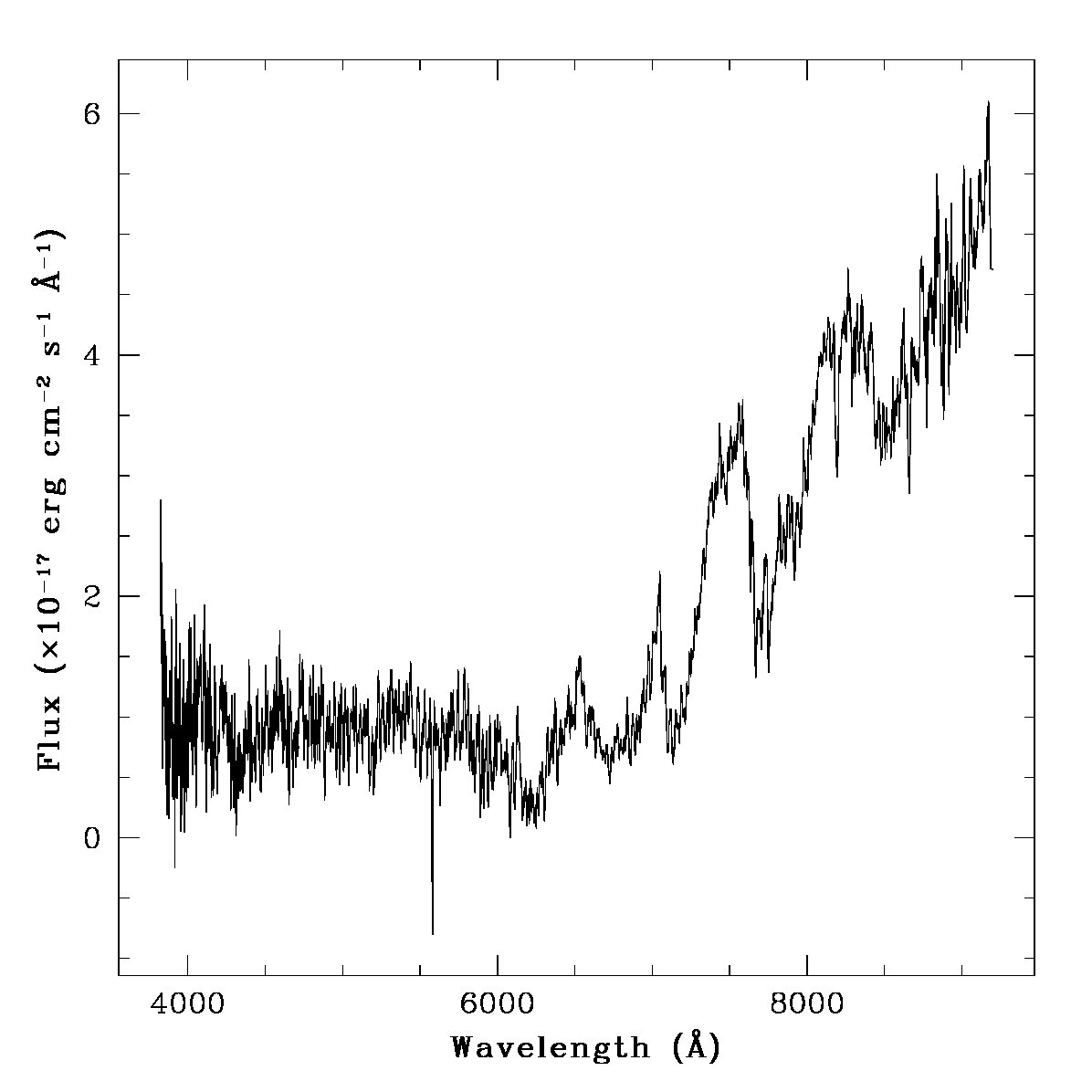 Figure 1
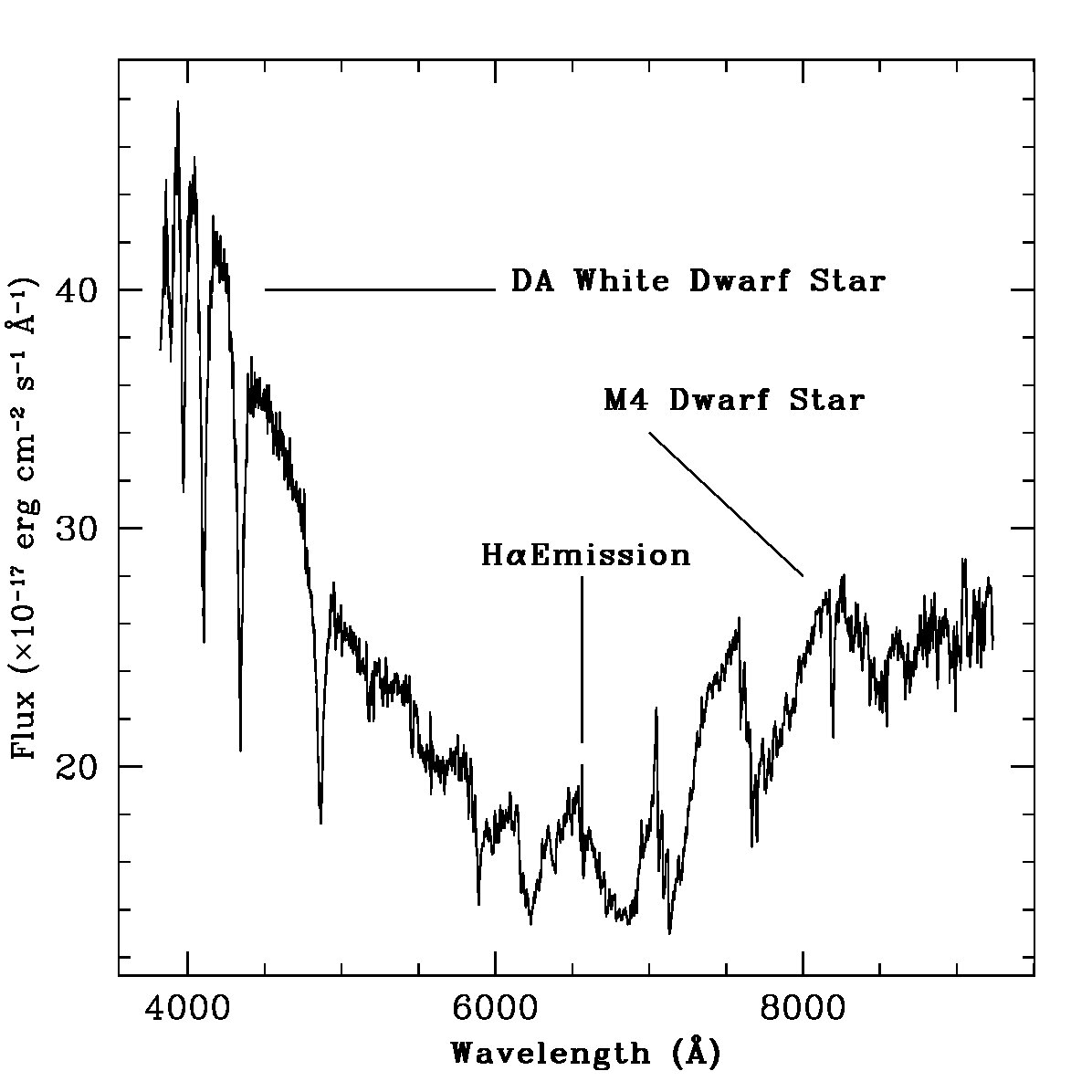 Figure 2
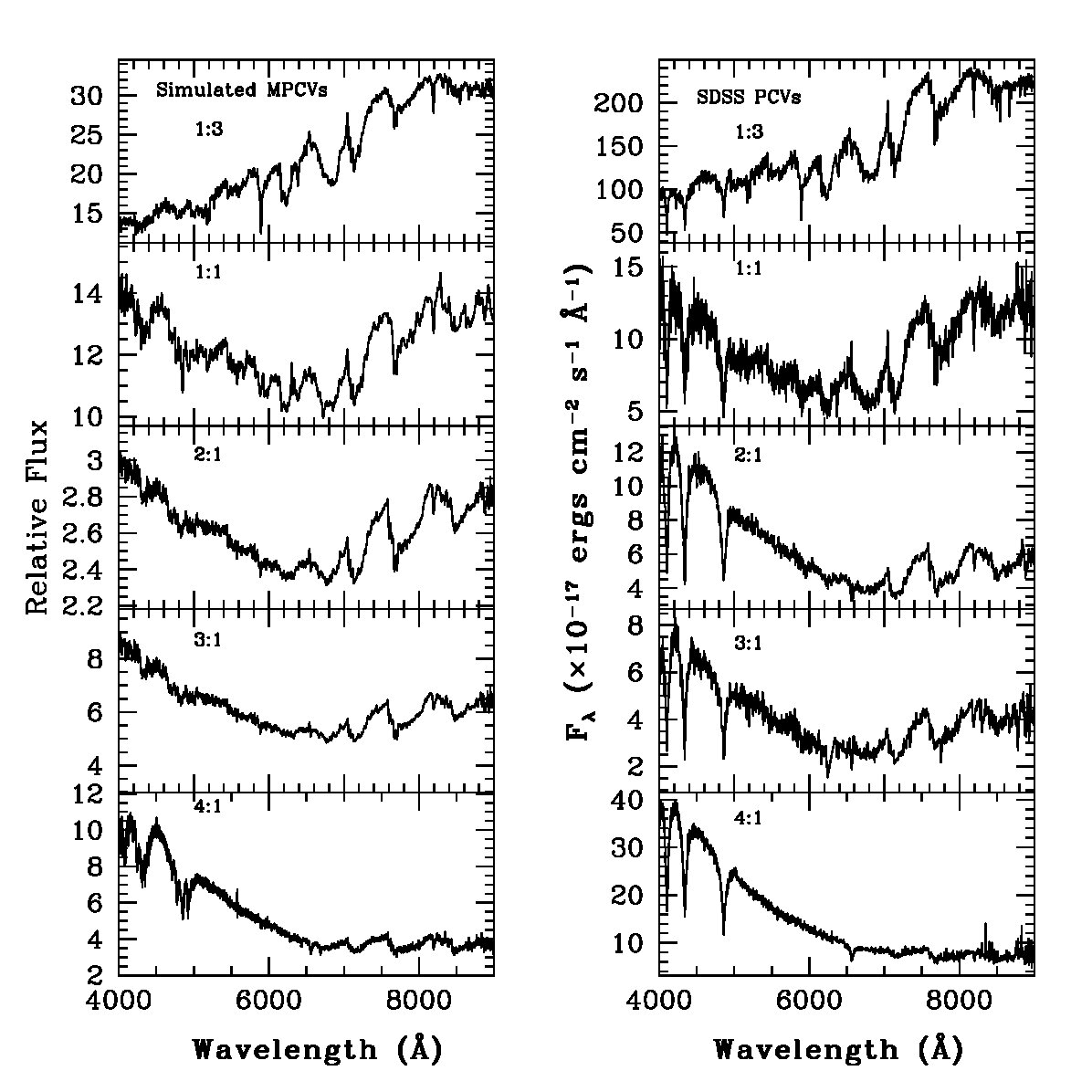 Figure 3
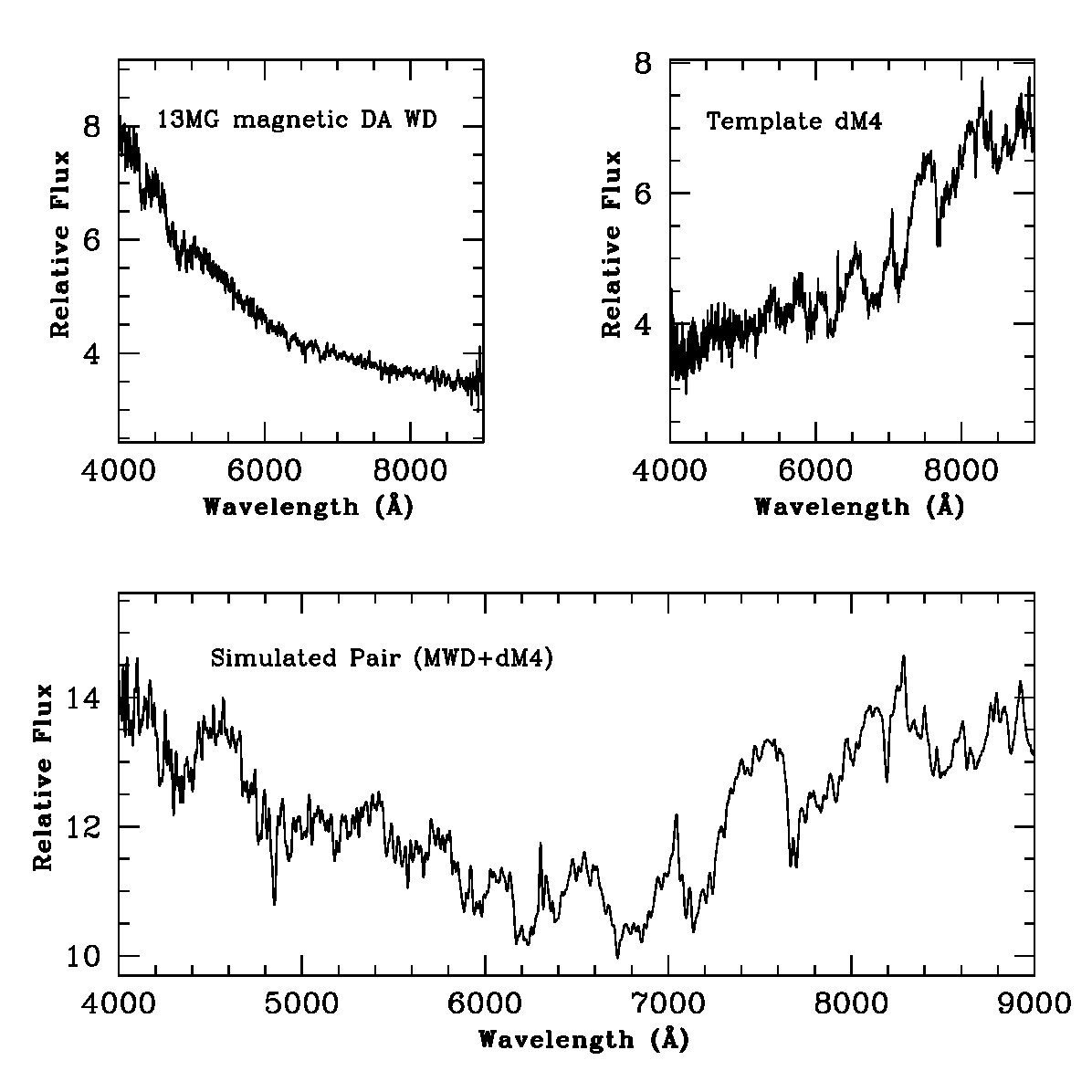 Figure 4
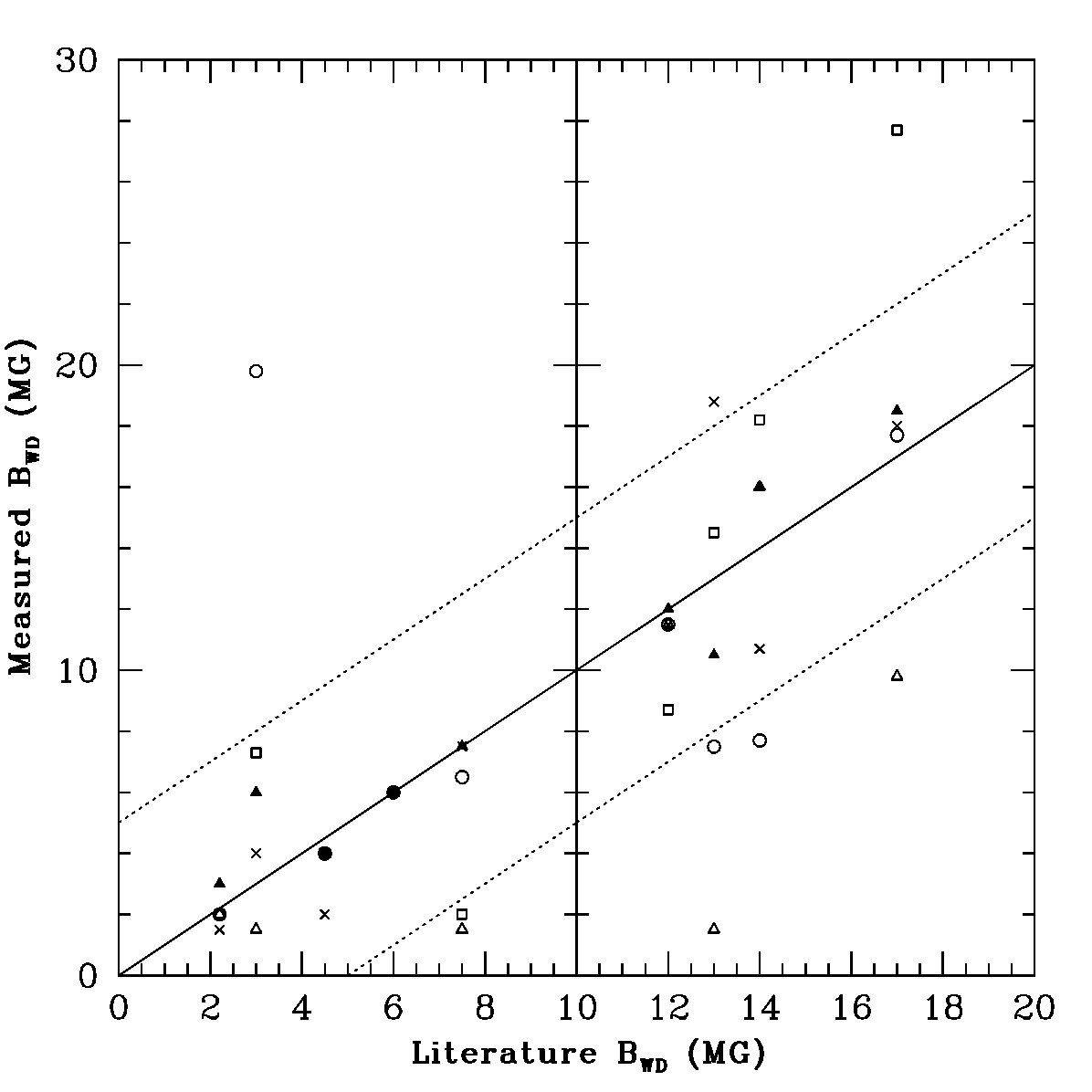 Figure 5
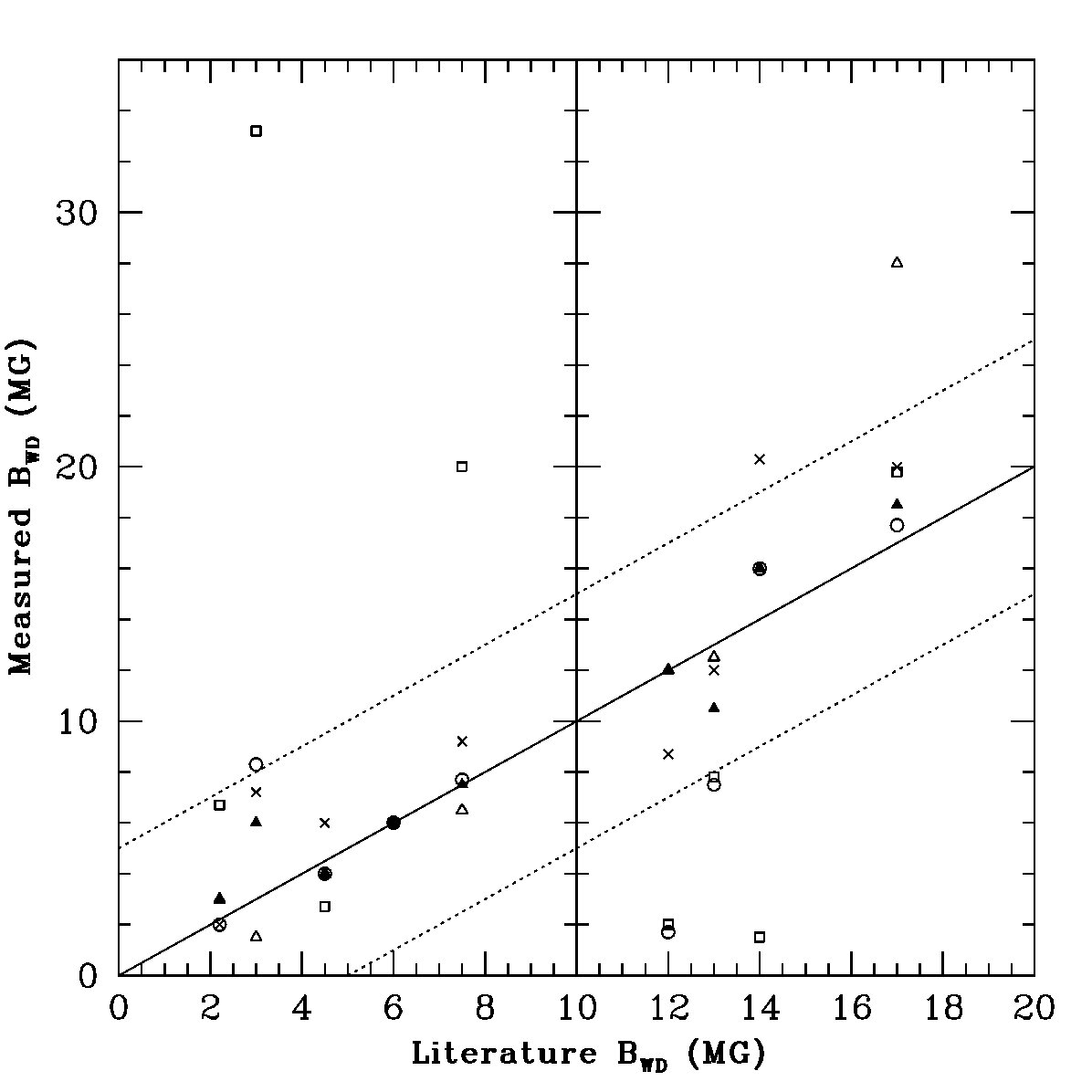 Figure 6
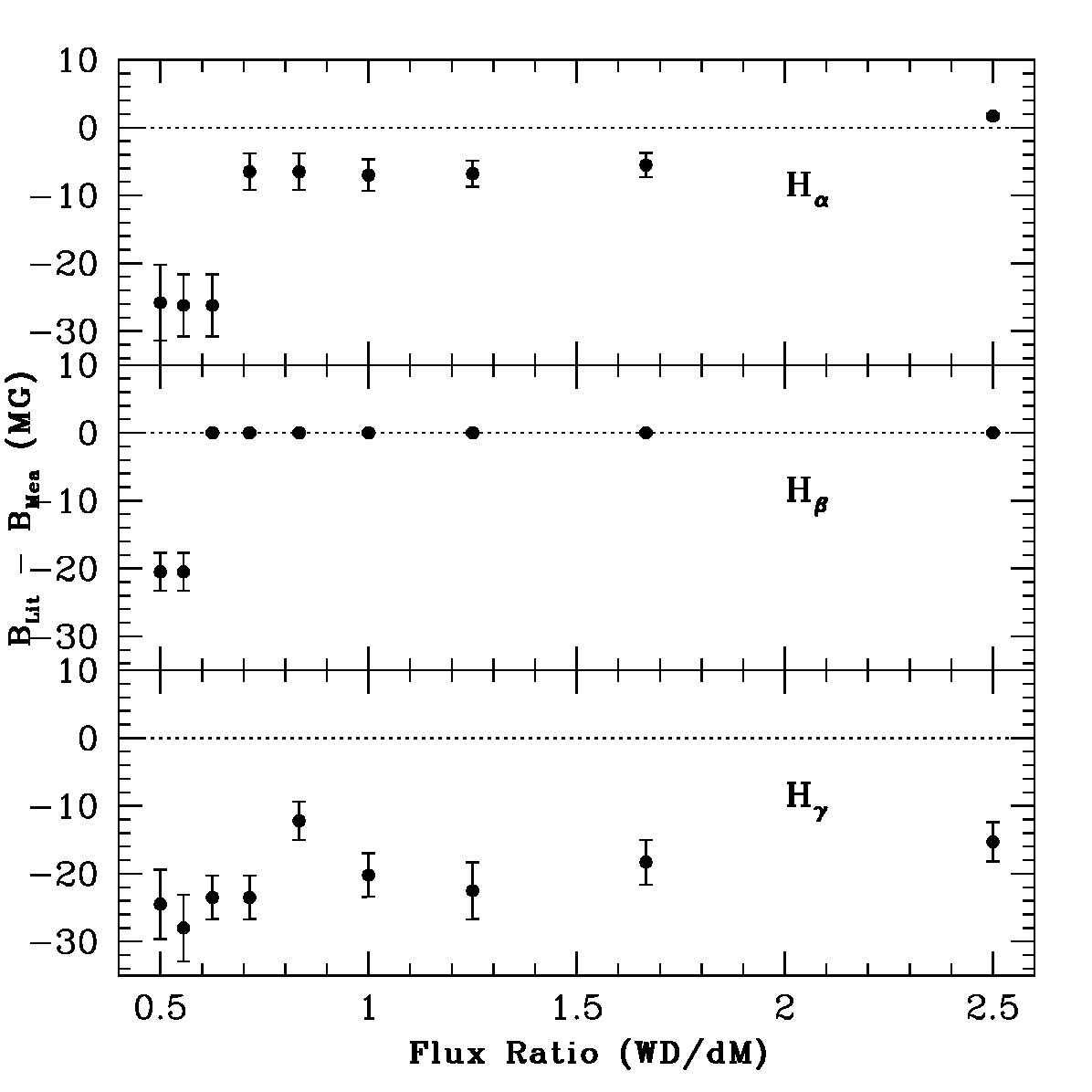 Figure 7
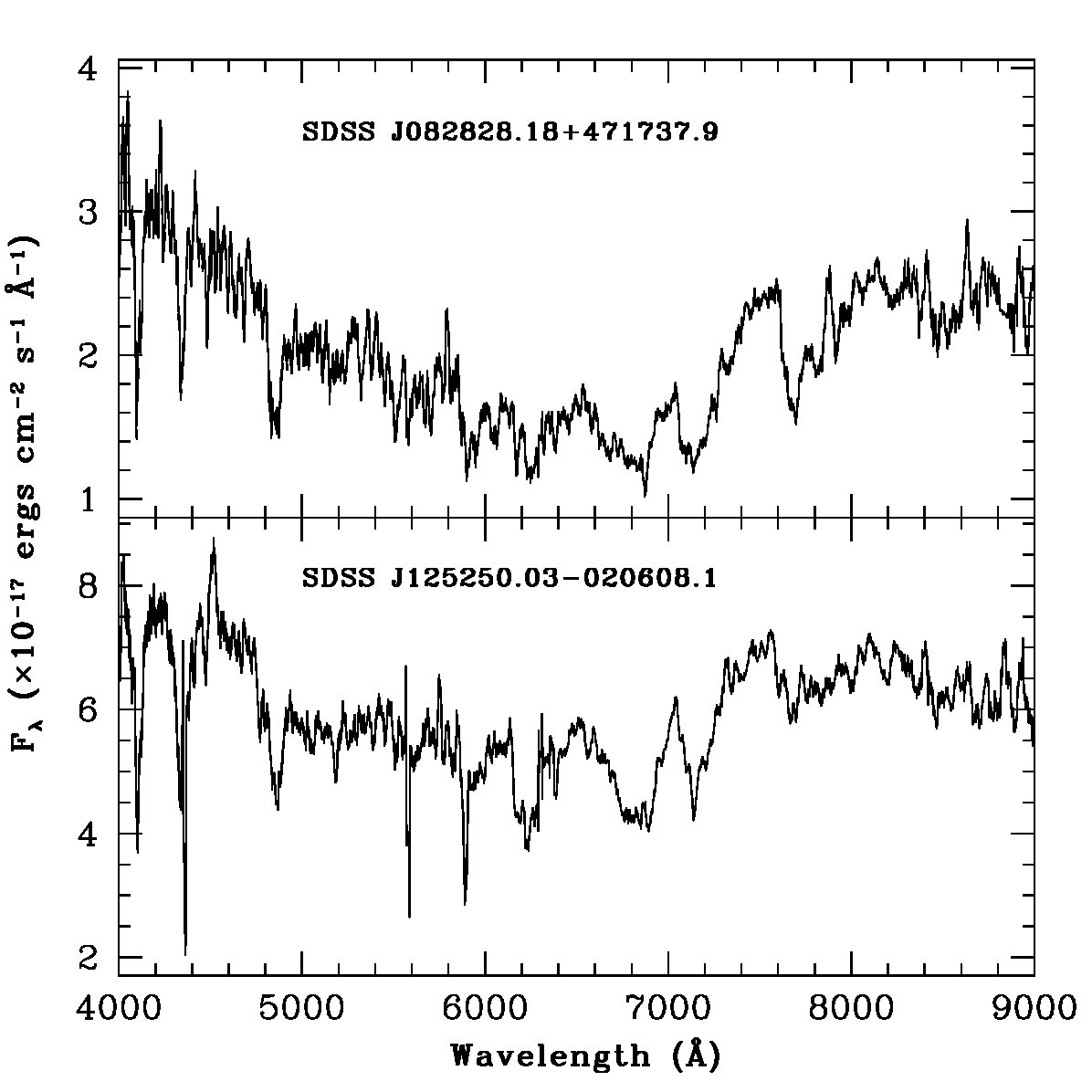 Figure 8
| Identifier | Plate | FiberID | MJD | Sp1+Sp2aaSp1: Spectral type of the WD, Sp2: Spectral type of the low–mass dwarf (see Silvestri et al., 2006, for details on Sp determination); e: emission detected visually. | R.A.bbR.A. and Decl. are J2000.0 equinox. | Decl. | Au | Ag | Ar | Ai | Az | RefsccEDR: Stoughton et al. (2002); DR[1,2,3]: Abazajian et al. (2003, 2004, 2005); DR[4,5]: Adelman-McCarthy et al. (2006, 2007); R03: published in Raymond et al. (2003); K04: published in Kleinman et al. (2004); B05: published in van den Besselaar et al. (2005); Sc05: published in Schmidt et al. (2005a); S06: published in Silvestri et al. (2006); E06: published in Eisenstein et al. (2006); P05: published in Pourbaix et al. (2005); KM: published in Koen & Maxted (2006); SN: published in Schuh & Nagel (2006); da06: R. da Silva (priv. comm., 2006). | Notesddlow: potential low gravity (log ) white dwarf. | ||||||||||
|---|---|---|---|---|---|---|---|---|---|---|---|---|---|---|---|---|---|---|---|---|---|---|---|
| (SDSS J) | (deg) | (deg) | |||||||||||||||||||||
| (1) | (2) | (3) | (4) | (5) | (6) | (7) | (8) | (9) | (10) | (11) | (12) | (13) | (14) | (15) | (16) | (17) | (18) | (19) | (20) | (21) | (22) | (23) | (24) |
| 001029.87+003126.2 | 0388 | 545 | 51793 | DZ:+dM | 002.62448 | 000.52396 | 21.93 | 0.19 | 0.14 | 20.85 | 0.04 | 0.10 | 19.98 | 0.03 | 0.08 | 19.00 | 0.02 | 0.06 | 18.42 | 0.04 | 0.04 | EDR | |
| 001726.63002451.2 | 0687 | 153 | 52518 | DA+dMe | 004.36099 | 00.41422 | 19.68 | 0.04 | 0.14 | 19.29 | 0.03 | 0.10 | 19.03 | 0.02 | 0.07 | 18.19 | 0.02 | 0.06 | 17.54 | 0.03 | 0.04 | R03 | |
| 001733.59+004030.4 | 0389 | 614 | 51795 | DA+dM | 004.38996 | 000.67511 | 22.10 | 0.40 | 0.13 | 20.79 | 0.14 | 0.10 | 19.59 | 0.03 | 0.07 | 18.17 | 0.02 | 0.05 | 17.39 | 0.02 | 0.04 | EDR/R03 | |
| 001749.24000955.3 | 0389 | 112 | 51795 | DA+dMe | 004.45519 | 00.16539 | 16.57 | 0.02 | 0.13 | 16.87 | 0.02 | 0.10 | 17.03 | 0.01 | 0.07 | 16.78 | 0.01 | 0.05 | 16.47 | 0.02 | 0.04 | EDR/R03 | |
| 002620.41+144409.5 | 0753 | 079 | 52233 | DA+dMe | 006.58505 | 014.73597 | 17.57 | 0.01 | 0.27 | 17.35 | 0.01 | 0.20 | 17.34 | 0.02 | 0.15 | 16.65 | 0.01 | 0.11 | 16.04 | 0.02 | 0.08 | DR2 |
| Identifier | Plate | Fiber | MJD | R.A. | Decl. | Sp1+Sp2 | Release | |||||||
|---|---|---|---|---|---|---|---|---|---|---|---|---|---|---|
| SDSS J | (deg) | (deg) | (MG) | (deg) | ||||||||||
| (1) | (2) | (3) | (4) | (5) | (6) | (7) | (8) | (9) | (10) | (11) | (12) | (13) | (14) | (15) |
| 082828.18+471737.9 | 0549 | 338 | 51981 | 127.11742 | 0+47.29387 | 8 | 90 | DA+dM | 20.41 | 20.35 | 20.33 | 19.58 | 19.02 | DR1 |
| 125250.03020608.1 | 0338 | 343 | 51694 | 193.20846 | 02.10227 | 90 | DA+dM | 19.25 | 19.12 | 18.89 | 18.31 | 17.82 | DR1 |
Peer Reviews
No public reviews on file for this paper yet. If you reviewed it on a platform where reviews are public (OpenReview, ICLR, NeurIPS, ICML), you can paste yours below so the community can read it here.
Videos
No videos yet. Explain this paper in a talk, walkthrough, or lecture? Add one.
New Close Binary Systems from the SDSS–I (Data Release Five)
and the Search for Magnetic White Dwarfs in Cataclysmic Variable Progenitor Systems
Nicole M. Silvestri11affiliation: Department of Astronomy, University of Washington, Box 351580, Seattle, WA 98195, USA; [email protected], [email protected], [email protected], [email protected], [email protected], [email protected]. , Mara P. Lemagie11affiliation: Department of Astronomy, University of Washington, Box 351580, Seattle, WA 98195, USA; [email protected], [email protected], [email protected], [email protected], [email protected], [email protected]. , Suzanne L. Hawley11affiliation: Department of Astronomy, University of Washington, Box 351580, Seattle, WA 98195, USA; [email protected], [email protected], [email protected], [email protected], [email protected], [email protected]. , Andrew A. West22affiliation: Astronomy Department, 601 Campbell Hall, University of California, Berkeley, CA 94720, USA; [email protected] , Gary D. Schmidt33affiliation: Department of Astronomy and Steward Observatory, University of Arizona, Tucson, AZ 85721, USA; [email protected], [email protected]. , James Liebert33affiliation: Department of Astronomy and Steward Observatory, University of Arizona, Tucson, AZ 85721, USA; [email protected], [email protected]. , Paula Szkody11affiliation: Department of Astronomy, University of Washington, Box 351580, Seattle, WA 98195, USA; [email protected], [email protected], [email protected], [email protected], [email protected], [email protected]. , Lee Mannikko11affiliation: Department of Astronomy, University of Washington, Box 351580, Seattle, WA 98195, USA; [email protected], [email protected], [email protected], [email protected], [email protected], [email protected]. , Michael A. Wolfe11affiliation: Department of Astronomy, University of Washington, Box 351580, Seattle, WA 98195, USA; [email protected], [email protected], [email protected], [email protected], [email protected], [email protected]. , J. C. Barentine44affiliation: Apache Point Observatory, P.O. Box 59, Sunspot, NM 88349, USA; [email protected], [email protected], [email protected], [email protected], [email protected]. , Howard J. Brewington44affiliation: Apache Point Observatory, P.O. Box 59, Sunspot, NM 88349, USA; [email protected], [email protected], [email protected], [email protected], [email protected]. , Michael Harvanek44affiliation: Apache Point Observatory, P.O. Box 59, Sunspot, NM 88349, USA; [email protected], [email protected], [email protected], [email protected], [email protected]. , Jurik Krzesinski55affiliation: Mt. Suhora Observatory, Cracow Pedagogical University, ul. Podchorazych 2, 30-084 Cracow, Poland; [email protected]. , Dan Long44affiliation: Apache Point Observatory, P.O. Box 59, Sunspot, NM 88349, USA; [email protected], [email protected], [email protected], [email protected], [email protected]. , Donald P. Schneider66affiliation: Department of Astronomy, Penn State University, PA 16802 USA; [email protected] , and Stephanie A. Snedden44affiliation: Apache Point Observatory, P.O. Box 59, Sunspot, NM 88349, USA; [email protected], [email protected], [email protected], [email protected], [email protected].
(Received 2007 February 9)
Abstract
We present the latest catalog of more than 1200 spectroscopically–selected close binary systems observed with the Sloan Digital Sky Survey through Data Release Five. We use the catalog to search for magnetic white dwarfs in cataclysmic variable progenitor systems. Given that approximately 25% of cataclysmic variables contain a magnetic white dwarf, and that our large sample of close binary systems should contain many progenitors of cataclysmic variables, it is quite surprising that we find only two potential magnetic white dwarfs in this sample. The candidate magnetic white dwarfs, if confirmed, would possess relatively low magnetic field strengths ( MG) that are similar to those of intermediate–Polars but are much less than the average field strength of the current Polar population. Additional observations of these systems are required to definitively cast the white dwarfs as magnetic. Even if these two systems prove to be the first evidence of detached magnetic white dwarf + M dwarf binaries, there is still a large disparity between the properties of the presently known cataclysmic variable population and the presumed close binary progenitors.
Subject headings:
binaries: close — cataclysmic variables — stars: low-mass — stars: magnetic fields — stars: white dwarfs
1. Introduction
The evolution of stars in close binary systems leads to interesting stellar end-products such as cataclysmic variables (CVs), Type 1a supernovae, and helium–core white dwarfs (WDs). The period in which an evolved star ascends the asymptotic giant branch and engulfs a close companion in its evolving atmosphere, referred to as the common envelope phase, probably plays a dominant role in the evolution of these systems and as yet is poorly understood. The angular momentum of the system is believed to aid in the eventual ejection of the common envelope to reveal the remnant WD and close companion. After the common envelope has been ejected, gravitational and magnetic braking work to decrease the orbital separation of the detached system (de Kool & Ritter, 1993). This orbital evolution continues through to the CV phase. The effect of the common envelope on the secondary star in these systems is another aspect of close binary evolution which is not well characterized. Plausible scenarios for the secondary companion range from accreting as much as 90% of its mass during this phase to escaping relatively unscathed from the common envelope, emerging in the same state as it entered (see Livio, 1996, and references therein).
Recently, studies of close binary systems with WD companions (see for example Farihi et al., 2005b, a; Pourbaix et al., 2005; Silvestri et al., 2006) have revealed yet another puzzling property of these systems. None of the WDs in close binary systems with low–mass, main sequence companions appear to be magnetic (Liebert et al., 2005). Close, non–interacting binary systems with WD primaries are quite common and are believed to be the direct progenitors to CVs (Langer et al., 2000, and references therein). Magnetic WDs, stellar remnants with magnetic fields in excess of MG, comprise only a small percentage of the isolated WD population (%, Liebert et al., 2005). Note that the 2% magnetic WD fraction applies to magnitude–limited samples like the Palomar–Green (Liebert et al., 1988). However, the same paper notes that magnetic WDs may generally have smaller radii than non–magnetic white dwarfs, due to higher mass. In a given volume, the density of magnetic WDs may be % of all WDs (Liebert et al., 2003). The SDSS is also a magnitude limited sample so we assume a similar expected value for the close binaries. Our sample (as discussed in detail in §2) contains 1253 potential close binary systems. Therefore we assume approximately 24 of these binaries to harbor a magnetic WD. Possible implications of the small radii for magnetic WD + main sequence pairs will be discussed in §5. However, more than 25% of the WDs in the currently identified CV population are classified as magnetic, and many have magnetic fields in excess of 10 MG (see Wickramasinghe & Ferrario, 2000).
Holberg et al. (2002) have compiled a list of 109 known WDs within 20pc (and complete to within 13pc) that have nearly complete information about the presence of a companion. Of the 109 WDs in their sample, have nondegenerate companions. Table 7 in Kawka et al. (2007) lists all known magnetic WDs as of June 2006. Of the magnetic WDs listed in their table, 149 have field strengths identifiable in SDSS-resolution spectra ( MG). If the magnetic WDs in the Kawka et al. (2007) sample are assumed to be drawn from a similar sample then would be expected to have nondegenerate companions, and yet none have been detected in the Kawka et al. (2007) sample. This is nearly a deficit in magnetic WDs with nondegenerate companions.
Holberg & Magargal (2005) looked at the 2MASS photometry of 347 WDs in the Palomar–Green sample. Of the 347 WDs, 254 had reliable infrared measurements of at least magnitude. Of these, 59 had excesses indicative of a nondegenerate companion and another 15 showed “probable” excesses (Liebert et al., 2005). This gives a WD+dM fraction of 23% (definite excess) and 29% (including all probable excesses). If the Kawka et al. (2007) sample had the same frequency of of nondegenerate companions as the Palomar–Green sample, they should have 34 and 43, respectively. This is nearly as deficit!
This apparent lack of magnetic WDs with main sequence companions is not restricted to studies of close binaries. Low resolution spectroscopic surveys of more than 500 common proper motion binary systems discovered by Luyten et al. (1964); Luyten (1968, 1972) and Giclas et al. (1971, 1978) revealed no magnetic WDs paired with main sequence companions in these wide pairs (Smith, 1997; Silvestri et al., 2005). In addition, Schmidt et al. (2003) and Vanlandingham et al. (2005) have identified over 100 magnetic WDs in the Sloan Digital Sky Survey (SDSS, Gunn et al., 1998; York et al., 2000; Stoughton et al., 2002; Pier et al., 2003; Gunn et al., 2006). As discussed by Liebert et al. (2005), this implies essentially no overlap between the close binary and magnetic WD samples.
A new class of short–period, low accretion–rate polars (LARPS) identified by Schmidt et al. (2005b) may explain, in part, these “missing” magnetic WD systems. In these systems, the donor star has not filled its Roche Lobe. The WD accretes material by capturing the stellar wind of the secondary. These CVs have accretion rates that are less than 1% of accretion rates normally associated with CVs. The discovery of these systems sheds some light on the whereabouts of magnetic WD binaries, though as Schmidt et al. (2005b) point out, this still does not explain the apparent lack of long–period, detached magnetic WD systems. Thought to be the first detached binary with a magnetic WD, SDSS J121209.31+013627.7, a magnetic WD with a probable brown dwarf (L dwarf) companion (Schmidt et al., 2005a) has been shown to be one of these LARP systems (Debes et al., 2006; Koen & Maxted, 2006; et al.(2006), Burleigh). To date, magnetic WDs have only been found as isolated objects, in binaries with another degenerate object (WD or neutron star companion), or in CVs; none have a clearly main sequence companion.
In this study, we investigate a new large sample of close binary systems in an effort to uncover these “missing” magnetic WD binary systems. The sample comprises more than 1200 close binary systems containing a WD and main sequence star drawn from the SDSS, many of which were originally presented in Silvestri et al. (2006, hereafter, S06). We find that only two of the WDs in these pairs appear to be magnetic. Even if confirmed, neither of these WDs has magnetic field strength comparable to those observed in the majority of magnetic (Polar) CV systems. We confirm that the current CV and close binary populations are indeed disparate and show that more work is necessary to unravel this mystery.
In §2 we introduce the catalog of close binary systems through the public SDSS Data Release Five (DR5; Adelman-McCarthy et al., 2007). We discuss our analysis techniques in §3 and we present our results in §2. Our discussion and concluding remarks are given in §5 and §6, respectively.
2. The SDSS Close Binary Catalog through DR5
The combined properties of the majority of close binaries in this paper are discussed in detail in Raymond et al. (2003) and S06. The S06 catalog was based on a preliminary list of spectroscopic plates released internally to the collaboration and as such does not include objects from plates released with the final public Data Release Four (DR4; Adelman-McCarthy et al., 2006). The additional systems from both DR4 and DR5 do not change the overall results from analysis performed in S06, hence no new analysis is presented here. We include this list in its entirety to complete the DR4 catalog introduced by S06 and add over 300 new systems from the now public DR5 (Adelman-McCarthy et al., 2007). This completes the catalog of close binary systems with a WD identified through SDSS–I. More close binaries are being targeted in the SDSS–II (SEGUE) survey which will continue to increase the sample through 2008.
The list of 1253 potential close binary systems given in Table 1 includes objects from all plates released with the public DR5, thereby superseding the S06 DR4 catalog. The technique used to search for these objects is the same as described in S06. As with that study, we do not include systems with low signal-to-noise ratios (S/N ) and do not search for systems with non–DA WDs. We emphasize that our sample is not complete (or bias free) due to the selection effects imposed by our detection methods and due to the sporadic targeting of these objects in the SDSS spectroscopic survey as discussed in S06. Thus, our sample represents primarily bright, DA WD + M dwarf binary systems. As evidenced by Smolčić et al. (2004), there are potentially thousands more WD + M dwarf binaries observed photometrically in the SDSS but not targeted for spectroscopy. Our catalog represents an interesting and statistically significant sampling of these systems, the properties of which can be used to test models of close binary evolution (see Politano & Weiler, 2006, for example).
The list of plate numbers from which this sample has been drawn can be found at http://das.sdss.org/DR5/data/spectro/1d_23/. This plate list includes both “extra” and “special” plates. The extra plates are repeat observations of survey plates taken during normal operation. The special plates are observations for special programs (e.g. SEGUE, F stars, main sequence turnoff stars, quasar selection efficiency, etc.) that are not part of the original SDSS–I survey.
The first four columns of Table 1 list the SDSS identifier, the plate number, fiber identification, and modified Julian date (MJD) of the observation, followed by the spectral type of the components (determined visually) where Sp1 represents the blue object and Sp2 is the red object. Columns 6 and 7 give the J2000 coordinates (in decimal degrees) for the object. The next 15 columns give the PSF photometry (Fukugita et al., 1996; Hogg et al., 2001; Ivezić et al., 2004; Smith et al., 2002; Tucker et al., 2006), photometric uncertainties (), and reddening (). The magnitudes are not corrected for Galactic extinction. Column 23 lists the SDSS data release in which the object was discovered as well as additional references in the literature. Additional notes for the objects are listed in column 24.
The objects identified in Table 1 as :+dM are likely M dwarfs with faint, cool WD companions. The discovery spectra for these objects reveal little more than excess blue flux at wavelengths shorter than 5000 Å, as shown in Figure 1. It is possible that some of these pairs may contain a magnetic WD; however, much higher S/N spectra are required to adequately characterize the blue component of these systems.
Similarly, the thirty nine objects identified as WD+: or WD+:e (see Figure 8 of S06) have either some excess flux in the red or have emission at Balmer wavelengths indicative of a faint, active, low–mass or sub–stellar companion. The companion to the magnetic WD in Schmidt et al. (2005a) was first identified by emission at H in the SDSS discovery spectrum. Other than the emission at H this object had no other optical signature of a companion. We are performing followup observations using the ARC 3.5–m telescope at Apache Point Observatory to obtain radial velocities and near–infrared imaging of these objects to measure the orbital periods and categorize the probable low–mass companion’s spectral type. We have already confirmed that none of these systems contain a magnetic WD.
3. The Search for Magnetic WDs
Schmidt et al. (2003) and Vanlandingham et al. (2005) demonstrated that magnetic WDs with field strengths as low as MG can be effectively measured using SDSS spectra. Visual inspection of the systems in our sample reveals no obvious magnetic WDs in spectra with good S/N () (Lemagie et al., 2004). Most are classical WD + M dwarf close binaries as shown in Figure 2. Of interest are the lower quality spectra, where the features of the WD are less obvious because of low S/N and/or contamination by the spectral features of the close M dwarf companion. These effects make it difficult to identify small magnetic field effects on the WD absorption features. Thus, relatively low magnetic fields ( MG) are not easily recognized in the combined spectrum.
3.1. The Simulated Magnetic Binary Systems
Given the difficulties associated with visually identifying features in these systems, we developed a method to search for the characteristic Zeeman splitting of the DA WD absorption features that is also sensitive to low magnetic field WDs. We use a program that attempts to match absorption features in magnetic DA WD models (see Kemic, 1974b, a; Schmidt et al., 2003, and references therein for details on the models) through an iterative method of smoothing and searching the stellar spectrum. To develop a robust program to search for magnetic WDs in close binaries we first tested our program on WDs of known magnetic field strength. We used the magnetic DA WDs with field strengths between 1.5 MG MG from Schmidt et al. (2003) and Vanlandingham et al. (2005) as our test sample. We then constructed model spectra at every half–MG between 1.5 MG MG, each with magnetic field inclinations of 30°, 60°, and 90°. The program was able to match (using a minimization) the magnetic field strength of each of the magnetic WDs to within MG of the value quoted in Schmidt et al. (2003).
We then constructed a sample of simulated SDSS spectra of magnetic binary systems. The simulated binaries were created by adding the spectra of magnetic WDs used in our initial test from Schmidt et al. (2003) and Vanlandingham et al. (2005) to the M star templates of Hawley et al. (2002). We first normalized all spectra at a wavelength of 6500 Å, and then combined them with flux ratios of 1:4 (WD:M dwarf) to 4:1 to replicate the range of flux ratios observed in the close binary sample (see Figure 3)111Note that 6500 Å is the midpoint of the SDSS combined blue and red spectra, as plotted in Figure 3. In reality the SDSS spectra extend to below 3900 Å and to nearly 10000 Å.. This created a sample of binaries which represent the average brightness and spectral type distribution of the majority of the systems in Table 1 (i.e. DA WDs and M0–M5 dwarfs).
Figure 4 is an example of one of the simulated magnetic binary systems. The upper left hand panel is the SDSS spectrum of a 13 MG magnetic WD, the upper right hand panel is the spectrum of a template M4 dwarf star. The bottom panel is the addition (superposition) of the two spectra with a flux ratio of 1:1 at 6500 Å. As shown, this WD with a relatively moderate magnetic field, when combined with the spectrum of an average M dwarf, is clearly detected at the resolution of the SDSS spectra (R ).
3.2. Results from the Simulated Systems
We found that detecting the presence of a WD magnetic field depends most strongly on the spectral type and relative flux of the M dwarf companion. Due to the selection effects of the close binary sample (see S06 for details), the majority of the M dwarfs in these binaries have spectral sub–types between M0–M4. In SDSS spectra, early M dwarf spectral types contribute nearly as much flux in the blue portion of the spectrum (4000–7000 Å) as they do in the red (7000–10000 Å). The spectrum of the blue magnetic WD is then superimposed onto the numerous blue molecular features of the M dwarf. This makes the small absorption features stemming from the subtle influence of a weak magnetic field difficult to detect.
We plot a subset of our simulated pairs to demonstrate some of these issues in Figure 5 and Figure 6. In Figure 5 we selected four early–type template M dwarfs (WD+M0 = open squares, WD+M1 = open circles, WD+M2 = open triangles, and WD+M3 = crosses) from Hawley et al. (2002) and added them to a range of magnetic WDs from Schmidt et al. (2003) and Vanlandingham et al. (2005). The quoted value from Schmidt et al. (2003) for the magnetic field strength of each of these WDs represents the “Literature ” value on the x–axis. The “Measured ” is the value returned by the program. Values returned by the program that matched the literature values fall along the solid line. The dashed lines represent MG of the literature value. Figure 6 is the same except we add the same magnetic WDs to later–type M dwarf templates (WD+M4 = open squares, WD+M5 = open circles, WD+M6 = open triangles, and WD+M7 = crosses). The solid triangles represent the tests using the isolated WD spectra.
In both Figures 5 and 6 the program returns the value of the single WD to within MG for the large majority of the systems. The uncertainty of the fitted value and the spread in values increases for magnetic fields of 3 MG or less when the magnetic WD is paired with an M dwarf of comparable brightness. The flux minima associated with the Zeeman features for such low field strengths are just barely resolvable in high S/N spectra of isolated SDSS WDs (see Schmidt et al., 2003). The added complexity of the M dwarf molecular features and the generally lower S/N spectra make it difficult to measure the magnetic features for low magnetic field strengths. However, WDs with magnetic fields MG were easily measured at all M dwarf spectral types.
In both Figures, the largest discrepancies between the literature and measured values occur when the WD’s magnetic field is between 12 MG MG; this is true when the WD is paired with both early– and late–type M dwarfs. Inspection of the model results indicates that at these field strengths, the Zeeman features overlap on wavelengths with strong M dwarf molecular features, causing confusion in the identification of the feature. However, WD spectra with these and larger field strengths are quite easily recognized visually so we are confident that no systems with MG have escaped notice, though the exact value of the field strength would be more uncertain.
In Figure 7, we demonstrate the effect of the relative flux ratio (WD: M dwarf [dM]) on the identification of the magnetic field strength of WDs in the simulated binary sample. The Figure gives the relative flux ratio versus the difference between the magnetic fields quoted in the literature and those returned by the program. We use the same distribution in Figure 7 as used in Figure 5 and Figure 6. The literature values () are from Schmidt et al. (2003) and Vanlandingham et al. (2005). The three panels show ratios determined using H (top), H (center), and H (bottom). The program consistently returns the quoted as determined from H until the flux contribution from the M dwarf is nearly double the flux contribution from the WD. The program returns the magnetic field from the H feature to within MG until the flux contribution from the M dwarf is nearly 1.5 the flux from the WD. The as measured by H is consistently 15–25 MG larger than the value in the literature at any flux ratio. The contribution of a relatively clean spectral region near H, together with the fairly strong Zeeman signal at this wavelength makes H a reliable indicator of WD magnetic field strength for binaries with flux ratios up to 1:2.
4. Two Possible Magnetic WDs in the DR5 Close Binary Sample
The method employed by S06 to split the binary system into its two component spectra through an iterative method of fitting and subtracting WD model atmospheres and template M dwarf spectra was not used on these objects. There are no obviously strong magnetic WDs in the sample, suggesting that any possibly magnetic WDs must possess relatively weak fields. The subsequent fitting and subtraction of model WDs and template M dwarfs adds noise to the spectrum which would make detection of an already weak magnetic field even more difficult. Also, we would be subtracting a non–magnetic WD model from the spectrum of a potentially magnetic WD in our attempt to improve the M dwarf template fit. This adds absorption features where none actually exist, further corrupting the WD spectrum. Given these complications, we chose to work with the original composite SDSS discovery spectra.
Table 2 lists the properties of the only two close binary systems flagged by our program as containing potential magnetic WDs: SDSS J082828.18+471737.9 and SDSS J125250.03020608.1. The first four columns are the same as for Table 1, followed by the R.A. and Decl. (J2000 coordinates). The tentative magnetic field strengths (in MG), inclination of the WD magnetic field to the line of sight (in degrees) and the spectral types of the components are listed in Columns 7–9. For each of these systems the magnetic field strength estimate is based upon a match to at least two of the three Balmer features (H, H, and/or H) to within MG of the model minima. The last six columns give the photometry and the SDSS data release for the objects. Refer to Table 1 for a full listing of photometric errors, reddening and alternate literature sources.
Figure 8 displays the spectra of these two objects, which have relatively low S/N ( at H) The identification of the magnetic field strength was determined from the H and H features in each spectrum, which upon closer inspection may show some Zeeman splitting. The best fit model for SDSS J082828.18+471737.9 has a magnetic field strength of 8 MG and an inclination of 90°, while the best fit model for SDSS J125250.03020608.1 has a magnetic field strength of 3 MG and an inclination of 90°. H appears to be distorted in both systems, indicating a potential broadening of a few MG field, however H and Hδ would show more splitting than H but both appear to be relatively sharp in comparison. H may be affected by TiO features from the M dwarf and there does appear to be a minor glitch in the blue portion of the spectrum, indication difficulty with SDSS flux calibration.
5. Discussion
Of the 1253 potential close binary systems in the DR5 catalog, there were 168 systems that we could not measure with our program. These include the :+dM systems and binaries with non-DA WDs. We were not able to unambiguously determine if the :+dM systems have a magnetic or a non–magnetic WD as the blue component is barely visible in most of the :+dM SDSS spectra. Until we can identify the companion, we can not make any statement about magnetism in these objects. The :+dM cases where a blue component is seen in the spectrum which must be a WD, but too faint even to classify the type may include (a) cases where the WD is simply very cool, but also (b) magnetic WDs of suitably warmer effective temperature but with smaller radii. These need to be reobserved in the blue with a spectrograph and telescope of large aperture. We made no attempt to measure the DB WDs because we lack viable magnetic DB WD models; however, all of the DB spectra matched well to non–magnetic DB WD models, so we believe it is unlikely that any of the WDs in these pairs are magnetic. We could not measure the pairs with DC WDs because there are no features with which we can detect a magnetic field and therefore cannot rule out magnetism without employing polarimetry or other methods of identifying a magnetic field in these objects.
Of the remaining binary systems, we find only two that may contain WDs with weak magnetic fields. Our automatic detection methods are sensitive to magnetic fields between 3 MG 30 MG; field strengths larger than this are easily identified by visual inspection. Therefore, there is a significant shortage of close binary systems that could be the progenitors of the large Intermediate–Polar and Polar CV populations.
As mentioned in §1, Schmidt et al. (2005b) discuss six newly identified low accretion rate magnetic binary systems as being the probable progenitors to magnetic CVs. The magnetic field strengths of the WDs in these systems are fairly high, with most around 60 MG. These objects are clearly pre-Polars and provide an obvious link between post–common envelope, detached binaries and Polars. The existence of these objects, however only adds to the mystery. If observations of these objects are possible then why have no detached binary systems with large magnetic field WDs been detected?
Perhaps selection effects are to blame. Schmidt et al. (2005b) discuss the various selection effects associated with targeting these pre–Polars with the SDSS. As is the case with the majority of the close binary systems, the pre–Polars were targeted by the SDSS QSO targeting pipeline (Richards et al., 2002) which accounts for the narrow range of magnetic field strengths found in these objects. In the case of significantly lower or higher magnetic field strengths, the pre–Polars resemble an ordinary WD + M dwarf binary in color–color space and are rejected by the QSO targeting algorithm. It is possible that this selection effect accounts for the lack of close binary magnetic systems targeted by the SDSS as well. Arguing against this explanation is the large number of detached close binary systems in our sample, and the fact that the pre–Polars were observed by the SDSS. It is quite surprising that a detached system with a WD magnetic field in the range required to detect these pre–Polars has not been observed, if such objects exist.
Another selection effect discussed by Liebert et al. (2005) argues that magnetic WDs, on average, are more massive than non–magnetic WDs; this implies smaller WD radii and therefore less luminous WDs. Faint, massive WDs in competition with the flux from an M star companion might go undetected in an optical survey because they are hidden by the more luminous, non–degenerate companion. This would imply an unusually small mass ratio (q = M2/M1) for the initial binary if the progenitor of the magnetic white dwarf were massive (3-8 M). Thus, the magnetics may usually have been paired with an A-G star. However, the vast majority of polars and intermediate polars with strongly magnetic primaries have M dwarf companions. Perhaps they were whittled down from more massive stars by mass transfer. The LARPS are selected for spectroscopy because of their peculiar colors, which arise because of the isolated cyclotron harmonics. As Schmidt et al. (2005b, 2007) point out, the WDs in LARPS are generally rather faint (cool) and, in one case, undetected. So the large mass/small radius selection effect would also apply to the pre–Polars which have been observed by SDSS.
6. Conclusions
We present a new sample of close binary systems through the Data Release Five of the SDSS. This catalog includes more than 1200 WD + M dwarf binary systems and represents the largest catalog of its kind to date.
We have fit magnetic DA WD models (see Schmidt et al., 2003, and references therein) to the 1100 DA WD + M dwarf close binaries in the DR5 sample. Only two have been found to potentially harbor a magnetic DA WD of low ( MG) magnetic field strength. Neither of these potential magnetic WDs are convincing cases, though follow–up spectroscopy to improve the S/N or polarimetry on these objects should be performed to completely rule out the presence of a magnetic field.
The remaining close binaries comprised of M dwarfs with excess blue flux (:+dM) and binaries with non–DA WDs require other means of detecting magnetic fields. Methods that are sensitive to magnetic fields weaker than 3 MG should also be employed on this sample to detect possible Intermediate–Polar progenitors that may have escaped detection with our methods.
Even if future spectroscopic or polarimetric observations reveal the two DA WD candidates to be magnetic, their field strengths will likely prove to be quite low. A sample of two, detached, low magnetic field WD binaries is not representative of the majority of known magnetic WDs in CVs nor would it comprise an adequate progenitor population for the newly discovered magnetic pre–Polars described in Schmidt et al. (2005b). The question of where the progenitors to magnetic CVs are remains unanswered by the current spectroscopically identified close binary population.
This work was supported by NSF Grant AST 02–05875 (NMS, SLH), a University of Washington undergraduate research grant (MPL), NSF grant AST 03–06080 (GDS), and NSF grant AST 03–07321 (JL). Funding for the SDSS and SDSS–II has been provided by the Alfred P. Sloan Foundation, the Participating Institutions, the National Science Foundation, the U.S. Department of Energy, the National Aeronautics and Space Administration, the Japanese Monbukagakusho, the Max Planck Society, and the Higher Education Funding Council for England. The SDSS Web Site is http://www.sdss.org/. The SDSS is managed by the Astrophysical Research Consortium for the Participating Institutions. The Participating Institutions are the American Museum of Natural History, Astrophysical Institute Potsdam, University of Basel, University of Cambridge, Case Western Reserve University, University of Chicago, Drexel University, Fermilab, the Institute for Advanced Study, the Japan Participation Group, Johns Hopkins University, the Joint Institute for Nuclear Astrophysics, the Kavli Institute for Particle Astrophysics and Cosmology, the Korean Scientist Group, the Chinese Academy of Sciences (LAMOST), Los Alamos National Laboratory, the Max–Planck–Institute for Astronomy (MPIA), the Max–Planck–Institute for Astrophysics (MPA), New Mexico State University, Ohio State University, University of Pittsburgh, University of Portsmouth, Princeton University, the United States Naval Observatory, and the University of Washington.
The reference list from the paper itself. Each links out to its DOI / PubMed record.
- 1Abazajian et al. (2003) Abazajian, K., et al. 2003, AJ, 126, 2081
- 2Abazajian et al. (2004) —. 2004, AJ, 128, 502
- 3Abazajian et al. (2005) —. 2005, AJ, 129, 1755
- 4Adelman-Mc Carthy et al. (2006) Adelman-Mc Carthy, J. K., et al. 2006, Ap JS, 162, 38
- 5Adelman-Mc Carthy et al. (2007) —. 2007, Ap JS, submitted
- 6(6) (Burleigh), M. R., et al. 2006, MNRAS, accepted,[astro-ph/0609366], accepted,[astro
- 7de Kool & Ritter (1993) de Kool, M., & Ritter, H. 1993, A&A, 267, 397
- 8Debes et al. (2006) Debes, J. H., López-Morales, M., Bonanos, A. Z., & Weinberger, A. J. 2006, Ap J, 647, L 147