Implication of the D^0 Width Difference On CP-Violation in D^0-\bar D^0 Mixing
Patricia Ball

TL;DR
This paper discusses how the observed width difference in the D0-D0bar system constrains CP-violation, suggesting that a significant CP-violating phase would indicate new physics beyond the Standard Model.
Contribution
It demonstrates that current measurements of the width difference impose constraints on the CP-violating phase in D0-D0bar mixing, highlighting potential signals of new physics.
Findings
Measured width difference constrains CP-violating phase
Significant CP-violation would indicate new physics
Current data limits possible CP-violation in D mixing
Abstract
Both BaBar and Belle have found evidence for a non-zero width difference in the - system. Although there is no direct experimental evidence for CP-violation in mixing (yet), we show that the measured values of the width difference already imply constraints on the CP-violating phase in mixing, which, if significantly different from zero, would be an unambiguous signal of new physics.
Click any figure to enlarge with its caption.
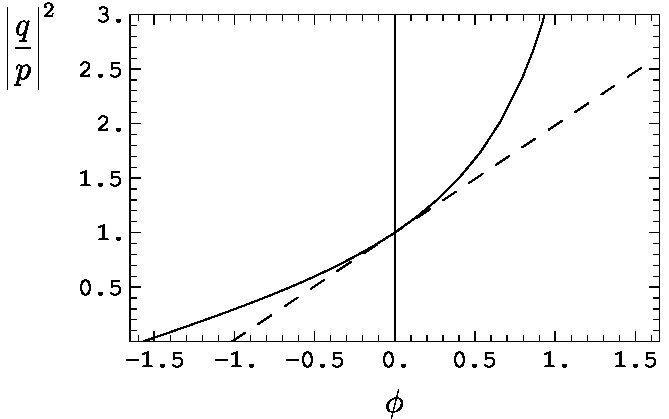 Figure 1
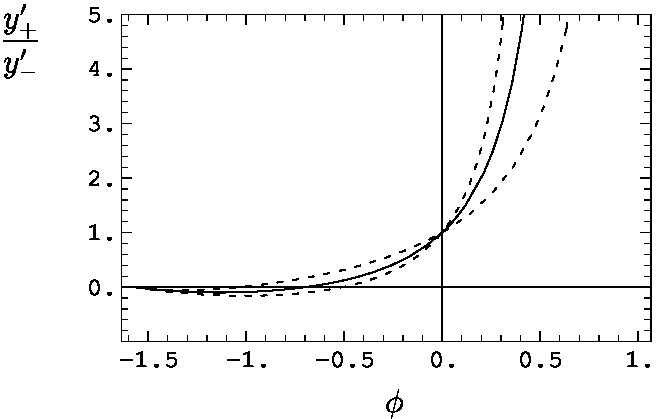 Figure 2
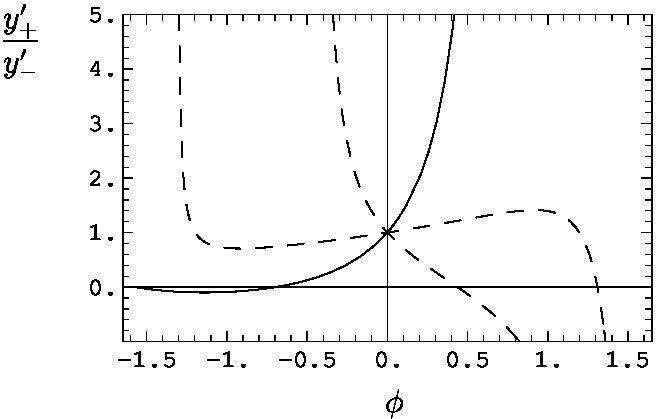 Figure 2
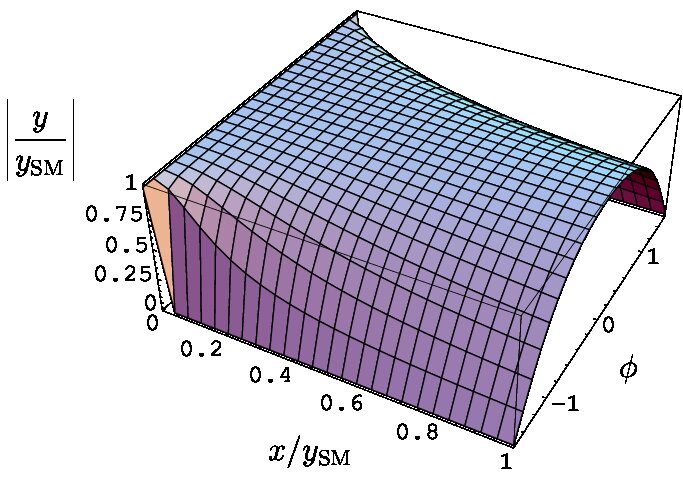 Figure 3
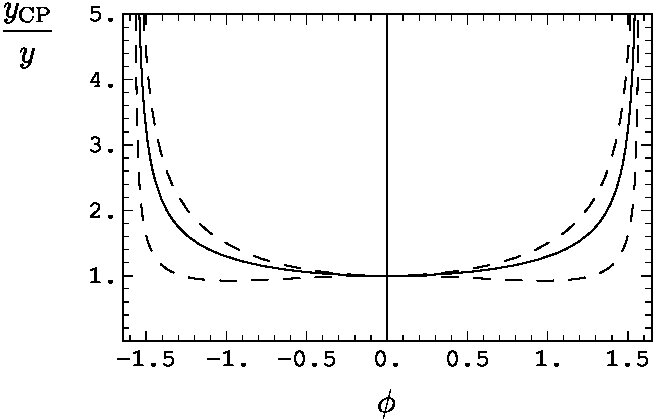 Figure 4
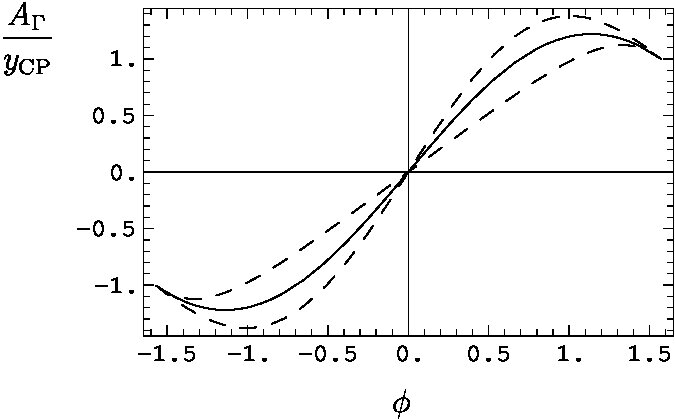 Figure 4
Peer Reviews
No public reviews on file for this paper yet. If you reviewed it on a platform where reviews are public (OpenReview, ICLR, NeurIPS, ICML), you can paste yours below so the community can read it here.
Videos
No videos yet. Explain this paper in a talk, walkthrough, or lecture? Add one.
IPPP/07/10
DCPT/07/20
**Implication of the Width Difference
On CP-Violation in - Mixing**
Patricia Ball***[email protected]
*IPPP, Department of Physics, University of Durham, Durham DH1 3LE, UK
**Abstract
**
Both BaBar and Belle have found evidence for a non-zero width difference in the - system. Although there is no direct experimental evidence for CP-violation in mixing (yet), we show that the measured values of the width difference already imply constraints on the CP-odd phase in mixing, which, if significantly different from zero, would be an unambiguous signal of new physics.
The highlight of this year’s Moriond conference on electroweak interactions and unified theories arguably was the announcement by BaBar and Belle of experimental evidence for - mixing [1, 2, 3], which was quickly followed by a number of theoretical analyses [4, 5, 6, 7, 8, 9]. While Refs. [4, 7, 8, 9] focused on the constraints posed, by the experimental results, on various new-physics models, Ref. [5] presented a first analysis of the implications of these results for the fundamental parameters describing mixing. The purpose of this letter is to show that the present experimental results already imply constraints on a sizeable CP-odd phase in mixing, which could only be due to new physics (NP).
To start with, let us shortly review the theoretical formalism of mixing and the experimental results, see Refs. [10, 11] for more detailed reviews. In complete analogy to mixing, mixing in the SM is due to box diagrams with internal quarks and bosons. In contrast to , though, the internal quarks are down-type. Also in contrast to mixing, the GIM mechanism is much more effective, as the contribution of the heaviest down-type quark, the , comes with a relative enhancement factor , but also a large CKM-suppression factor , which renders its contribution to mixing and hence negligible. As a consequence, mixing is very sensitive to the potential intervention of NP. On the other hand, it is also rather difficult to calculate the SM “background” to mixing, as the loop-diagrams are dominated by and quarks and hence sensitive to the intervention of resonances and non-perturbative QCD. The quasi-decoupling of the 3rd quark generation also implies that CP violation in mixing is extremely small in the SM, and hence any observation of CP violation will be an unambiguous signal of new physics, independently of hadronic uncertainties.
The theoretical parameters describing mixing can be defined in complete analogy to those for mixing: the time evolution of the system is described by the Schrödinger equation
[TABLE]
with Hermitian matrices and . The off-diagonal elements of these matrices, and , describe, respectively, the dispersive and absorptive parts of mixing. The flavour-eigenstates , are related to the mass-eigenstates by
[TABLE]
with
[TABLE]
by definition.
The basic observables in mixing are the mass and lifetime difference of , which are usually normalised to the average lifetime :
[TABLE]
In this letter we follow the sign convention of Ref. [5], according to which is positive by definition. The sign of then has to be determined from experiment. In addition, if there is CP-violation in the system, one also has
[TABLE]
While previously only bounds on and were known, both BaBar and Belle have now found evidence for non-vanishing mixing in the system. BaBar has obtained this evidence from the measurement of the doubly Cabibbo-suppressed decay (and its CP conjugate), yielding
[TABLE]
while Belle obtains
[TABLE]
from and
[TABLE]
from a Dalitz-plot analysis of . Here in the limit of no CP violation in mixing, while the primed quantities are related to by a rotation by a strong phase :
[TABLE]
Limited experimental information on this phase has been obtainted at CLEO-c [12]:
[TABLE]
which can be translated into . An analysis with a larger data-set is underway at CLEO-c, with an expected uncertainty of in the next couple of years [13]; BES-III is expected to reach after 4 years of running [14]. The experimental result (10) agrees with theoretical expectations, in the SU(3)-limit and |\delta_{K\pi}|\,\raisebox{-4.0pt}{\stackrel{{\scriptstyle<}}{{\sim}}}\,15^{\circ} from a calculation of the amplitudes in QCD factorisation [15]. Based on these experimental results, a preliminary HFAG-average was presented at the 2007 CERN workshop “Flavour in the Era of the LHC” [13]:
[TABLE]
Adding errors in quadrature, this implies
[TABLE]
The exact relations between , , and are given by
[TABLE]
Eq. (13) implies for and for . In view of the above experimental results, we assume from now on.
As for the CP-violating observables, characterises CP-violation in mixing and can be measured for instance in flavour-specific decays , where is possible only via mixing. The prime example is semileptonic decays with
[TABLE]
Although the B factories may have some sensitivity to this asymmetry, its measurement is severely impaired by the fact that mixing proceeds only very slowly, resulting in a large suppression factor of the mixed vs. the unmixed rate:
[TABLE]
Both in the and the system the quantity
[TABLE]
is very small, which however need not necessarily be the case for ’s. From (3) one derives the general expression
[TABLE]
with and the weak phase defined in (5). In the system, one has (the current up-to-date numbers are for and for [16]), so that upon expansion in
[TABLE]
Note that this formula refers to the definition , which differs by from the one used in Ref. [16], . For the system, one finds from experiment, but now the phase turns out to be small, so that
[TABLE]
In both cases, to a very good approximation. In the system, however, there is no natural hierarchy , and of course one hopes that NP-effects induce . In this case, and because and have been measured, while and are difficult to calculate, it is convenient to express in terms of , , , using the exact relations (13). From (3), and defining , we then obtain
[TABLE]
Note that for finite and , diverges because for from (13). In Fig. 1 we plot as function of , for the central experimental value from HFAG, , Eq. (11).
It is obvious that even for moderate values of the small- expansion is not really reliable.
What is the currently available experimental information on CP-violating in mixing, i.e. and ? As already mentioned, the semileptonic CP-asymmetry (14) has not been measured yet. What has been measured, though, is the effect of CP-violation on the time-dependent rates of and . The BaBar collaboration has parametrised these rates as
[TABLE]
and fit the and samples separately. They find [2]
[TABLE]
Adding errors in quadrature, this means . BaBar also obtains values for which we do not quote here, because the sensitivity to the quadratic term in (21) is less than that to the linear term in . is the ratio of the doubly Cabbibo-suppressed to the Cabibbo-favoured amplitude, . is the relative strong phase in the Cabibbo-favoured and suppressed amplitudes:
[TABLE]
the minus-sign comes from the relative sign between the CKM matrix elements and . In the limit of no CP-violation in the decay amplitude, one has , which is expected to be a very good approximation, in view of the fact that the decay is solely due to a tree-level amplitude. Then the relation of to , and is given by
[TABLE]
Presently, the experimental result for is compatible with 1, although with considerable uncertainties. Any significant deviation from 1 would be a sign for new physics. In Fig. 2 we plot as function of , for different values of and .
The figures clearly show that the value of is very sensitive to the phase , at least if is not too close to , which corresponds to the nearly constant dashed line in Fig. 2b. The reason for this dependence on becomes clearer if is expanded to first order in :
[TABLE]
For the central values of and , Eq. (11), this amounts to for , for and for , which explains the shape of the curves in Fig. 2b. Evidently it is important to reduce the uncertainty of , which, as mentioned earlier, will be achieved within the next few years. On the other hand, as shown in Fig. 2a, , which depends only on the ratio , but not and separately, is not very sensitive to the precise value of that ratio, but very much so to . The conclusion is that, even if itself cannot be determined very precisely, will nonetheless be a powerful tool to constrain , at least once will be known more precisely. Already now very large values are excluded.
Another, more theory-dependent constraint on can be derived from the value of . This argument centers around the fact that (a) the experimental result (11) is at the top end of theoretical predictions [17] and (b) new physics indicated by a non-zero value of always reduces the lifetime difference, independently of the value of . This observation is similar to what was found, some time ago, for the system [18]. In order to derive it, we assume that new physics does not affect ,111See, however, Ref. [19] for a discussion of the effect of tiny NP admixtures to . so that . We then have and hence . Using the relations (13), we can then express the ratio in terms of , and :
[TABLE]
This implies that new physics always reduces the lifetime difference, independently of the value of (and any new physics in the mass difference). In particular one has for and , which follows from the 2nd relation (13). Eq. (26) is the manifestation of the fact that one does not need to observe CP-violation in order to constrain it. A famous example for this is the unitarity triangle in physics, whose sides are determined from CP-conserving quantities only, but nonetheless allow a precise measurement of the size of CP-violation in the SM, via the angles and the area of the triangle.
In Fig. 3, we plot as a function of . The zero at is clearly visible. The experimental value then excludes phases close to . In order to make more quantitative statements, apparently a more precise calculation of is needed.
Two more CP-sensitive observables related to have been measured by the Belle collaboration [3]:
[TABLE]
The present experimental value of is given in (7), that for is . Again, we can study the dependence of these observables on . In Fig. 4a we plot the ratio , which is a function of and , in dependence on . As it turns out, this quantity is far less sensitive to than , the reason being that its deviation from is only a second-order effect in :
[TABLE]
Hence, unless the experimental accuracy is dramatically increased, and because the results on and already exclude a large CP-odd phase , it is safe to interpret as measurement of .
In Fig. 4b we plot the quantity . Also here there is a distinctive dependence on , with for small , but the effect is less dramatic than that in .
In conclusion, we find that the experimental results on mixing reported by BaBar and Belle already exclude extreme values of the CP-odd phase close to . This follows from the result for , which is close to the top end of theoretical predictions and can only be reduced by new physics, and from . While vanishes in the limit of no CP-violation, is a CP-conserving observable, which demonstrates the usefulness of such quantities in constraining CP-odd phases. Also , and the ratio can be useful in constraining . As long as there is no major breakthrough in theoretical predictions for mixing, which are held back by the fact that the meson is at the same time too heavy and too light for current theoretical tools to get a proper grip on the problem, the long-distance SM contributions to will completely obscure any NP contributions and their detection. The observation of CP violation, however, presents a theoretically clean way for NP to manifest itself and it is to be hoped that in the near future, i.e. at the factories or the LHC, at least one of the plentiful opportunities for NP to show up in CP violation [20] will be realised.
Acknowledgments
This work was supported in part by the EU networks contract Nos. MRTN-CT-2006-035482, Flavianet, and MRTN-CT-2006-035505, Heptools.
The reference list from the paper itself. Each links out to its DOI / PubMed record.
- 1[1] M. Staric (Belle), talk given at 42nd Rencontres de Moriond, Electroweak Interactions and Unified Theories , La Thuile, Italy, March 2007; K. Flood (Ba Bar), talk given at the same conference.
- 2[2] B. Aubert et al. [BABAR Collaboration], ar Xiv:hep-ex/0703020.
- 3[3] K. Abe [Belle Collaboration], ar Xiv:hep-ex/0703036.
- 4[4] M. Ciuchini et al. , ar Xiv:hep-ph/0703204.
- 5[5] Y. Nir, ar Xiv:hep-ph/0703235.
- 6[6] P. Ball, ar Xiv:hep-ph/0703245.
- 7[7] M. Blanke et al. , ar Xiv:hep-ph/0703254.
- 8[8] X. G. He and G. Valencia, ar Xiv:hep-ph/0703270.