A measure of the non-Gaussian character of a quantum state
Marco G. Genoni, Matteo G. A. Paris, Konrad Banaszek

TL;DR
This paper introduces a Hilbert-Schmidt distance-based measure to quantify the non-Gaussian character of bosonic quantum states, analyzing its properties and evolution under various processes.
Contribution
It proposes a new, easily computable non-Gaussianity measure for bosonic quantum states and extends it to quantum operations, enhancing quantification methods.
Findings
The measure effectively quantifies non-Gaussianity in single- and multi-mode states.
It tracks non-Gaussianity evolution during Gaussification and de-Gaussification processes.
The measure is computationally straightforward for bosonic systems.
Abstract
We address the issue of quantifying the non-Gaussian character of a bosonic quantum state and introduce a non-Gaussianity measure based on the Hilbert-Schmidt distance between the state under examination and a reference Gaussian state. We analyze in details the properties of the proposed measure and exploit it to evaluate the non-Gaussianity of some relevant single- and multi-mode quantum states. The evolution of non-Gaussianity is also analyzed for quantum states undergoing the processes of Gaussification by loss and de-Gaussification by photon-subtraction. The suggested measure is easily computable for any state of a bosonic system and allows to define a corresponding measure for the non-Gaussian character of a quantum operation.
Click any figure to enlarge with its caption.
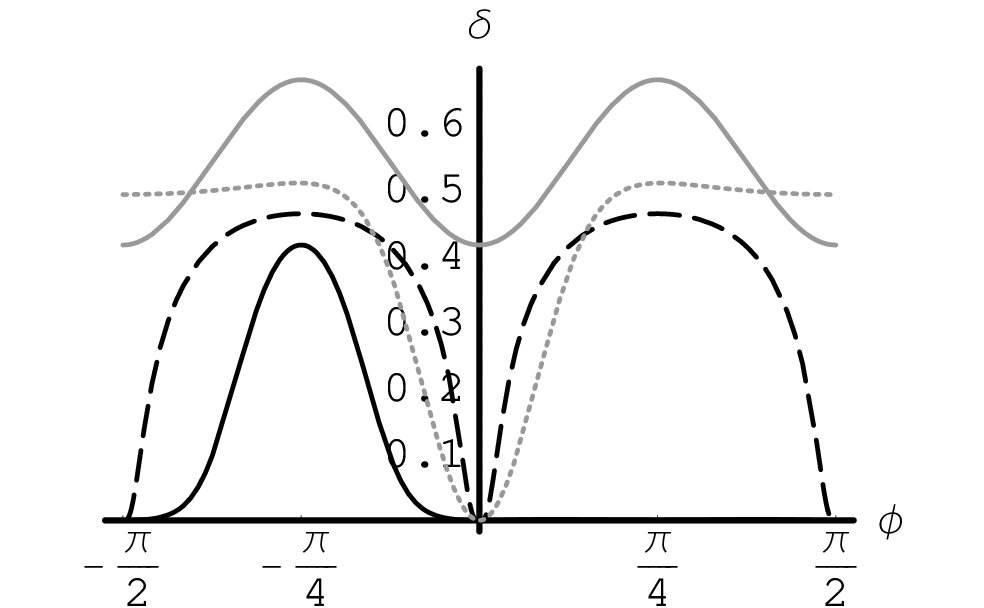 Figure 1
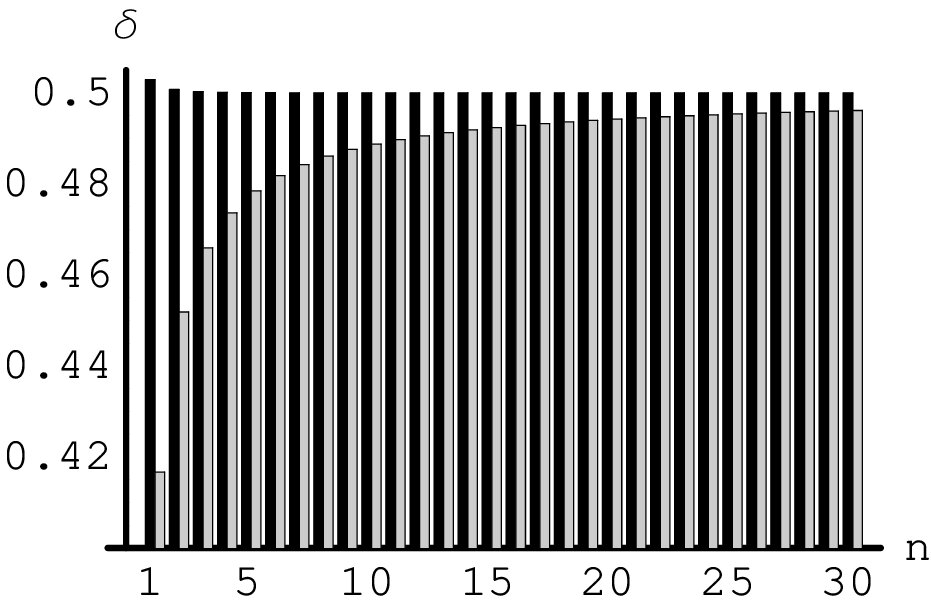 Figure 2
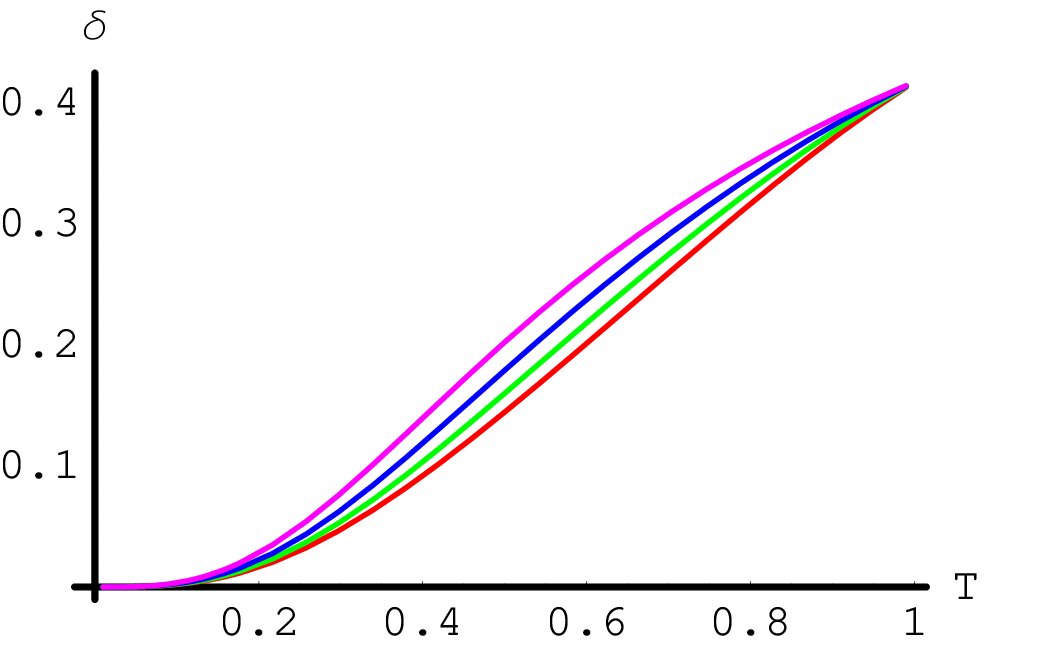 Figure 3
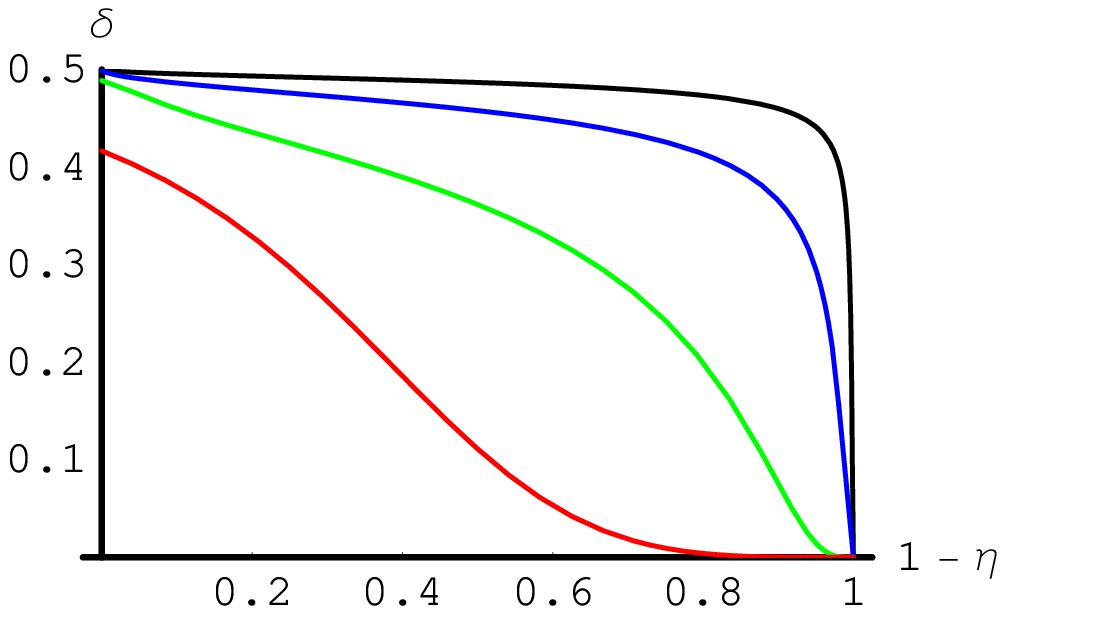 Figure 4
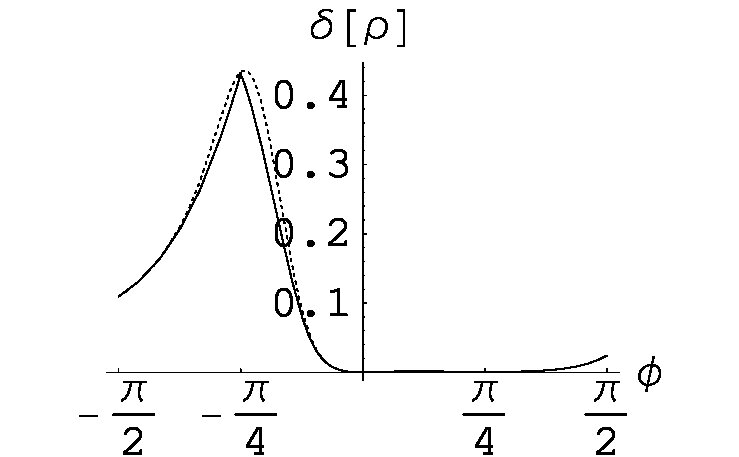 Figure 5
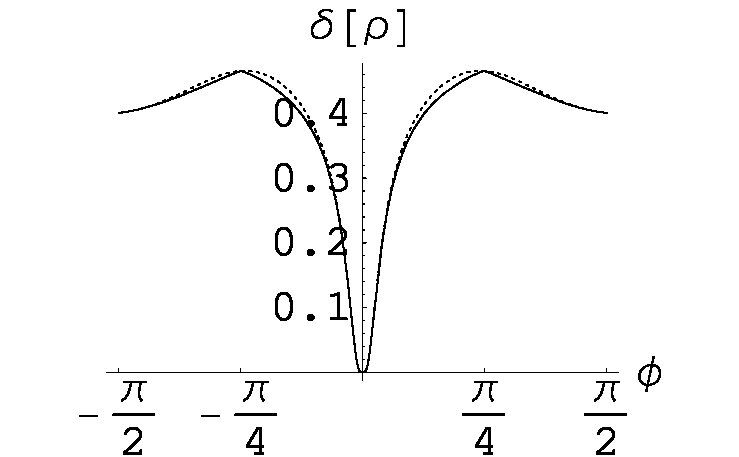 Figure 6
Peer Reviews
No public reviews on file for this paper yet. If you reviewed it on a platform where reviews are public (OpenReview, ICLR, NeurIPS, ICML), you can paste yours below so the community can read it here.
Videos
No videos yet. Explain this paper in a talk, walkthrough, or lecture? Add one.
A measure of the non-Gaussian character of a quantum state
Marco G. Genoni
Dipartimento di Fisica dell’Università di Milano, I-20133, Milano, Italia.
Matteo G. A. Paris
Dipartimento di Fisica dell’Università di Milano, I-20133, Milano, Italia.
Institute for Scientific Interchange, I-10133 Torino, Italia
Konrad Banaszek
Institute of Physics, Nicolaus Copernicus University, PL-87-100 Toruń, Poland
Abstract
We address the issue of quantifying the non-Gaussian character of a bosonic quantum state and introduce a non-Gaussianity measure based on the Hilbert-Schmidt distance between the state under examination and a reference Gaussian state. We analyze in details the properties of the proposed measure and exploit it to evaluate the non-Gaussianity of some relevant single- and multi-mode quantum states. The evolution of non-Gaussianity is also analyzed for quantum states undergoing the processes of Gaussification by loss and de-Gaussification by photon-subtraction. The suggested measure is easily computable for any state of a bosonic system and allows to define a corresponding measure for the non-Gaussian character of a quantum operation.
pacs:
03.67.-a, 03.65.Bz, 42.50.Dv
I Introduction
Gaussian states play a crucial role in quantum information processing with continuous variables. This is especially true for quantum optical implementations since radiation at thermal equilibrium, including the vacuum state, is itself a Gaussian state and most of the Hamiltonians achievable within the current technology are at most bilinear in the field operators, i.e. preserve the Gaussian character AOP ; Eisert ; Illu . As a matter of fact, using single-mode and entangled Gaussian states, linear optical circuits and Gaussian operations, like homodyne detection, several quantum information protocols have been implemented, including teleportation, dense coding and quantum cloning Brau .
On the other hand quantum information protocols required for long distance communication, as for example entanglement distillation and entanglement swapping, rely on non-Gaussian operations. In addition, it has been demonstrated that teleportation Tom ; IPS2a ; IPS2b and cloning nonGclon of quantum states may be improved by using non-Gaussian states and non-Gaussian operations. Indeed, de-Gaussification protocols for single-mode and two-mode states have been proposed Tom ; IPS2a ; IPS2b and realized IPS_Wenger . It should be also noticed that any strongly superadditive function is minimized, at fixed covariance matrix, by Gaussian states. This is crucial to prove extremality of Gaussian states and Gaussian operations Wolf1 ; Wolf2 for what concerns various quantities as channel capacities HW01 , multipartite entanglement measures EM and distillable secret key in quantum key distribution protocols. Since in most cases these quantities can be computed only for Gaussian states, a non-Gaussianity measure may serve as a guideline to quantify them for the class of non-Gaussian states. Overall, non-Gaussianity is revealing itself as a resource for continuous variable quantum information, and thus we urge a measure able to quantify the non-Gaussian character of a quantum state.
In this paper we introduce a novel quantity, the non-Gaussianity of a quantum state, which quantifies how much a state fails to be Gaussian. Our measure, which is based on the Hilbert-Schmidt distance between the state itself and a reference Gaussian state, can be easily computed for any state, either single-mode or multi-mode.
The paper is structured as follows. In the next Section we introduce notation and review the basic properties of Gaussian states. Then, in Section III we introduce the formal definition of and study its properties in details. In Section IV we evaluate non-Gaussianity of relevant quantum states whereas in Section V we analyze the evolution of non-Gaussianity for known Gaussification and de-Gaussification maps. Section VI closes the paper with some concluding remarks.
II Gaussian states
For concreteness, we will use here the quantum optical terminology of modes carrying photons, but our theory applies to general bosonic systems. Let us consider a system of modes described by mode operators , , satisfying the commutation relations . A quantum state of the modes is fully described by its characteristic function Glauber2
[TABLE]
where is the -mode displacement operator, with , , and where
[TABLE]
is the single-mode displacement operator. The canonical operators are given by:
[TABLE]
with commutation relations given by . Upon introducing the real vector , the commutation relations rewrite as
[TABLE]
where are the elements of the symplectic matrix , being the -Pauli matrix. The covariance matrix and the vector of mean values of a quantum state are defined as
[TABLE]
where denotes the anti-commutator, and is the expectation value of the operator .
A quantum state is referred to as a Gaussian state if its characteristic function has the Gaussian form
[TABLE]
where is the real vector . Of course, once the covariance matrix and the vector of mean values are given, a Gaussian state is fully determined. For a single-mode system the most general Gaussian state can be written as
[TABLE]
being the displacement operator, the squeezing operator, , and a thermal state with average number of photons.
III A measure of the non-Gaussian character of a quantum state
In order to quantify the non-Gaussian character of a quantum state we use a quantity based on the distance between and a reference Gaussian state , which itself depends on . Specifically, we define the non-Gaussianity of the state as
[TABLE]
where denotes the Hilbert-Schmidt distance between and
[TABLE]
with and denoting the purity of and the overlap between and respectively. The Gaussian reference is the Gaussian state such that
[TABLE]
i.e. is the Gaussian state with the same covariance matrix and the same vector of the state .
The relevant properties of , which confirm that it represents a good measure of the non-Gaussian character of , are summarized by the following Lemmas:
Lemma 1: iff is a Gaussian state.
Proof: If then and thus it is a Gaussian state. If is a Gaussian state, then it is uniquely identified by its first and second moments and thus the reference Gaussian state is given by , which, in turn, leads to and thus to .
Lemma 2: If is a unitary map corresponding to a symplectic transformation in the phase space, i.e. if with hermitian that is at most bilinear in the field operators, then . This property ensures that displacement and squeezing operations do not change the Gaussian character of a quantum state.
Proof: Let us consider . Then the covariance matrix transforms as , being the symplectic transformation associated to . At the same time the vector of mean values simply translates to , where is the displacement generated by . Since any Gaussian state is fully characterized by its first and second moments, then the reference state must necessarily transform as , i.e. with the same unitary transformation . Since the Hilbert-Schmidt distance and the purity of a quantum state are invariant under unitary transformations the lemma is proved.
Lemma 3: is proportional to the squared distance between the characteristic functions of and of the reference Gaussian state . In formula:
[TABLE]
Since the notion of Gaussianity of a quantum state is defined through the shape of its characteristic function, and since the characteristic function of a quantum state belongs to the space Glauber2 , we address distance to as a good indicator for the non Gaussian character of .
Proof: Since characteristic functions of self-adjoint operators are even functions of and by means of the identity
[TABLE]
we obtain
[TABLE]
Lemma 4: Consider a bipartite state . If is a Gaussian state then .
Proof: we have
[TABLE]
Therefore, since we arrive at
[TABLE]
The four properties illustrated by the above lemmas are the natural properties required for a good measure of the non-Gaussian character of a quantum state. Notice that by using the trace distance instead of the Hilbert-Schmidt distance we would lose Lemmas 3 and 4, and that the invariance expressed by Lemma 4 holds thanks to the renormalization of the Hilbert-Schmidt distance through the purity . We stress the fact that our measure of non-Gaussianity is a computable one: It may be evaluated for any quantum state of modes by the calculation of the first two moments of the state, followed by the evaluation of the overlap with the corresponding Gaussian state.
Notice that is not additive (nor multiplicative) with respect to the tensor product. If we consider a (separable) multi-partite quantum state in the product form , the non-Gaussianity is given by
[TABLE]
where is the Gaussian state with the same moments of . In fact, since the state is factorisable, we have that the corresponding Gaussian is a factorisable state too.
IV Non-Gaussianity of relevant quantum states
Let us now exploit the definition (2) to evaluate the non-Gaussianity of some relevant quantum states. At first we consider Fock number states of a single mode as well as multimode factorisable states made of copies of a number state. The reference Gaussian states are a thermal state with average photon number and a factorisable thermal state with average photon number in each mode mar . Non-Gaussianity may be analytically evaluated, leading to
[TABLE]
In the multimode case of , we seek for the number of copies that maximizes the non-Gaussianity. In Fig. 1 we show both and as a function of . As it is apparent from the plot non-Gaussianity of Fock states increases monotonically with the number of photon with the limiting value obtained for . Upon considering multi-mode copies of Fock states we obtain larger value of non-Gaussianity: is a decreasing function of , approaching from above. The value of corresponds to for and to for .
Another example is the superposition of coherent states
[TABLE]
with normalization which for reduces to the so-called Schrödinger cat states, and whose reference Gaussian state is a displaced squeezed thermal state , where the real parameters , , and are analytical functions of and . Finally we evaluate the non-Gaussianity of the two-mode Bell-like superpositions of Fock states
[TABLE]
which for reduces to the Bell states and . The corresponding reference Gaussian states are respectively a two mode squeezed thermal state , where denotes the two-mode squeezing operator, and , namely the correlated two-mode state obtained by mixing a single-mode thermal state with the vacuum at a beam splitter of transmissivity , i.e. . All the parameters involved in these reference Gaussian states are analytical functions of the superposition parameter . Non-Gaussianities are thus evaluated by means of (2) and are reported in Fig. 1 as a function of the parameter . As it is apparent from the plot, the non-Gaussianity of single-mode states does not surpass the value , and this fact is confirmed by other examples not reported here.
As concern the cat-like states, we notice that for small values of the non-Gaussianity of the superposition shows a different behavior for positive and negative values of the parameter : for and we have almost zero , while higher values are achieved for . For higher values of ( in Fig. 1), non-Gaussianity becomes an even function of . This different behavior can be understood by looking at the Wigner functions of even and odd Schrödinger cat states for different values of : for small values of the even cat’s Wigner function is similar to a Gaussian function, while the odd cat’s Wigner function shows a non-Gaussian hole in the origin of the phase space; increasing the value of the Wigner functions of the two kind of states become similar and deviate from a Gaussian function.
We have also done a numerical analysis of non-Gaussianity of single-mode quantum states represented by finite superposition of Fock states
[TABLE]
To this aim we generate randomly quantum states in a finite dimensional subspaces, , following the algorithm proposed by Zyczkowski et al Zyczk1 ; Zyczk2 , i.e. by generating a random diagonal state (i.e. a point on the simplex) and a random unitary matrix according to the Haar measure. In Fig. 2 we report the distribution of non-Gaussianity , as evaluated for random quantum states, for three different value of the maximum number of photons . As it is apparent from the plots the distribution of becomes Gaussian-like for increasing . In the fourth panel of Fig. 2 we thus report the mean values and variances of the the distributions as a function of the maximum number of photons . The mean value increases with the dimension whereas the variance is a monotonically decreasing function of .
Also for finite superpositions simulations we did not observe non-Gaussianity higher than . Therefore, although we have no proof, we conjecture that is a limiting value for the non-Gaussianity of a single-mode state. Higher values are achievable for two-mode or multi-mode quantum states (e.g. for the Bell states ).
V Gaussification and de-Gaussification processes
We have also studied the evolution of non-Gaussianity of quantum states undergoing either Gaussification or de-Gaussification processes. First we have considered the Gaussification of Fock states due do the interaction of the system with a bath of oscillators at zero temperature. This is perhaps the simplest example of a Gaussification protocol. In fact the interaction drives asymptotically any quantum state to the vacuum state of the harmonic system, which, in turn, is a Gaussian state. The evolution of the system is governed by the Lindblad Master equation , where denotes time derivative, is the damping factor and the Lindblad superoperator acts as follows . Upon writing the solution of the Master equation can be written as
[TABLE]
where is the initial state. In particular for the system initially prepared in a Fock state , we obtain, after evolution, the mixed state
[TABLE]
with . The reference Gaussian state corresponding to is a thermal state with average photon number . Non-Gaussianity of can be evaluated analytically, we have
[TABLE]
being a hypergeometric function. We show the behavior of in Fig. 3 as a function of for different values of . As it is apparent from the plot is a monotonically decreasing function of as well as a monotonically increasing function of . That is, at fixed time the higher is the initial photon number , the larger is the resulting non-Gaussianity.
Let us now consider the de-Gaussification protocol obtained by the process of photon subtraction. Inconclusive Photon Subtraction (IPS) has been introduced for single-mode and two-mode states in IPS1 ; IPS2a ; IPS2b and experimentally realized in IPS_Wenger . In the IPS protocol an input state is mixed with the vacuum at a beam splitter (BS) with transmissivity and then, on/off photodetection with quantum efficiency is performed on the reflected beam. The process can be thus characterized by two parameters: the transmissivity and the detector efficiency . Since the detector can only discriminate the presence from the absence of light, this measurement is inconclusive, namely it does not resolve the number of detected photons. When the detector clicks, an unknown number of photons is subtracted from the initial state and we obtain the conditional IPS state . The conditional map induced by the measurement is non-Gaussian IPS2b , and the output state is de-Gaussified. Upon applying the IPS protocol to the (Gaussian) single-mode squeezed vacuum (), where is the real squeezing operation we obtain IPS1 the conditional state , whose characteristic function is a sum of two Gaussian functions and therefore is no longer Gaussian. The corresponding Gaussian reference state is a squeezed thermal state where the parameters and are analytic functions of , and . Non-Gaussianity has been evaluated, and in Fig. 3 (right) we report for as a function of the transmittivity for different values of the quantum efficiency . As it is apparent from the plot the IPS protocol indeed de-Gaussifies the input state, i.e. nonzero values of the non-Gaussianity are obtained. We found that is an increasing function of the transmissivity which is the relevant parameter, while the quantum efficiency only slightly affects the non-Gaussian character of the output state. The highest value of non-Gaussianity is achieved in the limit of unit transmissivity and unit quantum efficiency
[TABLE]
where the last equality is derived from Lemma 2. This result is in agreement with the fact that a squeezed vacuum state undergoing the IPS protocol is driven towards the target state in the limit of IPS1 . Finally, we notice that for and for the non-Gaussianity vanishes. In turn, this corresponds to the fact that one of the coefficients of the two Gaussians of vanishes, i.e. the output state is again a Gaussian one.
VI Conclusion and outlooks
Having at disposal a good measure of non-Gaussianity for quantum state allows us to define a measure of the non-Gaussian character of a quantum operation. Let us denote by the whole set of Gaussian states. A convenient definition for the non-Gaussianity of a map reads as follows , where denotes the quantum state obtained after the evolution imposed by the map. Indeed, for a Gaussian map , which transforms any input Gaussian state into a Gaussian state, we have . Work along this line is in progress and results will be reported elsewhere.
In conclusion, we have proposed a measure of the non-Gaussian character of a CV quantum state. We have shown that our measure satisfies the natural properties expected from a good measure of non-Gaussianity, and have evaluated the non-Gaussianity of some relevant states, in particular of states undergoing Gaussification and de-Gaussification protocols. Using our measure an analogue non-Gaussianity measure for quantum operations may be introduced.
Acknowledgments
This work has been supported by MIUR project PRIN2005024254-002, the EC Integrated Project QAP (Contract No. 015848) and Polish MNiSW grant 1 P03B 011 29.
Appendix A Gaussian reference with unconstrained mean value
As we have seen from the above examples of Eq. (2) represents a good measure of the non-Gaussian character of a quantum state. A question arises on whether different choices for the reference Gaussian state may lead to alternative, valid, definitions. As for example (for single-mode states) we may define
[TABLE]
where is a Gaussian state with the same covariance matrix of and unconstrained vector of mean values used to minimize the Hilbert-Schmidt distance. Here we report few examples of the comparison between the results already obtained using (2) with that coming from (12). As we will see either the two definitions coincide or and are monotone functions of each other. Since the definition (2) corresponds to an easily computable measure we conclude that it represents the most convenient choice.
Let us first consider the Fock state . According to (12), the reference Gaussian state is given by a displaced thermal states . The overlap between and is given by
[TABLE]
The maximum of (13) is achieved for , which coincides with the assumptions .
Let us consider the quantum state (10) obtained as the solution of the loss Master Equation for an initial Fock state . The unconstrained Gaussian reference is again a displaced thermal state , and the overlap is given by
[TABLE]
Again, since the overlap is maximum for , both definitions give the same results for the non-Gaussianity.
Let us now consider the Schrödinger cat-like states of (7). The reference Gaussian state is a displaced squeezed thermal state, with squeezing and thermal photons as calculated before. The optimization over the free parameter may be done numerically. In Fig. 4 we show the non-Gaussianitiy, both as resulting from (12) and by choosing as in (2), as a function of . The two curves are almost the same, with no qualitative differences.
The reference list from the paper itself. Each links out to its DOI / PubMed record.
- 1(1) A. Ferraro, S. Olivares and M. G. A. Paris, Gaussian States in Quantum Information , (Bibliopolis, Napoli, 2005)
- 2(2) J. Eisert, M. B. Plenio, Int. J. Quant. Inf. 1 , 479 (2003)
- 3(3) F. Dell’Anno et al., Phys. Rep. 428 , 53 (2006).
- 4(4) S. L. Braunstein, P. van Loock, Rev. Mod. Phys 77 , 513 (2005).
- 5(5) T. Opatrny et al., Phys.Rev. A 61 , 032302 (2000).
- 6(6) P. T. Cochrane et al., Phys Rev. A 65 , 062306 (2002).
- 7(7) S. Olivares et al., Phys. Rev. A 67 , 032314 (2003); S. Olivares, M. G. A. Paris, Las. Phys. 16 , 1533 (2006).
- 8(8) N. J. Cerf et al., Phys. Rev. Lett. 95 , 070501 (2005).