d-wave superconductivity from electron-phonon interactions
J.P.Hague

TL;DR
This paper investigates how electron-phonon interactions can lead to d-wave superconductivity in a quasi-2D model, emphasizing the importance of vertex corrections and spatial fluctuations in predicting the order parameter's symmetry.
Contribution
It introduces an extended Migdal-Eliashberg theory that includes vertex corrections and spatial fluctuations, revealing the emergence of d-wave superconductivity near half-filling.
Findings
D-wave superconductivity appears close to half-filling.
Increasing filling transitions the order parameter from d-wave to s-wave.
Large Coulomb pseudopotential suppresses s-wave but not d-wave superconductivity.
Abstract
I examine electron-phonon mediated superconductivity in the intermediate coupling and phonon frequency regime of the quasi-2D Holstein model. I use an extended Migdal-Eliashberg theory which includes vertex corrections and spatial fluctuations. I find a d-wave superconducting state that is unique close to half-filling. The order parameter undergoes a transition to s-wave superconductivity on increasing filling. I explain how the inclusion of both vertex corrections and spatial fluctuations is essential for the prediction of a d-wave order parameter. I then discuss the effects of a large Coulomb pseudopotential on the superconductivity (such as is found in contemporary superconducting materials like the cuprates), which results in the destruction of the s-wave states, while leaving the d-wave states unmodified.
Click any figure to enlarge with its caption.
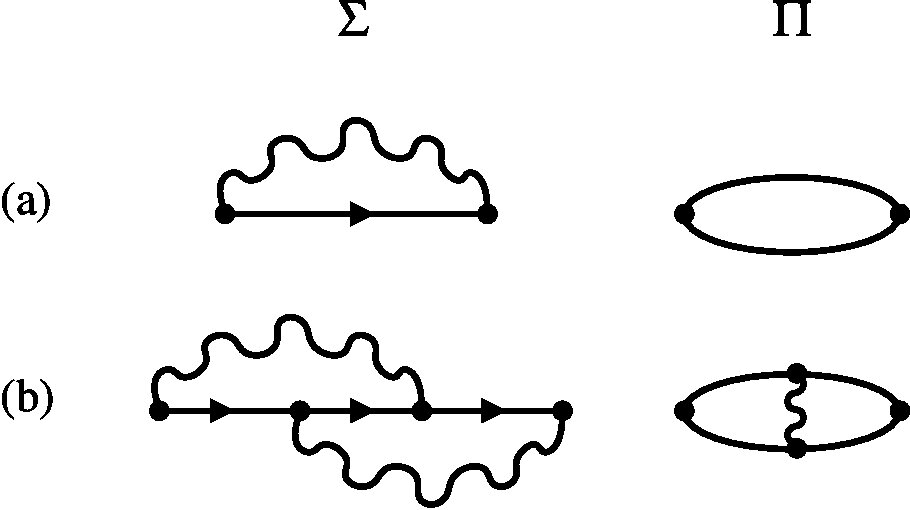 Figure 1
Peer Reviews
No public reviews on file for this paper yet. If you reviewed it on a platform where reviews are public (OpenReview, ICLR, NeurIPS, ICML), you can paste yours below so the community can read it here.
Videos
No videos yet. Explain this paper in a talk, walkthrough, or lecture? Add one.
-wave superconductivity from electron-phonon interactions
J.P.Hague
Dept. of Physics and Astronomy, University of Leicester, Leicester, LE1 7RH
Dept. of Physics, Loughborough University, Loughborough, LE11 3TU
(4th May 2005)
Abstract
I examine electron-phonon mediated superconductivity in the intermediate coupling and phonon frequency regime of the quasi-2D Holstein model. I use an extended Migdal–Eliashberg theory which includes vertex corrections and spatial fluctuations. I find a -wave superconducting state that is unique close to half-filling. The order parameter undergoes a transition to -wave superconductivity on increasing filling. I explain how the inclusion of both vertex corrections and spatial fluctuations is essential for the prediction of a -wave order parameter. I then discuss the effects of a large Coulomb pseudopotential on the superconductivity (such as is found in contemporary superconducting materials like the cuprates), which results in the destruction of the -wave states, while leaving the -wave states unmodified. Published as: Phys. Rev. B 73, 060503(R) (2006)
pacs:
71.10.-w, 71.38.-k, 74.20.-z
The discovery of high transition temperatures and a -wave order parameter in the cuprate superconductors are remarkable results and have serious implications for the theory of superconductivity. The presence of large Coulomb interactions in the cuprates which have the potential to destroy conventional -wave BCS states has prompted the search for new mechanisms that can give rise to superconductivity. However, electron-phonon mediated superconductivity is still not well understood, especialy in lower dimensional systems. In particular, the electron-phonon problem is particularly difficult at intermediate couplings with large phonon frequency (such as found in the cuprates) and the electron-phonon mechanism cannot be fully ruled out. It is therefore of paramount importance to develop new theories to understand electron-phonon mediated superconductivity away from the BCS limit.
The assumption that electron-phonon interactions cannot lead to high transition temperatures and unusual order parameters was made on the basis of calculations from BCS theory, which is a very-weak-coupling mean-field theory (although of course highly successful for pre-1980s superconductors) J.Bardeen et al. (1957). In the presence of strong Coulomb interaction, the BCS -wave transition temperature is vastly reduced. However, the recent measurement of large couplings between electrons and the lattice in the cuprate superconductors means that extensions to the conventional theories of superconductivity are required G.M.Zhao et al. (1997); A.Lanzara et al. (2001); R.J.McQueeney et al. (1999). In particular, low dimensionality, intermediate dimensionless coupling constants of and large and active phonon frequencies of 75meV mean that BCS or the more advanced Migdal–Eliashberg (ME) theory cannot be applied. In fact, the large coupling constant and a propensity for strong renormalization in 2D systems, indicate that the bare unrenormalized phonon frequency could be several times greater than the measured 75 meV J.P.Hague (2003).
Here I apply the dynamical cluster approximation (DCA) to introduce a fully self-consistent momentum-dependent self-energy to the electron-phonon problem M.H.Hettler et al. (1998); T.Maier et al. (2005); J.P.Hague (2003, 2005). Short ranged spatial fluctuations and lowest order vertex corrections are included, allowing the sequence of phonon absorption and emission to be reordered once. In particular, the theory used here is second order in the effective electron-electron coupling , which provides the correct weak coupling limit from small to large phonon frequencies 111I also note the extensions to Eliashberg theory carried out by Grimaldi et al. C.Grimaldi et al. (1995).. In this paper, I include symmetry broken states in the anomalous self energy to investigate unconventional order parameters such as -wave. No assumptions are made in advance about the form of the order parameter.
DCA M.H.Hettler et al. (1998, 2000); T.Maier et al. (2005) is an extension to the dynamical mean-field theory for the study of low dimensional systems. To apply the DCA, the Brillouin zone is divided into subzones within which the self-energy is assumed to be momentum independent, and cluster Green functions are determined by averaging over the momentum states in each subzone. This leads to spatial fluctuations with characteristic range, . In this paper, is used throughout. This puts an upper bound on the strength of the superconductivity, which is expected to be reduced in larger cluster sizes M.Jarrell et al. (2001). To examine superconducting states, DCA is extended within the Nambu formalism T.Maier et al. (2005); J.P.Hague (2005). Green functions and self-energies are described by matrices, with off diagonal terms relating to the superconducting states. The self-consistent condition is:
[TABLE]
[TABLE]
where , is the chemical potential, are the Fermionic Matsubara frequencies, is the anomalous self energy and is the normal self energy. must obey the lattice symmetry. In contrast, it is only which is constrained by this condition, since is squared in the denominator of Eqn. 1. Therefore the sign of can change. For instance, if the anomalous self energy has the rotational symmetry , the on-diagonal Green function, which represents the electron propagation retains the correct lattice symmetry . Therefore, only inversion symmetry is required of the anomalous Green function representing superconducting pairs and the anomalous self energy.
Here I examine the Holstein model T.Holstein (1959) of electron-phonon interactions. It treats phonons as nuclei vibrating in a time-averaged harmonic potential (representing the interactions between all nuclei), i.e. only one frequency is considered. The phonons couple to the local electron density via a momentum-independent coupling constant T.Holstein (1959).
[TABLE]
The first term in this Hamiltonian represents hopping of electrons between neighboring sites and has a dispersion . The second term couples the local ion displacement, to the local electron density. The last term is the bare phonon Hamiltonian, i.e. a simple harmonic oscillator. The creation and annihilation of electrons is represented by (), is the ion momentum and the ion mass. The effective electron-electron interaction is,
[TABLE]
where, , is an integer and represents the magnitude of the effective electron-electron coupling. with , resulting in a non-interacting band width . A small interplanar hopping is included. This is necessary to stabilise superconductivity, which is not permitted in a pure 2D system P.C.Hohenberg (1967).
Perturbation theory in the effective electron-electron interaction (Fig. 1) is applied to second order in , using a skeleton expansion. The electron self-energy has two terms, neglects vertex corrections (Fig. 1(a)), and corresponds to the vertex corrected case (Fig. 1(b)). and correspond to the equivalent phonon self energies. At large phonon frequencies, all second order diagrams including are essential for the correct description of the weak coupling limit.
The phonon propagator is calculated from,
[TABLE]
and the Green function from equations 1 and 2. and . Details of the translation of the diagrams in Fig. 1 and the iteration procedure can be found in Ref. J.P.Hague, 2005. Calculations are carried out along the Matsubara axis, with sufficient Matsubara points for an accurate calculation. The equations were iterated until the normal and anomalous self-energies converged to an accuracy of approximately 1 part in .
Since the anomalous Green function is proportional to the anomalous self energy, initializing the problem with the non-interacting Green function leads to a non-superconducting (normal) state. A constant superconducting field with -wave symmetry was applied to the system to induce superconductivity. The external field was then completely removed. Iteration continued without the field until convergence. This solution was then used to initialize self-consistency for other similar values of the parameters. The symmetry conditions used in Refs J.P.Hague, 2003 and J.P.Hague, 2005 have been relaxed to reflect the additional breaking of the anomalous lattice symmetry in the -wave state. This does not affect the normal state Green function, but does affect the anomalous state Green function.
In Fig. 2, the anomalous self energy is examined for (half-filling). The striking feature is that stable -wave superconductivity is found. This is manifested through a change in sign of the anomalous self energy, which is negative at the point and positive at the point. The electron Green function (equation 1) depends on , so causality and lattice symmetry are maintained. Since the gap function is directly proportional to , and , then the sign of the order parameter i.e. the sign of the superconducting gap changes under rotation. .
Figure 3 shows the variation of superconducting pairing across the Brillouin zone. . and . The -wave order can be seen very clearly. The largest anomalous densities are at the and points, with a node situated at the point and a sign change on 90o rotation. Pairing clearly occurs between electrons close to the Fermi surface.
So far, the model has been analyzed at half filling. Figure 4 demonstrates the evolution of the order parameter as the number of holes is first increased, and then decreased. The total magnitude of the anomalous density, is examined. When the number of holes is increased, stable -wave order persists to a filling of , while decreasing monotonically. At the critical point, there is a spontaneous transition to -wave order. Starting from a high filling, and reducing the number of holes, there is a spontaneous transition from to -wave order at . There is therefore hysteresis associated with the self-consistent solution. It is reassuring that the -wave state can be induced without the need for the external field. As previously established, -wave order does not exist at half-filling as a mainfestation of Hohenberg’s theorem J.P.Hague (2005), so the computed -wave order at half-filling is the ground state of the model. It is interesting that the - and -channels are able to coexist, considering that the BCS channels are separate on a square lattice. This is due to the vertex corrections, since the self consistent equations are no longer linear in the gap function (the 1st order gap equation vanishes in the -wave case, leaving 2nd order terms as the leading contribution).
I finish with a brief discussion of Coulomb effects. In the Eliashberg equations, a Coulomb pseudopotential may be added to the theory as,
[TABLE]
It is easy to see the effect of -wave order on this term. Since the sign of the anomalous Green function is modulated, the average effect of -wave order is to nullify the Coulomb contribution to the anomalous self-energy (i.e. ). This demonstrates that the -wave state is stable to Coulomb perturbations, presumably because the pairs are distance separated. In contrast, the -wave state is not stable to Coulomb interaction, with a corresponding reduction of the transition temperature ( for ). Thus, such a Coulomb filter selects the -wave state (see e.g. Ref. J.F.Annett, 2004). Since large local Coulomb repulsions are present in the cuprates (and indeed most transition metal oxides), then this mechanism seems the most likely to remove the hysteresis. Without the Coulomb interactions, it is expected that the -wave state will dominate for , since the anomalous order is larger.
I note that a further consequence of strong Coulomb repulsion is antiferromagnetism close to half-filling. Typically magnetic fluctuations act to suppress phonon mediated superconducting order. As such, one might expect a suppression of superconducting order close to half-filling, with a maximum away from half filling. The current theory could be extended to include additional anomalous Green functions related to antiferromagnetic order. This would lead to a 4x4 Green function matrix. A full analysis of antiferromagnetism and the free energy will be carried out at a later date.
Summary
In this paper I have carried out simulations of the 2D Holstein model in the superconducting state. Vertex corrections and spatial fluctuations were included in the approximation for the self-energy. The anomalous self energy and superconducting order parameter were calculated. Remarkably, stable superconducting states with -wave order were found at half-filling. -wave states persist to , where the symmetry of the parameter changes to -wave. Starting in the -wave phase and reducing the filling, -wave states spontaneously appear at . The spontaneous appearance of -wave states in a model of electron-phonon interactions is of particular interest, since it may negate the need for novel pairing mechanisms in the cuprates 222 On the basis of a screened electron-phonon interaction, Abrikosov claims to have found stable -wave states in a BCS like theory A.A.Abrikosov (1995a, b). However with an unscreened Holstein potential, the transition temperature it the -wave channel given by the standard theory is zero. Also, the assumed order parameter in his work does not clearly have -wave symmetry..
The inclusion of vertex corrections and spatial fluctuations was essential to the emergence of the -wave states in the Holstein model, which indicates why BCS and ME calculations do not predict this phenomenon. For very weak coupling, the off diagonal Eliashberg self-energy has the form , so it is clear (for the same reasons as the Coulomb pseudopotential) that this diagram has no contribution in the -wave phase (the weak coupling phonon propagator is momentum independent for the Holstein model). Therefore, vertex corrections are the leading term in the weak coupling limit. Furthermore, I have discussed the inclusion of Coulomb states to lowest order, which act to destabilize the -wave states, while leaving the -wave states unchanged. Since the Coulomb pseudopotential has no effect then it is possible that electron-phonon interactions are the mechanism inducing -wave states in real materials such as the cuprates. The Coulomb filtering mechanism works for -wave symmetry and higher, so it is possible that electron-phonon interactions could explain many novel superconductors. Certainly, such a mechanism cannot be ruled out. The doping dependence of the order qualitatively matches that of La2-xSrxCuO4 (here order extends to , in the Cuprate to ). Antiferromagnetism is only present in the cuprate very close to half filling (up to approx ), and on a mean-field level does not interfere with the -wave superconductivity at larger dopings.
It has been determined experimentally that strong electron-phonon interactions and high phonon frequencies are clearly visible in the electron and phonon band structures of the cuprates, and are therefore an essential part of the physics A.Lanzara et al. (2001); R.J.McQueeney et al. (1999). Similar effects to those observed in the cuprates are seen in the electron and phonon band structures of the 2D Holstein model in the normal phase J.P.Hague (2003). It is clearly of interest to determine whether other features and effects in the cuprate superconductors could be explained with electron-phonon interactions alone.
Acknowledgments
I thank the University of Leicester for hospitality while carrying out this work. I thank E.M.L.Chung for useful discussions. I am currently supported under EPSRC grant no. EP/C518365/1.
The reference list from the paper itself. Each links out to its DOI / PubMed record.
- 1J.Bardeen et al. (1957) J.Bardeen, L.N.Cooper, and J.R.Schrieffer, Phys. Rev. B 108 , 1175 (1957).
- 2G.M.Zhao et al. (1997) G.M.Zhao, M.B.Hunt, H.Keller, and K.A.Müller, Nature 385 , 236 (1997).
- 3A.Lanzara et al. (2001) A.Lanzara, P.V.Bogdanov, X.J.Zhou, S.A.Kellar, D.L.Feng, E.D.Lu, T.Yoshida, H.Eisaki, A.Fujimori, K.Kishio, et al., Nature 412 , 6846 (2001).
- 4R.J.Mc Queeney et al. (1999) R.J.Mc Queeney, Y.Petrov, T.Egami, M.Yethiraj, G.Shirane, and Y.Endoh, Phys. Rev. Lett. 82 , 628 (1999).
- 5J.P.Hague (2003) J.P.Hague, J. Phys. Condens. Matt 15 , 2535 (2003).
- 6M.H.Hettler et al. (1998) M.H.Hettler, A.N.Tahvildar-Zadeh, M.Jarrell, T.Pruschke, and H.R.Krishnamurthy, Phys. Rev. B 58 , R 7475 (1998).
- 7J.P.Hague (2005) J.P.Hague, J. Phys.: Condens. Matter 17 , 5663 (2005).
- 8T.Maier et al. (2005) T. Maier, M. Jarrell, T. Pruschke, and M. H. Hettler, Rev. Mod. Phys 77 , 1027 (2005).