Feedback from first radiation sources: H- photodissociation
Leonid Chuzhoy, Michael Kuhlen, Paul R. Shapiro

TL;DR
This paper investigates how H- photodissociation during reionization affects molecular hydrogen formation and star formation in early galaxies, potentially delaying reionization.
Contribution
It provides a quantitative estimate of H- photodissociation's impact on H2 formation across different radiation sources during reionization.
Findings
H- photodissociation reduces H2 formation by a factor depending on ionized fraction and escape fraction.
Significant H2 reduction may delay primordial star formation and reionization.
The impact varies with source type and local gas conditions.
Abstract
During the epoch of reionization, the formation of radiation sources is accompanied by the growth of a H- photodissociating flux. We estimate the impact of this flux on the formation of molecular hydrogen and cooling in the first galaxies, assuming different types of radiation sources (e.g. Pop II and Pop III stars, miniquasars). We find that H- photodissociation reduces the formation of H2 molecules by a factor of ~1+1000k_s*x/(f_esc*delta), where x is the mean ionized fraction in the IGM, f_esc is the fraction of ionizing photons that escape from their progenitor halos, delta is the local gas overdensity and k_s is an order unity constant which depends on the type of radiation source. By the time a significant fraction of the universe becomes ionized, H- photodissociation may significantly reduce the H2 abundance and, with it, the primordial star formation rate, delaying the progress…
Click any figure to enlarge with its caption.
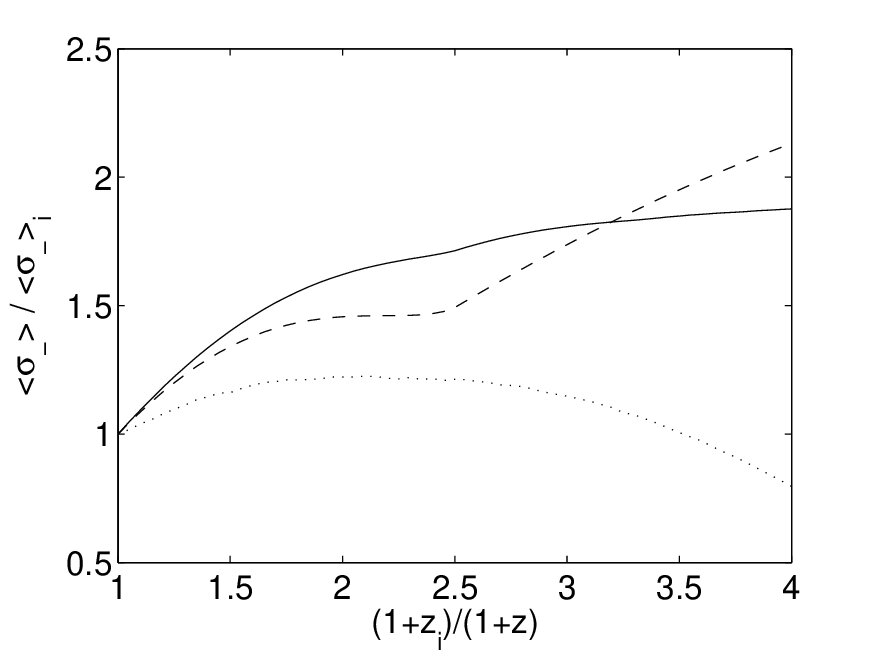 Figure 1
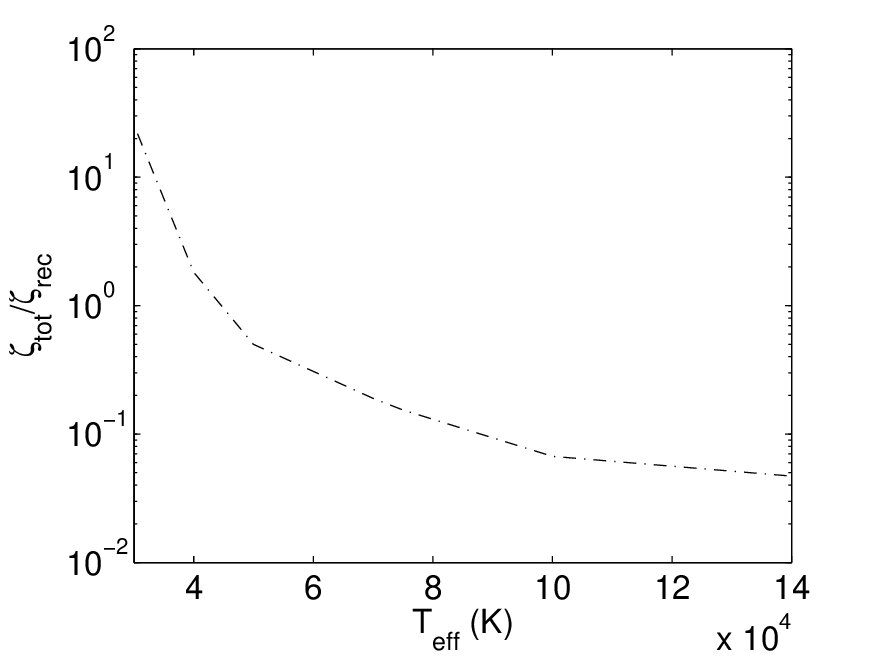 Figure 2
Peer Reviews
No public reviews on file for this paper yet. If you reviewed it on a platform where reviews are public (OpenReview, ICLR, NeurIPS, ICML), you can paste yours below so the community can read it here.
Videos
No videos yet. Explain this paper in a talk, walkthrough, or lecture? Add one.
Feedback from first radiation sources: photodissociation
Leonid Chuzhoy1, Michael Kuhlen2 and Paul R. Shapiro1
Abstract
During the epoch of reionization, the formation of radiation sources is accompanied by the growth of a photodissociating flux. We estimate the impact of this flux on the formation of molecular hydrogen and cooling in the first galaxies, assuming different types of radiation sources (e.g. Pop II and Pop III stars, miniquasars). We find that photodissociation reduces the formation of molecules by a factor of , where is the mean ionized fraction in the IGM, is the fraction of ionizing photons that escape from their progenitor halos, is the local gas overdensity and is an order unity constant which depends on the type of radiation source. By the time a significant fraction of the universe becomes ionized, photodissociation may significantly reduce the abundance and, with it, the primordial star formation rate, delaying the progress of reionization.
Subject headings:
cosmology: theory – early universe – galaxies: formation – galaxies: high redshift
11affiliationtext: McDonald Observatory and Department of Astronomy, The University of Texas at Austin, RLM 16.206, Austin, TX 78712, USA; [email protected]: Institute for Advanced Study, Princeton, NJ, 08540, USA; [email protected]
1. Introduction
The first stars in the CDM universe are believed to have formed inside dark-matter-dominated minihalos filled with mostly neutral, metal-free gas of virial temperature K, when molecules formed in sufficient abundance to cool the gas radiatively to K. If, as currently thought, these stars were massive, hot, and luminous, they may have contributed significantly to the reionization of the universe, which CMB polarization observations by WMAP indicate was highly ionized by (Spergel et al., 2006). The release of ionizing UV radiation by minihalos and other sources (e.g. stars in more massive halos, with K, or miniquasars), required to explain reionization, must have been accompanied by radiation release at energies below the H Lyman limit, as well, however. This may, in turn, have limited the abundance inside minihalos and their ability to form stars, thereby limiting their contribution to cosmic reionization.
In the absence of dust and at densities below the three-body formation regime ( cm*-3*), the most important reaction for the production of is
[TABLE]
(e.g., Shapiro & Kang 1987 and refs. therein) with reaction rate (Schmetekopf et al., 1967). Once formed, can be destroyed by collisions with other species
[TABLE]
or by photodissociation via Lyman-Werner band photon absorption
[TABLE]
The latter process becomes dominant once a substantial UV background is built up between 912 and 1110 , providing a feedback mechanism against the formation of new radiation sources (e.g. Haiman et al., 1997; Haiman et al., 2000; Ciardi et al., 2000; Machacek et al., 2001; Mesinger et al., 2006).
In this paper we explore the impact of another feedback mechanism, the photodissociation of ,
[TABLE]
The cross-section for photodissociation of is well fitted by (Wishart, 1979)
[TABLE]
where is the photon energy in eV. The cross section is zero below a threshold of eV, the binding energy of the second electron. In the absence of the UV background, the primary mode of destruction is the formation of (Eq. [1]), 111When gas fractional ionization is high () mutual neutralization with can provide another efficient channel for destruction. However, typically the fractional ionization of minihalos is much lower. so introducing the photodissociating flux reduces the formation rate by a factor
[TABLE]
where is the photodissociation rate per ion, is the hydrogen atom number density and is the number density of photons with energy .222This approximation for breaks down when its value exceeds , since for such UV intensities reaction becomes a dominant channel of production (assuming reaction rates given by Shapiro & Kang (1987)). Note also that is still uncertain to within a factor of a few (see Glover et al. 2006), and this uncertainty carries over to when . Hence the importance of this mechanism depends primarily on the local density ratio of photodissociating photons and hydrogen atoms.
The impact of photodissociation differs from that of by two fundamental characteristics. First, the time required for abundance to approach equilibrium is very short (typically less than 10000 years), while for the equilibration time can exceed the Hubble time. Therefore, when gas is exposed to a transient UV flux, produced by nearby Pop III stars, for example, photodissociation can generally be ignored, as it does not affect the subsequent thermal and chemical evolution. Secondly, photons that make up the photodissociating background are destroyed after a few percent of the Hubble time, as they redshift into one of the Lyman series resonances, and must be replenished continuously. By contrast, photons that constitute the photodissociating background are very rarely destroyed, which allows them to accumulate over time. Consequently the importance of photodissociation increases over time, and as we show in this paper, by the time a significant ( %) fraction of the Universe is ionized, photodissociation may result in a drastic reduction of the molecular hydrogen abundance. This in turn may lead to a reduced star formation rate and delay the progress of reionization.
Recently, Glover (2007) considered the suppression of formation due to the photodissociation of and . Whereas Glover (2007) focused on the local feedback around and inside HII regions created by Pop III stars, we treat the problem globally and also consider long range effects due to the much lower optical depth of the universe below the Lyman limit.
The paper is organized as following. In §2 and 3, we estimate the intensity of photodissociating flux produced by UV and X-ray sources, respectively. In §4, we discuss the implication of our results for gas cooling in minihalos.
2. photodissociating background - UV sources
2.1. Recombination products
Since the first radiation sources are expected to form within overdense gas clouds, only the escaping fraction of their ionizing photons, , was available for ionization of the diffuse IGM. The rest was absorbed within the host halos and, via the process of radiative recombination, converted into lower energy UV photons. Since the universe during that epoch is transparent to most non-ionizing UV photons, 333An exception occurs for photons whose frequency is close to one of the high () Lyman resonances, which, following their absorption by hydrogen atoms, are further split into two or more lower energy photons. For Ly photons, the optical depth is also very high, but in their case the absorption in almost all cases is followed by reemission, with the destruction probability being extremely low (e.g. Furlanetto & Pritchard, 2006). Also, at the very early stage of reionization () the presence of molecules makes the universe opaque in the Lyman-Werner range. However, since their initial abundance () is already very low, the number of photons they destroy is negligible. almost all of them add to the photodissociation background.
Neglecting recombinations in the diffuse IGM, the mean ionization is , where is the total number of ionizing photons per baryon produced up to this point. Inside halos, the recombination time is quite short, and so the number of ionizations taking place there, , is almost equal to the number of electron recombinations to states (i.e., recombinations which do not result in emission of additional ionizing photons), . Therefore the average photodissociating rate is given by
[TABLE]
where is the mean baryon density and is the average cross-section per recombination photon times the average number of photons per recombination, . Note that since emissivity, , is proportional to , is in fact independent of and . Using Osterbrock’s (1989, Sec. 4.3) calculation of the recombination spectrum, , and assuming that the temperature of the recombining gas is close to K, we find .
By combining equations (8) and (9), we can estimate the importance of the photodissociation due to recombination radiation. Assuming that most of the recombinations occurred recently, we find that, the recombination radiation alone will suppress the formation rate by
[TABLE]
where is the local overdensity. Here we have neglected recombinations in the diffuse intergalactic medium (IGM) and the associated dissociating photons from these recombinations, but these would only further increase .
Cosmological redshift can affect the photodissociation rate by shifting the spectrum to longer wavelengths. Initially this leads to an increase in due to the dependence of the cross-section for eV. Eventually, as more and more of the spectrum is shifted below the threshold, the cosmological redshift begins to decrease the dissociation rate. For recombination photons this redshift effect is small, and the transition to -depression occurs at a redshift factor of , see Figure 1.
2.2. Direct emission
Unlike ionizing photons, whose intensity is heavily attenuated both in stellar atmospheres and in their host galaxies, most of the photons with frequencies below the Lyman limit escape freely into the IGM. From then on, photons with frequency below Ly undergo no evolution apart from cosmological redshift. By contrast, within a small fraction of the Hubble time, most photons with frequency between Ly and the Lyman limit are split by cascade into two or more photons after being redshifted into one of the hydrogen resonances. Most of the cascade products, which include lines such as Ly, H, and H, as well as a continuum spectrum produced by the two photon transition , are above the eV threshold for photodissociation.
The relative importance of these directly emitted dissociating photons depends on the nature of the UV sources. Figure 2 shows the increase of the dissociation rate due to inclusion of direct emission from metal-poor Pop III stars, which we calculated using the stellar atmosphere models of Schaerer (2002). Predictably, for very massive Pop III stars, with surface temperatures K, adding the stellar continuum below the Lyman limit to the recombination spectrum increases the photodissociation rate by only . If, on the other hand, most of the early ionizing flux was produced by stars with masses below , whose continuum emission is stronger at lower frequencies, then the total dissociation rate would be tripled at least. Likewise, direct emission may be important if most of the UV photons were produced by miniquasars. For example, assuming that their spectrum can be approximated by a power law, , with a cutoff below eV, adding the directly emitted photons to the recombination products increases the total photodissociation rate by a factor of .
3. photodissociating background - X-ray sources
It has been suggested that X-ray photons could contribute a large fraction of the energy emitted by the first radiation sources (e.g. Ricotti & Ostriker, 2004). By increasing the number of free electrons, X-rays can boost the production of , and thus of , providing a positive feedback to the formation of new sources (Haiman et al., 2000; Kuhlen & Madau, 2005). This effect, however, would be at least partially offset by an increase of the photodissociating background, caused by conversion of X-rays into UV photons.
The absorption of an X-ray photon is followed by release of a non-thermal electron, which then loses some of its energy by inelastic collisions with atoms before it can thermalize its energy by elastic scattering with ions and other electrons. When the gas ionization fraction is low (), the photoelectron splits most of its energy evenly between collisional ionizations and excitations of hydrogen atoms (Shull & van Steenberg, 1985). Using electron-hydrogen excitation cross-sections (Grafe et al., 2001; Stone et al., 2002), we find that around of the excitations are to the 2p level, which are followed by emission of a Ly photon. Most of the remaining excitations are to the 3p level, which decays via emission of one H photon and a subsequent two-photon decay from the 2s level. The Ly, H and two-photon continuum each produce roughly equal contributions to photodissociation. Per ionization, the average intensity-weighted cross-section for these photons is . Due to the low number of UV photons produced during this phase, the formation of is not strongly affected
[TABLE]
After the ionized fraction climbs above , most of the energy of the non-thermal electrons is converted to heat. However, simultaneously with the growth of the ionized fraction, the temperature of the gas rises, and as it crosses K, the collisions between thermal electrons and atoms begin to dissipate the energy added by X-rays, mainly via emission of Ly photons. Neglecting gas clumping, we find that the number of emitted Ly photons per hydrogen atom is
[TABLE]
Assuming for simplicity that and are constants, we can rewrite the equation (12) as
[TABLE]
where is the Thompson optical depth from the epoch of partial ionization by X-rays. If X-ray preionization contributes at least half of the measured by WMAP (i.e. ), hydrogen atomic de-excitations in the diffuse IGM may produce Ly photons per baryon.
The suppression of formation due to photodissociation by Ly photons is
[TABLE]
Since the energy of Ly photons (10.2 eV) is far above the photodissociation threshold (0.75 eV), the photodissociation rate grows roughly as , where is the redshift at which the photon was emitted. In the case of an extended period of partial ionization, may be increased by a factor of a few, possibly exceeding .
Since, when the IGM temperature rises above K, the formation of new minihalos is suppressed, the impact of photodissociating flux produced by X-ray conversion is relevant only for minihalos which have formed some time ago or for halos with K, which also rely on cooling to form stars.
4. Discussion
As shown by our calculations, photodissociation reduces the formation of molecules by a factor of
[TABLE]
where is a constant of order a few, whose value depends on the type of radiation source and the growth history of the radiation background. Thus, by the time a significant fraction () of the universe becomes ionized, photodissociation can significantly reduce the formation rate in regions with overdensities of up to a few thousands, i.e. in the interior regions of minihalos. The equilibrium abundance of molecular hydrogen during this stage would be determined by the balance between its formation and destruction rates (Eqs. [1] and [5])
[TABLE]
where is the destruction rate by the Lyman-Werner photons. Thus a reduction of abundance by a factor translates into the same reduction of the abundance and, in minihalos, a comparable increase of the cooling time.
Indirectly, photodissociation may affect the cooling in the central regions of minihalos even during the early stages of reionization. The maximum density that gas can reach in the core region of a minihalo is limited by the amount of entropy it is able to radiate away during collapse. The lower density gas prevalent during the early collapse phase would be susceptible to dissociation from even a relatively low intensity dissociating flux, and the resulting lowered abundance would limit its ability to radiate away entropy via cooling. Furthermore, the density and abundance at the center depend on the conditions in the low density outer regions, through their contributions to both the total pressure and the self-shielding ability of the halo. We plan to investigate these effects further with numerical radiation-hydrodynamic simulations in the future.
LC thanks the McDonald Observatory for the W.J. McDonald Fellowship. MK gratefully acknowledges support from the Institute for Advanced Study. This work was partially supported by NASA Astrophysical Theory Program grants NAG5-10825 and NNG04G177G to P. R. S.
The reference list from the paper itself. Each links out to its DOI / PubMed record.
- 1Ciardi et al. (2000) Ciardi, B., Ferrara, A., & Abel, T. 2000, Ap J, 533, 594
- 2e.g. Furlanetto & Pritchard (2006) Furlanetto, S. R., & Pritchard, J. R. 2006, MNRAS, 372, 1093
- 3Grafe et al. (2001) Grafe, A., Sweeney, C. J., & Shyn, T. W. 2001, Phys. Rev. A, 63, 052715
- 4Glover (2007) Glover, S. C. O. 2007, MNRAS, in press, astro-ph/0703716
- 5Glover et al. (2006) Glover, S. C. O., Savin, D. W., & Jappsen, A. -K. 2006, Ap J, 640, 553
- 6Haiman et al. (2000) Haiman, Z., Abel, T., & Rees, M. J. 2000, Ap J, 534, 11
- 7e.g. Haiman et al. (1997) Haiman, Z., Rees, M. J., & Loeb, A. 1997, Ap J, 484, 985
- 8Kuhlen & Madau (2005) Kuhlen, M., & Madau, P. 2005, MNRAS, 363, 1069