Origamis with non congruence Veech groups
Gabriela Schmithuesen

TL;DR
This paper demonstrates that for any genus greater than one, there exist translation surfaces with Veech groups that are non-congruence subgroups of SL(2,Z), constructed using origamis and square-tiled surfaces.
Contribution
It introduces a method to construct translation surfaces with non-congruence Veech groups for all genera greater than one, expanding understanding of Veech group properties.
Findings
Existence of translation surfaces with non-congruence Veech groups for all g > 1
Explicit examples of genus 2 origamis with non-congruence Veech groups
A technique to generate sequences of origamis with decreasing Veech groups
Abstract
As main result we show that for each g > 1 there is some translation surface of genus g whose Veech group is a non congruence subgroup of SL(2,Z). We use origamis/square-tiled surfaces to produce our examples. The article is divided into two parts: In the first part we introduce translation surfaces, origamis, Veech groups and Teichmueller curves and show for two origamis in genus 2 that their Veech groups are non congruence groups; in the second part we provide a technique that produces sequences of origamis whose Veech groups are decreasing. This is used to prove the main result.
Click any figure to enlarge with its caption.
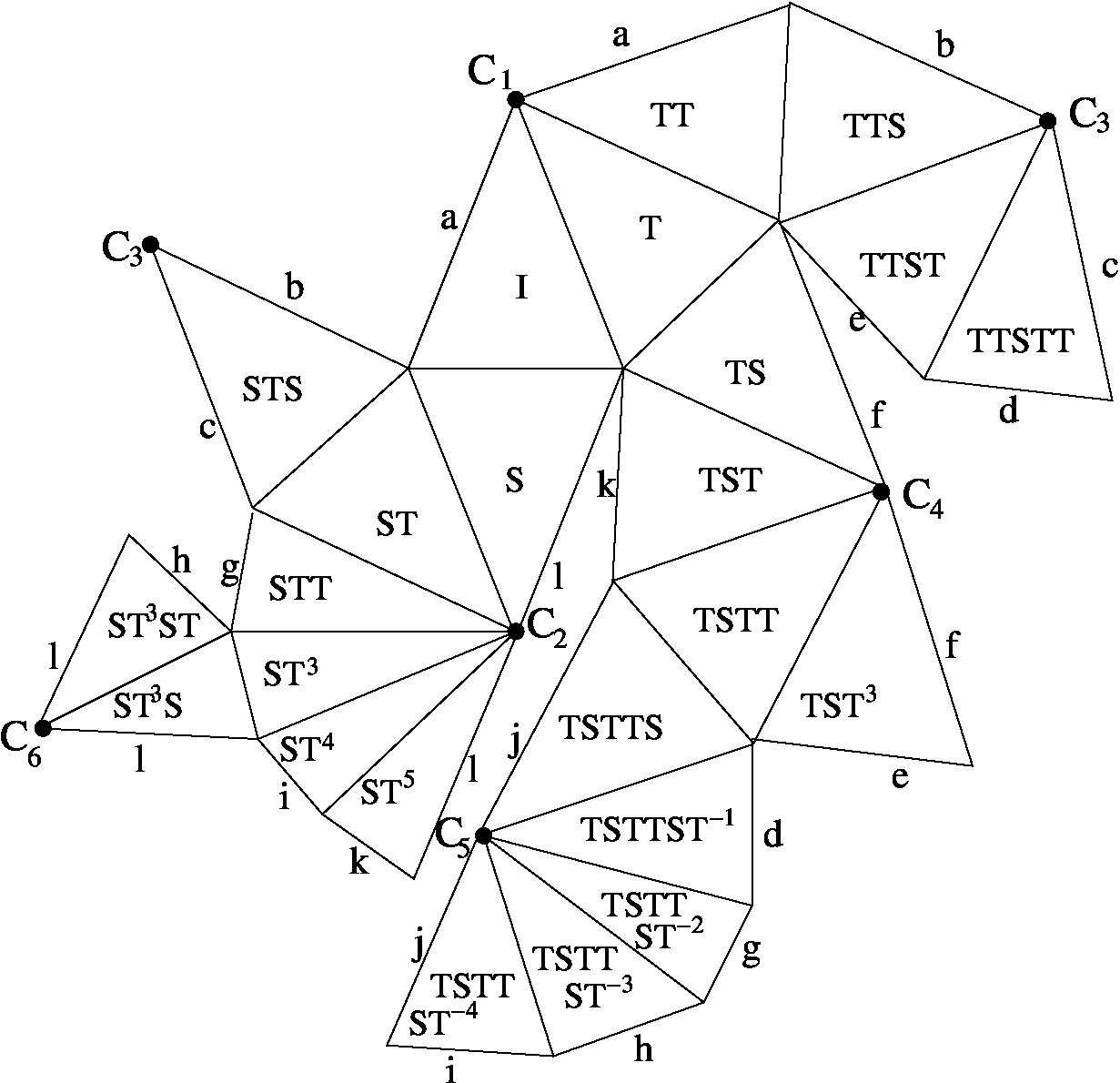 Figure 1
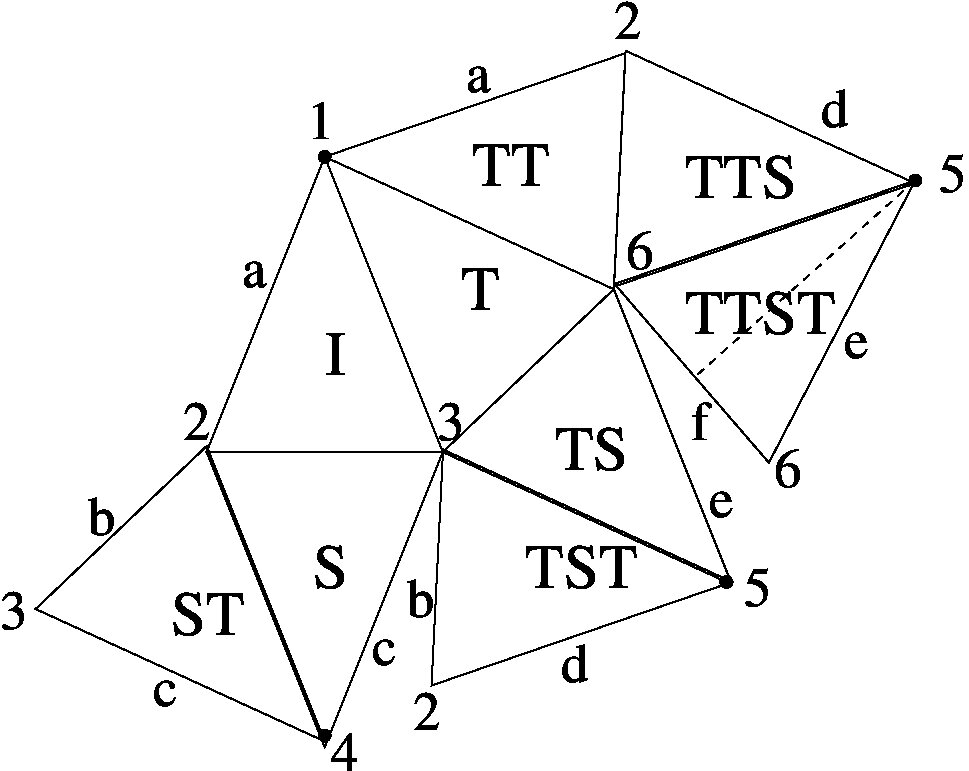 Figure 2
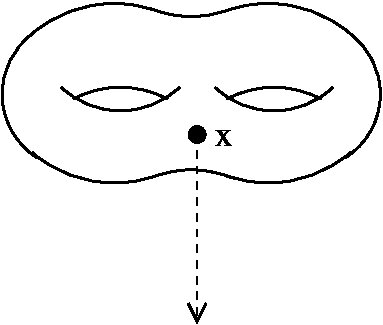 Figure 3
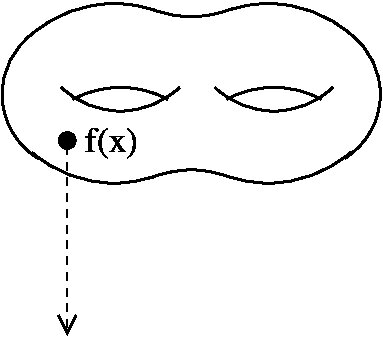 Figure 4
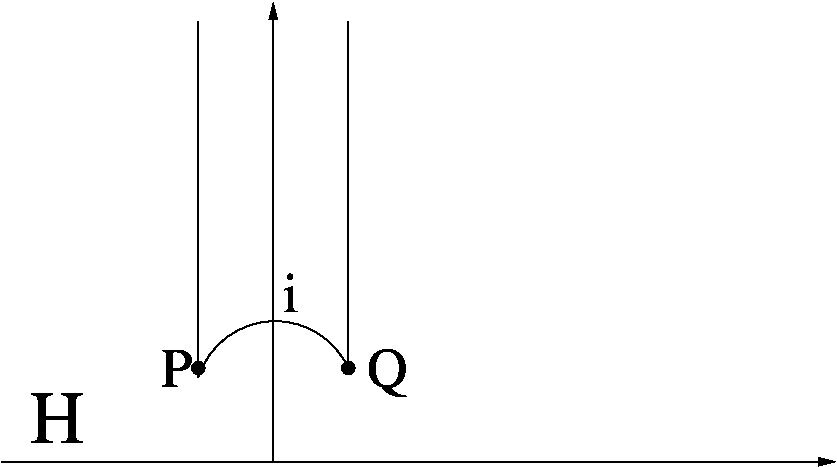 Figure 5
 Figure 6
Peer Reviews
No public reviews on file for this paper yet. If you reviewed it on a platform where reviews are public (OpenReview, ICLR, NeurIPS, ICML), you can paste yours below so the community can read it here.
Videos
No videos yet. Explain this paper in a talk, walkthrough, or lecture? Add one.
Taxonomy
TopicsAdvanced Materials and Mechanics · Geometric and Algebraic Topology · Cellular Mechanics and Interactions
Origamis with non congruence Veech groups
Gabriela Schmithüsen
In this article we give an introduction to origamis (often also called square-tiled surfaces) and their Veech groups. As main theorem we prove that in each genus there exist origamis, whose Veech groups are non congruence subgroups of .
The basic idea of an origami is to obtain a topological surface from a few combinatorial data by gluing finitely many Euclidean unit squares according to specified rules. These surfaces come with a natural translation structure. One assigns in general to a translation surface a subgroup of GL called the Veech group. In the case of surfaces defined by origamis, the Veech groups are finite index subgroups of . These groups are the objects we study in this article.
One motivation to be interested in Veech groups is their relation to Teichmüller disks and Teichmüller curves, see e.g. the article [H 06] of F. Herrlich in the same volume: A translation surface of genus defines in a geometric way an embedding of the upper half plane into the Teichmüller space of closed Riemann surfaces of genus . The image is called Teichmüller disk. Its projection to the moduli space is sometimes a complex algebraic curve, called Teichmüller curve. More precisely this happens, if and only if the Veech group is a lattice in . In this case the algebraic curve can be determined from the Veech group up to birationality.
It is hard to determine the Veech group for a general translation surface. However, if the translation surface comes from an origami there is a special approach to this problem. It is based on the idea of describing origamis by finite index subgroups of , the free group in two generators. This leads to a characterization of origami Veech groups as the images in of certain subgroups of , the automorphism group of .
Using this approach we will calculate Veech groups of two origamis explicitly. They turn out to be non congruence groups. Starting from these examples we obtain infinite sequences of origamis all of whose Veech groups are non congruence groups. This leads to the following theorem.
Theorem 1**.**
Each moduli space contains an origami curve whose Veech group is a non congruence group.
In Section 1 we introduce origamis and present different equivalent ways to describe them. In Section 2 we give a glance on the mathematical context. We describe, how an origami defines a family of translation surfaces and explain roughly , how one obtains a Teichmüller curve in moduli space starting from an origami. We introduce Veech groups and shortly point out their relation to Teichmüller curves. In Section 3 we turn to Veech groups of origamis and present a characterization of them in terms of automorphisms of the free group in two generators. We use this characterization to calculate two examples explicitly. Finally, in Section 4 we show that these two examples produce Veech groups that are non congruence groups and give a method to construct out of them infinite sequences of Veech groups that are again non congruence groups.
The first part (Section 1 - Section 3) of this article is meant to give a handy introduction to origamis and an overview on some of our results about their Veech groups. In the second part we state and prove Theorem 1 based on the results in the PhD thesis [S 05] of the author.
For a broader introduction and overview on origamis and Teichmüller curves as well as for references to the larger context, we refer the the reader e.g. to [HeSc 06], [S 04] and [S 05].
Acknowledgments: I would like to thank Frank Herrlich for his support in respect of the content and for his proof reading, Stefan Kühnlein for helpful discussions and suggestions especially on non congruence groups and the organizers of the conference for giving me the opportunity to contribute to these proceedings. This work was partially supported by a fellowship within the Postdoc-Programme of the German Academic Exchange Service (DAAD).
1 Origamis
There are several ways to define origamis. We start with the somehow playful description that we have learned from [Lo 05], where also the name origami was introduced: An origami is obtained by gluing the edges of finitely many copies , …, of the Euclidean square via translations according to the following rules:
- •
Each left edge shall be identified to a right edge and vice versa.
- •
Similarly, each upper edge shall be identified to a lower one.
- •
The arising closed surface shall be connected.
We only study what is called oriented origamis in [Lo 05] and call them just origamis.
Example 1.1**.**
- a)
The simplest example is the origami that is made from only one square. There is precisely one possibility to glue its edges according to the rules. One obtains a torus . We call this origami the trivial origami .
a$$b$$a$$b$$\infty$$\bullet$$\bullet$$\bullet$$\bullet
Figure 1: The trivial origami. Opposite edges are glued.
Observe that the four vertices of the square are all identified and become one point on the closed surface . We call this point . 2. b)
We now consider an origami made from four squares, see Figure b). Some identifications of the edges are already done in the picture. For all other edges those having same labels are glued. The origami is called for obvious reasons.
2341\bullet$$\bullet$$\bullet$$\bullet$$\bullet$$\bullet$$\bullet$$\bullet$$\circ$$\circ$$a$$b$$c$$d$$c$$b$$a$$d$$e$$e
Figure 2: The origami . Opposite edges are glued.
Observe that in this case the vertices labeled with and the vertices labeled with are respectively identified and become two points on the closed surface . By calculating the Euler characteristic one obtains, that the genus of the surface is 2. 3. c)
Finally, we consider an example with five squares, see Figure c). Here, edges with same labels are identified. For the unlabeled edges, those which are opposite to each other are glued. We call the origami .
12345a$$a$$b$$b$$\bullet$$\bullet$$\bullet$$\bullet$$\bullet$$\bullet$$\circ$$\circ****
Figure 3: The origami . Edges with the same label and unlabeled edges that are opposite are glued.
In this case, we obtain the three identification classes , and for the vertices. The genus of the closed surface is again 2.
Origamis as coverings of a torus
Observe, that the trivial origami from Example 1.1 a) is universal in the following sense: If is the closed surface that arises from an arbitrary origami and the torus that arises from , then we have a natural map by mapping each of the unit squares of the origami that form the surface to the one unit square of that forms the torus . This map is a covering that is unramified except over the one point . Conversely, given a closed surface together with such a covering , we obtain a decomposition of into squares by cutting along the preimages of the edges of the one square of that forms . This motivates the following definition of origamis.
Definition 1.2**.**
An origami of genus and degree is a covering of degree from a closed, oriented (topological) surface of genus to the torus that is ramified over at most one marked point .
Remark that we have fixed here one torus and one point . In particular we may furthermore fix a point on and a set of standard generators of the fundamental group that do not pass through . That way we obtain a fixed isomorphism
[TABLE]
where and is the free group in two generators and . Describing E by gluing the edges of the unit square via translations, we choose to be the midpoint of the unit square and the standard generators to be the horizontal and the vertical simply closed curve through , see Figure 1.
\bullet$$M$$x$$y
Figure 4: Generators of .
Example 1.3**.**
*In Example 1.1, in a) the covering is the identity .
In b) we have a covering of degree 4 that is ramified in the two points labeled by and . Recall that the genus of is 2.
In c) we have a covering of degree 5 ramified in the two points labeled by and . Observe that though the point on labeled by is a preimage of , the covering is not ramified in this point. The genus of is again 2.*
Definition 1.4**.**
We say that two origamis and are equivalent, if there is a homeomorphism with .
Description by a pair of permutations
An origami of degree defines (up to conjugation in )
- •
a homomorphism or equivalently
- •
a pair of permutations in
as follows:
Let , …, be the preimages of the point (defined as above) under . Furthermore, let
[TABLE]
be the monodromy map defined by , i.e. for the closed path the point is mapped to by if and only if the lift of the curve to via , that starts in , ends in .
Choosing an isomorphism Sym and using the isomorphism fixed in (1) makes into a homomorphism from to . We set and .
Observe that this homomorphism depends on the chosen isomorphism to and on the choice of the origami in its equivalence class only up to conjugation in . Therefore we consider two homomorphisms and to be equivalent, if they are conjugated by an element in . Similarly we call two pairs and in equivalent, if they are simultaneously conjugated, i.e. there is some such that and .
Example 1.5**.**
In Example 1.1 we obtain for the origami in b) the monodromy homomorphism
[TABLE]
*and thus and .
For the origami in c) we similarly obtain the permutations*
[TABLE]
Description as finite index subgroups of
Origamis can be equivalently described as finite index subgroups of , the free group in two generators, as stated in the following remark. The characterization of the Veech groups of origamis is mainly based on this observation.
Remark 1.6**.**
We have a one-to-one correspondence:
[TABLE]
More precisely, this correspondence is given as follows:
Let be an origami. Define and . Thus we may restrict to the unramified covering . This defines an embedding of the corresponding fundamental groups:
[TABLE]
Again we use the fixed isomorphism in (1), see also Figure 1. Changing the origami in its equivalence class leads to a conjugation of with an element in . The index of the subgroup of is the degree of the covering .
Conversely, given a finite index subgroup of we retrieve the origami in the following way: Let be a universal covering of . By the theorem of the universal covering, is isomorphic to Deck, the group of deck transformations of . Furthermore, the finite index subgroup of Deck corresponds to an unramified covering of finite degree. This can be extended to a covering , where is a closed surface.
Example 1.7**.**
*In Example 1.1, we obtain the following subgroups of :
In a), is the once punctured torus itself and .
In b), is a genus 2 surface with 2 punctures. Thus is a free group of rank 5. Keeping in mind that we use the identification described in Figure 1, one can read off from the picture in Figure b) that*
[TABLE]
In c), is a genus 2 surface with three punctures. Thus is a free group of rank 6. More precisely, we read off the picture in Figure c), that
[TABLE]
Description as a finite graph
Finitely, sometimes it is convenient to describe an origami as a finite, oriented labeled graph: Namely, let be the finite index subgroup of (unique up to conjugation) that corresponds to as described in the last paragraph. Then we represent the origami by the Cayley-Graph of : The vertices of the graph are the coset representatives. They are labeled with a representative of the coset. The edges are labeled with and . For each vertex (with label ) there is an -edge from it to the vertex that belongs to the coset of . And similarly there is a -edge to the vertex that belongs to the coset .
Example 1.8**.**
*The following figure shows the Cayley-graph for the origami from Example 1.1:
[TABLE]
Figure 5: Graph for .
2 Translation structures and Veech groups
Translation structures
Recall that an atlas on a surface is called translation atlas, if all transition maps are translations. An origami naturally defines an SL-family of translation structures () on as follows:
- •
As first step, observe that each naturally defines a translation structure on the torus itself by identifying it with , where
[TABLE]
- •
Then define the translation structure on by lifting via , i.e.
[TABLE]
Using the first description of an origami that we gave by gluing squares, we obtain the translation structure (where is the identity matrix), if we identify the squares with the Euclidean unit square in . We obtain for a general matrix from this by identifying the squares with the parallelogram spanned by the two vectors
[TABLE]
Thus the -variations of the translation structure can be thought of as affine shearing of the unit squares, see Figure 2.
Figure 6: Sheared translation structure for the origami .
From an origami to a Teichmüller curve in the moduli space
By the -family of translation structures, the origami defines a specific complex algebraic curve called Teichmüller curve in the moduli space of closed Riemann surfaces of genus . We state this construction here only briefly as motivation and refer e.g. to the overview article [HeSc 06] for a detailed description and links to references. A particular nice configuration of such Teichmüller curves is described in [H 06] in this volume.
The Teichmüller curve in is obtained from the origami in the following way:
- •
The translation structure described in the previous paragraph is in particular a complex structure on the surface which can be extended to the closed surface . The Riemann surface together with the identity map as marking then defines a point in the Teichmüller space . Thus we obtain the map: .
- •
If , then the affine map is holomorphic. Thus the map factors through SO. Furthermore using that modulo SO is isomorphic to the upper half plane , one obtains a map
[TABLE]
In fact, this map is an embedding that is in the same time holomorphic and isometric. A map with this property is called Teichmüller embedding and its image in Teichmüller space is called a Teichmüller disk or a geodesic disk.
- •
Finally, one may compose the map with the projection to the moduli space . The image of in is a complex algebraic curve. A curve in that arises like this as the image of a Teichmüller disk is called Teichmüller curve.
Note: More generally, one obtains a Teichmüller disk in a similar way starting from an arbitrary translation surface (or a bit more general: from a flat surface). However, the image of such a disk in moduli space is not always a complex algebraic curve; in fact its Zariski closure tends to be of higher dimension. It is an interesting question how to decide whether a translation surface leads to a Teichmüller curve. One possible answer to this is given by the Veech group which we introduce in the following paragraph.
Veech groups
Let be a connected surface and a translation structure on it. One assigns to it a subgroup of GL called Veech group as described in the following: We consider the group of all orientation preserving affine diffeomorphisms, i.e. orientation preserving diffeomorphisms that are locally affine maps of the plane , see Figure 2.1. Here – and throughout the whole article – we identify with by the map . Thus an affine diffeomorphism can be written in terms of local charts as
[TABLE]
Observe that does not depend on the chart, since is a translation structure. Thus one obtains a well defined map
[TABLE]
called Derivative map.
Definition 2.1**.**
The Veech group of the translation surface is the image of the derivative map :
[TABLE]
f
Figure 7: An affine diffeomorphism of a translation surface
Example 2.2**.**
*Let be with the natural translation structure. Here is the identity matrix and is the corresponding lattice as defined in (2).
An affine diffeomorphisms of lifts to an affine diffeomorphism of respecting the lattice. Conversely, each such diffeomorphism descends to . Thus, we have in this case*
[TABLE]
Veech groups and Teichmüller curves
As indicated in the paragraph about Teichmüller curves, the Veech group “knows” whether a translation surface defines a Teichmüller curve in moduli space or not. More precisely, one has the following statement:
Fact: Let be a surface of genus and for finitely many points , …, on . Furthermore let be a translation structure on .
Then defines a Teichmüller curve if and only if the Veech group is a lattice in . In this case, the curve is (antiholomorphic) birational to .
We describe the relation to Teichmüller curves here just as motivation and in order to give a glance at the general frame. We have therefore resumed theorems contributed by several authors condensed in what is here called “fact”. A good access to it can be found e.g. in [EG 97] or [Z 06]. A broader overview on Veech groups of translation surfaces is given e.g. in [HuSc 01] and in [Le 02]. Teichmüller disks, Teichmüller curves and Veech groups have intensively been studied by numerous authors, starting from Thurston [T 88] and Veech himself [V 89]. We refer to [S 04] and [HeSc 06] for more comprehensive overviews on references.
3 Veech groups of origamis
Let be an origami. We have seen in Section 2 that defines an -family of translation structures () on . The corresponding Veech groups are not very different. In fact, they are all conjugated to each other. More precisely, we have:
[TABLE]
Thus, we may restrict to the case where which justifies the following definition.
Definition 3.1**.**
The Veech group of the origami is defined to be .
From Example 2.2 it follows that the Veech group of the trivial origami (defined in Example 1.1) is . For a general origami one can show that is a finite index subgroup of . In fact, also the converse is true as it was shown by Gutkin and Judge in [GJ 00]: A Veech group is a finite index subgroup of if and only if it comes from an origami.
From this it follows in particular by the Fact presented in Section 2 on page 2 that an origami always defines a Teichmüller curve in the moduli space.
Characterization of origami Veech groups
Recall from Section 1 that an origami corresponds (up to equivalence) to a finite index subgroup of , the free group in two generators (up to conjugation). This description enables us to give a characterization of its Veech group entirely in terms of and its automorphisms.
For this we need the following two ingredients:
- •
Let be the natural projection. The fact that we only consider orientation preserving diffeomorphisms applies to only taking automorphisms of that are mapped to elements in . We denote and restrict to the map
[TABLE]
- •
Let
Using these ingredients, it was shown in [S 04] that Veech groups of origamis can be described as stated in the following theorem.
Theorem 2** (Proposition 1 in [S 04]).**
For the Veech group of the origami holds:
[TABLE]
Let us make two comments on this description:
One consequence is, that one obtains an algorithm that can calculate the Veech group of an arbitrary origami explicitly. This algorithm is described in detail in [S 04].
As an other consequence, we have now a characterization of all origami Veech groups as stated in the following corollary.
Corollary 3.2**.**
A finite index subgroup of occurs as origami Veech group if and only if it is the image of the stabilizing group for some finite index subgroup in .
Thus the question, which finite index subgroups of are Veech groups becomes roughly speaking the same as the question which subgroups of are such stabilizing groups. So far, there is no general answer known.
In [S 05] it was shown that many congruence subgroups of are Veech groups. Recall that a congruence group of level is a subgroup of that is the full preimage of some subgroup of under the natural homomorphism and shall be minimal with this property. For prime level congruence groups the following statement is shown in [S 05, Theorem 4]
Theorem 3**.**
Let be prime. All congruence groups of level are Veech groups except possibly p and has index in .
This result is generalized to a statement for arbitrary in [S 05, Theorem 5]
Presenting the Veech group
and the quotient for an origami
As mentioned above, using Theorem 2 the Veech group of an origami can be calculated explicitly. The Veech groups are described as subgroups of by generators and coset representatives. We use for the notation that is generated by and , with
[TABLE]
Recall furthermore from the discussion on Veech groups and Teichmüller curves in Section 2 on page 2 that for a Veech group we are in particular interested in the quotient , since this quotient is birational to the corresponding Teichmüller curve. Here acts as Fuchsian group on the upper half plane , which is endowed with the Poincaré metric.
Since an origami Veech group is a finite index subgroup of , the quotient comes with a natural triangulation. More precisely, we choose the fundamental domain for the action of on that is the geodesic pseudo-triangle with vertices , and .
Figure 8: Fundamental domain of .
The surface is obtained by identifying the vertical edges and via and the edge PQ with itself (with fixed point ) via .
For an arbitrary subgroup of of finite index we obtain a fundamental domain as a union of translates of the triangle : for each coset we take the triangle , where is a representative of the coset. The identification of the edges is given by the elements in . Gluing the edges gives the quotient surface , filling in the cusps leads to a closed Riemann surface endowed with a triangulation. We draw stylized pictures of the fundamental domains that indicate the triangles (see Figure 3 and 3). The triangles are labeled with a coset representative, edges that are identified are labeled with the same letter and vertices that are identified with the same number. Vertices that come from cusps (i.e. points at ) are marked with .
In particular, one can read off from these stylized pictures the genus and the number of cusps of the quotient surface .
Two examples:
the origami L(2,3) and the origami D
**The origami L(2,3):
**In [S 04, Example 3.5] the Veech group is calculated as follows:
[TABLE]
More precisely, one obtains the generators presented as products of and as well as a list of coset representatives.
- •
List of generators:
[TABLE]
- •
List of representatives:
[TABLE]
Hence, is a subgroup of index in .
The stylized picture of the quotient is determined in [S 04, Example 3.6] and is shown here in Figure 3.
Figure 9: Fundamental domain of .
From this one can read off that the genus of the quotient is [math] and that it has 3 cusps, namely the vertices labeled by 1,4 and 5. It follows in particular that the corresponding Teichmüller curve has genus 0.
**The origami D:
**The Veech group of the origami is calculated in [S 05, Section 7.3.2]. It has index in and the following generators:
[TABLE]
The following is a system of cosets representatives:
[TABLE]
The corresponding origami curve has genus [math]. It is shown with its natural triangulation in Figure 3. It has six cusps, namely , , , , and .
Figure 10:
The origami curve to .
4 Veech groups that are non congruence groups
Theorem 3 implies that there are many congruence groups which are Veech groups. How about non congruence groups? In this section we will see that the Veech groups for the two examples, the origami and the origami , studied in the last paragraph are both non congruence groups. Furthermore, we give a construction that produces for both of them an infinite sequence of origamis whose Veech group is a non congruence group. We use this in order to prove our main theorem.
An other generalization of the example was given by Hubert and Lelièvre in [HL 05], where they show for certain “L-shaped” origamis or square-tiled surfaces, how they are called there, that their Veech groups are non congruence groups. These surfaces are all of genus 2, hence it follows that there are infinitely many origamis of genus 2 whose Veech group is a non congruence group.
Recall that a group is a congruence group, whose level is a divisor of , if and only if it contains the principal congruence group
[TABLE]
In [S 04, Proposition 3.8] it was shown using a proof of Stefan Kühnlein that the Veech group of is a non congruence group. The basic tool for this is the general level that is defined for any subgroup of as follows: For each cusp we define its amplitude to be the smallest natural number such that there is an element of conjugated in to the matrix
[TABLE]
which fixes the cusp. Observe that this is equal to the number of triangles around the vertex that represents the cusp in our stylized picture of the quotient surface (see Figures 3 and 3). The general level of is the least common multiple of the amplitudes of all its cusps. A theorem of Wohlfahrt [W 64, Theorem 2] states that the level and the general level of a congruence group coincide.
The amplitude of the three cusps of labeled with 1, 4 and 5 in Figure 3 is 3, 2 and 4 respectively. Hence, the general level of is 12. Then it is shown in the proof that does not contain which gives the contradiction.
The same method can be used in order to show that is a non congruence group. We here carry out the proof for it. Observe from Figure 3 that the six cusps , …, have the amplitude 3, 6, 4, 4, 5 and 2, respectively. Thus the general level is 60.
Proposition 4.1**.**
The Veech group is a non congruence group.
Proof.
Suppose that is a congruence group. Since the general level of is , we have by the theorem of Wohlfahrt mentioned above, that is a subgroup of .
We will use the following facts, which can be checked e.g. in Figure 3:
[TABLE]
In order to verify this in Figure 3, use that
[TABLE]
We will find an element in whose projection to is equal to that of , which gives us the desired contradiction.
Recall that
[TABLE]
We identify in the following these two groups. Furthermore we denote by , , and the projection from to , , and , respectively. Then .
We have
[TABLE]
The order of in is , the order of in is and the order of in is . We also say: The order of is . Since and we have
[TABLE]
Furthermore:
[TABLE]
and with the same notation as above * has the order *. Thus
[TABLE]
From (4) and (5) it follows that
[TABLE]
But and , thus cannot be contained in . Therefore, cannot be a congruence group of level . Contradiction! ∎
Sequences of origamis with non congruence Veech groups
Starting from the origamis and we will define respectively a sequence , such that for each the Veech group again is a non congruence group. The basic idea is to “copy and paste”: we will cut the origami along a segment, take copies of it and glue them along the cuts.
In Figure 4 we show the origami for :
13425786…4n-74n-54n-44n-64n-34n-14n4n-2\bullet$$\bullet$$\bullet$$\bullet$$\bullet$$\bullet$$\circ$$\circ$$\bullet$$\bullet$$\bullet$$\bullet$$\bullet$$\bullet$$\circ$$\circ$$\bullet$$\bullet$$\bullet$$\bullet$$\bullet$$\bullet$$\circ$$\circ$$\bullet$$\bullet$$\bullet$$\bullet$$\bullet$$\bullet$$\circ$$\circ$$\bullet$$\bullet
Figure 11: * copies of . Opposite edges are glued.*
Using the description of an origami by a pair of permutations from Section 1, is given as:
[TABLE]
Observe that the genus of is and it has cusps: of order (all marked by in Figure 4), and of order (all marked by in Figure 4).
Finally, we want to present the origami by the finite index subgroup of , that corresponds to by Remark 1.6.
Recall from Example 1.7 that for , we obtain the free group of rank 5:
[TABLE]
The group is obtained as as follows:
[TABLE]
In Figure 4, we show the origami :
12345678910………5n-45n-35n-25n-15na_{1}$$a_{1}$$b_{1}$$b_{1}$$a_{2}$$a_{2}$$b_{2}$$b_{2}$$a_{n}$$a_{n}$$b_{n}$$b_{n}$$\bullet$$\bullet$$\bullet$$\bullet$$\bullet$$\bullet$$\circ$$\circ\bullet$$\bullet$$\bullet$$\bullet$$\bullet$$\bullet$$\circ$$\circ**\bullet$$\bullet$$\bullet$$\bullet$$\bullet$$\bullet$$\circ$$\circ***
Figure 12: * copies of .
Edges with the same label or
unlabeled opposite edges are glued.
The pair of permutations describing is:
[TABLE]
The genus of is and it has cusps: 2 of order (marked as and ) and of order (all marked by ).
Again, we present by the corresponding finite index subgroup of . We have from Example 1.7 that , the free group of rank 6:
[TABLE]
And similarly as above, we obtain:
[TABLE]
We will see in the following that for both sequences all Veech groups are non congruence groups. More precisely, we will show:
Proposition 4.2**.**
For both sequences the following holds:
- •
, which is for both sequences a non congruence group.
- •
More generally one has:
* divides .*
- •
Different origamis in one sequence have different Veech groups, i.e.:
* for .*
To prove this, let us detect that we are in the following more general setting.
Setting A:
- •
Let be a finite index subgroup of . Then is a free group of rank for some , i.e.
[TABLE]
- •
Let be the projection
where is the number of in the word with counted as .
- •
Let be the kernel of , where is the natural projection, i.e.
[TABLE]
- •
Finally, let be the kernel of , i.e.:
[TABLE]
is the normal subgroup in generated by , …, .
Observe that we are in this setting with
for the origami and
for the origami .
In order to prove the properties in Proposition 4.2, we will need that fulfills the following a bit technical condition:
Property B: Let be as above a finite index subgroup of of rank and a system of coset representatives with . Suppose that has the following property:
[TABLE]
One can check by hand that for both origamis, and , this property is fulfilled. In this setting we obtain the following conclusions.
Proposition 4.3**.**
Let . Let be a finite index subgroup of fulfilling property B. With the notations from Setting A, we have:
- a)
The normalizer of in is equal to : Norm 2. b)
** 3. c)
Recall that , the free group in generators.
Let be the natural projection.
Then is equal to*
[TABLE]
Here we use the notation thus is the natural projection .
Proof.
**a)
**By definition is normal in , i.e. .
Let now be an element of . Hence, for some , . By Property B, there exists some , such that . Therefore we have . But , since is normal in . This shows that .
**b)
**This follows from a), since for a subgroup of in general holds:
, see e.g. [S 06, Remark 3.1].
**c)
**Define .
Let . We have to show that if and only if .
Let furthermore be the natural projection.
Consider the following commutative diagram:
[TABLE]
Since is surjective and is the full preimage of , it follows that if and only if .
Observe finally that:
[TABLE]
∎
Theorem 2 suggests the following notation.
Definition 4.4**.**
*Let be a subgroup of .
With as in Theorem 2, we define*
[TABLE]
and call the Veech group of .
We now obtain from Proposition 4.3 the following conclusions.
Corollary 4.5**.**
Suppose that we are in the same situation as in Proposition 4.3, in particular that is a finite index subgroup of fulfilling property B. Then we have for all :
- a)
* ** and ** .* 2. b)
If with , then:
** and ** .* 3. c)
[TABLE]
Proof.
**a) and b):
**Let . By Proposition 4.3 we have that
[TABLE]
Thus we have for all and for all with , that
[TABLE]
We have in particular by the definition of the Veech group of a subgroup of :
[TABLE]
**c):
** follows from a). follows from Remark [S 06, Remark 3.1].
∎
We now return to the language of origamis: Let be an origami, the corresponding subgroup of . Define for the subgroups () as in Setting A and let be the origamis corresponding to the groups .
By Corollary 4.5 and Theorem 2 we obtain immediately the following result.
Proposition 4.6**.**
If has the Property B, then
[TABLE]
In particular, if is a non congruence group, each is a non congruence group. Thus in this case, we obtain infinitely many origamis whose Veech group is a non congruence group.
In order to conclude Proposition 4.2, it is now just left to prove the last item. But this follows , since we have (see [S 05]) for both sequences , the one coming from the origami and the one coming from the origami , that
[TABLE]
This finishes the proof of Proposition 4.2.
Furthermore, Theorem 1 follows from Proposition 4.2.
Remark: From Corollary 4.5 and (9) it follows that has infinite index in . Furthermore it is non trivial, since it contains
[TABLE]
The reference list from the paper itself. Each links out to its DOI / PubMed record.
- 1[EG 97] C.J. Earle, F.P. Gardiner: Teichmüller disks and Veech’s F 𝐹 F -structures. American Mathematical Society. Contemporary Mathematics 201, 1997 (p. 165–189).
- 2[GJ 00] E. Gutkin, C. Judge: Affine mappings of translation surfaces. Duke Mathematical Journal 103 No. 2, 2000 (p. 191–212).
- 3[He Sc 06] F. Herrlich, G. Schmithüsen: On the boundary of Teichmüller disks in Teichmüller and in Schottky space. To appear in Handbook of Teichmüller theory. Ed. A. Papadopoulos, European Mathematical Society, 2006.
- 4[H 06] F. Herrlich: A comb of origami curves in M 3 subscript 𝑀 3 M_{3} . Proceedings of Symposium on Transformation Groups, Yokohama, November 2006.
- 5[HL 05] P. Hubert, S. Lelièvre: Noncongruence subgroups in H ( 2 ) 𝐻 2 H(2) . International Mathematics Research Notices 2005, No.1 , 2005 (p. 47–64).
- 6[Hu Sc 01] P. Hubert, T. Schmidt: Invariants of translation surfaces. Annales de l’Institut Fourier 51 No. 2, 2001 (p. 461–495).
- 7[Le 02] S. Lelièvre: Veech surfaces associated with rational billiards. Preprint, 2002. ar Xiv:math.GT/0205249.
- 8[Lo 05] P. Lochak: On arithmetic curves in the moduli space of curves. J. Inst. Math. Jussieu 4, No. 3, 2005 (p. 443–508).