Quantum non-local effects with Bose-Einstein condensates
Franck Lalo\"e (LKB - Lhomond), William J. Mullin (UMASS)

TL;DR
This paper theoretically investigates how measurements on two Bose-Einstein condensates in different spin states can lead to the emergence of a definite relative phase, and how quantum effects like Bell inequality violations reappear with many measurements.
Contribution
It demonstrates the emergence and re-emergence of quantum non-local effects in Bose-Einstein condensates through sequential measurements, highlighting the transition between quantum and classical regimes.
Findings
A fixed relative phase rapidly emerges from initial undefined states.
Bell inequalities are violated even with a large number of particles.
Quantum effects reappear at maximum measurements, indicating non-local correlations.
Abstract
We study theoretically the properties of two Bose-Einstein condensates in different spin states, represented by a double Fock state. Individual measurements of the spins of the particles are performed in transverse directions, giving access to the relative phase of the condensates. Initially, this phase is completely undefined, and the first measurements provide random results. But a fixed value of this phase rapidly emerges under the effect of the successive quantum measurements, giving rise to a quasi-classical situation where all spins have parallel transverse orientations. If the number of measurements reaches its maximum (the number of particles), quantum effects show up again, giving rise to violations of Bell type inequalities. The violation of BCHSH inequalities with an arbitrarily large number of spins may be comparable (or even equal) to that obtained with two spins.
Click any figure to enlarge with its caption.
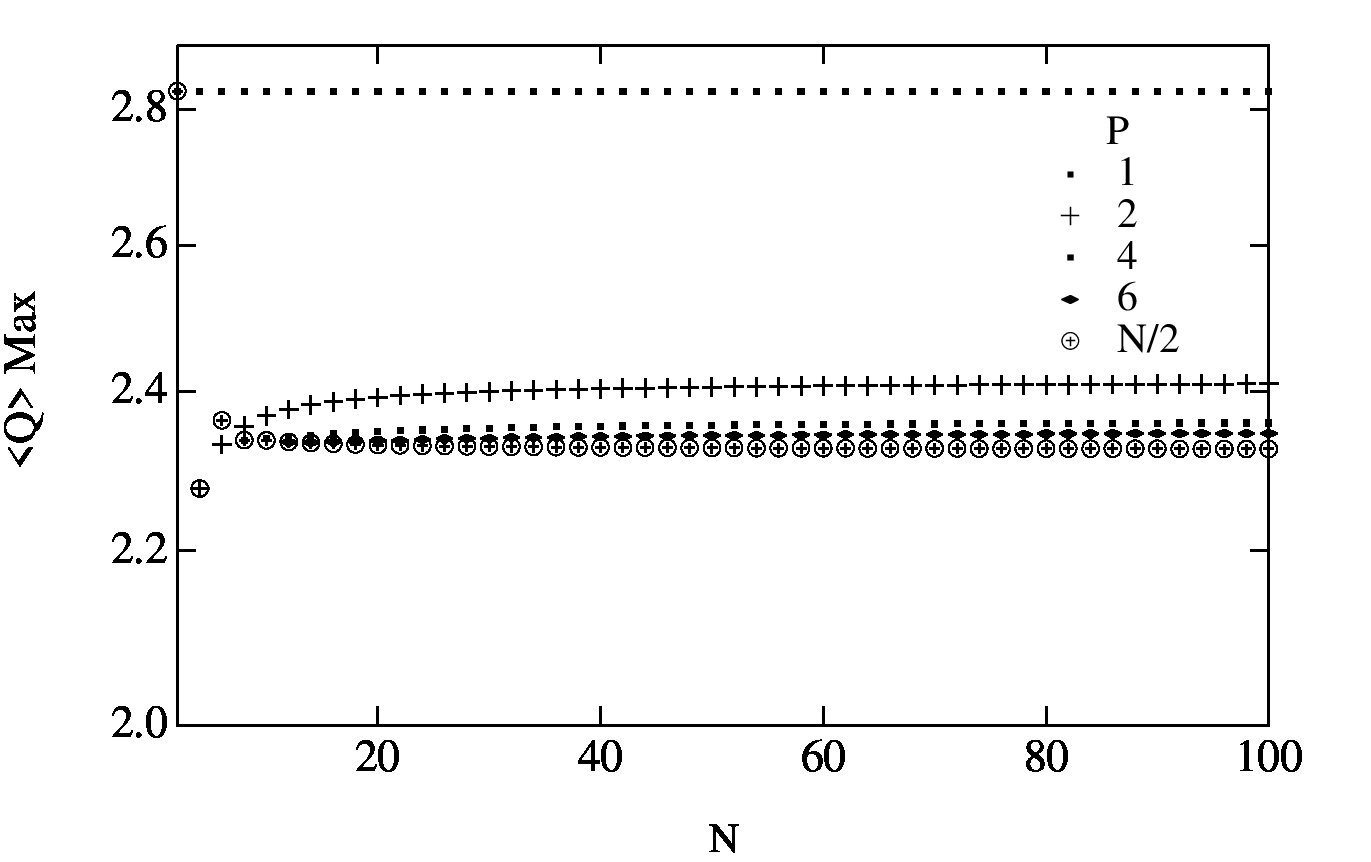 Figure 1
Peer Reviews
No public reviews on file for this paper yet. If you reviewed it on a platform where reviews are public (OpenReview, ICLR, NeurIPS, ICML), you can paste yours below so the community can read it here.
Videos
No videos yet. Explain this paper in a talk, walkthrough, or lecture? Add one.
Taxonomy
TopicsCold Atom Physics and Bose-Einstein Condensates · Quantum Mechanics and Applications · Quantum Information and Cryptography
Quantum non-local effects with Bose-Einstein condensates
F. Laloë a and W. J. Mullin b
aLaboratoire Kastler Brossel, ENS, UPMC, CNRS; 24 rue Lhomond, 75005 Paris, France
bDepartment of Physics, University of Massachusetts, Amherst, Massachusetts 01003 USA
Abstract
We study theoretically the properties of two Bose-Einstein condensates in different spin states, represented by a double Fock state. Individual measurements of the spins of the particles are performed in transverse directions, giving access to the relative phase of the condensates. Initially, this phase is completely undefined, and the first measurements provide random results. But a fixed value of this phase rapidly emerges under the effect of the successive quantum measurements, giving rise to a quasi-classical situation where all spins have parallel transverse orientations. If the number of measurements reaches its maximum (the number of particles), quantum effects show up again, giving rise to violations of Bell type inequalities. The violation of BCHSH inequalities with an arbitrarily large number of spins may be comparable (or even equal) to that obtained with two spins.
pacs:
03.65.Ta,03.65.Ud,03.75.Gg,03.75.Mn
The notion of non-locality in quantum mechanics (QM) takes its roots in a chain of two theorems, the EPR (Einstein Podolsky Rosen) theorem EPR and its logical continuation, the Bell theorem. The EPR theorem starts from three assumptions (Einstein realism, locality, the predictions of quantum mechanics concerning some perfect correlations are correct) and proves that QM is incomplete: additional quantities, traditionally named , are necessary to complete the description of physical reality. The Bell theorem Bell ; Bell-book then proves that, if exists, the predictions of QM concerning other imperfect correlations cannot always be correct. The ensemble of the three assumptions: Einstein realism, locality, all predictions of QM are correct, is therefore self-contradictory; if Einstein realism is valid, QM is non-local. Bohr Bohr rejected Einstein realism because, in his view, the notion of physical reality could not correctly be applied to microscopic quantum systems, defined independently of the measurement apparatuses. Indeed, since EPR consider a system of two microscopic particles, which can be “seen” only with the help of measurement apparatuses, the notion of their independent physical reality is open to discussion.
Nevertheless, it has been pointed out recently FL ; MKL that the EPR theorem also applies to macroscopic systems, namely Bose-Einstein (BE) condensates in two different internal states. The introduced by EPR then corresponds to the relative phase of the condensates, i.e. to macroscopic transverse spin orientations, physical quantities at a human scale; it then seems more difficult to deny the existence of their reality, even in the absence of measurement devices. This gives even more strength to the EPR argument and weakens Bohr’s refutation. It is then natural to ask whether the Bell theorem can be transposed to this stronger case.
The purpose of this article is to show that it can. We consider an ensemble of particles in a state defined by an orbital state and a spin state , and particles in the same state with spin orientation . The whole system is described quantum mechanically by a double Fock state, that is, a “double BE condensate”:
[TABLE]
where and are the destruction operators associated with the two populated single-particle states and vac is the vacuum state. We introduce a sequence of transverse spin measurements that leads to quantum predictions violating the so called BCHSH BCHSH ; CS Bell inequality. This is reminiscent of the work of Mermin Mermin-1 , who finds exponential violations of local realist inequalities with -particle spin states that are maximally entangled. By contrast, here we consider the simplest way in which many bosons can be put in two different internal levels, with a -particle state containing only the minimal possible correlations, those due to statistics. We find violations of inequalities that are the same order of magnitude as with the usual singlet spin state and may actually saturate the Cirel’son bound Cirel .
Double Fock states are experimentally more accessible and much less sensitive to dissipation and decoherence than maximally entangled states DBB . Considering a system in a double Fock state, we assume that a series of rapid spin measurements can be performed and described by the usual QM postulate of measurement, without worrying about decoherence between the measurements, thermal effects, etc.
The operators associated with the local density of particles and spins can be expressed as functions of the two fields operators associated with the two internal states as: , , while the spin component in the direction of plane making an angle with is: . Consider now a measurement of this component performed at point and providing result . The corresponding projector is:
[TABLE]
and, because the measurements are supposed to be performed at different points (ensuring that these projectors all commute) the probability for a series of results for spin measurements at points along directions can be written as:
[TABLE]
We now substitute the expression of into (2) and (3), exactly as in the calculation of ref. FL , but with one difference: here we do not assume that the number of measurements is much smaller than , but equal to its maximum value . In the product of projectors appearing in (3), because all ’s are different, commutation allows us to push all the field operators to the right, all their conjugates to the left; one can then easily see that each acting on can be replaced by , and similarly for the Hermitian conjugates. With our initial state, a non-zero result can be obtained only if exactly operators appear in the term considered, and operators ; a similar condition exists for the Hermitian conjugate operators. To express these conditions, we introduce two additional variables. As in FL , the first variable ensures an equal number of creation and destruction operators in the internal states through the mathematical identity:
[TABLE]
The second variable expresses in a similar way that the difference between the number of destruction operators in states and is exactly , through the integral:
[TABLE]
The introduction of the corresponding exponentials into the product of projectors (2) in (3) provides the expression (c.c. means complex conjugate):
[TABLE]
where, after integration over and , the only surviving terms are all associated with the same matrix element in state (that of the product of operators and operators followed by the same sequence of destruction operators, providing the constant result ). We can thus write the probability as:
[TABLE]
or, by using parity and changing one integration variable (), as:
[TABLE]
The normalization coefficient is readily obtained by writing that the sum of probabilities of all possible sequences of ’s is 1 (this step requires discussion; we come back to this point at the end of this article):
[TABLE]
Finally, we generalize (8) to any number of measurements . A sequence of measurements can always be completed by additional measurements, leading to probability (8). We can therefore take the sum of (8) over all possible results of the additional measurements to obtain the probability for any as:
[TABLE]
The integral can be replaced by twice the integral between (a change of into multiplies the function by ). If , the large power of in the first integral concentrates its contribution around , so that a good approximation is . We then recover the results of refs FL ; MKL , with a single integral over defining the relative phase of the condensates (Anderson phase), initially completely undetermined, so that the first spin measurement provides a completely random result. But the phase rapidly emerges under the effect of a few measurements, and remains constant Juha ; CD ; more ; it takes a different value for each realization of the experiment, as if it was revealing the pre-existing value of a classical quantity. Moreover, when is replaced by 1, each factor of the product over remains positive (or zero), leading to a result similar to that of stochastic local realist theories; the Bell inequalities can then be obtained. However, when is small or even vanishes, can take values that are smaller than 1 and the factors may become negative, opening the possibility of violations. In a sense, the additional variable controls the amount of quantum effects in the series of measurements.
We now discuss when these standard QM predictions violate Bell inequalities. We need the value of the quantum average of the product of results, that is the sum of over all possible values of the ’s, which according to (10) is given by:
[TABLE]
Consider a thought experiment where two condensates in different spin states (two eigenstates of the spin component) overlap in two remote regions of space and , with two experimentalists Alice and Bob; they measure the spins of the particles in arbitrary transverse directions (perpendicular to ) at points of space where the orbital wave functions of the two condensates are equal. All measurements performed by Alice are made along a single direction , which plays here the usual role of the “setting” , while all those performed by Bob are made along angle . We assume that Alice retains just the product of all her measurements, while Bob retains only the product of his; and are both .
We now assume two possible orientations and for Alice, two possible orientations and for Bob. Within deterministic local realism, for each realization of the experiment, it is possible to define two numbers , , both equal to , associated with the two possible products of results that Alice will observe, depending of her choice of orientation; the same is obviously true for Bob, introducing and . Within stochastic local realism CS ; FL-MQ , and are the difference of probabilities associated with Alice observing or , i.e. numbers that have values between and . In both cases, the following inequalities (BCHSH) are obeyed:
[TABLE]
In standard quantum mechanics, of course, “unperformed experiments have no results” AP , and several of the numbers appearing in (12) are undefined; only two of them can be defined after the experiment has been performed with a given choice of the orientations. Thus, while one can calculate from (11) the quantum average value of the sum of products of results appearing in (12), there is no special reason why should be limited between and . Situations where the limit is exceeded are called “quantum non-local”.
We have seen that the most interesting situations occur when the cosines do not introduce their peaking effect around , i.e. when and has its maximum value . Then, for a given , the only remaining choice is how the number of measurements is shared between measurements for Alice and for Bob.
Assume first that (Alice makes one measurement) and therefore (Bob makes all the others). Since we assume that and , the integral in (11) disappears, and the integral contains only the product of by the th power of , which is straightforward and provides times the normalization integral . The quantum average associated with the product is thus merely equal to , exactly as the usual case of two spins in a singlet state. Then it is well-known that, when the angles form a “fan” fan spaced by , a strong violation of (12) occurs, by a factor , saturating the Cirel’son bound Cirel . A similar calculation can be performed when Alice makes 2 measurements and Bob , and shows that the quantum average is now equal to no longer independent of If , the maximum of is , and rises to 2.41 as An expression for the generalization of the quantum average to any number and of measurements by Alice and Bob, respectively, is (with ):
[TABLE]
where is the integer part of . The maximum of can then be found using a numerical Mathematica routine. Results are shown for several values of in Fig. 1. The angles maximizing the quantum Bell quantity always occur in the fan shape, although the basic angle changes with and All of the curves where is held fixed have a finite limit with increasing , and the optimum values of the angles approach constants. For the curve , the limit is 2.32 when , and the fan opening decreases as 1/
We can also study cases where the number of measurements is : if Bob makes all his measurements, but ignores one or two of them (independently of the order of the measurements), when he correlates his results with Alice, the BCHSH inequality is never violated. All measurements have to be taken into account to obtain violations. Furthermore, if the number of particles in the two condensates are not equal, no violation occurs either. Finally, it is possible to consider cases where we generalize the angles considered: experimenter Carole makes measurements at and , and David at and We then find that a maximization of reduces to the cases already studied, where the new angles collapse to the previous angles .
For the sake of simplicity, we have not yet discussed some important issues that underlie our calculations. One is related to the so called “sample bias loophole” (or “detection/efficiency loophole”) and to the normalization condition (9), which assumes that one spin is detected at each point of measurement. A more detailed study (see second ref. FL ) should include the integration of each in a small detection volume and the possibility that no particle is detected in it. This is a well-known difficulty, which already appears in the usual two-photon experiments CS , where most photons are missed by the detectors. If this loophole still raises a real experimental challenge, the difficulty can be resolved in theory by assuming the presence of additional spin-independent detectors Bell ; CS , which ensure the detection of one particle in each detector and create appropriate initial conditions (see for instance Bell-preliminary-det for a description of an experiment with veto detectors). We postpone this discussion to another article LM . A second issue deals with the definition of the local realist quantities , , etc. For two condensates, we have a slightly different situation than in the usual EPR situation: the local realist reasoning leads to the existence of a well-defined phase between the condensates FL , not necessarily to deterministic properties of the individual particles. Fortunately, Bell inequalities can also be derived within stochastic local realist theories Bell-book ; CS (see also for instance Mermin-1 or appendix I of FL-MQ ), and this difference is not a problem LM .
In conclusion, strong violations of local realism may occur for large quantum systems, even if the state is a simple double Fock state with equal populations; within present experimental techniques, this seems reachable with or . We have assumed that the measured quantity is the product of many microscopic measurements, not their sum, which would be macroscopic; a product of results remains sensitive to the last measurement, even after a long sequence of others. Curiously, for very few measurements only the results are quantum, for many measurements they can be interpreted in terms of a classical phase, but become again strongly quantum when the maximum number of measurements is reached, a sort of revival of quantum-ness of the system.
Laboratoire Kastler Brossel is “UMR 8552 du CNRS, de l’ENS, et de l’Université Pierre et Marie Curie”.
The reference list from the paper itself. Each links out to its DOI / PubMed record.
- 1(1) A. Einstein, B. Podolsky and N. Rosen, Phys. Rev. 47 , 777 (1935).
- 2(2) J.S. Bell, Physics 1 , 195 (1964), reprinted in Bell-book .
- 3(3) J.S. Bell, “ Speakable and unspeakable in quantum mechanics ”, Cambridge University Press (1987).
- 4(4) N. Bohr, Phys. Rev. 48 , 696 (1935).
- 5(5) F. Laloë, Europ. Phys. J. D, 33 , 87 (2005); see also cond-mat/0611043.
- 6(6) W.J. Mullin, R. Krotkov and F. Laloë, Phys. Rev. A 74 , 023610 (2006).
- 7(7) J.F. Clauser, M.A. Horne, A. Shimony and R.A. Holt, Phys. Rev. Lett. 23 , 880 (1969).
- 8(8) J.F. Clauser and A. Shimony, Rep. on Progress in Phys. 41 , 1883 (1978).