The lifetime of unstable particles in electromagnetic fields
Daniele Binosi (ECT*, Trento), Vladimir Pascalutsa (ECT*, Trento &, Mainz U.)

TL;DR
This paper investigates how external electromagnetic fields influence the lifetime of unstable particles by analyzing their electromagnetic moments, providing calculations for muons, neutrons, and the Δ(1232) resonance, and discussing potential observable effects.
Contribution
It introduces the concept that electromagnetic moments of unstable particles have an absorptive component affecting their lifetimes, with explicit calculations for specific particles at leading order.
Findings
The imaginary part of the magnetic moment for muons and neutrons is computed.
External magnetic fields cause a tiny but quantifiable change in particle lifetimes.
The effect is significant enough to be potentially observable in experiments.
Abstract
We show that the electromagnetic moments of unstable particles (resonances) have an absorptive contribution which quantifies the change of the particle's lifetime in an external electromagnetic field. To give an example we compute here the imaginary part of the magnetic moment for the cases of the muon and the neutron at leading order in the electroweak coupling. We also consider an analogous effect for the strongly-decaying (1232) resonance. The result for the muon is Im, with the charge and the mass of the muon, the Fermi constant, which in an external magnetic field of Tesla give rise to the relative change in the muon lifetime of . For neutron the effect is of a similar magnitude. We speculate on the observable implications of this effect.
Click any figure to enlarge with its caption.
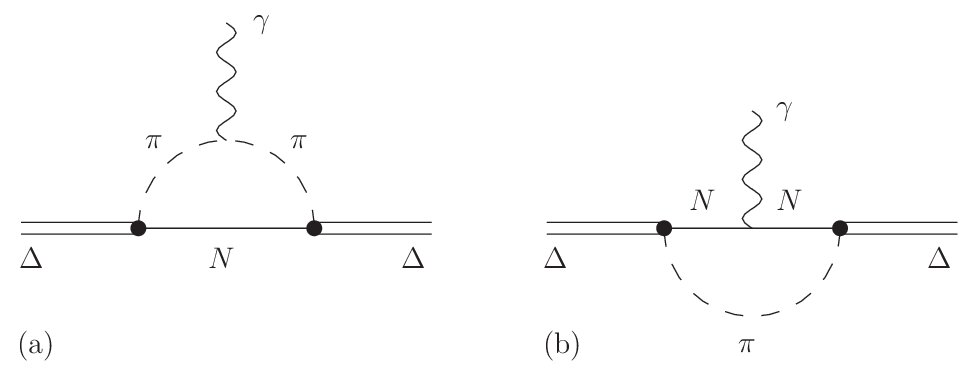 Figure 1
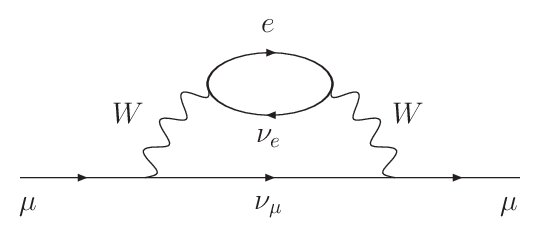 Figure 2
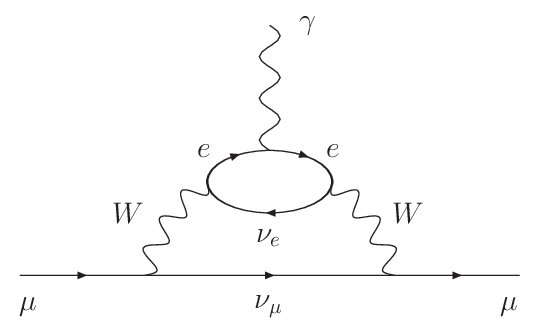 Figure 3
Peer Reviews
No public reviews on file for this paper yet. If you reviewed it on a platform where reviews are public (OpenReview, ICLR, NeurIPS, ICML), you can paste yours below so the community can read it here.
Videos
No videos yet. Explain this paper in a talk, walkthrough, or lecture? Add one.
The lifetime
of unstable particles in electromagnetic fields
Daniele Binosi
ECT* Trento, Villa Tambosi, Villazzano, I-38050 TN, Italy
Vladimir Pascalutsa
ECT* Trento, Villa Tambosi, Villazzano, I-38050 TN, Italy
Institut für Kernphysik, Johannes Gutenberg Universität, Mainz D-55099, Germany
Abstract
We show that the electromagnetic moments of unstable particles (resonances) have an absorptive contribution which quantifies the change of the particle’s lifetime in an external electromagnetic field. To give an example we compute here the imaginary part of the magnetic moment for the cases of the muon and the neutron at leading order in the electroweak coupling. We also consider an analogous effect for the strongly-decaying (1232) resonance. The result for the muon is Im, with the charge and the mass of the muon, the Fermi constant, which in an external magnetic field of Tesla give rise to the relative change in the muon lifetime of . For neutron the effect is of a similar magnitude. We speculate on the observable implications of this effect.
Unstable particles; magnetic moment; lifetime change.
pacs:
13.40.Em, 13.35.-r, 12.15.Lk, 23.40.-s
I Introduction
The electromagnetic (e.m.) moments of a particle are among the few fundamental quantities which describe the particle properties and as such have thoroughly been studied. The most renowned examples are the magnetic moments of the electron and the muon which have been measured to unprecendented accuracy and yielded a number of physical insights, seemuon:gm2 for recent reviews. What is far lesser known is that the e.m. moments of unstable particles are complex numbers in general Avdeev:1998sx ; Pascalutsa:2004je . Their imaginary part reflects, of course, the unstable nature of the particle, however, the precise interpretation has been missing. In this paper we work out the relation, suggested first by Holstein Barry06 , which should exist between the imaginary part of the magnetic moment and the effect of an external magnetic field on particle’s lifetime.
The argument for such a relation is very simple. The (self-)energy of the particle with a lifetime has an absorptive part, which has an interpretation of the width . The particle’s magnetic moment in the presence of magnetic field induces the change in the energy: . The latter contribution can then also change the width, provided the magnetic moment has an absorptive part (Im).
The decay properties of unstable particles, such as muon or neutron are extremely well studied and are widely used for the precise determination of the Standard Model parametersPDG06 ; determ . There are also a plethora of studies of how these particles behave in e.m. fields. A well-known example is the search for the neutron’s electric dipole momentnEDM . In view of these studies it is compelling to investigate how the decay properties of unstable particles may be affected by e.m. fields.
The lifetime of unstable quantum-mechanical systems is known to be affected by an e.m. field. Positronium provides a textbook examplepositronium , where the effect arises due to the admixture of para- () and ortho- () positronium states with orbital momentum by the magnetic field interacting with the magnetic moments of the constituents. As the result, already in the field of Tesla, the lifetime of ortho-positronium decreases by almost a factor of 2.
It is far from obvious how the same kind of an effect can arise for an elementary unstable particle, e.g., the muon. The above-mentioned relation between the imaginary part of the magnetic moment and the lifetime change may, therefore, provide us with both an interpretation for the imaginary part of the magnetic moment and the means to compute the effect of the lifetime change.
In the following we examine in detail the case of the muon, compute the leading contribution to Im and the corresponding effect on the lifetime. Then we will briefly discuss the cases of the neutron and of the -resonance.
II Muon decay ()
The leading contribution to the muon decay width arises at two-loop level, see Fig. 1. For our purposes, the propagators in this graph can safely be assumed to be static — Fermi theory. We also neglect the mass of the electron in the loops, since it leads to an under-percent correction of ; here and in what follows, is the muon mass. The graphs with other Standard Model fermions (e.g., quarks) in the loops need not to be considered here, because they cannot give any contribution to the muon width.
Using dimensional regularization, we compute this graph in dimensions (in the limit ),111 Our conventions are: metric , , , ’s stand for Dirac matrices and their totally-antisymmetric products: \gamma^{\mu\nu}=\mbox{\small{\frac{1}{2}}}[\gamma^{\mu},\,\gamma^{\nu}], \gamma^{\mu\nu\alpha}=\mbox{\small{\frac{1}{2}}}\{\gamma^{\mu\nu},\,\gamma^{\alpha}\}, \gamma^{\mu\nu\alpha\beta}=\mbox{\small{\frac{1}{2}}}[\gamma^{\mu\nu\alpha},\,\gamma^{\beta}].
[TABLE]
where is the -boson mass, is the electroweak coupling related to the Fermi constant by , is the charge, is the Weinberg angle, and
[TABLE]
is the one-loop correction to the polarization tensor of the boson. The decay width can then be found as .
A brief calculation shows that the self-energy has the following form:
[TABLE]
with and the scalar function given by:
[TABLE]
where is the Euler’s constant. The absorptive part of this function stems from the logarithm [, for ]:
[TABLE]
Terefore, the width is , and the muon lifetime:
[TABLE]
This result is of course long-known due to the seminal work of Feynman and Gell-Mann on Fermi theoryFeynman:1958ty . It is in a percent agreement with the experimental valuePDG06 :
[TABLE]
The discrepancy is due the neglect of the electron mass and some radiative corrections, c.f.vanRitbergen:1998yd . We now investigate the influence of the e.m. field on the leading contribution given by Eq. (6).
Let us denote by the self-energy in the presence of an external e.m. field . It is obtained by minimal substitution () of the derivatives of all charged fields into the self-energy of Fig. 1. Expanding in the e.m. coupling, we obtain:
[TABLE]
where is the already computed self-energy in the vacuum, while is the e.m. vertex correction of Fig. 2, with static ’s.
Denoting the 4-momentum of the initial (final) muon and assuming the on-shell situation (), the vertex correction has in the momentum space the following general form:
[TABLE]
where , and are complex numbers. Note that is the correction to the magnetic moment, and is the correction to the electric charge. The Ward-Takahashi (WT) identity:
[TABLE]
with the self-energy in Eq. (3) leads to the following conditions:
[TABLE]
Therefore, the term is in fact necessary by the e.m. gauge invariance. The terms, in both self-energy and the vertex, are shown to vanish when summing over all the fermions in Standard ModelCzarnecki:1996if . However, this does not happen for the imaginary part because the heavier fermions do not contribute.
The expression for the graph in Fig. 2 is (in Fermi theory) given by
[TABLE]
After a lengthy calculation we obtain the following result:
[TABLE]
hence satisfying the gauge-invariance conditions Eq. (11), for Im given by Eq. (5).
We would like to emphasize here that, of course, not only the magnetic moment, but also the charge operator receives an imaginary contribution, equal to . However, through the WT identity, this contribution is completely fixed by the momentum dependence of the self-energy, and therefore is not independent. The same holds for . We thus discuss only the effect of the absorptive part of the magnetic moment, here given by Im.
The energy of the magnetic moment interacting with the magnetic field is equal to , with being the projection of the field along the muon spin. Then the total energy, in the muon rest-frame, is given by: . We thus deduce that the absorptive part yields the following change in the muon width:
[TABLE]
while the change in the lifetime is , for .
Given this result, we conclude that the positively-charged muons live shorter (longer) in a uniform magnetic field if their spin is aligned along (against) the field. For the relative change in the width we find:
[TABLE]
where is the strength of the field in Tesla. Therefore, in moderate magnetic fields the change in the muon lifetime is tiny, well beyond the present experimental accuracy (which is at the ppm level). We will dwell on this more in the concluding part of the paper, but for now we turn to a more technical issue.
It is interesting to observe that the result of Eq. (13), can simply be obtained by the minimal substitution into Eq. (3), rather than into the electron propagator in Eq. (1). To show this we go to coordinate space and hence write the self-energy as . The minimal substitution to the first order in leads to the following vertex correction:
[TABLE]
Note that in general this is different from the vertex function in Eq. (8), since in the latter the minimal substitution is performed also in the internal lines. The general form of Eq. (9), of course, applies here as well, but now the scalar functions are completely specified by the self-energy:
[TABLE]
Substituting the explicit form of Im, we see that this method unambiguously leads to exactly the same result [Eq. (13)] as the full calculation. We emphasize though, that this method cannot always work (see, e.g., Ref.Koch:2001ii ), as will also be clear from the following examples. Nevertheless, it is worthwhile to investigate this method further, since knowing whether it is applicable a priori can enormously facilitate the calculations.
III Neutron decay and the -resonance
We consider now the neutron -decay. Assuming exact interaction () and neglecting the electron mass (but not the proton mass, ), the corresponding two-loop self-energy can still be written in the form of Eq. (3). We introduce and treat it as a small parameter, since in the physical case (where ), . A simple calculation then yields:
[TABLE]
where is the relevant quark-mixing (CKM) matrix element. We note in passing that this result leads to the lifetime of sec, to be compared with the experimental value of sec. This disagreement is largely due to the fact that in reality the axial coupling deviates from 1. However, for our order-of-magnitude estimate this discrepancy is unimportant.
What is important is that the derivative of the self-energy is enhanced by one power of :
[TABLE]
and this opens the possibility for the enhancement of the effect in the lifetime. Namely, the relative change in the neutron width then goes as
[TABLE]
where is the nuclear magneton. A more precise analysis of this effect for the neutron is beyond the scope of this paper. We focus instead on the example of the -resonance, where such an enhancement will be shown to be even more dramatic, at least qualitatively.
The resonance decays strongly into the pion and nucleon, , and the corresponding self-energy, to leading order in chiral effective-field theory, yields the following result for the absorptive partPascalutsa:2004je :
[TABLE]
where the isospin symmetry is assumed, e.g., . The constant , where represents the coupling and is fitted to the empiracal width of the , MeV is the pion-decay constant, and MeV is the mass. For simplicity we neglect the pion mass (i.e., take the chiral limit). Then, in Eq. (21), , . For , is a small parameter in the chiral effective-field theory with ’s (see Ref.PVY07 for a recent review), and will so be treated here too.
The absorptive part of the magnetic dipole moment of the arises at this order from graphs in Fig. 3. These graphs, computed in Ref.Pascalutsa:2004je , in the chiral limit yield the following result (upto terms):
[TABLE]
where and correspond with the decomposition in Eq. (9), with the superscript referring to the corresponding graphs in Fig. 3; is absent in this case, of course.
First of all, we observe that this result satisfies the WT conditions, Eq. (11), for each of the four charge states of the ,
[TABLE]
where , and hence .
At the same time, the ‘naive’ minimal-substitution procedure [Eq. (16)], that happens to work for the muon, fails here miserably. It would predict that the magnetic moment contribution would go with the same power as the self-energy [Eq. (17)], which for the absorptive part means . In reality it goes as . E.g., for the :
[TABLE]
The fact that the self-energy goes as , while as has as a consequence the enhancement of the lifetime change in the magnetic field by two powers of .
Quantitatively such enhancements of the lifetime change over the lifetime by the phase-space volume do not make much difference in the above examples. However, it shows that it might be useful to look for manifestations of the lifetime change in the medium where the phase-space volume can be varied.
IV Conclusions and outlook
We have examined her a concept of the ‘absorptive magnetic moment’ — an intrinsic property of an unstable particle, together with the width or the lifetime. It manifests itself in the change of the particle’s lefetime in an external magnetic field, see Eq. (25) below. We have computed this quantity for the examples of muon, neutron and -resonance to leading order in couplings. In all the three cosidered cases the effect on the lifetime is tiny for normal magnetic fields: in a uniform field of 1 Tesla the change in the lifetime is of order of percent, at most.
In the case of the muon we have computed this effect to the leading order in the electroweak coupling; the change in the lifetime is
[TABLE]
or, numerically, . A direct measurement of this effect is therefore beyond the present experimental precision. Nevertheless, it is worthwhile to investigate the effect of the magnetic field on the differential decay rates, with the hope that some asymmetries could show a significantly bigger sensitivity.
A notable feature of this effect is that the relative change of the lifetime is inversely proportional to the phase space. It goes as in the neutron case, and as in the -resonance case. (The difference in power is apparently because the neutron decays solely into fermions while the has a boson in the decay product.) One can expect that in the conditions where the phase-space is significantly reduced, e.g. for the neutron in nuclear medium, the effect of the lifetime change may become measurable.
Especially interesting would be to evaluate the manifestations of this effect in neutron star formations. Not only the phase-space of the neutron decay is shrinking, the protons decay too, and all that occurs in magnetic fields as large as Tesla. Even larger fields can be achieved in atomic or nuclear systems. Finally, it is worthwhile to point out that in lattice QCD studies strong magnetic fields are standardly used to compute the electromagnetic properties of hadrons. Combined with the lattice techniques of extracting the width, the relation between the absorprive part and the lifetime change may allow to compute the former on the lattice for unstable hadrons.
Acknowledgments
We thank Barry Holstein and Marc Vanderhaeghen for a number of insightful discussions. The work of V.P. is partially supported by the European Community-Research Infrastructure Activity under the FP6 ”Structuring the European Research Area” programme (HadronPhysics, contract RII3-CT-2004-506078).
The reference list from the paper itself. Each links out to its DOI / PubMed record.
- 1(1) M. Passera, J. Phys. G 31 , R 75 (2005); J. P. Miller, E. de Rafael and B. L. Roberts, Rept. Prog. Phys. 70 , 795 (2007).
- 2(2) L. V. Avdeev and M. Y. Kalmykov, Phys. Lett. B 436 , 132 (1998).
- 3(3) V. Pascalutsa and M. Vanderhaeghen, Phys. Rev. Lett. 94 , 102003 (2005); Phys. Rev. D 77 , 014027 (2008).
- 4(4) B. R. Holstein, unpublished.
- 5(5) W. M. Yao et al. [Particle Data Group],“Review of particle physics,”J. Phys. G 33 , 1 (2006).
- 6(6) D. Tomono [RIKEN RAL R 77 Collaboration], AIP Conf. Proc. 842 , 906 (2006); K. R. Lynch, AIP Conf. Proc. 870 , 333 (2006); J. S. Nico, AIP Conf. Proc. 870 , 132 (2006); A. P. Serebrov et al. , ar Xiv:nucl-ex/0702009.
- 7(7) P. G. Harris et al. , Phys. Rev. Lett. 82 , 904 (1999); C. A. Baker et al. , Phys. Rev. Lett. 97 , 131801 (2006).
- 8(8) J. L. Basdevant and J. Dalibard, “Quantum Mechanics Solver,” (Springer, Berlin, 2005).