Extending the theory of phonon-mediated superconductivity in quasi-2D
J.P.Hague

TL;DR
This paper extends the Migdal-Eliashberg theory to better understand phonon-mediated superconductivity in quasi-2D materials, especially relevant for cuprates, by analyzing spectral functions and phase diagrams.
Contribution
It introduces an extended theoretical framework for electron-phonon interactions, addressing intermediate regimes and limitations of traditional models in superconductivity research.
Findings
Spectral functions and phase diagrams are computed using the extended theory.
The results highlight the importance of considering intermediate parameter regimes.
Discussion connects findings to established theories and Coulomb effects.
Abstract
I present results from an extended Migdal-Eliashberg theory of electron-phonon interactions and superconductivity. The history of the electron-phonon problem is introduced, and then study of the intermediate parameter regime is justified from the energy scales in the cuprate superconductors. The Holstein model is detailed, and limiting cases are examined to demonstrate the need for an extended theory of superconductivity. Results of the extended approximation are shown, including spectral functions and phase diagrams. These are discussed with reference to Hohenberg's theorem, the Bardeen-Cooper-Schrieffer theory and Coulomb repulsion.
Click any figure to enlarge with its caption.
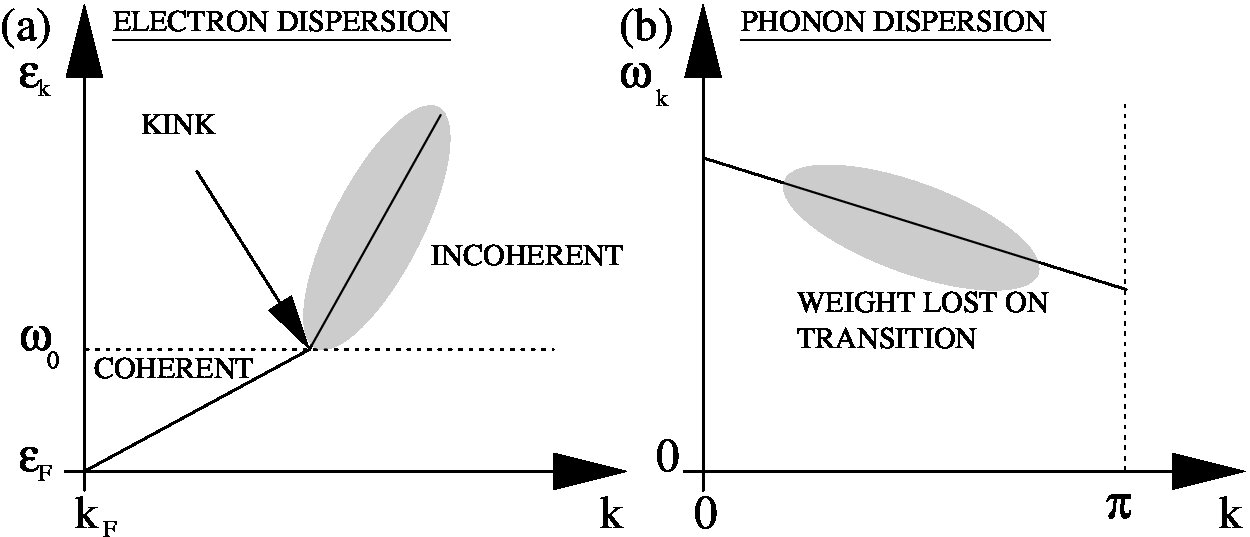 Figure 1
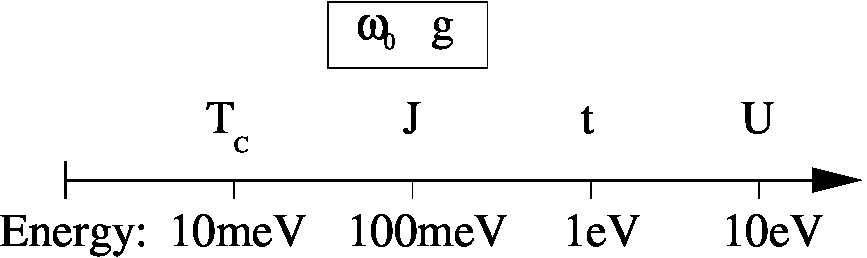 Figure 2
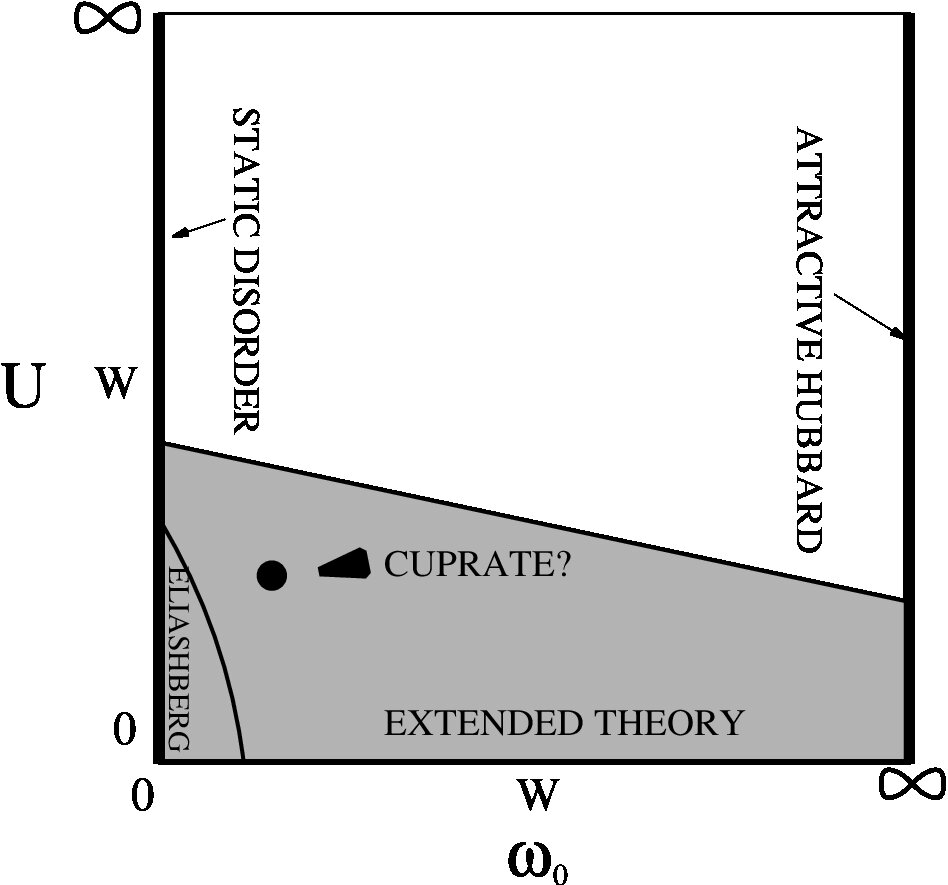 Figure 3
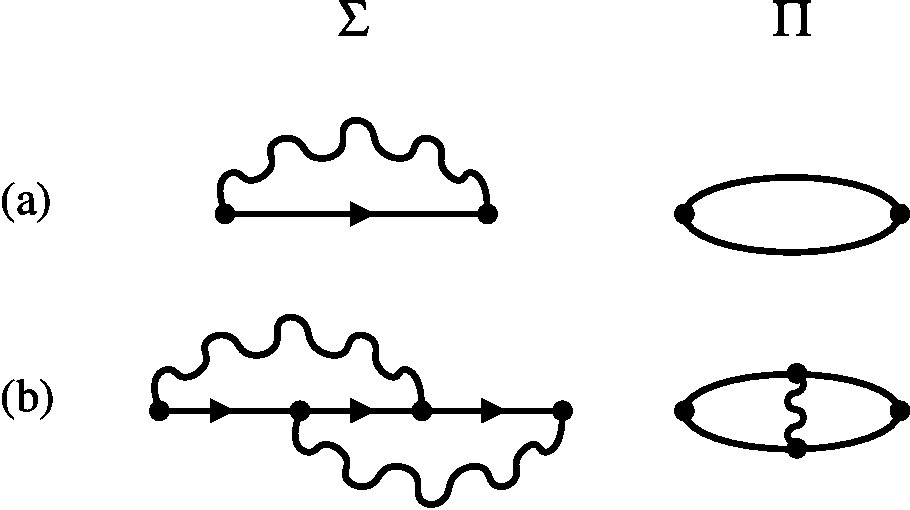 Figure 4
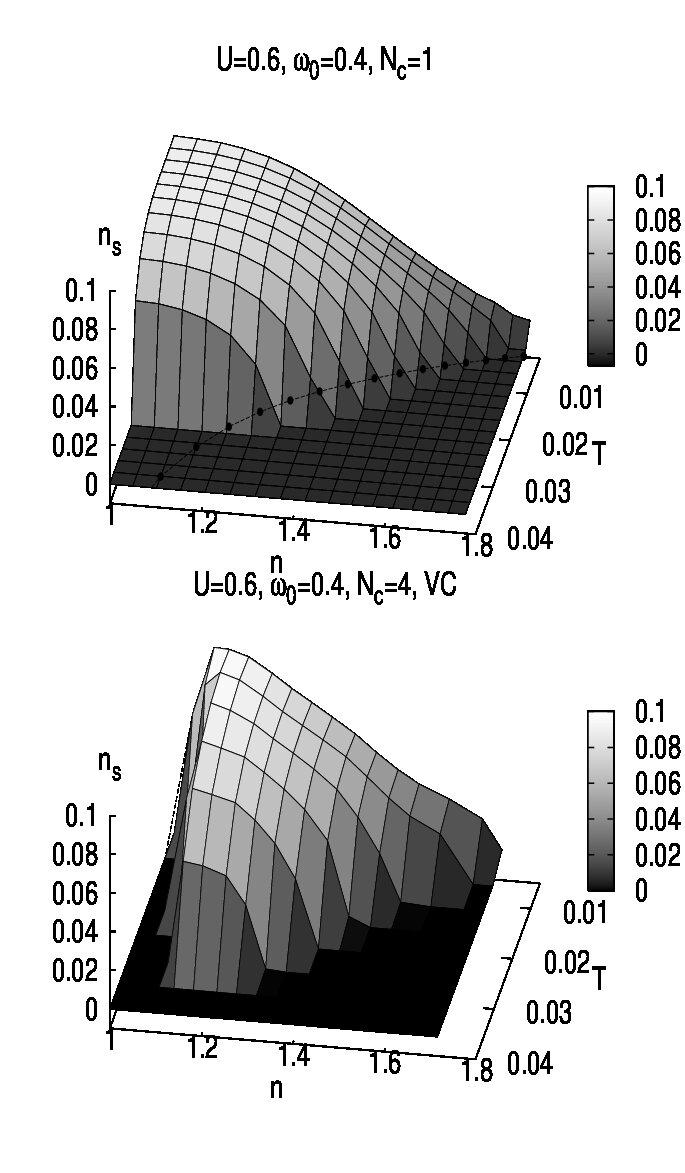 Figure 7
Peer Reviews
No public reviews on file for this paper yet. If you reviewed it on a platform where reviews are public (OpenReview, ICLR, NeurIPS, ICML), you can paste yours below so the community can read it here.
Videos
No videos yet. Explain this paper in a talk, walkthrough, or lecture? Add one.
Taxonomy
TopicsPhysics of Superconductivity and Magnetism · Superconductivity in MgB2 and Alloys · Superconducting Materials and Applications
\pacs
Extending the theory of phonon-mediated superconductivity in quasi-2D
J.P.Hague
Abstract
I present results from an extended Migdal–Eliashberg theory of electron-phonon interactions and superconductivity. The history of the electron-phonon problem is introduced, and then study of the intermediate parameter regime is justified from the energy scales in the cuprate superconductors. The Holstein model is detailed, and limiting cases are examined to demonstrate the need for an extended theory of superconductivity. Results of the extended approximation are shown, including spectral functions and phase diagrams. These are discussed with reference to Hohenberg’s theorem, the Bardeen–Cooper–Schrieffer theory and Coulomb repulsion. [Published in: Lectures on the physics of highly correlated electron systems X, p255-264, AIP Conference Proceedings vol. 846 (2006)]
1 Introduction
Over the past half-century, the study of the role of electron-phonon interactions in condensed matter physics has been an active and controversial field. Initially of interest from the point of view of thermal properties, early models of the interactions between lattice vibrations and electrons included the continuum Fröhlich model frohlich . Interest in electron-phonon interactions increased dramatically when in 1957, Bardeen, Cooper and Schrieffer (BCS) published their famous theory of superconductivity bcs , which directly implicated phonons as the microscopic mechanism for the low temperature absence of resistivity in a variety of metals. Until the discovery of the cuprate superconductors by Bednorz and Müller in 1986 bednorz , the BCS picture was found to account well for all superconducting materials - a remarkable success for a simple mean-field theory which is only applicable at weak coupling!
Soon after the realisation that phonons were responsible for superconductivity, Eliashberg extended the theoretical description beyond the absolute weak coupling theory with the famous Eliashberg equations eliashberg1960a . In doing this, he built on the earlier work of Migdal, who argued that a simple resummation of a certain class of Feynmann diagrams should be sufficient to describe the limit of low phonon frequency migdal1958a . Eliashberg’s theory can be argued to be one of the first applications of the dynamical mean-field theory (DMFT) metzner1989a , since (in its original sense) it ignores spatial fluctuations (momentum dependence) in the self-energy, while keeping frequency dependent (dynamical) effects.
The purpose of this paper is to describe an extension to the theory of superconductivity from electron-phonon interactions. The approach goes beyond the Eliashberg theory by introducing the effects of spatial fluctuations and higher order terms in the perturbation theory. The aim is to develop a theory which can be used for systems with stronger coupling, larger phonon frequencies and reduced dimensionality. I begin by motivating the need for a more sophisticated theory from the experimental viewpoint. I also discuss limiting cases of the Holstein model, and how the large phonon frequency limit of that model implies that the conventional theories of superconductivity are incomplete. I then introduce the approximations needed to develop a more sophisticated theory. Finally I present some results from the new approximation, and discuss them in relation to Cuprate superconductors, and also with regard to conventional theories and the exact Hohenberg theorem hohenberg .
2 Motivation
When the high-temperature cuprate superconductors were discovered in 1986 bednorz , the possibility that phonons could be attributed to the microscopic mechanism was quickly discounted by many people. In part, this was due to the absence of an isotope effect at optimal doping, and also an assumption that phonon-mediated superconductivity could not occur above 30K. The mechanism for high- superconductors remains highly controversial, and many different hypotheses are suggested (some examples are spin fluctuations anderson and exotic phonon mechanisms such as bipolarons alexandrov ). An increasing body of evidence shows that phonons as well as Coulomb repulsion have an effect on the physics of the cuprate materials. I shall give a brief review of the current experimental situation in this section, and argue that (1) Electron-phonon interactions need to be treated on an equal footing to Coulomb repulsion if the Cuprates are to be understood, and (2) In order to treat the phonons in the Cuprates, extensions to the current theories of electron-phonon interactions and phonon-mediated superconductivity are required.
There are several experiments demonstrating strong electron-phonon coupling in the cuprates. The most compelling is the existence of a strong isotope effect on exchanging O16 for O18 zhao1997a . There are also some more recent experiments which demonstrate the effects of electron-phonon interactions in a transparent manner. Figure 1 shows schematic representations of electron and phonon dispersions in the cuprates. Panel (a) details the main features of the electronic dispersion measured by Angle-Resolved Photo-Emmission Spectroscopy (ARPES) in the [11] direction lanzara2001a . At energies close to the Fermi-surface, there are coherent excitations with a long lifetime. As is approached, the gradient of the dispersion changes at a sharp kink. The phonon is of the transverse optic variety, and its frequency () is of the order of 100meV. It suffices here to mention that this is very large. The ratio of the gradients above and below the kink is related to the dimensionless coupling constant (), and it is found that can take values of up to 2 lanzara2001a . Panel (b) shows a schematic representation of some neutron scattering results measuring the phonon dispersion mcqueeny1999a ; chung2003a . Above the transition temperature, this looks like the solid line, but as the system moves from normal to superconducting state, the spectral weight in the circled area vanishes. This indicates that the superconductivity (bound pairs of electrons) affects the phonons, and is additional evidence for a strong electron-phonon coupling.
A frequent misconception about the cuprates is that electron-phonon terms in the Hamiltonian can be neglected on the basis that they are small. To demonstrate that this is not the case, figure 2 shows approximate energy scales in the cuprates. The largest energy by far is the Coulomb repulsion (or Hubbard ) which weighs in at some 10eV. Next is the intersite hopping integral , which is of the order of 1eV. Using a simple 2nd order perturbation theory at strong coupling, an effective exchange interaction is generated gebhard , with of the order of 100meV. This often used to argue for a spin-fluctuation theory of high- superconductivity that neglects phonons. The problem with this viewpoint is immediately clear if one reviews the experimental data. First, the energies of the phonons are also approximately 100meV, so they cannot be treated as a small energy scale. Second, a dimensionless coupling constant of order unity implies dimensionfull coupling with similar magnitude. Thus with three very close energy scales, it is important that the contributions from both phonon and Coulomb mechanisms are treated on equal footing in a theory for the cuprates. Unfortunately, as I discuss in the next section, current theories of electron-phonon interactions are not capable of handling the large phonon energies and coupling constants in the cuprates. The remainder of this paper focuses on how the theory can be extended to describe this regime.
3 Model and limits
A generic model of electron-phonon interactions includes the motion of the electrons , the motion of the ions (or phonons) and the interaction between the electrons and the phonons (which may be absorbed or emitted) which is denoted . In this way, is the total Hamiltonian.
[TABLE]
[TABLE]
[TABLE]
The first term in the Hamiltonian is the general form for free electrons, i.e. the total energy is the sum of the kinetic energies of all occupied states. In a special case, which is known as the Holstein Hamiltonian, the electrons in a tight binding model may hop between nearest-neighbour sites only, and , where is the overlap integral. In the generic form of the electron-phonon interaction, an electron may be scattered by absorbing a phonon with momentum or emitting a phonon with momentum . An additional approximation uses a momentum independent electron-phonon coupling, , and in that case the Fourier transform shows that the second term connects the local ion displacement, to the local electron density. Finally, the free phonon term may be simplified by using the Einstein approximation and Fourier transforming, the bare phonon Hamiltonian is shown to be a series of independent simple harmonic oscillators at each site index. The creation of electrons and phonons is represented by and respectively, is the ion momentum and the ion mass. By choosing , a bandwidth of is chosen. A small interplanar hopping of is included to remove the logarithmic singularity in the 2D density of states at .
Figure 3 shows the parameter space of the Holstein model. For very large phonon frequency, the effective interaction is instantaneous, and a Lang–Firsov transformation langfirsov results in an attractive Hubbard model (which is one of the standard models for correlated electron systems) hubbard1963a . Alternatively, taking the limit of very small phonon frequency, a fast moving electron cannot ‘see’ the nuclei move in the time it takes to traverse many sites, so the problem maps to a static disorder problem (which is essentially uncorrelated). One may therefore think of the phonon frequency as possessing the ability to “tune” the effect of correlations, and one therefore obtains a second motivation for the study of electron-phonon systems of trying to understand electronic correlations haguenda . The correlation tuning makes the phonon problem extremely hard, and little is known about the intermediate regime of the parameter space. The range of the Eliashberg theory is shown in the bottom left corner. Contrary to Migdal’s assumption, the theory cannot extend beyond intermediate coupling since renormalisation of the effective mass reduces invalidating the condition (Migdal’s theorem) hague2001a ; alexandrov . The approximate position of the phonon parameters in the cuprates is shown as the single diamond. It is essential to correct the theory for weak to intermediate coupling at larger phonon frequencies. The extension is clear by looking at the large phonon frequency limit. The Hubbard limit requires that all 2nd order processes in are included in the self-energy, or the incorrect weak coupling limit is found. An extended theory including all 2nd order Feynman diagrams is required to understand the weak coupling limit, from small to large phonon frequency.
4 Extending the Eliashberg theory
Extending the Eliashberg theory involves inserting the lowest order vertex corrections into the electron and phonon self energies. In the Eliashberg theory, emitted phonons are reabsorbed in a last-out-first-in order. Vertex corrections essentially allow this order to be changed once. Such contributions are shown diagrammatically in figure 4. All the diagrams must be included in the calculation, or electron number would not be conserved. Momentum dependence is included in the approximation, which is essential in low-dimensions. The inclusion of vertex corrections leads to double 2-fold integration over the Brillouin zone in combination with a double sum over matsubara frequencies, which is time consuming for the numerics. In order to reduce the number of points in -space while maintaining the thermodynamic limit, the dynamical cluster approximation is applied hettler1998a . Additionally, superconducting states can be considered by using the Nambu formalism. The full details of the implementation of the extended approximation can be found in references hague2003a and hague2005d .
Using a maximum entropy technique, it is possible to compute the spectral function from the Matsubara axis Green function. Figure 5 shows the spectral function of the Holstein model calculated using the extended Migdal–Eliashberg theory. The results are qualitatively similar to ARPES measurements of the cuprates. In particular the change between incoherent and coherent particles occurs at the phonon frequency (shown as the dashed line), associated with a kink in the direction. It is noted here that the effect of the phonon self-energy is a softening of the phonon mode. In the standard ME theory in 2D, the mode at the point is completely softened, leading to a fatal instability of the theory. However, the vertex corrections act against this softening, and relieve the instability. In such a way, it is clear that a vertex corrected Eliashberg theory is essential for the study of quasi-2D materials hague2003a .
One can also compute properties in the superconducting state. One such property is the momentum-dependent pairing density, , where is the anomalous Green function associated with the pairing of electrons with momentum and . It is possible to transform the momentum dependent order parameter to determine the magnitude of individual spherical harmonics. Figure 6 shows such a decomposition. A cluster size of is used, with and . Note how higher order harmonics develop as the filling is increased. In particular, it can be seen that no single harmonic (such as the -wave symmetry) is sufficient to describe the order parameter. Some of the higher order terms come about due to increased pairing at momentum , in particular, pairs with angular momentum.
Finally, by varying the temperature and chemical potential, the phase diagram can be computed. Figure 7 shows phase diagrams of the Holstein model for the different approximations. and .The top diagram shows the result from the Eliashberg approximation (dynamical mean-field theory ). On the bottom the results from the current approximation with are shown. The superconducting order is suppressed close to half filling. Assuming a form for the density of states in 2D (with small interplane hopping) of (for ) liliana , which matches the full density of states with reasonable accuracy. From this the BCS result may be calculated using the expression
[TABLE]
with the chemical potential taken from the self-consistent solution for a given . This result also drops off monotonically. Results in the dilute limit are in good agreement with the BCS result (line with points). Close to half-filling, the DMFT result is significantly smaller than the BCS result (which predicts ). The difference in results between the two mean-field theories at half-filling is due to the self-consistency in the DMFT. When vertex corrections and spatial fluctuations are included, the dilute limit is relatively unchanged. However at half-filling, there is a huge drop in the transition temperature. The suppression at half-filling is a manifestation of Hohenberg’s theorem, which implies that there may be no superconducting order in 2D. Here I have computed for quasi-2D, so it is interesting that in real materials with low dimensional character the maximum in superconductivity is shifted away from half-filling.
5 Concluding remarks
I end the paper with a warning for constructing theories of high-temperature superconductivity using electron-phonon interactions alone, while neglecting the Coulomb repulsion. If one takes the phase diagrams from the previous section, and assigns similar energy scales to those in the cuprates, it is possible to obtain a temperature in Kelvins for the maximum in the phase diagram at . This comes out as around 172K - one could say approximately the in the cuprates.
So why isn’t this the solution for the cuprates? Cuprates are very tightly bound materials, which is why the “Fermi energy” is low, and the ratio is large enough to justify extending Eliashberg theory. The problem is that a small Fermi energy also means the the Hubbard is a comparatively large quantity. On a simple mean-field level, one can include the Coulomb repulsion in the theory of superconductivity. For example, the Eliashberg equations can be extended to include an effective electron-electron interaction (otherwise known as the Coulomb pseudopotential ). The effect of this is to modify . Substitution into equation 4 means that the transition temperature is considerably reduced, or that superconductivity of the BCS type is completely destroyed. Any phonon-based mechanism for the cuprates must address this point and be compatible with the electron-electron interaction. Alternatively (and this is a warning against the other extreme) on the basis of the similarity of energy scales, any spin-fluctuation mechanism (which is essentially Coulombic) must also treat the phonons (or at least be compatible with them) to be plausible.
6 Acknowledgments
I sincerely thank the organising committee of the course for their generous financial support. Aspects of this research were carried out under the MPIPKS guest scientist program, and as a visitor at the University of Leicester. I thank A.S.Alexandrov, J.L.Beeby, E.M.L.Chung, N.d’Ambrumenil, J.K.Freericks, M.Jarrell, P.E.Kornilovitch, J.H.Samson and M.Yethiraj for stimulating discussions, both about this work and the problems of electron-phonon interactions and superconductivity in general. I acknowledge support at Loughborough University under EPSRC grant no. EP/C518365/1.
The reference list from the paper itself. Each links out to its DOI / PubMed record.
- 1[1] H.Fröhlich. Phys. Rev. , 79:845, 1950.
- 2[2] J.Bardeen, L.N.Cooper, and J.R.Schrieffer. Phys. Rev. , 108:1175, 1957.
- 3[3] J.G.Bednorz and K.A.Müller. Z. Phys. B , 64:189, 1986.
- 4[4] G.M.Eliashberg. JETP letters , 11:696, 1960.
- 5[5] A.B.Migdal. JETP letters , 7:996, 1958.
- 6[6] W.Metzner and D.Vollhardt. Phys. Rev. Lett. , 62:324, 1989.
- 7[7] P.C.Hohenberg. Phys. Rev. , 158:383, 1967.
- 8[8] P.W.Anderson. The theory of superconductivity in the high- T C subscript 𝑇 𝐶 T_{C} cuprates . Princeton University Press, 1997.