Flavor Physics in SUSY at large tan(beta)
Paride Paradisi

TL;DR
This paper reviews the phenomenological implications of large tan(beta) in the MSSM, emphasizing how flavor-violating processes and lepton universality tests can reveal insights into physics beyond the Standard Model.
Contribution
It highlights the significance of large tan(beta) regime in MSSM and explores how flavor violation and lepton universality tests can probe new physics.
Findings
Leptonic and hadronic flavor-violating processes are sensitive to new physics.
Tests of lepton universality can provide relevant information on beyond Standard Model scenarios.
Large tan(beta) enhances certain phenomenological effects in SUSY models.
Abstract
We discuss the phenomenological impact of a particularly interesting corner of the MSSM: the large tan(beta) regime. The capabilities of leptonic and hadronic Flavor Violating processes in shedding light on physics beyond the Standard Model are reviewed. Moreover, we show that tests of Lepton Universality in charged current processes can represent an interesting handle to obtain relevant information on New Physics scenarios.
Click any figure to enlarge with its caption.
 Figure 1
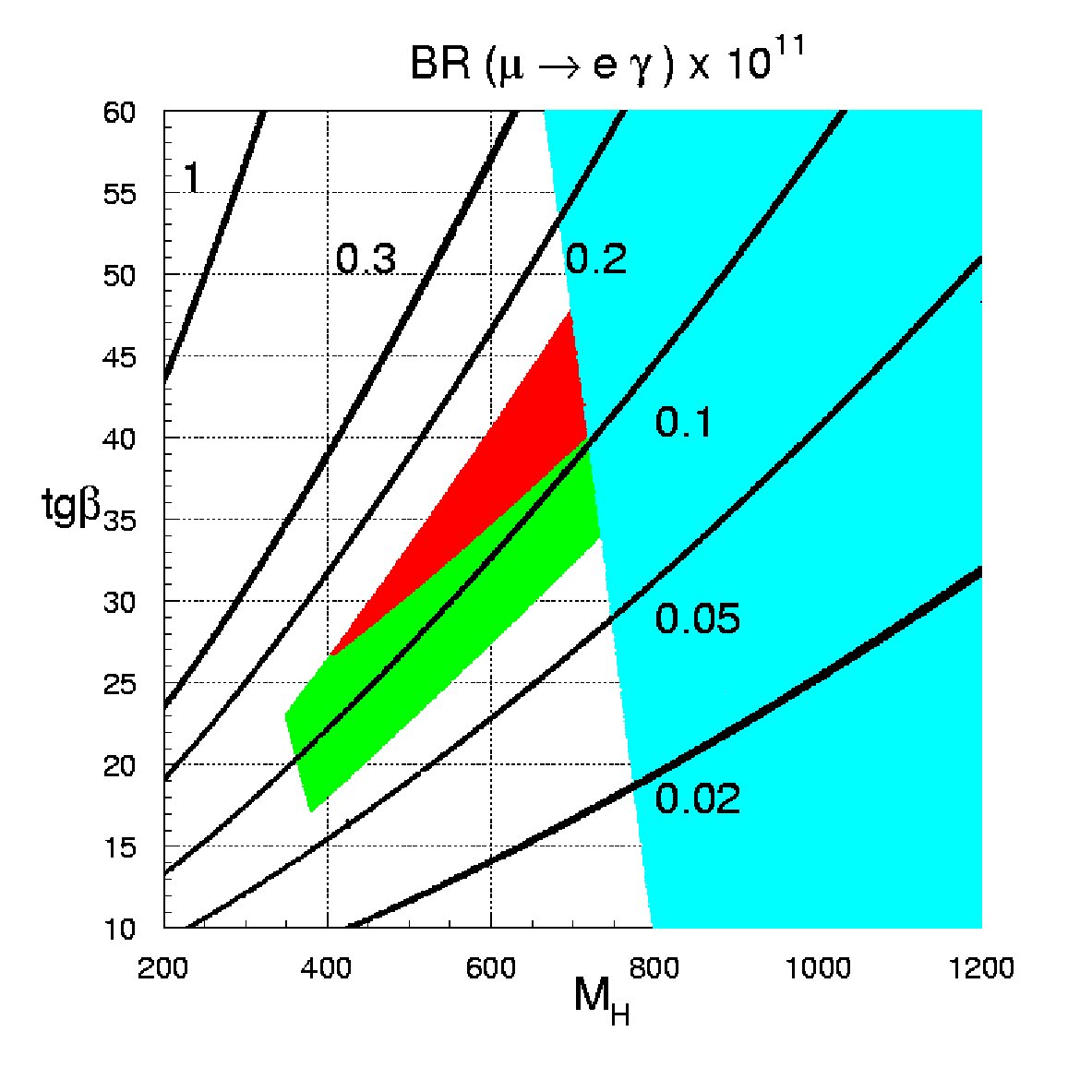 Figure 2
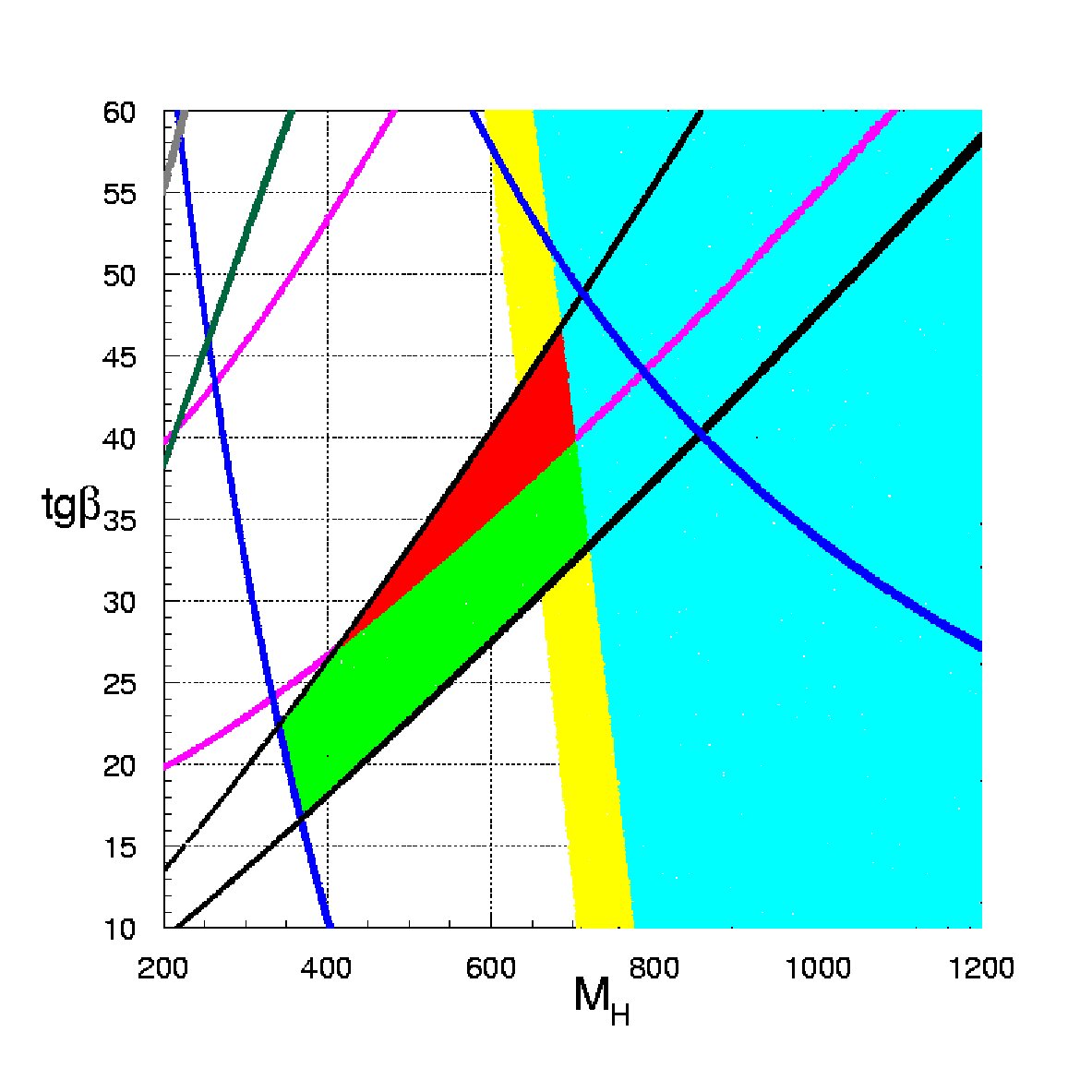 Figure 3
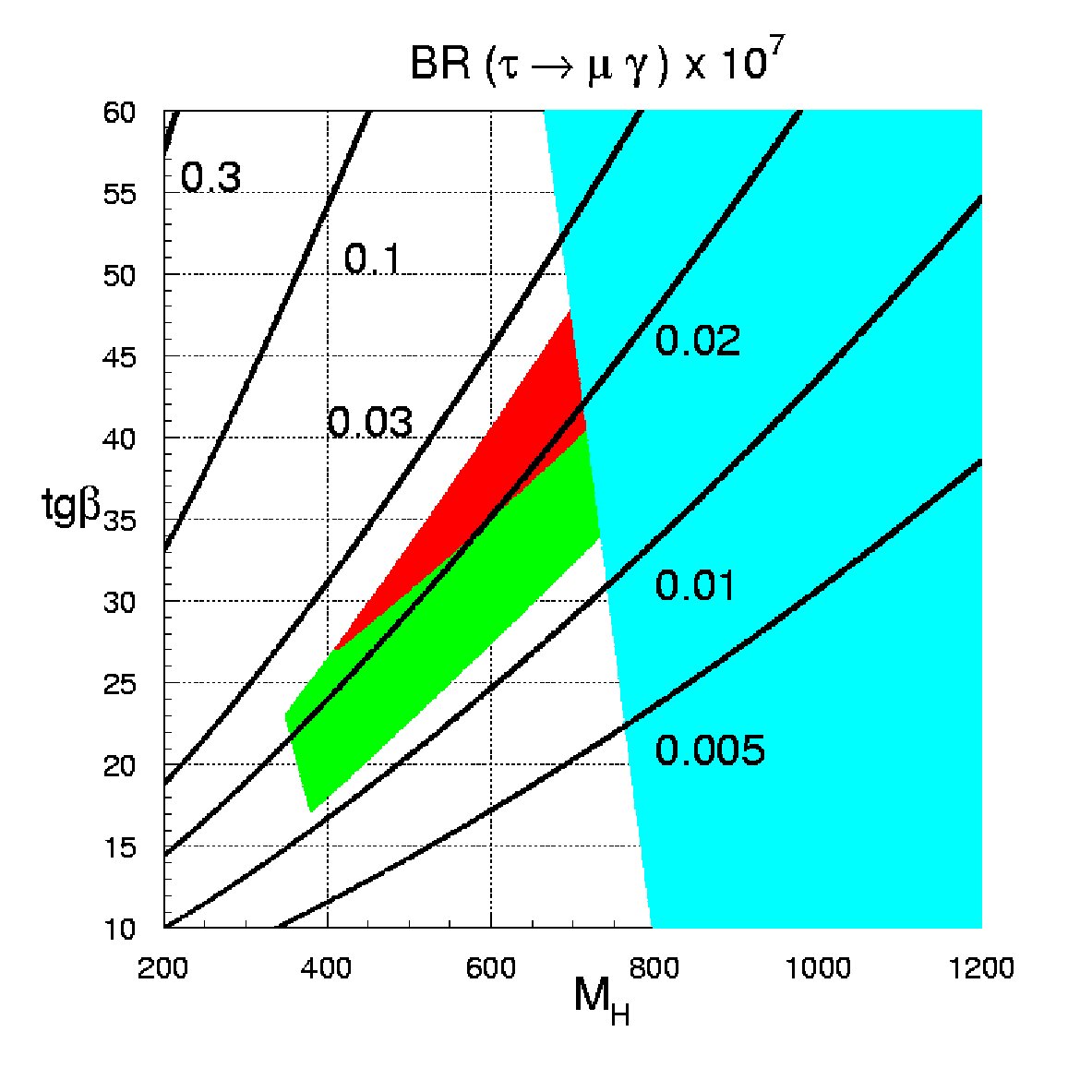 Figure 4
Peer Reviews
No public reviews on file for this paper yet. If you reviewed it on a platform where reviews are public (OpenReview, ICLR, NeurIPS, ICML), you can paste yours below so the community can read it here.
Videos
No videos yet. Explain this paper in a talk, walkthrough, or lecture? Add one.
Taxonomy
TopicsParticle physics theoretical and experimental studies · High-Energy Particle Collisions Research · Quantum Chromodynamics and Particle Interactions
Flavor Physics in SUSY at large
Paride Paradisi
Departament de Física Teòrica and IFIC, Universitat de València-CSIC, E-46100, Burjassot, Spain.
Abstract
We discuss the phenomenological impact of a particularly interesting corner of the MSSM: the large regime. The capabilities of leptonic and hadronic Flavor Violating processes in shedding light on physics beyond the Standard Model are reviewed. Moreover, we show that tests of Lepton Universality in charged current processes can represent an interesting handle to obtain relevant information on New Physics scenarios.
I Introduction
Despite the great phenomenological success of the Standard Model (SM), it is natural to consider this theory only as the low-energy limit of a more general model.
The direct exploration of New Physics (NP) particles at the TeV scale will be performed at the upcoming LHC. A complementary strategy in looking for NP is provided by high-precision low-energy experiments where NP could be detected through the virtual effects of NP particles. In particular, flavor-changing neutral-current (FCNC) transitions may exhibit a sensitivity reach even beyond that achievable by the direct searches at the LHC while representing, at the same time, the best (or even the only) tool to extract information about the flavor structures of NP theories.
In view of the above considerations, it is clear that flavor physics provides necessary and complementary information to those obtainable by the LHC.
Besides FCNC decays, also the Lepton Flavor Universality (LFU) tests ( and ) offer a unique opportunity to probe the SM and thus, to shed light on NP: the smallness of NP effects is more than compensated by the excellent experimental resolution and the good theoretical control.
II LFV in SUSY
The discovery of neutrino masses and oscillations has unambiguously pointed out the existence of the Lepton Flavor Violation (LFV) thus, we expect this phenomenon to occur also in the charged-lepton sector.
Within a SM framework with massive neutrinos, FCNC transitions in the lepton sector like are strongly suppressed by the GIM mechanism at the level of well beyond any realistic experimental resolution epxLFV . In this sense, the search for FCNC transitions of charged leptons is one of the most promising directions where to look for physics beyond the SM.
Within a SUSY framework, LFV effects originate from any misalignment between fermion and sfermion mass eigenstates. In particular, if the light neutrino masses are obtained via a see-saw mechanism, the radiatively induced LFV entries in the slepton mass matrix are given by BorzumatiMasiero :
[TABLE]
where denote the scale of SUSY-breaking mediation and the universal supersymmetry breaking scalar mass. Since the see–saw equation 111The effective light-neutrino mass matrix obtained from a see-saw mechanism is , where is the right-handed neutrino mass matrix and are the Yukawa couplings between left- and right-handed neutrinos (the potentially large sources of LFV), and is the vacuum expectation value of the up-type Higgs. allows large entries, sizable effects can stem from this running BorzumatiMasiero .
The determination of would imply a complete knowledge of the neutrino Yukawa matrix , which is not possible even if all the low-energy observables from the neutrino sector were known. As a result, the predictions of leptonic FCNC effects will remain undetermined even in the very optimistic situation where all the relevant NP masses were measured at the LHC.
This is in contrast with the quark sector, where similar RGE contributions are completely determined in terms of quark masses and CKM-matrix elements.
More stable predictions can be obtained embedding the SUSY model within a Grand Unified Theory (GUT) where the see-saw mechanism can naturally arise (such as ). In this case the GUT symmetry allows us to obtain some hints about the unknown neutrino Yukawa matrix . Moreover, in GUT scenarios there are other contributions stemming from the quark sector BarbieriHall . These effects are completely independent from the structure of and can be regarded as new irreducible LFV contributions within SUSY GUTs. For instance, within , as both and are hosted in the 10 representation, the CKM matrix mixing the left handed quarks will give rise to off diagonal entries in the running of the right-handed slepton soft masses BarbieriHall .
There exist to different classes of LFV contributions to rare decays:
- i)
Gauge-mediated LFV effects through the exchange of gauginos and sleptons, 2. ii)
Higgs-mediated LFV effects through effective non-holomorphic Yukawa interactions bkl .
The above contributions decouple with the heaviest mass in the slepton/gaugino loops (case ) or with the heavy Higgs mass (case ).
In principle, and refers to different mass scales. Higgs mediated effects start being competitive with the gaugino mediated ones when is roughly one order of magnitude heavier then and for paradisiH .
While the appearance of LFV transitions would unambiguously signal the presence of NP, the underlying theory generating LFV phenomena will remain undetermined, in general.
A powerful tool to disentangle among NP theories is the study of the correlations of LFV transitions among same families RossiBrignole ; paradisiH ; buraslfv .
Interestingly enough, the predictions for the correlations among LFV processes are very different in the gauge- and Higgs-mediated cases paradisiH . In this way, if several LFV transitions are observed, their correlated analysis could shed light on the underlying mechanism of LFV. In the case of gauge-mediated LFV amplitudes the decays are dominated by the dipole transition, which leads to the unambiguous prediction:
[TABLE]
[TABLE]
If some ratios different from the above were discovered, then this would be clear evidence that some new process is generating the transition, with Higgs mediation being a potential candidate 222As recently shown in buraslfv , a powerful tool to disentangle between Little Higgs models with T parity (LHT) and SUSY theories is a correlated analysis of LFV processes. In fact, LHT and SUSY theories predict very different correlations among LFV transitions buraslfv ..
As regards the Higgs mediated case, still gets generally the largest contribution among all the possible LFV decay modes paradisiH . The following approximate relations hold paradisiH :
[TABLE]
[TABLE]
[TABLE]
On the other hand, a correlated study of processes of the same type but relative to different family transitions, like , provides important information about the unknown structure of the LFV source, i.e. .
III LFU in SUSY
High precision electroweak tests, such as deviations from the SM expectations of the LFU breaking, represent a powerful tool to probe the SM and, hence, to constrain or obtain indirect hints of new physics beyond it. Kaon and pion physics are obvious grounds where to perform such tests, for instance in the and decays, where or . In particular, the ratios
[TABLE]
can be predicted with excellent accuracies in the SM, both for (0.02% accuracy Marciano ) and (0.04% accuracy Marciano ), allowing for some of the most significant tests of LFU.
As recently pointed out in Ref. kl2 , large departures from the SM expectations can be generated within a SUSY framework with R-parity only once we assume i) LFV effects, ii) large values.
Denoting by the deviation from universality in due to NP, i.e.: , it turns out that kl2 :
[TABLE]
The deviations from the SM could reach in the case kl2 (not far from the present experimental resolution kl2_exp ) and in the case while maintaining LFV effects in decays at the level. In the pion case the effect is quite below the present experimental resolution pl2_exp , but could well be within the reach of the new generation of high-precision experiments planned at TRIUMPH and at PSI. Larger violations of LFU are expected in decays, with deviations from the SM in and even order-of-magnitude enhancements in tgbhints .
IV Flavor physics at large and Dark Matter
Within the MSSM, the scenario with large and heavy squarks is particularly interesting. On the one hand, values of 30–50 can allow the unification of top and bottom Yukawa couplings, as predicted in well-motivated grand-unified models GUT . On the other hand, a Minimal Flavor Violating (MFV) structure MFV with heavy () soft-breaking terms in the quark sector and large values leads to interesting phenomenological virtues tgbhints ; vives : the present anomaly and the upper bound on the Higgs boson mass can be easily accommodated, while satisfying all the present tight constraints in the electroweak and flavor sectors. Additional low-energy signatures of this scenario could possibly show up in the near future in , and . In the following, as discussed in IPwmap , we analyze the above scenario under the additional assumption that the relic density of a Bino-like lightest SUSY particle (LSP) accommodates the observed dark matter distribution
[TABLE]
In the regime with large and heavy squarks, the relic-density constraints can be easily satisfied mainly in the so called -funnel region funnel where . The combined constraints from low-energy observables and dark matter in the – plane are illustrated in Figure 1 (left). The light-blue areas are excluded since the stau turns out to be the LSP, while the yellow band denotes the allowed region where the stau coannihilation mechanism is also active. The remaining bands correspond to the following constraints/reference-ranges from low-energy observables:
- •
[]: allowed region between the two blue lines.
- •
[ gm2 ]: allowed region between the two purple lines.
- •
[ Bmm ]: allowed region below the dark-green line.
- •
[ Dms ]: allowed region below the gray line.
- •
[]: allowed region between the two black lines [ red (green) area if all the other conditions (but for ) are satisfied].
From Figure 1 (right), we deduce that there is a quite strong correlation between and thanks to the -funnel region condition . A SUSY contribution to of generally implies a sizable effect in . A more precise determination of is therefore a key element to test this scenario.
The interplay of physics observables, dark-matter constraints, of , and LFV rates is shown in Figure 2. For a natural choice of is in the range, i.e. well within the reach of MEG MEG experiment. On the other hand, lies within the range for a , that is a natural size expected in many models.
Acknowledgements.
I wish to thank the conveners of WG3 for the kind invitation and G. Isidori, F. Mescia and D. Temes for collaborations on which this talk is partly based. I also acknowledge support from the EU contract No. MRTN-CT-2006-035482, ”FLAVIANET” and from the Spanish MEC and FEDER FPA2005-01678.
The reference list from the paper itself. Each links out to its DOI / PubMed record.
- 1(1) W. M. Yao et al. [Particle Data Group], J. Phys. G 33 (2006) 1 [hppt://pdg.lbl.gov].
- 2(2) F. Borzumati and A. Masiero, Phys. Rev. Lett. 57 (1986) 961.
- 3(3) R. Barbieri and L. J. Hall, Phys. Lett. B 338 (1994) 212 [hep-ph/9408406]; R. Barbieri, L. J. Hall and A. Strumia, Nucl. Phys. B 445 (1995) 219 [hep-ph/9501334]; L. Calibbi, A. Faccia, A. Masiero and S. K. Vempati, Phys. Rev. D 74 , 116002 (2006) [hep-ph/0605139].
- 4(4) K. S. Babu and C. Kolda, Phys. Rev. Lett. 89 (2002) 241802 [hep-ph/0206310].
- 5(5) P. Paradisi, JHEP 0602 , 050 (2006) [hep-ph/0508054]; P. Paradisi, JHEP 0608 , 047 (2006) [hep-ph/0601100].
- 6(6) A. Brignole and A. Rossi, Nucl. Phys. B 701 , 3 (2004) [hep-ph/0401100].
- 7(7) M. Blanke, A. J. Buras, B. Duling, A. Poschenrieder and C. Tarantino, hep-ph/0702136.
- 8(8) W.J. Marciano and A. Sirlin, Phys.Rev.Lett. 71 3629 (1993); M.Finkemeier, Phys.Lett. B 387 391 (1996).