New algebraic aspects of perturbative and non-perturbative Quantum Field Theory
Christoph Bergbauer, Dirk Kreimer

TL;DR
This paper reviews recent algebraic and combinatorial advances in perturbative and non-perturbative quantum field theory, focusing on Feynman graphs, Dyson-Schwinger equations, and their connections to algebraic geometry and number theory.
Contribution
It highlights new algebraic structures and methods for understanding quantum field theory, including Hopf algebras, Hochschild cohomology, and their applications to Dyson-Schwinger equations.
Findings
Algebraic reformulation of perturbative renormalization.
Progress in solving Dyson-Schwinger equations algebraically.
Connections between Feynman integrals and algebraic geometry.
Abstract
In this expository article we review recent advances in our understanding of the combinatorial and algebraic structure of perturbation theory in terms of Feynman graphs, and Dyson-Schwinger equations. Starting from Lie and Hopf algebras of Feynman graphs, perturbative renormalization is rephrased algebraically. The Hochschild cohomology of these Hopf algebras leads the way to Slavnov-Taylor identities and Dyson-Schwinger equations. We discuss recent progress in solving simple Dyson-Schwinger equations in the high energy sector using the algebraic machinery. Finally there is a short account on a relation to algebraic geometry and number theory: understanding Feynman integrals as periods of mixed (Tate) motives.
Click any figure to enlarge with its caption.
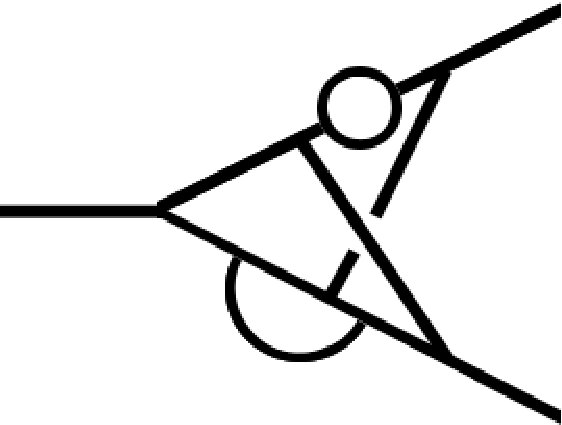 Figure 1
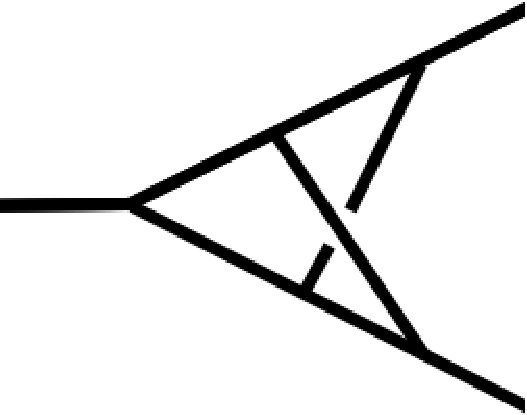 Figure 2
 Figure 3
 Figure 4
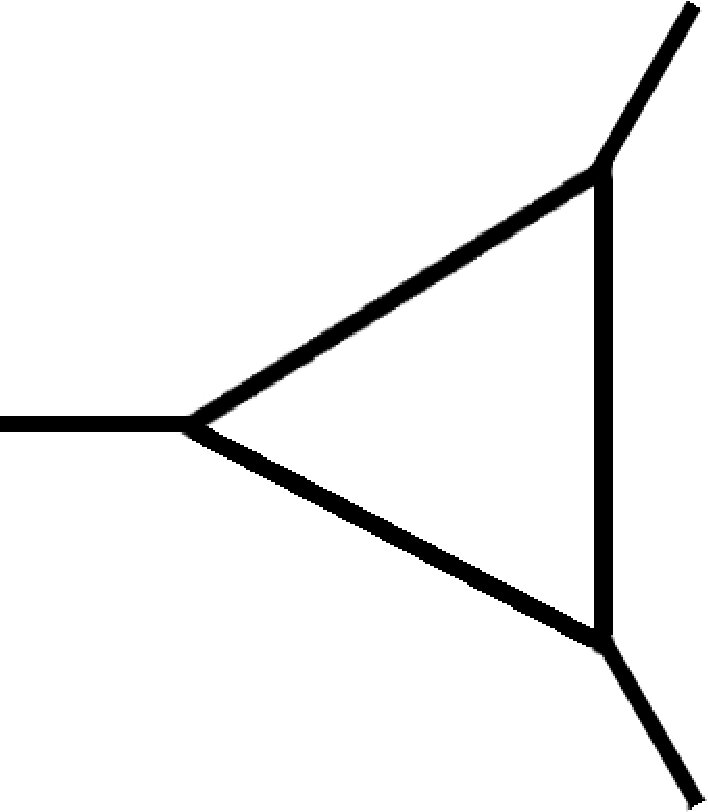 Figure 5
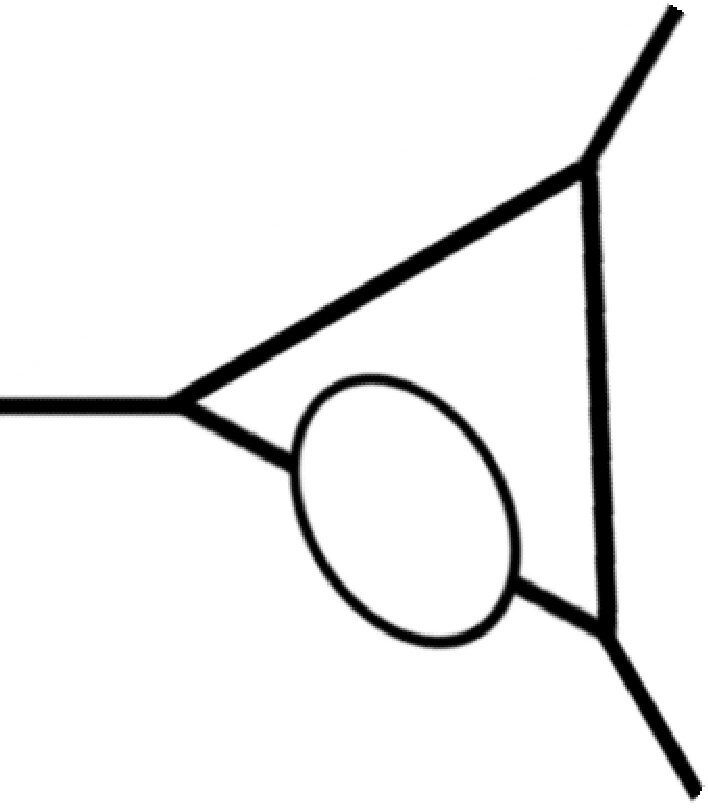 Figure 6
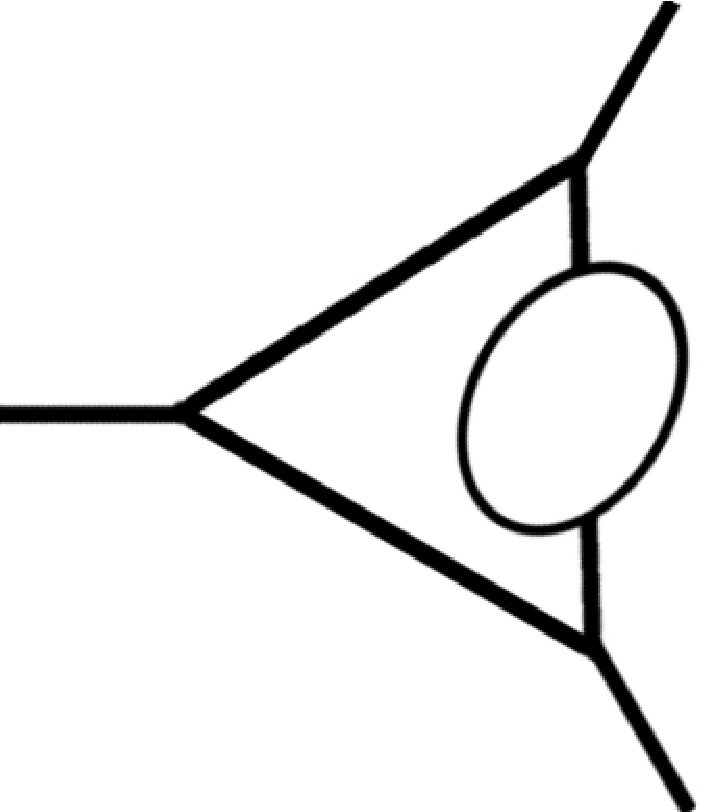 Figure 7
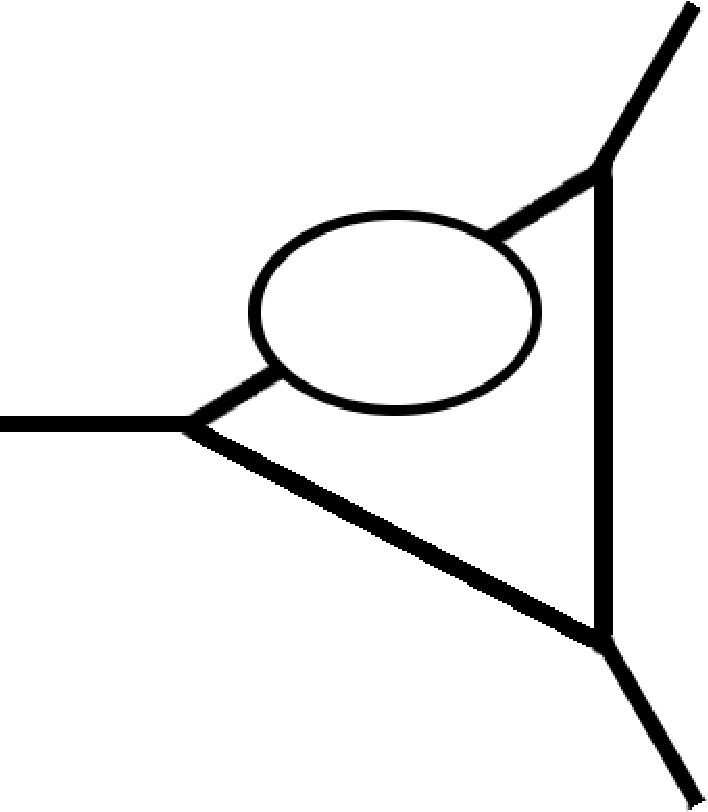 Figure 8
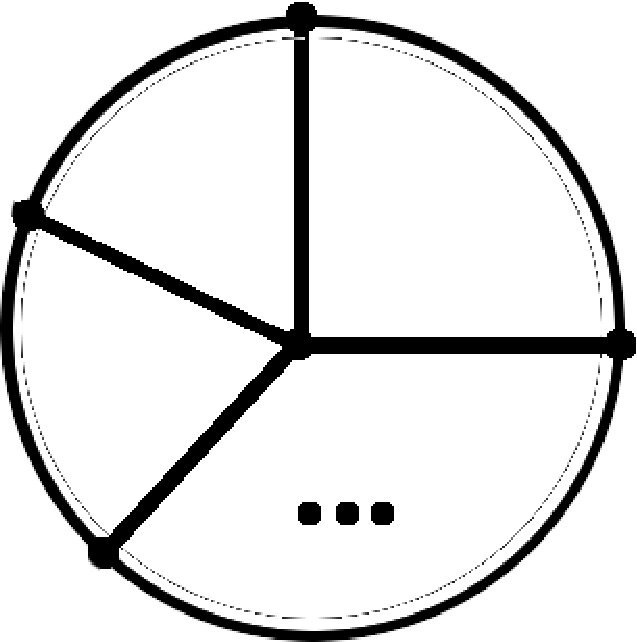 Figure 9
Peer Reviews
No public reviews on file for this paper yet. If you reviewed it on a platform where reviews are public (OpenReview, ICLR, NeurIPS, ICML), you can paste yours below so the community can read it here.
Videos
No videos yet. Explain this paper in a talk, walkthrough, or lecture? Add one.
Taxonomy
TopicsQuantum Mechanics and Applications · Advanced Mathematical Theories and Applications · Dark Matter and Cosmic Phenomena
New algebraic aspects of perturbative and non-perturbative Quantum Field Theory
Christoph Bergbauer and Dirk Kreimer
Freie Universität Berlin, Institut für Mathematik II
Arnimallee 3, 14195 Berlin, Germany
CNRS at Institut des Hautes Etudes Scientifiques
35 route de Chartres, 91440 Bures-sur-Yvette, France
Boston University, Center for Mathematical Physics
111 Cummington Street, Boston, MA 02215, USA
Erwin-Schrödinger-Institut
Boltzmanngasse 9, 1090 Wien, Austria
[email protected], [email protected]
(April 1, 2007)
Abstract
In this expository article we review recent advances in our understanding of the combinatorial and algebraic structure of perturbation theory in terms of Feynman graphs, and Dyson-Schwinger equations. Starting from Lie and Hopf algebras of Feynman graphs, perturbative renormalization is rephrased algebraically. The Hochschild cohomology of these Hopf algebras leads the way to Slavnov-Taylor identities and Dyson-Schwinger equations. We discuss recent progress in solving simple Dyson-Schwinger equations in the high energy sector using the algebraic machinery. Finally there is a short account on a relation to algebraic geometry and number theory: understanding Feynman integrals as periods of mixed (Tate) motives.
1 Introduction
As elements of perturbative expansions of Quantum field theories, Feynman graphs have been playing and still play a key role both for our conceptual understanding and for state-of-the-art computations in particle physics. This article is concerned with several aspects of Feynman graphs: First, the combinatorics of perturbative renormalization give rise to Hopf algebras of rooted trees and Feynman graphs. These Hopf algebras come with a cohomology theory and structure maps that help understand important physical notions, such as locality of counterterms, the beta function, certain symmetries, or Dyson-Schwinger equations from a unified mathematical point of view. This point of view is about self-similarity and recursion. The atomic (primitive) elements in this combinatorial approach are divergent graphs without subdivergences. They must be studied by additional means, be it analytic methods or algebraic geometry and number theory, and this is a significantly more difficult task. However, the Hopf algebra structure of graphs for renormalization is in this sense a substructure of the Hopf algebra structure underlying the relative cohomology of graph hypersurfaces needed to understand the number-theoretic properties of field theory amplitudes [6, 5].
2 Lie and Hopf algebras of Feynman graphs
Given a Feynman graph with several divergent subgraphs, the Bogoliubov recursion and Zimmermann’s forest formula tell how must be renormalized in order to obtain a finite conceptual result, using only local counterterms. This has an analytic (regularization/extension of distributions) and a combinatorial aspect. The basic combinatorial question of perturbative renormalization is to find a good model which describes disentanglement of graphs into subdivergent pieces, or dually insertion of divergent pieces one into each other, from the point of view of renormalized Feynman rules. It has been known now for several years that commutative Hopf algebras and (dual) Lie algebras provide such a framework [26, 14, 15] with many ramifications in pure mathematics. From the physical side, it is important to know that, for example, recovering aspects of gauge/BRST symmetry [39, 37, 30, 38] and the transition to nonperturbative equations of motion [12, 28, 29, 36, 3, 35, 32, 34, 4] are conveniently possible in this framework, as will be discussed in subsequent sections.
In order to introduce these Lie and Hopf algebras, let us now fix a renormalizable quantum field theory (in the sense of perturbation theory), given by a local Lagrangian. A convenient first example is massless theory in 6 dimensions. We look at its perturbative expansion in terms of 1PI Feynman graphs. Each 1PI graph comes with two integers, its number of loops, and its superficial degree of divergence. As usual, vacuum and tadpole graphs need not be considered, and the only remaining superficial divergent graphs have exactly two or three external edges, a feature of renormalizability. Graphs without subdivergences are called primitive. Here are two examples.
[TABLE]
Both are superficially divergent as they have three external edges. The first one has two subdivergences, the second one is primitive. Note that there are infinitely many primitive graphs with three external edges. In particular, for every one finds a primitive such that
Let now be the -vector space generated by all the superficially divergent 1PI graphs of our theory, graded by the number of loops There is an operation on given by insertion of graphs into each other: Let be two generators of Then
[TABLE]
where is the number of times that shows up as a subgraph of and Here are two examples:
[TABLE]
This definition is extended bilinearly onto all of Note that respects the grading as The operation is not in general associative. Indeed, it is pre-Lie [14, 17]:
[TABLE]
To see that (1) holds observe that on both sides nested insertions cancel. What remains are disjoint insertions of and into which do obviously not depend on the order of and One defines a Lie bracket on
[TABLE]
The Jacobi identity for is satisfied as a consequence of the pre-Lie property (1) of This makes a graded Lie algebra. The bracket is defined by mutual insertions of graphs. As usual, the universal envelopping algebra of is a cocommutative Hopf algebra. Its graded dual, in the sense of Milnor-Moore, is therefore a commutative Hopf algebra As an algebra, is free commutative, generated by the vector space and an adjoined unit By duality, one expects the coproduct of to disentangle its argument into subdivergent pieces. Indeed, one finds
[TABLE]
The relation refers to disjoint unions of 1PI superficially divergent subgraphs of Disjoint unions of graphs are in turn identified with their product in For example,
[TABLE]
The coproduct respects the grading by the loop number, as does the product (by definition). Therefore is a graded Hopf algebra. Since it is connected. The counit vanishes on the subspace called augmentation ideal, and As usual, if the element is called primitive. The linear subspace of primitive elements is denoted
The interest in and arises from the fact that the Bogoliubov recursion is essentially solved by the antipode of In any connected graded bialgebra, the antipode is given by
[TABLE]
in Sweedler’s notation. Let now be a -algebra. The space of linear maps is equipped with a convolution product where is the product in Relevant examples for are suggested by regularization schemes such as the algebra of Laurent series with finite pole part for dimensional regularization (space-time dimension ) The (unrenormalized) Feynman rules provide then an algebra homomorphism mapping Feynman graphs to Feynman integrals in dimensions. On there is a linear endomorphism (renormalization scheme) defined, for example minimal subtraction if if If is primitive, as defined above, then has only a simple pole in hence is a good renormalized value for If does have subdivergences, the situation is more complicated. However, the map
[TABLE]
provides the counterterm prescribed by the Bogoliubov recursion, and yields the renormalized value of The map is a recursive deformation of by compare its definition with (3). These are results obtained by one of the authors in collaboration with Connes [26, 14, 15].
For to be an algebra homomorphism again, one requires to be a Rota-Baxter operator, studied in a more general setting by Ebrahimi-Fard, Guo and one of the authors in [20, 22, 21]. The Rota-Baxter property is at the algebraic origin of the Birkhoff decomposition introduced in [15, 16]. In the presence of mass terms, or gauge symmetries etc. in the Lagrangian, and may contribute to several form factors in the usual way. This can be resolved by considering a slight extension of the Hopf algebra containing projections onto single structure functions, as discussed for example in [15, 32]. For the case of gauge theories, a precise definition of the coefficients is given in [30].
The Hopf algebra arises from the simple insertion of graphs into each other in a completely canonical way. Indeed, the pre-Lie product determines the coproduct, and the coproduct determines the antipode. Like this, each quantum field theory gives rise to such a Hopf algebra based on its 1PI graphs. It is no surprise then that there is an even more universal Hopf algebra behind all of them: The Hopf algebra of rooted trees [26, 14]. In order to see this, imagine a purely nested situation of subdivergences like
[TABLE]
which can be represented by the rooted tree
[TABLE]
To account for each single graph of this kind, the tree’s vertices should actually be labeled according to which primitive graph they correspond to (plus some gluing data) which we will suppress for the sake of simplicity. The coproduct on – corresponding to the one (2) of – is
[TABLE]
where the sum runs over all admissible cuts of the tree A cut of is a nonempty subset of its edges which are to be removed. A cut is defined to be admissible, if for each leaf of at most one edge on the path from to the root is cut. The product of subtrees which fall down when those edges are removed is denoted The part which remains connected with the root is denoted Here is an example:
[TABLE]
Compared to the advantage of is however that overlapping divergences are resolved automatically. To achieve this in requires some care [27].
3 From Hochschild cohomology to physics
There is a natural cohomology theory on and whose non-exact 1-cocycles play an important ”operadic” role in the sense that they drive the recursion that define the full 1PI Green’s functions in terms of primitve graphs. In order to introduce this cohomology theory, let be any bialgebra. We view as a bicomodule over itself with right coaction Then the Hochschild cohomology of (with respect to the coalgebra part) is defined as follows [14]: Linear maps are considered as -cochains. The operator defined as
[TABLE]
furnishes a codifferential: Here denotes the coproduct of and the coproduct applied to the -th factor in . The map is given by Clearly this codifferential encodes only information about the coalgebra (as opposed to the algebra) part of The resulting cohomology is denoted For the cocycle condition is simply
[TABLE]
for a linear endomorphism of In the Hopf algebra of rooted trees (where things are often simpler), a 1-cocycle is quickly found: the grafting operator defined by
[TABLE]
joining all the roots of its argument to a newly created root. Clearly, reminds of an operad multiplication. It is easily seen that is not exact and therefore a generator (among others) of Foissy [23] showed that is an onto map The higher Hochschild cohomology of is known to vanish [23]. The pair is the universal model for all Hopf algebras of Feynman graphs and their 1-cocycles [14]. Let us now turn to those 1-cocycles of Clearly, every primitve graph gives rise to a 1-cocycle defined as the operator which inserts its argument, a product of graphs, into in all possible ways. Here is a simple example:
[TABLE]
See [30] for the general definition involving some combinatorics of insertion places and symmetries.
It is an important consequence of the satisfying the cocycle condition (5) that
[TABLE]
where is the push-forward of along the Feynman rules In other words, is the integral operator corresponding to the skeleton graph This is the combinatorial key to the proof of locality of counterterms and finiteness of renormalization [13, 28, 2, 3]. Indeed, equation (6) says that after treating all subdivergences, an overall subtraction suffices. The only analytic ingredient is Weinberg’s theorem applied to the primitive graphs. In [2] it is emphasized that is actually generated (and determined) by the action of prescribed 1-cocycles and the multiplication. A version of (6) with decorated trees is available which describes renormalization in coordinate space [2].
The 1-cocycles give rise to a number of useful Hopf subalgebras of Many of them are isomorphic. They are studied in [3] on the model of decorated rooted trees, and we will come back to them in the next section. In [30] one of the authors showed that in nonabelian gauge theories, the existence of a certain Hopf subalgebra, generated by 1-cocycles, is closely related to the Slavnov-Taylor identities for the couplings to hold. In a similar spirit, van Suijlekom showed that, in QED, Ward-Takahashi identities, and in nonabelian Yang-Mills theories, the Slavnov-Taylor identities for the couplings generate Hopf ideals of such that the quotients are defined and the Feynman rules factor through them [37, 38]. The Hopf algebra for QED had been studied before in [11, 33, 39].
4 Dyson-Schwinger equations
The ultimate application of the Hochschild 1-cocycles introduced in the previous section aims at non-perturbative results. Dyson-Schwinger equations, reorganized using the correspondence become recursive equations in the coupling constant, with contributions from (degree 1) 1-cocycles. The Feynman rules connect them to the usual integral kernel representation. We remain in the massless theory in 6 dimensions for the moment. Let be the full 1PI vertex function,
[TABLE]
(normalized such that the tree level contribution equals 1). This is a formal power series in with values in Here is the result of collapsing all internal lines of The graph is called the residue of In a renormalizable theory, can be seen as a map from the set of generators of to the terms in the Lagrangian. For instance, in the theory, vertex graphs have residue and self energy graphs have residue The number denotes the order of the group of automorphisms of defined in detail for example in [30, 38]. Similarly, the full inverse propagator is represented by
[TABLE]
These series can be reorganized by summing only over primitive graphs, with all possible insertions into these primitive graphs. In the insertions are afforded by the corresponding Hochschild 1-cocycles. Indeed,
[TABLE]
The universal invariant charge is a monomial in the and their inverses, where are residues (terms in the Lagrangian) provided by the theory. In theory we have In theory, the universality of (i. e. the fact that the same is good for all Dyson-Schwinger equations of the theory) comes from a simple topological argument. In nonabelian gauge theories however, the universality of takes care that the solution of the corresponding system of coupled Dyson-Schwinger equations gives rise to a Hopf subalgebra and therefore amounts to the Slavnov-Taylor identities for the couplings [30].
The system (4) of coupled Dyson-Schwinger equations has (7,8) as its solution. Note that in the first equation of (4) an infinite number of cocycles contributes as there are infinitely many primitive vertex graphs in theory – the second equation has only finitely many contributions – here one. Before we describe how to actually attempt to solve equations of this kind analytically (application of the Feynman rules ), we discuss the combinatorial ramifications of this construction in the Hopf algebra. It makes sense to call all (systems of) recursive equations of the form
[TABLE]
combinatorial Dyson-Schwinger equations, and to study their combinatorics. Here, the are non-exact Hochschild 1-cocycles and the are monomials in the In [3] we studied a large class of single (uncoupled) combinatorial Dyson-Schwinger equations in a decorated version of as a model for vertex insertions:
[TABLE]
where the For example, is in this class. It turns out [28, 3] that the coefficients of defined by generate a Hopf subalgebra themselves:
[TABLE]
The are homogeneous polynomials of degree in the These polynomials have been worked out explicitly in [3]. One notices in particular that the are independent of the and and hence that under mild assumptions (on the algebraic independence of the ) the Hopf subalgebras generated this way are actually isomorphic. For example, and yield isomorphic Hopf subalgebras. This is an aspect of the fact that truncation of Dyson-Schwinger equations – considering only a finite instead of an infinite number of contributing cocycles – does make (at least combinatorial) sense. Indeed, the combinatorics remain invariant. Similar results hold for Dyson-Schwinger equations in the true Hopf algebra of graphs where things are a bit more difficult though as the cocycles there involve some bookkeeping of insertion places.
The simplest nontrivial Dyson-Schwinger equation one can think of is the linear one:
[TABLE]
Its solution is given by In this case is grouplike and the corresponding Hopf subalgebra of s is cocommutative [25]. A typical and important non-linear Dyson-Schwinger equation arises from propagator insertions:
[TABLE]
for example the massless fermion propagator in Yukawa theory where only the fermion line obtains radiative corrections (other corrections are ignored). This problem has been studied and solved by Broadhurst and one of the authors in [12] and revisited recently by one of the authors and Yeats [35]. As we now turn to the analytic aspects of Dyson-Schwinger equations, we briefly sketch the general approach presented in [35] on how to successfully treat the nonlinearity of Dyson-Schwinger equations. Indeed, the linear Dyson-Schwinger equations can be solved by a simple scaling ansatz [25]. In any case, let be a primitive graph. The following works for amplitudes which depend on a single scale, so let us assume a massless situation with only one non-zero external momentum – how more than one external momentum (vertex insertions) are incorporated by enlarging the set of primitive elements is sketched in [32]. The grafting operator associated to translates to an integral operator under the (renormalized) Feynman rules
[TABLE]
where is the integral kernel corresponding to the internal momenta are denoted by the external momentum by and is the fixed momentum at which we subtract:
In the following we stick to the special case discussed in [35] where only one internal edge is allowed to receive corrections. The integral kernel defines a Mellin transform
[TABLE]
where is the momentum of the internal edge of at which insertions may take place (here the fermion line). If there are several insertion sites, obvious multiple Mellin transforms become necessary. The case of two (propagator) insertion places has been studied, at the same example, in [35].
The function has a simple pole in at 0. We write
[TABLE]
We denote Clearly An important result of [35] is that, even in the difficult nonlinear situation, the anomalous dimension is implicitly defined by the residue and Taylor coefficients of the Mellin transform On the other hand, all the for are recursively defined in terms of the This last statement amounts to a renormalization group argument that is afforded in the Hopf algebra by the scattering formula of [16]. Curiously, for this argument only a linearized part of the coproduct is needed. We refer to [35] for the actual algorithm. For a linear Dyson-Schwinger equation, the situation is considerably simpler as the for since is grouplike [25].
Let us restate the results for the high energy sector of non-linear Dyson-Schwinger equations [12, 35]: Primitive graphs define Mellin transforms via their integral kernels The anomalous dimension is implicitly determined order by order from the coefficients of those Mellin transforms. All non-leading log coefficients are recursively determined by thanks to the renormalization group. This reduces, in principle, the problem to a study of all the primitive graphs and the intricacies of insertion places.
Finding useful representations of those Mellin transforms – even one-dimensional ones – of higher loop order skeleton graphs is difficult. However, the two-loop primitive vertex in massless Yukawa theory has been worked out by Bierenbaum, Weinzierl and one of the authors in [4], a result that can be applied to other theories as well. Combined with the algebraic treatment [12, 3, 35] sketched in the previous paragraphs and new geometric insight on primitive graphs (see section 5), there is reasonable hope that actual solutions of Dyson-Schwinger equations will be more accessible in the future.
Using the Dyson-Schwinger analysis, one of the authors and Yeats [34] were able to deduce a bound for the convergence of superficially divergent amplitudes/structure functions from the (desirable) existence of a bound for the superficially convergent amplitudes.
5 Feynman integrals and periods of mixed (Tate) Hodge
structures
A primitive graph defines a real number , called the residue of , which is independent of the renormalization scheme. In the case that is massless and has one external momentum the residue is the coefficient of in It coincides with the coefficient of the Mellin transform introduced in the previous section. One may ask what kind of a number is, for example if it is rational or algebraic. The origin of this question is that the irrational or transcendental numbers that show up for various strongly suggest a motivic interpretation of the Indeed, explicit calculations [9, 10, 8] display patterns of Riemann zeta and multiple zeta values that are known to be periods of mixed Tate Hodge structures – here the periods are provided by the Feynman rules which produce By disproving a related conjecture of Kontsevich, Belkale and Brosnan [1] have shown that not all these Feynman motives must be mixed Tate, so one may expect a larger class of Feynman periods than multiple zeta values. Our detailed understanding of these phenomena is still far from complete, and only some very first steps have been made in the last few years. However, techniques developed in recent work by Bloch, Esnault and one of the authors [7] do permit reasonable insight for some special cases which we briefly sketch in the following.
Let be a logarithmically divergent massless primitive graph with one external momentum . It is convenient to work in the ”Schwinger” parametric representation [24] obtained by the usual trick of replacing propagators
[TABLE]
and performing the loop integrations (Gaussian integrals) first which leaves us with a (divergent) integral over various Schwinger parameters It is a classical exercise [24, 7, 6] to show that in four dimensions, up to some powers of and
[TABLE]
where is the number of edges of and are graph polynomials of , where sometimes called Symanzik or Kirchhoff polynomial, is defined as follows: Let be the set of spanning trees of i. e. the set of connected simply connected subgraphs which meet all vertices of We think of the edges of as being numbered from 1 to Then
[TABLE]
This is a homogeneous polynomial in the of degree It is easily seen (scaling behaviour of and that is extracted from by considering the as homogeneous coordinates of and evaluating at
[TABLE]
where and is a volume form on Let If the integrand in (10) has no poles. If poles will show up on the union of coordinate linear spaces for edge of – these need to be separated from the chain of integration by blowing up. The blowups being understood, the Feynman motive is, by abuse of notation,
[TABLE]
with Feynman period given by (10). See [7, 6] for details. Some particularly accessible examples are the wheel with spokes graphs
[TABLE]
studied extensively in [7]. The corresponding Feynman periods (10) yield rational multiples of zeta values [9]
[TABLE]
Due to the simple topology of the the geometry of the pairs are well understood and the corresponding motives have been worked out explicitly [7]. The methods used are however nontrivial and not immediately applicable to more general situations.
When confronted with non-primitive graphs, i. e. graphs with subdivergences, there are more than one period to consider. In the Schwinger parameter picture, subdivergences arise when poles appear along exceptional divisors as pieces of are blown up. This situation can be understood using limiting mixed Hodge structures [6], see also [31, 36] for a toy model approach to the combinatorics involved. In [6] it is also shown how the Hopf algebra of graphs lifts to the category of motives. For the motivic role of solutions of Dyson-Schwinger equations we refer to work in progress. Finally we mention that there is related work by Connes and Marcolli [18, 19] who attack the problem via Riemann-Hilbert correspondences and motivic Galois theory.
**Acknowledgements. **We thank Spencer Bloch and Karen Yeats for discussion on the subject of this review. The first named author (C. B.) thanks the organizers of the ICMP 2006 and the IHES for general support. His research is supported by the Deutsche Forschungsgemeinschaft. The IHES, Boston University and the Erwin-Schrödinger-Institute are gratefully acknowledged for their kind hospitality. At the time of writing this article, C. B. is visiting the ESI as a Junior Research Fellow.
The reference list from the paper itself. Each links out to its DOI / PubMed record.
- 1[1] P. Belkale and P. Brosnan. Matroids, motives, and a conjecture of Kontsevich. Duke Math. J. 116 , (1):147–188, 2003. math.AG/0012198.
- 2[2] C. Bergbauer and D. Kreimer. The Hopf algebra of rooted trees in Epstein–Glaser renormalization. Ann. Henri Poincare , 6:343–367, 2004. hep-th/0403207.
- 3[3] C. Bergbauer and D. Kreimer. Hopf algebras in renormalization theory: Locality and Dyson-Schwinger equations from Hochschild cohomology. IRMA Lect. Math. Theor. Phys. , 10:133–164, 2006. hep-th/0506190.
- 4[4] I. Bierenbaum, D. Kreimer, and S. Weinzierl. The next-to-ladder approximation for Dyson-Schwinger equations. Phys. Lett. , B 646:129–133, 2007. hep-th/0612180.
- 5[5] S. Bloch. Mixed Hodge structures and motives in physics. Talk at the conference on Motives and Algebraic Cycles, Fields Institute, March 2007.
- 6[6] S. Bloch. Motives Associated to Graphs. Takagi Lectures, Kyoto, November 2006. Available online at http://www.math.uchicago.edu/ bloch/.
- 7[7] S. Bloch, H. Esnault, and D. Kreimer. On Motives Associated to Graph Polynomials. Commun. Math. Phys. , 267:181–225, 2006. math.AG/0510011.
- 8[8] D. Broadhurst, J. Gracey, and D. Kreimer. Beyond the triangle and uniqueness relations: Non-zeta counterterms at large N from positive knots. Z. Phys. , C 75:559–574, 1997. hep-th/9607174.